Self-Defense - Defense of Third Person
Overview of this form
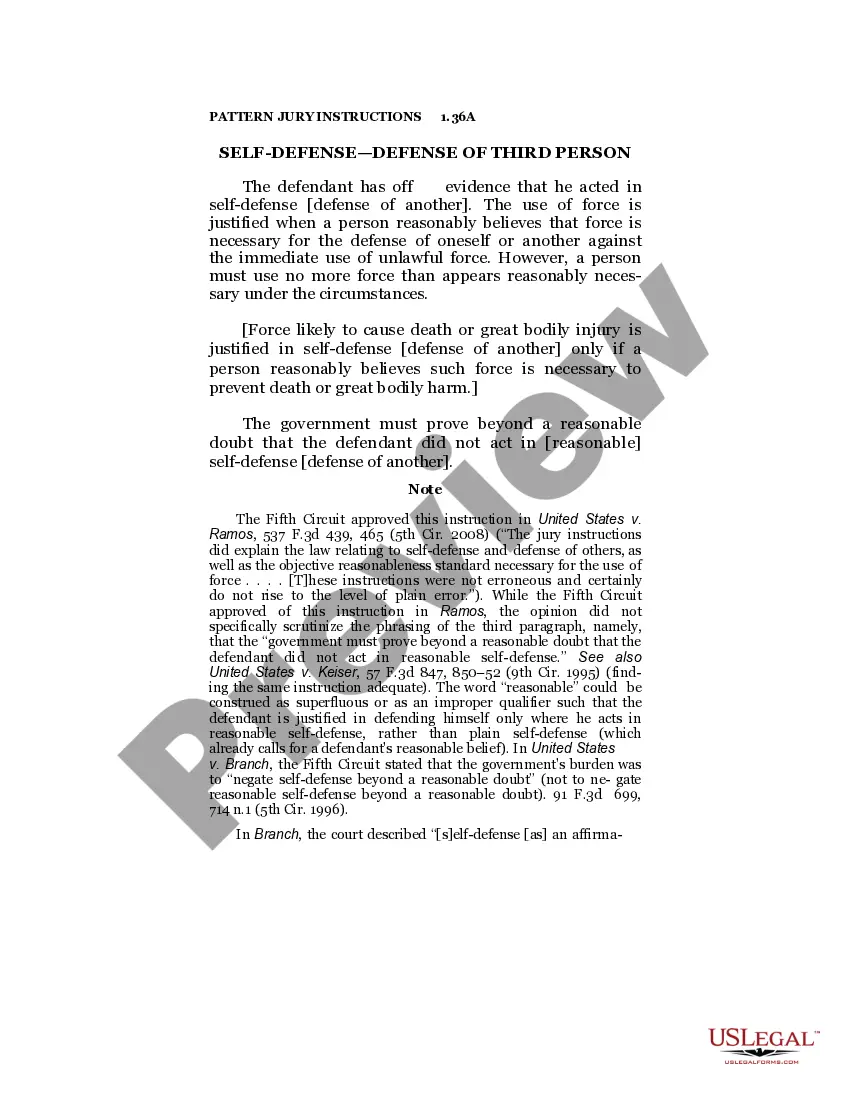
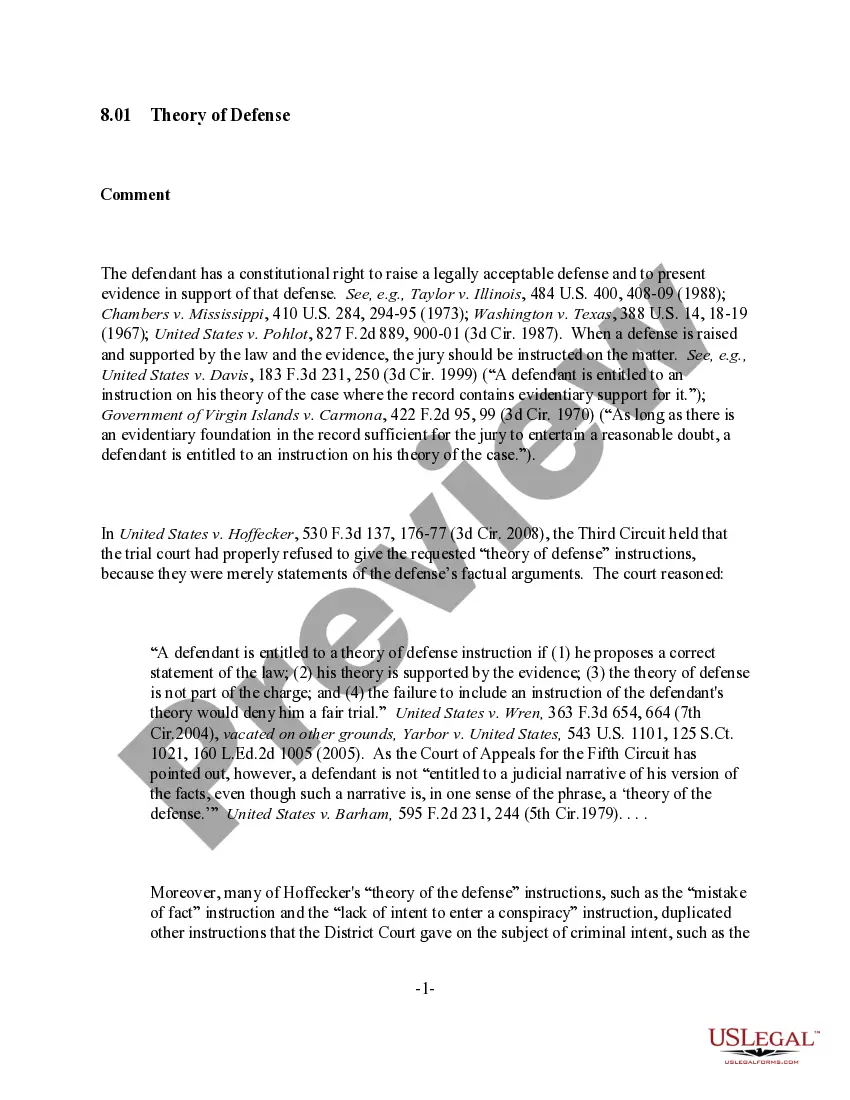
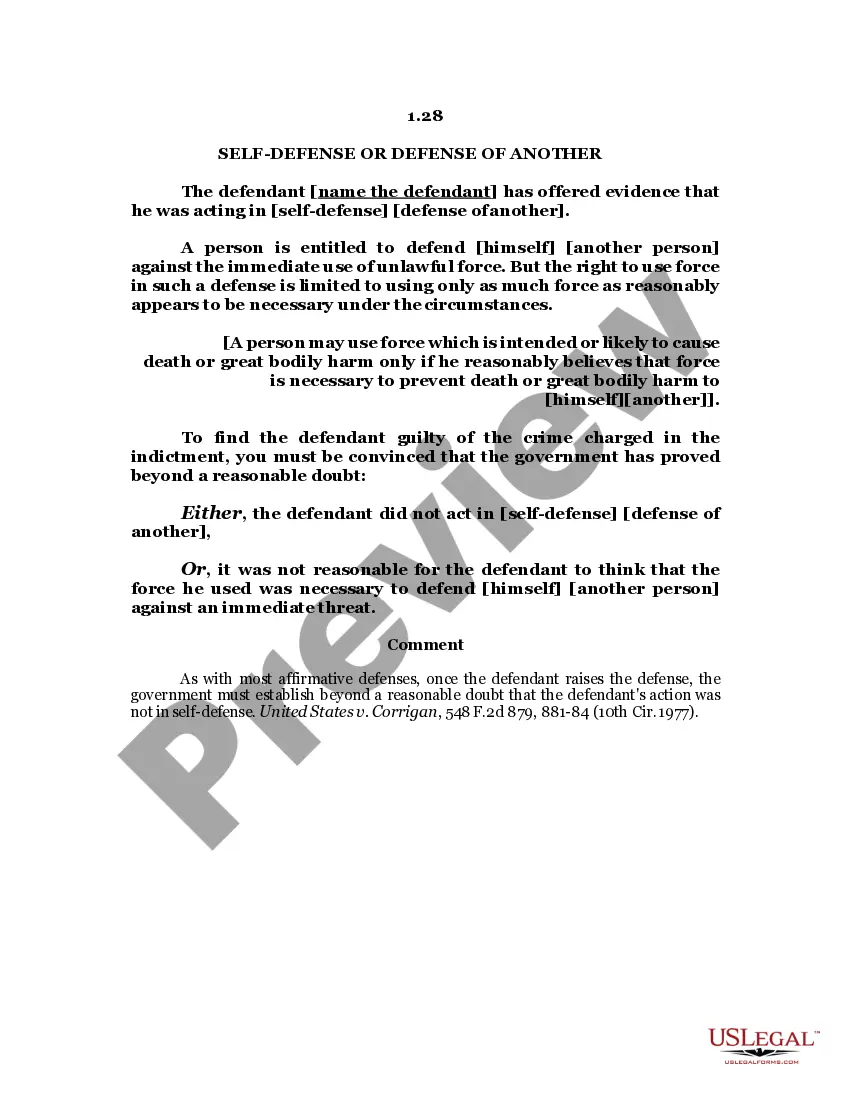
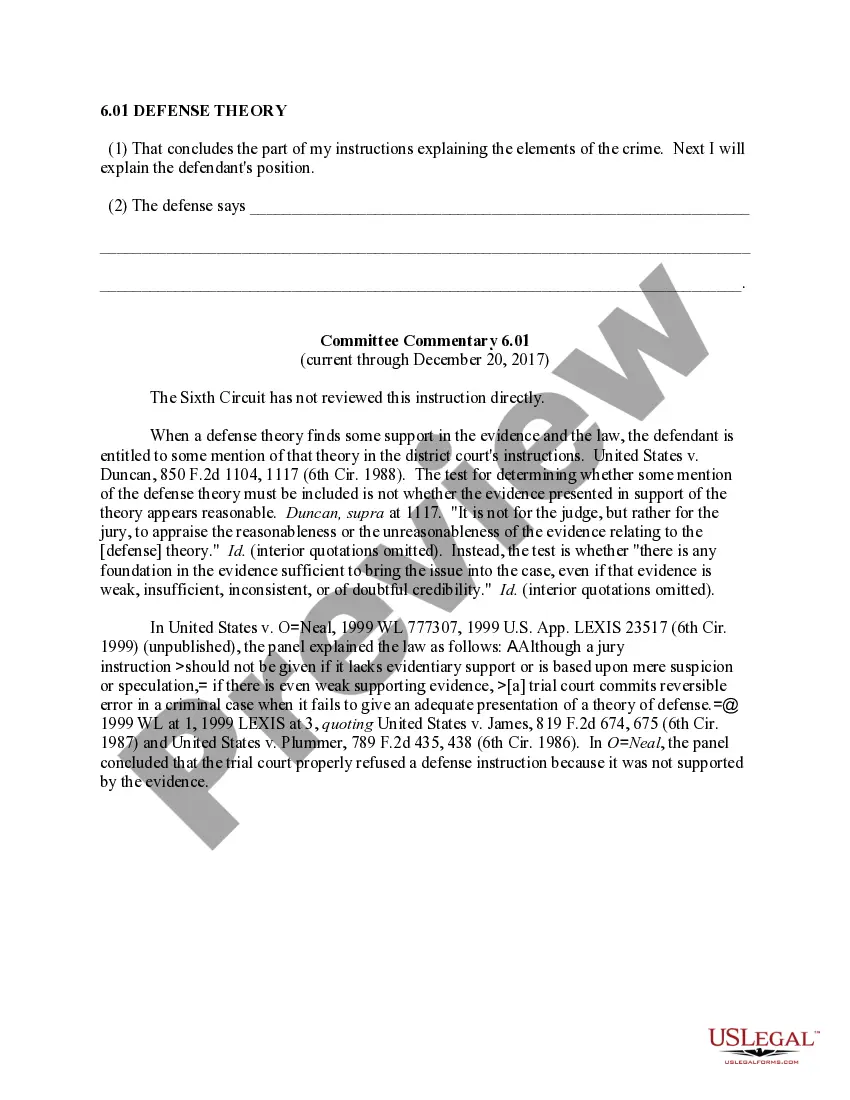
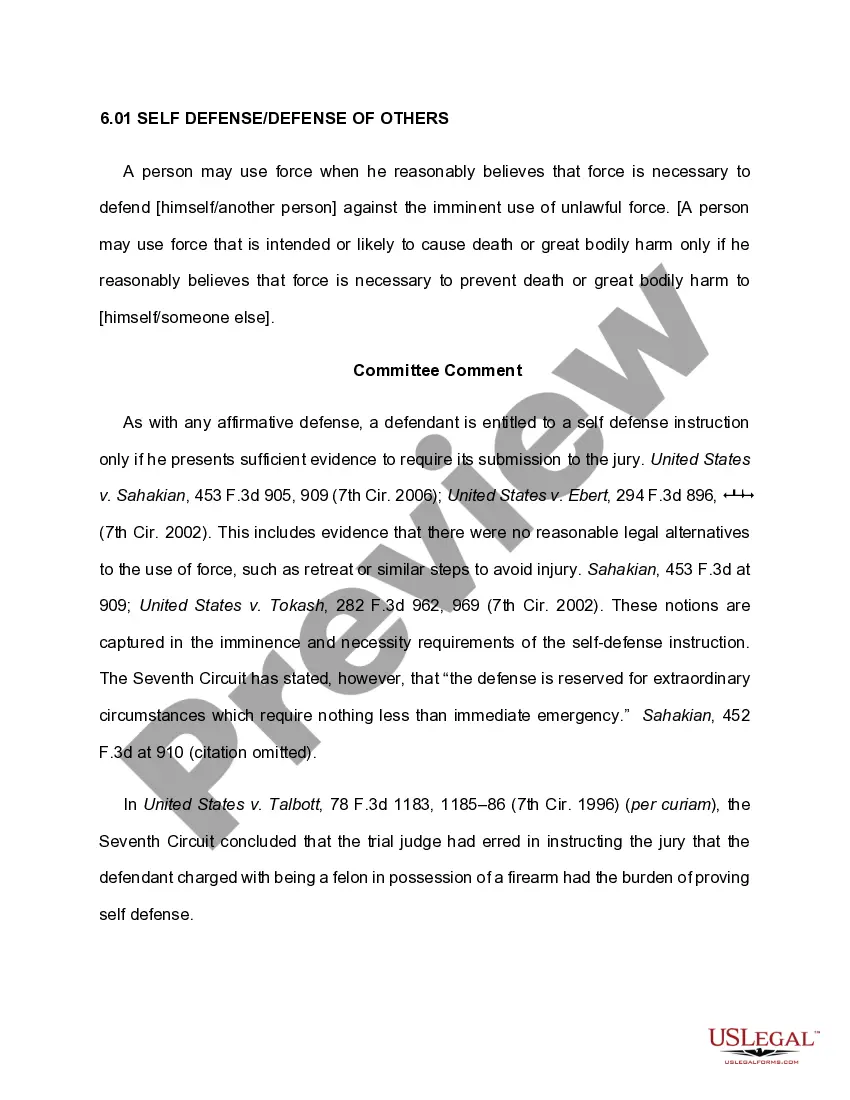
The Self-Defense - Defense of Third Person form is a legal document that assists individuals in asserting a defense in legal situations where they acted to protect another person from unlawful force. This form outlines the justification for the use of force in self-defense and emphasizes the importance of reasonable belief in the necessity of such actions. Unlike other self-defense forms, this one specifically addresses situations involving the defense of third parties, making it tailored for unique legal circumstances involving others' safety.
Key components of this form
- Definition of self-defense in relation to protecting another person.
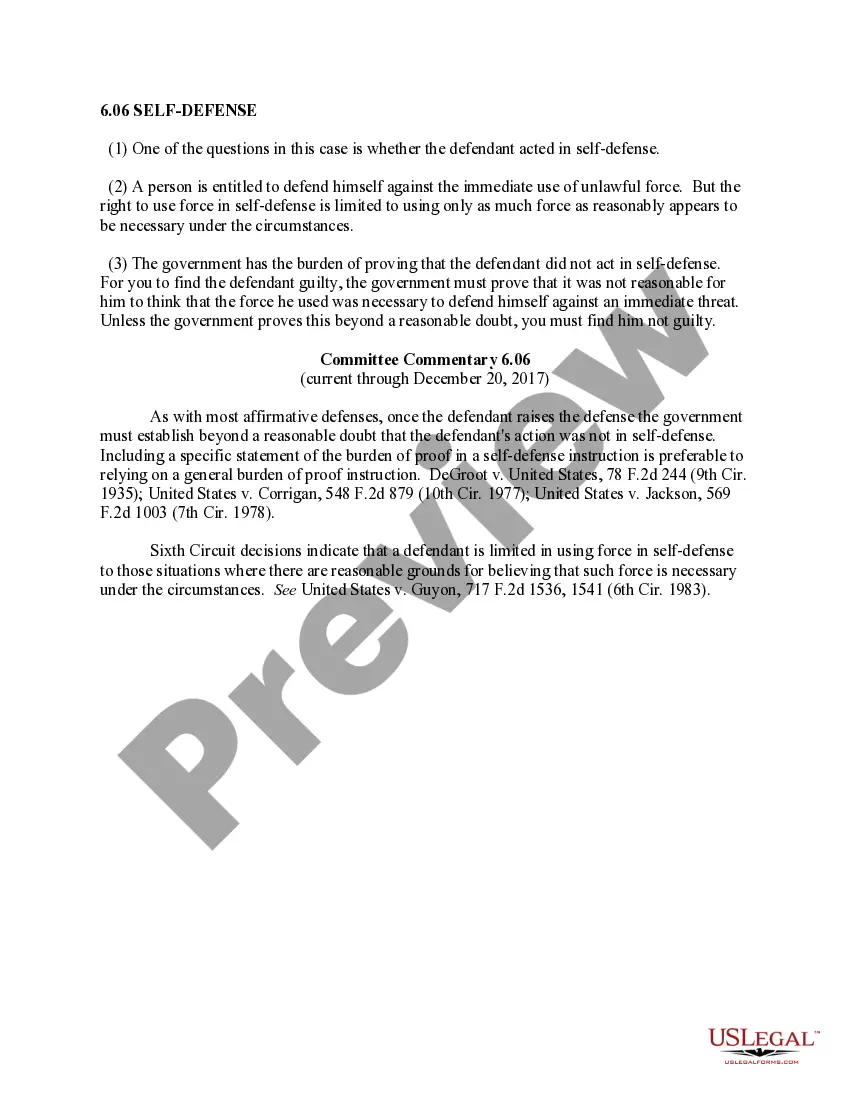
- Criteria for justifying the use of force based on reasonable belief.
- Clarification on what constitutes reasonable force versus excessive force.
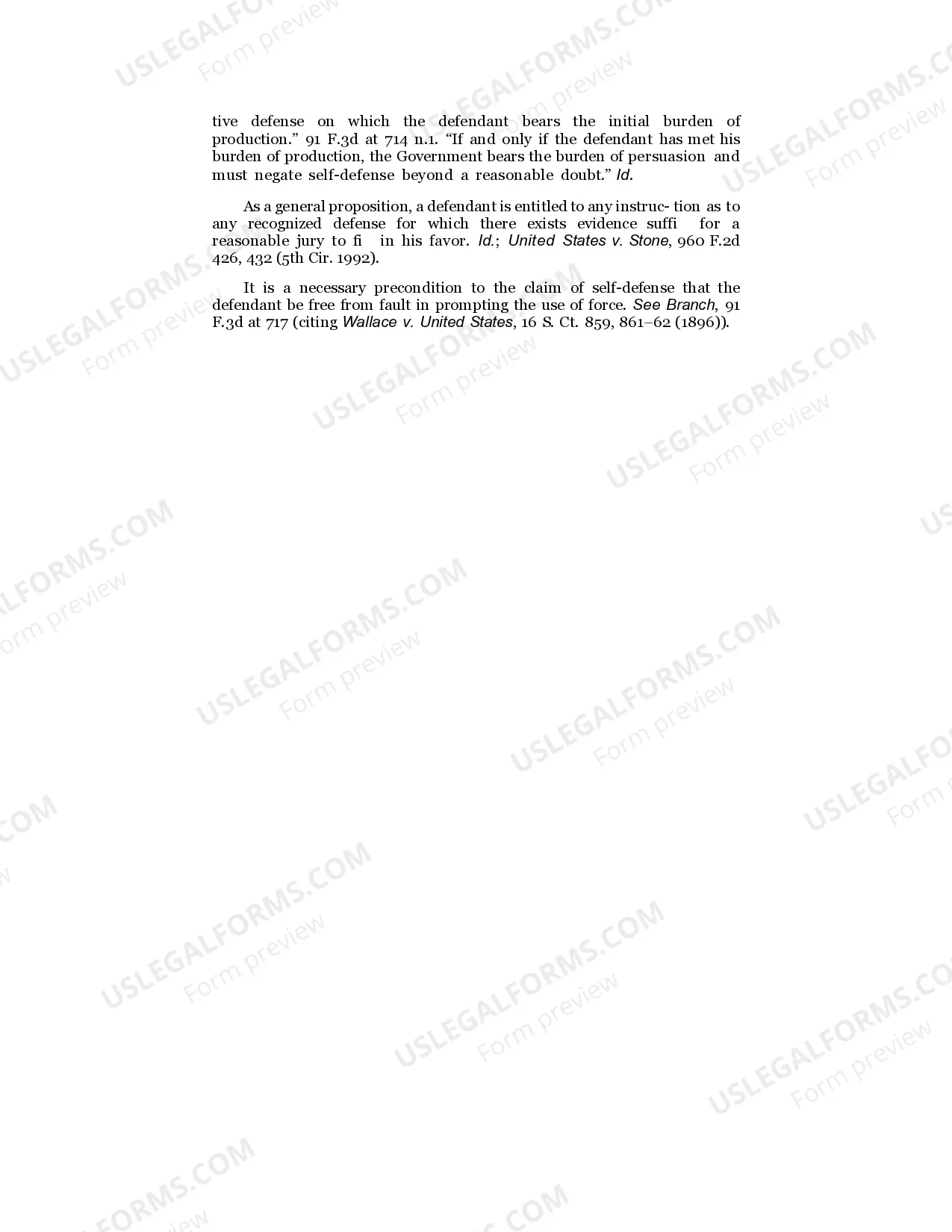
- Explanation of the burden of proof resting on the government to prove lack of reasonable self-defense.
- Information on the circumstances under which one can claim self-defense while being free from fault.
Situations where this form applies
This form is applicable in situations where an individual must demonstrate that they acted in defense of another person during an altercation or confrontation. It is particularly important when facing criminal charges involving violence or when defending oneself against claims of excessive force. Use this form when you believe that your actions were necessary to protect someone else from immediate harm or potential violence.
Who can use this document
- Individuals charged with a crime involving the defense of another person.
- Defendants who want to assert self-defense as a legal justification for their actions.
- Legal representatives seeking to prepare a defense based on the necessity of protecting others.
- Anyone involved in a dispute or altercation where defending another party was a factor.
How to prepare this document
- Identify the parties involved, including the defendant and the person being defended.
- Clearly outline the circumstances that prompted the use of force in defense of another.
- Explain the belief that the use of such force was necessary to prevent harm.
- Assert if the force used was proportional to the threat faced.
- Sign and date the form, ensuring all necessary sections are completed accurately.
Is notarization required?
Notarization is generally not required for this form. However, certain states or situations might demand it. You can complete notarization online through US Legal Forms, powered by Notarize, using a verified video call available anytime.
Get your form ready online
Our built-in tools help you complete, sign, share, and store your documents in one place.
Make edits, fill in missing information, and update formatting in US Legal Forms—just like you would in MS Word.
Download a copy, print it, send it by email, or mail it via USPS—whatever works best for your next step.
Sign and collect signatures with our SignNow integration. Send to multiple recipients, set reminders, and more. Go Premium to unlock E-Sign.
If this form requires notarization, complete it online through a secure video call—no need to meet a notary in person or wait for an appointment.
We protect your documents and personal data by following strict security and privacy standards.

Make edits, fill in missing information, and update formatting in US Legal Forms—just like you would in MS Word.

Download a copy, print it, send it by email, or mail it via USPS—whatever works best for your next step.

Sign and collect signatures with our SignNow integration. Send to multiple recipients, set reminders, and more. Go Premium to unlock E-Sign.

If this form requires notarization, complete it online through a secure video call—no need to meet a notary in person or wait for an appointment.

We protect your documents and personal data by following strict security and privacy standards.
Common mistakes to avoid
- Failing to provide sufficient details about the incident.
- Not clearly articulating the belief that force was necessary.
- Confusing the definitions of reasonable and excessive force.
- Neglecting to address whether one was free from fault in prompting the situation.
Benefits of completing this form online
- Convenient access to legal templates drafted by licensed attorneys.
- Ability to edit and customize the form to fit your specific situation.
- Instant download for immediate use in legal proceedings.
- Cost-effective solution without the need for an in-person attorney visit.
Legal use & context
- The Self-Defense - Defense of Third Person form is legally valid as a defense strategy in criminal proceedings.
- Courts require clear evidence of circumstances supporting the claim of self-defense.
- Itâs essential to understand the legal interpretations of reasonable force in your jurisdiction.
- Consulting with a legal professional is advised to navigate specific case details.
Main things to remember
- This form is crucial for asserting a self-defense claim when protecting another person.
- Understanding the reasonable belief standard is essential for valid defense.
- The burden of proof lies with the government to disprove the reasonable self-defense assertion.
- Seek advice from a legal expert to ensure the form is completed and used correctly.
Looking for another form?
Form popularity
FAQ
The Five Principles of Self-Defense Laws Principle 1: Innocence.Principle 2: Imminence.Principle 3: Proportionality.Principle 4: Avoidance.Principle 5: Reasonableness.
A defendant in California is entitled to stand their ground and defend themselves using force, if reasonably necessary, to pursue an assailant until the danger of bodily injury, death, or any other crime has passed. This is so even if safety could have been achieved by retreating.
A straight forward approach to self-defense is something called The 3 A's. Awareness. Assessment. Action.
?Self-defense.? Merriam-Webster.com Dictionary, Merriam-Webster, .
Self-defense techniques involve the fighting stance, personal body weapons, blocking, use of sample objects as weapons, and defense against weapons. Relevant police tactics are examined, warmup exercises illustrated, and use of the night stick and other weapons are explained.
?Defense of others? is a defense to liability for an alleged crime that is in defense of a person other than oneself. It refers to a person's right to use reasonable force to protect a third party from another person who threatens to use force on the third party.
Thus, for instance, a defendant may have been threatened by a man holding a toy gun and responded by assaulting or harming the man. If a ?reasonable man? would also have believed that the toy gun was a real threat and have responded with fear as well, the defendant's actions will likely be considered self-defense.
An example of imperfect self-defense would be if someone pointed a bright blue water gun at you, and you honestly believed it was a real gun and that the person was about to shoot you. If you killed that person in response, your belief in the need for self-defense would have been honest but unreasonable.