Receiving Illegal Gratuity by a Public Official
About this form
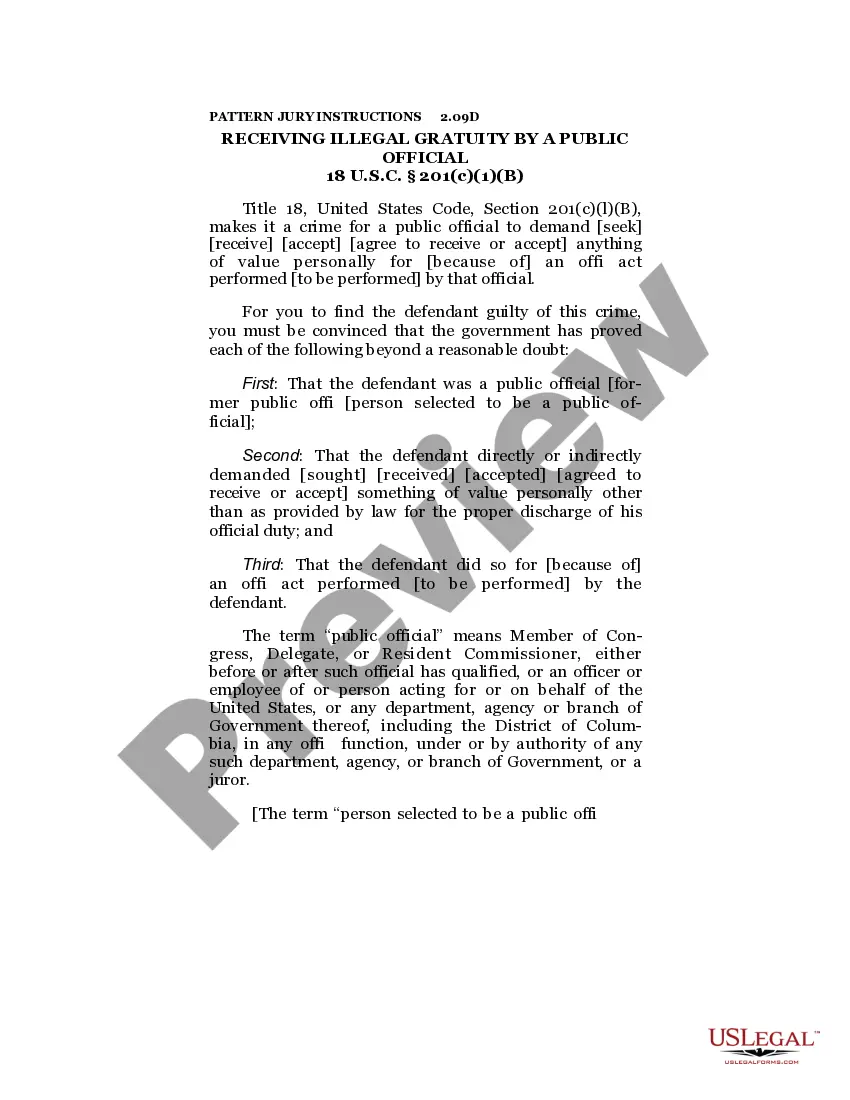
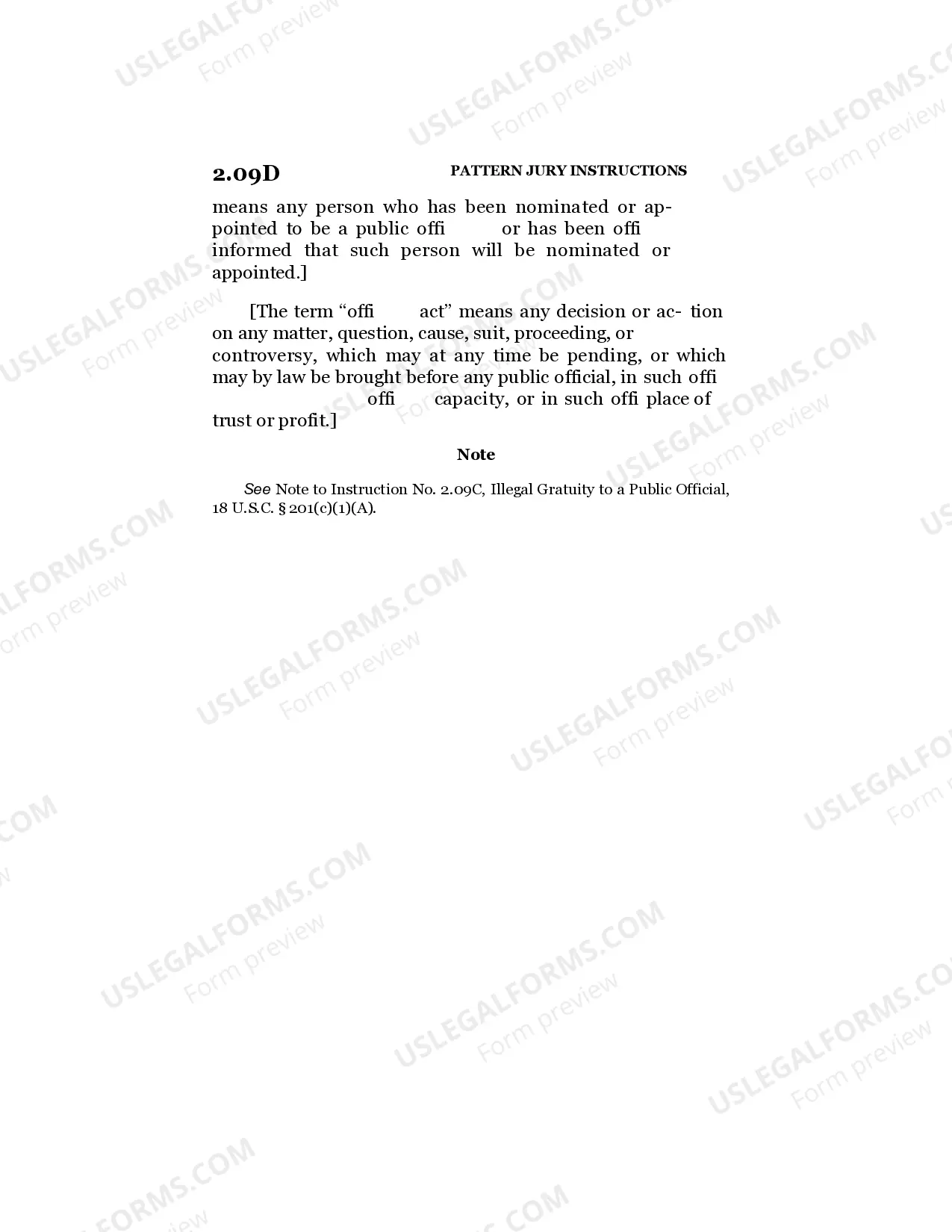
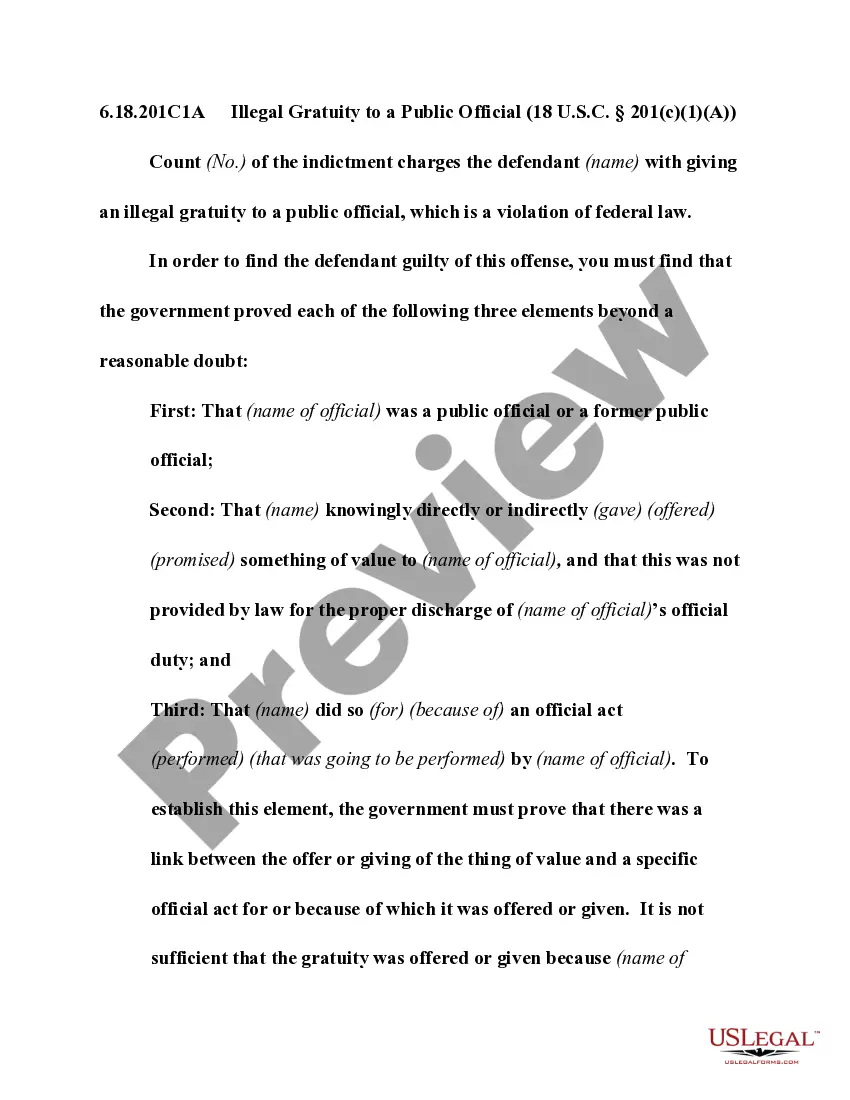
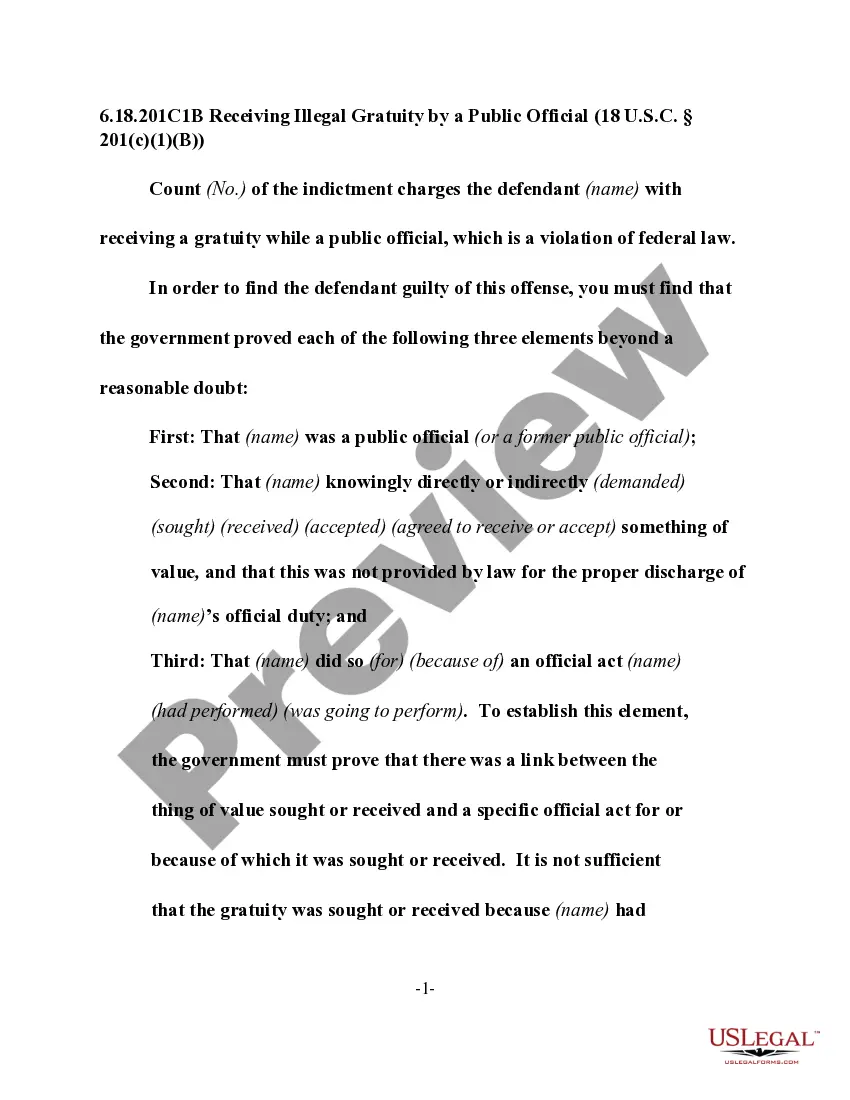
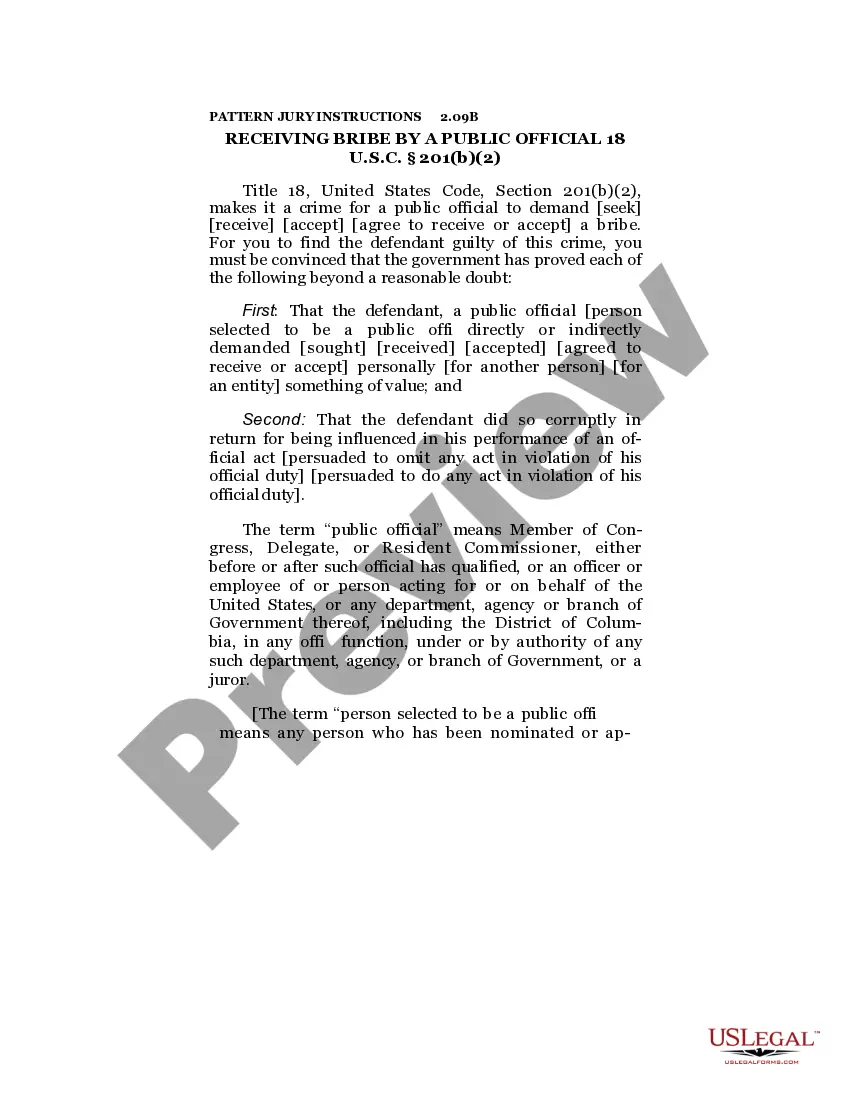
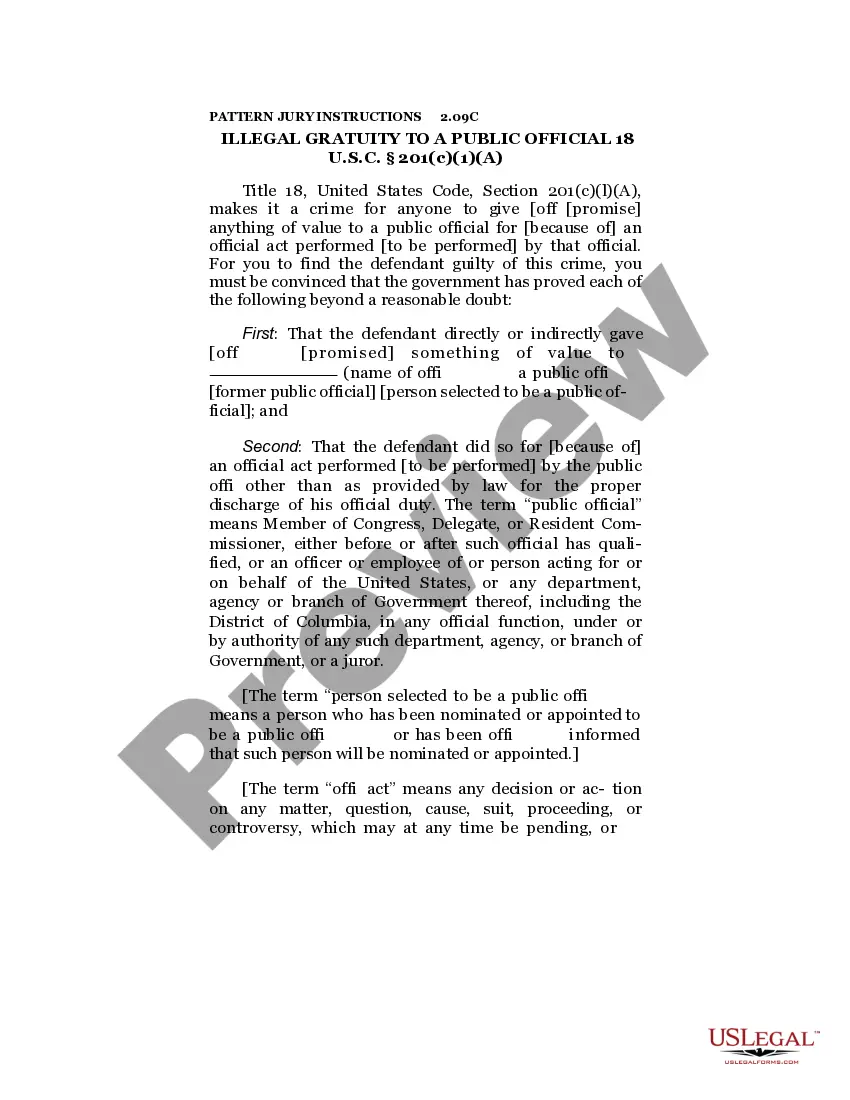
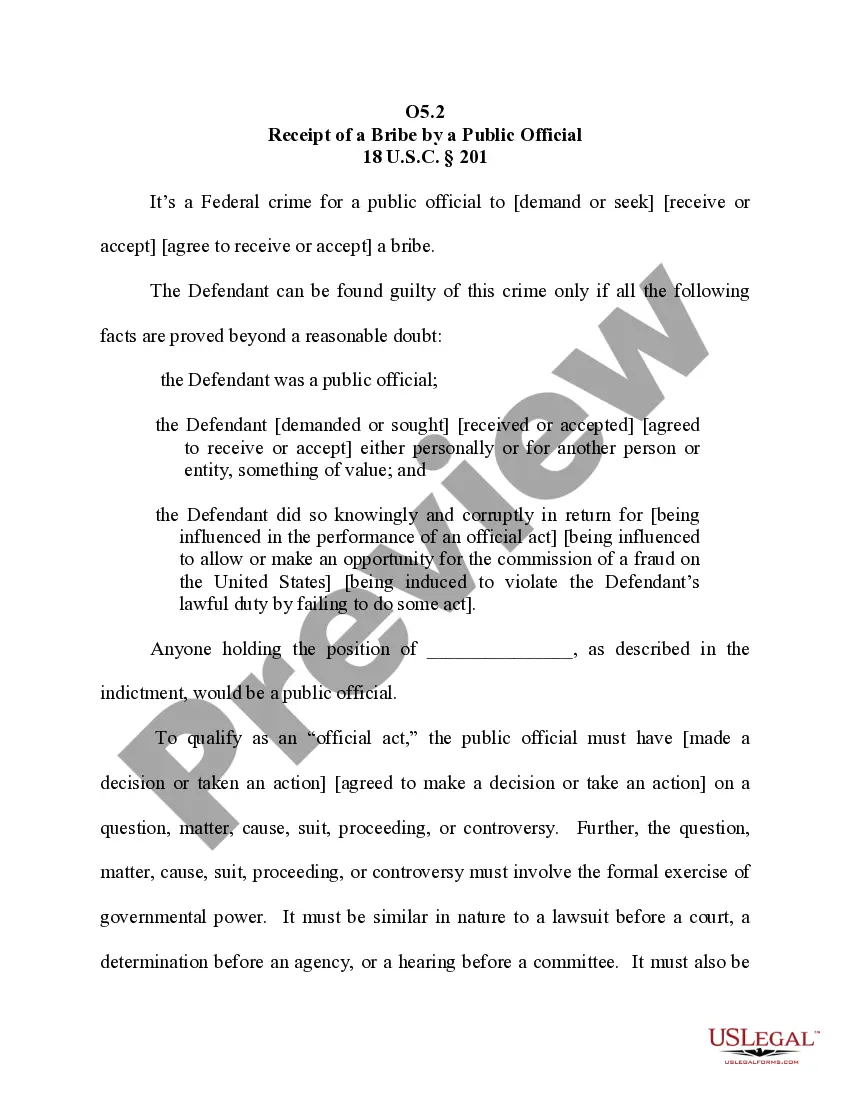
The Receiving Illegal Gratuity by a Public Official form outlines the legal framework surrounding the acceptance of something of value by public officials in exchange for official acts. This form is designed to clarify the elements of the crime defined under Title 18, United States Code, Section 201(c)(1)(B). It is distinguished from similar forms addressing bribery, as it specifically addresses gratuities that are not necessarily linked to a quid pro quo arrangement. Proper use of this form can help ensure accountability in public service roles.
Key parts of this document
- Definition of a public official and the criteria for their classification.
- Explanation of what constitutes a prohibited gratuity.
- Details on the necessary legal elements for a conviction, such as the requirement that the benefit received must be for an official act performed.
- A stipulation of the legal obligations surrounding the acceptance of gifts by public officials.
When to use this form
This form should be used when addressing issues related to public officials accepting gifts or benefits that may violate federal law. It is relevant in situations where concerns arise regarding the integrity and impartiality of public office, such as when a public official is accused of accepting gifts that could influence decision-making or actions taken in their official capacity.
Intended users of this form
- Public officials who need to understand their legal obligations regarding gratuities.
- Legal professionals advising clients on compliance with federal bribery laws.
- Individuals reporting suspected illegal gratuities received by public officials.
How to prepare this document
- Identify the public official involved and include their official title.
- Describe the nature of the gift or gratuity received.
- Specify the official act that is being influenced or could be influenced by the gratuity.
- Provide any relevant dates and circumstances surrounding the acceptance of the gift.
- Include any witnesses or documentation that supports the details of the case.
Notarization guidance
This form does not typically require notarization to be legally valid. However, some jurisdictions or document types may still require it. US Legal Forms provides secure online notarization powered by Notarize, available 24/7 for added convenience.
Get your form ready online
Our built-in tools help you complete, sign, share, and store your documents in one place.
Make edits, fill in missing information, and update formatting in US Legal Forms—just like you would in MS Word.
Download a copy, print it, send it by email, or mail it via USPS—whatever works best for your next step.
Sign and collect signatures with our SignNow integration. Send to multiple recipients, set reminders, and more. Go Premium to unlock E-Sign.
If this form requires notarization, complete it online through a secure video call—no need to meet a notary in person or wait for an appointment.
We protect your documents and personal data by following strict security and privacy standards.

Make edits, fill in missing information, and update formatting in US Legal Forms—just like you would in MS Word.

Download a copy, print it, send it by email, or mail it via USPS—whatever works best for your next step.

Sign and collect signatures with our SignNow integration. Send to multiple recipients, set reminders, and more. Go Premium to unlock E-Sign.

If this form requires notarization, complete it online through a secure video call—no need to meet a notary in person or wait for an appointment.

We protect your documents and personal data by following strict security and privacy standards.
Avoid these common issues
- Failing to accurately define the official act associated with the gratuity.
- Not providing sufficient details about the gift or benefit received.
- Neglecting to identify all involved parties accurately.
- Assuming the form is only applicable in certain states without checking federal compliance.
Advantages of online completion
- Instant access to legal resources tailored by licensed attorneys.
- Convenient download options for quick printing and use.
- Editability allows for customization based on specific needs.
- Secure storage of forms for future reference or legal purposes.
Looking for another form?
Form popularity
FAQ
If convicted of bribery of a public official under 18 U.S.C. 201(b), the penalties include up to 15 years in prison and/or a fine of up to three times the monetary amount of the something of value that you offered to the public official.
The ?distinguishing feature? between bribery and illegal gratuities is found in the intent element. A payment as a thank you for a past act is a gratuity, not a bribe. If there was no prior agreement, and no quid pro quo, it is a gratuity.
Illegal gratuities are similar to bribery, except that there is no intent to influence a particular business decision, but rather to reward someone for making a favorable decision.
An illegal gratuity is defined under 18 U.S.C. § 201 as the giving of a gift in response to an action or decision by a public official. Bribery is the agreement to give something of value in exchange for an official taking an action, making a decision, or other performance in their official duties.
Generally, to establish an illegal gratuity violation, the government must prove that the gratuity was given for the purpose of influencing an official act.
The main difference between bribery and illegal gratuity is the intent involved. Bribery requires proof of a quid pro quo-an exchange of money for an official act. Illegal gratuity, on the other hand, merely requires a gift of money because of an official act.
Bribery is defined generally as corrupt solicitation, acceptance, or transfer of value in exchange for official action.