Forging Endorsement on a Treasury Check, Bond, or Security of the United States
Understanding this form
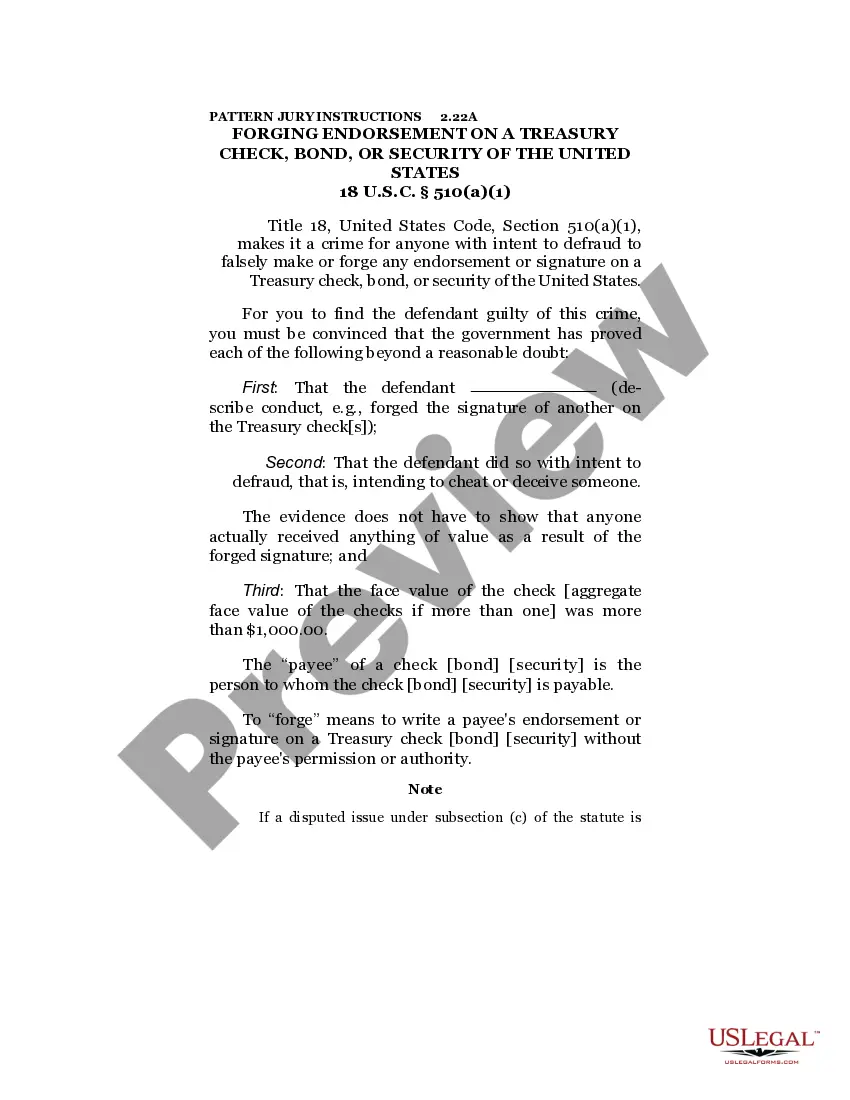
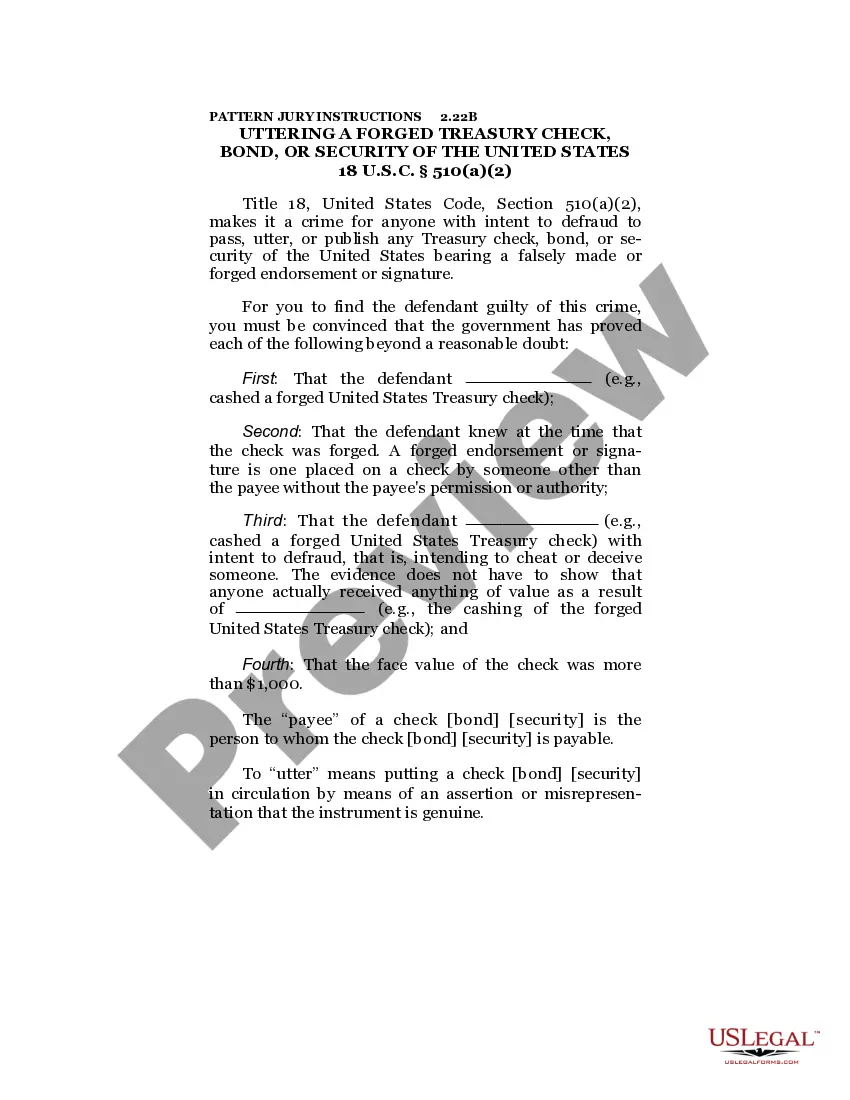
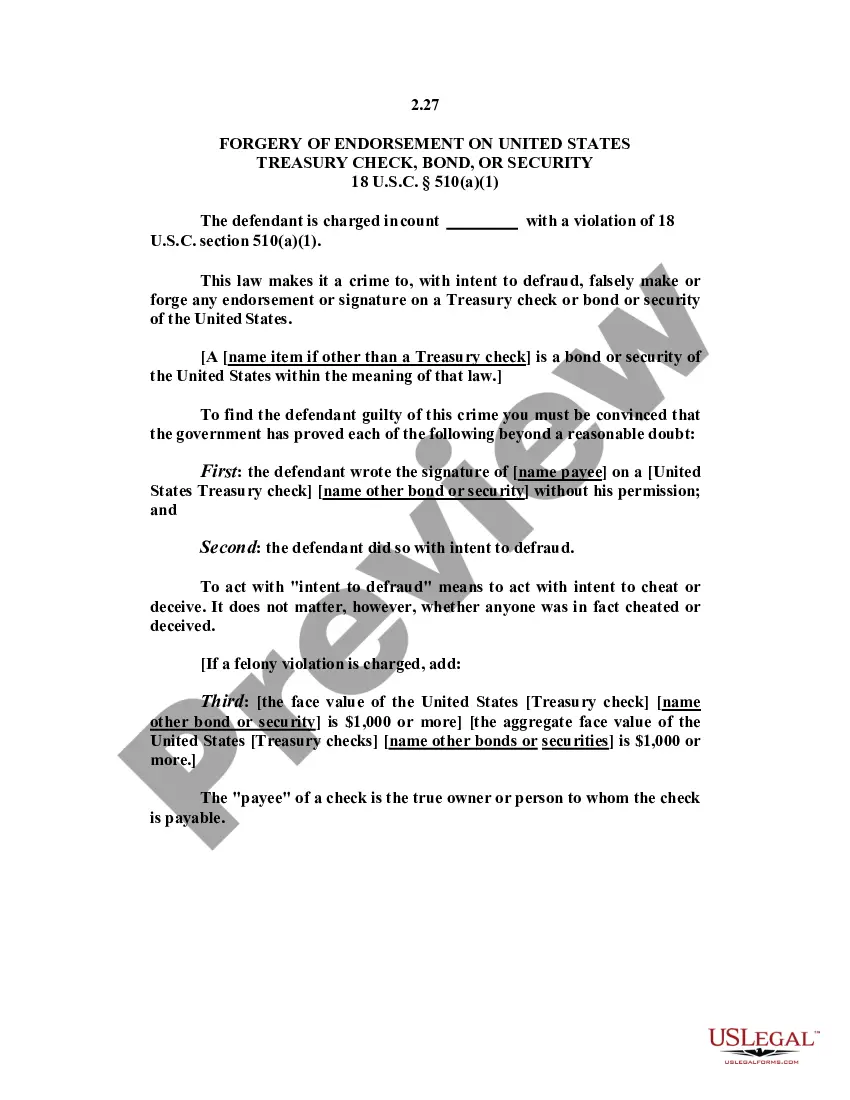
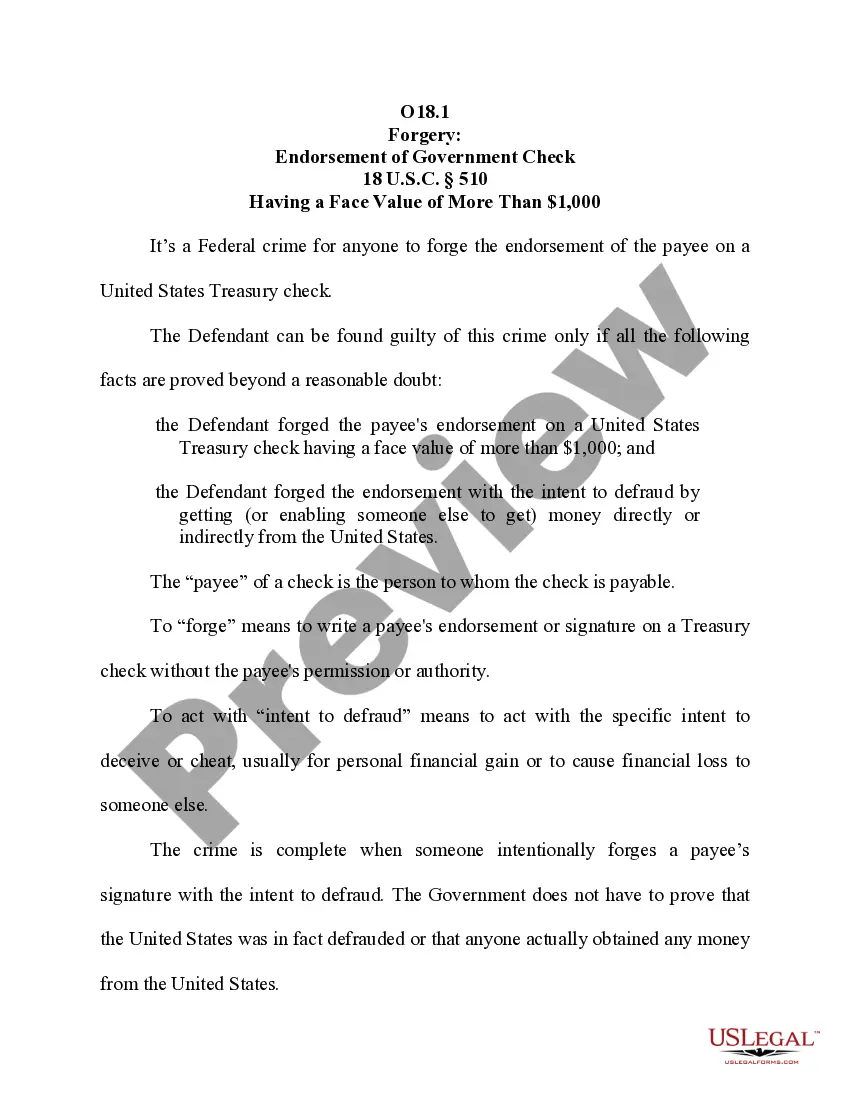
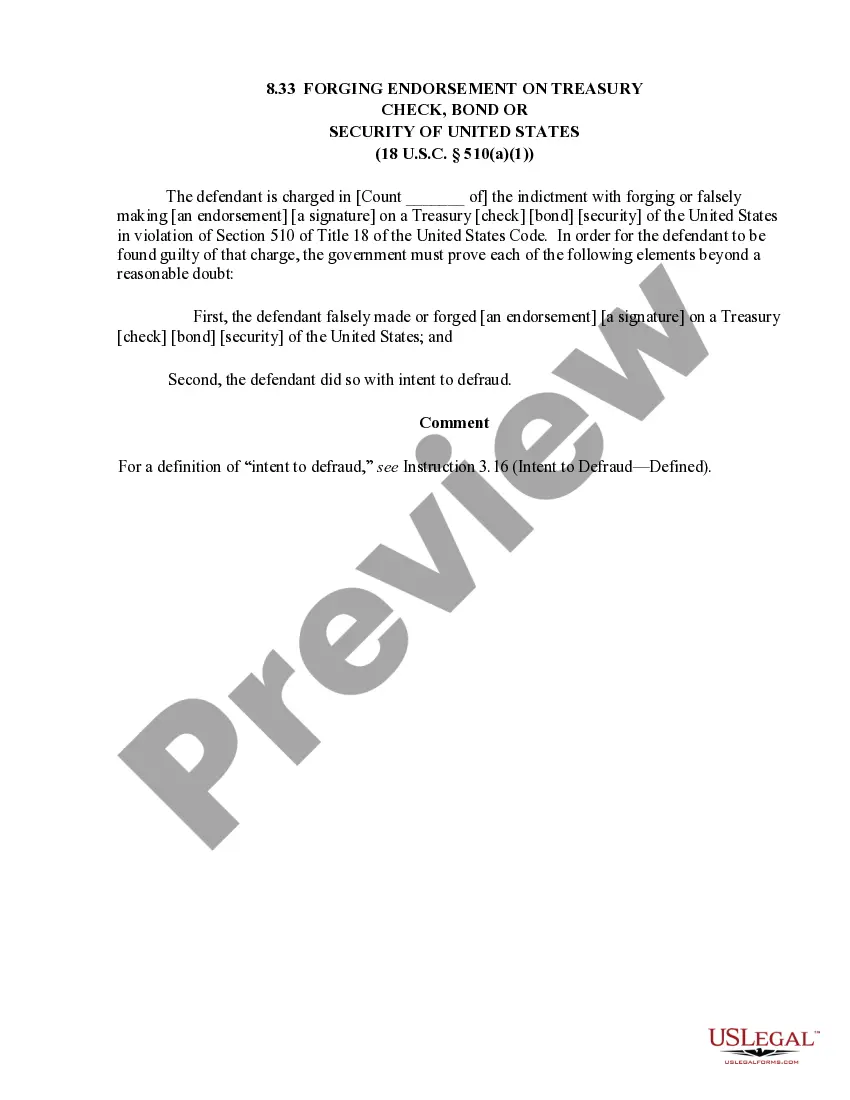
The Forging Endorsement on a Treasury Check, Bond, or Security of the United States form is a legal document that addresses the crime of forging endorsements on U.S. Treasury checks, bonds, or securities. This form aims to outline the legal consequences of such actions and serves as guidance in the prosecution of individuals accused of this offense. Unlike other financial fraud forms, this document specifically deals with fraudulent endorsements related to U.S. Treasury instruments.
Key parts of this document
- Description of the crime: Outlines what constitutes forgery under Title 18, U.S. Code.
- Intent to defraud: Specifies that the defendant must act with the intention to cheat or deceive.
- Value requirement: Details the threshold of $1,000 to establish a crime under this statute.
- Definition of forging: Clarifies what it means to write a payee's endorsement or signature without permission.
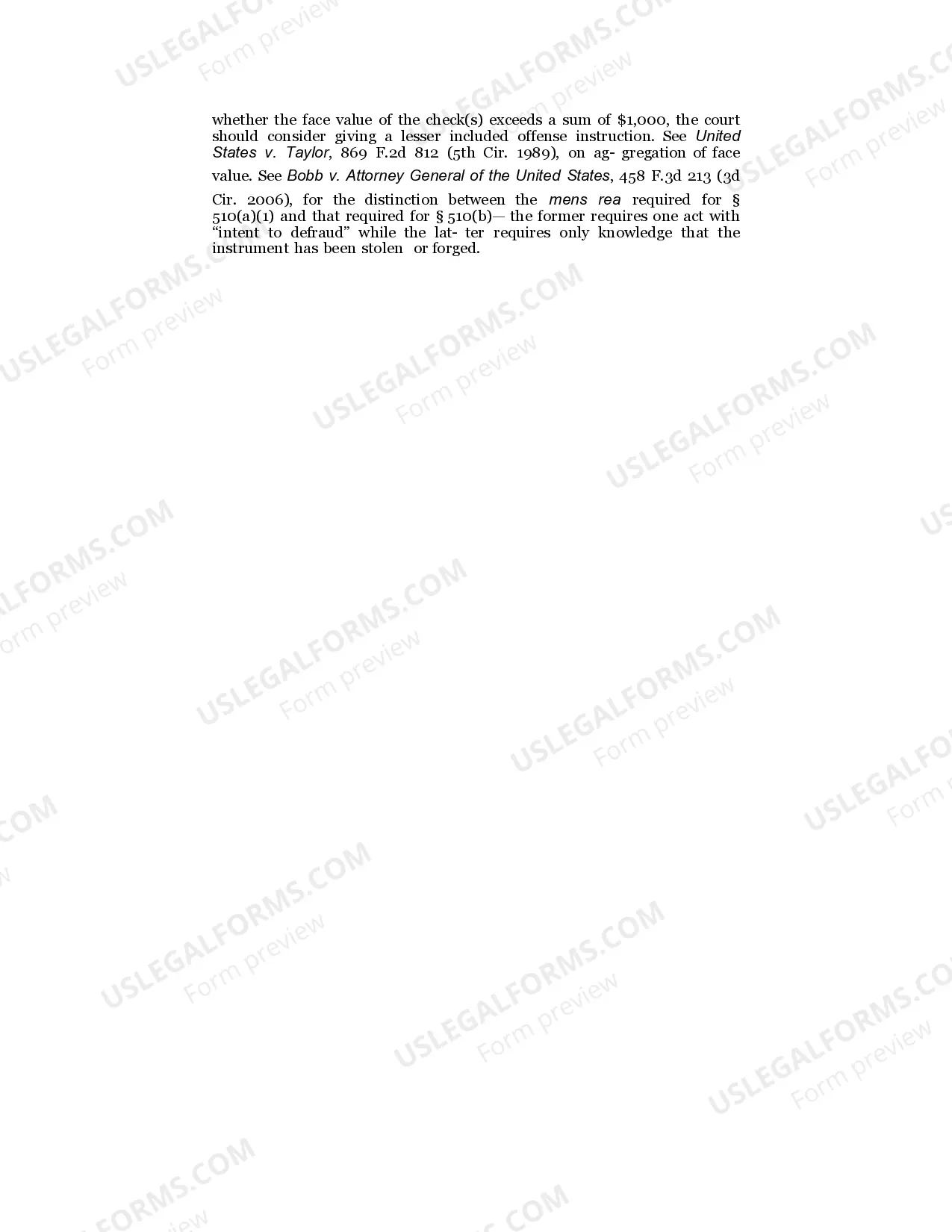
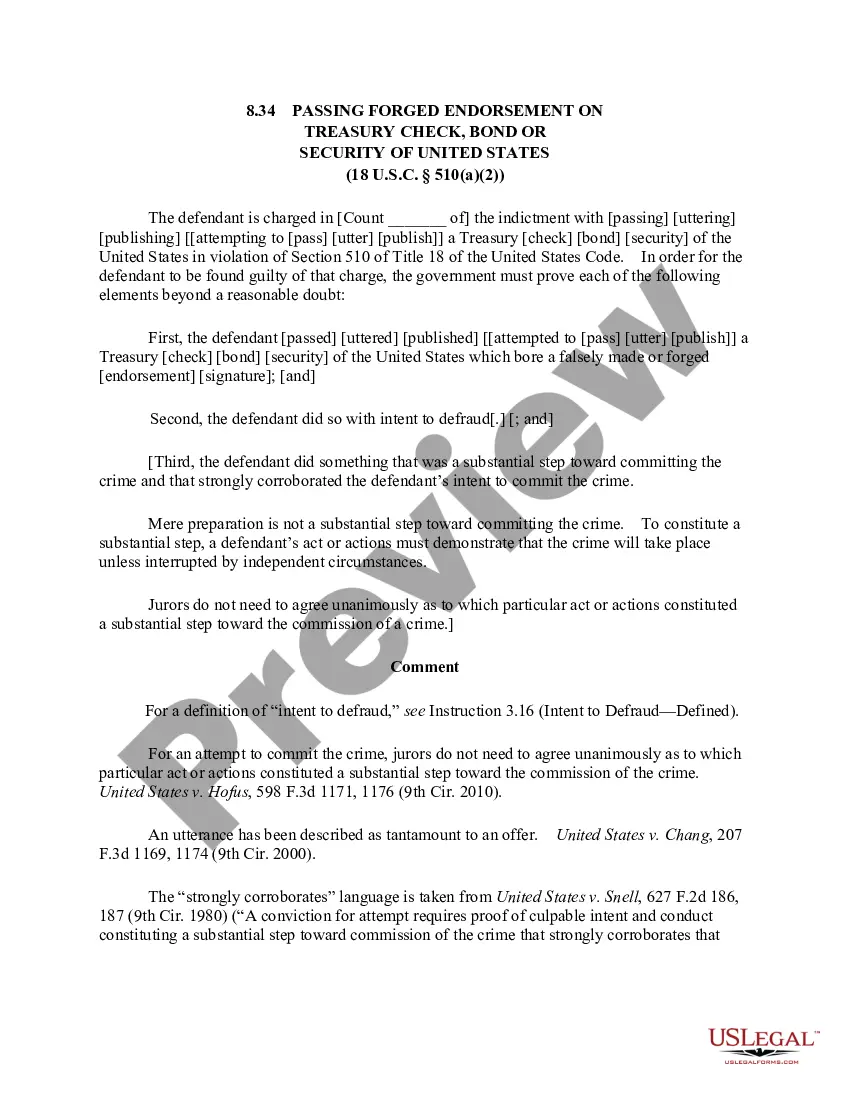
- Legal references: Cites relevant case law that may impact the application of the statute.
When to use this form
This form is needed in situations where an individual is charged with the crime of forging endorsements on U.S. Treasury checks, bonds, or securities. It may be used by legal professionals handling cases of financial fraud or by individuals needing to understand the legal implications of such actions. If a defendant is involved in a dispute over the legitimacy of a Treasury instrument's endorsement, this form can help define the parameters of the discussion.
Who needs this form
- Legal professionals representing clients accused of forgery.
- Individuals who have been wrongfully accused of committing this crime.
- Law students or researchers studying financial fraud laws.
- Victims of fraud seeking to understand related legal protections.
How to prepare this document
- Identify the parties involved in the transaction or legal matter.
- Specify the details of the Treasury check, bond, or security in question.
- Describe the actions constituting the forgery.
- Provide any evidence to support claims regarding intent to defraud.
- Enter the total face value and ensure it meets the legal threshold.
Notarization requirements for this form
In most cases, this form does not require notarization. However, some jurisdictions or signing circumstances might. US Legal Forms offers online notarization powered by Notarize, accessible 24/7 for a quick, remote process.
Get your form ready online
Our built-in tools help you complete, sign, share, and store your documents in one place.
Make edits, fill in missing information, and update formatting in US Legal Forms—just like you would in MS Word.
Download a copy, print it, send it by email, or mail it via USPS—whatever works best for your next step.
Sign and collect signatures with our SignNow integration. Send to multiple recipients, set reminders, and more. Go Premium to unlock E-Sign.
If this form requires notarization, complete it online through a secure video call—no need to meet a notary in person or wait for an appointment.
We protect your documents and personal data by following strict security and privacy standards.

Make edits, fill in missing information, and update formatting in US Legal Forms—just like you would in MS Word.

Download a copy, print it, send it by email, or mail it via USPS—whatever works best for your next step.

Sign and collect signatures with our SignNow integration. Send to multiple recipients, set reminders, and more. Go Premium to unlock E-Sign.

If this form requires notarization, complete it online through a secure video call—no need to meet a notary in person or wait for an appointment.

We protect your documents and personal data by following strict security and privacy standards.
Common mistakes to avoid
- Failing to provide sufficient evidence of intent to defraud.
- Neglecting to accurately state the face value of the forged instrument.
- Using vague language that lacks clarity regarding the defendant's actions.
- Not including necessary legal references or citations.
Benefits of completing this form online
- Convenience of downloading and filling out the form from any location.
- Editability allows users to make necessary adjustments easily.
- Reliability of templates drafted by licensed attorneys ensuring legal compliance.
Looking for another form?
Form popularity
FAQ
All U.S. Treasury checks are printed on watermarked paper. When held up to the light, the watermark reads ?U.S. Treasury? from both the front and the back. Any check should be suspected as counterfeit if the check has no watermark, or the watermark is visible without holding the check up to light.
An unauthorized endorsement is when someone signs the document without permission, like if someone forges a signature.
A forgery conviction may result in up to 5 years in prison and/or a fine of up to $7,500.
Government-issued checks require all payees listed to endorse the check by signing each of their names on the back of the check. If you receive a check made out to you and a joint filer, be sure to endorse the check with both of your names and deposit it into an account you hold jointly.
For example, someone may write a cheque with a forged signature. In this case the forged signature makes the endorsement fraudulent. Forging endorsements can be used to prevent the person or legal entity that the payment is made out to from being able to receive its value (such as cashing a cheque).
Forged endorsement is a type of fraudulent payment. For example, someone may write a cheque with a forged signature. In this case the forged signature makes the endorsement fraudulent.
Banks are generally required to reimburse customers for forged checks. However, based on individual circumstances, a bank can investigate to determine if the customer is entitled to a reimbursement. the customer's failure to exercise ordinary care substantially contributed to an alteration or forgery.