Theft Within Special Maritime and Territorial Jurisdiction
About this form
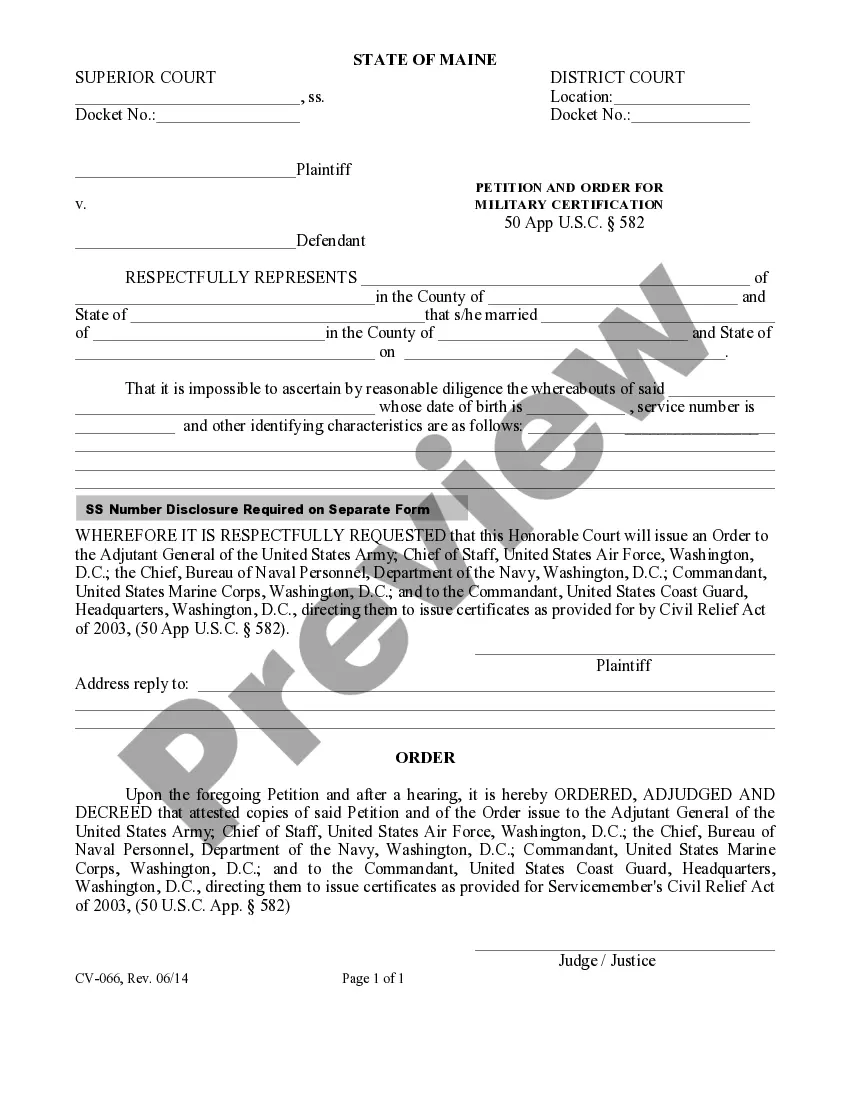
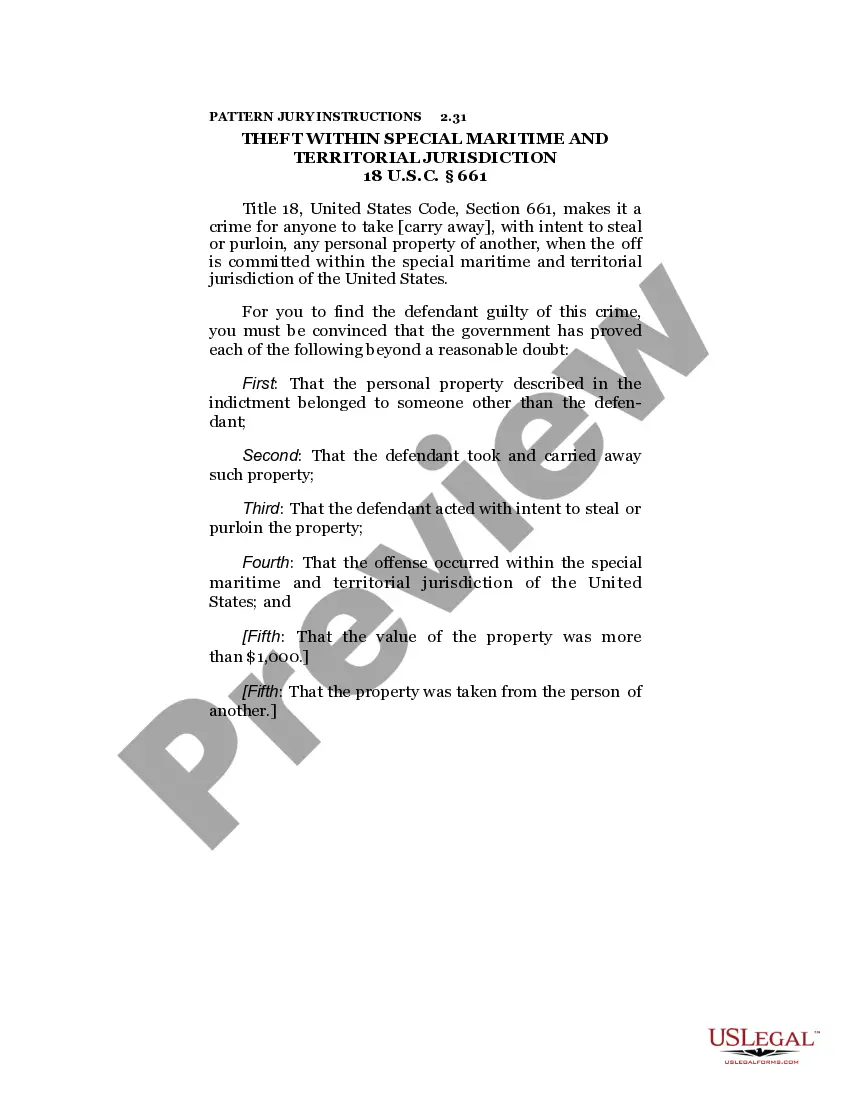
The Theft Within Special Maritime and Territorial Jurisdiction form is a legal document used in cases where an individual is charged with stealing or purloining property within specific jurisdictional boundaries defined by U.S. law. This legal framework addresses theft that occurs in maritime locations or other areas under federal jurisdiction, distinguishing it from state theft laws. This form helps clarify the charges and elements that must be proven in such cases.
What’s included in this form
- Definition of the crime: Theft occurring within special maritime and territorial jurisdiction.
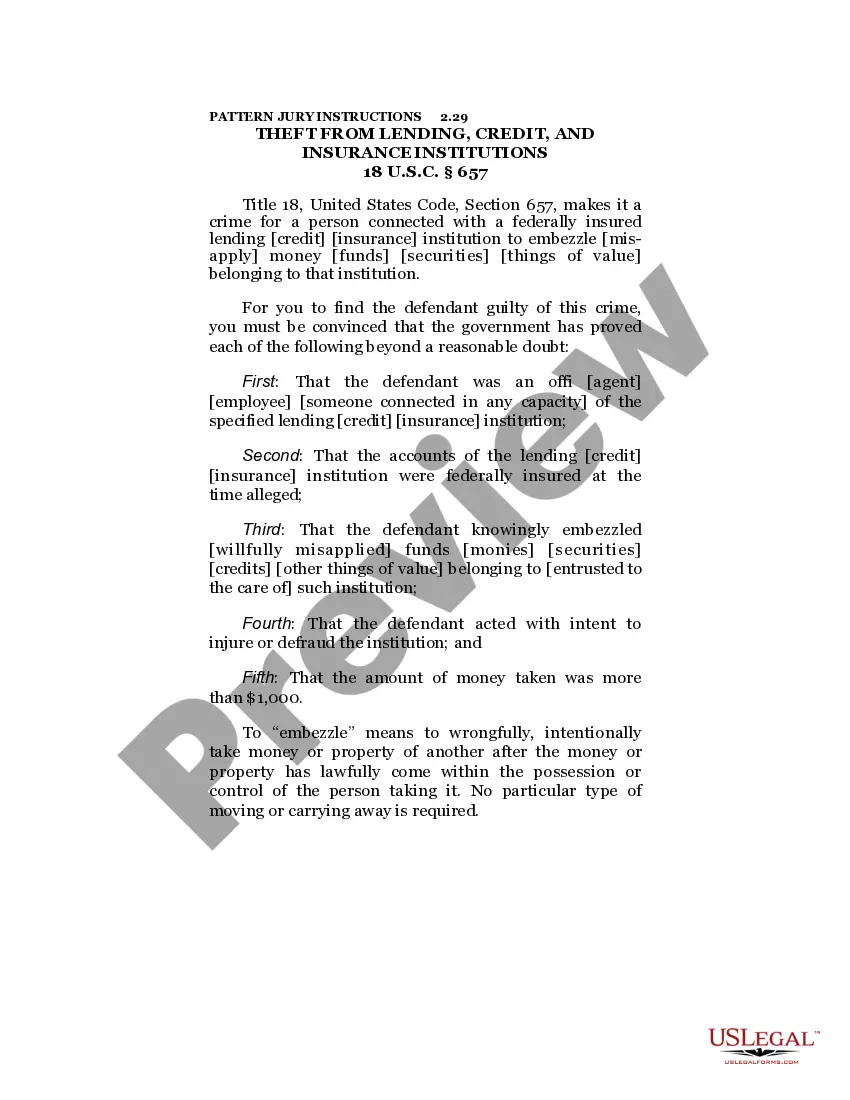
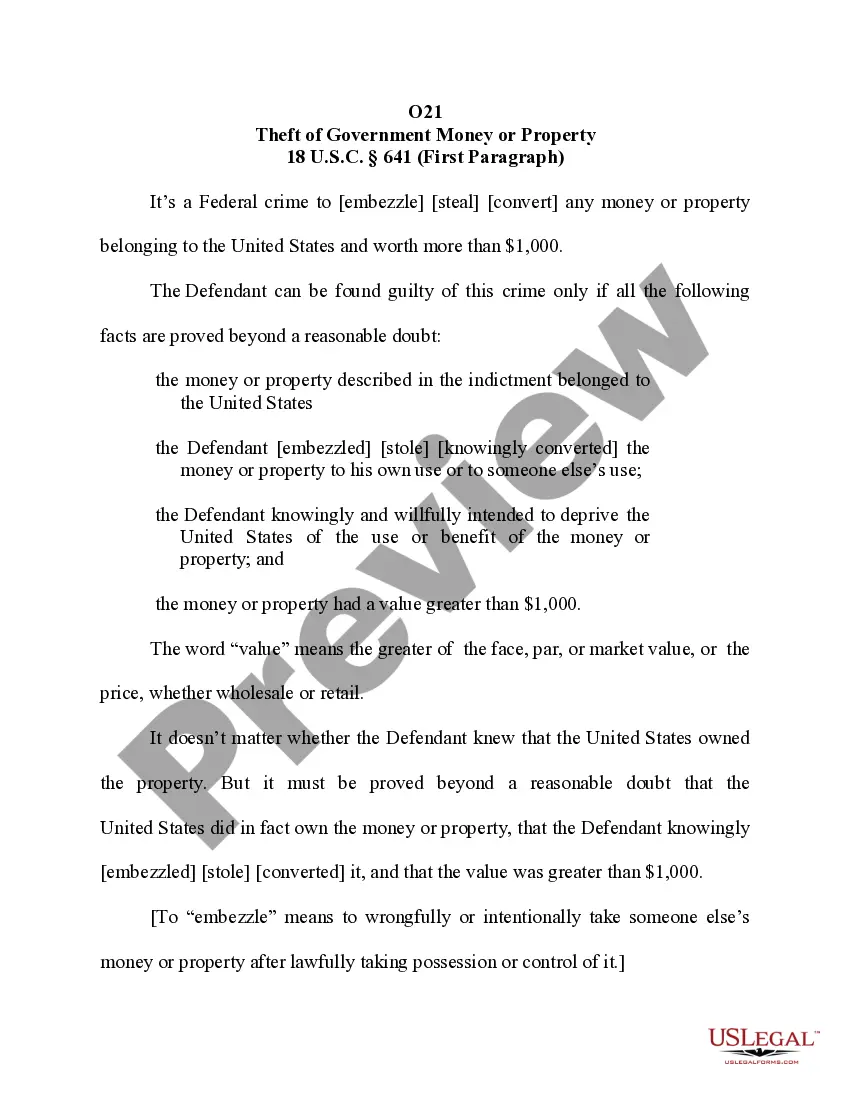
- Elements of the offense: Five key elements that must be proven for a conviction.
- Jurisdiction Specification: Clarification of where the crime occurred, detailing federal jurisdiction.
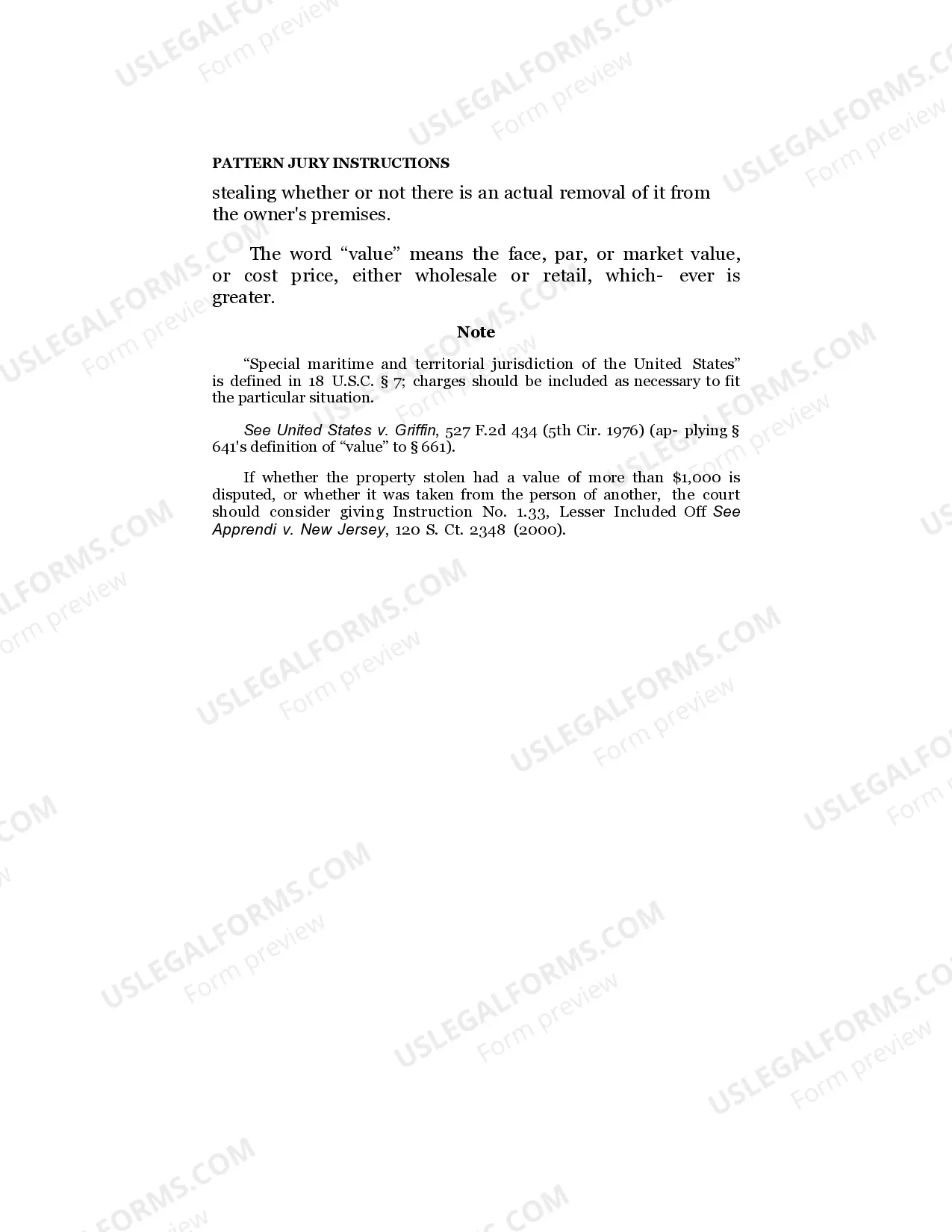
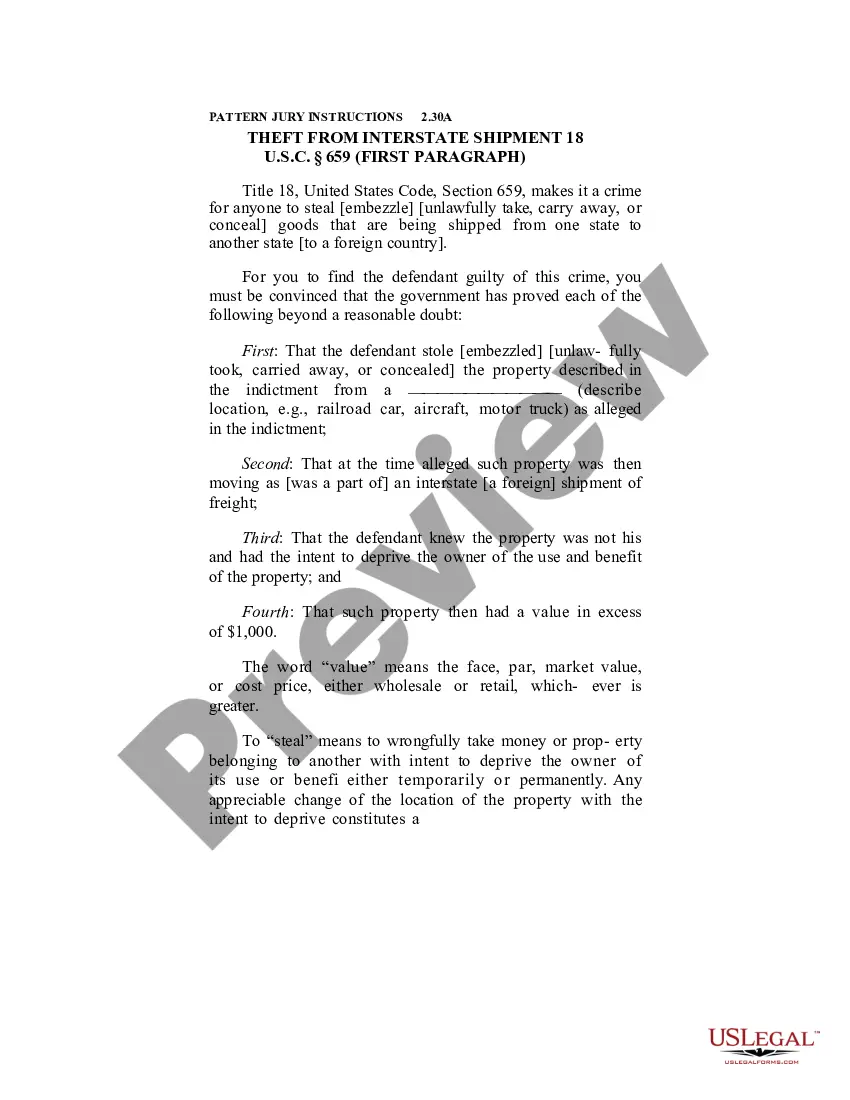
- Value Requirement: The stipulation that the stolen property must exceed a specific value threshold.
- Potential charges: Information about additional charges that may be relevant based on circumstances.
When to use this document
This form is necessary when a theft has taken place within areas defined under federal jurisdiction, such as U.S. naval bases, federal properties, or certain territorial waters. It is used primarily in criminal cases to outline the specifics of the charges against the defendant and is critical during pre-trial processes and jury instructions.
Who should use this form
- Prosecutors preparing to file charges for theft within special maritime and territorial jurisdictions.
- Defense attorneys representing clients accused of such thefts.
- Judges overseeing cases involving theft under this specific jurisdiction.
- Legal aides and clerks involved in the drafting and filing of related court documents.
Completing this form step by step
- Identify the property: Clearly describe the stolen property, including its value and ownership details.
- Determine jurisdiction: Specify the location where the theft occurred, ensuring it fits federal definitions.
- Define intent: Include statements about the defendant's intent to steal the property.
- Gather evidence: Collect supporting documents or testimonies that substantiate the case against the defendant.
- File with appropriate court: Submit the completed form to the designated federal court for processing.
Notarization requirements for this form
Notarization is not commonly needed for this form. However, certain documents or local rules may make it necessary. Our notarization service, powered by Notarize, allows you to finalize it securely online anytime, day or night.
Get your form ready online
Our built-in tools help you complete, sign, share, and store your documents in one place.
Make edits, fill in missing information, and update formatting in US Legal Forms—just like you would in MS Word.
Download a copy, print it, send it by email, or mail it via USPS—whatever works best for your next step.
Sign and collect signatures with our SignNow integration. Send to multiple recipients, set reminders, and more. Go Premium to unlock E-Sign.
If this form requires notarization, complete it online through a secure video call—no need to meet a notary in person or wait for an appointment.
We protect your documents and personal data by following strict security and privacy standards.

Make edits, fill in missing information, and update formatting in US Legal Forms—just like you would in MS Word.

Download a copy, print it, send it by email, or mail it via USPS—whatever works best for your next step.

Sign and collect signatures with our SignNow integration. Send to multiple recipients, set reminders, and more. Go Premium to unlock E-Sign.

If this form requires notarization, complete it online through a secure video call—no need to meet a notary in person or wait for an appointment.

We protect your documents and personal data by following strict security and privacy standards.
Typical mistakes to avoid
- Failing to properly describe the stolen property, leading to ambiguity in the case.
- Neglecting to ensure that jurisdictional definitions are accurately met.
- Overlooking the requirement to establish intent, which is critical for a successful conviction.
Benefits of completing this form online
- Convenience: Downloading the form allows for immediate access and use without waiting for physical copies.
- Editability: Users can easily fill out the necessary fields digitally, facilitating a more organized submission.
- Reliability: Forms are drafted by licensed attorneys, ensuring that they meet legal requirements and standards.
Summary of main points
- Theft Within Special Maritime and Territorial Jurisdiction addresses federal theft cases.
- The form outlines essential elements needed to prove guilt beyond a reasonable doubt.
- It is suitable for use by legal professionals in both prosecution and defense roles.
- Understanding jurisdiction and intent is crucial when filing charges related to this form.
Looking for another form?
Form popularity
FAQ
18 USC 641: Understanding the Components of & Penalties for a Federal Embezzlement Sentence. Embezzlement under U.S. federal law is a white collar crime that involves the theft of money, property, or other things of value.
Title 18, United States Code § 2 now provides: (a) Whoever commits an offense against the United States or aids, abets, counsels, commands, induces or procures its commission, is punishable as a principal.
This restriction and reservation of rights was significant because the statute of conviction, 18 U.S.C. § 641, carries a five year statute of limitations and the government filed charges about four-and-a-half years after the final monthly VA payment was made.
Territorial jurisdiction is the court's power to bind the parties to the action. This law determines the scope of federal and state court power.
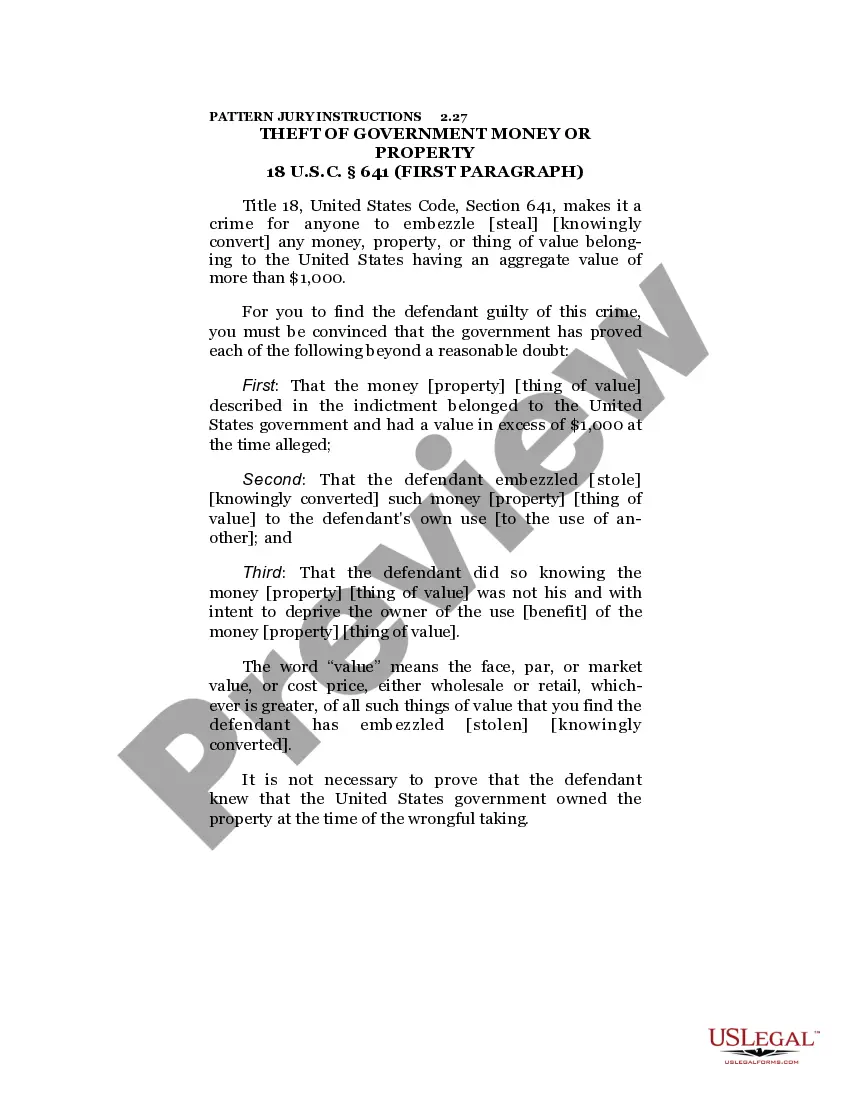
But Section 641 also states that, if the value of the stolen property is $1000 or less, that person shall be fined and imprisoned for no longer than 1 year. The $1000 threshold, therefore, is necessary to make a Section 641 offense into a felony; smaller theft from the government is only a misdemeanor.
Among the offenses within the special maritime and territorial jurisdiction of the United States are the crimes of murder, manslaughter, maiming, kidnapping, rape, assault, and robbery.
Penalties for 18 U.S.C. A violation of Section 641 subjects the defendant to a potential maximum of 10 years in federal prison and a fine, though if the property is valued at less than $1,000, the maximum term of imprisonment decreases to one year plus a fine.