Theft or Embezzlement from Employee Benefit Plan
What is this form?
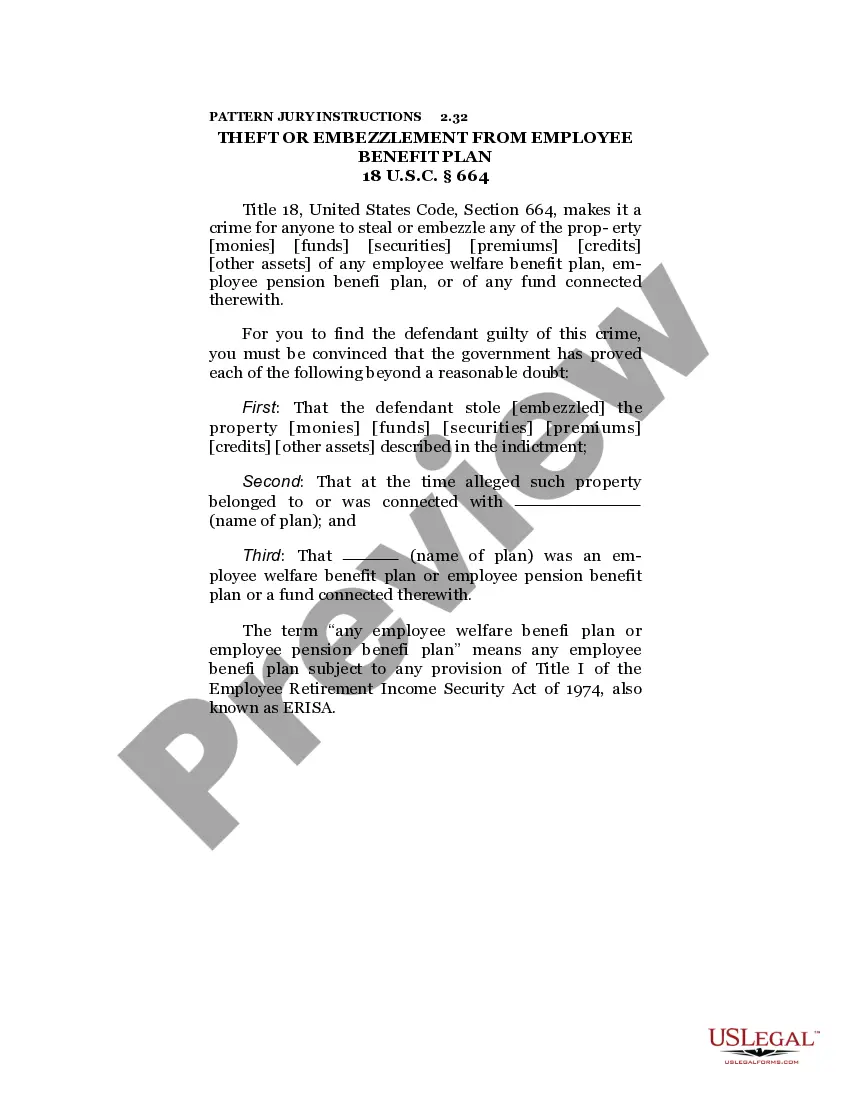
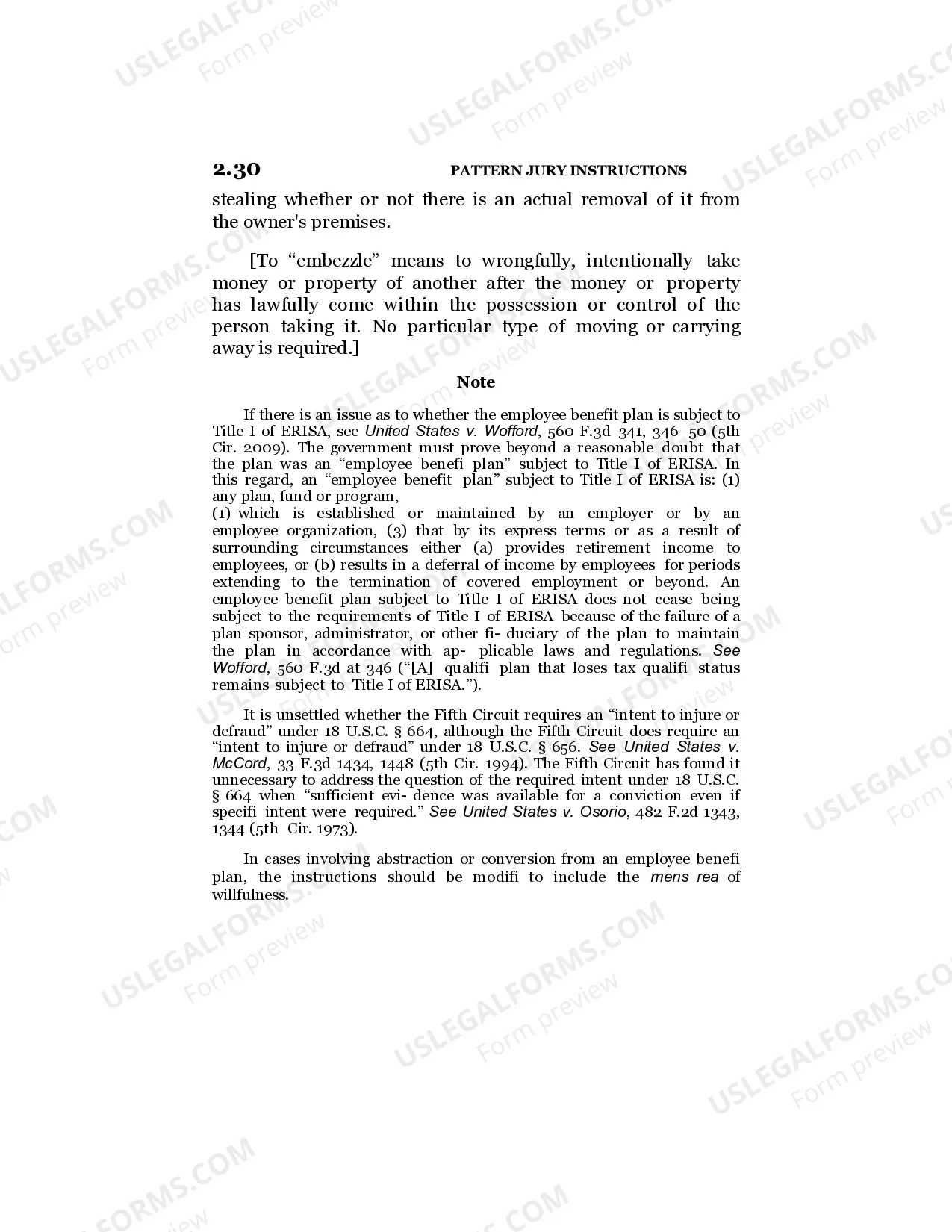
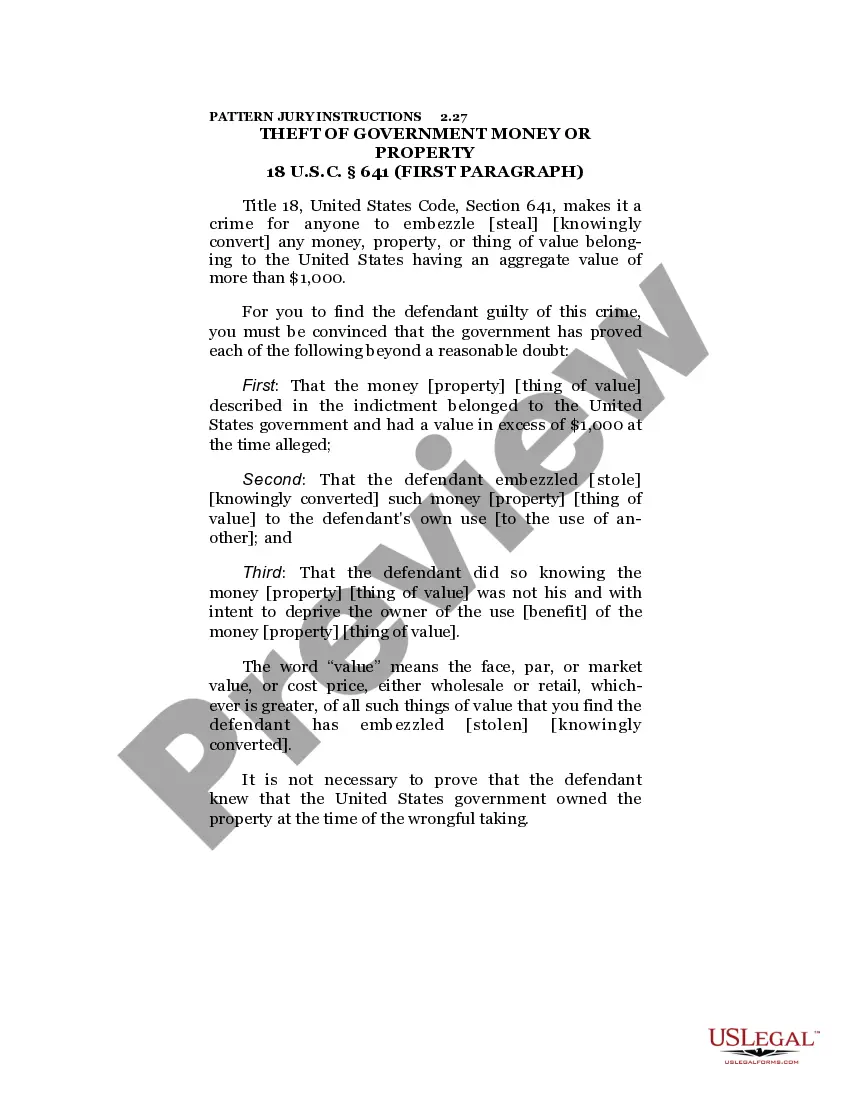
The Theft or Embezzlement from Employee Benefit Plan form is a legal document designed to address situations involving the theft or embezzlement of funds from employee benefit plans, including pension plans. This form outlines the necessary elements that must be proven for a guilty verdict under Title 18, United States Code, Section 664. It is vital for employers and plan administrators to understand their rights and the legal frameworks protecting employee retirement benefits, making it distinct from other financial fraud forms.
Form components explained
- Definition of theft and embezzlement within the context of employee benefit plans.
- Conditions for establishing ownership and connection of the funds involved.
- Clarification of what constitutes an employee welfare benefit plan as per ERISA.
- Burden of proof required for conviction, including intent considerations.
- Information on applicable legal precedents that may influence outcomes.
When to use this form
This form is necessary when there is suspicion or evidence of theft or embezzlement of assets from an employee benefit plan. For instance, employers or plan administrators may seek to utilize this form if they discover that an employee has wrongfully taken money or property from the plan, whether by direct theft or by exploiting their position within the organization. It is an essential tool for initiating legal proceedings in such cases.
Who can use this document
- Employers managing employee benefit plans.
- Administrators of pension or welfare benefit plans.
- Legal representatives dealing with cases of employee theft or embezzlement.
- Individuals who suspect malfeasance within an employee benefit context.
Steps to complete this form
- Title the document appropriately, indicating it is for Theft or Embezzlement from Employee Benefit Plan.
- Identify the defendant involved in the alleged theft or embezzlement.
- Clearly state the name of the employee benefit plan connected with the case.
- Detail the nature of the stolen funds or assets, providing specific descriptions.
- Include relevant dates and signatures of the parties involved.
Does this document require notarization?
Notarization is generally not required for this form. However, certain states or situations might demand it. You can complete notarization online through US Legal Forms, powered by Notarize, using a verified video call available anytime.
Get your form ready online
Our built-in tools help you complete, sign, share, and store your documents in one place.
Make edits, fill in missing information, and update formatting in US Legal Forms—just like you would in MS Word.
Download a copy, print it, send it by email, or mail it via USPS—whatever works best for your next step.
Sign and collect signatures with our SignNow integration. Send to multiple recipients, set reminders, and more. Go Premium to unlock E-Sign.
If this form requires notarization, complete it online through a secure video call—no need to meet a notary in person or wait for an appointment.
We protect your documents and personal data by following strict security and privacy standards.

Make edits, fill in missing information, and update formatting in US Legal Forms—just like you would in MS Word.

Download a copy, print it, send it by email, or mail it via USPS—whatever works best for your next step.

Sign and collect signatures with our SignNow integration. Send to multiple recipients, set reminders, and more. Go Premium to unlock E-Sign.

If this form requires notarization, complete it online through a secure video call—no need to meet a notary in person or wait for an appointment.

We protect your documents and personal data by following strict security and privacy standards.
Typical mistakes to avoid
- Failing to correctly identify the employee benefit plan involved.
- Not providing sufficient evidence or details of the alleged theft or embezzlement.
- Overlooking the requirement for intent to embezzle or defraud.
Benefits of using this form online
- Instant access to professionally drafted legal templates by licensed attorneys.
- Convenient downloading and editing to tailor the form to specific needs.
- Ensured compliance with current legal standards.
Looking for another form?
Form popularity
FAQ
Stealing cash and the misuse of corporate credit cards for personal purchases are the most common forms of embezzlement. In addition, some embezzlers use technology to tweak computer systems, allowing them to perform unauthorized transactions.
EMBEZZLEMENT: Embezzlement is when your employee who is entrusted with your business property, takes and converts business property for their own use. Your employee's job description with a descriptive list of duties and responsibilities is essential to establish this crime.
To prove embezzlement, a prosecutor must prove beyond a reasonable doubt to a moral certainty that the defendant had a specific intent to defraud the victim of property entrusted to the defendant through the fiduciary relationship. The defendant must have actually intended to deprive the victim of the property.
Embezzlement is a specific type of white-collar theft crime. Embezzlement occurs when an employee steals from their employer. This could be money, property, or anything the employee takes without authorization.
EMBEZZLEMENT: Embezzlement is when your employee who is entrusted with your business property, takes and converts business property for their own use. Your employee's job description with a descriptive list of duties and responsibilities is essential to establish this crime.
Any person who embezzles, steals, or unlawfully and willfully abstracts or converts to his own use or to the use of another, any of the moneys, funds, securities, premiums, credits, property, or other assets of any employee welfare benefit plan or employee pension benefit plan, or of any fund connected therewith, shall
Common Examples of Embezzlement and Employee Theft Voiding Transactions at the Cash Register.Pocketing Cash Payments from Fundraisers.Cashing Customer Checks.Overbilling Customers.Forging Payments.Faking Vendor Payments.Stealing Customer Credit Card Data.Double Dipping.