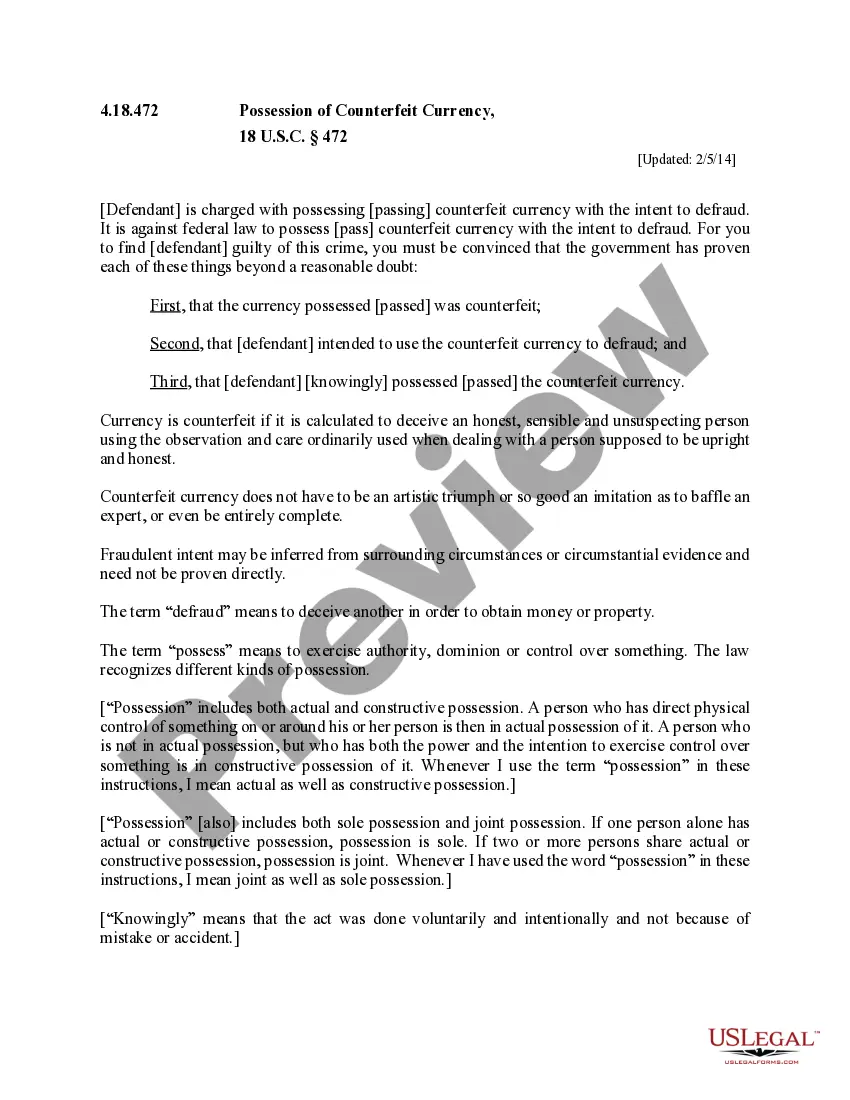
Possession of False Document with Intent to Defraud United States
Overview of this form
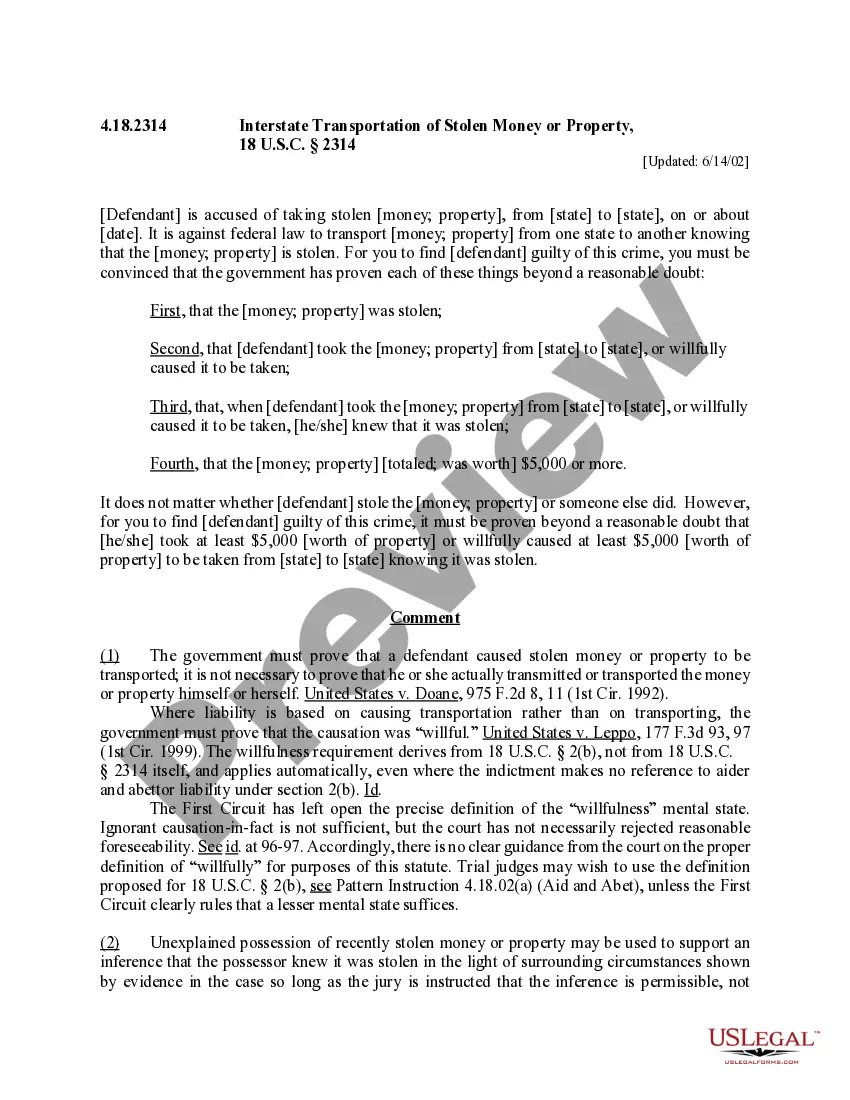
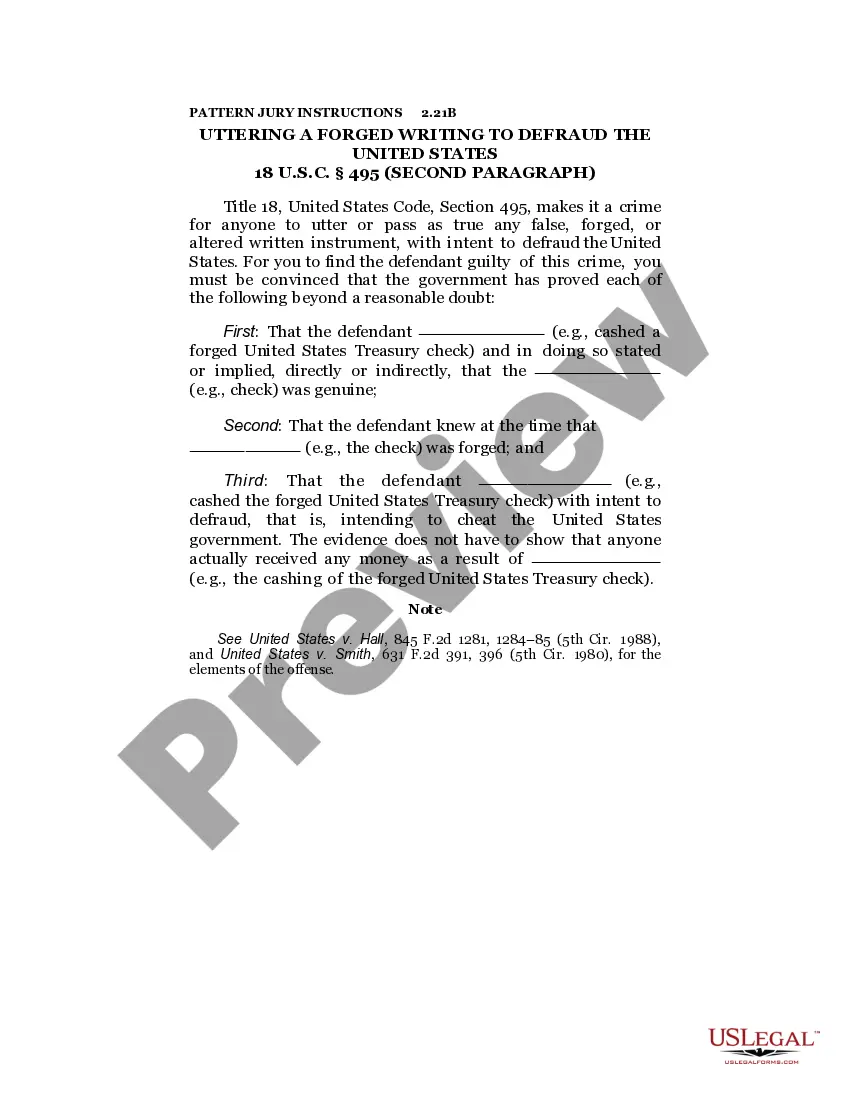
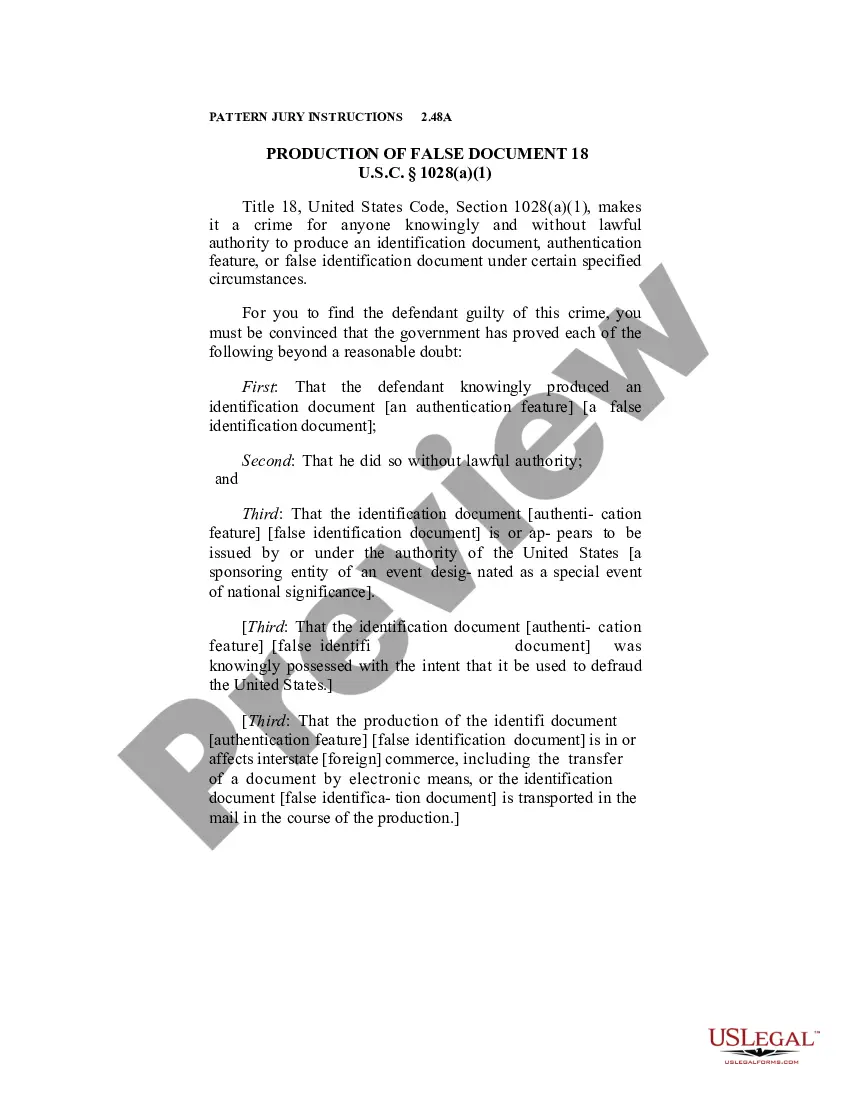
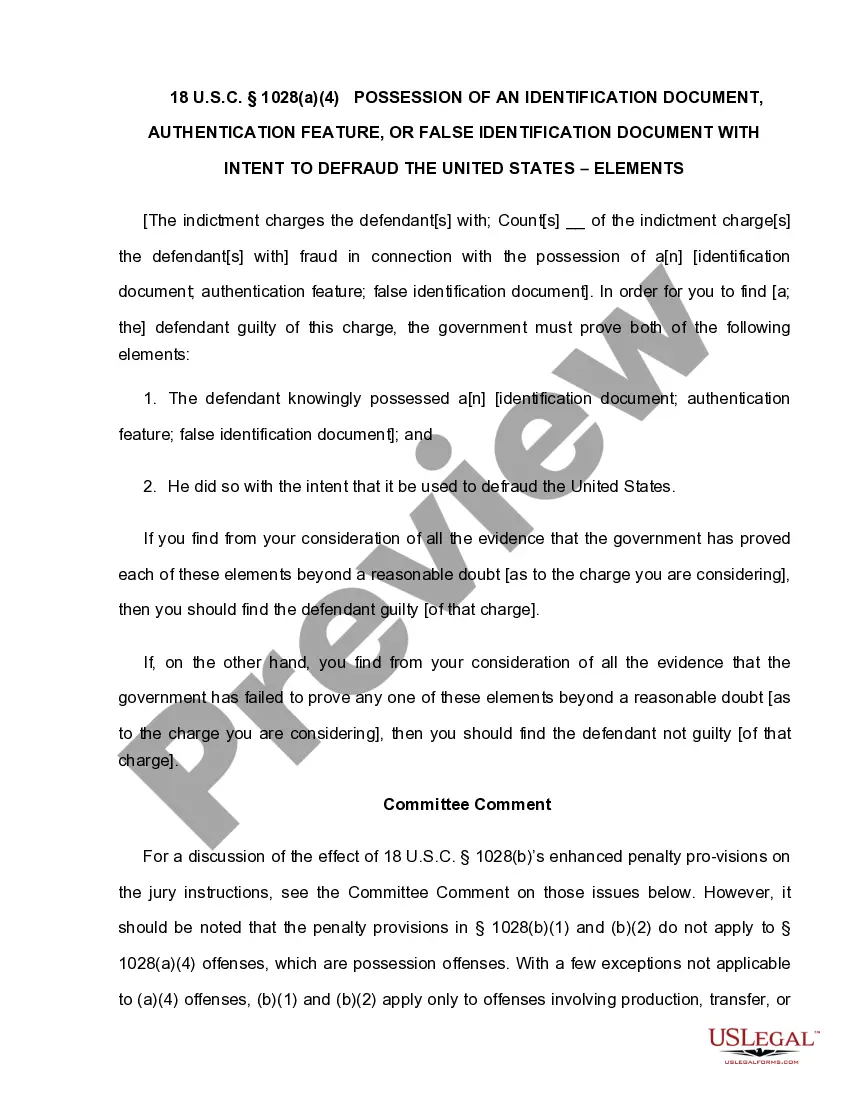
The Possession of False Document with Intent to Defraud United States form is a legal document that outlines the elements of a federal crime involving fraudulent identification documents. It details the specific actions that constitute the crime under Title 18, United States Code, Section 1028(a)(4). This form differs from other legal forms in that it specifically addresses the possession and intent to use false identification for defrauding governmental authorities, which carries significant legal implications.
Main sections of this form
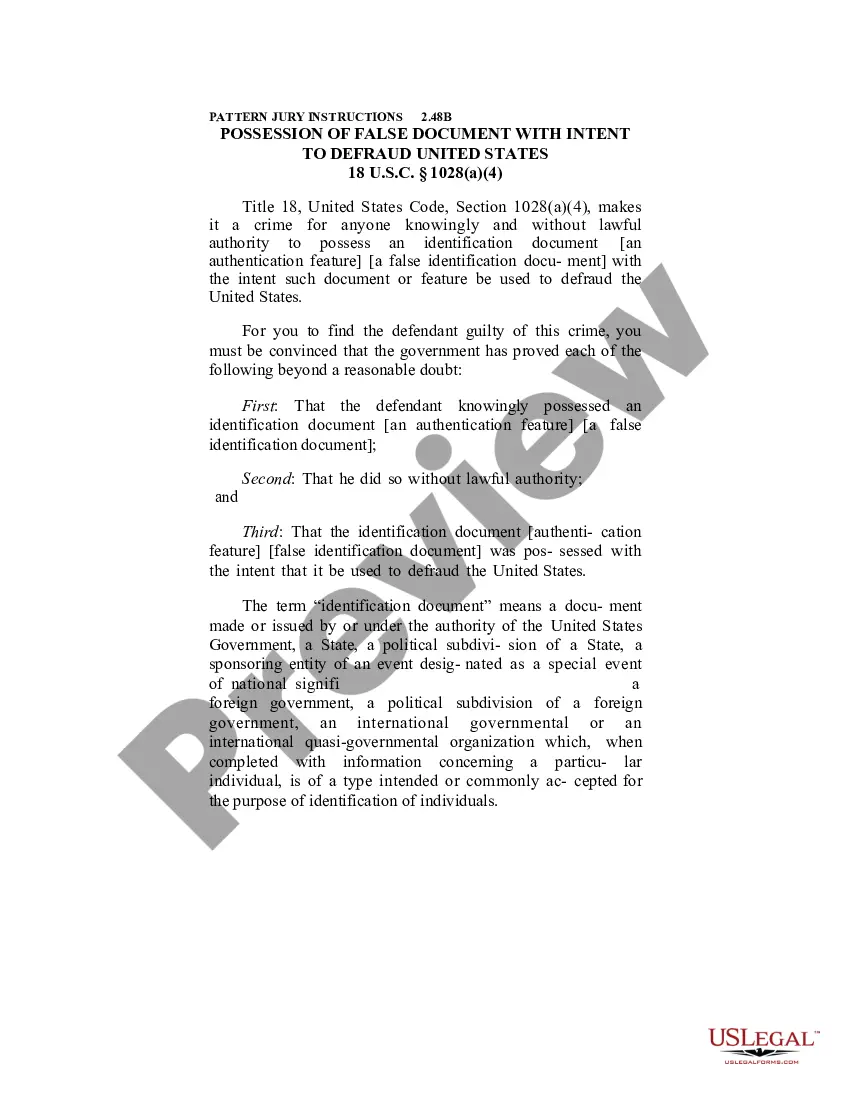
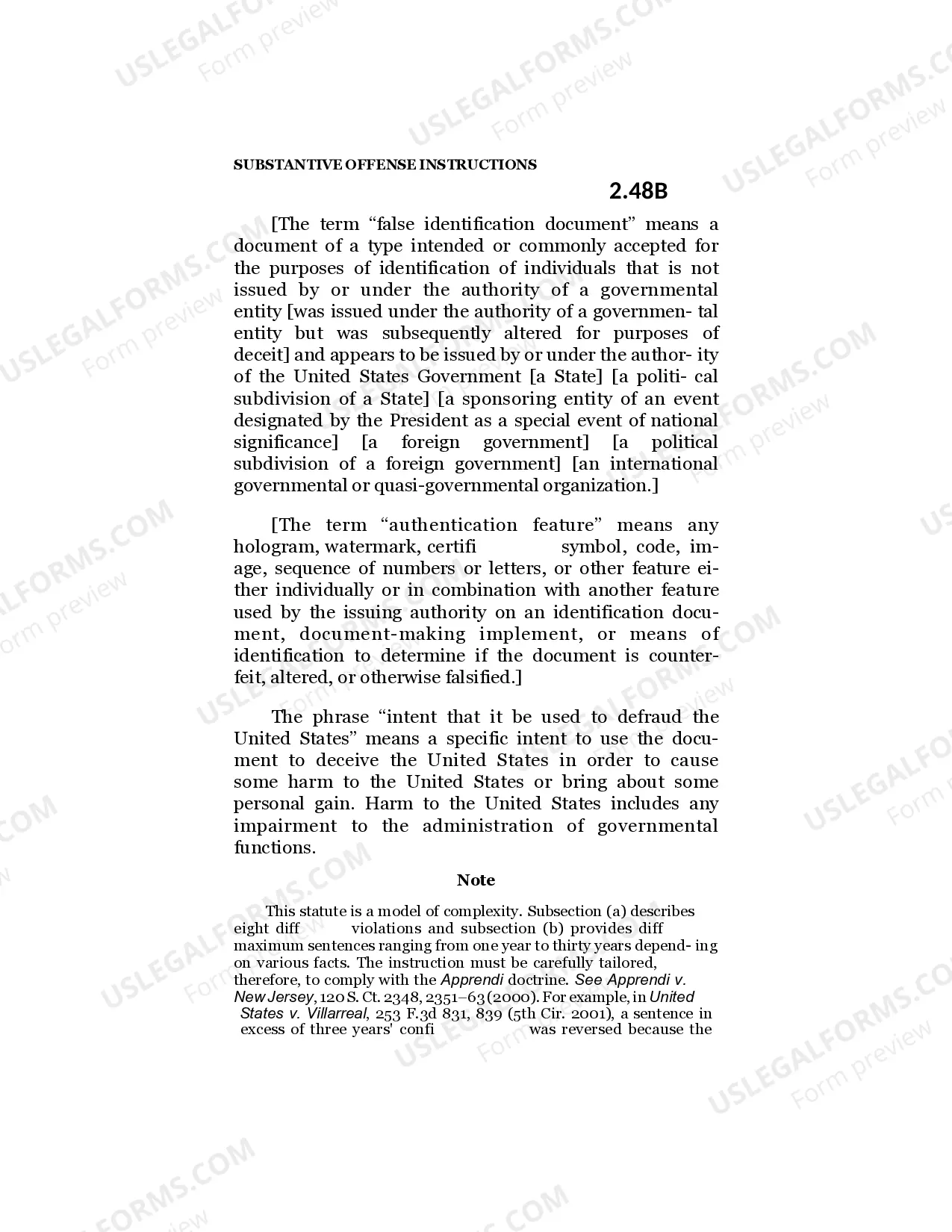
- Definition of identification document and its authenticity features
- Clarification of what constitutes a false identification document
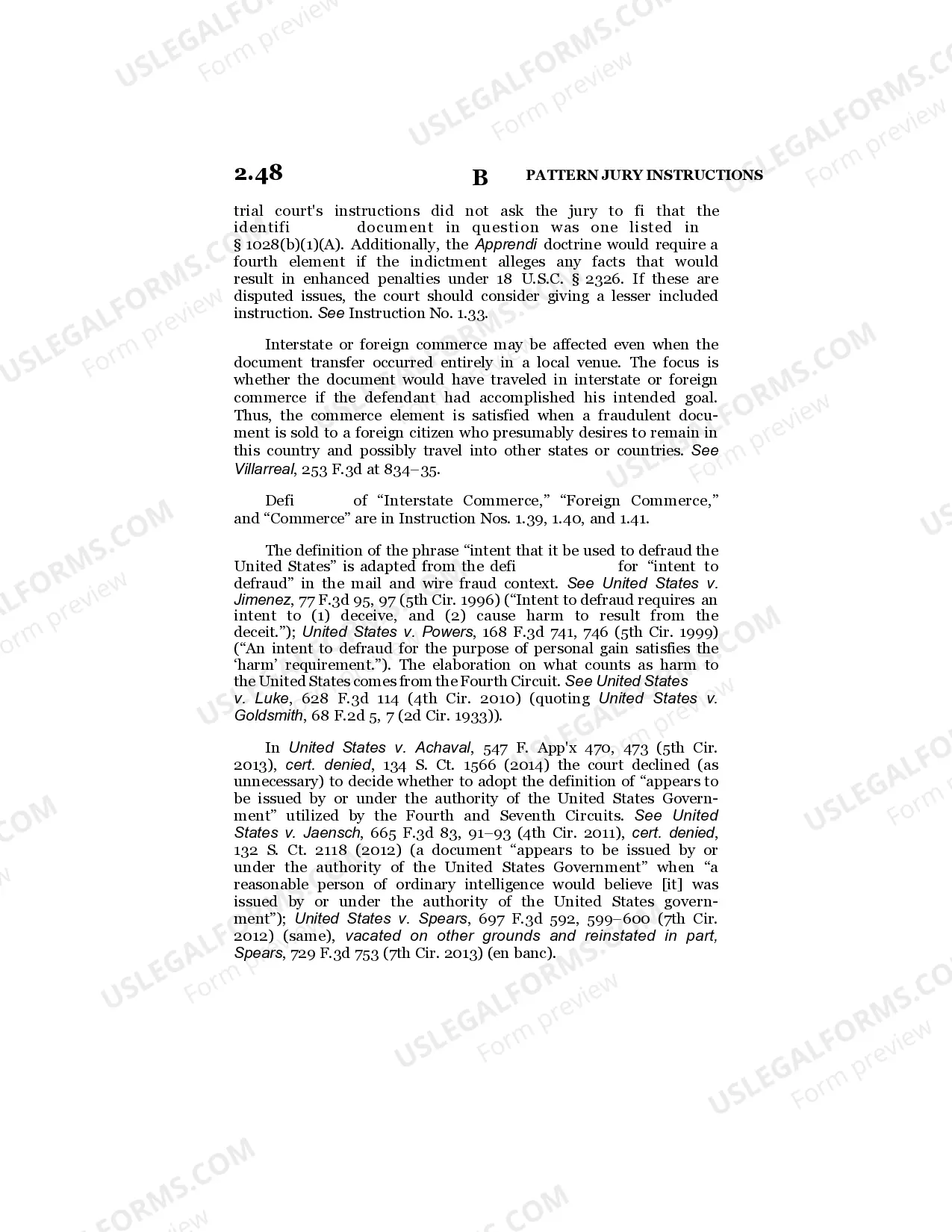
- Description of the intent needed to defraud the United States
- Elements required to prove guilt beyond a reasonable doubt
- Explanation of potential penalties for violations
Situations where this form applies
This form should be used in situations where an individual is charged or accused of possessing a false identification document with the intent to deceive and defraud the United States. It is applicable in federal cases involving various forms of identity fraud, including but not limited to immigration fraud, bank fraud, or other financial scams targeting governmental agencies.
Who this form is for
This form is intended for individuals involved in legal proceedings related to identity fraud. Specifically, it is applicable to:
- Defendants facing charges under 18 U.S.C. 1028(a)(4)
- Legal representatives and attorneys defending clients against these charges
- Individuals who need to understand the legal framework surrounding identification fraud
Completing this form step by step
- Read the definitions of identification and false identification documents carefully.
- Assess the evidence that supports the claim of possession without lawful authority.
- Establish the intent to defraud the United States based on the specific criteria outlined.
- Compile documentation or statements that may support your defense or case related to the charges.
- Consult with an attorney to ensure compliance and usability of the form in your situation.
Notarization guidance
This form does not typically require notarization to be legally valid. However, some jurisdictions or document types may still require it. US Legal Forms provides secure online notarization powered by Notarize, available 24/7 for added convenience.
Get your form ready online
Our built-in tools help you complete, sign, share, and store your documents in one place.
Make edits, fill in missing information, and update formatting in US Legal Forms—just like you would in MS Word.
Download a copy, print it, send it by email, or mail it via USPS—whatever works best for your next step.
Sign and collect signatures with our SignNow integration. Send to multiple recipients, set reminders, and more. Go Premium to unlock E-Sign.
If this form requires notarization, complete it online through a secure video call—no need to meet a notary in person or wait for an appointment.
We protect your documents and personal data by following strict security and privacy standards.

Make edits, fill in missing information, and update formatting in US Legal Forms—just like you would in MS Word.

Download a copy, print it, send it by email, or mail it via USPS—whatever works best for your next step.

Sign and collect signatures with our SignNow integration. Send to multiple recipients, set reminders, and more. Go Premium to unlock E-Sign.

If this form requires notarization, complete it online through a secure video call—no need to meet a notary in person or wait for an appointment.

We protect your documents and personal data by following strict security and privacy standards.
Common mistakes
- Failing to grasp the definitions of key terms like "identification document" and "false identification document."
- Ignoring the requirement for proving intent beyond a reasonable doubt.
- Not consulting legal counsel before using the form, potentially leading to incomplete or inaccurate submissions.
Benefits of using this form online
- Convenience of accessing and downloading the form from any location at any time.
- Editability allows you to customize the content according to your specific situation.
- Reliability of professionally drafted content ensuring legal compliance.
Legal use & context
- The form is rooted in federal law and is critical for understanding your rights and obligations regarding identity documentation.
- Usage may vary based on individual circumstances and jurisdictional variations in legal statutes.
- It is crucial to ensure all elements of the crime are addressed in any legal defense or submission related to this form.
Looking for another form?
Form popularity
FAQ
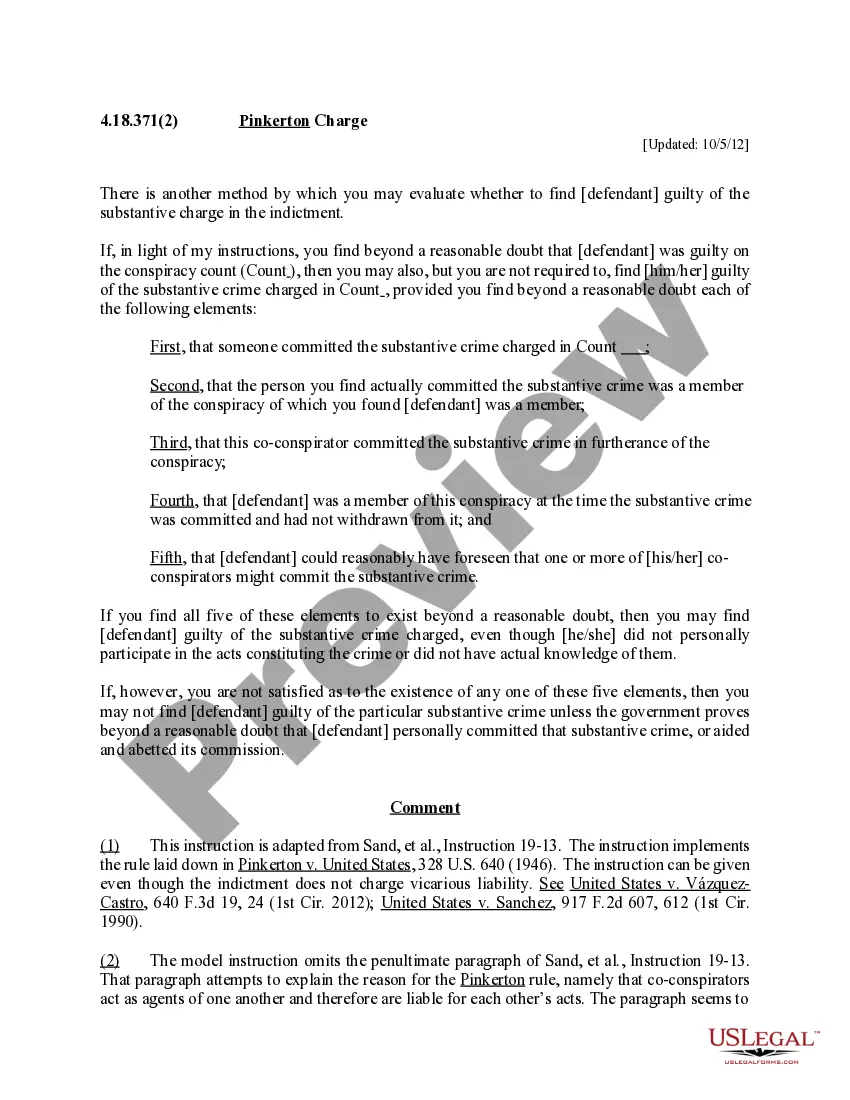
Title 18, United States Code § 2 now provides: (a) Whoever commits an offense against the United States or aids, abets, counsels, commands, induces or procures its commission, is punishable as a principal.
Producing without lawful authority an identification document or a false identification document (18 U.S.C. § 1028(a)(1)); Transferring an identification document or a false identification document knowing that such document was stolen or produced without lawful authority (18 U.S.C. § 1028(a)(2));
Section 1014 of Title 18, United States Code, covers the knowing making of false statements or willfully overvaluing any property or security for the purpose of influencing in any way the action of the enumerated agencies and organizations.
Section 1010, Title 18, of the U.S.C., "H.U.D. Transactions", makes it a criminal offense to make a willful false statement or misrepresentation to any Department or Agency of the United States as to any matter within its jurisdiction.
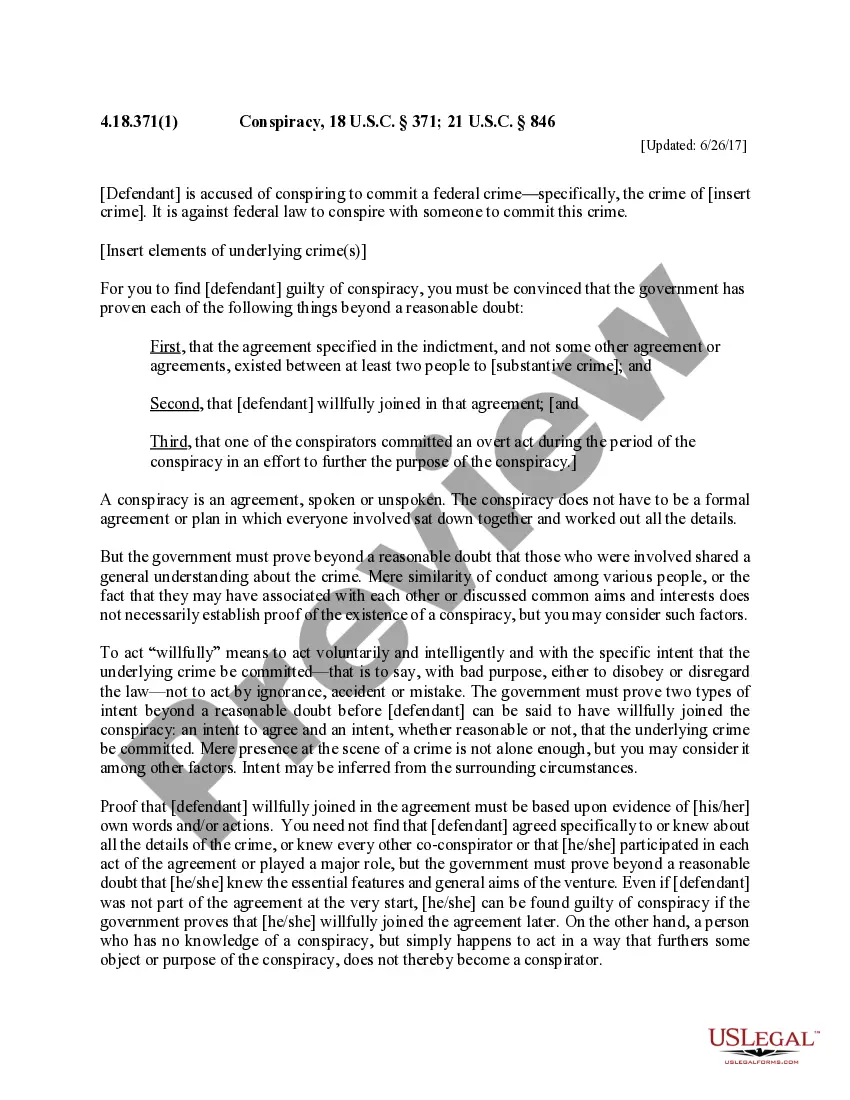
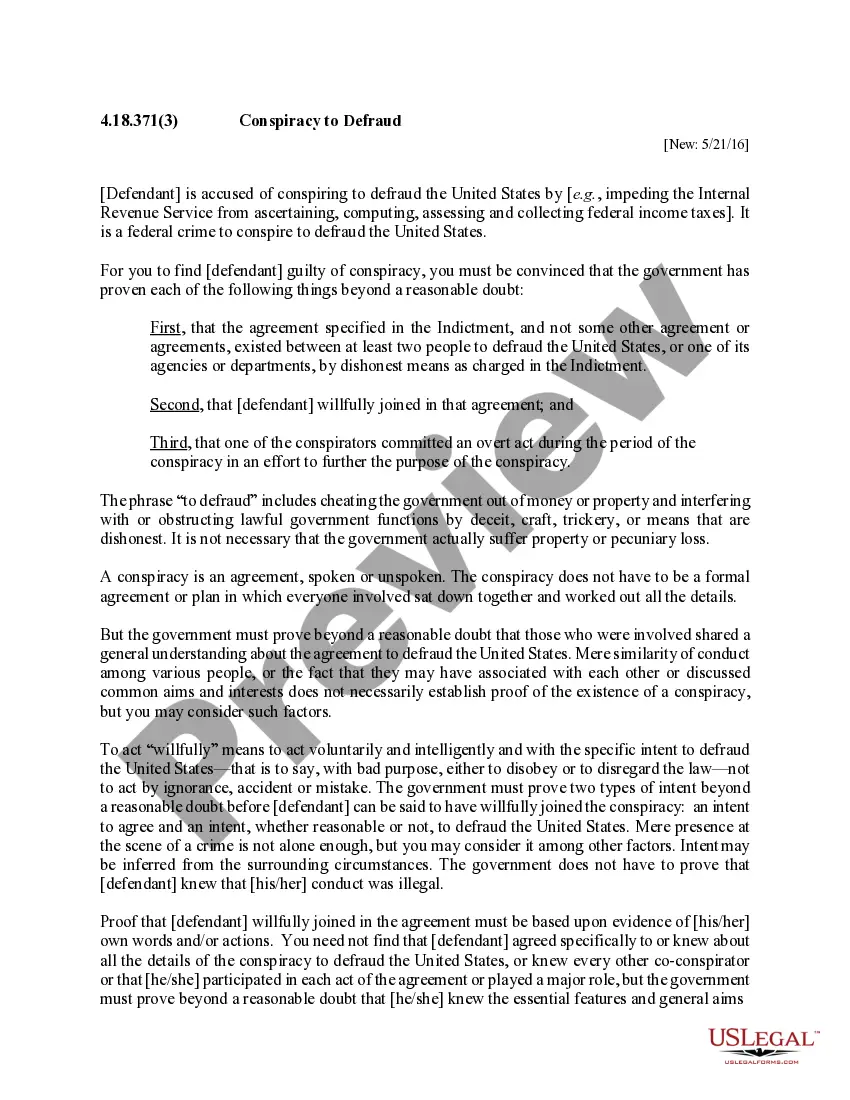
As a felony, violation of 18 U.S.C. § 371 carries a fine or imprisonment for up to five years. However, if the offense which is the subject of the conspiracy is charged as a misdemeanor, the punishment for the conspiracy cannot exceed the maximum punishment for the misdemeanor.
18 U.S.C.A. §1040 is the federal statute that criminalizes fraud and false statements in connection with benefits offered in response to a presidentially declared national emergency.
Section 1506 prohibits the theft, alteration or falsification of any record or process in any court of the United States. Both of these sections are punishable by a $5,000 fine or imprisonment for five years.