Obstrucing Administration of Justice by Threats or Force
What this document covers
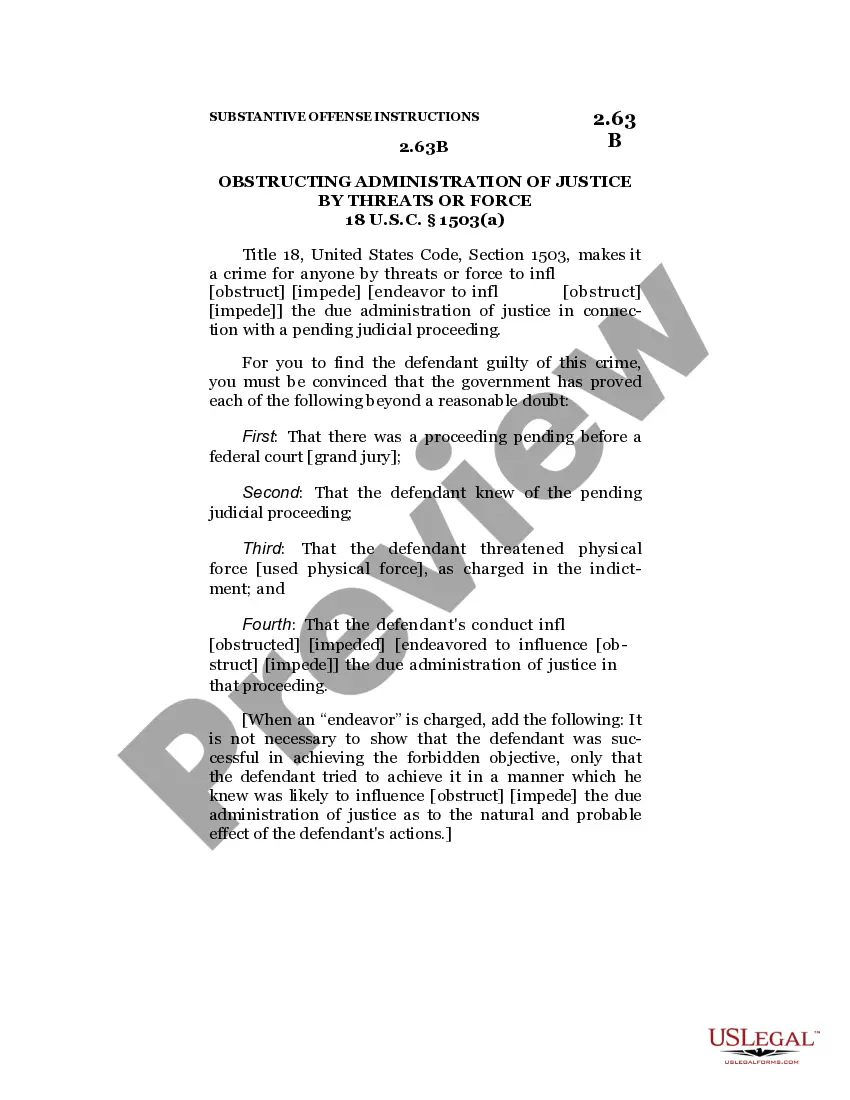
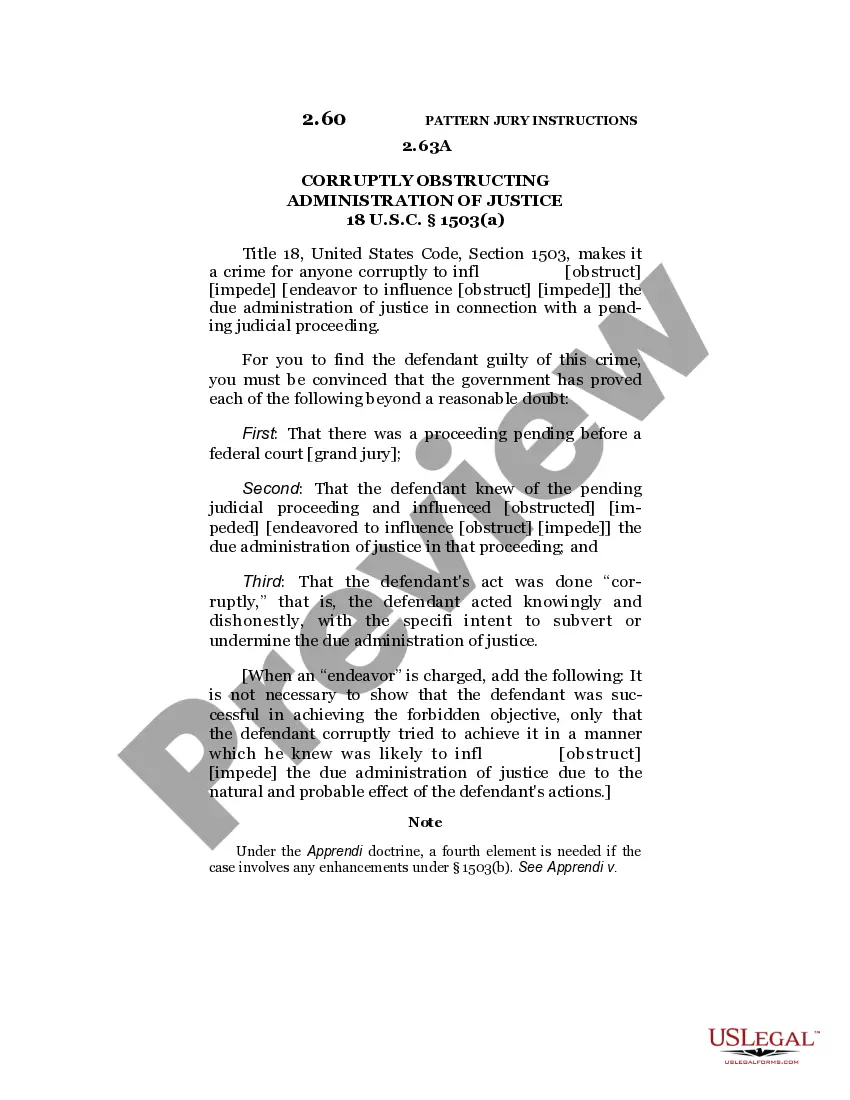
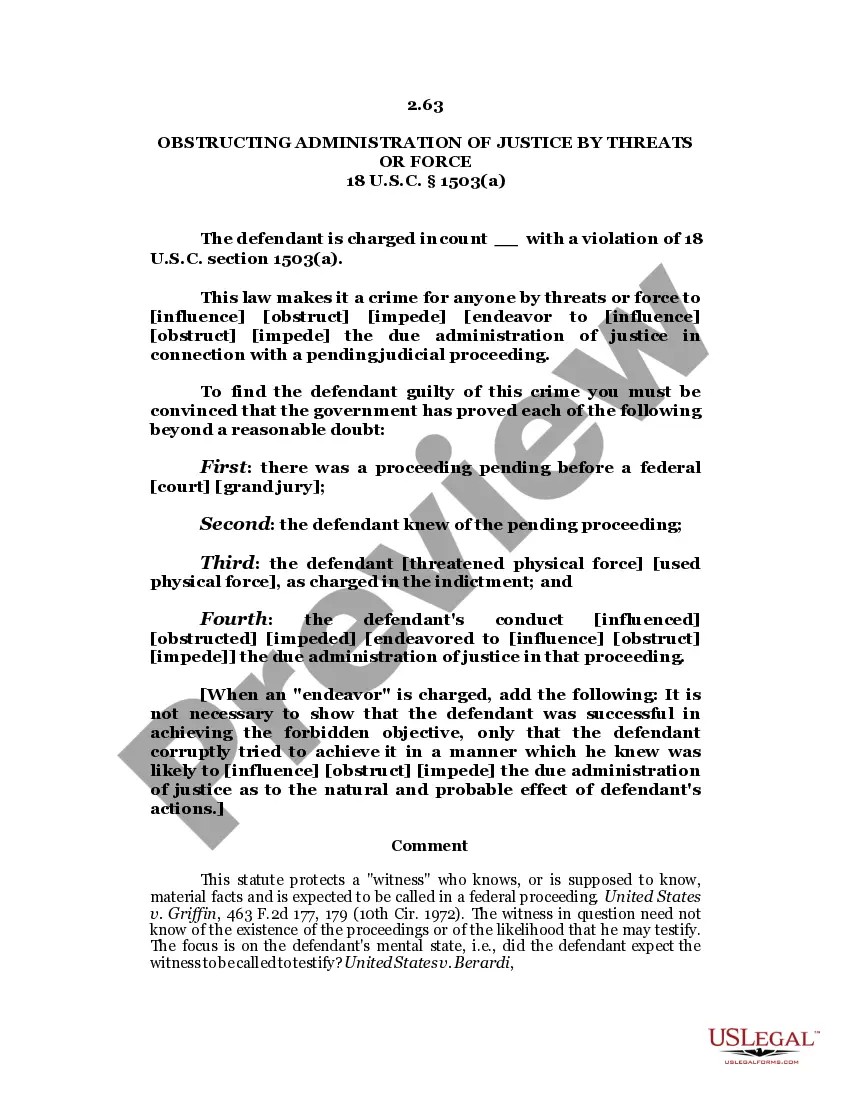
The Obstructing Administration of Justice by Threats or Force form is a legal document used to address actions that interfere with the judicial process through threats or physical force. It is based on Title 18, United States Code, Section 1503, which outlines the nature of the offense and the necessary conditions for prosecution. This form is specifically tailored to outline the crimes related to obstructing justice, distinguishing it from other legal documents that may pertain to similar offenses without the focus on threats or force.
Key components of this form
- Description of the crime under 18 U.S.C. 1503(a).
- Elements required to establish guilt, including knowledge of a proceeding and use of threats or force.
- Clarification on the necessity of a successful influence or obstruction of justice.
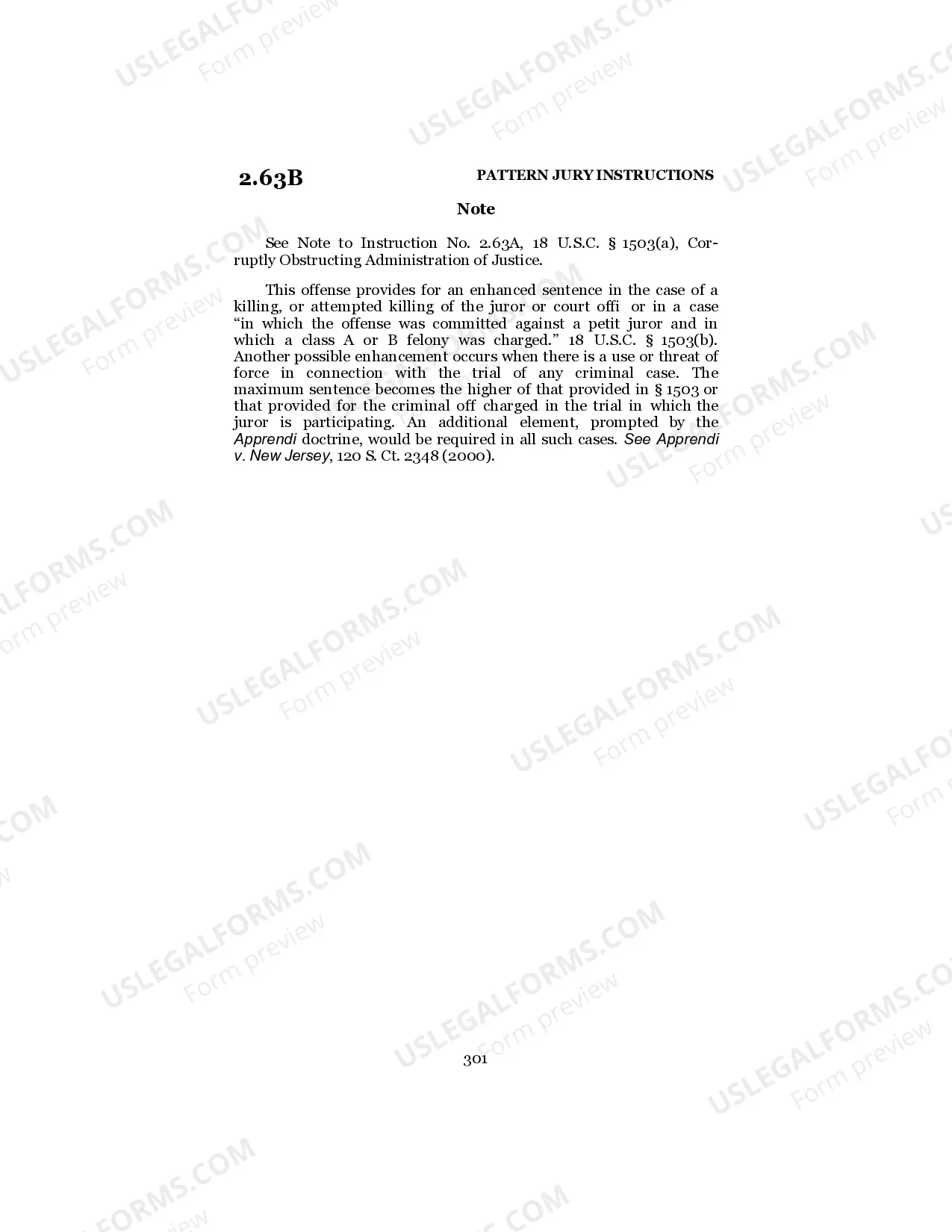
- Potential legal enhancements based on the severity of the offense.
- Instructions on how the conduct may affect sentencing.
Common use cases
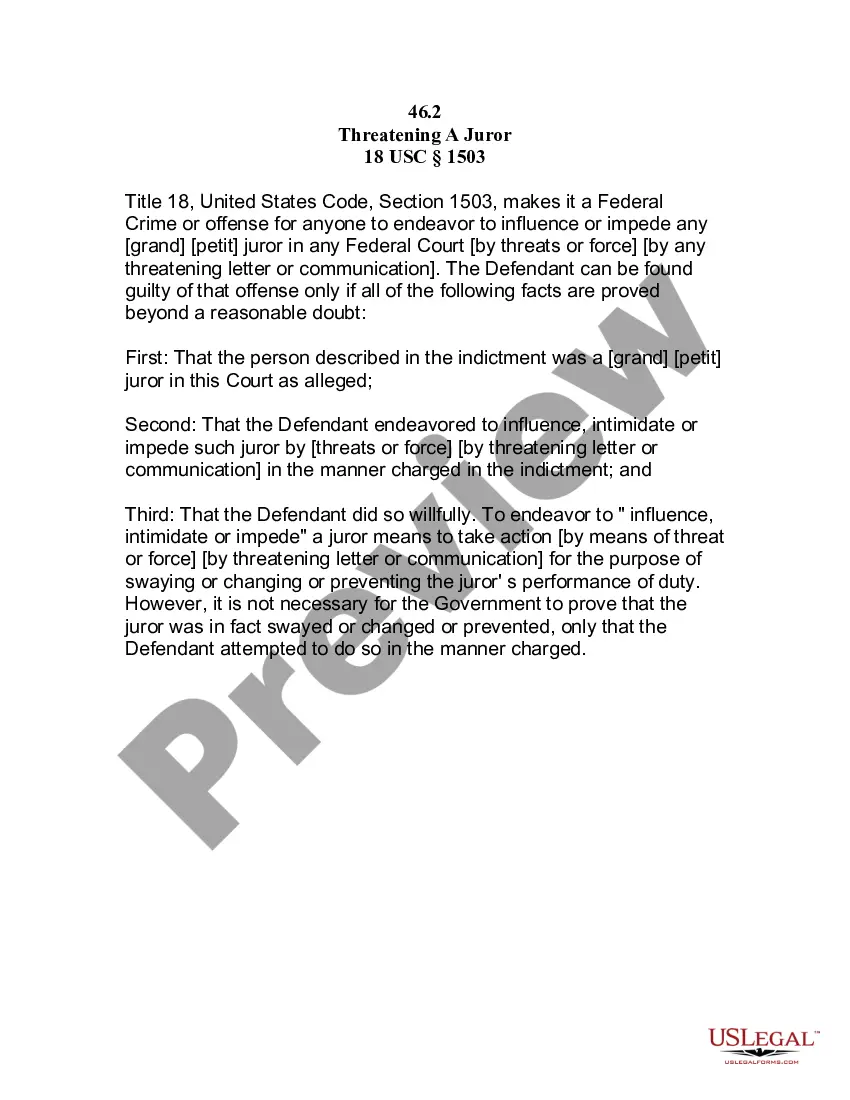
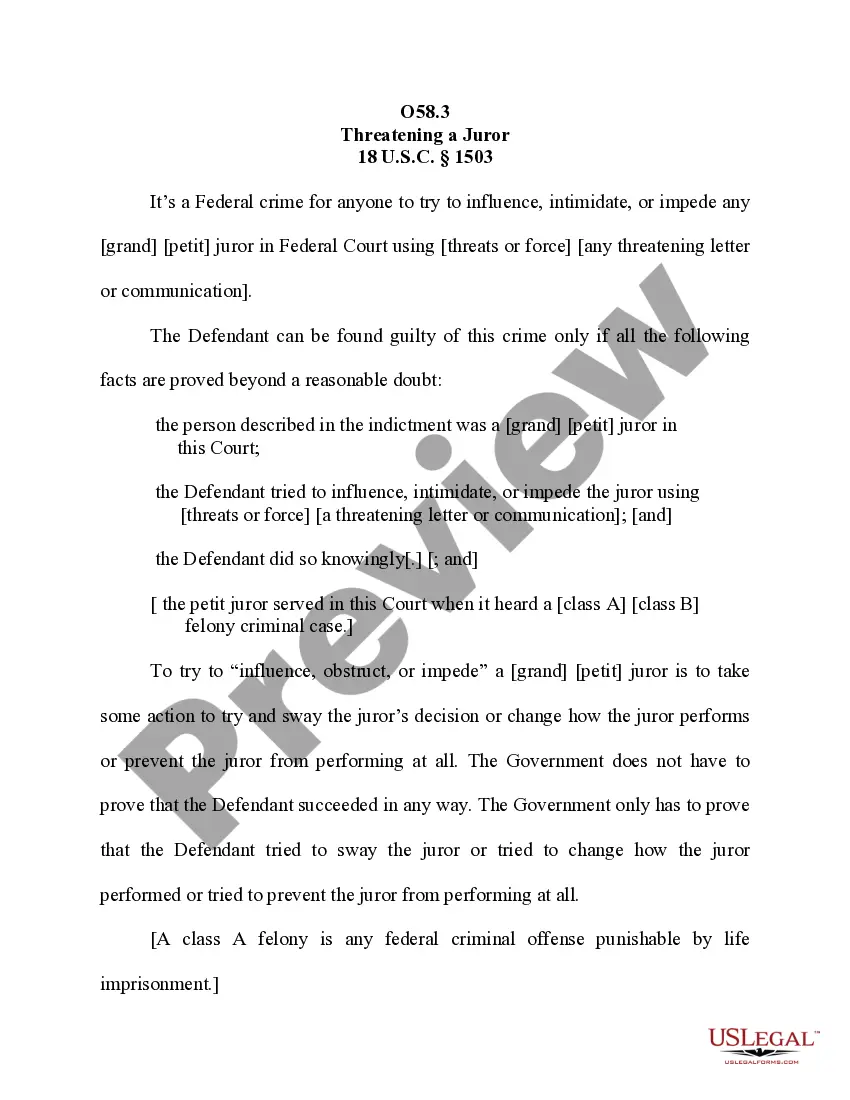
This form is used when an individual is accused of obstructing justice through intimidation or force in a pending judicial proceeding. Scenarios may include instances where a person threatens jurors, witnesses, or law enforcement officials to prevent or influence legal outcomes. It is crucial to document such behavior accurately for legal proceedings.
Who should use this form
- Legal professionals involved in a case of obstructing justice.
- Individuals facing allegations of threatening behavior related to judicial proceedings.
- Prosecutors or defense attorneys seeking to establish the elements of the crime.
- Law enforcement officials documenting related incidents.
Steps to complete this form
- Identify the parties involved in the proceeding, including the defendant and any affected jurors or officials.
- Document the specifics of the pending judicial proceeding, including case numbers and dates.
- Detail the actions taken by the defendant, noting any threats or use of force.
- Provide evidence supporting the claim of obstruction, including witness statements if applicable.
- Include any relevant legal precedents or statutes that pertain to the case.
Notarization requirements for this form
Notarization is not commonly needed for this form. However, certain documents or local rules may make it necessary. Our notarization service, powered by Notarize, allows you to finalize it securely online anytime, day or night.
Get your form ready online
Our built-in tools help you complete, sign, share, and store your documents in one place.
Make edits, fill in missing information, and update formatting in US Legal Forms—just like you would in MS Word.
Download a copy, print it, send it by email, or mail it via USPS—whatever works best for your next step.
Sign and collect signatures with our SignNow integration. Send to multiple recipients, set reminders, and more. Go Premium to unlock E-Sign.
If this form requires notarization, complete it online through a secure video call—no need to meet a notary in person or wait for an appointment.
We protect your documents and personal data by following strict security and privacy standards.

Make edits, fill in missing information, and update formatting in US Legal Forms—just like you would in MS Word.

Download a copy, print it, send it by email, or mail it via USPS—whatever works best for your next step.

Sign and collect signatures with our SignNow integration. Send to multiple recipients, set reminders, and more. Go Premium to unlock E-Sign.

If this form requires notarization, complete it online through a secure video call—no need to meet a notary in person or wait for an appointment.

We protect your documents and personal data by following strict security and privacy standards.
Common mistakes
- Failing to clearly identify the judicial proceeding involved.
- Not providing sufficient evidence of the defendant's knowledge of the proceeding.
- Neglecting to detail the nature of the threats or actions taken.
- Forgetting to include relevant legal references that support the claims.
Why complete this form online
- Convenient access to legal documents at any time.
- Easy to download and fill out, allowing for quick customization.
- Reliable templates drafted by licensed attorneys for accuracy.
- Ability to save progress and edit documents as needed.
Legal use & context
- This form is used to establish the legal standing of accusations related to obstructing justice.
- It provides a framework for potential prosecution under federal law.
- Understanding the elements of the crime is essential for proper legal representation and defense.
Quick recap
- The form details the legal implications of obstructing justice by threats or force.
- It is vital for legal professionals handling cases of obstruction to use this form accurately.
- Completing the form correctly can significantly impact the outcome of a case.
Looking for another form?
Form popularity
FAQ
The most common forms of obstruction of justice are witness tampering, perjury, and destroying evidence during the course of a government case. Obstruction of justice is a criminal offense under both federal and state law for which thousands of people go to prison every year.
Obstruction of justice, in United States jurisdictions, is an act that involves unduly influencing, impeding, or otherwise interfering with the justice system, especially the legal and procedural tasks of prosecutors, investigators, or other government officials.
While varying greatly, each obstruction of justice statute typically requires proof that the defendant 1) knew of a government proceeding and 2) acted with the intent to interfere with the proceeding.
Misleading or lying to investigators is a typical example of federal obstruction of justice. Bribing a government official, destroying evidence, or giving a false alibi to protect a friend or family member are also classic examples of obstruction of justice.
Federal Obstruction of Justice Witness tampering, bribing juries, and destroying evidence are examples of obstructions at the federal level. Anyone who tampers with evidence with the intent to obstruct justice in a federal court case may face upwards of 20 years in prison.
(2) destroy, impede, or attempt to obstruct or impede the administration of justice in any court. (B) A person who violates the provisions of subsection (A) is guilty of a felony and, upon conviction, must be fined not more than ten thousand dollars or imprisoned not more than ten years, or both. HISTORY: 1980 Act No.
Obstruction of justice often involves the interference of a law enforcement investigation in which suspects attempt to conceal or destroy evidence, or they refuse to cooperative with law enforcement officers.
Every day in central Ohio people face obstruction charges like obstruction of official business and/or obstruction of justice. Depending on the charge, penalties can range from a second degree misdemeanor, punishable by up to 90 days in jail to a second-degree felony punishable by up to 8 years in prison.