Violent Crimes in Aid of Racketeering
Overview of this form
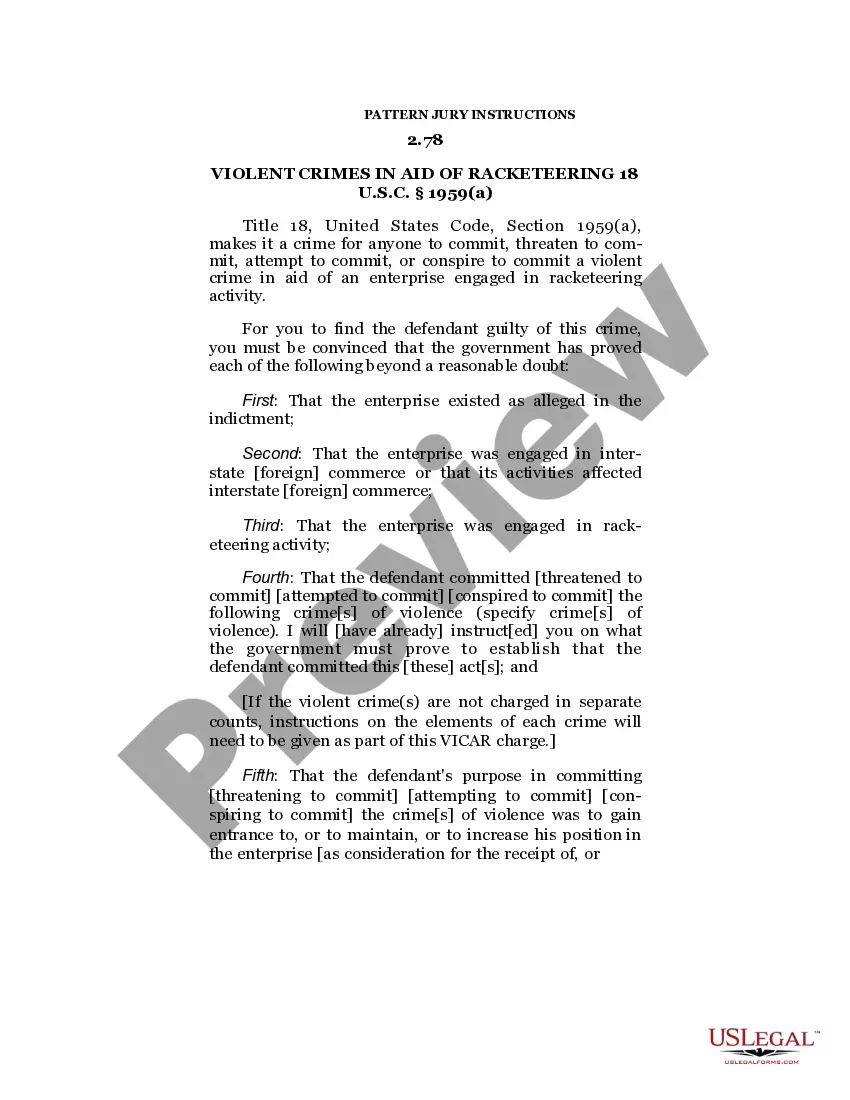
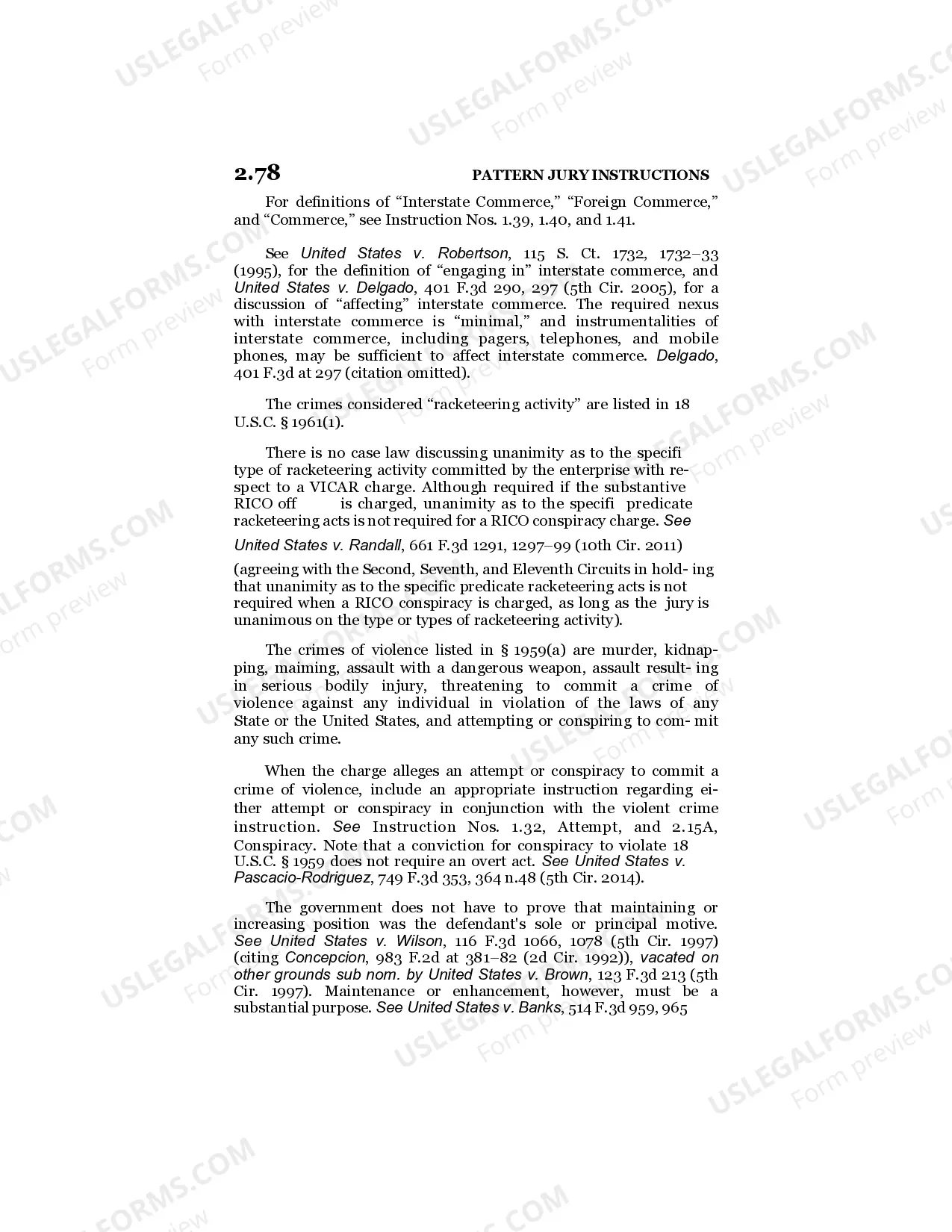
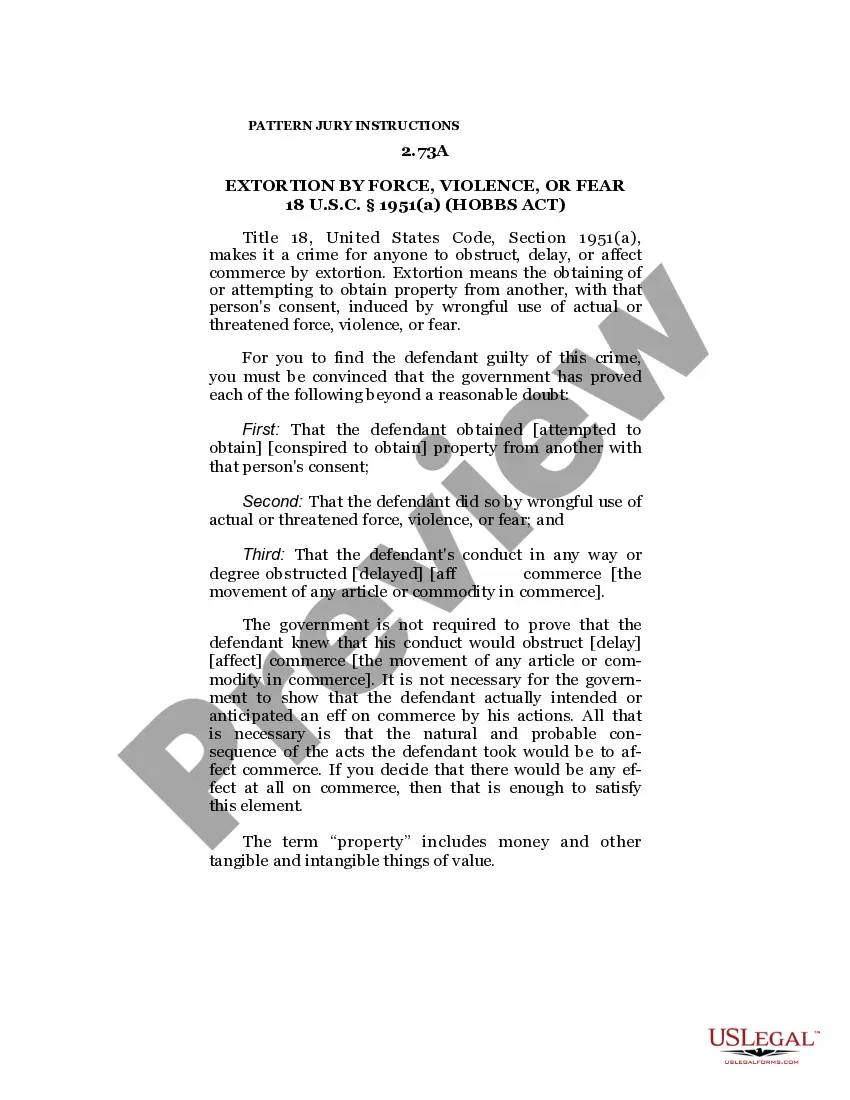
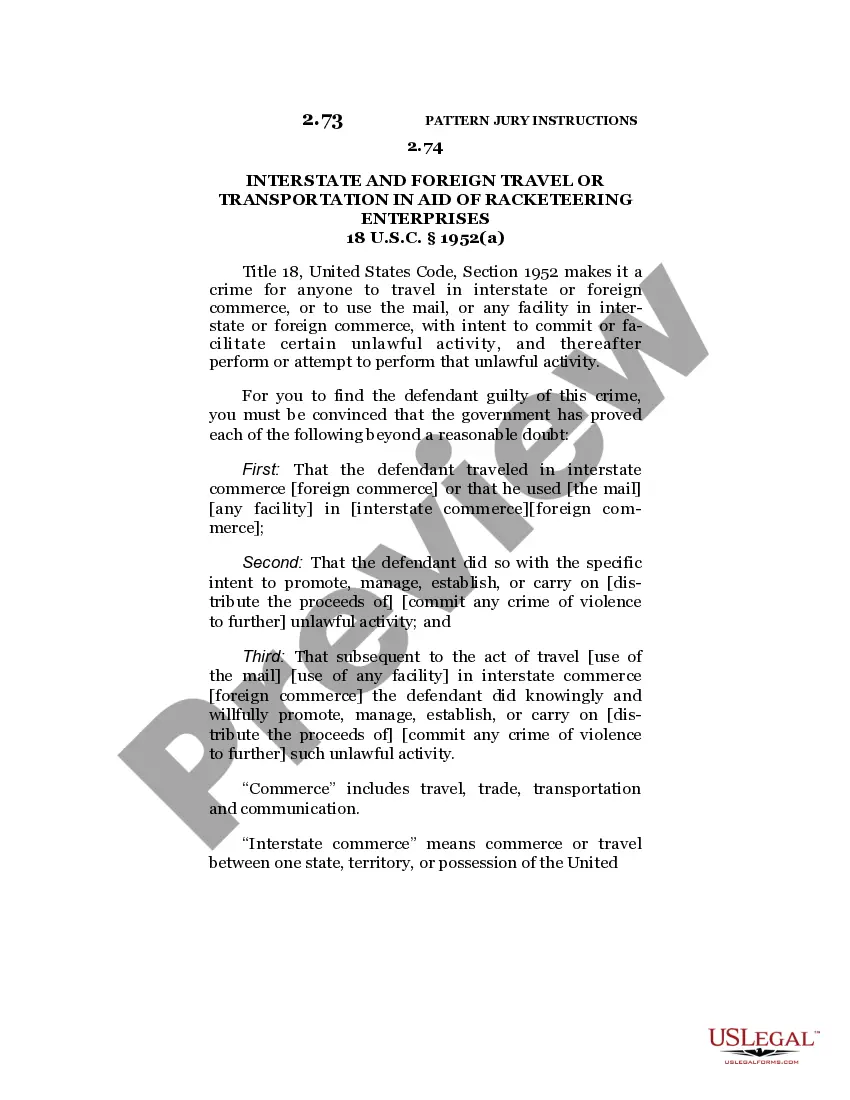
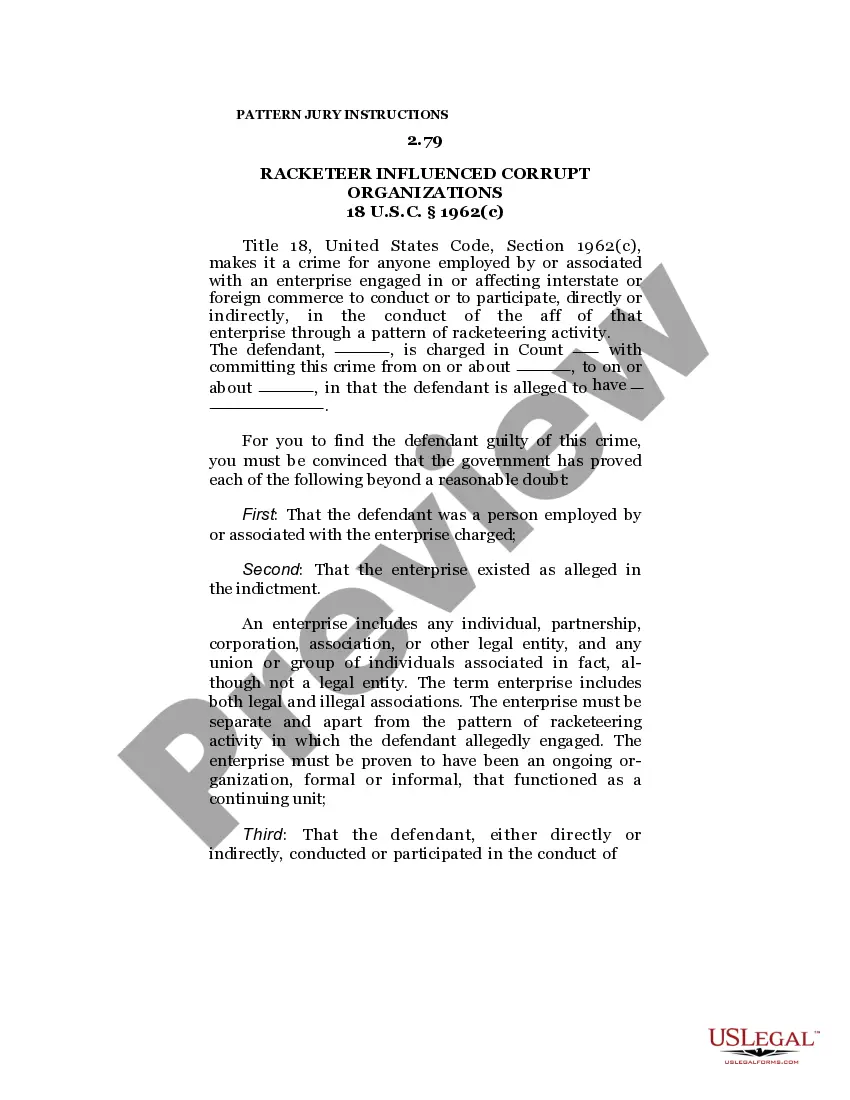
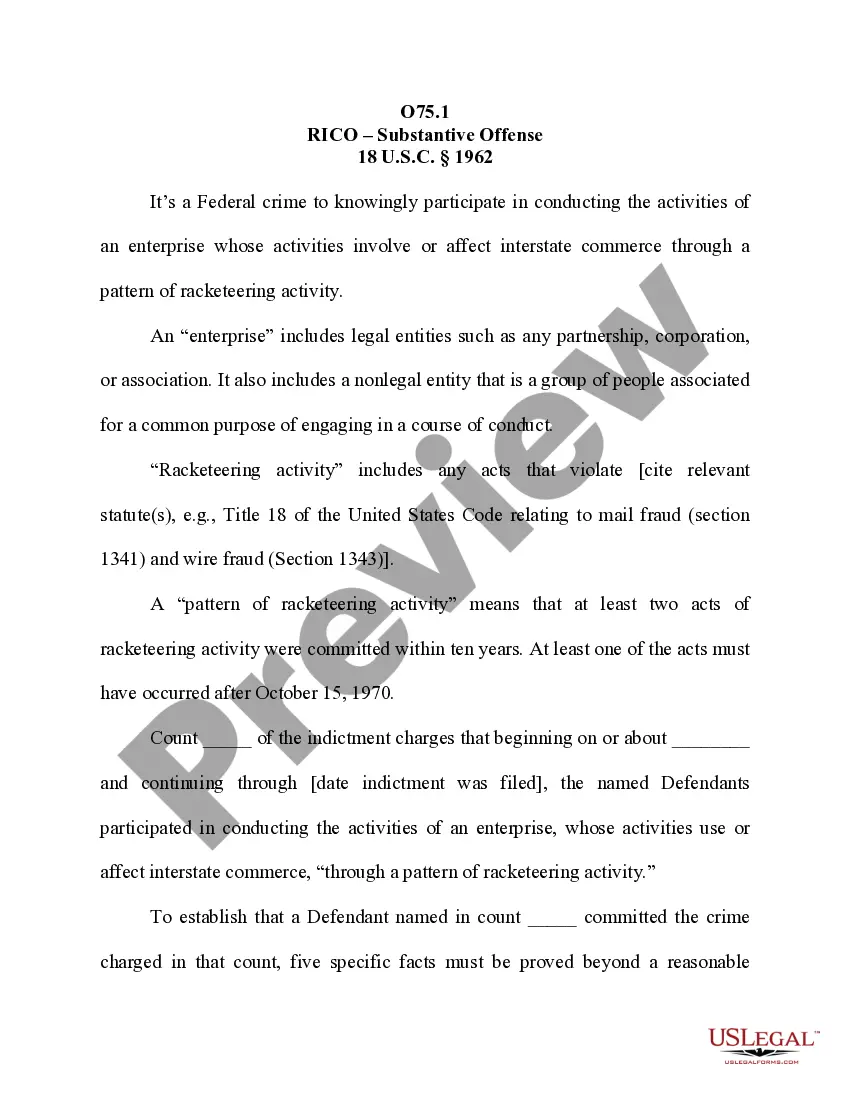
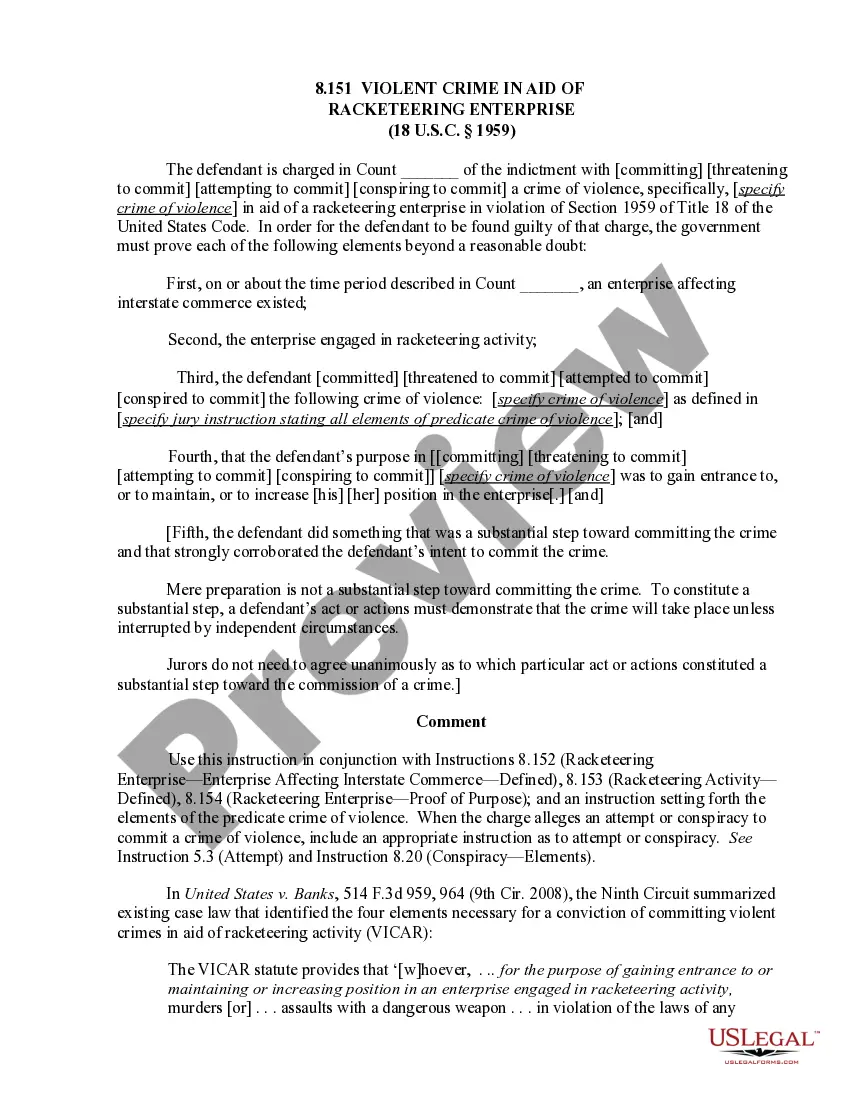
The Violent Crimes in Aid of Racketeering form is a legal document that addresses specific offenses under Title 18, U.S. Code, Section 1959(a). This form is used to outline the legal definitions and procedures associated with committing, threatening, or conspiring to commit violent crimes as part of a racketeering enterprise. It is not a generic violent crime form but is specifically tailored for cases involving both violence and organized crime, differentiating it from other legal forms that deal with violence in isolation.
Key parts of this document
- Definition of violent crimes related to racketeering activities
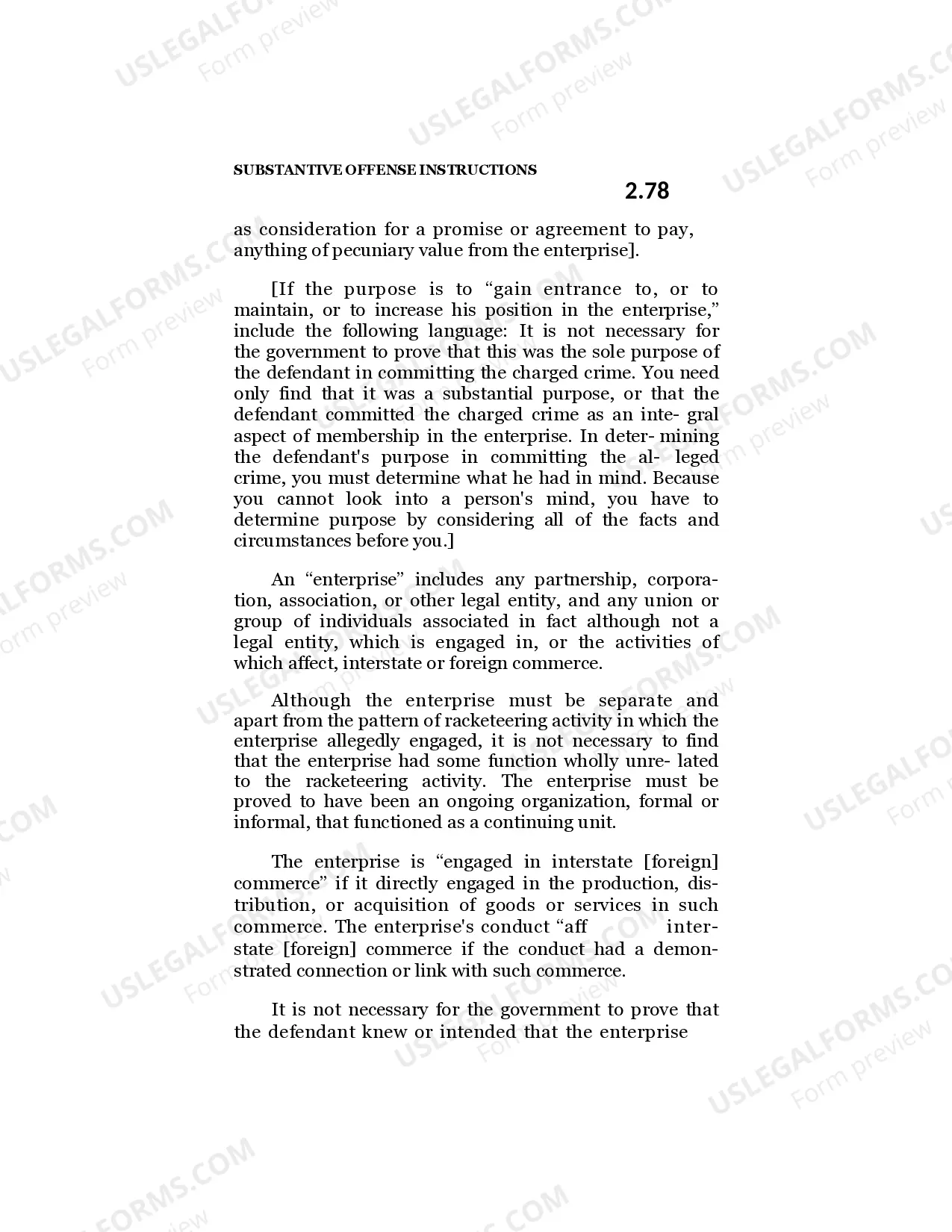
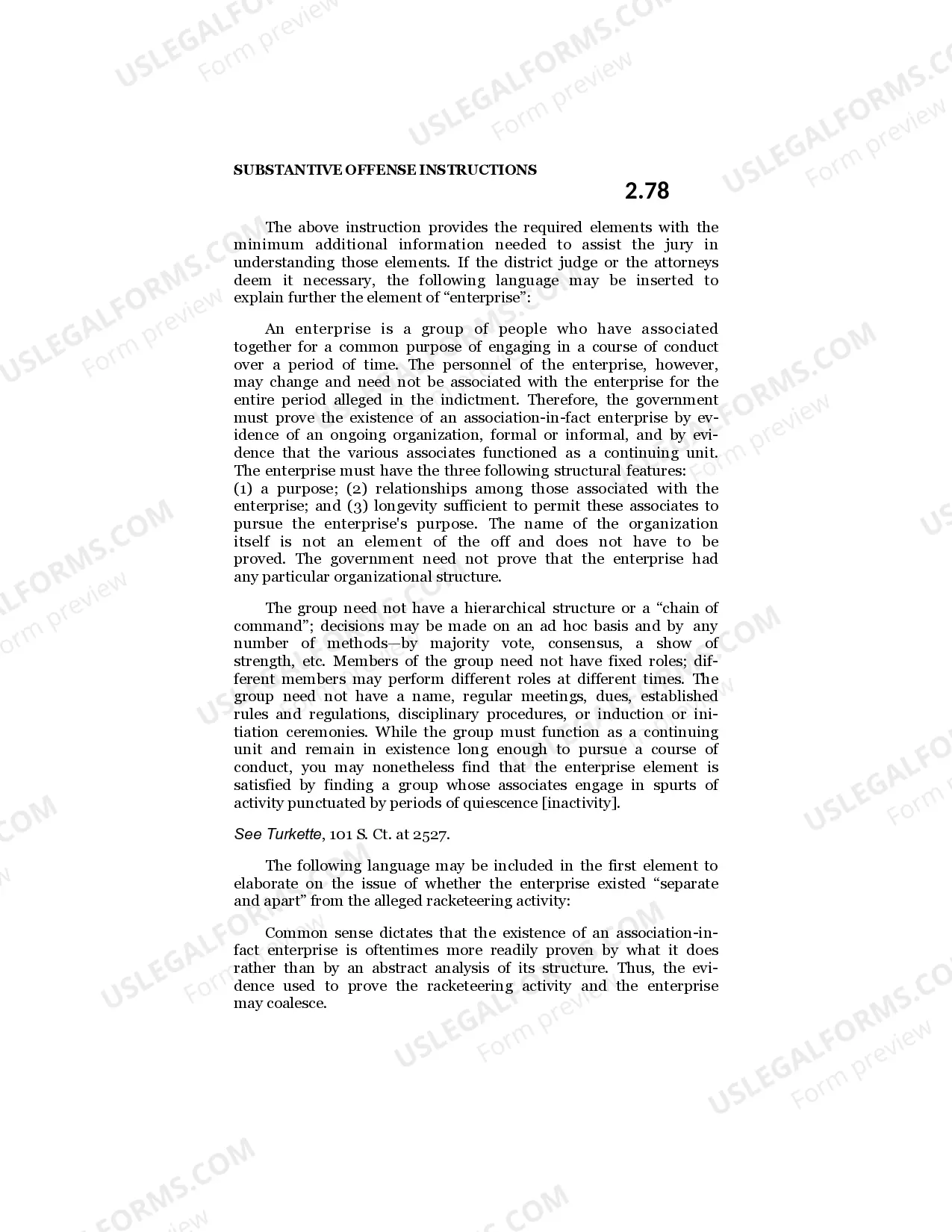
- Conditions for proving the existence of an enterprise
- Requirements for demonstrating the defendant's intent and purpose
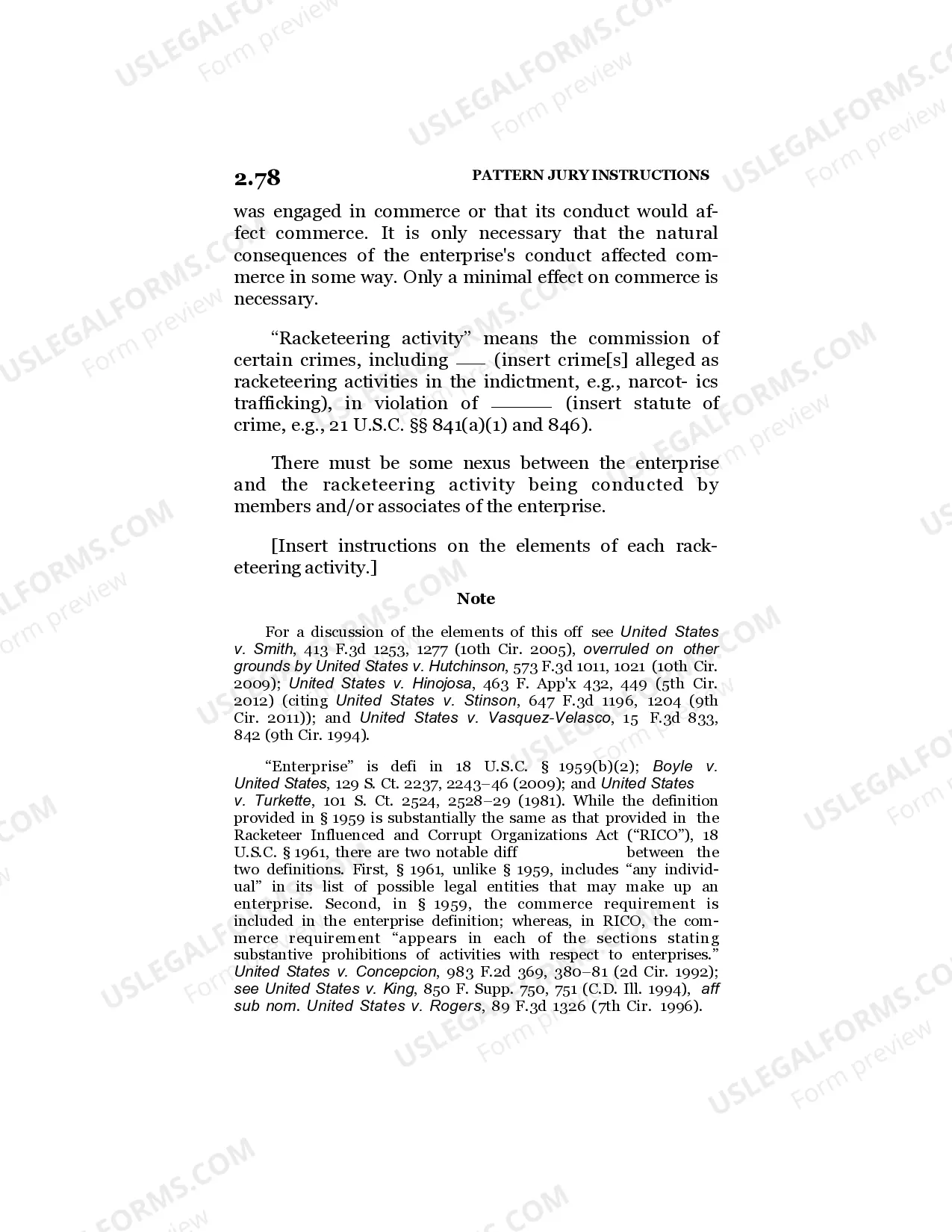
- Clarification of terms such as 'racketeering activity' and 'interstate commerce'
- Instructions for assessing the relationship between the enterprise and the violent acts


When this form is needed
This form should be used in cases where there is an allegation of violent crimes committed in support of a criminal enterprise involved in racketeering. It is particularly applicable in situations where individuals are accused of engaging in violent acts to gain or maintain membership status or enhance their position within such an enterprise. Legal practitioners may use this form to prepare specific charges or instructions in a courtroom setting.
Who should use this form
- Prosecutors preparing cases against individuals accused of violent crimes in connection with racketeering
- Defense attorneys representing clients charged under this statute
- Judges issuing instructions to juries regarding the specifics of the law
- Legal students or practitioners studying organized crime laws
How to complete this form
- Identify and define the enterprise involved in the racketeering activities
- List the alleged violent crimes associated with the enterprise
- Clarify the intent behind the defendant's actions regarding the crimes
- Provide evidence to demonstrate the enterprise's connection to interstate or foreign commerce
- Include any necessary instructions for jury considerations as required by law
Does this document require notarization?
Notarization is not commonly needed for this form. However, certain documents or local rules may make it necessary. Our notarization service, powered by Notarize, allows you to finalize it securely online anytime, day or night.
Get your form ready online
Our built-in tools help you complete, sign, share, and store your documents in one place.
Make edits, fill in missing information, and update formatting in US Legal Forms—just like you would in MS Word.
Download a copy, print it, send it by email, or mail it via USPS—whatever works best for your next step.
Sign and collect signatures with our SignNow integration. Send to multiple recipients, set reminders, and more. Go Premium to unlock E-Sign.
If this form requires notarization, complete it online through a secure video call—no need to meet a notary in person or wait for an appointment.
We protect your documents and personal data by following strict security and privacy standards.

Make edits, fill in missing information, and update formatting in US Legal Forms—just like you would in MS Word.

Download a copy, print it, send it by email, or mail it via USPS—whatever works best for your next step.

Sign and collect signatures with our SignNow integration. Send to multiple recipients, set reminders, and more. Go Premium to unlock E-Sign.

If this form requires notarization, complete it online through a secure video call—no need to meet a notary in person or wait for an appointment.

We protect your documents and personal data by following strict security and privacy standards.
Mistakes to watch out for
- Failing to adequately establish the existence of the enterprise
- Not clearly defining the violent crimes associated with the racketeering charge
- Neglecting to demonstrate the purpose and intent behind the alleged violent acts
- Overlooking state-specific legal nuances that apply to racketeering cases
Benefits of completing this form online
- Convenience of immediate access to legal templates
- Editability allows for tailored application to individual cases
- Ensures reliability with forms drafted by licensed attorneys
- Ability to quickly gather detailed, legal language to support case preparation
Legal use & context
- Crucial for establishing legal context in cases involving organized crime and violence
- Defines the legal threshold for proving violent acts in relation to racketeering
- Used in both prosecutorial and defense strategies in serious criminal cases
Looking for another form?
Form popularity
FAQ
Definition. In the FBI's Uniform Crime Reporting (UCR) Program, violent crime is composed of four offenses: murder and nonnegligent manslaughter, forcible rape, robbery, and aggravated assault.
Racketeering is a federal crime, typically categorized as a white-collar crime, that involves the use of an illegal enterprise to commit fraud or other crimes. It's typically associated with organized crime and can include a wide range of activities, from narcotics trafficking to money laundering.
RICO and VICAR Defined A companion statute, the ?Violent Crimes in Aid of Racketeering? statute (VICAR), proscribes violent crimes, including murder, kidnapping, and assaults. The RICO statute provides for three different substantive violations as described in 18 U.S.C.
State and federal governments seek to prevent and punish organized crime through racketeering laws. Whether charged at the state or federal level, racketeering is a serious offense. If charged with racketeering, a person could face substantial fines, a lengthy prison sentence and additional penalties.
Racketeering is a federal crime, typically categorized as a white-collar crime, that involves the use of an illegal enterprise to commit fraud or other crimes. It's typically associated with organized crime and can include a wide range of activities, from narcotics trafficking to money laundering.
At the state level, racketeering includes crimes such as murder, kidnapping, gambling, arson, robbery, bribery, extortion, dealing in obscene matters, and drug crimes.
For attempting or conspiring to commit a crime involving maiming, assault with a dangerous weapon, or assault resulting in serious bodily injury, by imprisonment for not more than three years or a fine of 1 under this title, or both.