Interstate Transportation of Stolen Property
About this form
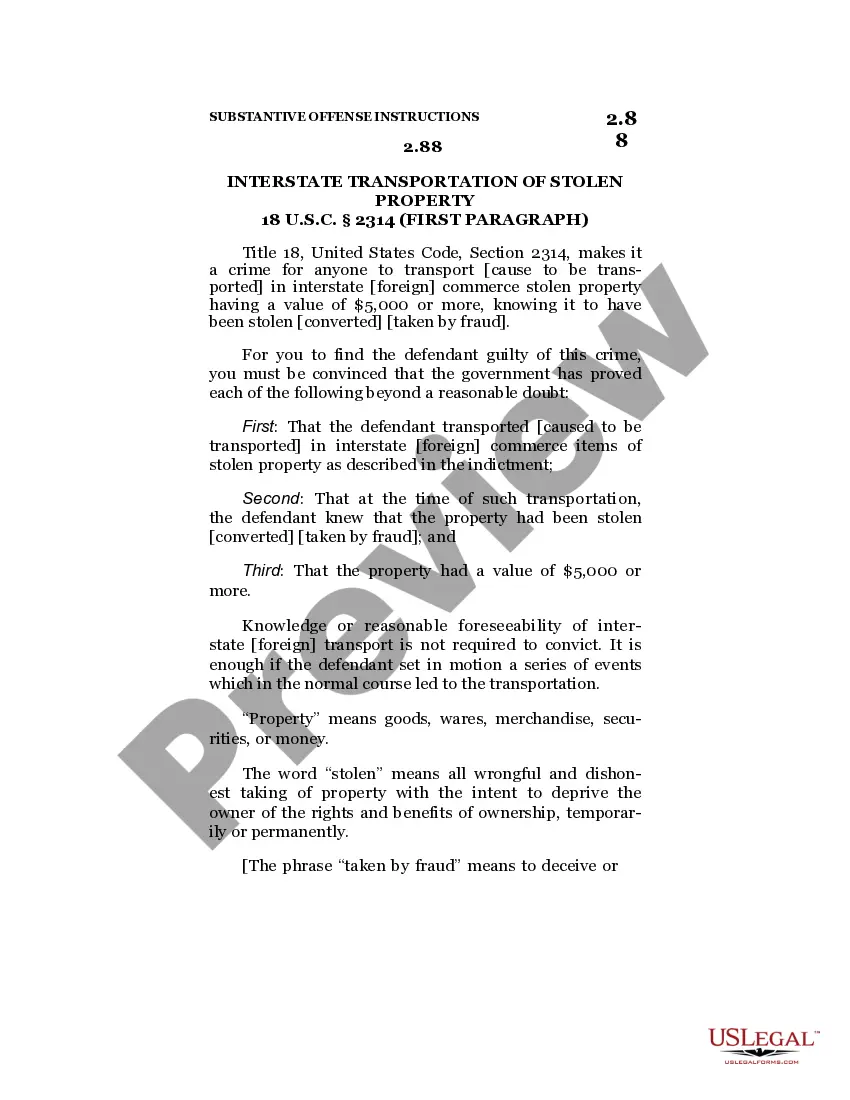
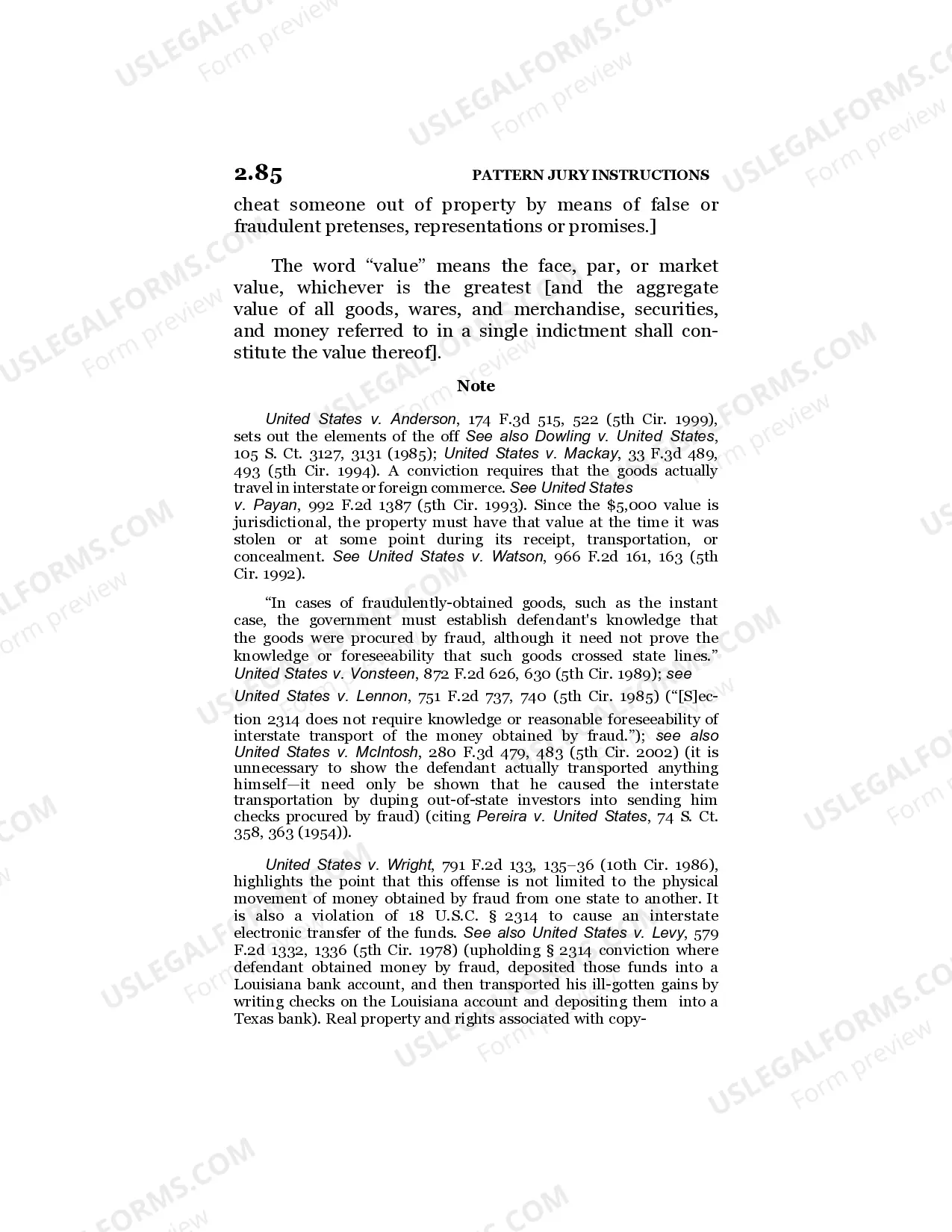
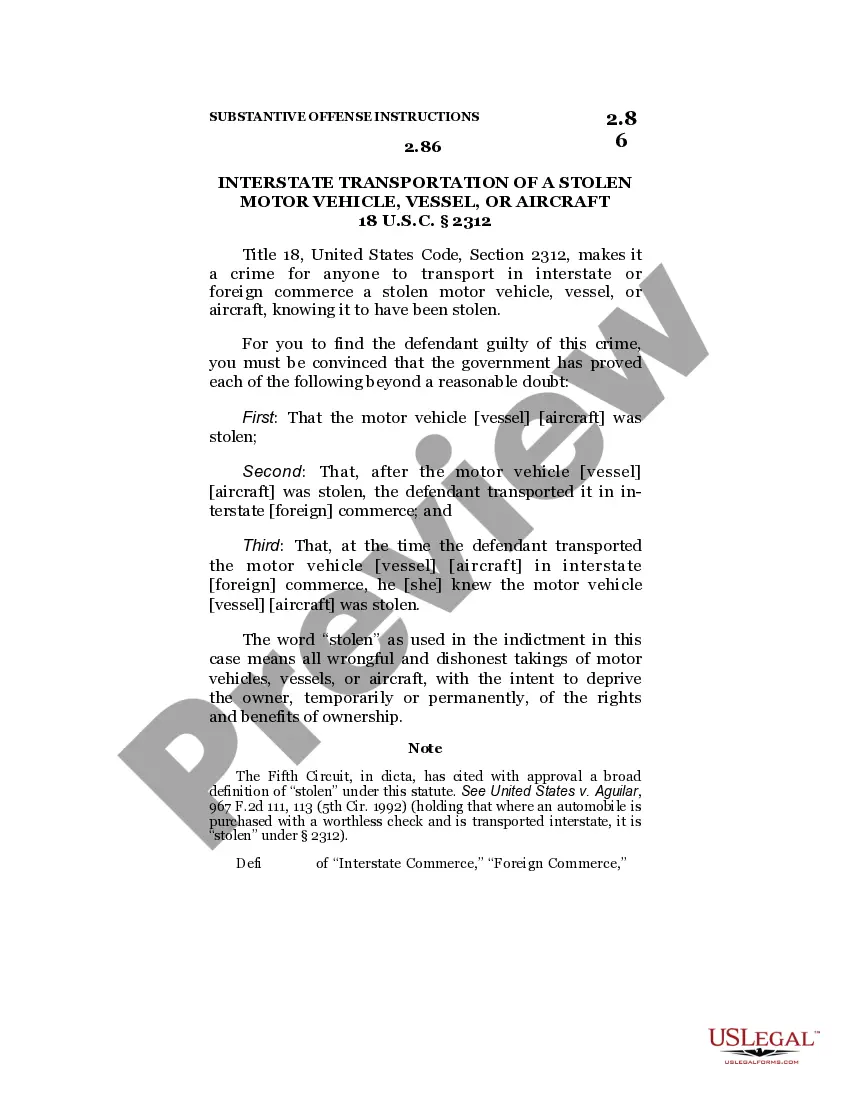
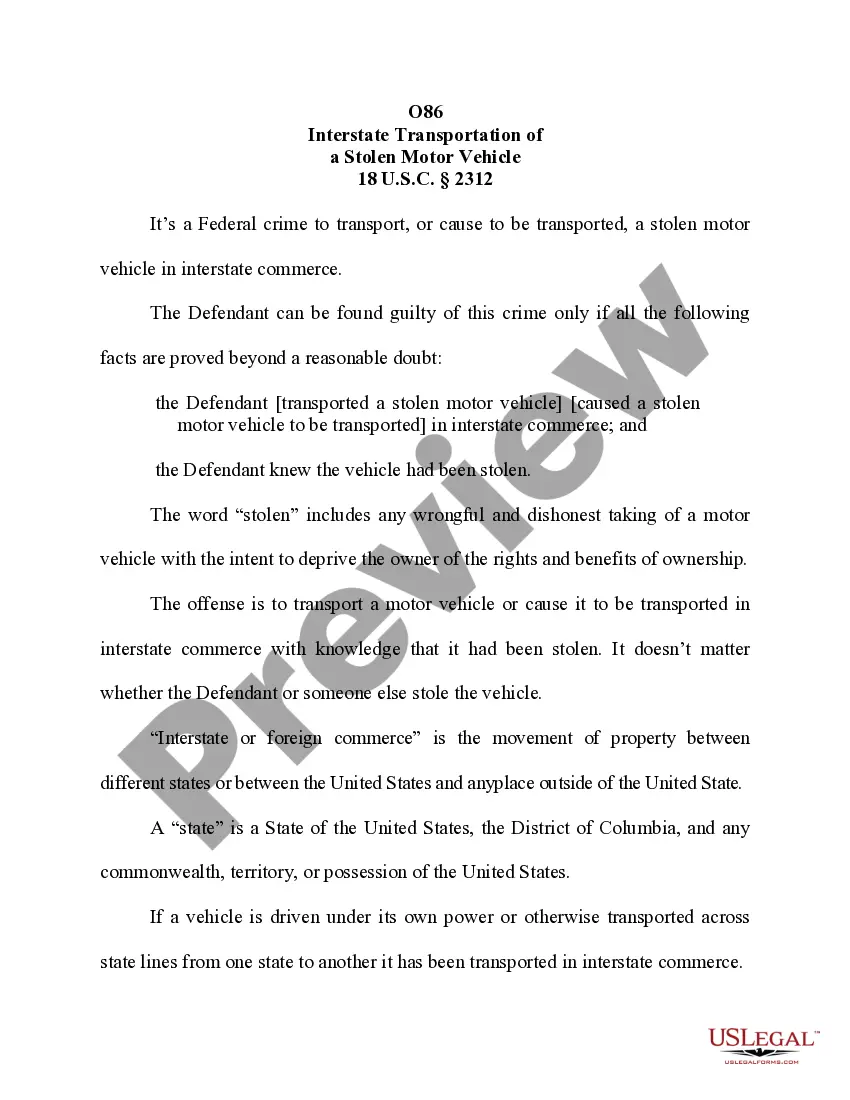
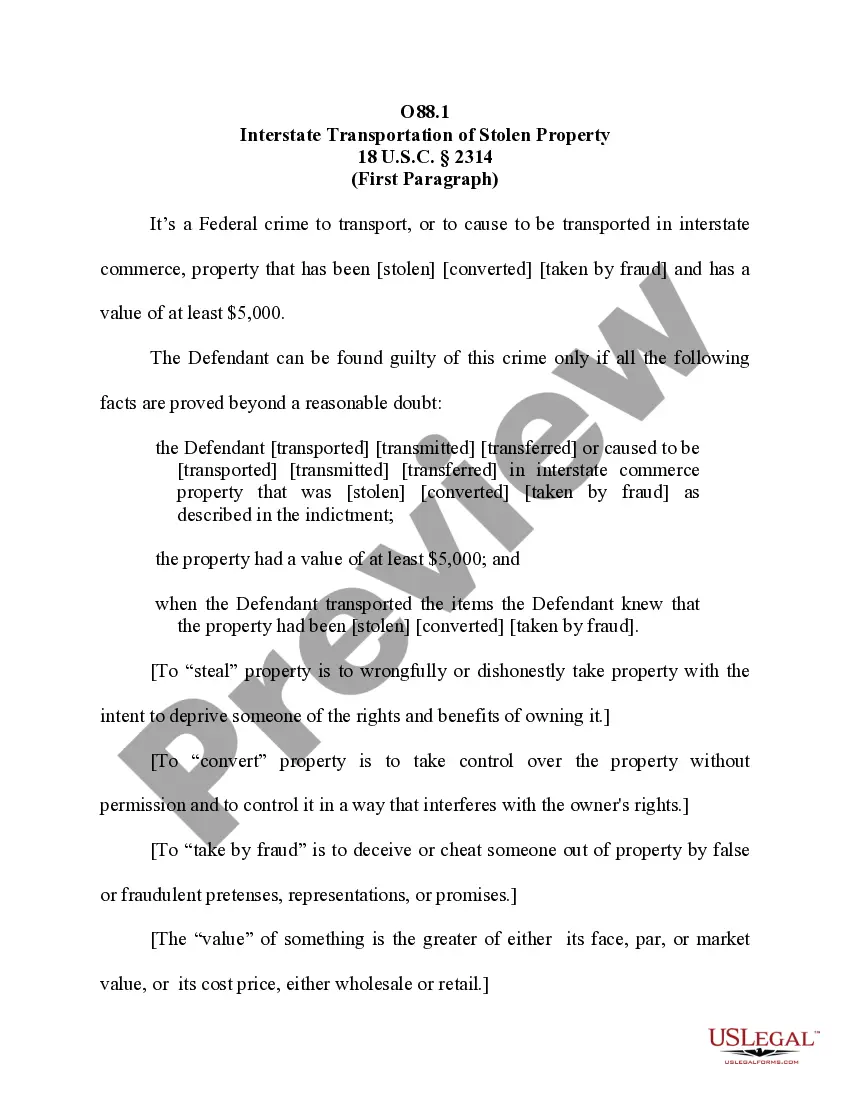
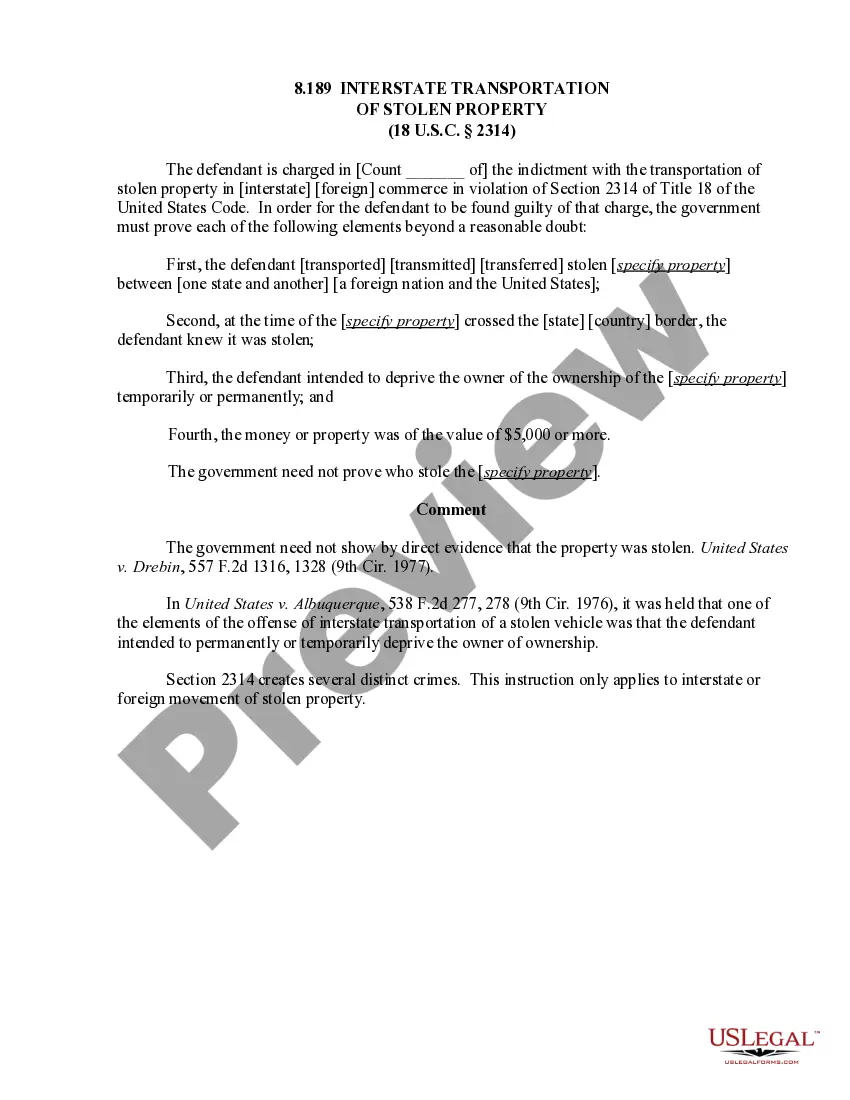
The Interstate Transportation of Stolen Property form is a legal document that outlines the elements constituting the crime of transporting stolen property across state lines. This form is essential for understanding the specific legal framework under 18 U.S.C. § 2314, focusing on the transportation of stolen property valued at $5,000 or more, committed knowingly. Unlike other theft-related forms, this one specifically addresses the interstate aspect of stolen property offenses.
Key parts of this document
- Definition of stolen property and its thresholds
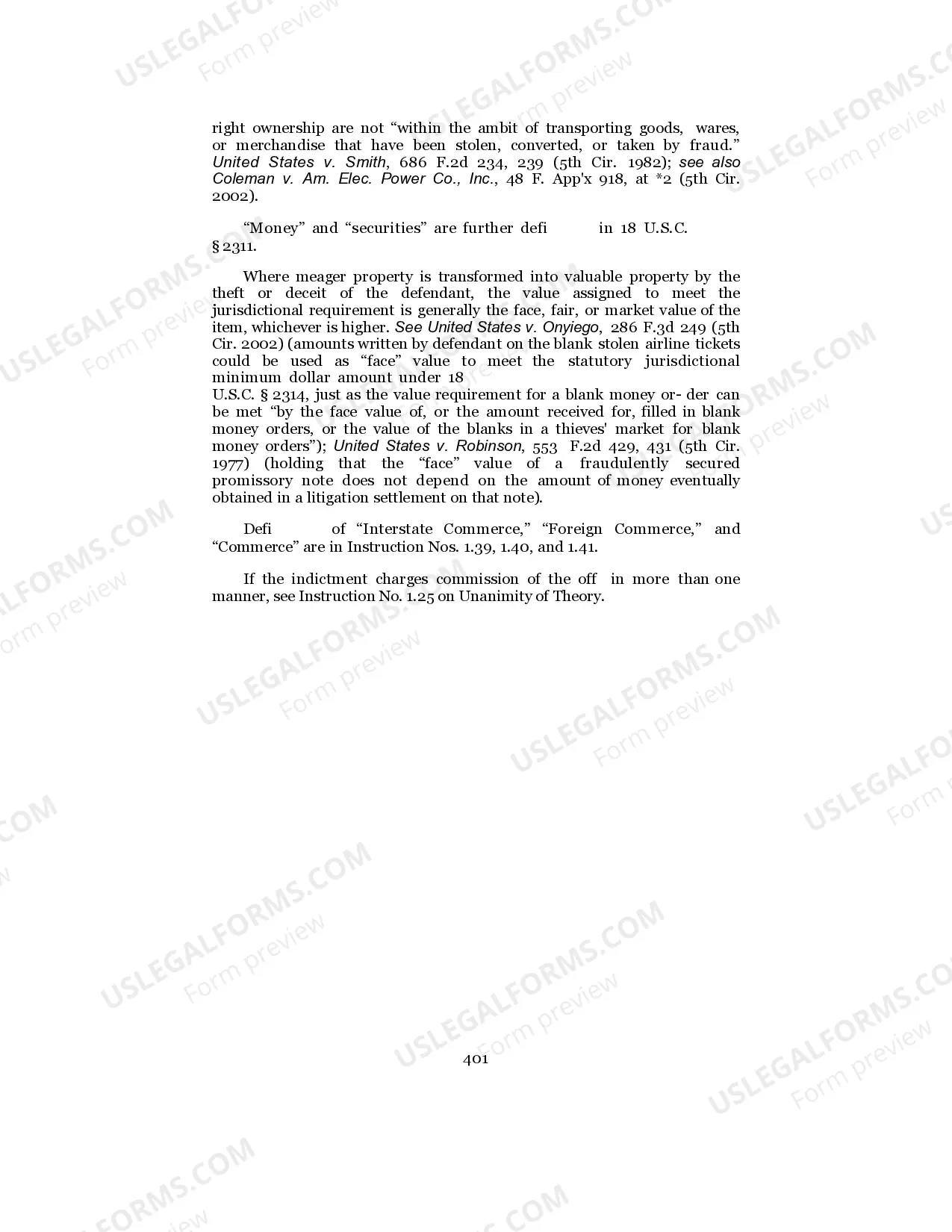
- Citations of relevant legal statutes and case law
- Elements of the crime: transport, knowledge, and value
- Clarification on the meaning of terms like "taken by fraud"
- Requirements for proving interstate commerce
Situations where this form applies
This form is needed when an individual is involved in or accused of transporting stolen property across state lines or internationally. It can be relevant in criminal cases where the government needs to establish whether a defendant knowingly participated in the transportation of stolen goods, making it applicable in legal defenses or prosecution in theft cases.
Who this form is for
- Defendants accused of interstate transportation of stolen property
- Legal professionals preparing defense strategies in theft cases
- Law enforcement officials involved in investigating stolen property cases
- Individuals seeking to understand their legal liabilities regarding stolen property
Steps to complete this form
- Identify the defendant and relevant case details.
- Clearly state the items involved in the case of theft.
- Document the knowledge of the defendant regarding the stolen nature of the property.
- Provide the value of the stolen property and evidence justifying this amount.
- Compile supporting documentation as prescribed by your legal advisor.
Notarization requirements for this form
This form does not typically require notarization unless specified by local law. If you have any questions about specific requirements in your jurisdiction, it's advisable to consult with a legal professional.
Get your form ready online
Our built-in tools help you complete, sign, share, and store your documents in one place.
Make edits, fill in missing information, and update formatting in US Legal Forms—just like you would in MS Word.
Download a copy, print it, send it by email, or mail it via USPS—whatever works best for your next step.
Sign and collect signatures with our SignNow integration. Send to multiple recipients, set reminders, and more. Go Premium to unlock E-Sign.
If this form requires notarization, complete it online through a secure video call—no need to meet a notary in person or wait for an appointment.
We protect your documents and personal data by following strict security and privacy standards.

Make edits, fill in missing information, and update formatting in US Legal Forms—just like you would in MS Word.

Download a copy, print it, send it by email, or mail it via USPS—whatever works best for your next step.

Sign and collect signatures with our SignNow integration. Send to multiple recipients, set reminders, and more. Go Premium to unlock E-Sign.

If this form requires notarization, complete it online through a secure video call—no need to meet a notary in person or wait for an appointment.

We protect your documents and personal data by following strict security and privacy standards.
Typical mistakes to avoid
- Failing to establish knowledge that the property was stolen.
- Omitting details of the jurisdiction in which the transportation occurred.
- Neglecting to document the value of the property accurately.
- Using unclear language that can cause misinterpretation of the charges.
Why use this form online
- Instant access to legal documents tailored by licensed attorneys.
- Ability to download and customize forms according to specific needs.
- Time-saving convenience compared to preparing documents from scratch.
- Increased reliability with templates that comply with current laws.
Looking for another form?
Form popularity
FAQ
18 U.S. Code § 2314 - Transportation of stolen goods, securities, moneys, fraudulent State tax stamps, or articles used in counterfeiting. Shall be fined under this title or imprisoned not more than ten years, or both.
It prohibits the theft or fraudulent acquisition of goods that are part of an interstate or international shipment, whether from the carrier or a holding area, and also the wilful buying, selling or possession of goods obtained in this way.
A fence, also known as a receiver, mover, or moving man, is an individual who knowingly buys stolen goods in order to later resell them for profit. The fence acts as a middleman between thieves and the eventual buyers of stolen goods who may not be aware that the goods are stolen.
Penalties for Possessing Stolen Property in the First Degree in Washington: Possession of stolen property in the first degree is a class B felony, which RCW §9A. 20.021 defines as punishable by a maximum sentence of ten years in prison, a maximum fine of $20,000, or both.