Issues-Claim for Damages Based Upon Invasion of Privacy by Appropriation
Understanding this form
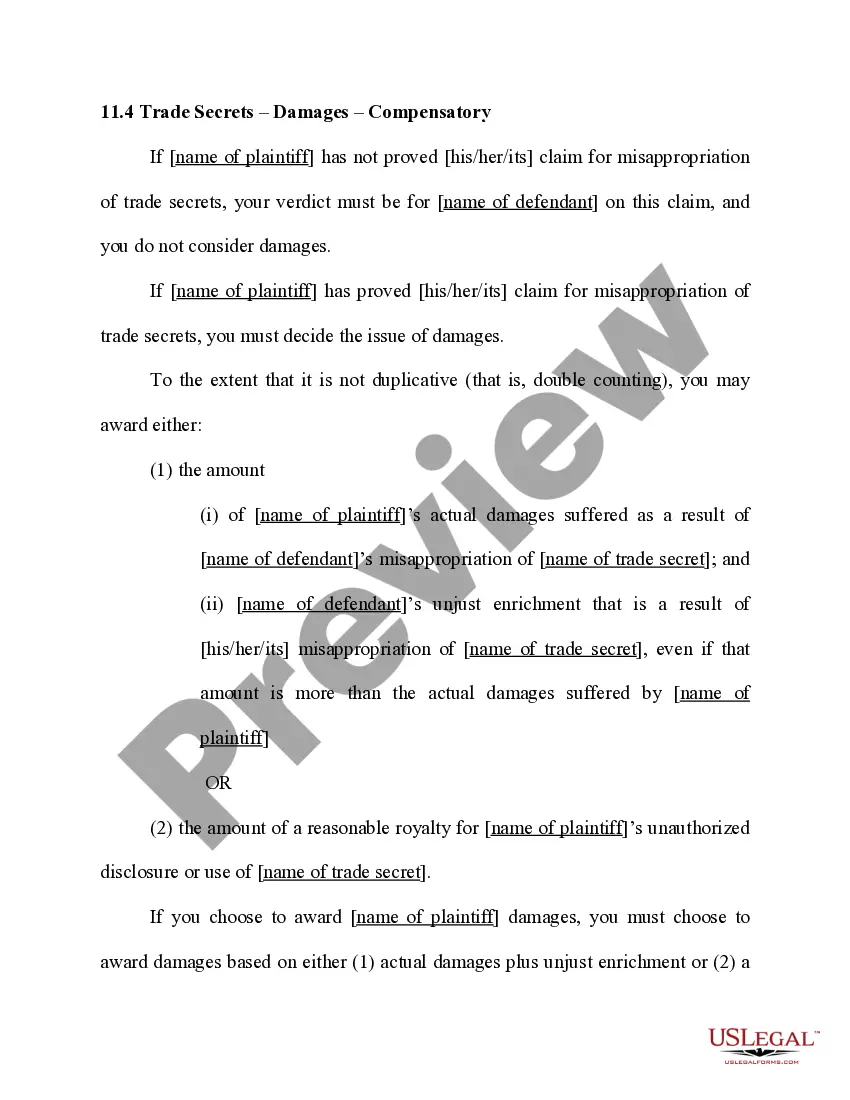
The Issues-Claim for Damages Based Upon Invasion of Privacy by Appropriation is a legal document that allows individuals to seek damages for unauthorized use of their name or likeness. This form is specifically designed to address claims of invasion of privacy, distinguishing it from other forms that may cover different aspects of privacy law.
Key parts of this document
- Identification of the plaintiff and defendant.
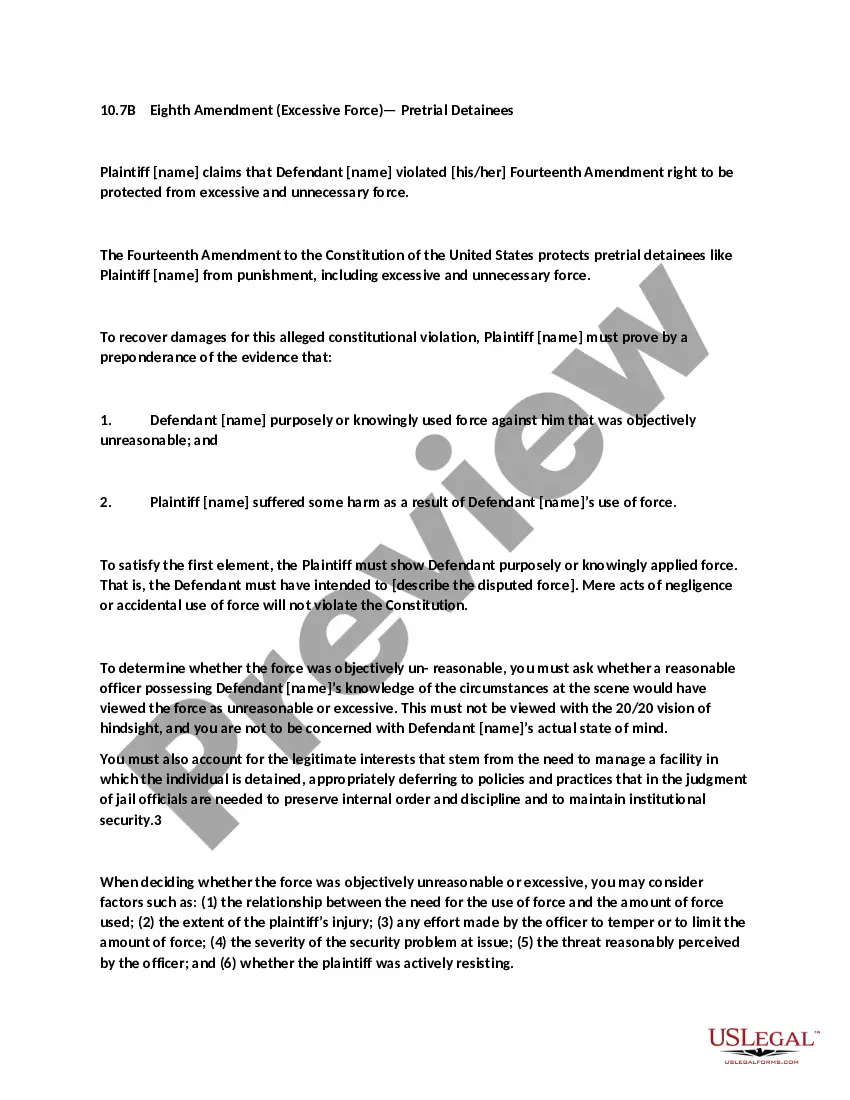
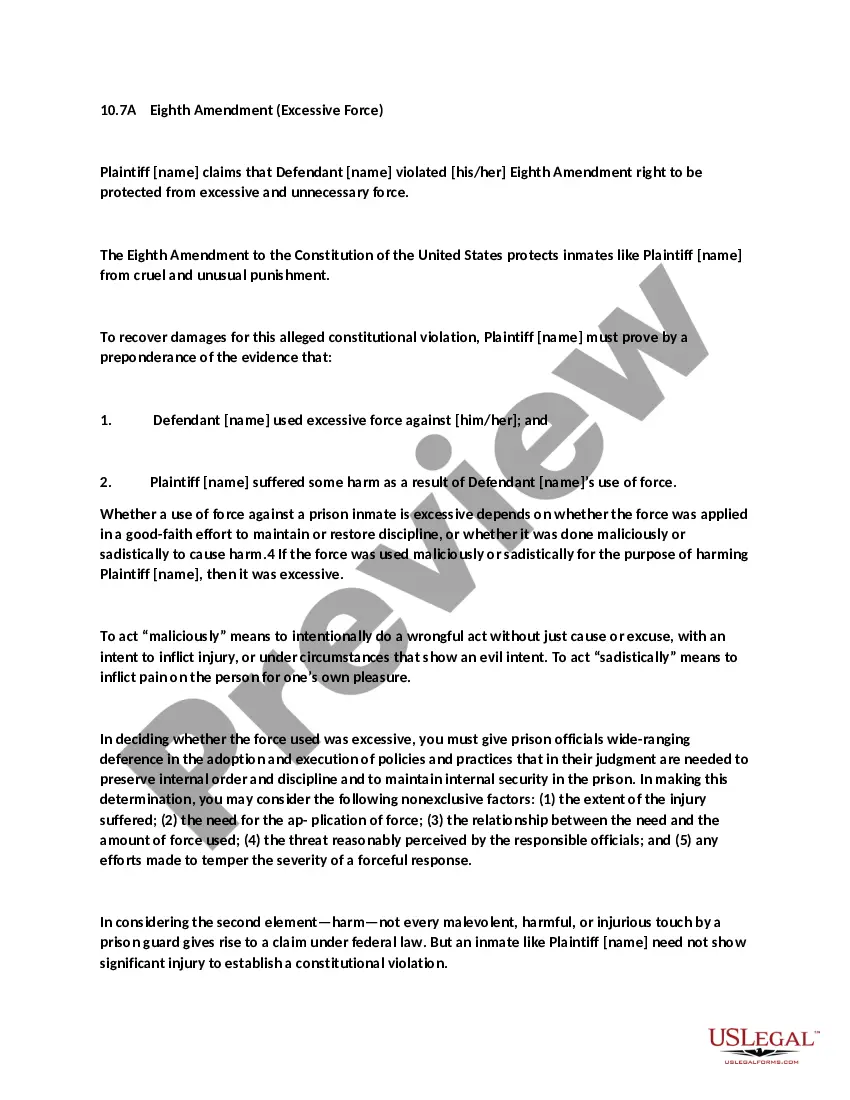
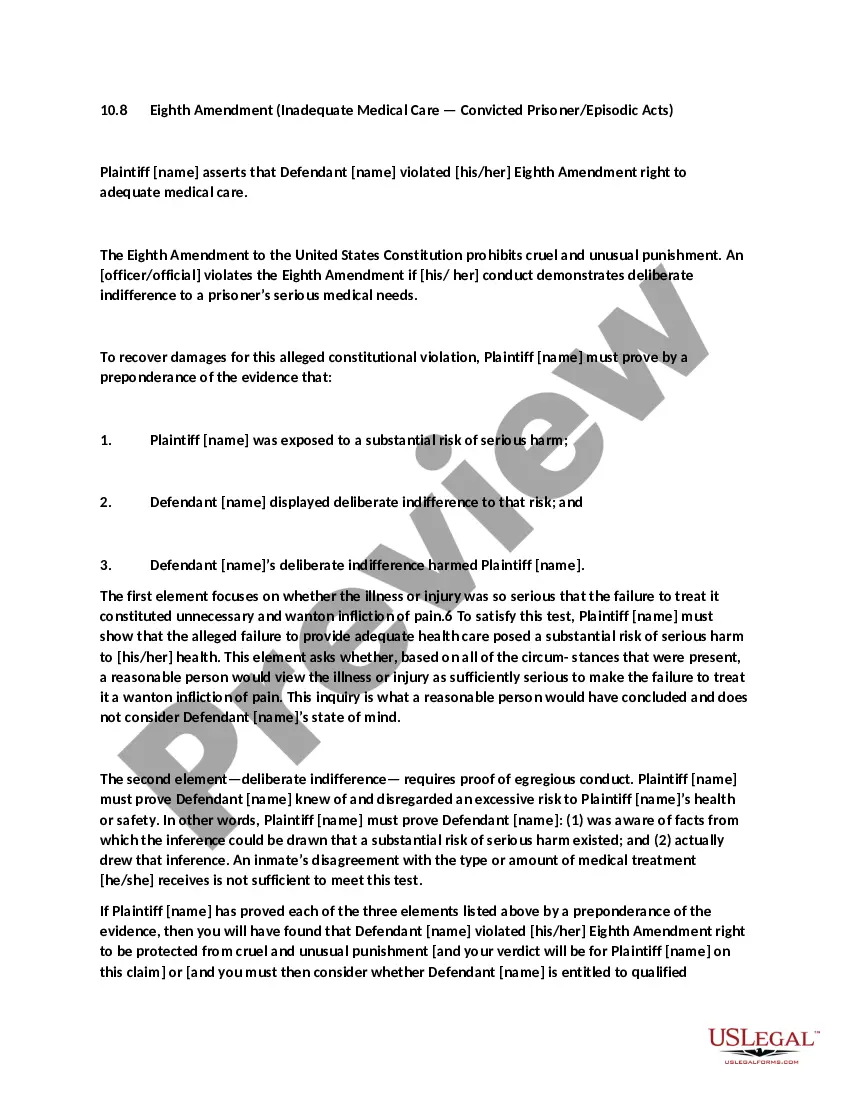
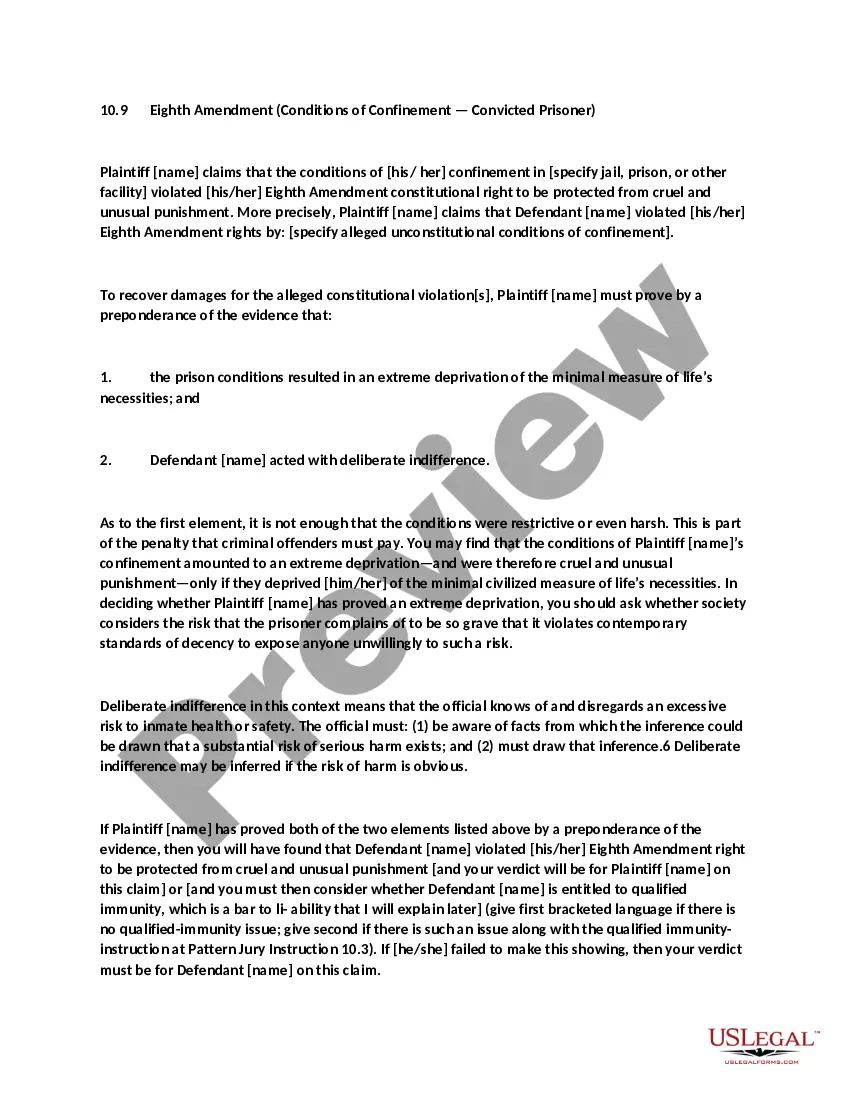
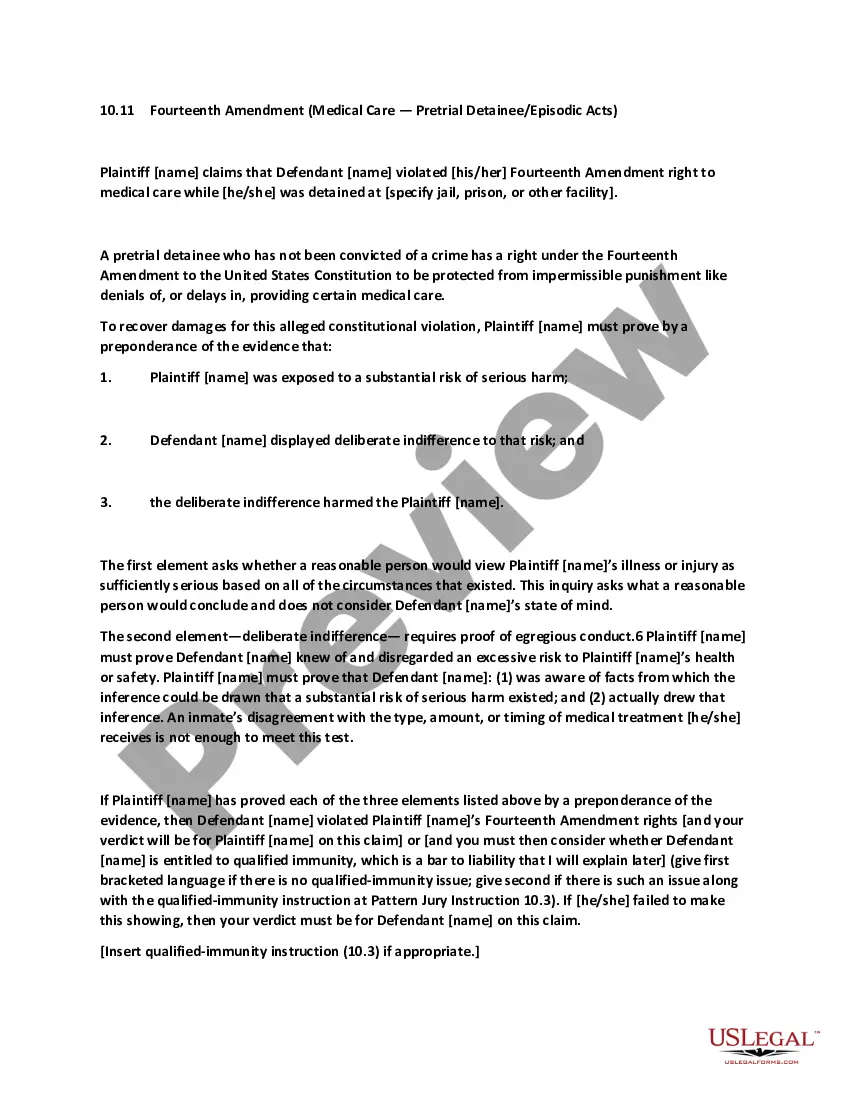
- Claim of violation of constitutional rights under the Fourteenth Amendment.
- Evidence requirements to prove excessive and unnecessary force was used.
- Consideration of factors indicating whether the force used was reasonable.
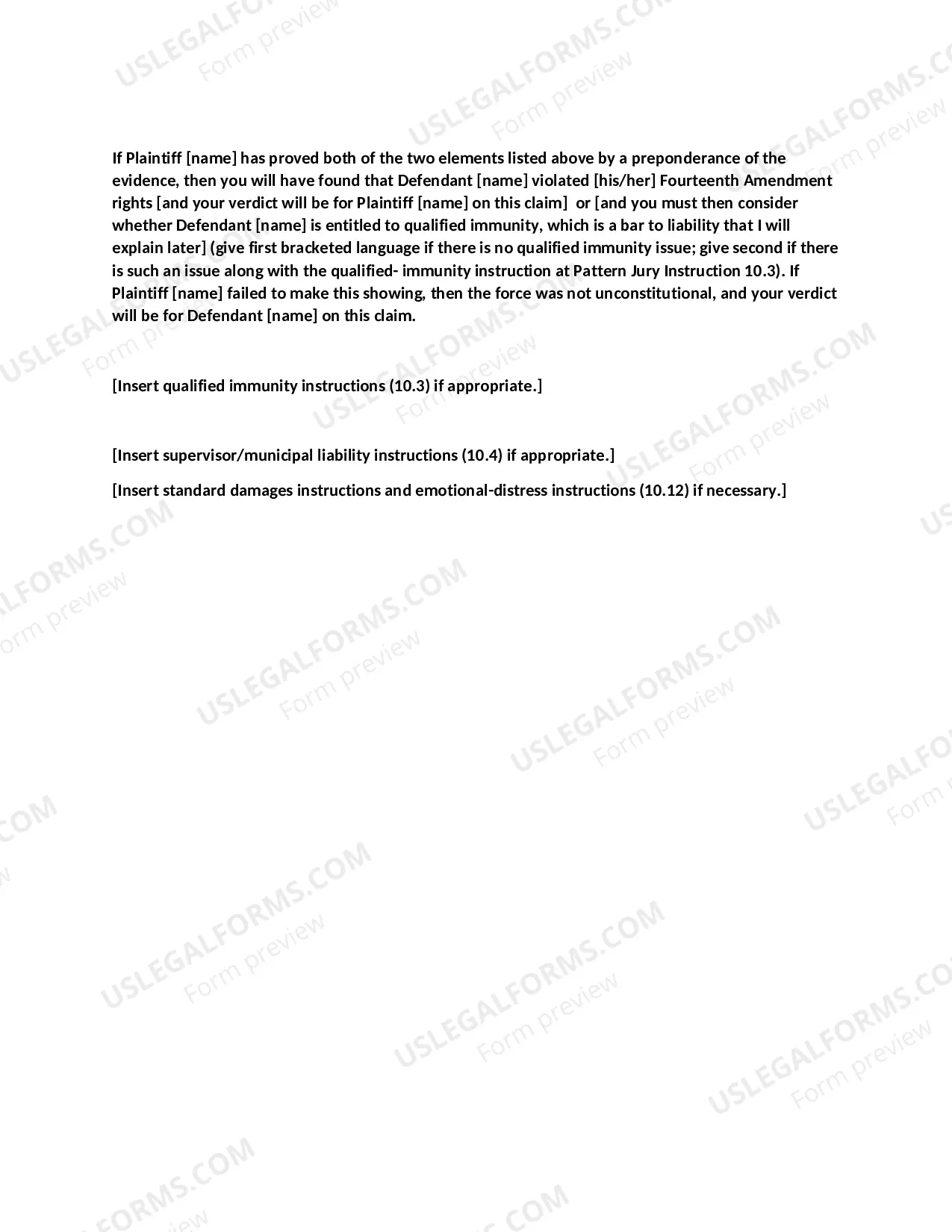
- Instructions on potential defenses such as qualified immunity.
When to use this document
This form should be utilized when an individual believes their privacy rights have been violated through the unauthorized appropriation of their name or likeness. Situations may include instances of public figures' images used for commercial purposes without consent or private individuals experiencing unauthorized use of their personal information.
Who this form is for
- Individuals whose name or likeness has been used without permission.
- People seeking to recover damages for mental distress caused by the invasion of privacy.
- Claimants in litigation involving privacy rights who wish to formally document their claims.
Instructions for completing this form
- Identify and enter the names of the plaintiff and defendant.
- Detail the circumstances of the invasion of privacy and the appropriation.
- Provide evidence to support claims of excessive and unnecessary force.
- Specify the damages sought as a result of the violation.
- Include any relevant additional instructions or custom language as needed.
Does this document require notarization?
This form does not typically require notarization unless specified by local law. It is always advisable to check any specific state requirements regarding notarization.
Get your form ready online
Our built-in tools help you complete, sign, share, and store your documents in one place.
Make edits, fill in missing information, and update formatting in US Legal Forms—just like you would in MS Word.
Download a copy, print it, send it by email, or mail it via USPS—whatever works best for your next step.
Sign and collect signatures with our SignNow integration. Send to multiple recipients, set reminders, and more. Go Premium to unlock E-Sign.
If this form requires notarization, complete it online through a secure video call—no need to meet a notary in person or wait for an appointment.
We protect your documents and personal data by following strict security and privacy standards.

Make edits, fill in missing information, and update formatting in US Legal Forms—just like you would in MS Word.

Download a copy, print it, send it by email, or mail it via USPS—whatever works best for your next step.

Sign and collect signatures with our SignNow integration. Send to multiple recipients, set reminders, and more. Go Premium to unlock E-Sign.

If this form requires notarization, complete it online through a secure video call—no need to meet a notary in person or wait for an appointment.

We protect your documents and personal data by following strict security and privacy standards.
Mistakes to watch out for
- Failing to gather sufficient evidence to support the claim.
- Not addressing the reasonable use of force standards adequately.
- Neglecting to include all necessary parties in the claim.
Why complete this form online
- Convenience of downloading and completing the form at your own pace.
- Editable templates allow for easy customization of claims.
- Access to professionally drafted legal content ensures compliance with legal standards.
Legal use & context
- This form is recognized as a valid method for initiating claims of privacy invasion.
- It serves as a formal notice to defendants and can support legal action in civil court.
- Understanding the context of the appropriation is vital for enforceability.
Main things to remember
- The form is used to assert claims regarding unauthorized use of personal identity.
- A thorough understanding of state laws regarding invasion of privacy is crucial.
- Accurate completion can significantly impact the outcome of the claim.
Looking for another form?
Form popularity
FAQ
Unlike defamation (libel or slander), truth of the disclosed information isn't a defense. If an individual publicly reveals truthful information that is not of public concern and which a reasonable person would find offensive if made public, they could be liable for damages.
Invasion of privacy is a tort based in common law allowing an aggrieved party to bring a lawsuit against an individual who unlawfully intrudes into his/her private affairs, discloses his/her private information, publicizes him/her in a false light, or appropriates his/her name for personal gain.
Those four types are 1) intrusion on a person's seclusion or solitude; 2) public disclosure of embarrassing private facts about a person; 3) publicity that places a person in a false light in the public eye; and 4) appropriation, for the defendant's advantage, of the person's name or likeness. 1.
Types and examples of invasion of privacy Misappropriating a person's name or likeness. This occurs when a business uses a person's name or image in marketing materials without consent.Intruding on someone's seclusion.Portraying someone in a false light.Publicly disclosing private facts.
A few common examples of false light include: A company publishes a picture of a married couple with a message stating that their only interest in one another is sex. John posts on his Facebook newsfeed a false claim that his ex-girlfriend Tyra has filed for bankruptcy.
Consent and privilege are the two main defenses to an invasion of privacy claim. Consent means that the plaintiff granted the defendant permission to perform the act. A plaintiff, for example, may consent to be recorded or photographed. In certain states, the agreement must be in writing.
What are the possible consequences of invasion of privacy? Invasion of privacy lawsuits go after money damages for the emotional harm, embarrassment, shame, and damage to the reputation of the individual or business in the community.
Appropriation occurs when a defendant uses a plaintiff's name, likeness, or image without their permission for commercial purposes. Appropriation is one of several torts falling under the category of invasion of privacy.