Issues-Multiple Claims-Varying Standards of Care-Burden of Proof
Understanding this form
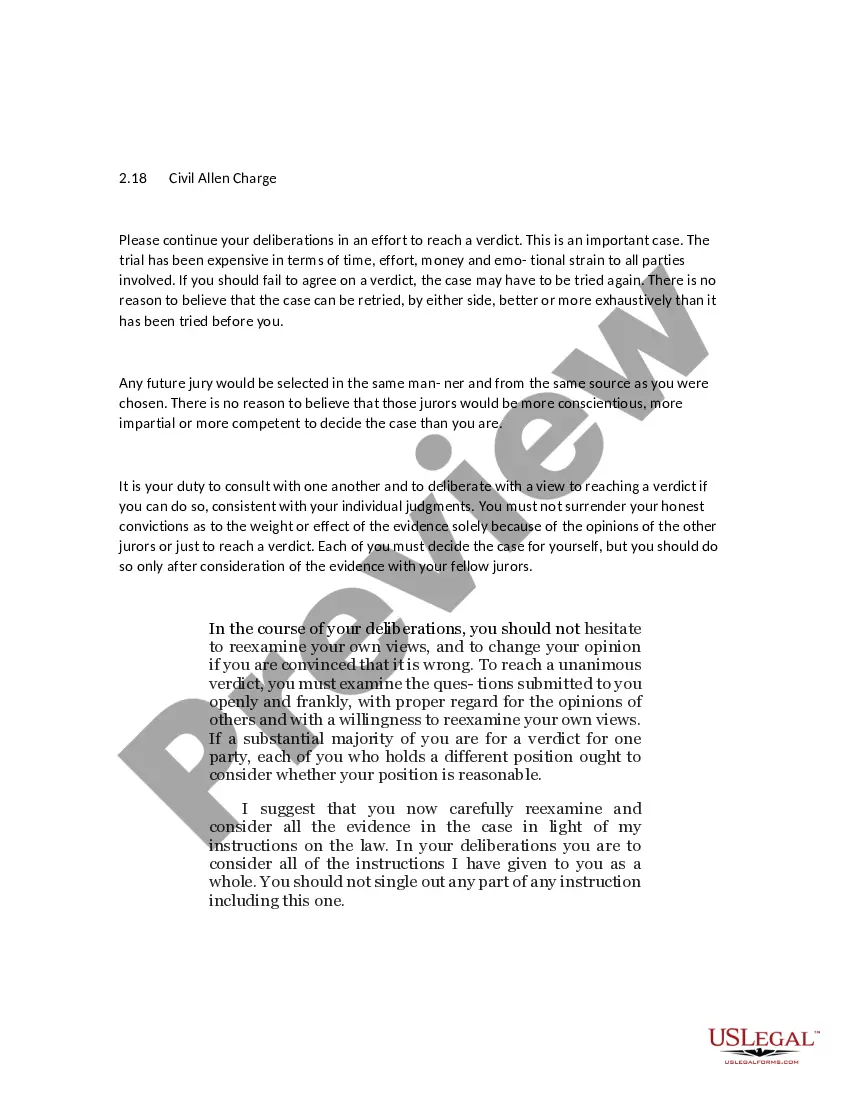
The Issues-Multiple Claims-Varying Standards of Care-Burden of Proof form addresses the complexities that arise when several claims involve different standards of care in a legal context. This form is essential for compiling relevant information and ensuring equitable treatment of corporate parties in court. It differs from other legal forms by specifically outlining how to assess varying standards of care and the burden of proof in multiple claim scenarios.
Form components explained
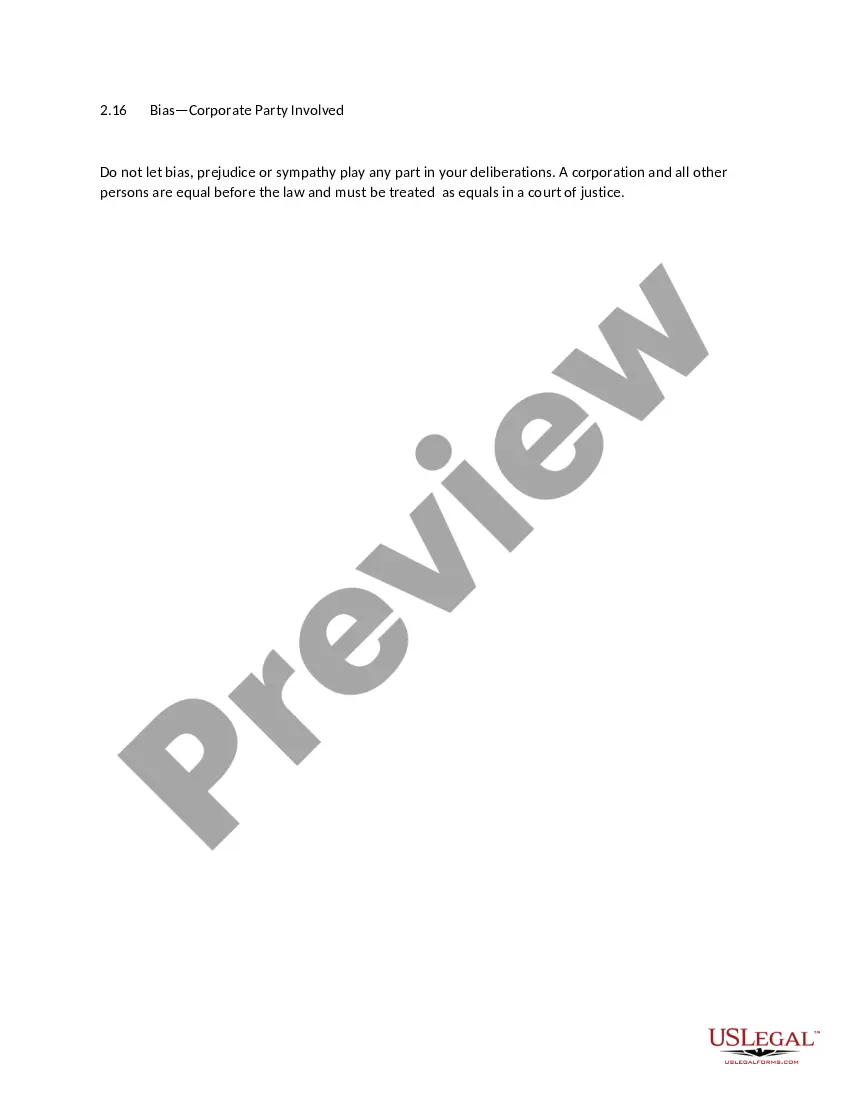
- Bias clause that emphasizes equality before the law for corporate parties.
- Sections for documenting multiple claims and their respective standards of care.
- Guidelines on how to assess the burden of proof for each claim.
When to use this document
This form is used when a case involves multiple legal claims, particularly when each claim has unique standards of care or levels of burden of proof. It is essential in situations such as personal injury cases with corporate defendants, medical malpractice suits involving various practices, or product liability claims with different parties involved.
Who can use this document
- Attorneys managing complex litigation cases with multiple claims.
- Individuals or parties involved in lawsuits against corporations.
- Legal professionals seeking to clarify standards of care in contested cases.
How to prepare this document
- Identify all parties involved in the claims.
- Define each claim and its specific standard of care.
- Document the burden of proof required for each claim.
- Ensure no bias or undue emotion influences the entry of the claims.
- Review the form for accuracy and completeness before submission.
Notarization guidance
Notarization is not commonly needed for this form. However, certain documents or local rules may make it necessary. Our notarization service, powered by Notarize, allows you to finalize it securely online anytime, day or night.
Get your form ready online
Our built-in tools help you complete, sign, share, and store your documents in one place.
Make edits, fill in missing information, and update formatting in US Legal Forms—just like you would in MS Word.
Download a copy, print it, send it by email, or mail it via USPS—whatever works best for your next step.
Sign and collect signatures with our SignNow integration. Send to multiple recipients, set reminders, and more. Go Premium to unlock E-Sign.
If this form requires notarization, complete it online through a secure video call—no need to meet a notary in person or wait for an appointment.
We protect your documents and personal data by following strict security and privacy standards.
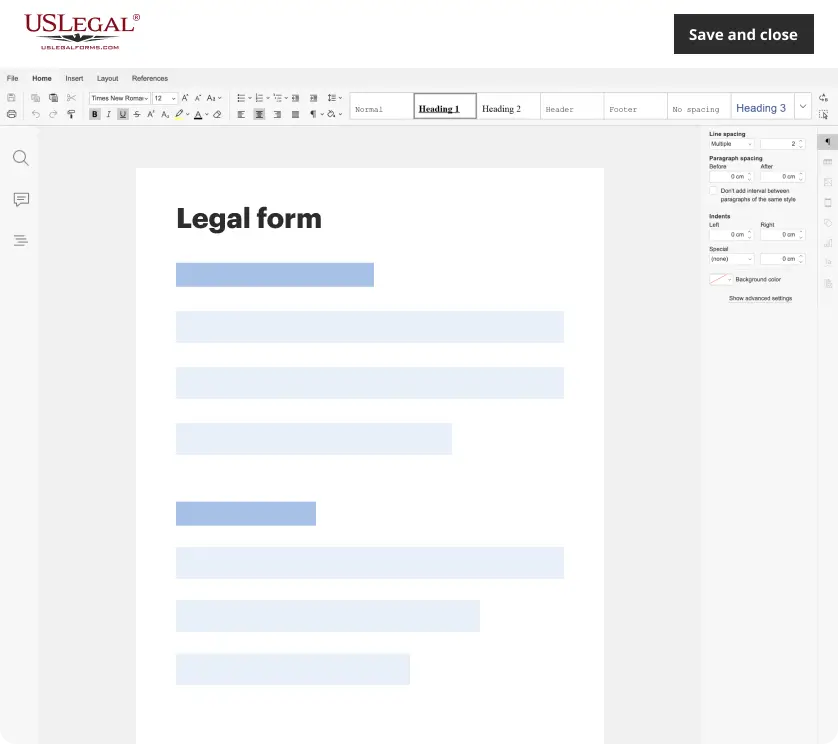
Make edits, fill in missing information, and update formatting in US Legal Forms—just like you would in MS Word.
Download a copy, print it, send it by email, or mail it via USPS—whatever works best for your next step.
Sign and collect signatures with our SignNow integration. Send to multiple recipients, set reminders, and more. Go Premium to unlock E-Sign.
If this form requires notarization, complete it online through a secure video call—no need to meet a notary in person or wait for an appointment.
We protect your documents and personal data by following strict security and privacy standards.
Typical mistakes to avoid
- Failing to clearly differentiate between claims and their respective standards of care.
- Omitting necessary evidence that supports the burden of proof for each claim.
- Allowing bias or sympathy to influence the documentation process.
Benefits of completing this form online
- Convenient access to legal form templates drafted by licensed attorneys.
- Edit and customize the form easily to fit specific case details.
- Downloadable format allows for quick printing and submission.
Looking for another form?
Form popularity
FAQ
Negligence claims must prove four things in court: duty, breach, causation, and damages/harm. Generally speaking, when someone acts in a careless way and causes an injury to another person, under the legal principle of "negligence" the careless person will be legally liable for any resulting harm.
Beyond a reasonable doubt in criminal law. clear and convincing evidence in fraud in will disputes. preponderance of the evidence in most civil cases. probable cause in the acquisition of a warrant or arrest proceeding.
The burden of proof has two components: the burden of production and the burden of persuasion.
What is Standard of Proof? Standard of proof describes the amount of evidence necessary to prove an assertion or claim in a trial. For example, in a criminal case the government has the burden to prove its case and the elements of the crime charged to the standard of "beyond a reasonable doubt."
§ 134.314 Standard of review and burden of proof. The standard of review is whether the size determination or NAICS code designation was based on clear error of fact or law. The appellant has the burden of proof, by a preponderance of the evidence, in both size and NAICS code appeals.
A negligence claim requires that the person bringing the claim (the plaintiff) establish four distinct elements: duty of care, breach, causation, and damages.
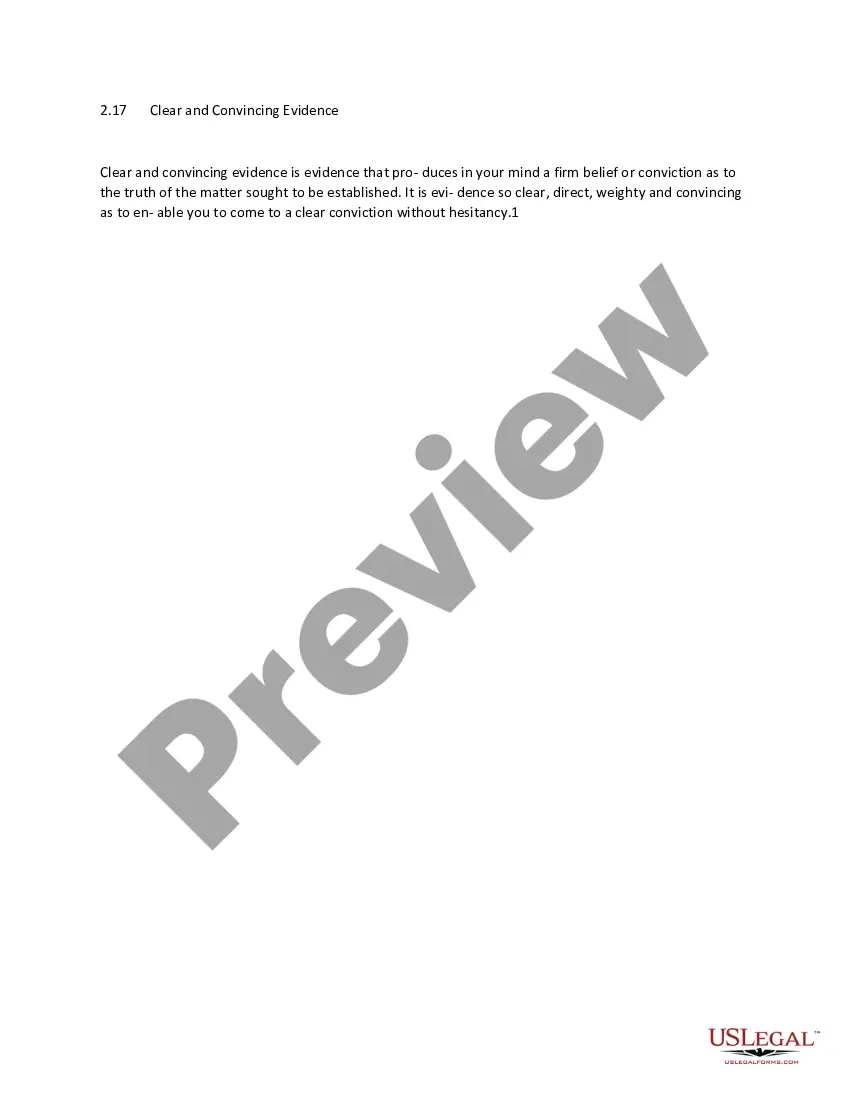
The burden of proof is a legal standard that requires parties to provide evidence to demonstrate that a claim is valid. Three levels of the burden of proof, "beyond a reasonable doubt," a "preponderance of the evidence," and "clear and convincing" determine the level of evidence required for a claim.
The three burdens of proof for criminal cases are "beyond a reasonable doubt," "probable cause," and "reasonable suspicion."