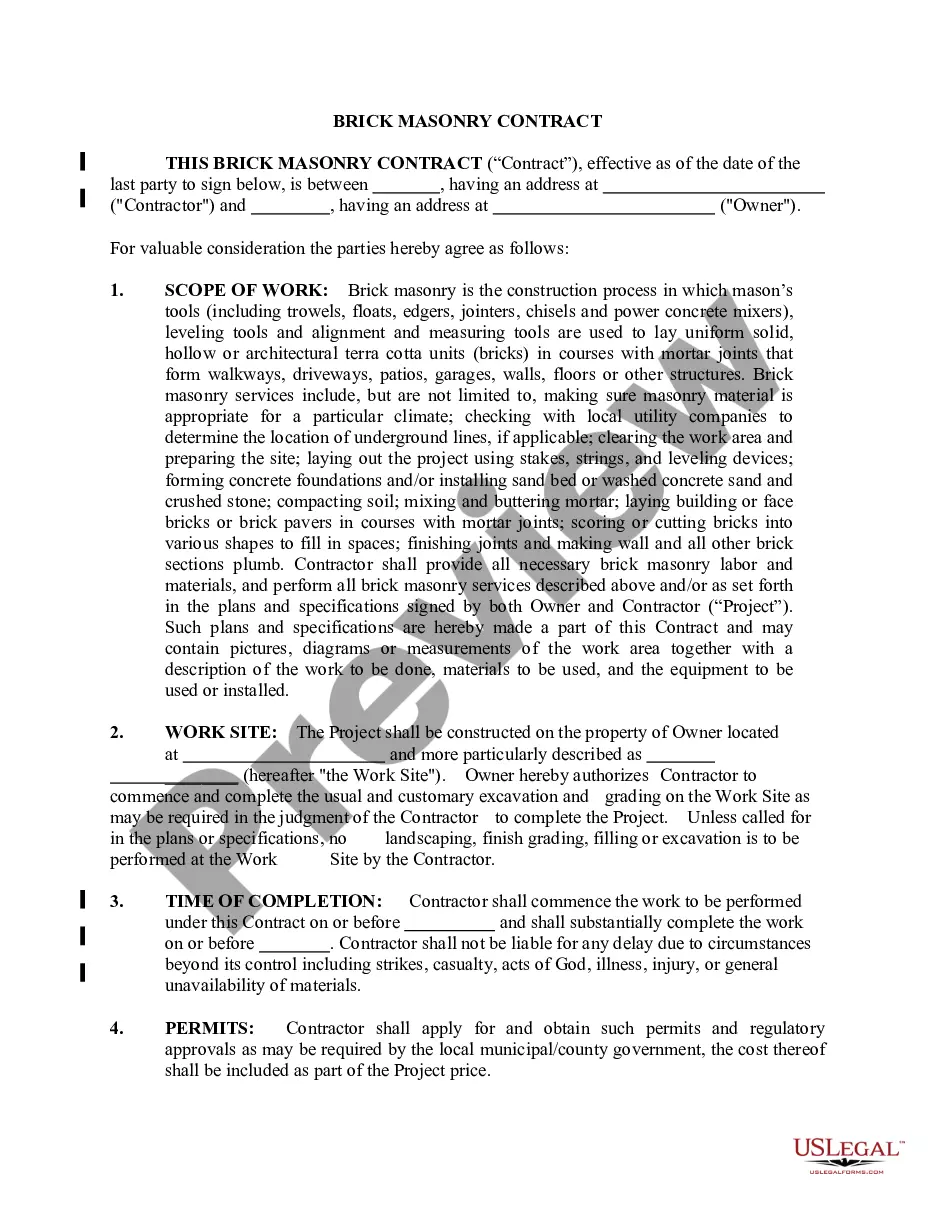
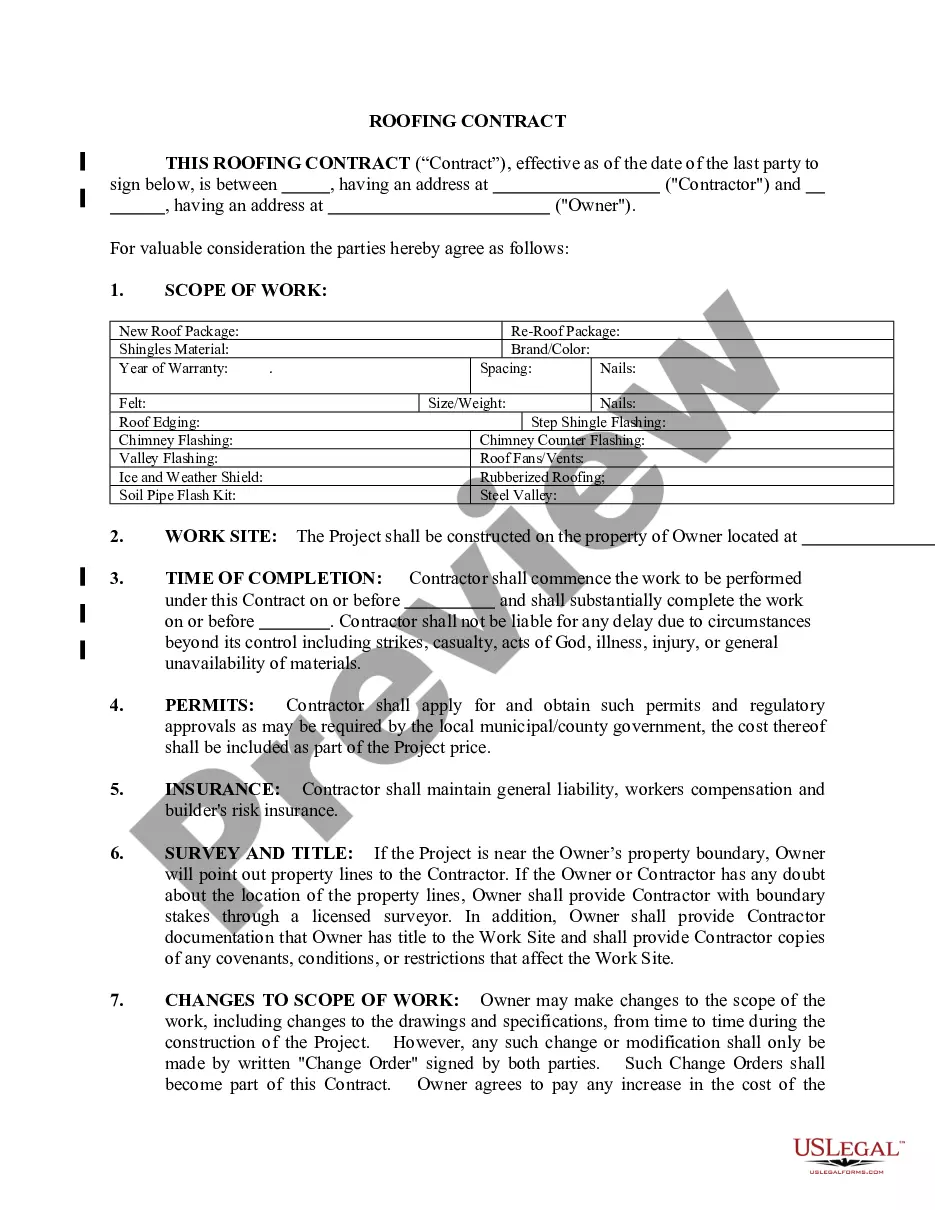
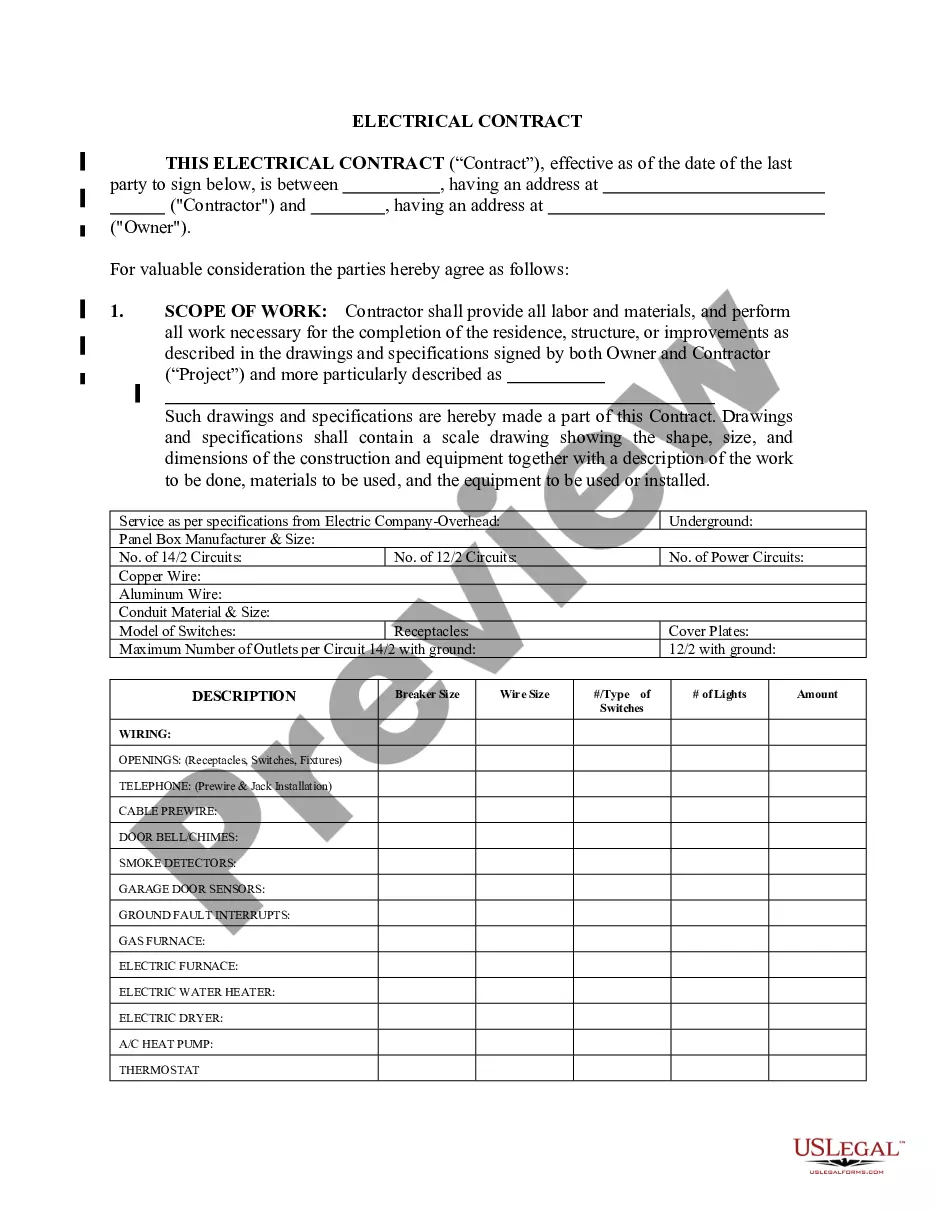
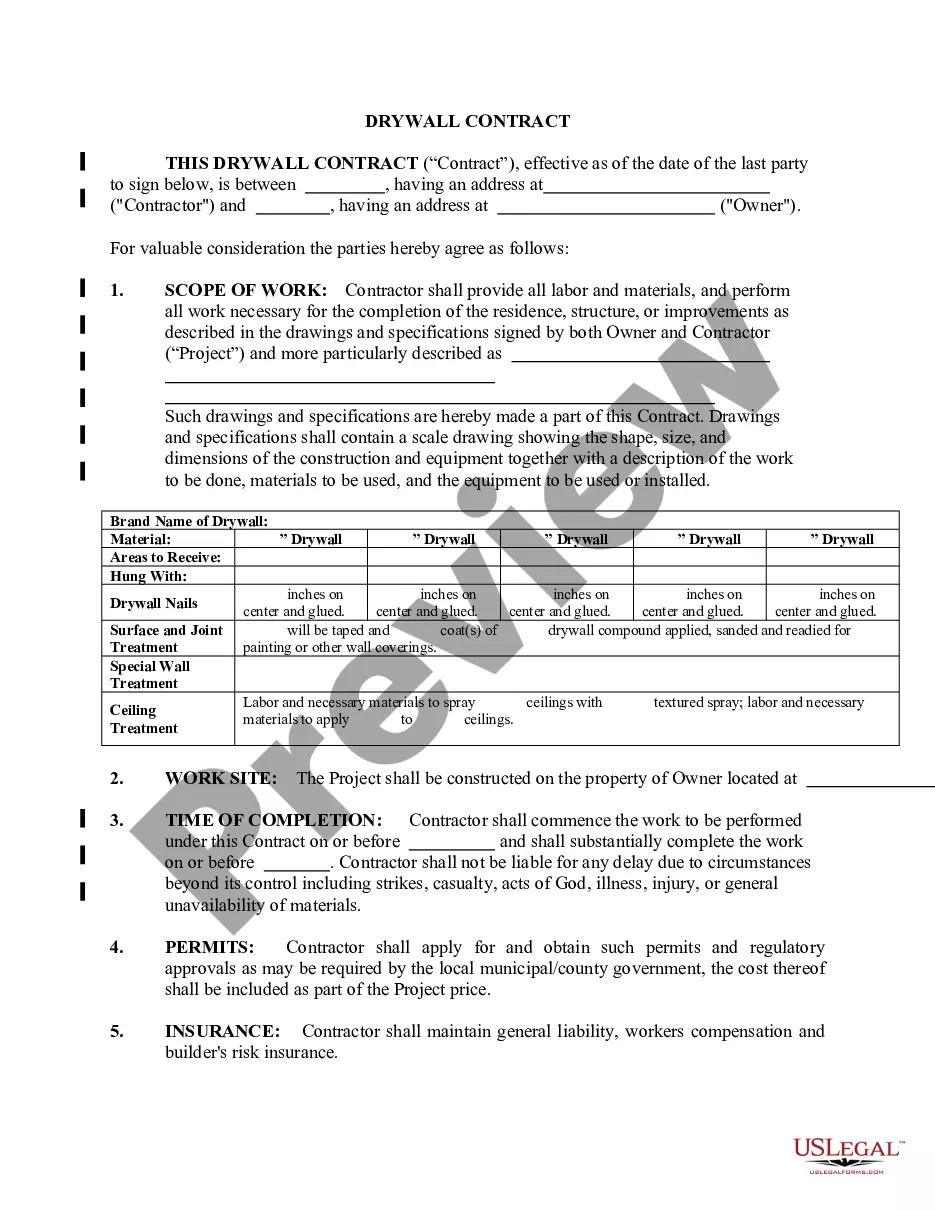
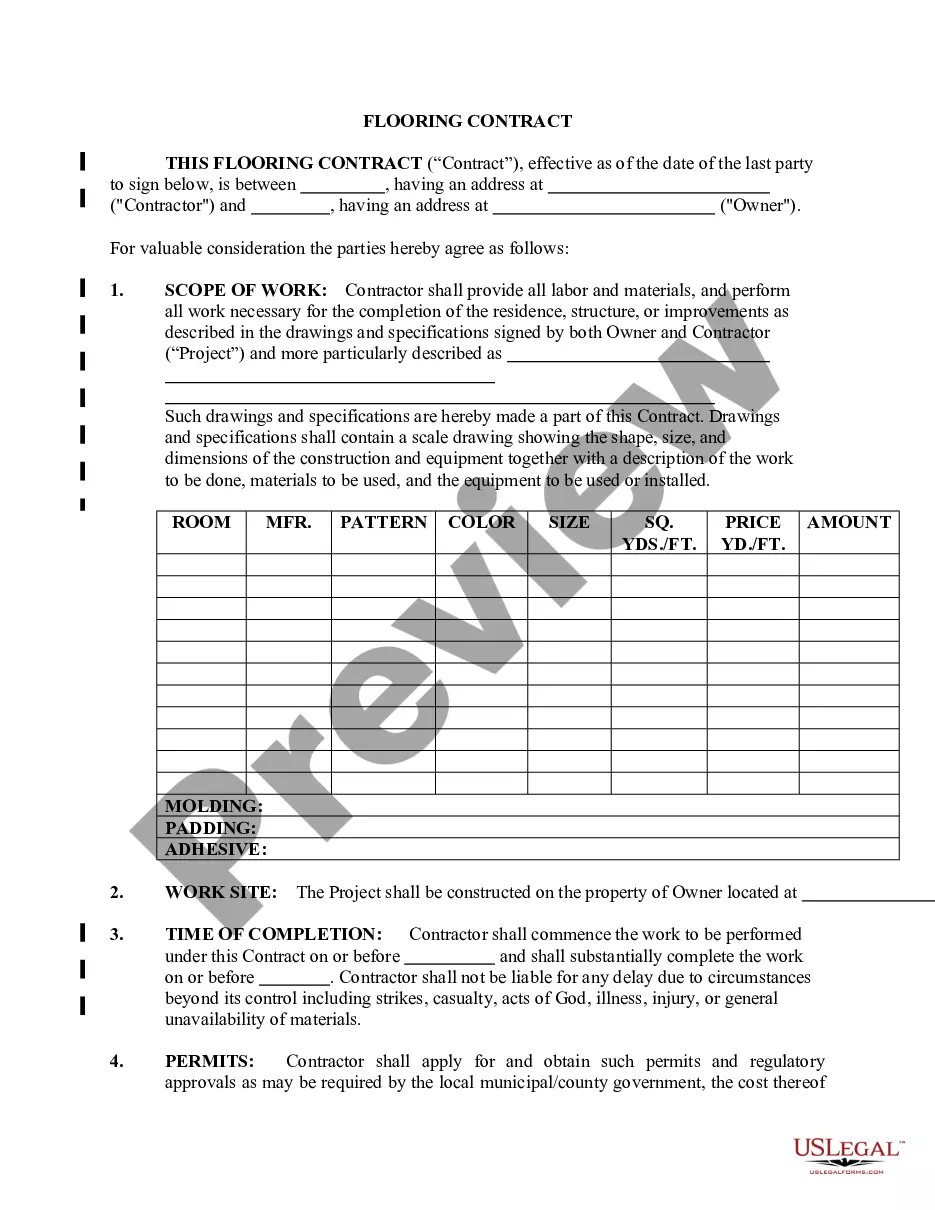
Self-Employed Independent Contractor Employment Agreement - General
Overview of this form
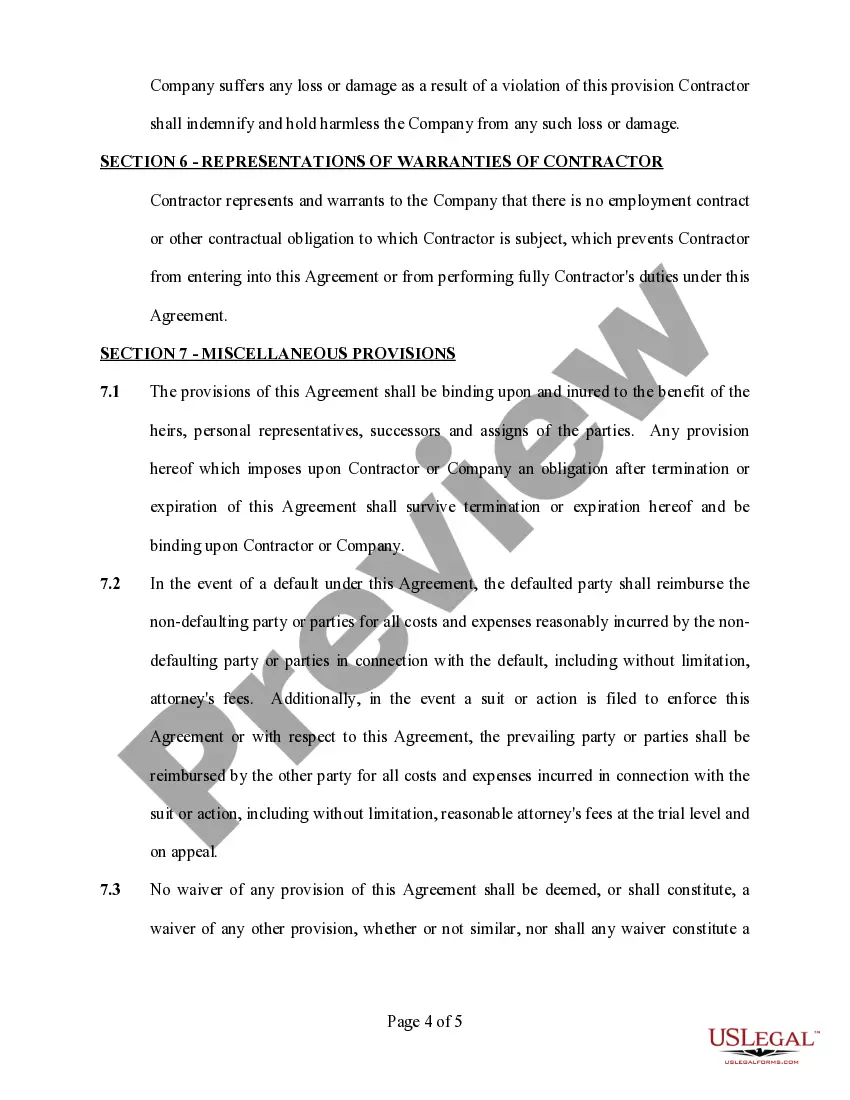
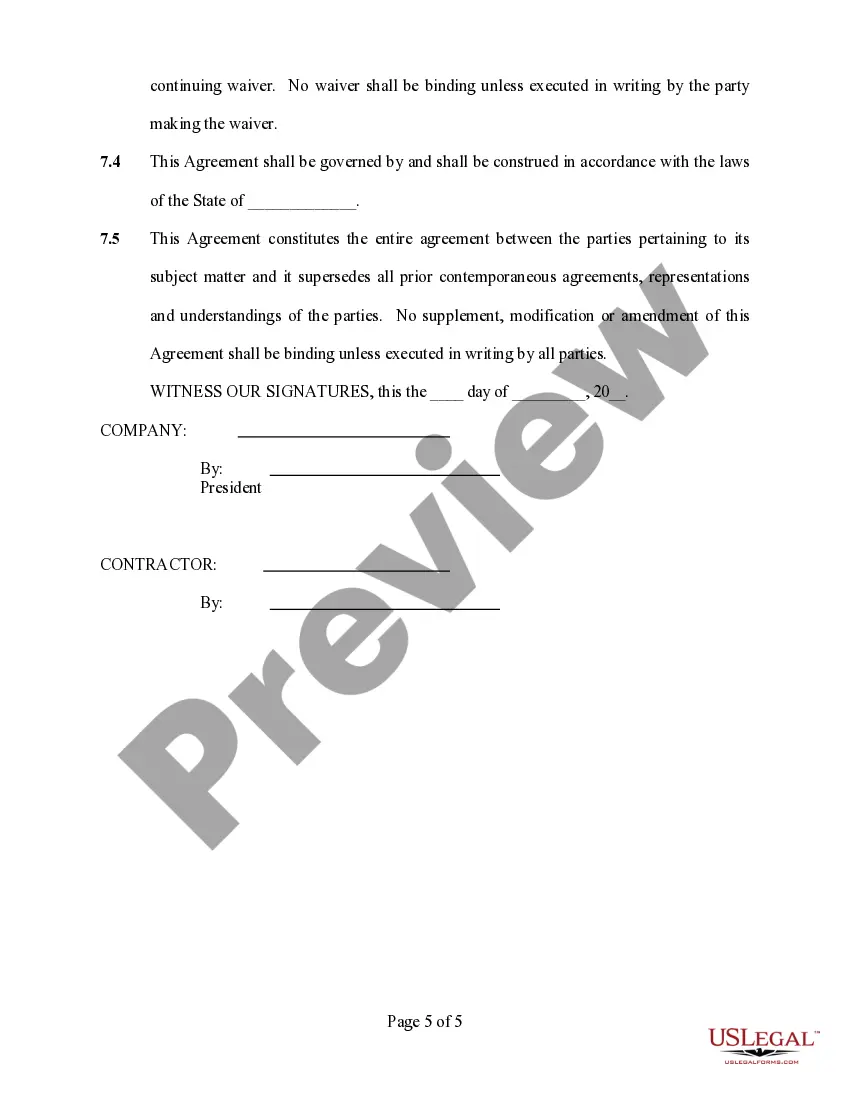
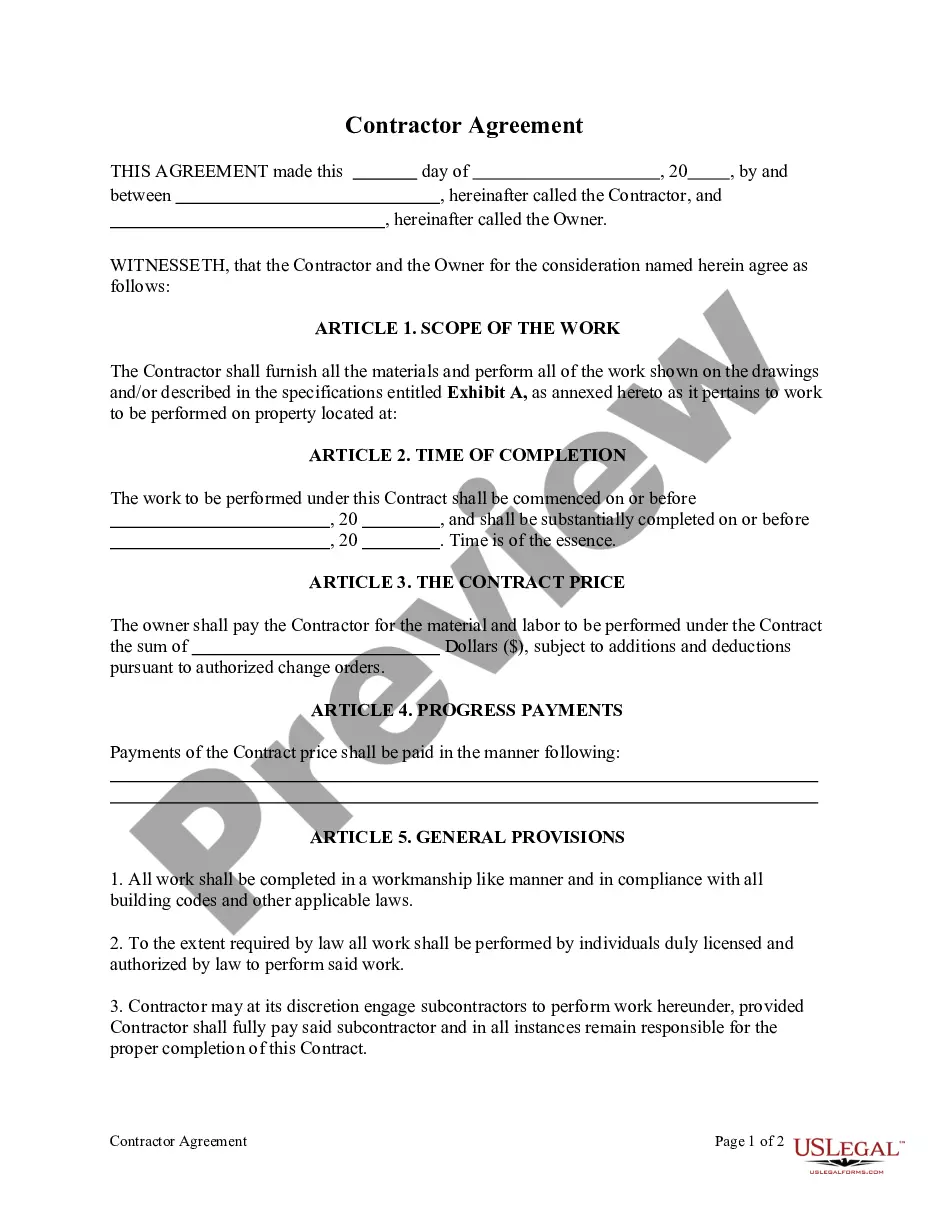
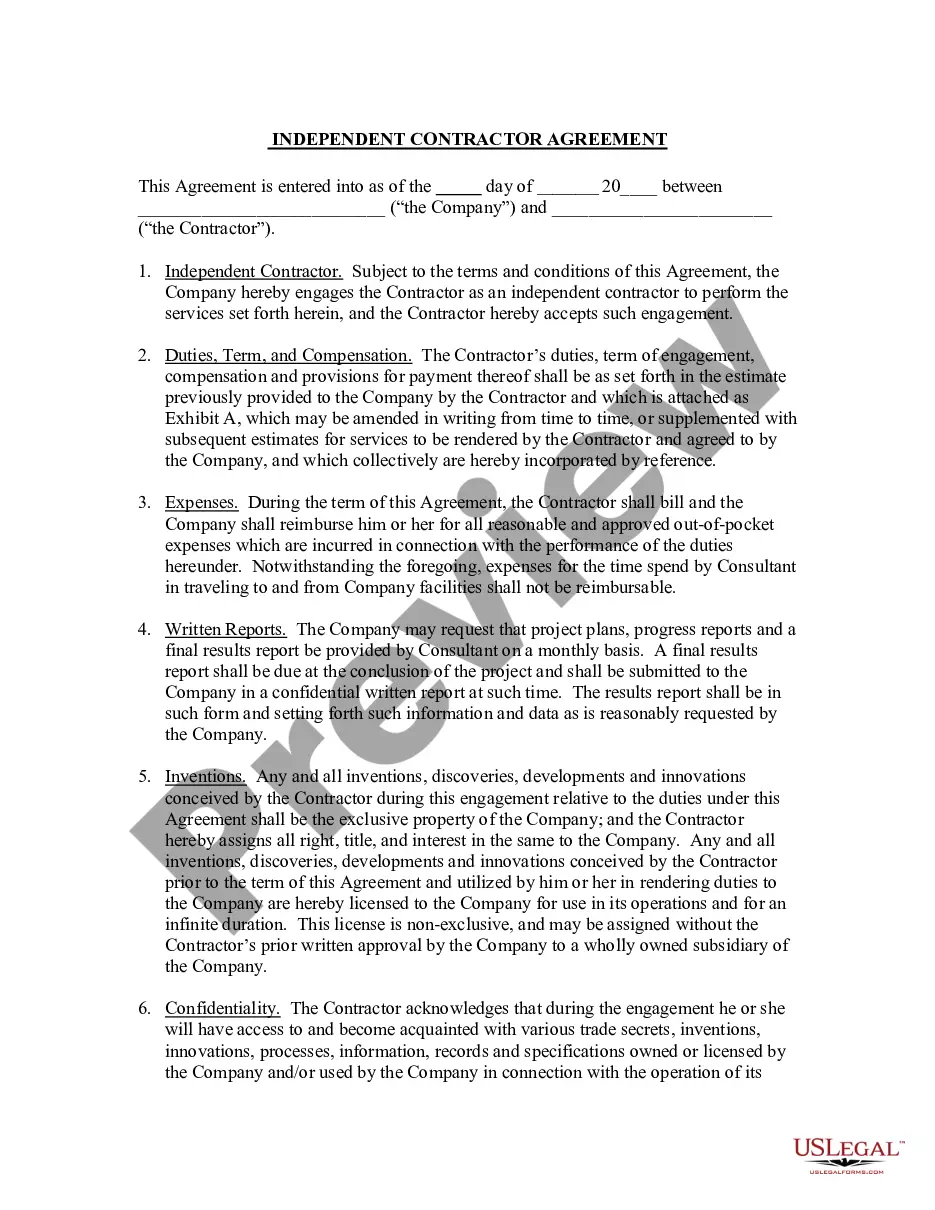
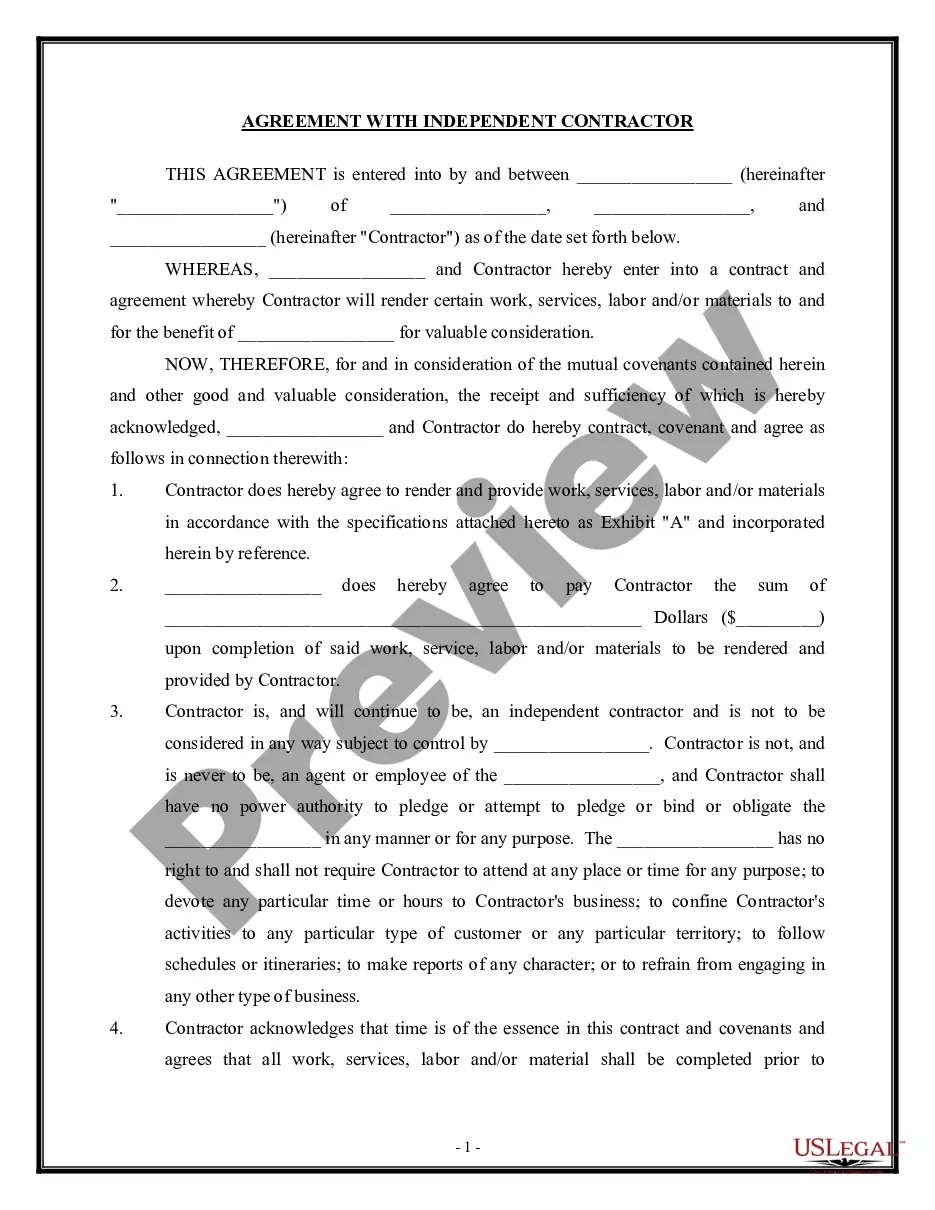
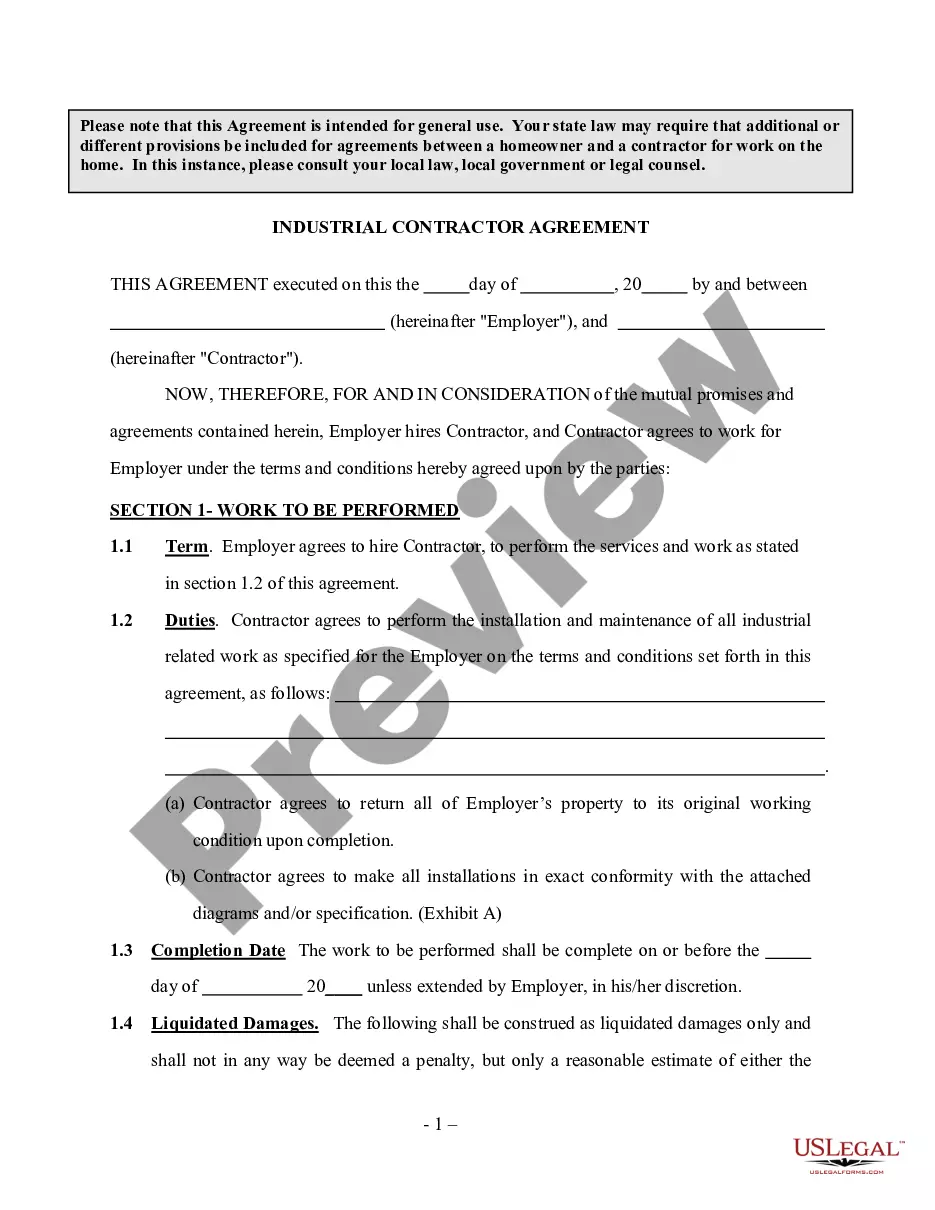
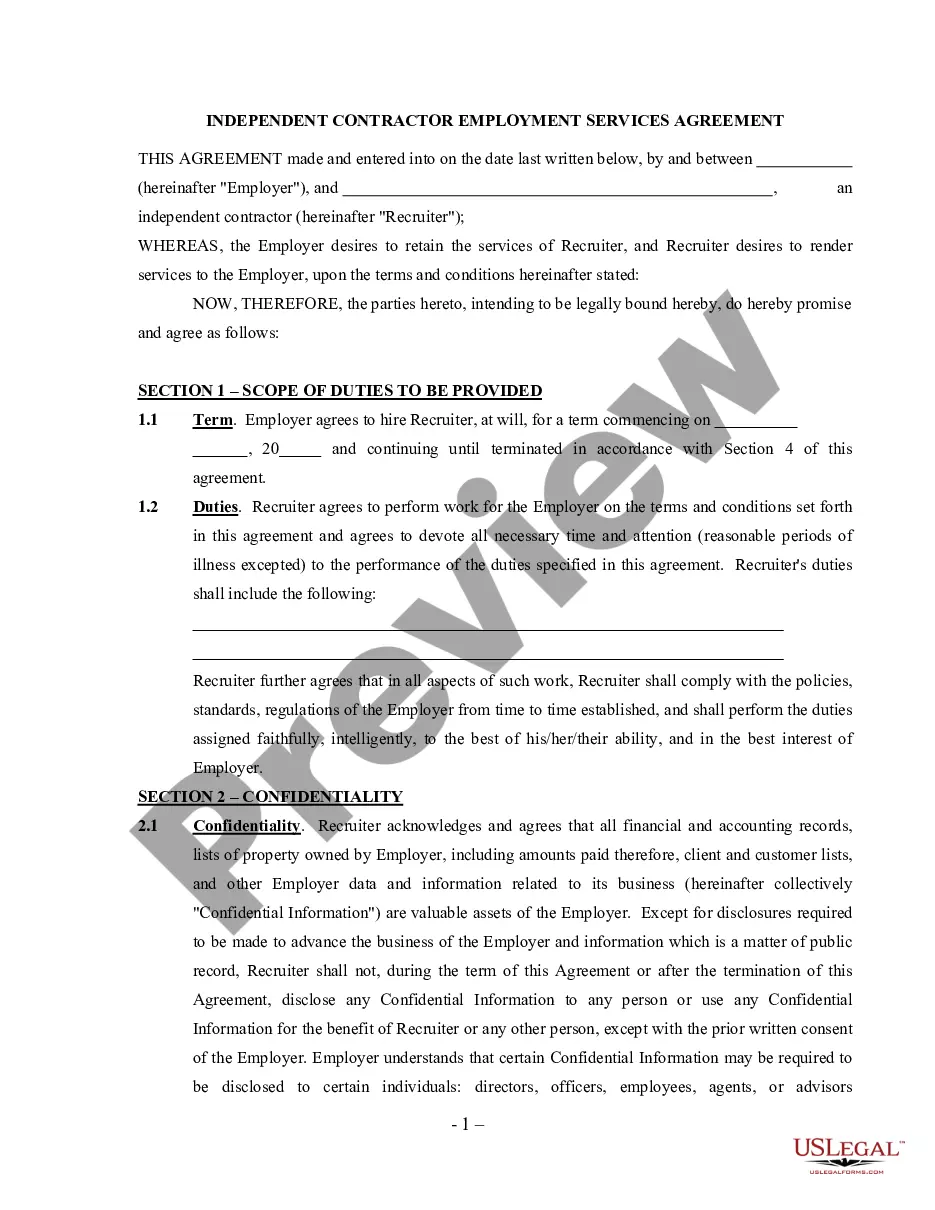
The Self-Employed Independent Contractor Employment Agreement - General is a legal document that sets forth the terms under which a contractor is hired by a company. This agreement outlines the contractor's responsibilities, compensation, confidentiality obligations, and the independent status of the contractor. It differs from employee contracts by emphasizing that the contractor is not considered an employee of the company, meaning they do not receive the same benefits or tax withholdings as traditional employees. This form is essential for establishing a clear professional relationship and protecting both parties involved.
What’s included in this form
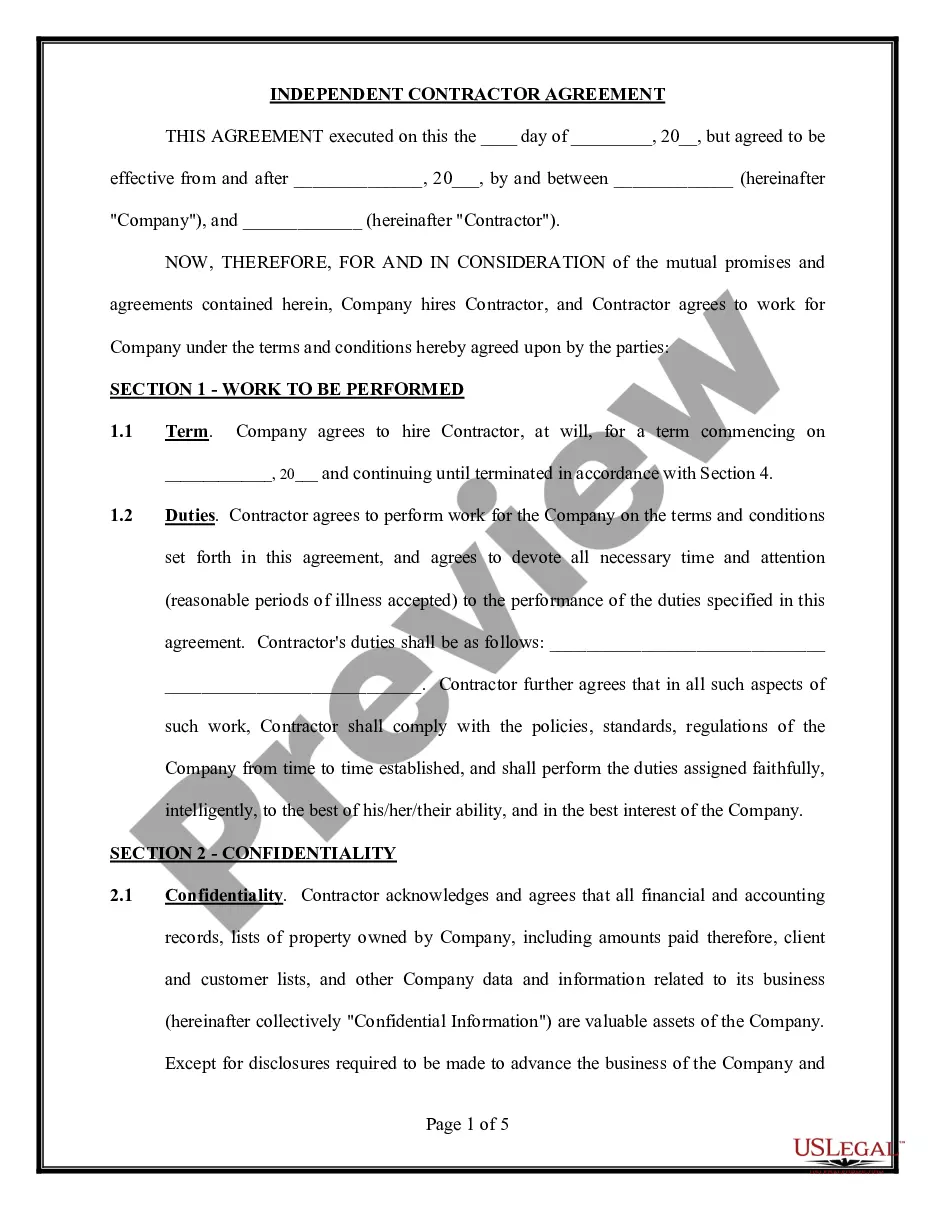
- Work to be performed: Specifies the duration, duties, and commitment of the contractor to the company.
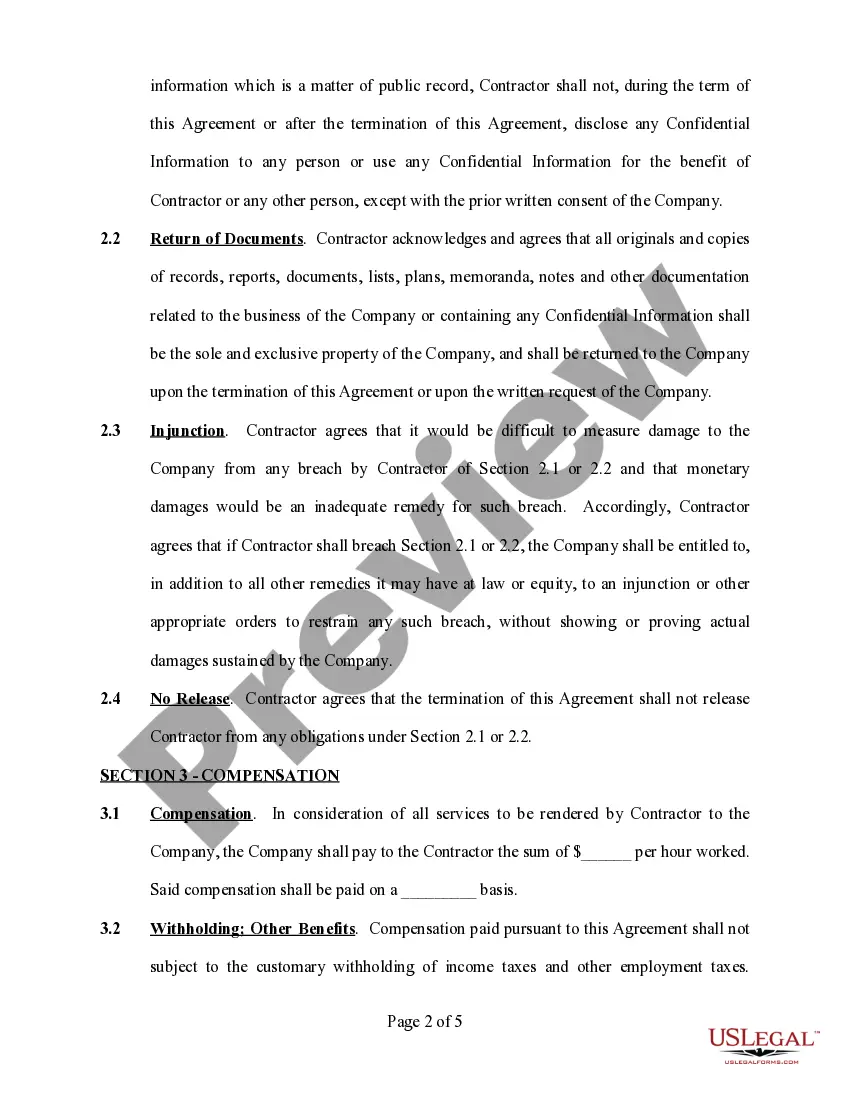
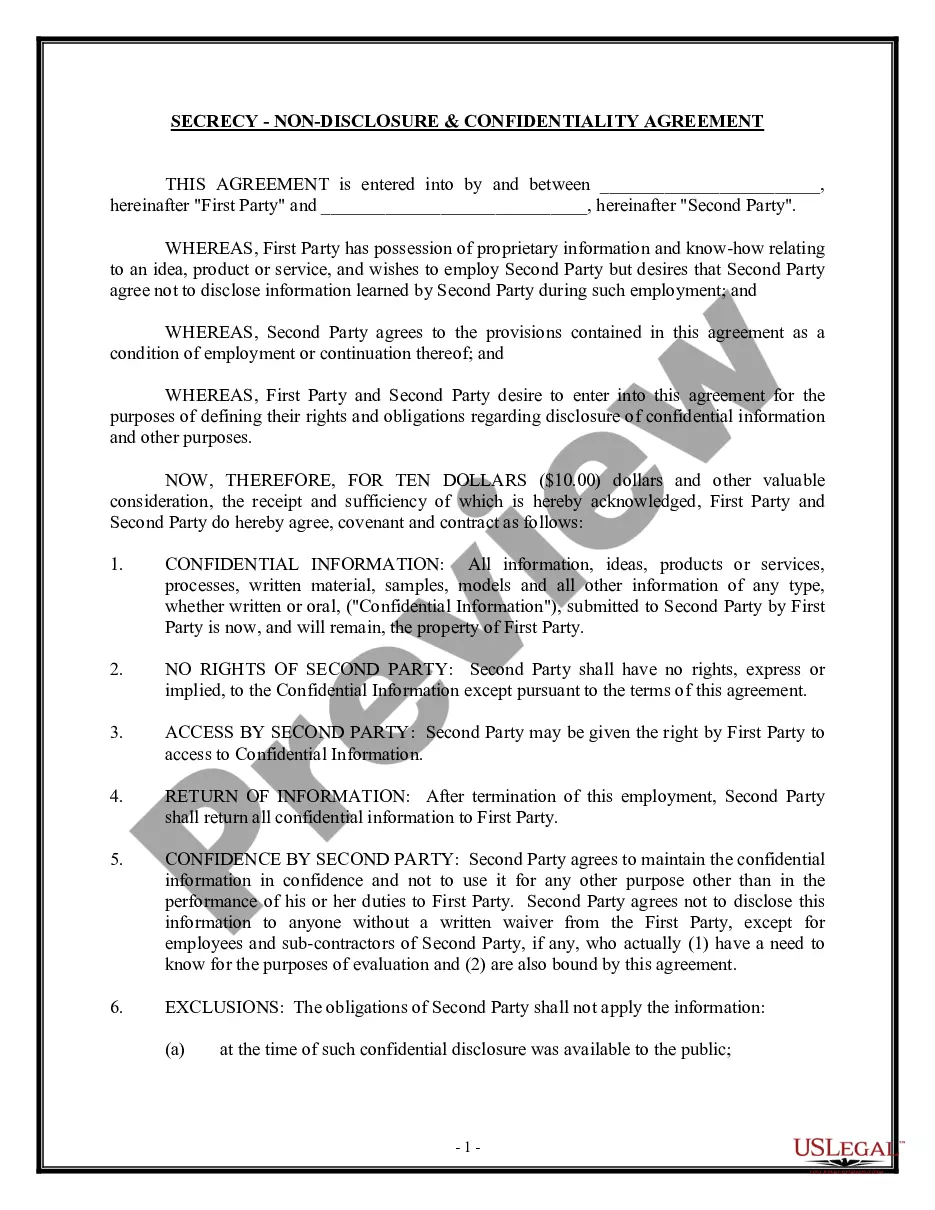
- Confidentiality: Details the contractor's obligation to protect the company's confidential information.
- Compensation: Outlines the payment structure and reimbursement for expenses incurred during work.
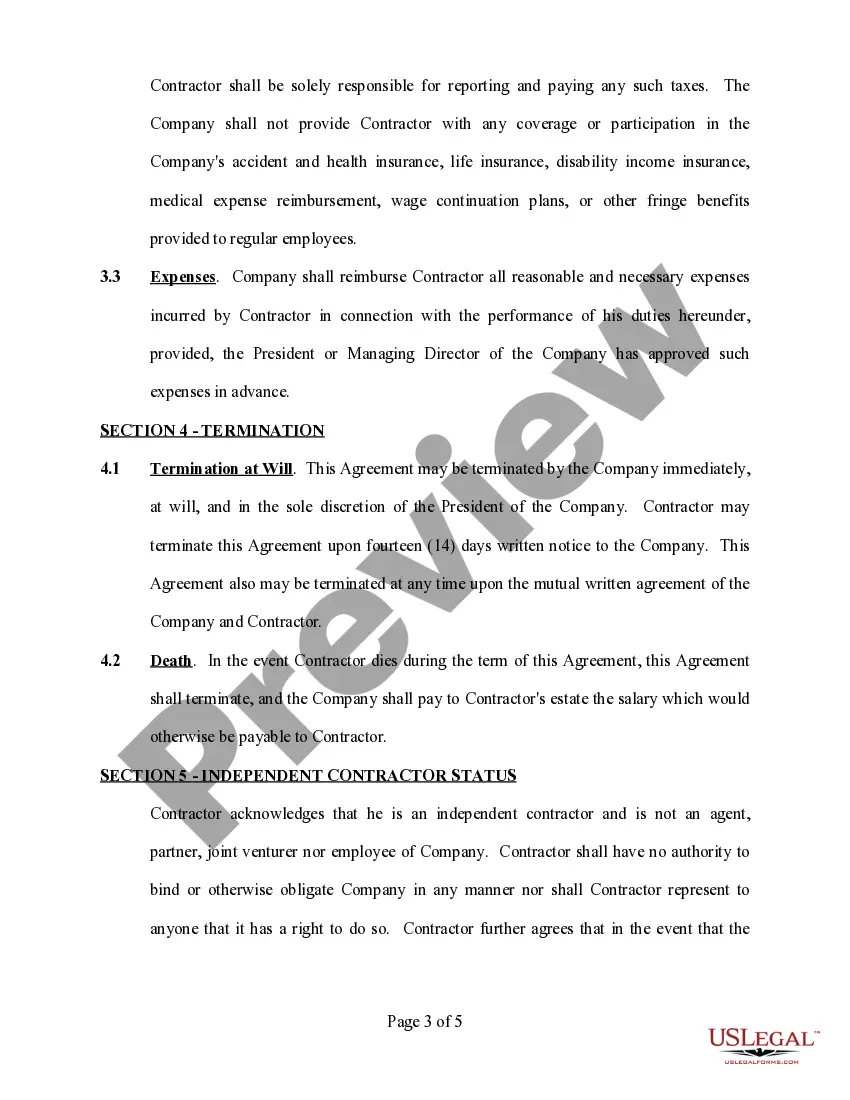
- Termination: Describes the conditions under which the agreement can be terminated by either party.
- Independent contractor status: Clarifies the contractor's status and limitations regarding binding the company.
Situations where this form applies
This form is needed when a company intends to hire a contractor for specific work or projects while maintaining independent contractor status. It is particularly useful in scenarios such as project-based work, freelance services, consulting roles, or any situation where a company wants to engage a self-employed individual without establishing an employer-employee relationship. Using this form helps both parties understand their rights and responsibilities, reducing the risk of disputes later on.
Who this form is for
- Companies seeking to hire independent contractors for specific tasks or projects.
- Self-employed individuals who want to formalize their working relationship with a client or company.
- Freelancers or consultants looking for clarity on their compensation and duties.
- Businesses that want to protect their confidential information while working with contractors.
How to prepare this document
- Identify the parties involved: Fill in the company name and contractor's name in the appropriate sections.
- Specify the start date of the agreement and any applicable terms related to the duration of the work.
- Outline the contractor's specific duties and responsibilities to ensure clarity.
- Detail the compensation structure, including payment rates and expense reimbursement procedures.
- Include any important confidentiality stipulations that both parties must agree to.
- Review the termination clauses to understand how either party can exit the agreement.
Notarization guidance
In most cases, this form does not require notarization. However, some jurisdictions or signing circumstances might. US Legal Forms offers online notarization powered by Notarize, accessible 24/7 for a quick, remote process.
Get your form ready online
Our built-in tools help you complete, sign, share, and store your documents in one place.
Make edits, fill in missing information, and update formatting in US Legal Forms—just like you would in MS Word.
Download a copy, print it, send it by email, or mail it via USPS—whatever works best for your next step.
Sign and collect signatures with our SignNow integration. Send to multiple recipients, set reminders, and more. Go Premium to unlock E-Sign.
If this form requires notarization, complete it online through a secure video call—no need to meet a notary in person or wait for an appointment.
We protect your documents and personal data by following strict security and privacy standards.

Make edits, fill in missing information, and update formatting in US Legal Forms—just like you would in MS Word.

Download a copy, print it, send it by email, or mail it via USPS—whatever works best for your next step.

Sign and collect signatures with our SignNow integration. Send to multiple recipients, set reminders, and more. Go Premium to unlock E-Sign.

If this form requires notarization, complete it online through a secure video call—no need to meet a notary in person or wait for an appointment.

We protect your documents and personal data by following strict security and privacy standards.
Avoid these common issues
- Failing to clearly define the contractor's duties can lead to confusion later.
- Not specifying the compensation details, which can cause payment disputes.
- Neglecting to include confidentiality clauses can risk sensitive company information.
- Forgetting to review the termination rights of both parties before signing.
Advantages of online completion
- Convenience of downloading and printing the agreement at your discretion.
- Editability allows for customization to fit specific terms and conditions.
- Access to professionally drafted forms ensures legal reliability and thoroughness.
- Quick transaction that saves time compared to traditional legal services.
Legal use & context
- Understanding and adhering to the terms outlined protects both parties from disputes.
- This agreement can serve as a reference in case of legal disputes regarding employment status.
- It establishes clear expectations for both the contractor and the company, promoting a healthy working relationship.
Summary of main points
- The agreement clearly defines the roles and responsibilities of both the contractor and the company.
- It's essential for protecting sensitive company information through confidentiality clauses.
- This form can help avoid misclassification of workers and ensure compliance with labor laws.
Looking for another form?
Form popularity
FAQ
The general rule is that an individual is an independent contractor if the payer has the right to control or direct only the result of the work and not what will be done and how it will be done. The earnings of a person who is working as an independent contractor are subject to Self-Employment Tax.
Those eligible for PUA also will receive an additional $300/week through the end of the extension period unlike CARES Act I, which added $600/week in federal stimulus payments. Finally, the new stimulus bill provides independent contractors with paid sick and paid family leave benefits through March 14, 2021.
An "independent contractor" is an entity with whom a principal/owner directly contracts to perform a certain task or tasks. A "general contractor" is an entity with whom the principal/owner directly contracts to perform certain jobs.
Pay basis: If you pay a worker on an hourly, weekly, or monthly basis, the IRS will consider it a sign the worker is your employee. An independent is generally paid by the job, project, assignment, etc., or receives a commission or similar fee.
If you're self-employed, you do not have a contract of employment with an employer.You don't have employment rights as such if you're self-employed as you are your own boss and can therefore decide how much to charge for your work and how much holiday to give yourself. You do have some legal protection.
Another term for an independent contractor is freelancer.
Length of Contract. Each client contractor agreement should outline the length of the working relationship. Project Description. Payment Terms. Nondisclosure Terms. Rights and Responsibilities. Termination Clause. Disclaimers.
In general, all independent contractors are self-employed, but not all self-employed people are independent contractors.
The contract should state who pays which expenses. The contractor is usually responsible for all expenses including mileage, vehicle maintenance, and other business travel costs; work supplies and tools; licenses, fees, and permits; phone and internet expenses; and payments to employees or subcontractors.