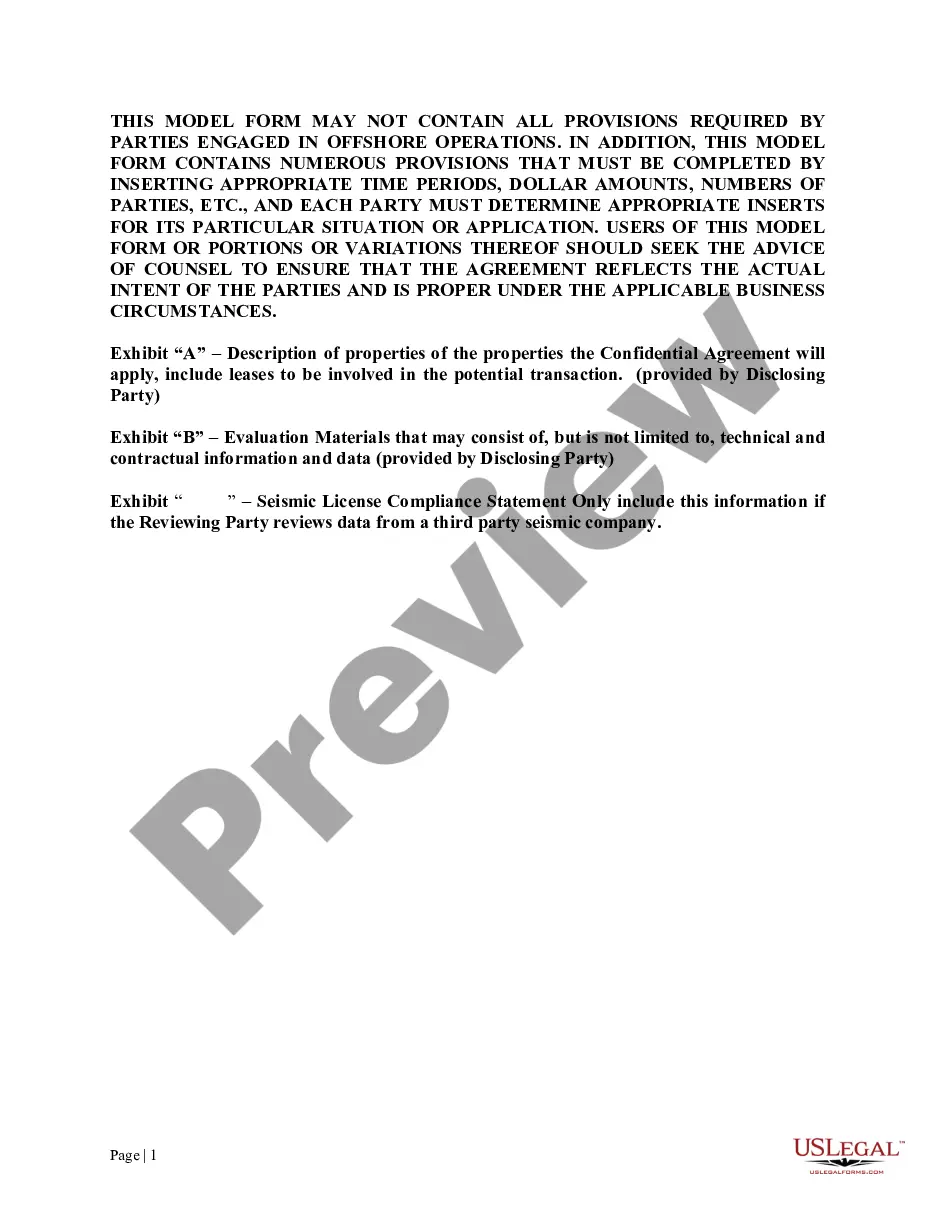
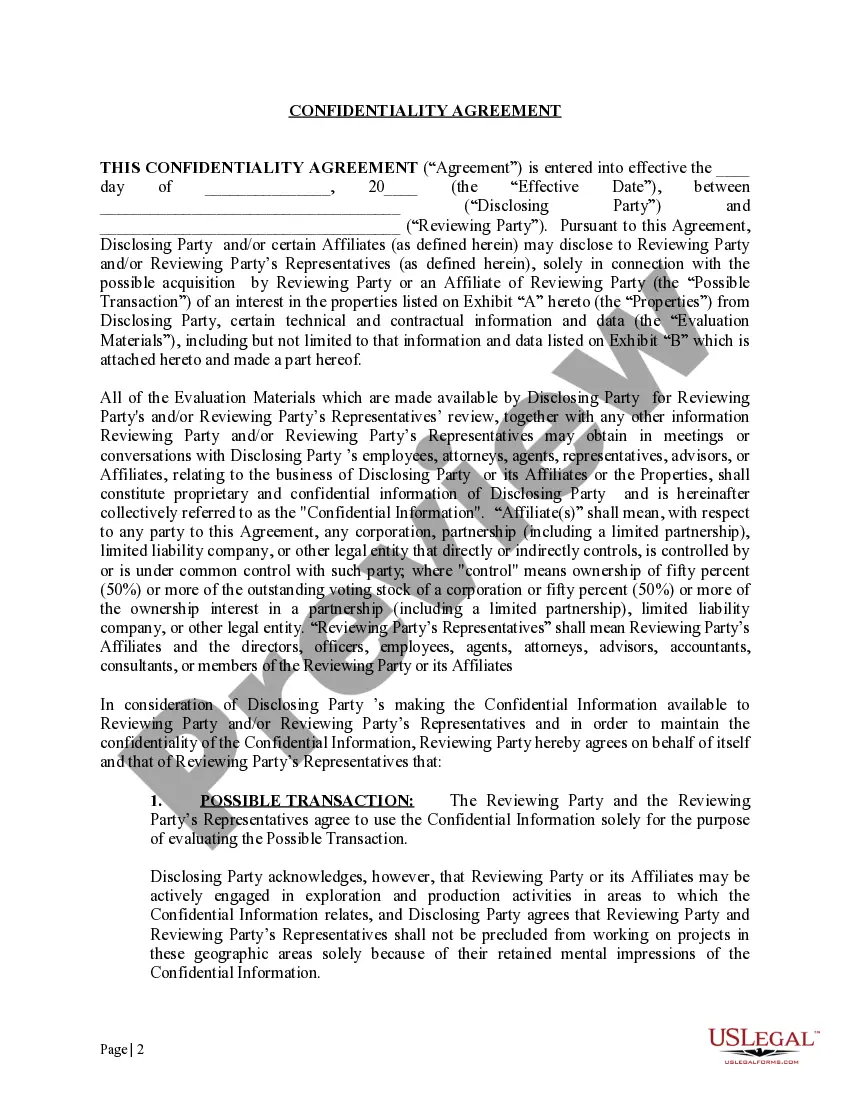
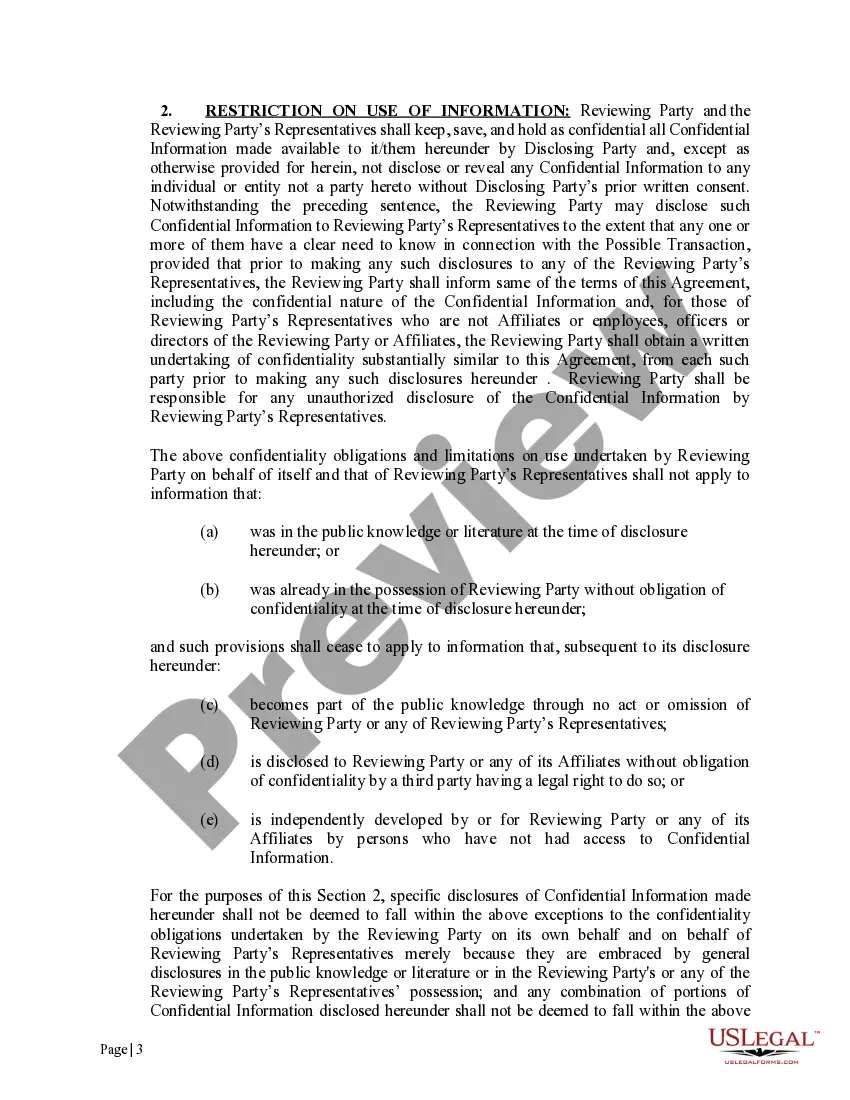
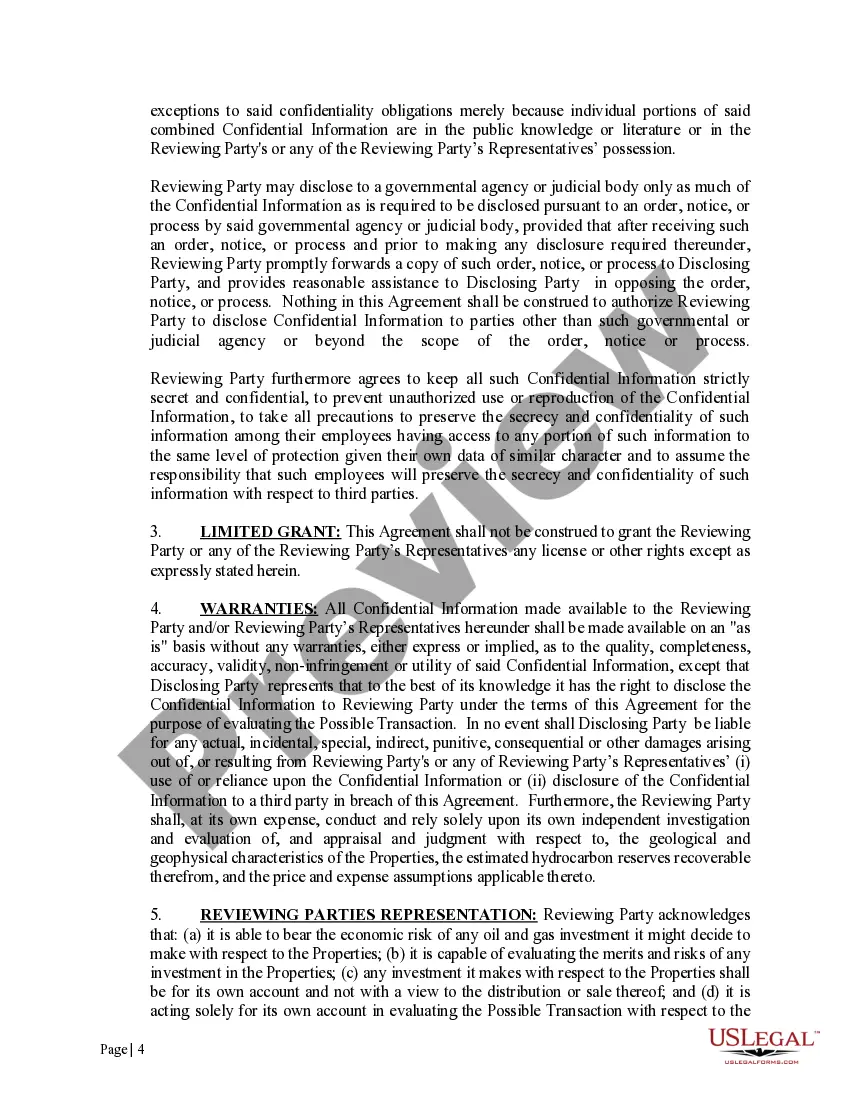
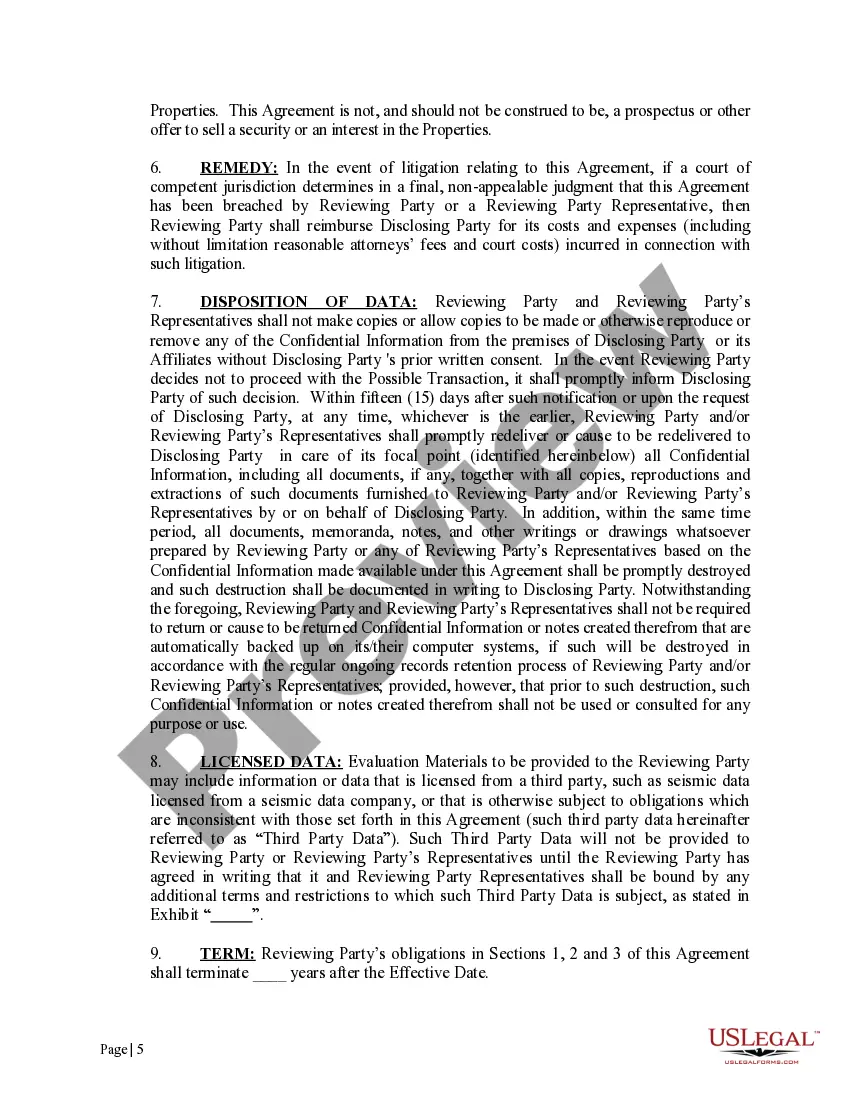
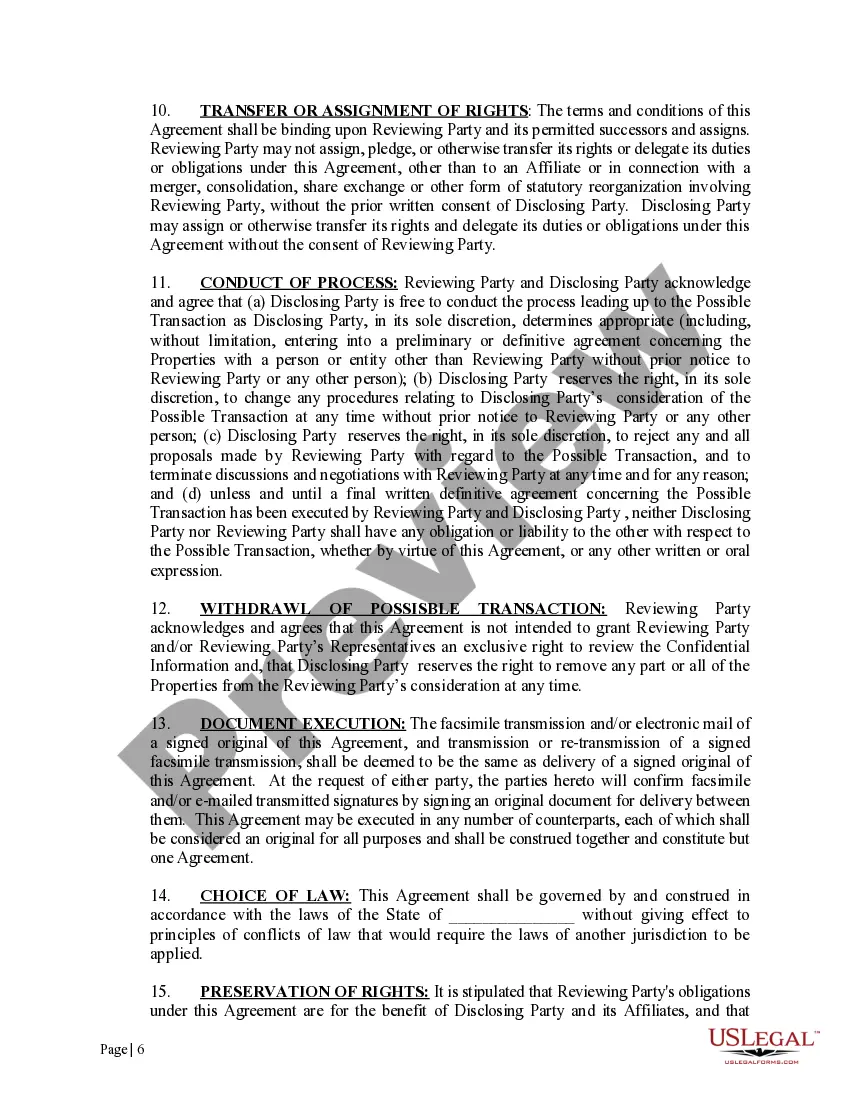
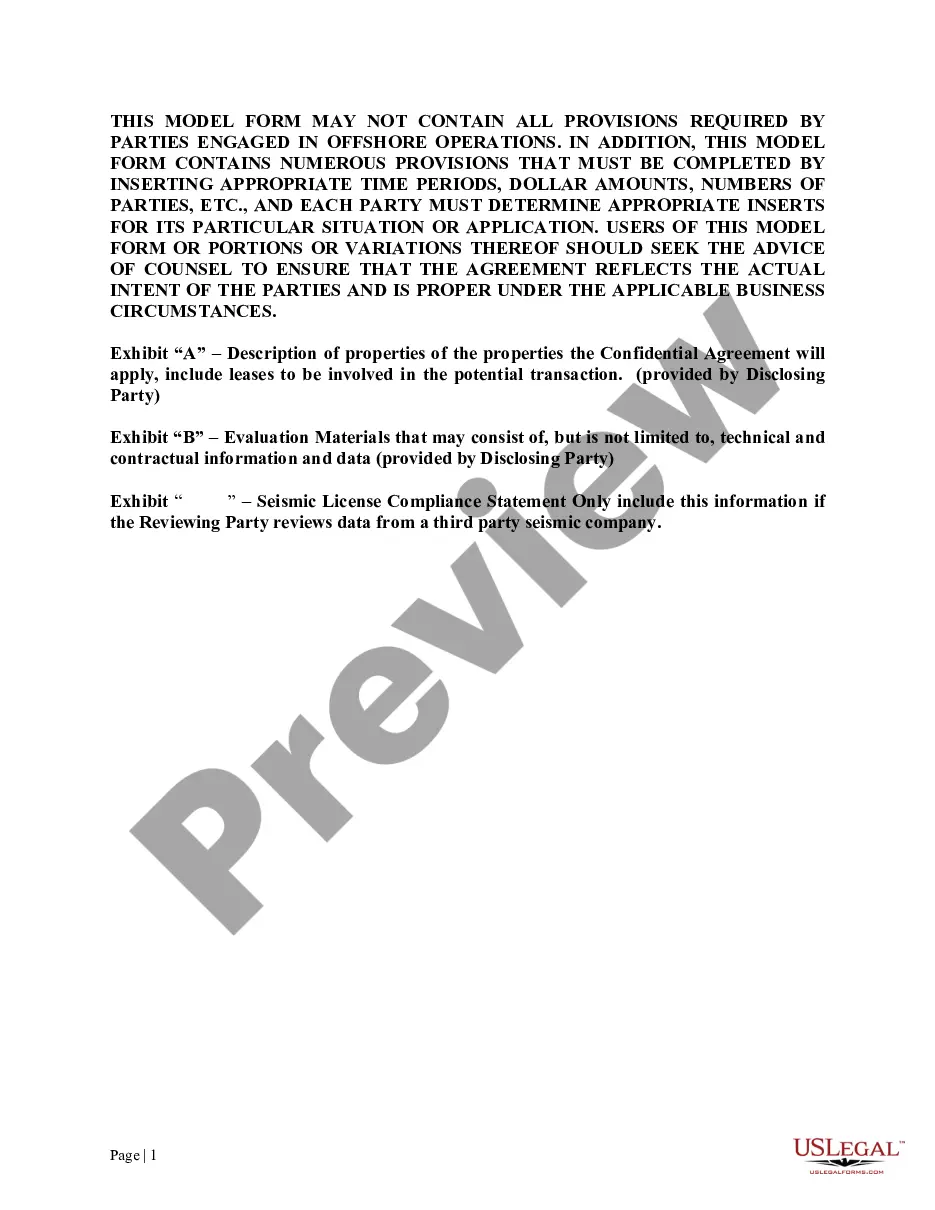
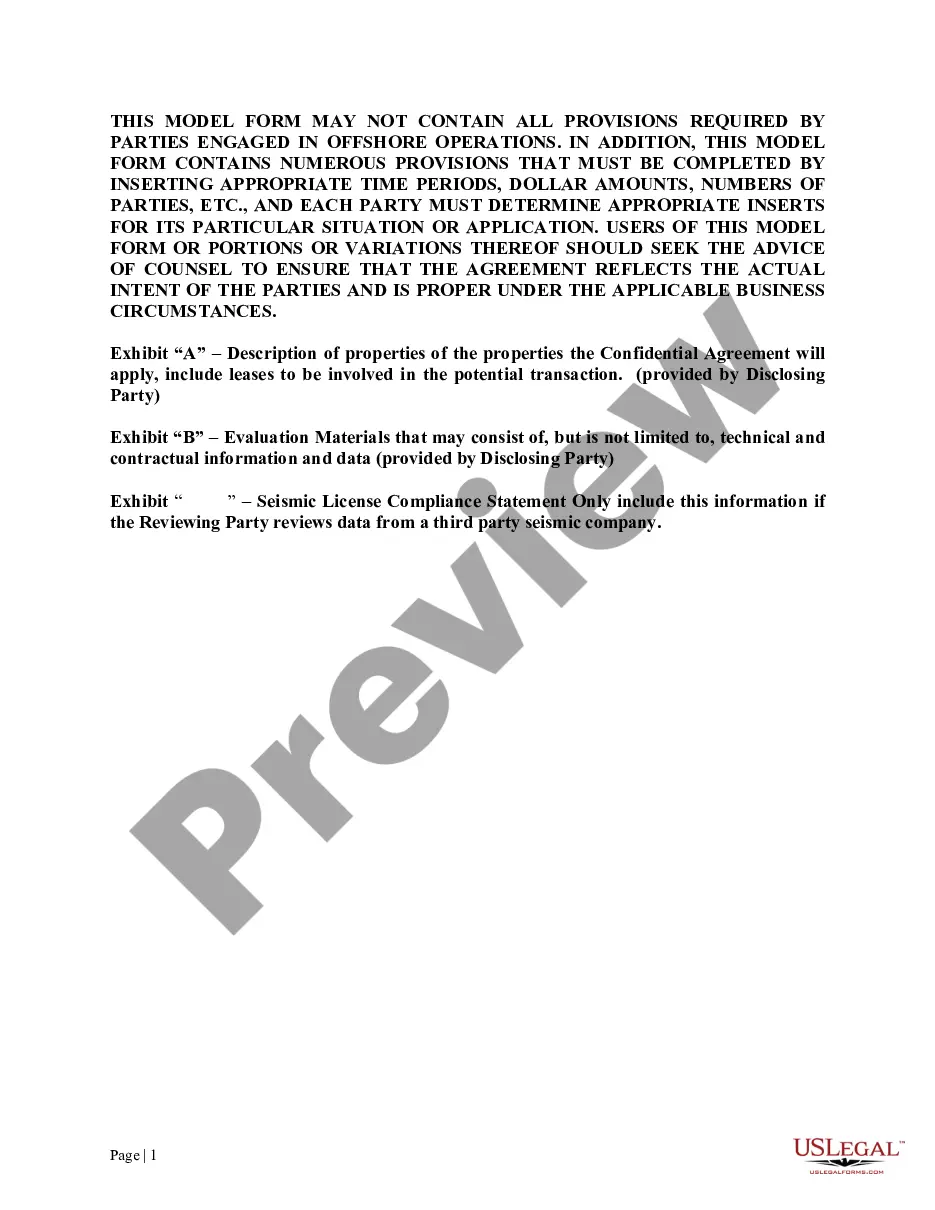
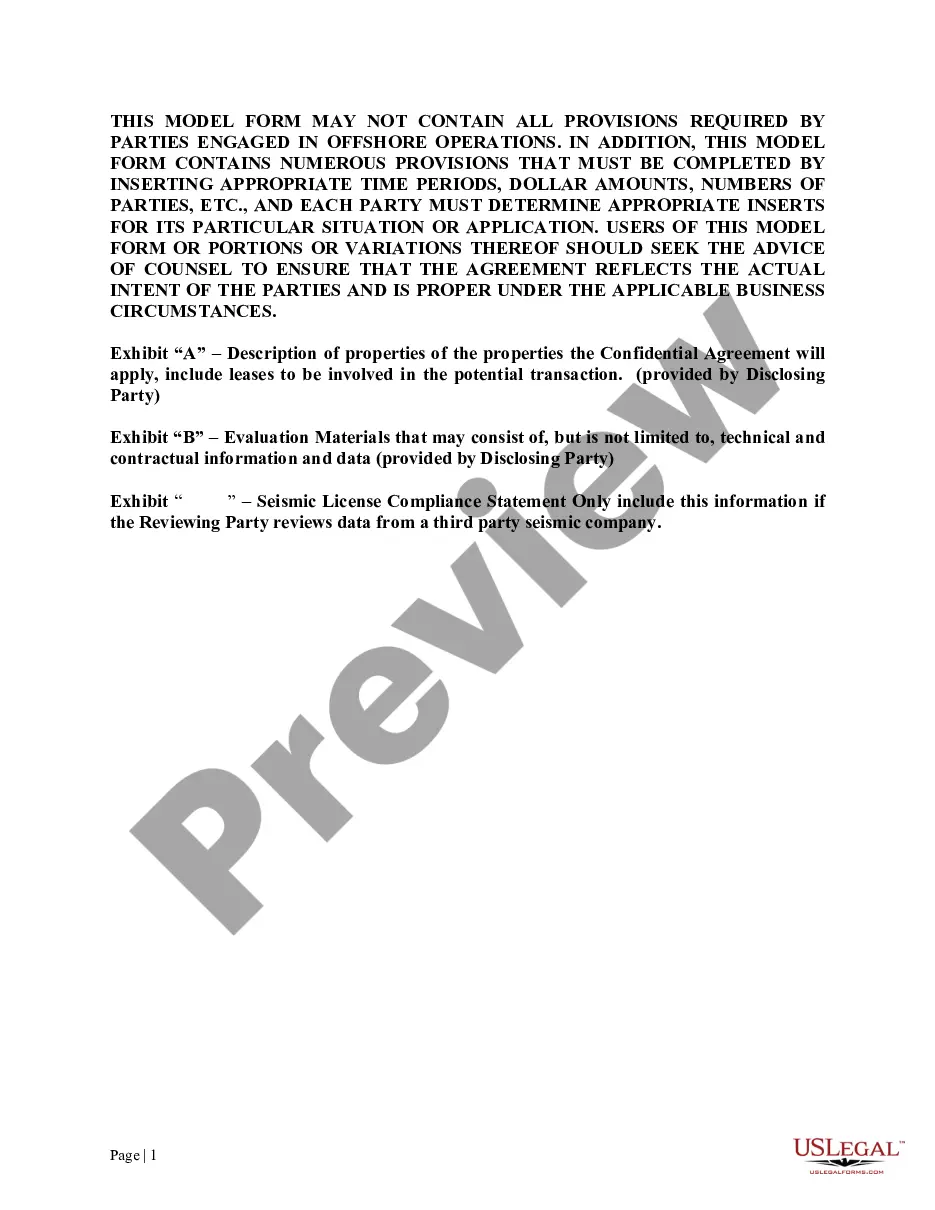
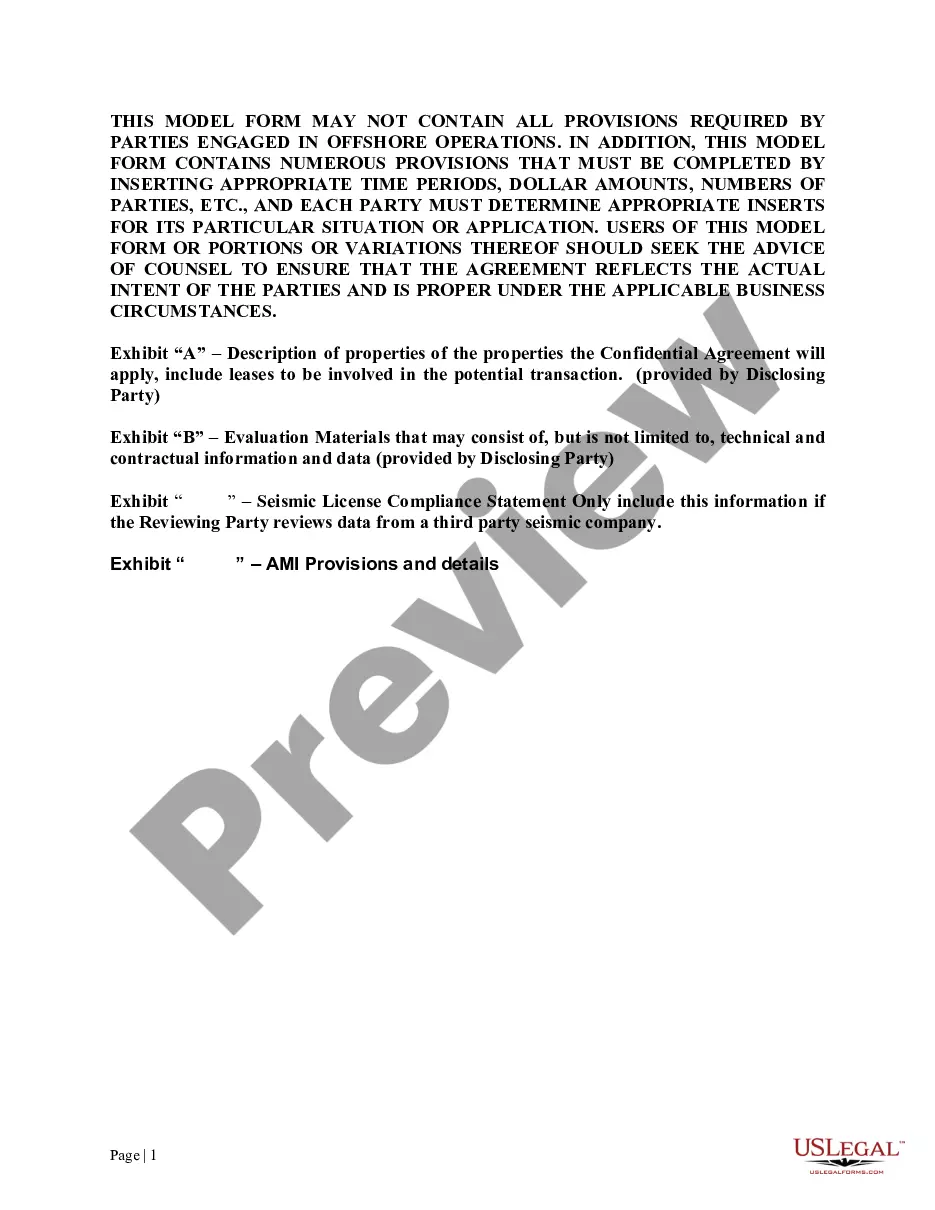
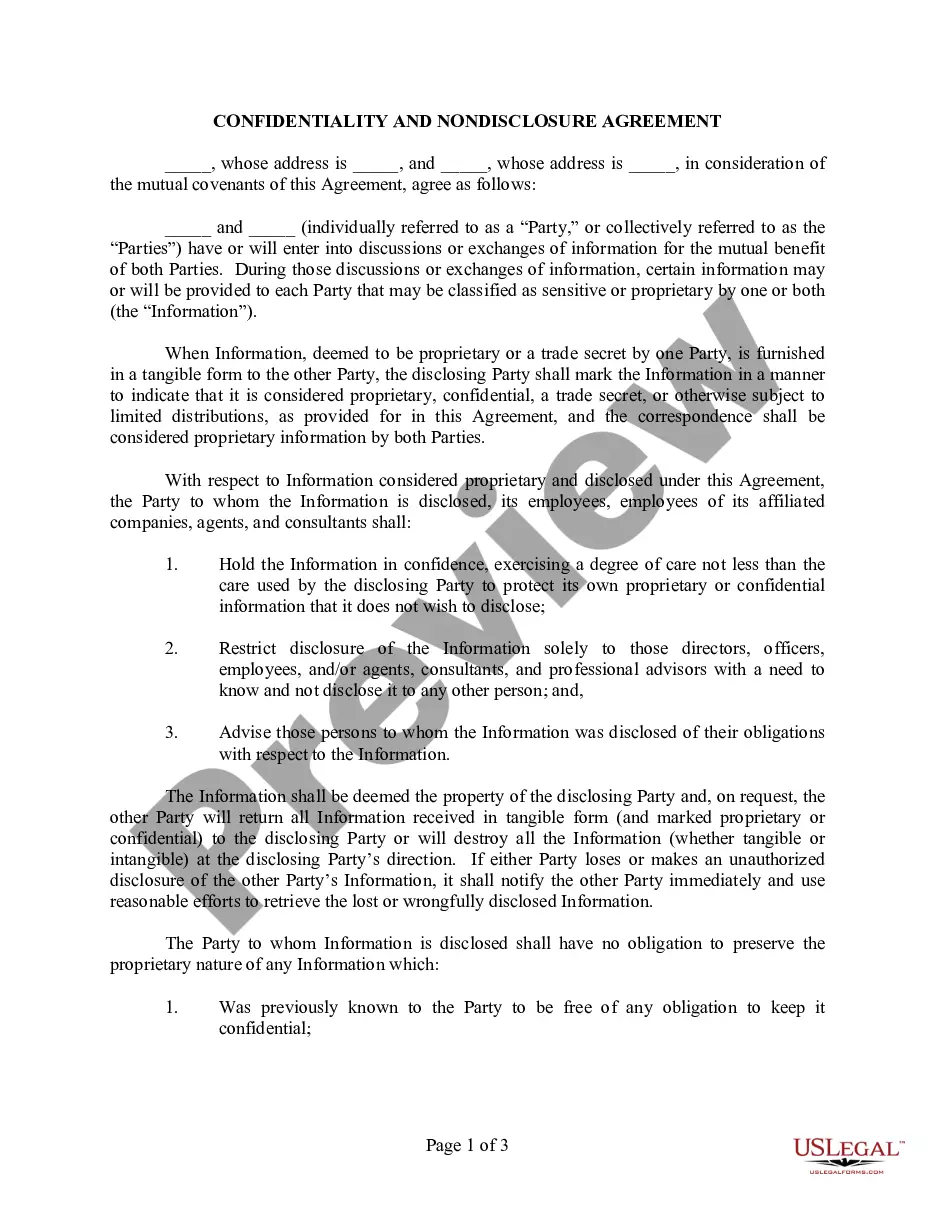
Confidentiality Agreement for Offshore Operations without Limited Disclosure Clause

Does this document require notarization?
Notarization is generally not required for this form. However, certain states or situations might demand it. You can complete notarization online through US Legal Forms, powered by Notarize, using a verified video call available anytime.
Get your form ready online
Our built-in tools help you complete, sign, share, and store your documents in one place.
Make edits, fill in missing information, and update formatting in US Legal Forms—just like you would in MS Word.
Download a copy, print it, send it by email, or mail it via USPS—whatever works best for your next step.
Sign and collect signatures with our SignNow integration. Send to multiple recipients, set reminders, and more. Go Premium to unlock E-Sign.
If this form requires notarization, complete it online through a secure video call—no need to meet a notary in person or wait for an appointment.
We protect your documents and personal data by following strict security and privacy standards.
Make edits, fill in missing information, and update formatting in US Legal Forms—just like you would in MS Word.
Download a copy, print it, send it by email, or mail it via USPS—whatever works best for your next step.
Sign and collect signatures with our SignNow integration. Send to multiple recipients, set reminders, and more. Go Premium to unlock E-Sign.
If this form requires notarization, complete it online through a secure video call—no need to meet a notary in person or wait for an appointment.
We protect your documents and personal data by following strict security and privacy standards.
Looking for another form?
Form popularity
FAQ
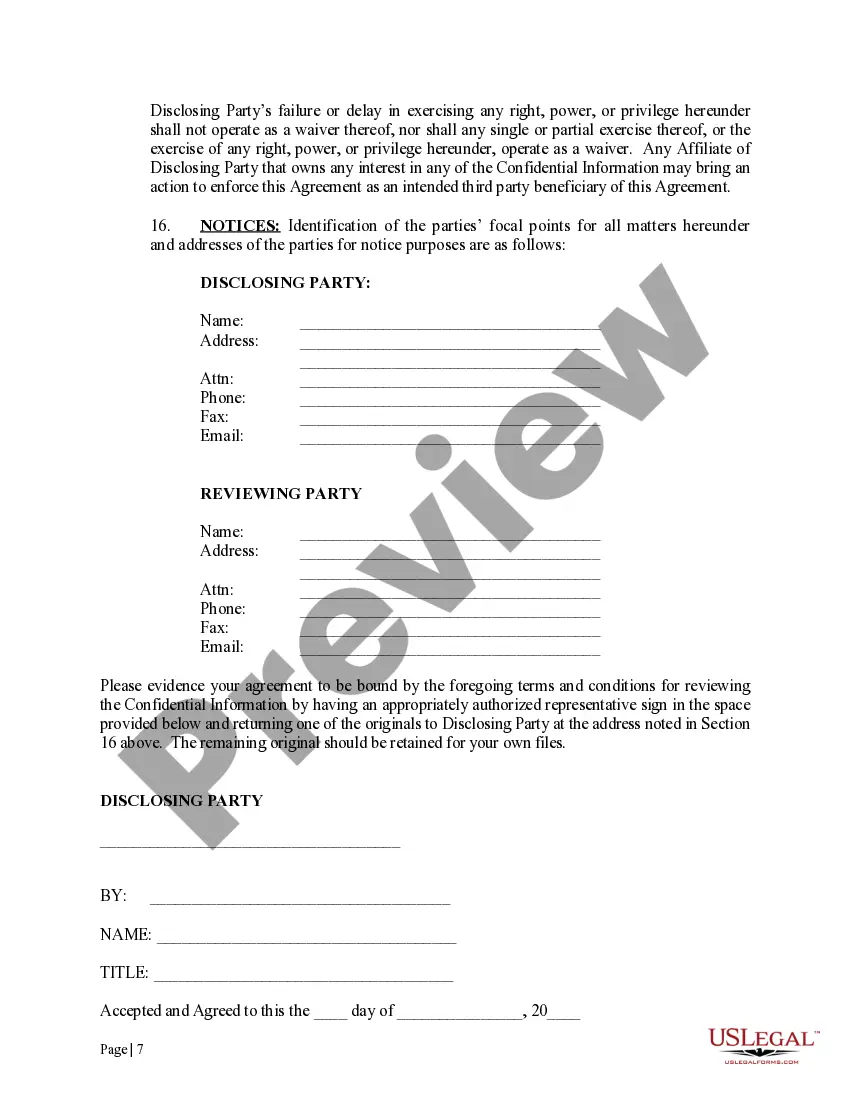
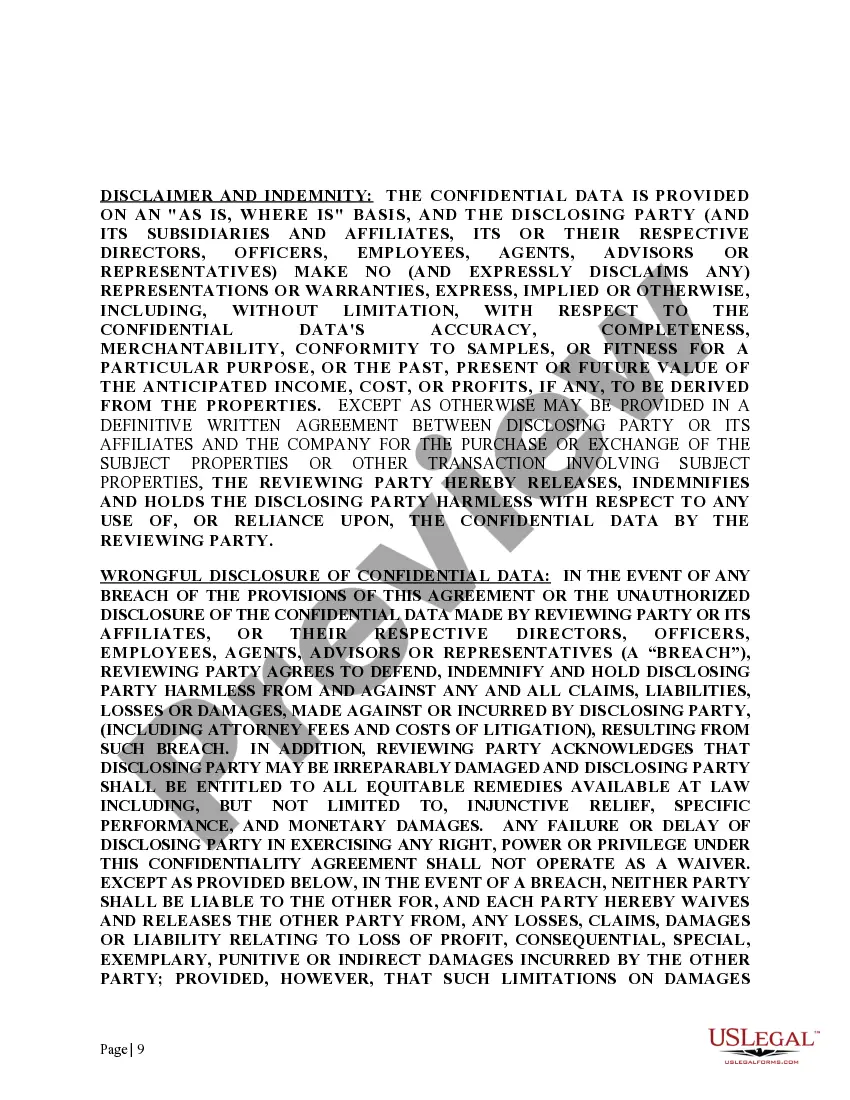
Non-disclosure agreements, or NDAs as they are sometimes called, are legally enforceable agreements between parties that are used to ensure that certain information will remain confidential.
Five requirements for an NDA The names of the parties to the agreement. A definition of what constitutes confidential information under the NDA. Any exclusions from confidentiality, including specific types of information and permissible recipients. Appropriate uses for the shared information.
A confidential disclosure agreement (CDA), also known as a non-disclosure agreement (NDA), is a legal contract between at least two parties that outlines confidential information that the parties wish to share with one another for certain purposes, but wish to restrict access to by third parties.
To create a Non-Disclosure Agreement, include the following information: The parties' names and contact information. The length of the non-disclosure period. The scope and definition of the confidential information. The obligations of the Non-Disclosure Agreement. The ownership and return information.
Understanding Non-Disclosure Agreements (NDAs) The NDA serves a purpose in a variety of situations. NDAs are generally required when two companies enter into discussions about doing business together but want to protect their own interests and the details of any potential deal.
disclosure agreement (NDA) is a legal contract or part of a contract between at least two parties that outlines confidential material, knowledge, or information that the parties wish to share with one another for certain purposes, but wish to restrict access to.
If there is no confidentiality clause in your agreement, you have a duty of fidelity to your ex-employer to not disclose to others or to use for your own profit the trade secrets and confidential information you learned during the course of your employment with them.
Confidential Disclosure Agreements (CDAs) -- also referred to as Confidentiality Agreements and Non-disclosure Agreements -- are binding contracts to safeguard the release or exchange of confidential information.