Nondisclosre, Noncompete, and Confidentiality Agreement between Employee and Employer
What is this form?
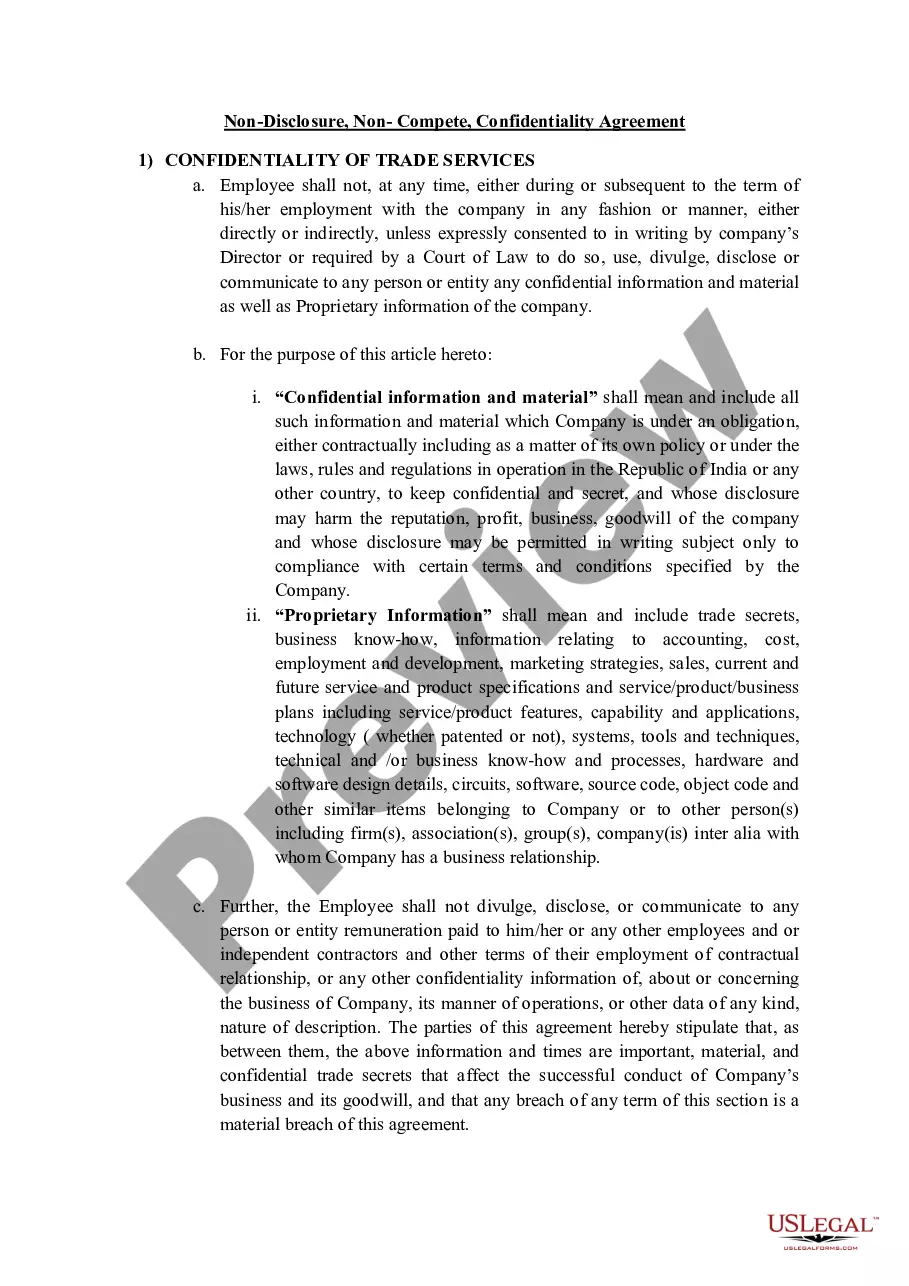
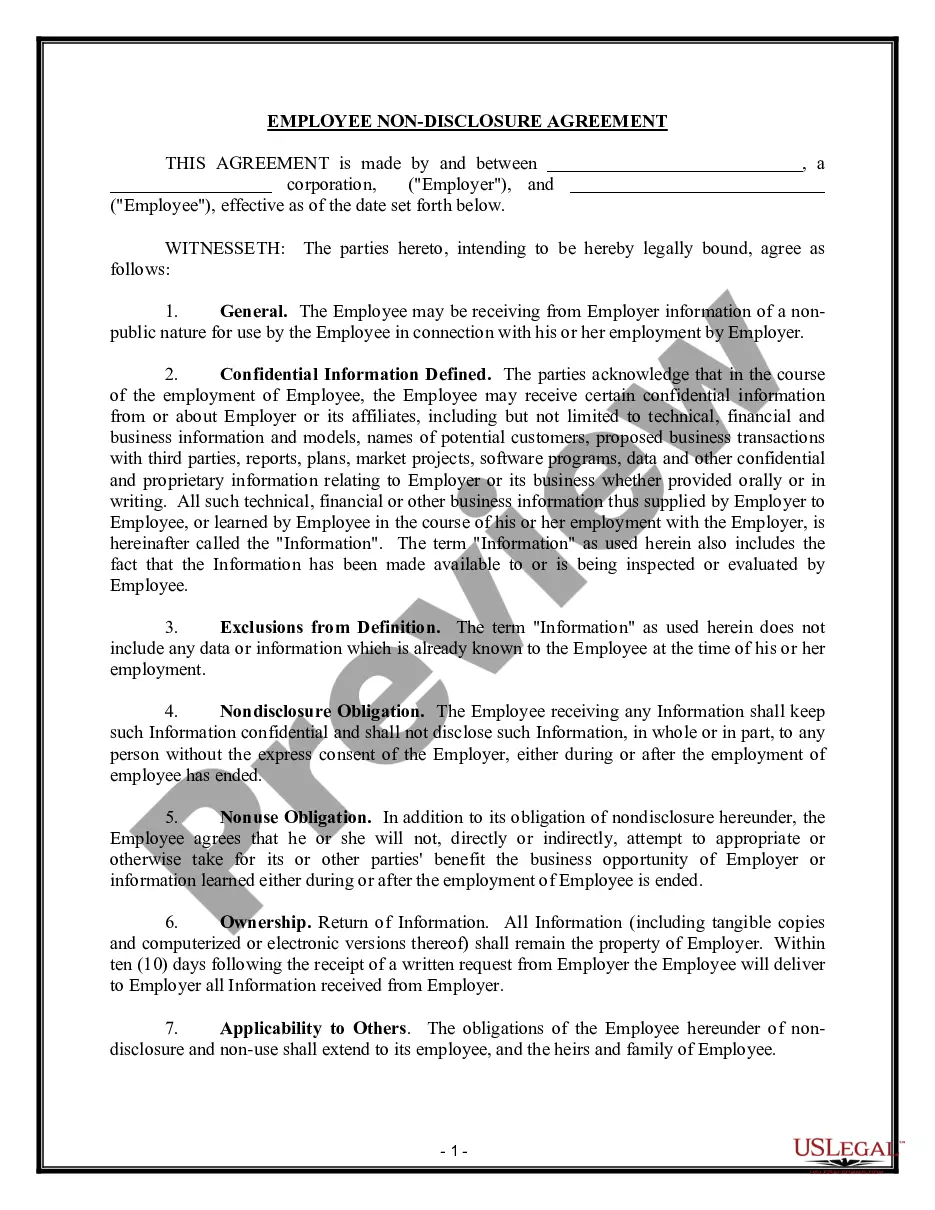
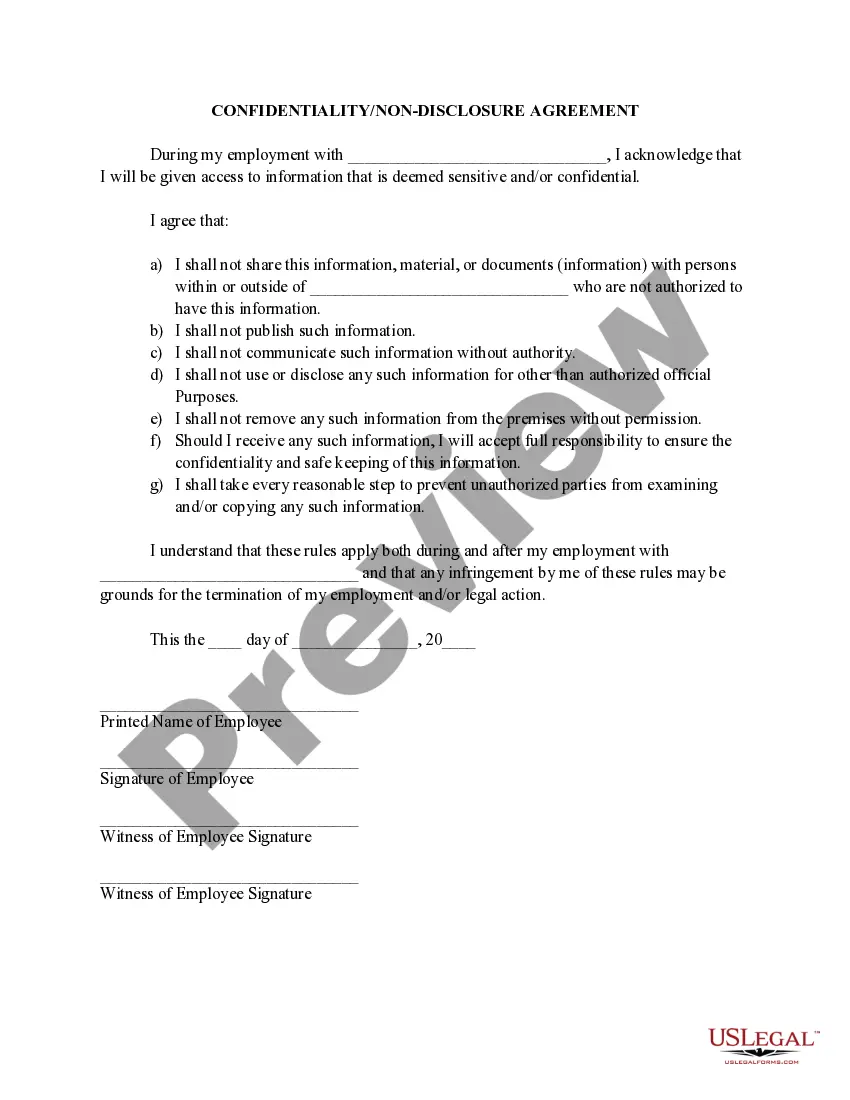
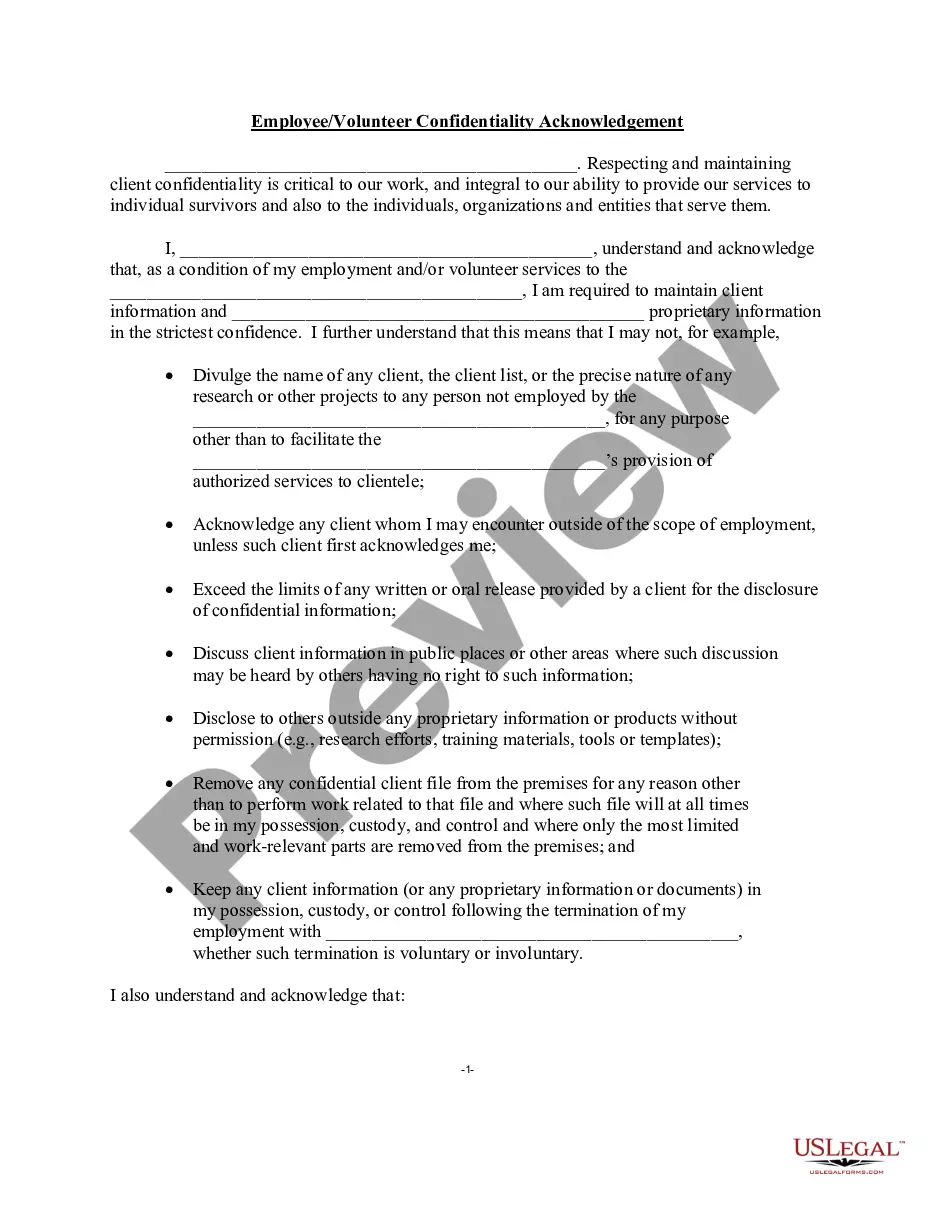
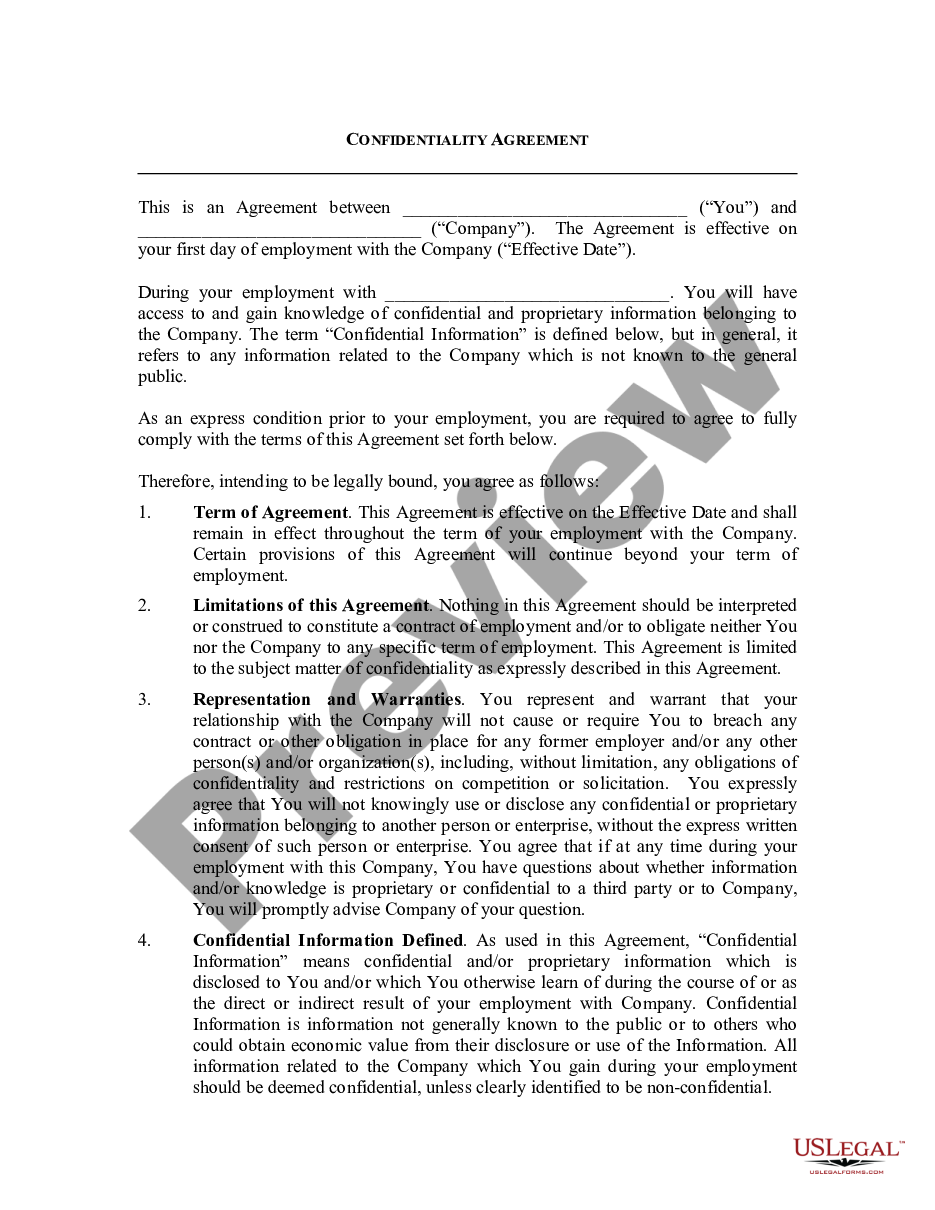
The Nondisclosure, Noncompete, and Confidentiality Agreement between Employee and Employer is a legal document that establishes the confidentiality obligations between an employee and their employer. This form differs from standard nondisclosure agreements by also including noncompete and non-solicitation clauses, which protect the employer's business interests beyond just sensitive information. It ensures that any proprietary or confidential data shared within the employment relationship is not disclosed or used improperly by the employee during and after employment.
Main sections of this form
- Definition of confidential information and proprietary information.
- Obligations of the employee regarding the non-disclosure of confidential data.
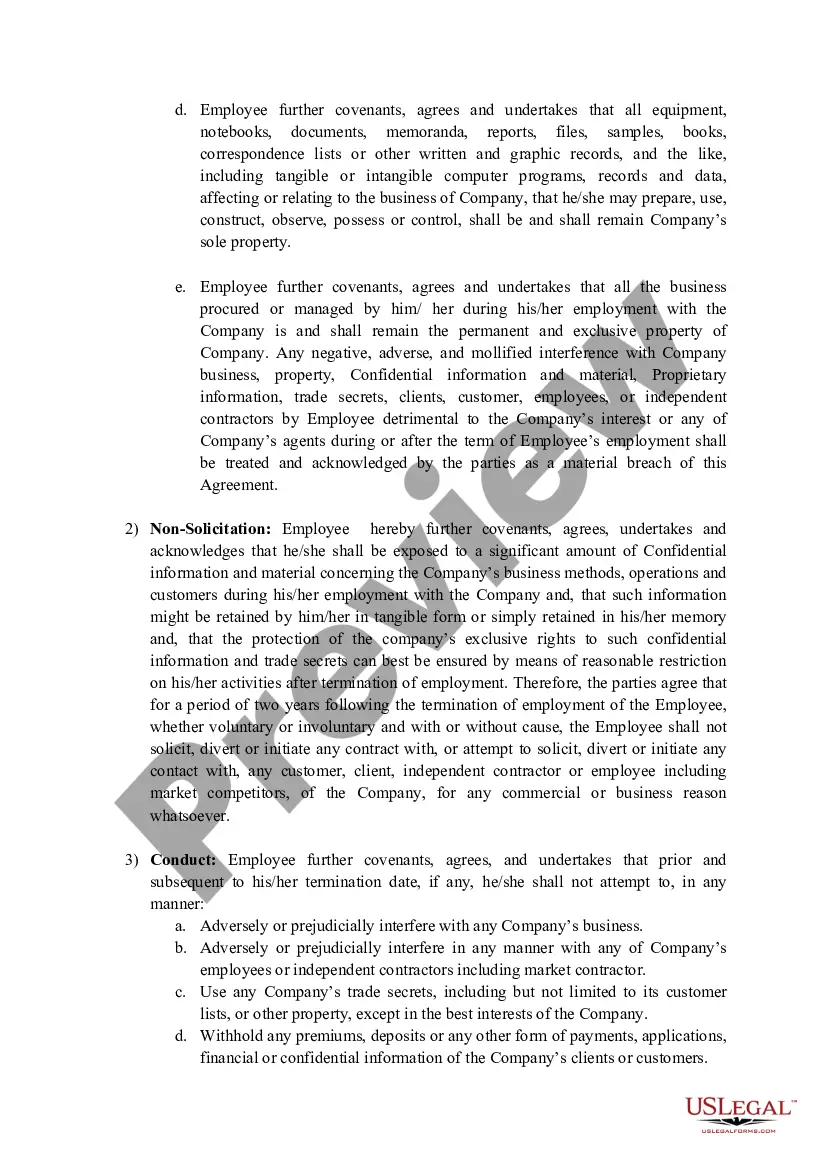
- Non-solicitation clause preventing the employee from contacting clients or contractors post-employment.
- Employee duties regarding the company's property and sensitive information.
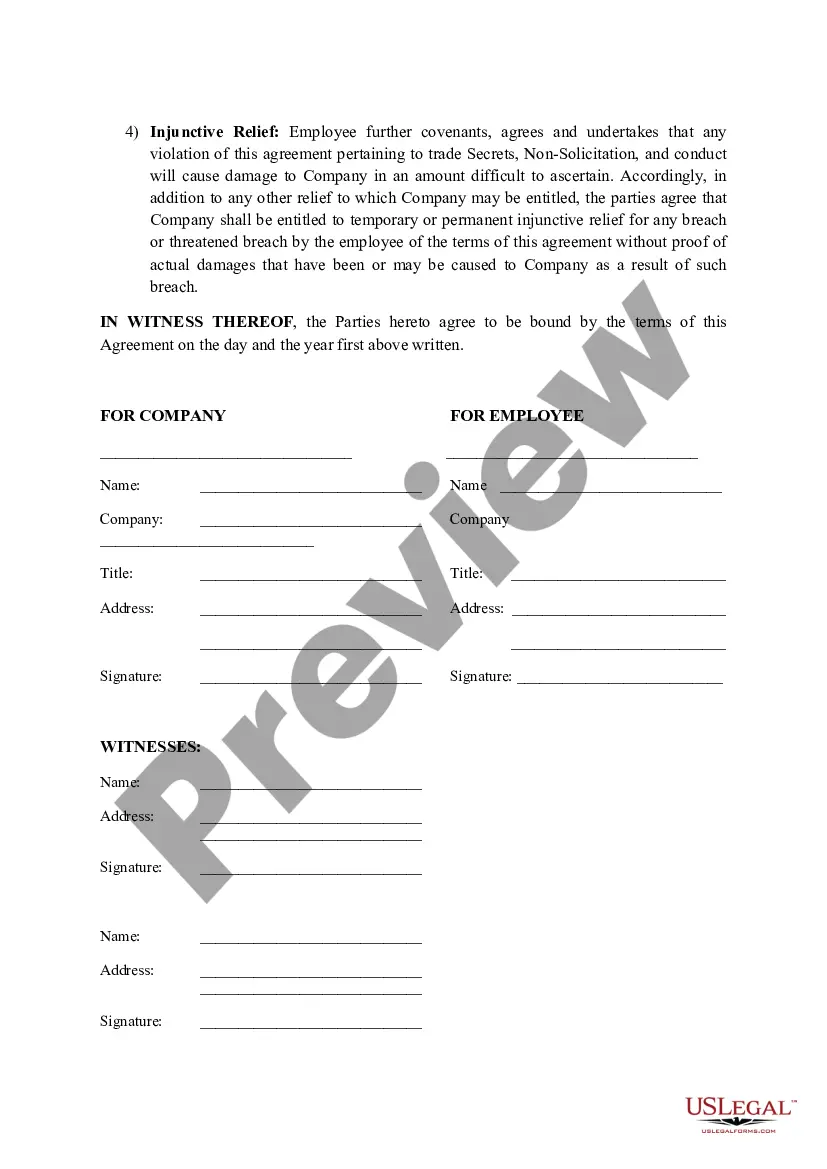
- Injunctive relief for the company in case of a breach by the employee.
Situations where this form applies
This form should be used when an employer wants to protect sensitive business information from being shared or exploited by an employee. It is commonly utilized when hiring new employees, particularly in positions where they will have access to confidential data, trade secrets, or proprietary systems. Additionally, it can be used during the onboarding process, or prior to signing other employment documents.
Intended users of this form
- Employers seeking to protect confidential business information and trade secrets.
- Companies employing individuals in sensitive roles where proprietary data will be accessed.
- Businesses that want to prevent ex-employees from soliciting clients or competing against them after leaving the company.
Steps to complete this form
- Identify the parties involved: list the employee and employer's names, titles, and addresses.
- Clearly define what constitutes confidential and proprietary information.
- Enter the duration of the non-solicitation period (e.g., two years after termination).
- Specify any restrictions on the use of company information post-employment.
- Ensure both parties sign and date the agreement to make it valid.
Notarization requirements for this form
This form does not typically require notarization unless specified by local law. However, having it notarized can provide an extra layer of authenticity and security for both parties.
Get your form ready online
Our built-in tools help you complete, sign, share, and store your documents in one place.
Make edits, fill in missing information, and update formatting in US Legal Forms—just like you would in MS Word.
Download a copy, print it, send it by email, or mail it via USPS—whatever works best for your next step.
Sign and collect signatures with our SignNow integration. Send to multiple recipients, set reminders, and more. Go Premium to unlock E-Sign.
If this form requires notarization, complete it online through a secure video call—no need to meet a notary in person or wait for an appointment.
We protect your documents and personal data by following strict security and privacy standards.

Make edits, fill in missing information, and update formatting in US Legal Forms—just like you would in MS Word.

Download a copy, print it, send it by email, or mail it via USPS—whatever works best for your next step.

Sign and collect signatures with our SignNow integration. Send to multiple recipients, set reminders, and more. Go Premium to unlock E-Sign.

If this form requires notarization, complete it online through a secure video call—no need to meet a notary in person or wait for an appointment.

We protect your documents and personal data by following strict security and privacy standards.
Common mistakes to avoid
- Failing to clearly define what constitutes confidential information.
- Not specifying the duration of non-compete or non-solicitation clauses.
- Overlooking employee signatures or necessary witness signatures.
- Assuming verbal agreements are adequate; written documentation is crucial.
Why use this form online
- Convenience of downloading and customizing the form to fit your specific needs.
- Time-saving compared to drafting a new agreement from scratch.
- Access to attorney-drafted templates ensures legal validity and compliance.
- Ability to edit and update the form as business needs change.
Legal use & context
- This agreement is designed to protect the interests of the employer while ensuring the employee understands their obligations regarding confidentiality.
- Noncompete clauses must be reasonable in scope and duration to be enforceable.
- Employees should be aware of their rights and limitations prior to signing this agreement.
Summary of main points
- The agreement protects sensitive information shared during employment.
- It includes provisions for non-solicitation and non-compete agreements to safeguard business interests.
- It's important for both parties to clearly understand their obligations under this agreement.
Looking for another form?
Form popularity
FAQ
They are designed to protect a company's confidential information because there is a lot at stake when it comes to trade secrets. The language within the NDA must be precise so that a court can uphold any violations. This is why these agreements must be taken very seriously.
The difference between the two agreements It doesn't mean you can't work for a competitor; it simply means you can't use proprietary or confidential information you learned or obtained from the former employer with a new employer.
To prevent employees from revealing sensitive information that could jeopardize your business, you might have them sign an employee confidentiality agreement. Businesses use employee confidentiality agreements to protect their innovative ideas, effective processes, unique products, or customer information.
An employee confidentiality agreement, or non-disclosure agreement or an ?NDA,? makes it crystal clear to an employee that he or she cannot under any circumstance, with the exception of prior written approval, disclose company secrets.
As previously mentioned, in California, employment confidentiality agreements are considered to be enforceable when they contain specific information. Generally speaking, enforcing a confidentiality agreement is the same as enforcing any other sort of contract.
What is an Employee Non-Disclosure Agreement? An NDA is a contractual agreement (also known as a ?restrictive covenant?) to protect sensitive information. An employer can ask that a new employee sign an NDA to protect legitimate, confidential business interests such as trade secrets and business practices.
NDAs, or non-disclosure agreements, are legally enforceable contracts that create a confidential relationship between a person who has sensitive information and a person who will gain access to that information. A confidential relationship means one or both parties has a duty not to share that information.
Under an employee non disclosure agreement, both parties are bound by confidentiality provisions, such as preventing the employee from disclosing certain specified information relating to the conduct of the employer or the termination of the employment contract.