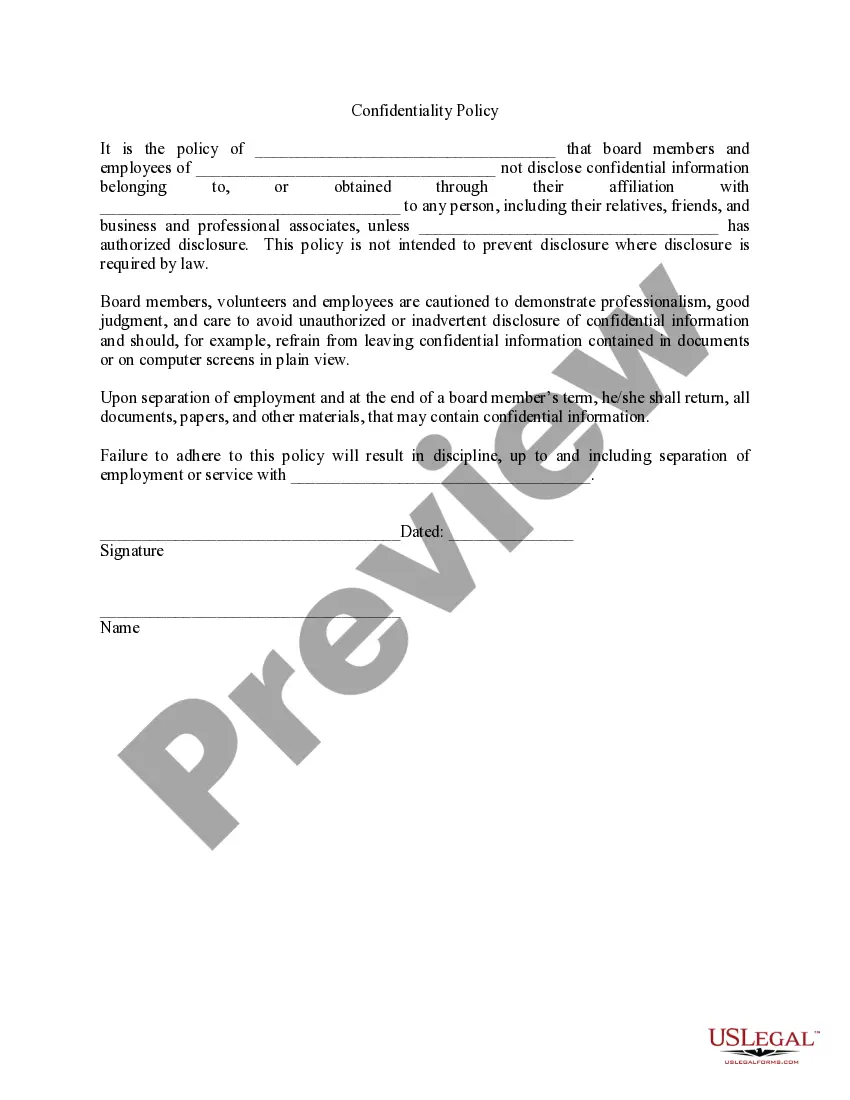
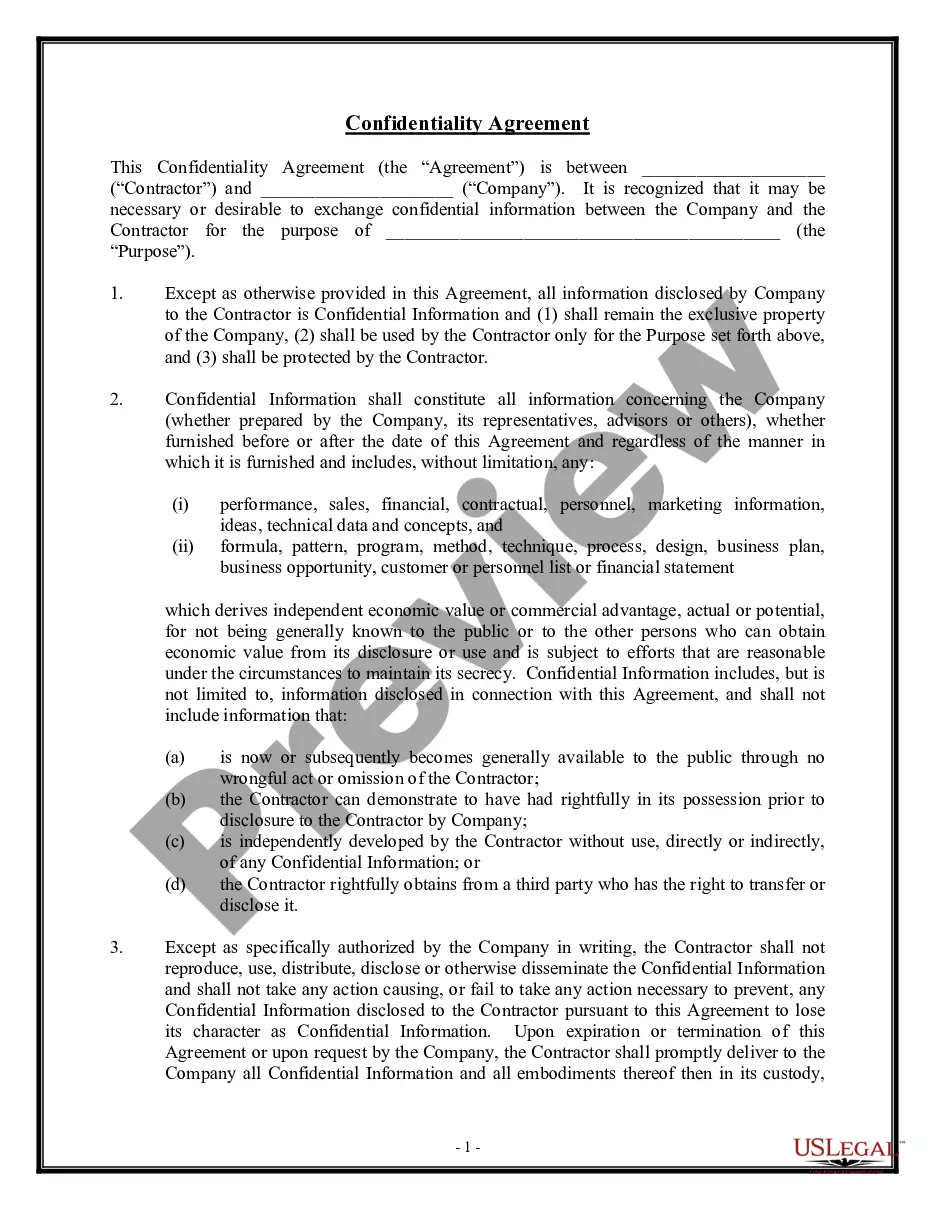
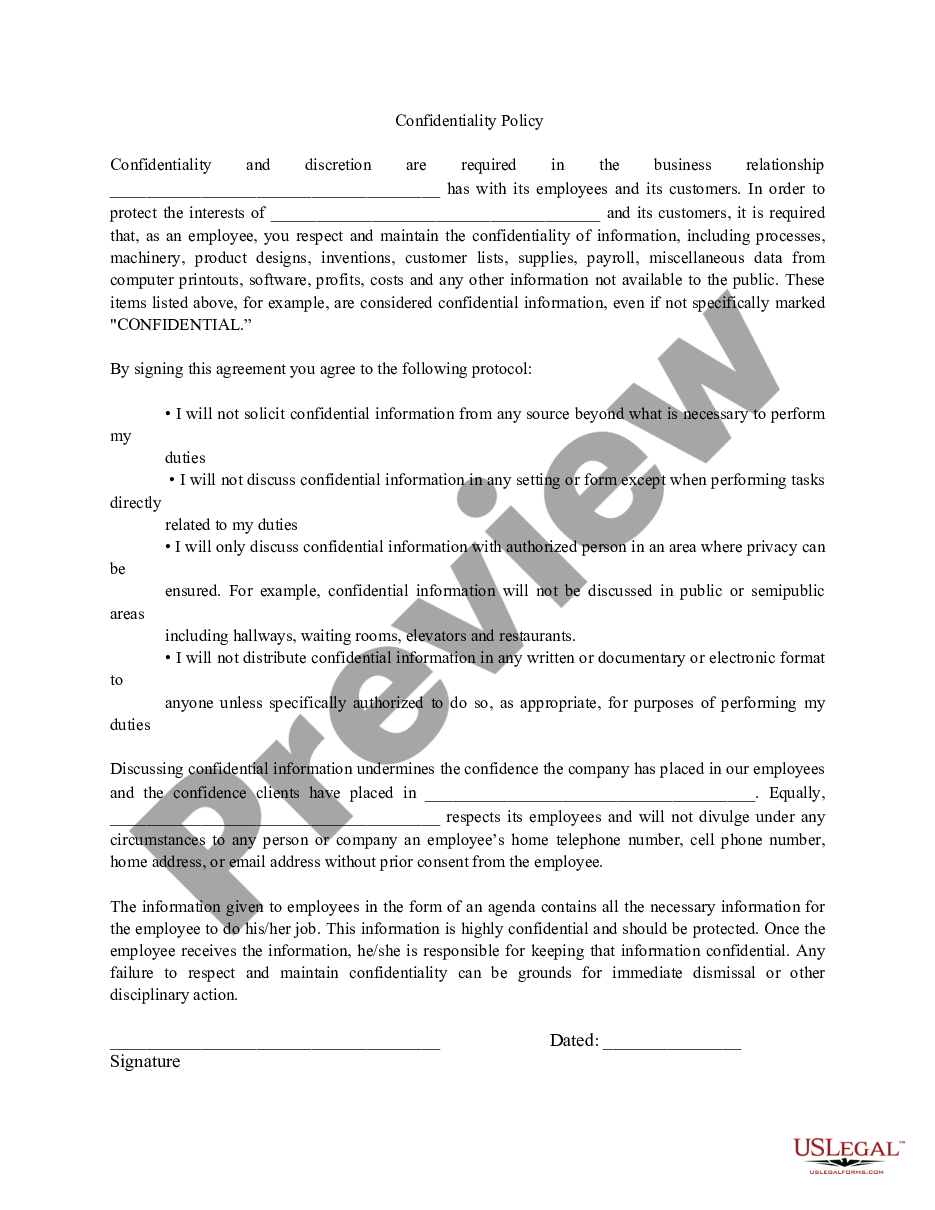
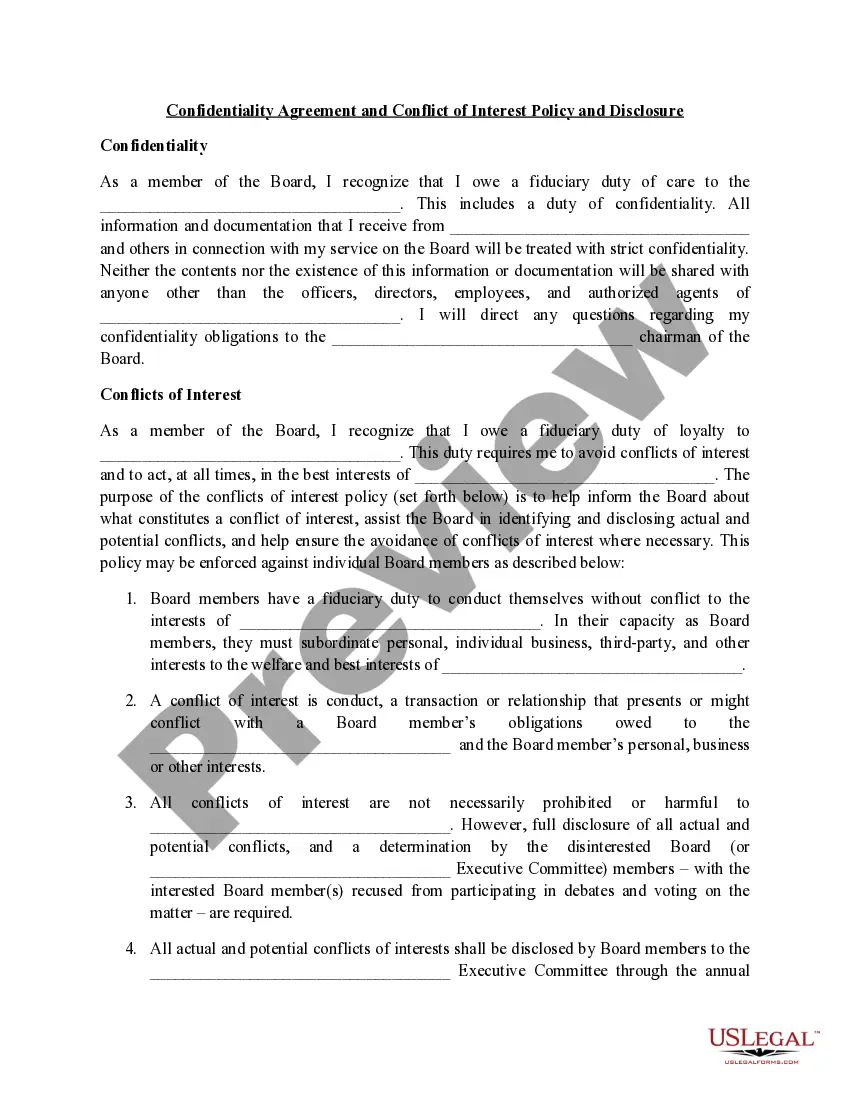
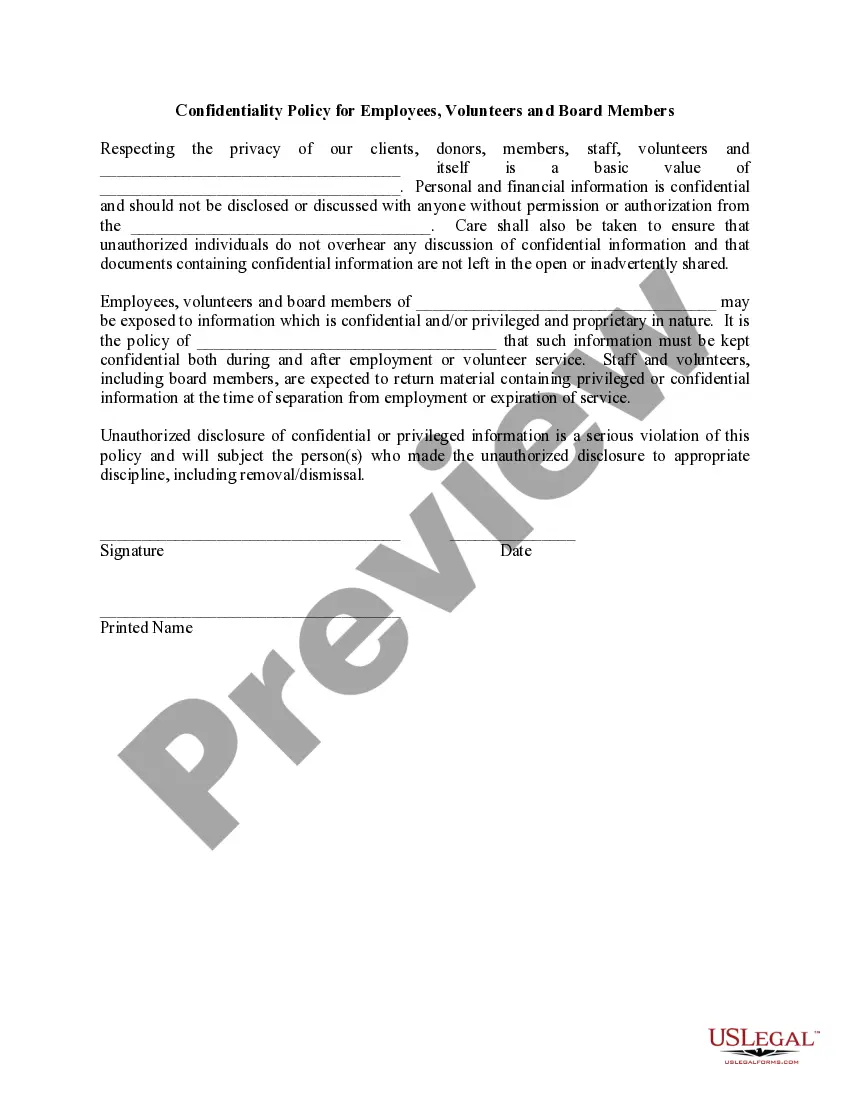
A Confidentiality Policy is a set of guidelines that establishes the expectations for maintaining the confidentiality of sensitive information. It is used to protect the privacy of individuals, and to ensure the security of confidential information. Types of Confidentiality Policies include: 1. Data Privacy Policy: This outlines how data is collected, stored, and used. It will also specify what types of data can be collected, how it is to be stored, and who can access it. 2. Employee Confidentiality Policy: This policy outlines what information can be shared with employees and what information is to be kept confidential. It also sets out the consequences for disclosing confidential information. 3. Health Information Confidentiality Policy: This policy outlines the expectations for maintaining the confidentiality of health information. It specifies how health information is collected, stored, and used. 4. Business Confidentiality Policy: This policy outlines the expectations for maintaining the confidentiality of business-related information. It specifies what can be shared with external parties, and who can access the information.
Confidentiality Policy
Description




How to fill out Confidentiality Policy?
How much time and resources do you usually spend on composing formal paperwork? There’s a greater way to get such forms than hiring legal experts or spending hours searching the web for a proper blank. US Legal Forms is the leading online library that offers professionally designed and verified state-specific legal documents for any purpose, including the Confidentiality Policy.
To obtain and prepare a suitable Confidentiality Policy blank, follow these easy steps:
- Examine the form content to make sure it complies with your state laws. To do so, read the form description or utilize the Preview option.
- If your legal template doesn’t meet your needs, find another one using the search bar at the top of the page.
- If you are already registered with our service, log in and download the Confidentiality Policy. Otherwise, proceed to the next steps.
- Click Buy now once you find the correct blank. Opt for the subscription plan that suits you best to access our library’s full service.
- Create an account and pay for your subscription. You can make a payment with your credit card or via PayPal - our service is totally secure for that.
- Download your Confidentiality Policy on your device and complete it on a printed-out hard copy or electronically.
Another benefit of our service is that you can access previously downloaded documents that you safely keep in your profile in the My Forms tab. Get them anytime and re-complete your paperwork as frequently as you need.
Save time and effort completing formal paperwork with US Legal Forms, one of the most reliable web services. Sign up for us now!
Form popularity
FAQ
These should include, for example: Ensuring that confidential information is always locked away at night, and not left unattended during the day; Password-protecting sensitive computer files; Marking confidential information clearly as such, and ensuring that paper copies are shredded before disposal; and.
A typical confidentiality clause might say, "The phrases and circumstances of this Agreement are completely confidential between the parties and shall not be disclosed to anybody else. Any disclosure in violation shall be deemed a breach of this Agreement."
This can include salaries, employee perks, client lists, trade secrets, sales numbers, customer information, news about pending terminations, reasons for a firing, phone codes or computer passwords. You may not divulge this information while you are working for an employer or after you leave.
An employee confidentiality agreement, or non-disclosure agreement (NDA), is a contract that prevents the employee from revealing confidential information about a business. Employee confidentiality agreements can't be broad?they must list specific information that employees are not allowed to disclose.
Confidentiality at work Confidentiality is a term used to describe something that cannot be told to or shared with anyone else because it must remain a secret. Confidentiality at work involves keeping verbal and written information private.
Confidential Information Examples Contact details. Bank details. Medical records and history. Personal information such as name, birthday, sex, address. Company reports whether sales, financial.
Examples of When You Need a Confidentiality Agreement? Trade Secrets. Scientific Information. Secret formulas. Computer Technology. Copyrights. Recipes. Prototypes and samples. Proprietary information has been shared.