19.80 GENERAL VERDICT FORM
What is this form?
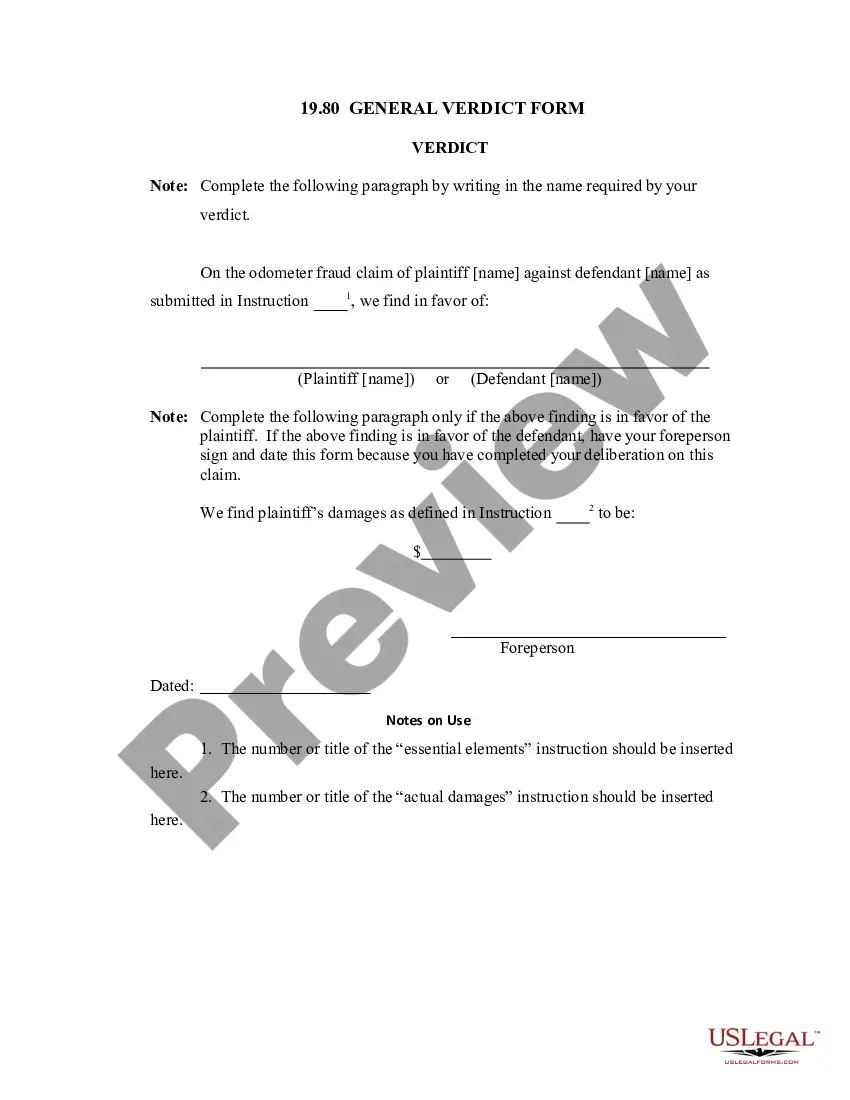
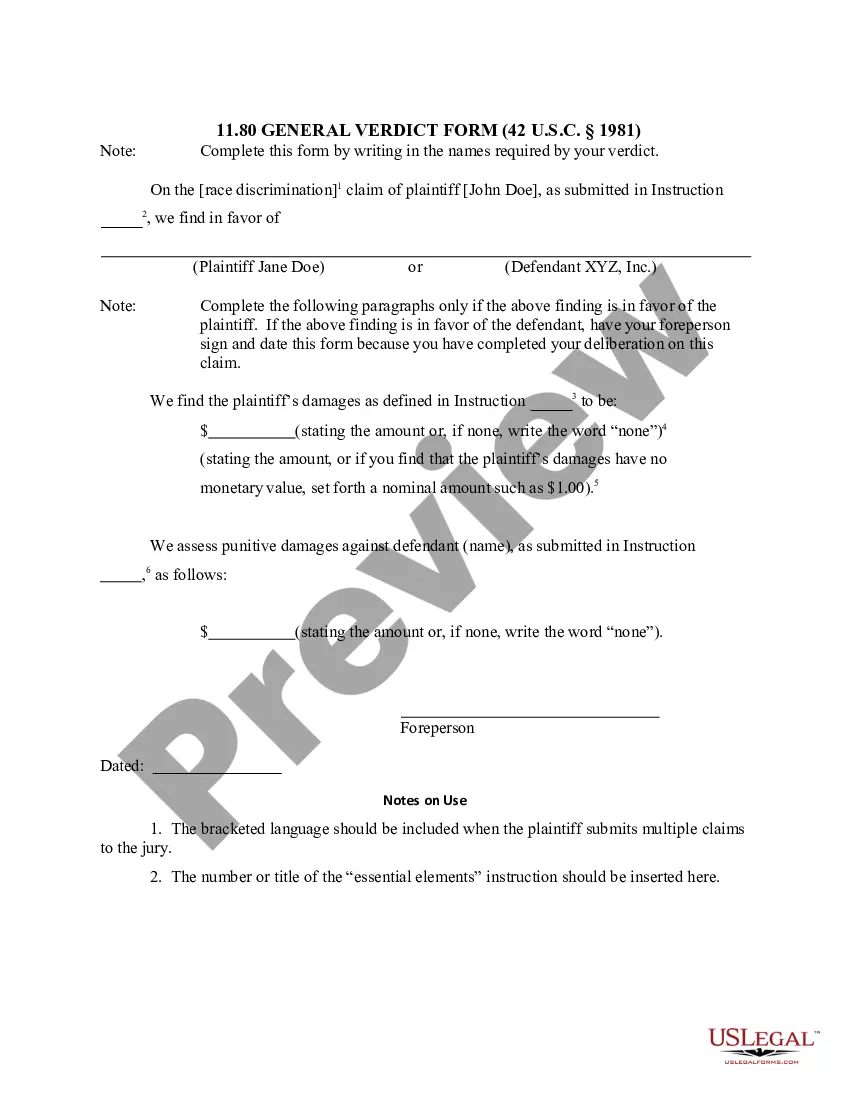
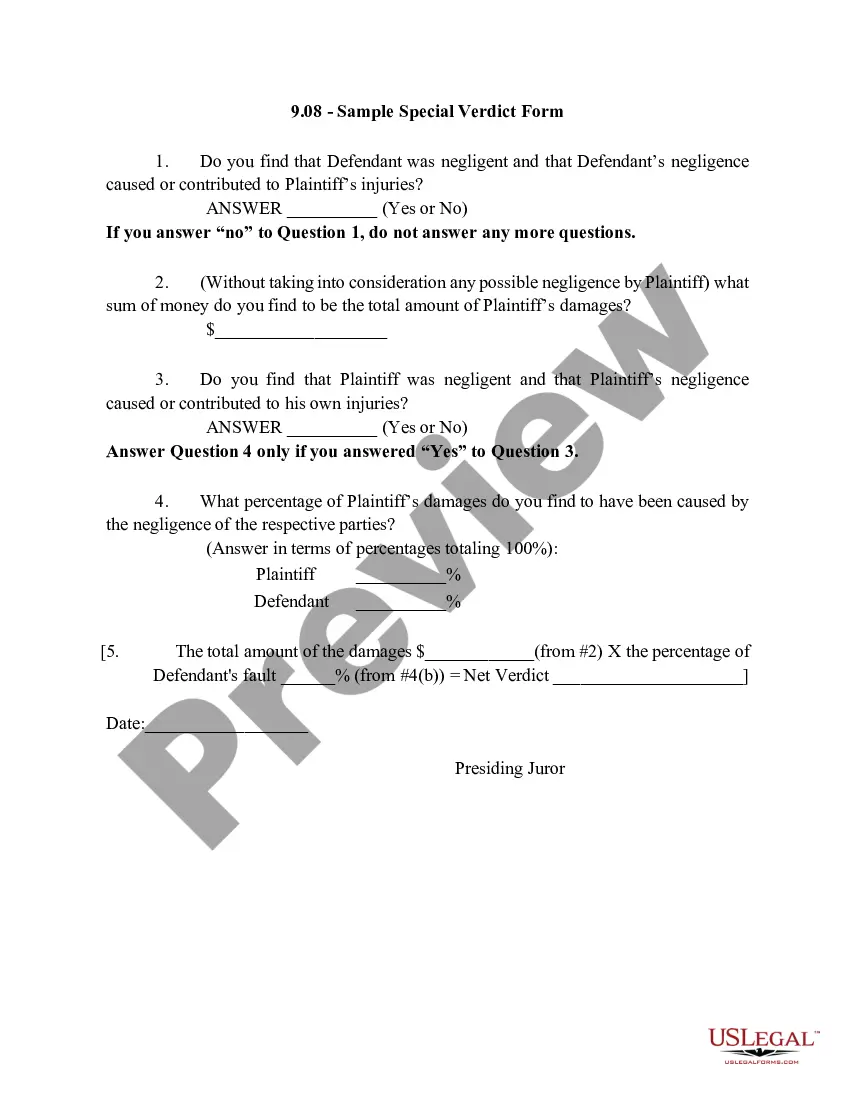
The 19.80 General Verdict Form is a legal document used by juries to record their decision in a civil trial, specifically concerning odometer fraud claims. This form allows the jury to clearly state whether they find in favor of the plaintiff or the defendant, along with any damages awarded if applicable. Unlike other verdict forms, this one is tailored to ensure specificity regarding fraud claims involving vehicle odometers, providing clarity on the jury's decision-making process.
Key parts of this document
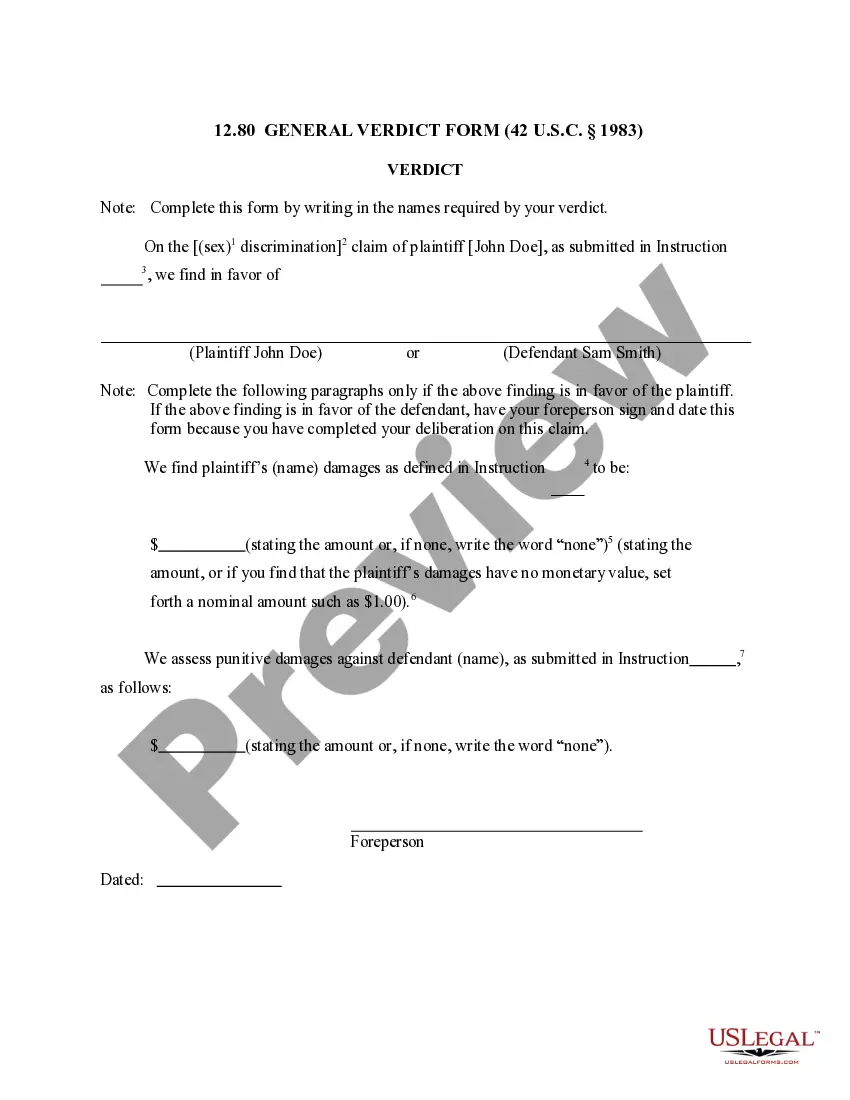
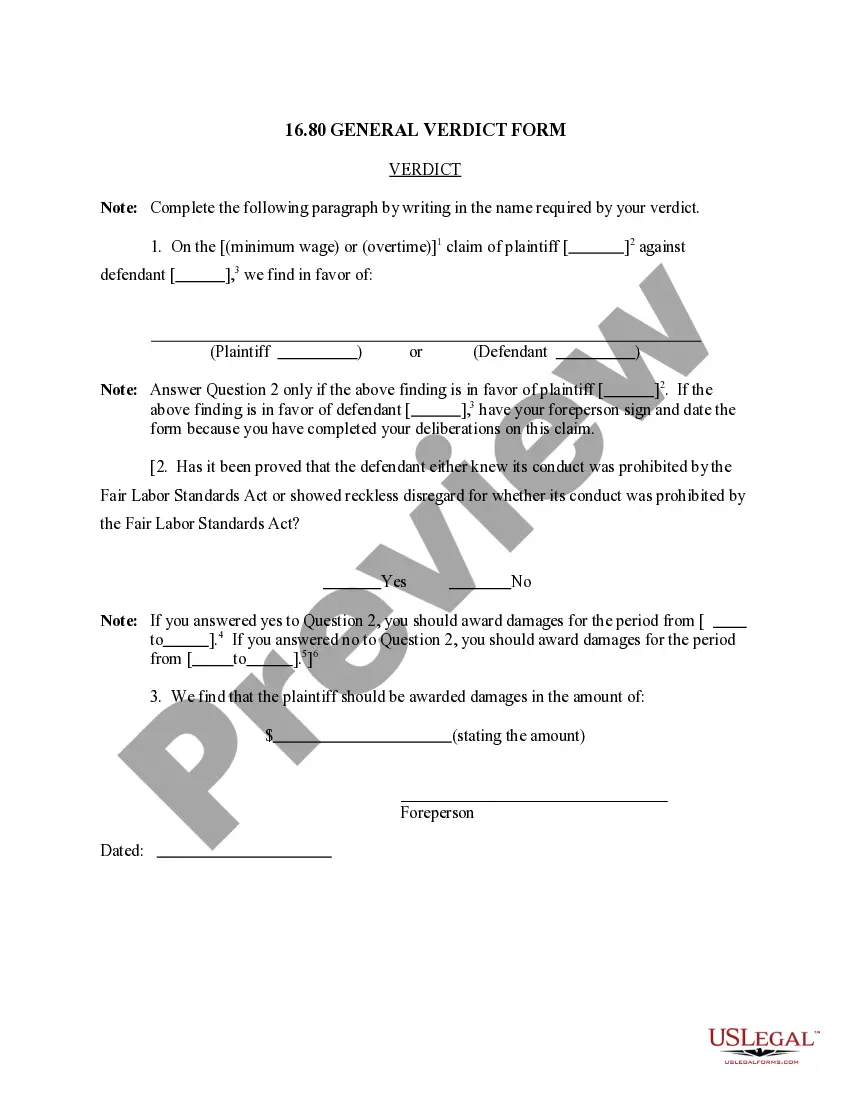
- Verdict section: states the name of the plaintiff and defendant and indicates who the jury finds in favor of.
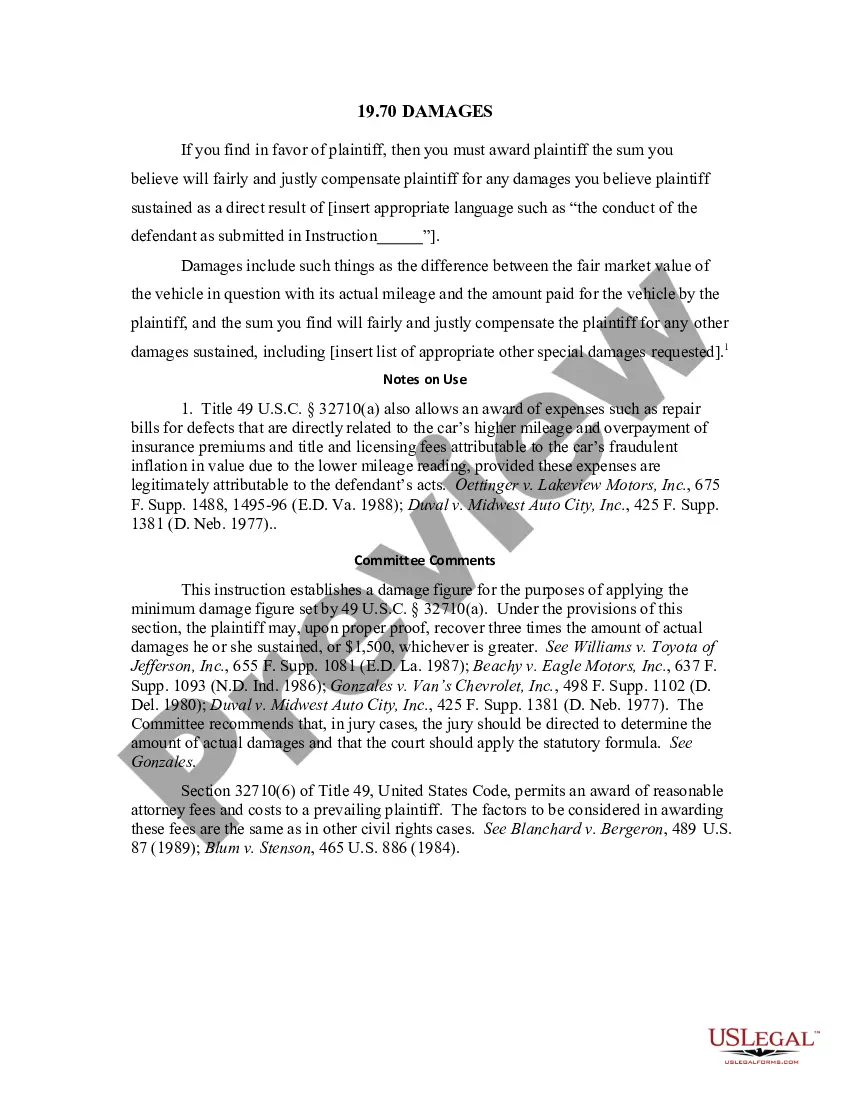
- Damages section: provides a space to fill in the amount of damages awarded to the plaintiff if the verdict is in their favor.
- Foreperson signature and date: requires the foreperson of the jury to sign and date the form to finalize the verdict.
- Instructions placeholders: includes numbered instructions for essential elements and actual damages that must be specified.
When to use this form
This form is used during civil jury trials where allegations of odometer fraud are presented. It is particularly important in cases where the jury needs to deliberate and document their finding on whether the plaintiff has proven their claims. This form is used at the conclusion of the trial once the jury has reached a decision.
Who should use this form
- Juries serving in civil cases involving odometer fraud.
- Judges overseeing trials where a formal jury verdict is required.
- Legal counsel involved in supporting juries with the formal documentation of their verdict.
How to complete this form
- Read the instructions provided in the trial regarding essential elements and damages.
- Write in the names of the plaintiff and defendant in the designated sections of the verdict.
- Indicate which party (plaintiff or defendant) the jury finds in favor of.
- If in favor of the plaintiff, fill in the amount of damages awarded.
- Have the foreperson sign and date the form once deliberations are complete.
Is notarization required?
Notarization is not commonly needed for this form. However, certain documents or local rules may make it necessary. Our notarization service, powered by Notarize, allows you to finalize it securely online anytime, day or night.
Get your form ready online
Our built-in tools help you complete, sign, share, and store your documents in one place.
Make edits, fill in missing information, and update formatting in US Legal Forms—just like you would in MS Word.
Download a copy, print it, send it by email, or mail it via USPS—whatever works best for your next step.
Sign and collect signatures with our SignNow integration. Send to multiple recipients, set reminders, and more. Go Premium to unlock E-Sign.
If this form requires notarization, complete it online through a secure video call—no need to meet a notary in person or wait for an appointment.
We protect your documents and personal data by following strict security and privacy standards.

Make edits, fill in missing information, and update formatting in US Legal Forms—just like you would in MS Word.

Download a copy, print it, send it by email, or mail it via USPS—whatever works best for your next step.

Sign and collect signatures with our SignNow integration. Send to multiple recipients, set reminders, and more. Go Premium to unlock E-Sign.

If this form requires notarization, complete it online through a secure video call—no need to meet a notary in person or wait for an appointment.

We protect your documents and personal data by following strict security and privacy standards.
Avoid these common issues
- Failure to specify the correct names of the plaintiff and defendant.
- Not filling in the damages awarded if the verdict is for the plaintiff.
- Neglecting to have the foreperson sign and date the document.
Why complete this form online
- Convenient access to the form for immediate use during jury deliberations.
- Editability allows for precise customization according to the case specifics.
- Reliable format ensures compliance with legal requirements and standards.
Looking for another form?
Form popularity
FAQ
The verdict form, in turn, formalizes the jury's decisions on the case, telling us how it will answer the claims and defenses. Its structure and language could influence the jury's ultimate answers. It may also control what issues may be raised on appeal.
The verdict of a jury is either general or special. A general verdict is that by which they pronounce generally upon all or any of the issues, either in favor of the plaintiff or defendant; a special verdict is that by which the jury find the facts only, leaving the judgment to the Court.
A verdict in which the jury gives its findings on factual issues in the case, without necessarily stating which party should win.
A general verdict with special interrogatories is sort of an amalgam of both a general and special verdict. It instructs the jury to return a general verdict, while also answering specific questions of fact.
A general verdict is one that decides which party should win but does not make findings on any specific factual issues. A special verdict is one in which the jury provides its findings on specific factual issues.
General verdict with interrogatories refers to a general verdict accompanied by answers to written interrogatories on one or more issues of fact that bear on the verdict. A interrogatory is submitted by the judge to a jury when the court asks for a general verdict and wants to know the basis of the decision.
FORMS OF VERDICT Multiple counts: A. ?We, the Jury, find the defendant, (guilty; not guilty; not guilty by reason of mental disease or defect; or not guilty and not guilty by reason of mental disease or defect) of , as charged in Count 1 of the Indictment/Complaint.?
?We, the Jury, find the defendant, (guilty; not guilty; not guilty by reason of mental disease or defect; or not guilty and not guilty by reason of mental disease or defect) of , as charged in Count 1 of the Indictment/Complaint.?