4.80 GENERAL VERDICT FORM: ONE PLAINTIFF, TWO DEFENDANTS, ONE INJURY CASE
Understanding this form
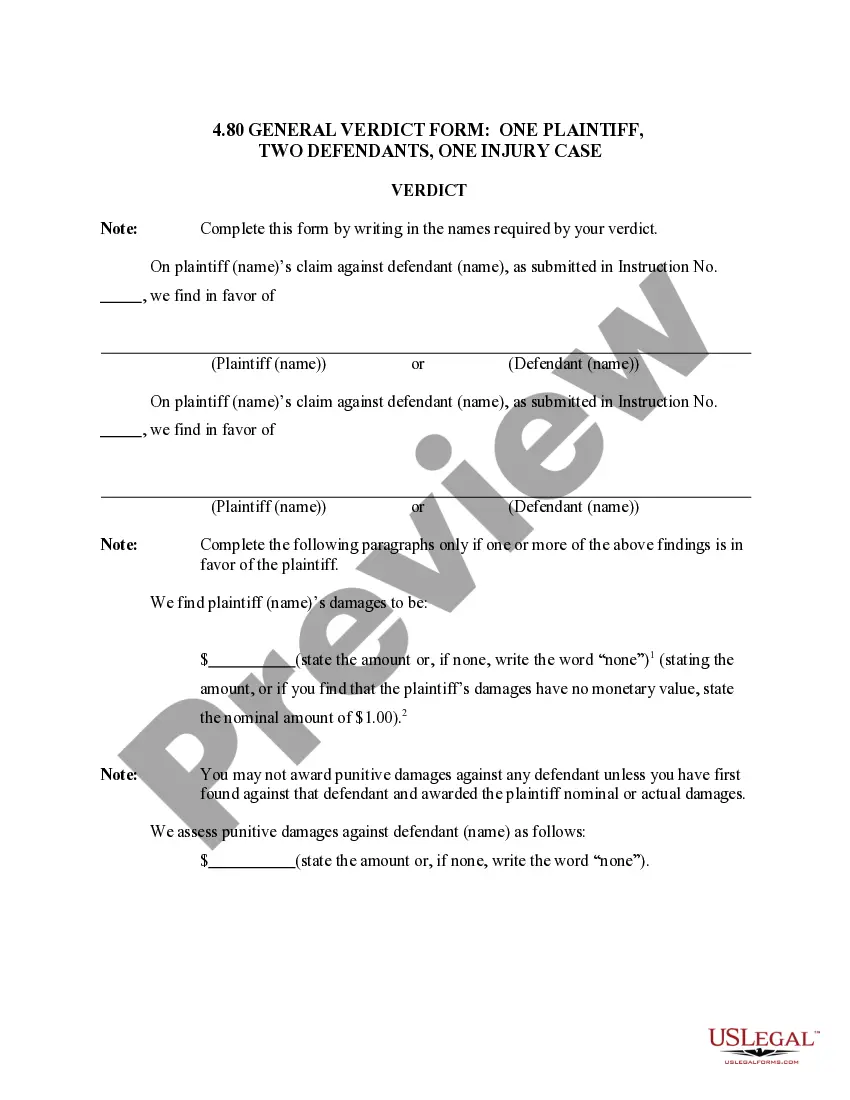
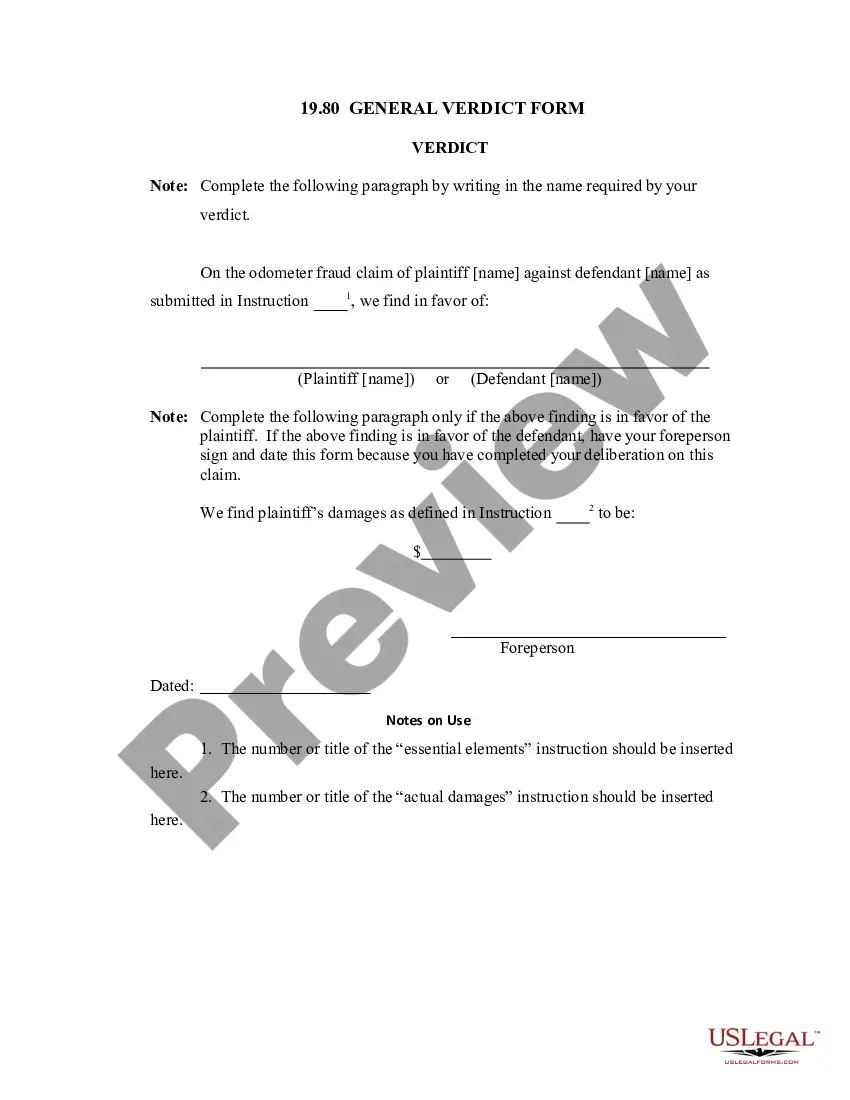
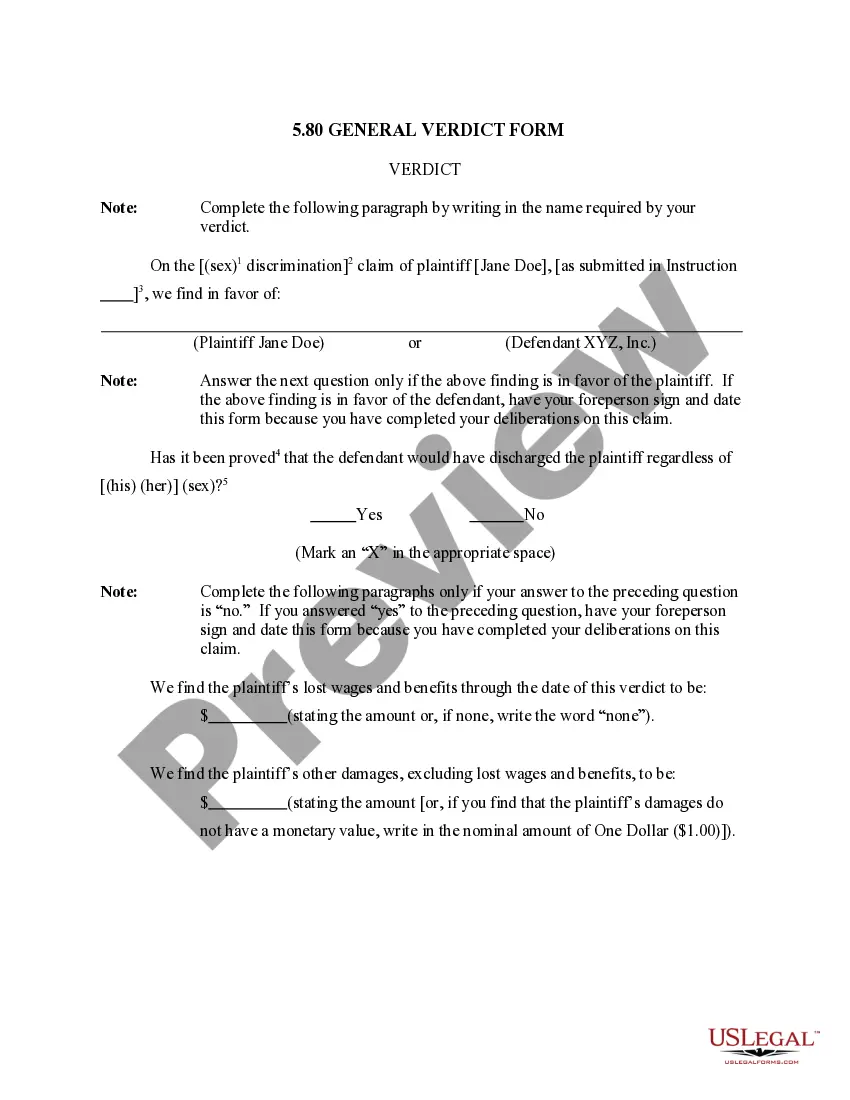
The General Verdict Form for a case with one plaintiff and two defendants, related to a single injury case, is a legal document used by a jury to render its decision. This form is specifically designed to simplify the jury's task of conveying their findings regarding liability and damages. It differs from verdict forms used in cases with more complex structures, such as multiple plaintiffs or multiple injuries, by focusing on a clear presentation of the claims and decisions related to one injury case.
Key parts of this document
- Identification of the plaintiff and defendants involved in the case.
- Sections to indicate findings in favor of either the plaintiff or defendants for each claim.
- Area to assess and state the amount of damages awarded to the plaintiff.
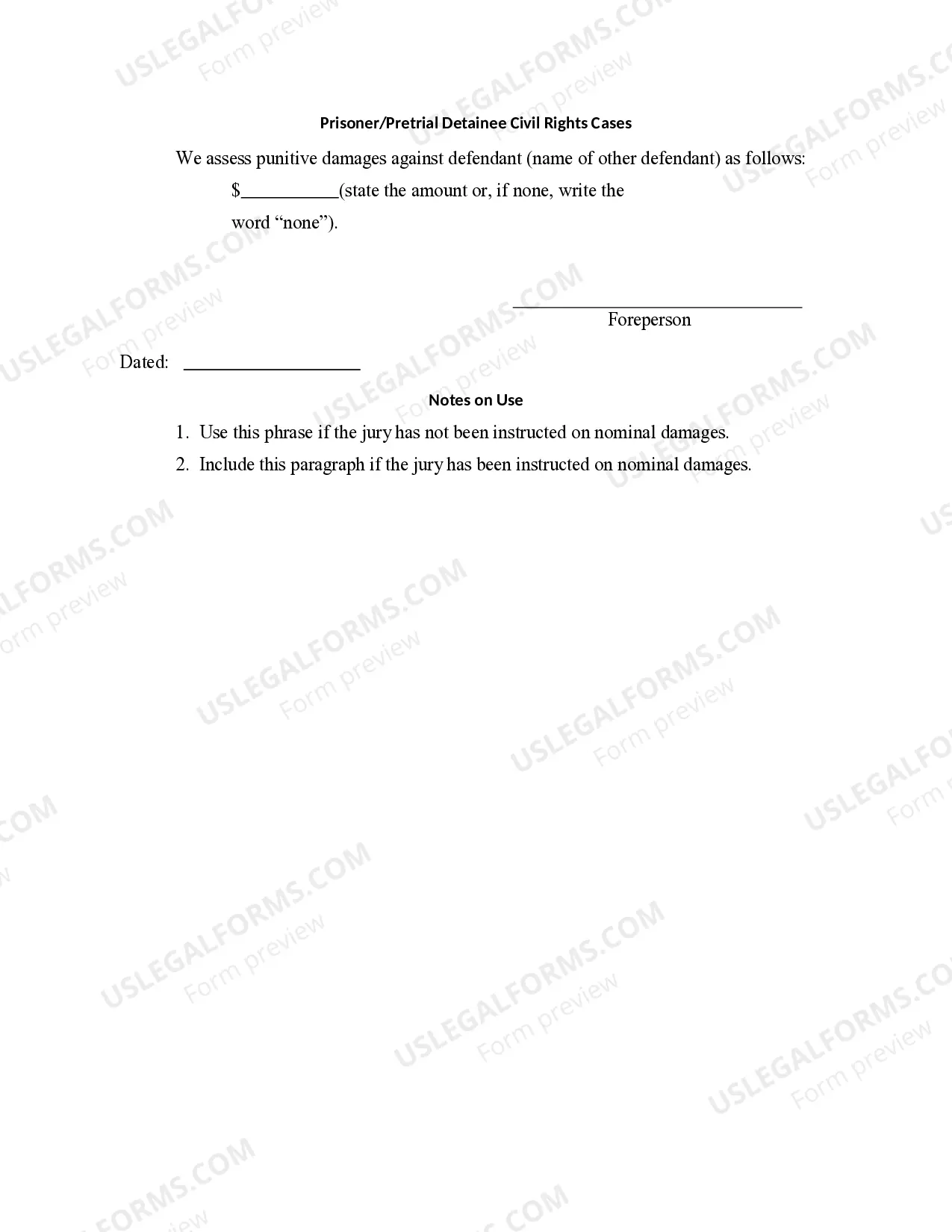
- Fields for potential punitive damages against defendants, if applicable.
- Signature line for the jury foreperson and the date of the verdict.
When to use this form
This form is used in civil cases where a jury must reach a verdict involving one plaintiff and two defendants regarding an injury claim. It is suitable for situations where there are clear claims of negligence or wrongdoing by the defendants that potentially resulted in harm to the plaintiff. For instance, if an individual sues two parties for an injury sustained in a car accident due to negligence from both drivers, this form will guide the jury in issuing their verdict effectively.
Intended users of this form
- Juries in civil litigation cases involving one plaintiff and two defendants.
- Attorneys representing plaintiffs or defendants in injury cases.
- Legal associates assisting with jury instructions and verdict documentation.
How to prepare this document
- Enter the names of the plaintiff and defendants in the appropriate sections.
- Indicate the jury's findings regarding each claim by selecting either the plaintiff or defendant.
- If applicable, specify the damages awarded to the plaintiff in dollar amounts or indicate ânone.â
- Assess any punitive damages against the defendants if the jury has found in favor of the plaintiff.
- Have the foreperson sign and date the form once completed.
Does this form need to be notarized?
This form does not typically require notarization unless specified by local law. Ensure to check local regulations regarding notarization requirements in your jurisdiction.
Get your form ready online
Our built-in tools help you complete, sign, share, and store your documents in one place.
Make edits, fill in missing information, and update formatting in US Legal Forms—just like you would in MS Word.
Download a copy, print it, send it by email, or mail it via USPS—whatever works best for your next step.
Sign and collect signatures with our SignNow integration. Send to multiple recipients, set reminders, and more. Go Premium to unlock E-Sign.
If this form requires notarization, complete it online through a secure video call—no need to meet a notary in person or wait for an appointment.
We protect your documents and personal data by following strict security and privacy standards.

Make edits, fill in missing information, and update formatting in US Legal Forms—just like you would in MS Word.

Download a copy, print it, send it by email, or mail it via USPS—whatever works best for your next step.

Sign and collect signatures with our SignNow integration. Send to multiple recipients, set reminders, and more. Go Premium to unlock E-Sign.

If this form requires notarization, complete it online through a secure video call—no need to meet a notary in person or wait for an appointment.

We protect your documents and personal data by following strict security and privacy standards.
Mistakes to watch out for
- Failing to clearly indicate the findings for each claim, leading to confusion.
- Not entering the correct names of the parties involved.
- Omitting the damage amount or marking it incorrectly.
Advantages of online completion
- Immediate access to a professionally drafted legal document.
- Easy to download and fill in, ensuring quick completion.
- Designed to adhere to legal standards, reducing the risk of errors.
Legal use & context
- This form is legally binding when completed properly by the jury and submitted to the court.
- Understanding the difference between nominal and punitive damages is crucial for accurate completions.
- The form serves to document the jury's decisions and conclusions, which can have significant repercussions on subsequent legal actions.
What to keep in mind
- The General Verdict Form is essential for jury trials involving multiple defendants and a single plaintiff.
- Clarity in the jury's findings is critical to ensure the form's legal validity.
- Proper completion of this form can impact the outcome of civil cases significantly.
Looking for another form?
Form popularity
FAQ
There are thirteen courts of appeals: eleven numbered circuits (First through Eleventh), the United States Court of Appeals for the District of Columbia Circuit and the United States Court of Appeals for the Federal Circuit. Not all circuits have published jury instructions: the Second and Fourth Circuits do not.
Definition. A jury's findings or conclusions on the factual issues presented by a case.
Jury instructions should ideally be brief, concise, non-repetitive, relevant to the case's details, understandable to the average juror, and should correctly state the law without misleading the jury or inviting unnecessary speculation.
The American Bar Association has published a number of books on model jury instructions by topical practice area, as shown below. To find other books on jury instructions, search in the Library's catalog, for subjects: "Instructions to Juries (State)" or Instructions to Juries United States" for federal publications.
The Judicial Council of California has adopted award-winning plain language civil and criminal jury instructions that accurately convey the law using language that is understandable to jurors.
The judge instructs the jury about the relevant laws that should guide its deliberations. (In some jurisdictions, the court may instruct the jury at any time after the close of evidence. This sometimes occurs before closing arguments.) The judge reads the instructions to the jury.
To search Jury Instruction Filings: Select. Trial Court Documents. on the Westlaw homepage. Select. Jury Instruction Filings. .