Employee Evaluation Form for Musician
What is this form?
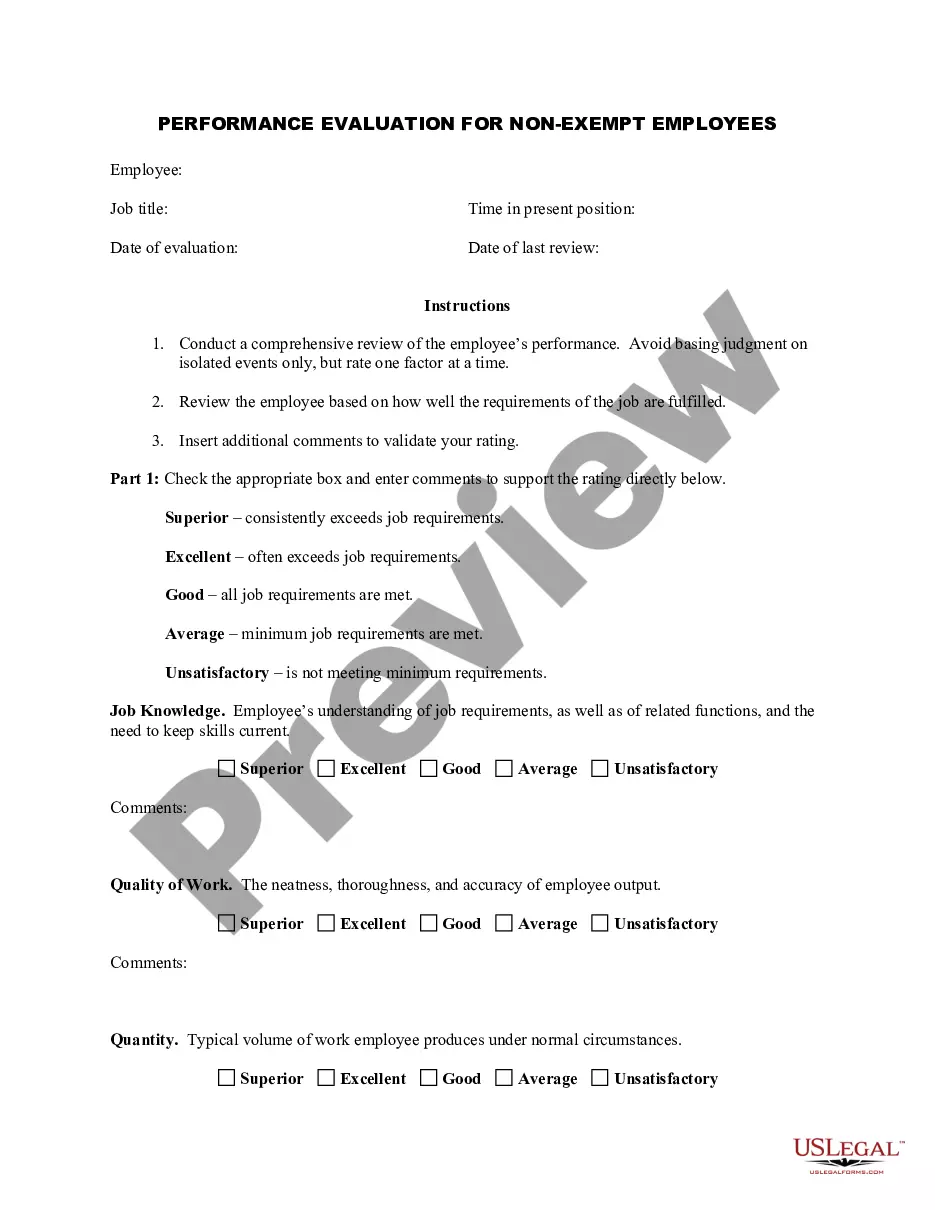
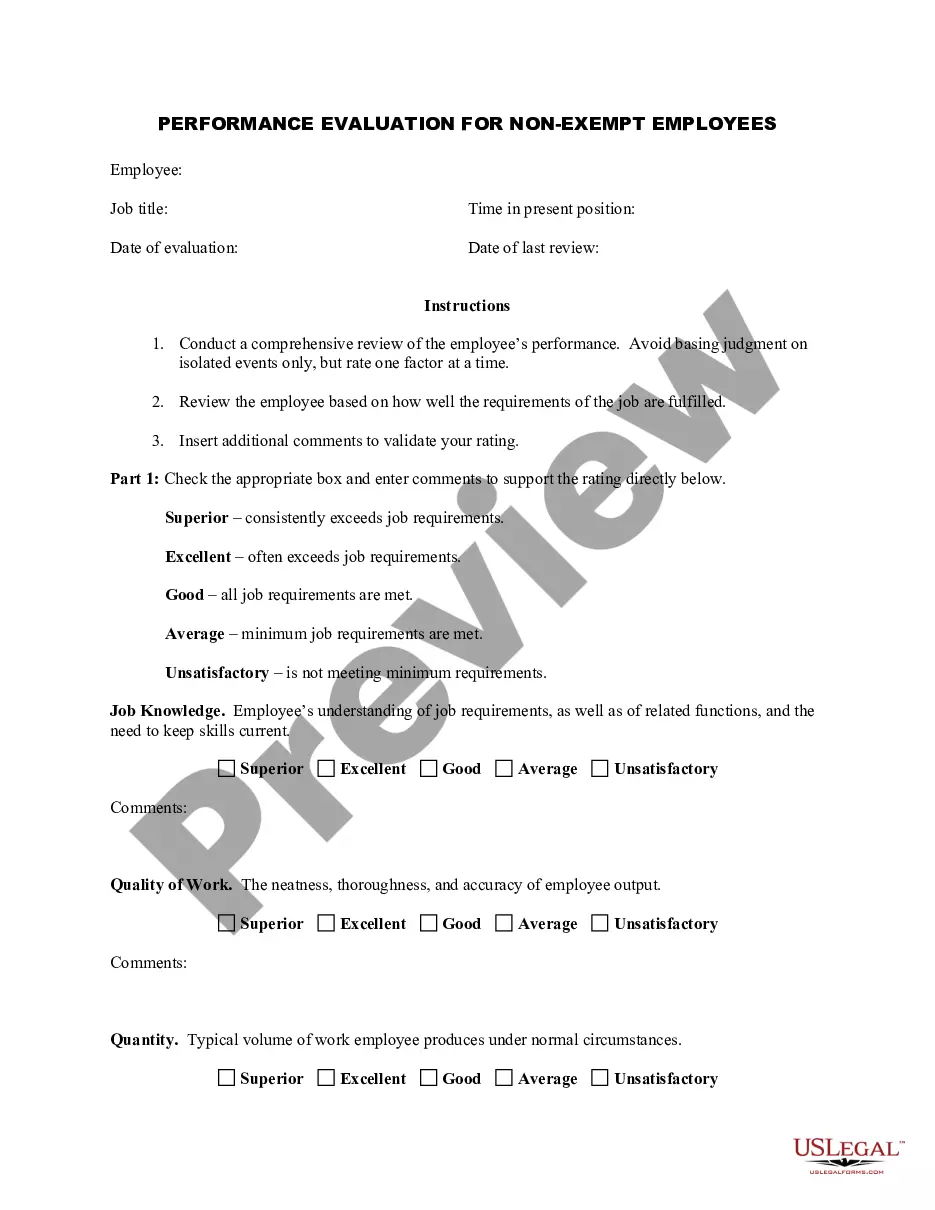
The Employee Evaluation Form for Musician is a structured document designed to formally assess the performance of musicians in an employment setting. This form differs from standard performance reviews by focusing specifically on aspects pertinent to musical roles, ensuring that assessments reflect the unique skills required in the music industry.
What’s included in this form
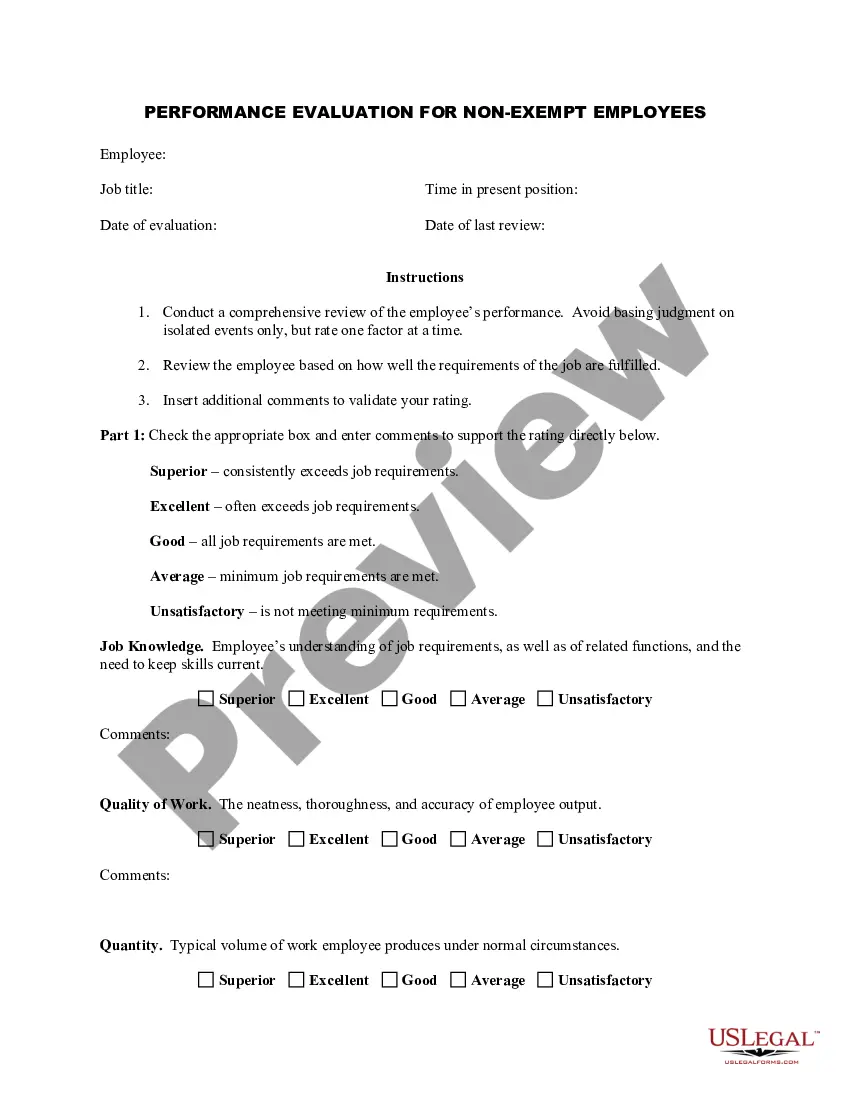
- Employee Information: Basic details about the musician including name, job title, and evaluation dates.
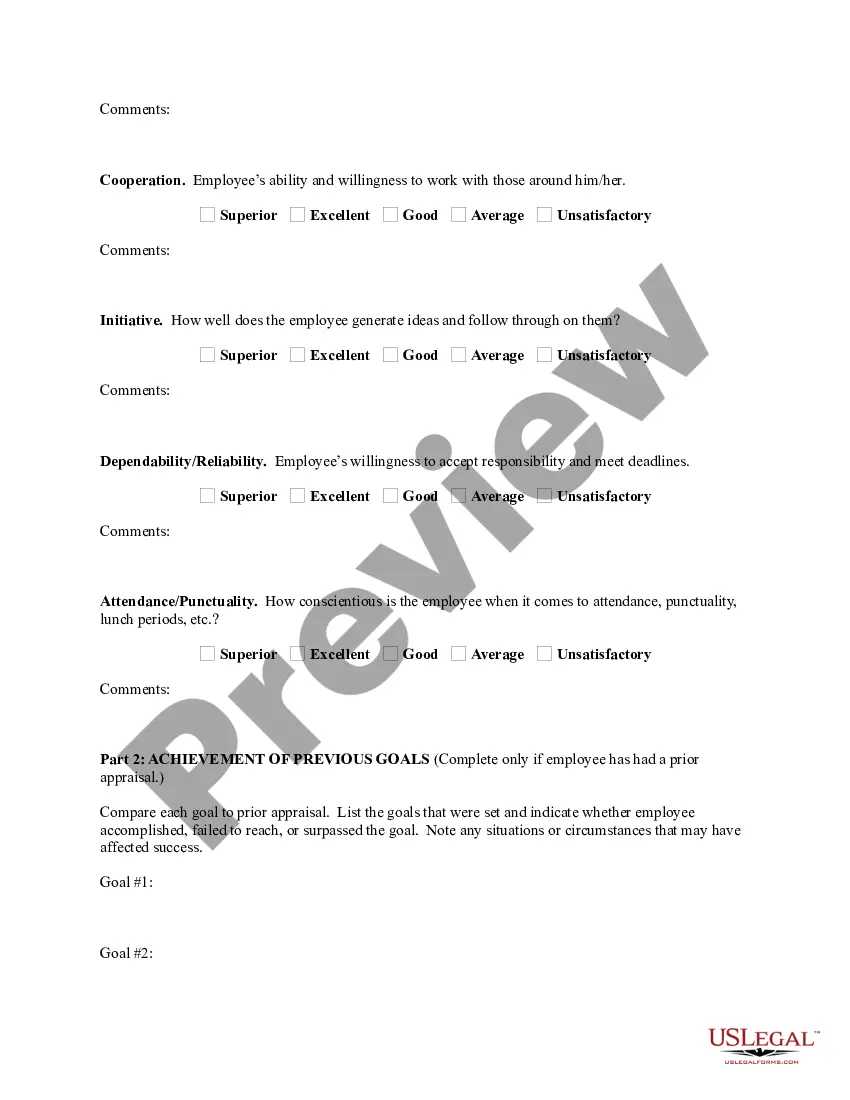
- Performance Criteria: Various performance metrics such as job knowledge, quality of work, quantity of work, cooperation, and initiative.
- Rating Scale: A structured approach to rating performance from superior to unsatisfactory, with space for evaluators to provide comments.
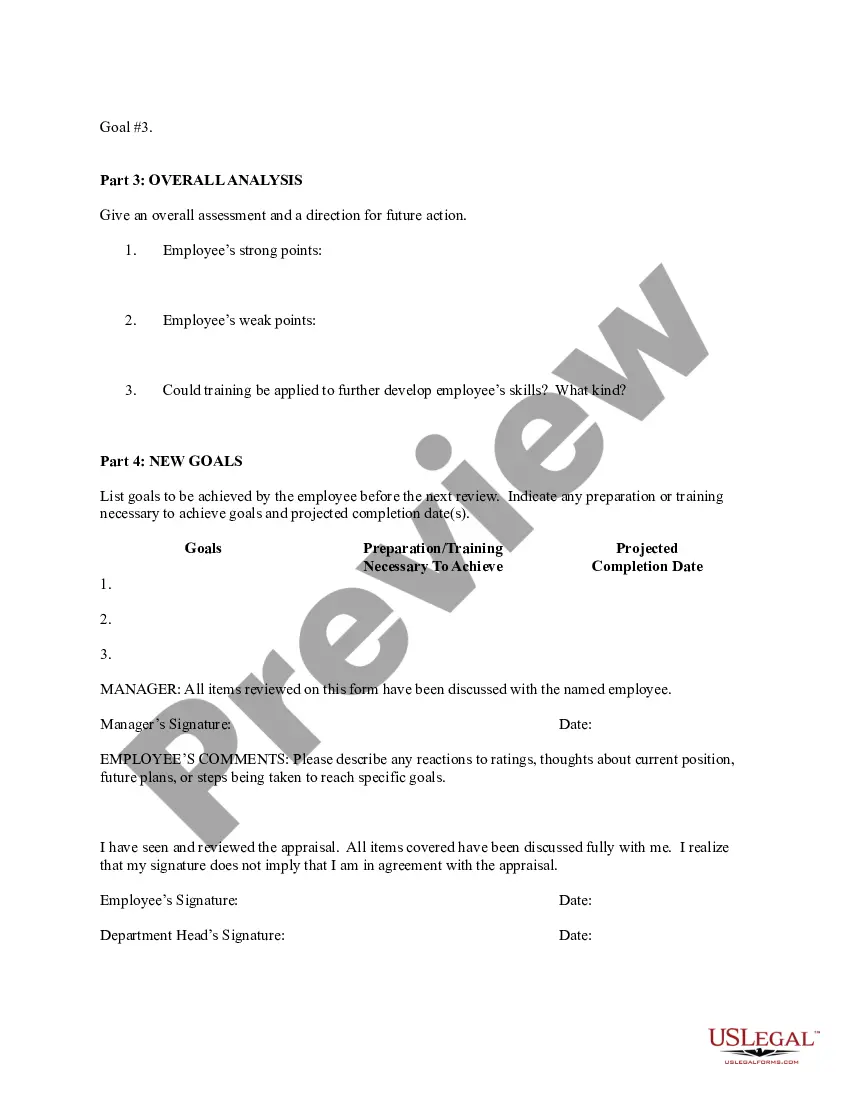
- Previous Goals: An assessment of the employeeâs achievements regarding previously set goals.
- Overall Analysis: A section for evaluators to summarize the musician's strengths and areas for improvement.
- Future Goals: An outline for new goals and required training or preparation for the upcoming evaluation period.
When this form is needed
This form should be utilized whenever a musician's performance needs to be formally evaluated, typically at the end of a designated evaluation period or following significant projects. It is also applicable during promotion assessments, after implementing feedback from previous reviews, or when establishing goals for upcoming periods.
Who can use this document
- Managers and supervisors responsible for reviewing employees within music-focused organizations.
- HR personnel in need of a standardized method to assess employee performance in the arts sector.
- Musicians undergoing performance evaluations, providing a structured format for feedback and growth.
Steps to complete this form
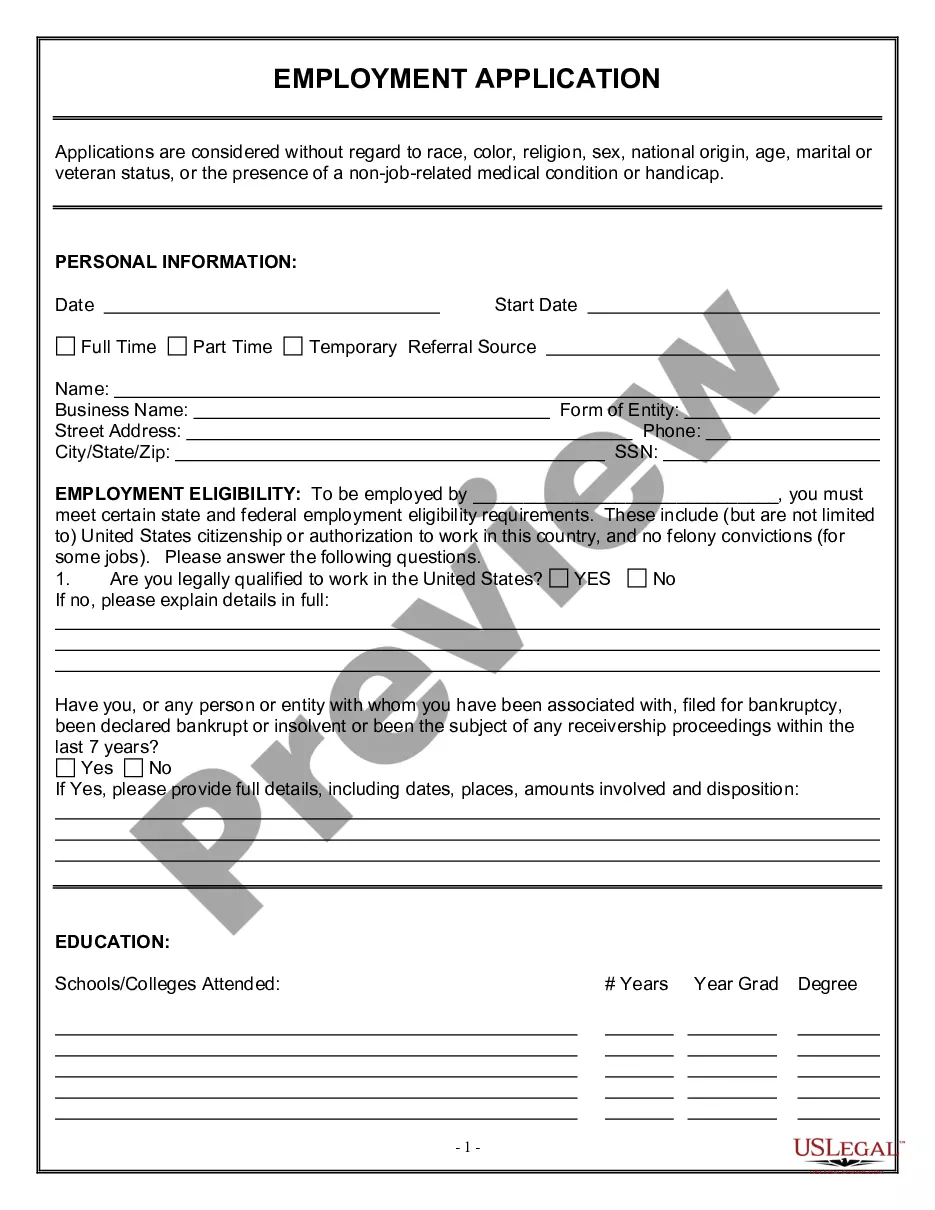
- Start by filling out the employee's basic information, including name and job title.
- Assess each performance criterion individually using the provided rating scale and justify the ratings with specific comments.
- Review the goals set during the last evaluation and indicate the level of achievement for each.
- Provide an overall assessment summarizing the evaluation findings and directing future actions.
- Set new goals for the upcoming period, outlining necessary training or steps to achieve these goals.
Does this document require notarization?
This form does not typically require notarization unless specified by local law. It is advisable to check local regulations regarding employment evaluation forms.
Get your form ready online
Our built-in tools help you complete, sign, share, and store your documents in one place.
Make edits, fill in missing information, and update formatting in US Legal Forms—just like you would in MS Word.
Download a copy, print it, send it by email, or mail it via USPS—whatever works best for your next step.
Sign and collect signatures with our SignNow integration. Send to multiple recipients, set reminders, and more. Go Premium to unlock E-Sign.
If this form requires notarization, complete it online through a secure video call—no need to meet a notary in person or wait for an appointment.
We protect your documents and personal data by following strict security and privacy standards.

Make edits, fill in missing information, and update formatting in US Legal Forms—just like you would in MS Word.

Download a copy, print it, send it by email, or mail it via USPS—whatever works best for your next step.

Sign and collect signatures with our SignNow integration. Send to multiple recipients, set reminders, and more. Go Premium to unlock E-Sign.

If this form requires notarization, complete it online through a secure video call—no need to meet a notary in person or wait for an appointment.

We protect your documents and personal data by following strict security and privacy standards.
Avoid these common issues
- Failing to provide specific examples to support ratings.
- Not involving the musician in the evaluation process thoroughly, missing their feedback.
- Ignoring the review of past goals when setting new objectives.
Why complete this form online
- Convenience of accessing the form anytime and from any device.
- Editable fields allow for quick updates and personalized assessments.
- Secure storage of completed evaluations for future reference.
Legal use & context
- The form serves as a critical tool for employers to document employee performance and decisions.
- Provides legal protection by maintaining clear records of evaluations and employee agreements.
- Enhances transparency in performance assessments, aligning with labor regulations.
What to keep in mind
- The Employee Evaluation Form for Musician is tailored to assess performance in musical roles.
- It includes specific criteria relevant to musicianship and tracks progress against set goals.
- Using this evaluation form helps standardize performance reviews and supports employee development.
Looking for another form?
Form popularity
FAQ
Measures of musical performance most appropriate to formative assessment are rubrics. Rubrics divide a task into constituent parts, offer descriptions of the performance levels for each part, and provide a means for authentic assessment.
Self-Evaluation. A self-evaluation requires an employee to judge his or her own performance against predetermined criteria. Behavioral Checklist. 360-Degree Feedback. Management by Objectives. Ratings Scale.
Gather information. List employee responsibilities. Use objective language. Use action verbs. Compare performance ratings. Ask open-ended questions.
Communication. Collaboration and teamwork. Problem-solving. Quality and accuracy of work. Attendance, punctuality and reliability. The ability to accomplish goals and meet deadlines.
Musical performance, step in the musical process during which musical ideas are realized and transmitted to a listener.In Western music, performance is most commonly viewed as an interpretive art, though it is not always merely that.
Your music performance will only be successful if your audience enjoys it.Think about what the audience is expecting to see and give them a bit of what they want. Famous bands still include their all-time smash hits from years ago when they tour because they know the crowd will love them and sing along.
Level of execution. Quality of work. Level of creativity. Amount of consistent improvement. Customer and peer feedback. Sales revenue generated. Responsiveness to feedback. Ability to take ownership.
Set Performance Standards. Set Specific Goals. Take Notes Throughout the Year. Be Prepared. Be Honest and Specific with Criticism. Don't Compare Employees. Evaluate the Performance, Not the Personality. Have a Conversation.