Exit Interview Review
What is this form?
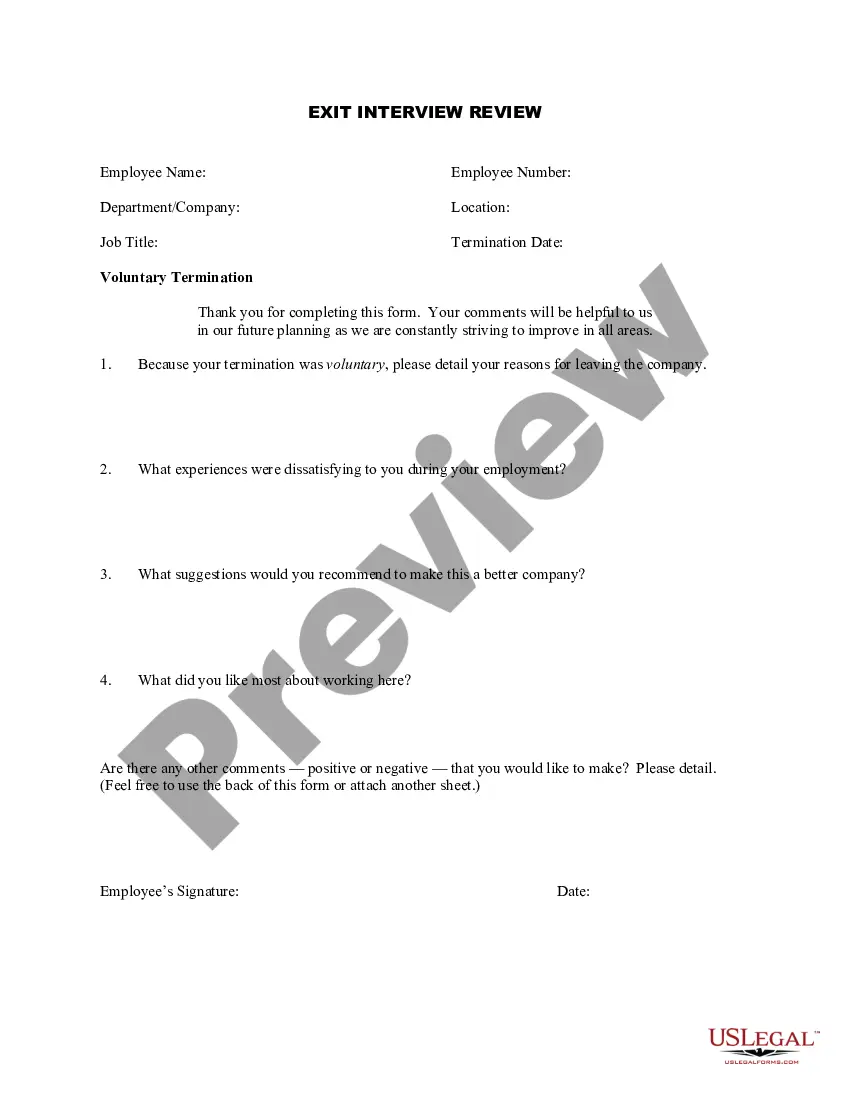
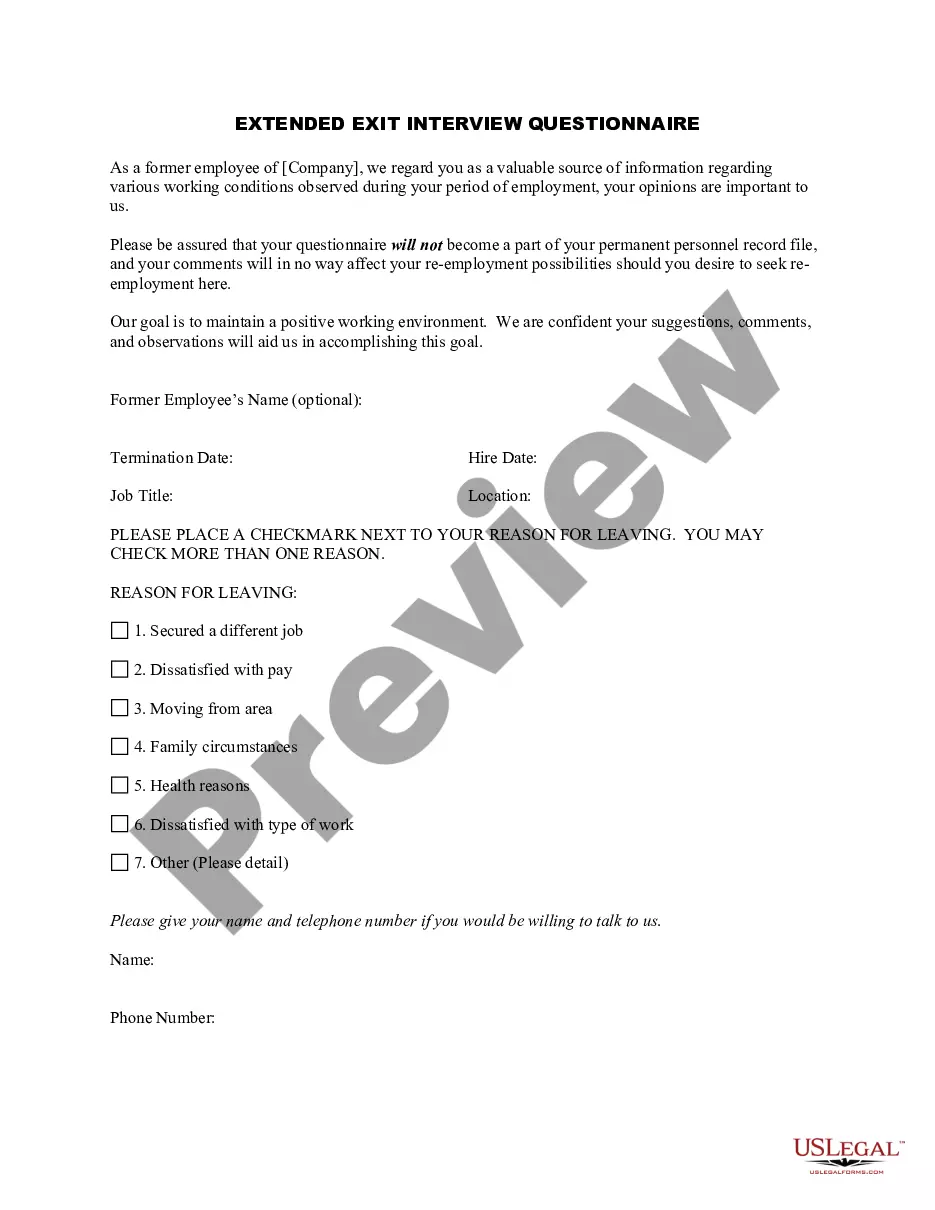
The Exit Interview Review form is a key tool for employers to gather insights into an employee's decision to voluntarily terminate their employment. This form helps HR departments understand the reasons behind resignations and collect feedback that can improve workplace practices. Unlike other termination forms, this review specifically focuses on the feedback from departing employees, allowing organizations to learn from their experiences and enhance employee retention strategies.
Main sections of this form
- Employee Name: The name of the employee completing the form.
- Employee Number: A unique identifier assigned to the employee.
- Department/Company: The specific department or company branch the employee worked in.
- Job Title: The employeeâs position within the company.
- Termination Date: The official last day of employment.
- Feedback Questions: Sections for the employee to share reasons for leaving, experiences during their employment, and suggestions for improvement.

Situations where this form applies
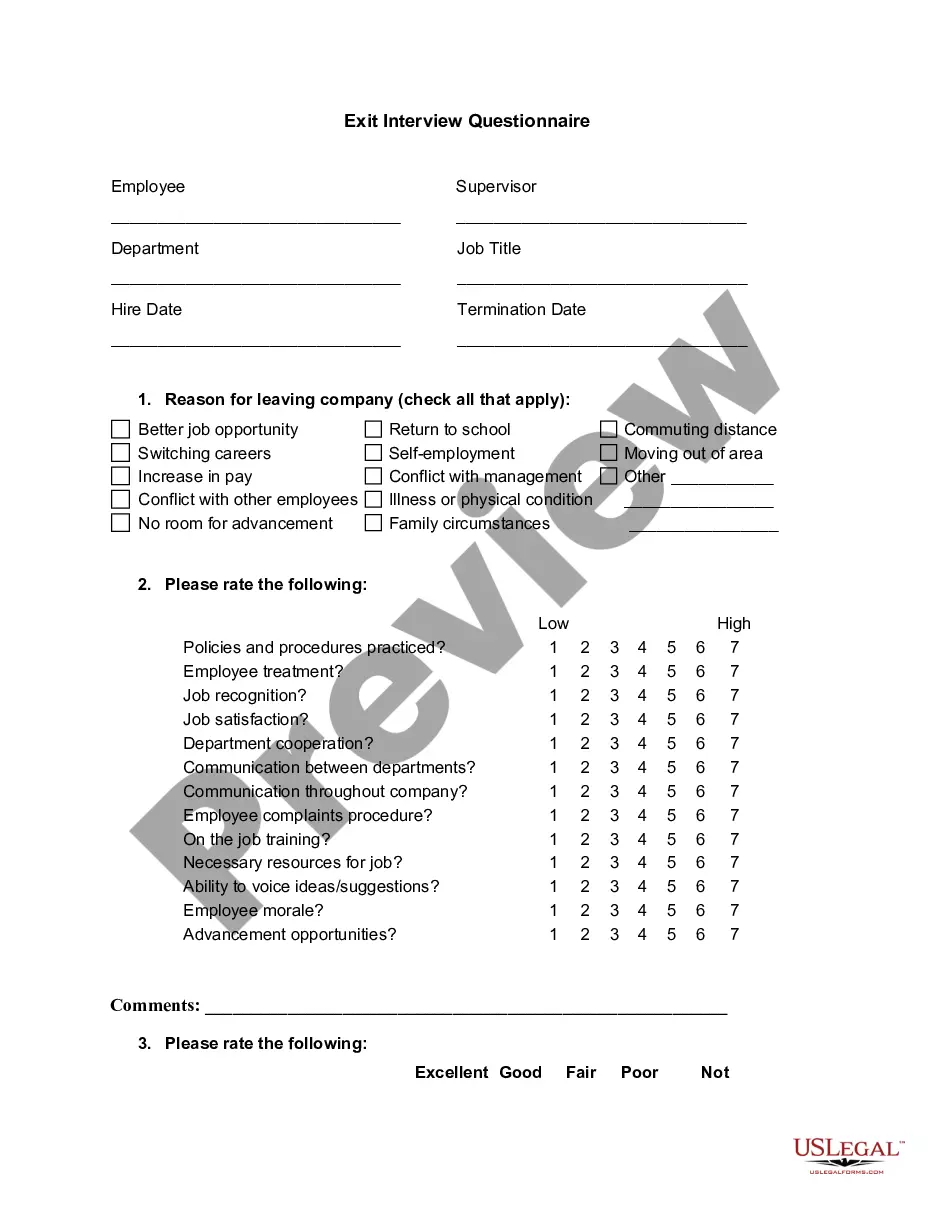
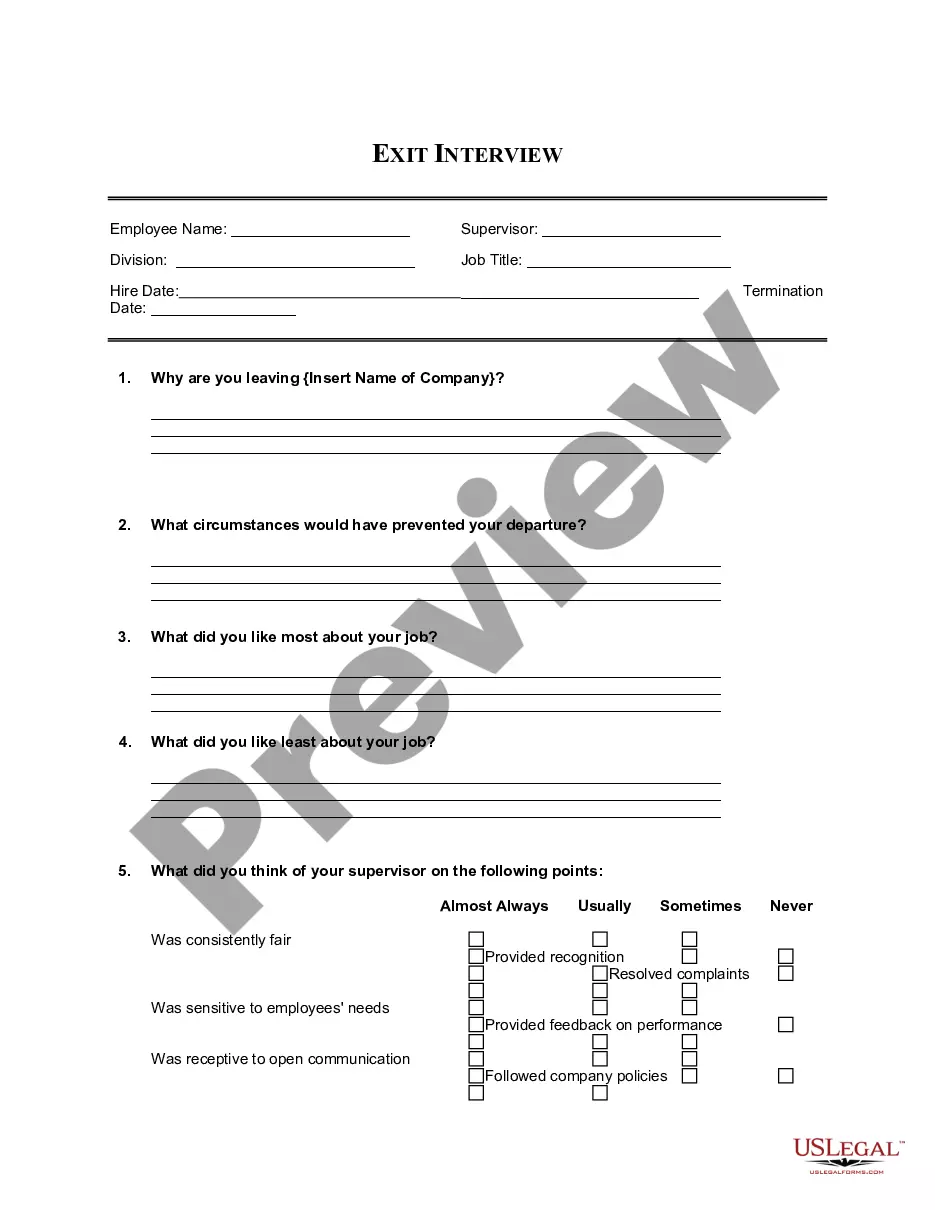
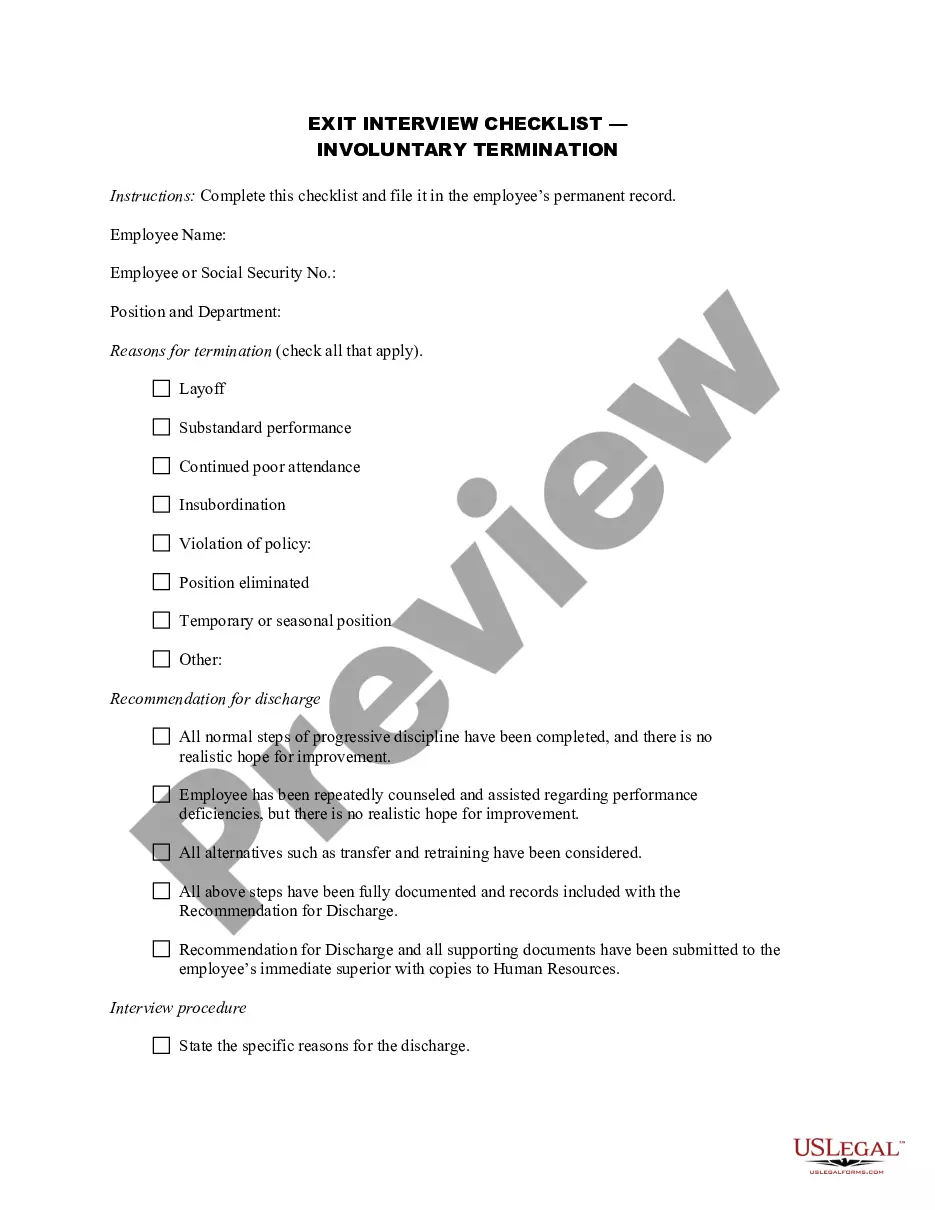
This form should be utilized during the exit interview process with employees who decide to leave the company voluntarily. It is particularly useful when an employer wants to gather qualitative data on employee experiences and areas for improvement. Utilize this form in discussions aimed at understanding why employees choose to leave, thus informing future HR practices and workplace improvements.
Who should use this form
- HR professionals responsible for conducting exit interviews.
- Managers seeking to improve team management and employee satisfaction.
- Organizations aiming to enhance their retention strategies based on employee feedback.
Steps to complete this form
- Identify the employee completing the form by entering their name and employee number.
- Specify the department and location where the employee worked, along with their job title and termination date.
- Encourage the employee to provide detailed answers in the feedback sections regarding their experiences and reasons for leaving.
- Collect the employee's signature and date to confirm their participation in the exit interview.
Does this form need to be notarized?
This form does not typically require notarization unless specified by local law.
Get your form ready online
Our built-in tools help you complete, sign, share, and store your documents in one place.
Make edits, fill in missing information, and update formatting in US Legal Forms—just like you would in MS Word.
Download a copy, print it, send it by email, or mail it via USPS—whatever works best for your next step.
Sign and collect signatures with our SignNow integration. Send to multiple recipients, set reminders, and more. Go Premium to unlock E-Sign.
If this form requires notarization, complete it online through a secure video call—no need to meet a notary in person or wait for an appointment.
We protect your documents and personal data by following strict security and privacy standards.

Make edits, fill in missing information, and update formatting in US Legal Forms—just like you would in MS Word.

Download a copy, print it, send it by email, or mail it via USPS—whatever works best for your next step.

Sign and collect signatures with our SignNow integration. Send to multiple recipients, set reminders, and more. Go Premium to unlock E-Sign.

If this form requires notarization, complete it online through a secure video call—no need to meet a notary in person or wait for an appointment.

We protect your documents and personal data by following strict security and privacy standards.
Common mistakes to avoid
- Failure to provide adequate space for employee feedback.
- Not allowing employees to express both positive and negative feedback.
- Neglecting to collect signatures or dates, which may lead to disputes about the interview content.
Advantages of online completion
- Easy access: Employees can fill it out conveniently from any device at any time.
- Editability: Changes can easily be made to ensure accurate feedback is captured.
- Reliability: The standardized format ensures consistency in collecting exit interview data across the organization.
Legal use & context
- The Exit Interview Review form serves as a record of employee feedback, which can assist in legal matters related to employment disputes.
- Such feedback may provide insights that enhance compliance with employment regulations and improve organizational policies.
Key takeaways
- The Exit Interview Review form is essential for capturing valuable insights from departing employees.
- Proper completion of the form can help organizations improve retention strategies and workplace culture.
- Feedback gathered through this form can be critical in resolving potential disputes and ensuring compliance with regulations.
Looking for another form?


Form popularity
FAQ
Are you leaving because of a particular manager? Is there something you don't like about the organisational culture? Were you unhappy with the lack of career advancement opportunities?
Include positive elements of your experience at the organization what you liked and appreciated most about the job, your team, and the organization. Just as individuals need to hear positive feedback to know what they should continue doing, so do organizations.
Why are you leaving? What were the best and worst parts of your job? How happy were you with things like salary, benefits, perks, time off, the office environment, etc? How do you feel about your managers or supervisors? How do you feel about the support/training/feedback you received?
This place is 'going downhill/a sinking ship/lost without me So-and-so was mean to me/did something bad/hates it here, too SHOW ME THE MONEY! @%! Never, ever again. You could have made me stay, you know. Nobody likes working here.
If you're asked to participate in an exit interview, you'll likely be asked some version of the following questions: Why are you leaving? What were the best and worst parts of your job? How happy were you with things like salary, benefits, perks, time off, the office environment, etc?
The honesty you display in your exit interview is not all about altruism. Boomerangs employees that leave a company only to end up coming back do happen. Nobody expects to boomerang. But if it does happen, it's better to land at a company that has been improved by your exit interview advice.
Exit interviews conducted in person are more effective because they allow for a direct, two-way conversation. In other words, the interviewer will be able to read an employee's body language and ask follow up questions in order to get the most out of these interviews.