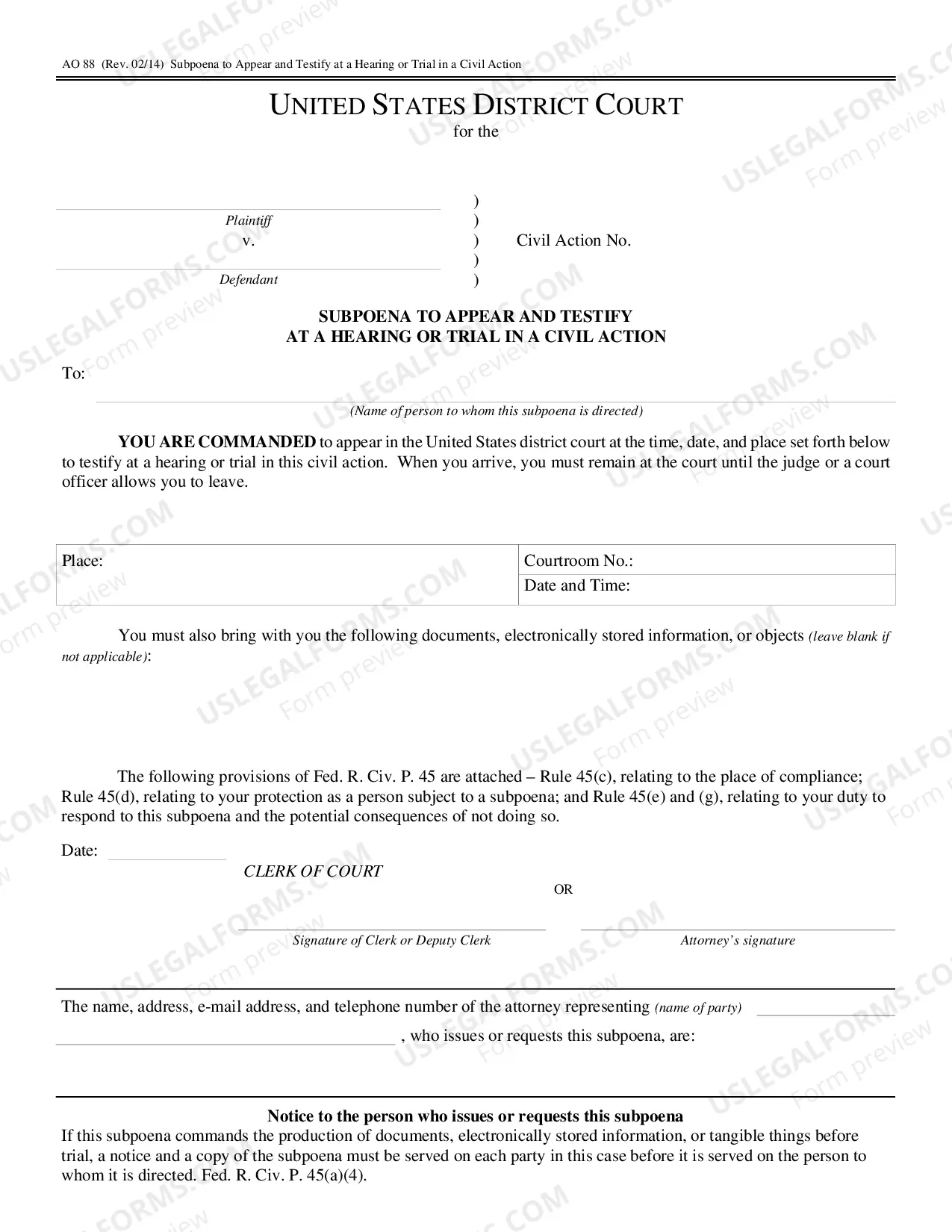
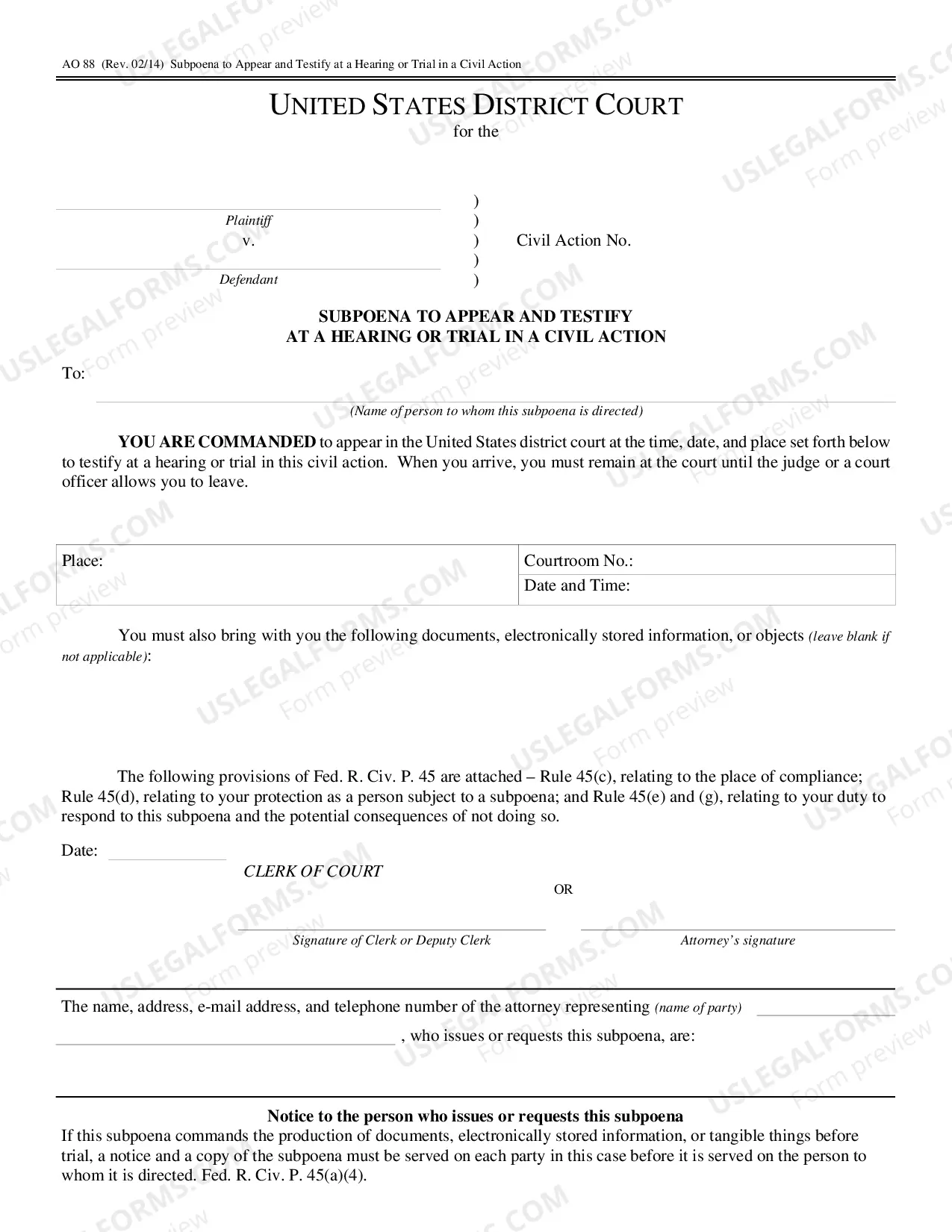
Subpoena to Appear and Testify at a Hearing or Trial in a Civil Action
Understanding this form
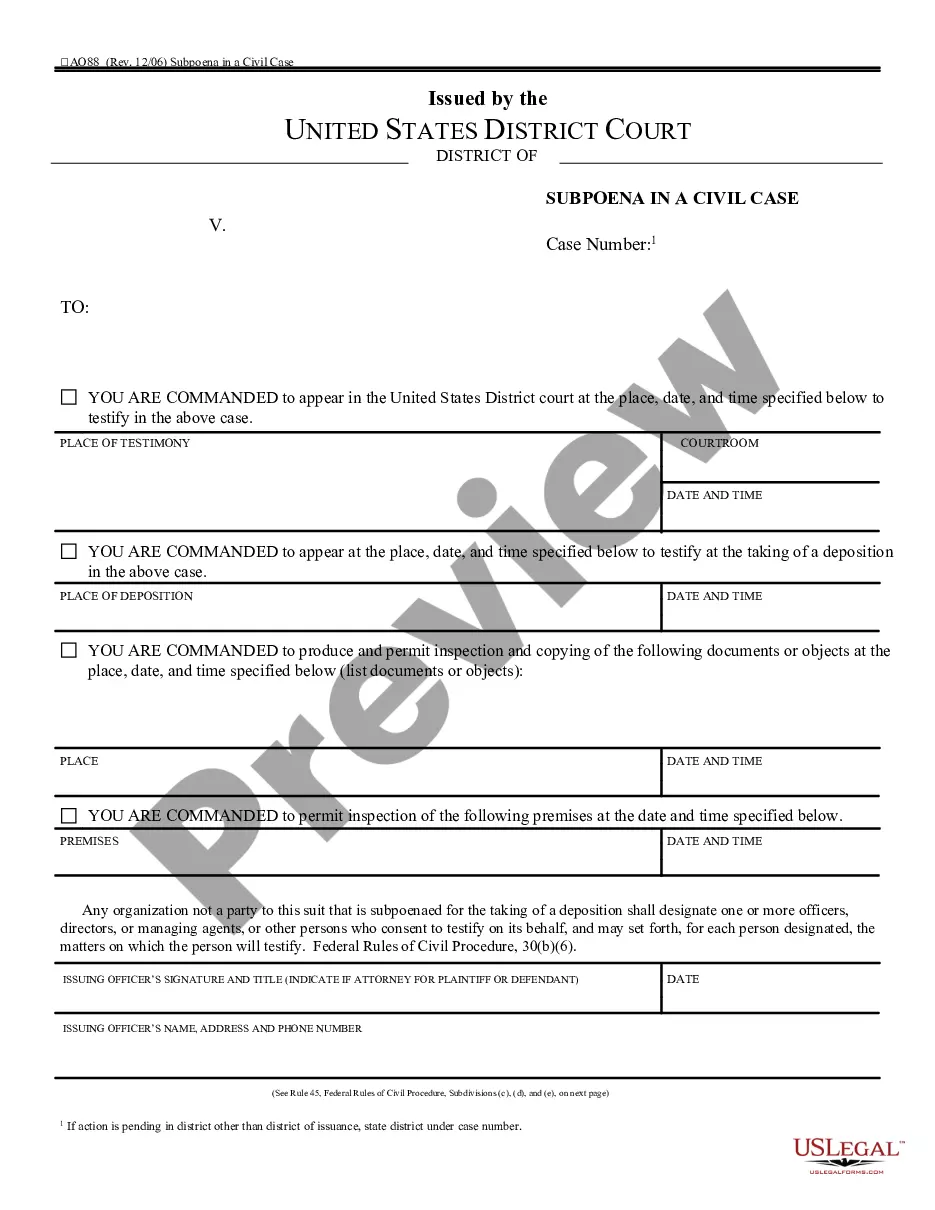
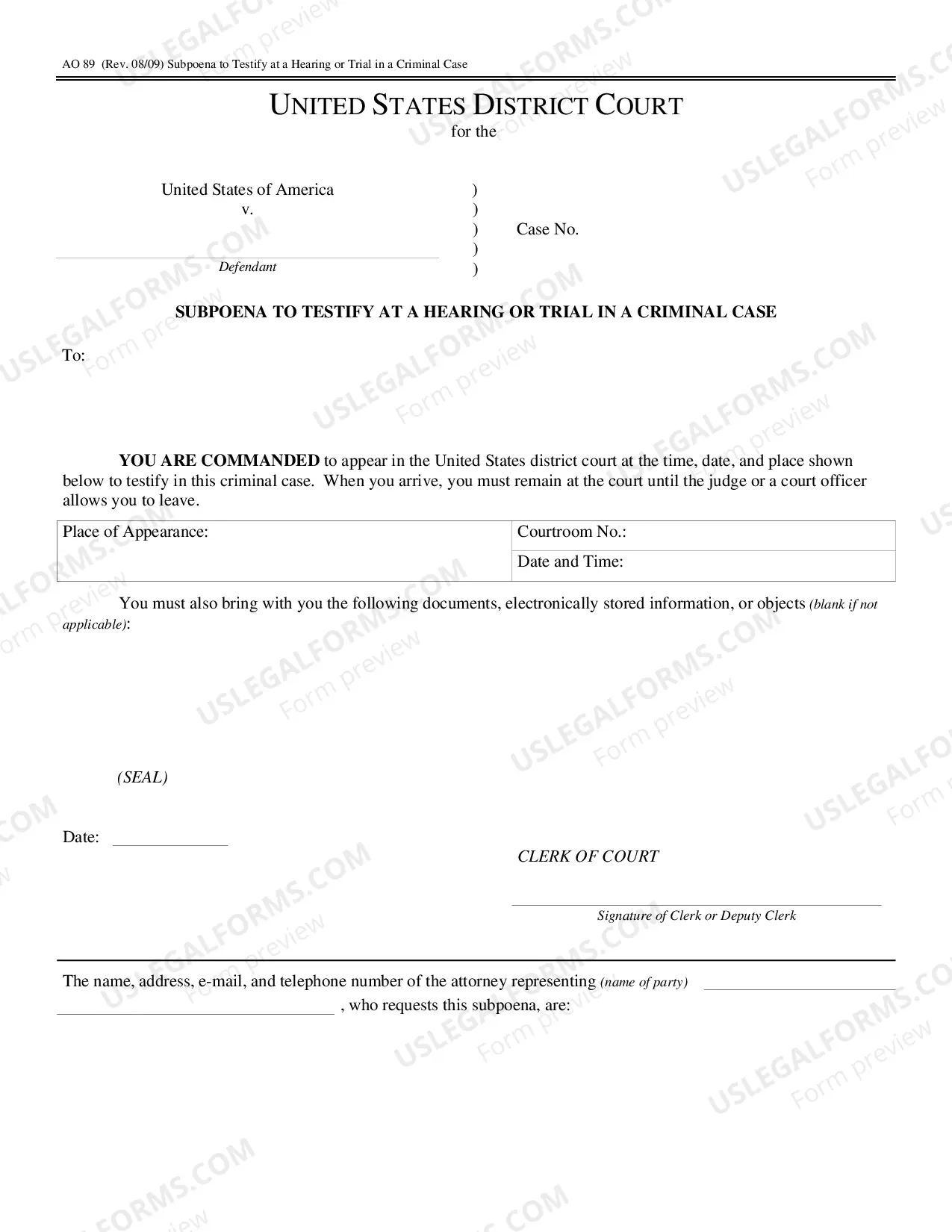
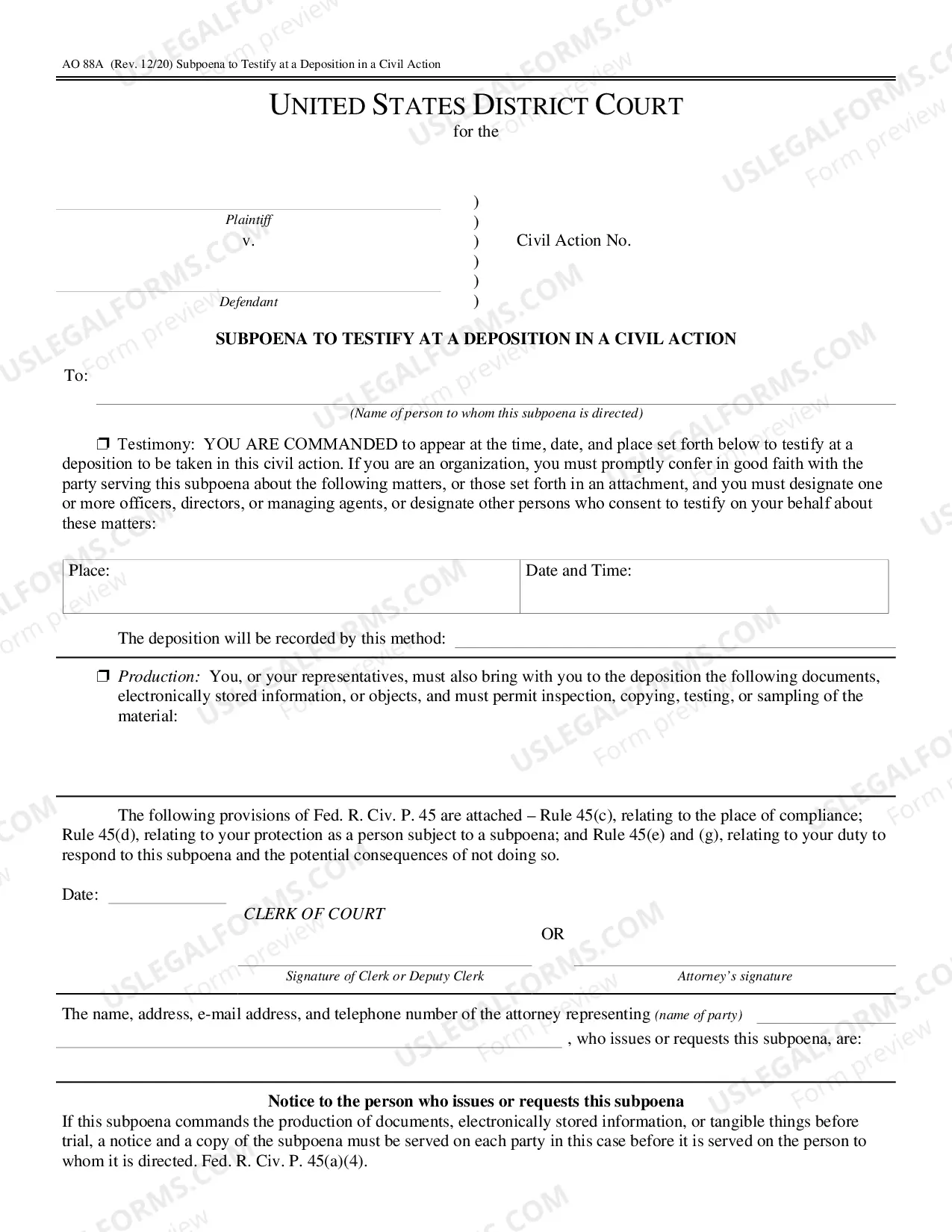
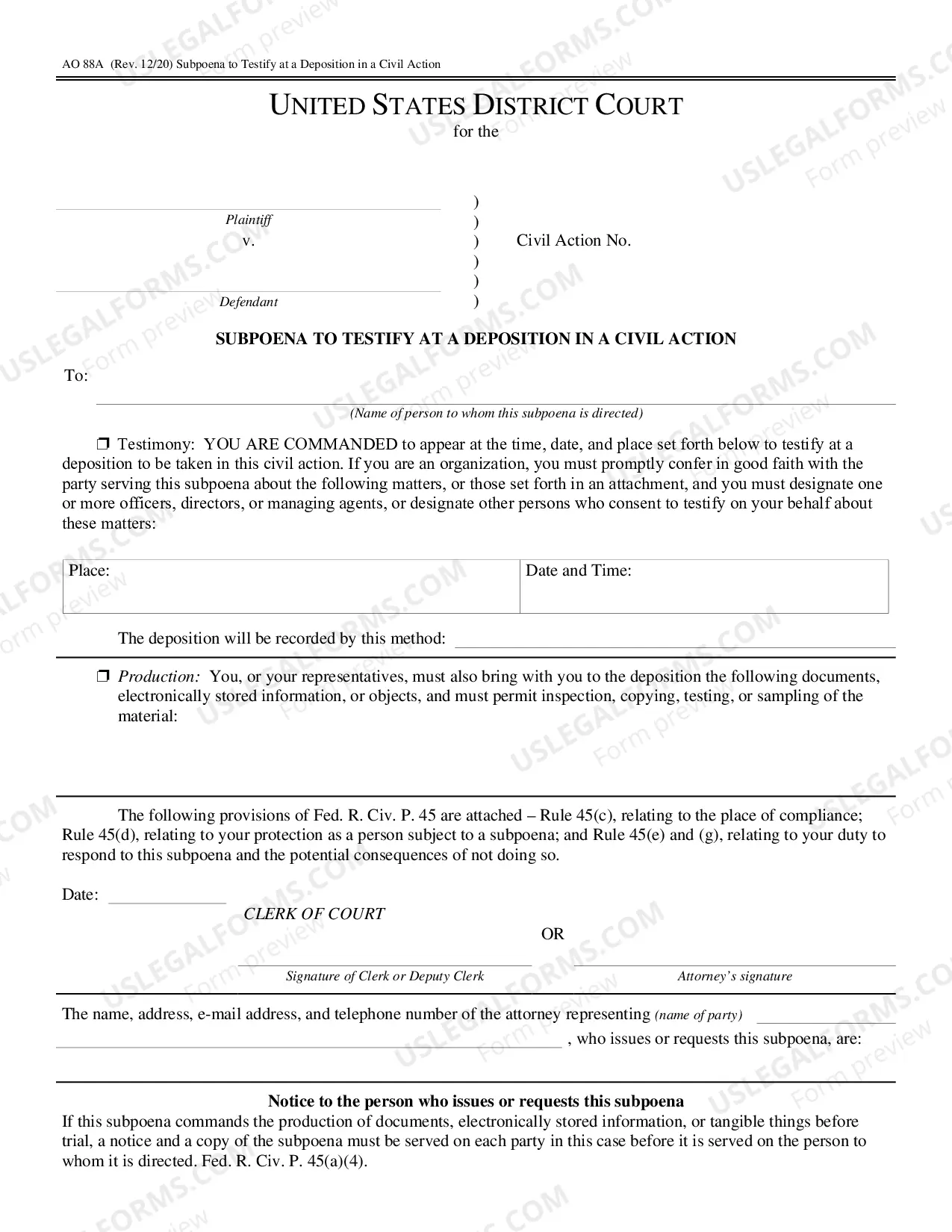
The Subpoena to Appear and Testify at a Hearing or Trial in a Civil Action is a legal document issued by a court that commands an individual to appear and provide testimony in a civil case. Unlike other forms of subpoenas, this particular form is specifically tailored for use in federal district courts and must comply with the Federal Rules of Civil Procedure. By using this form, a party ensures that witnesses can be legally required to testify, which is critical for presenting evidence in civil litigation.
Key components of this form
- Issuing officer signature: Identifies the court official who authorizes the subpoena.
- Designated persons: Names individuals required to appear and the topics on which they will testify.
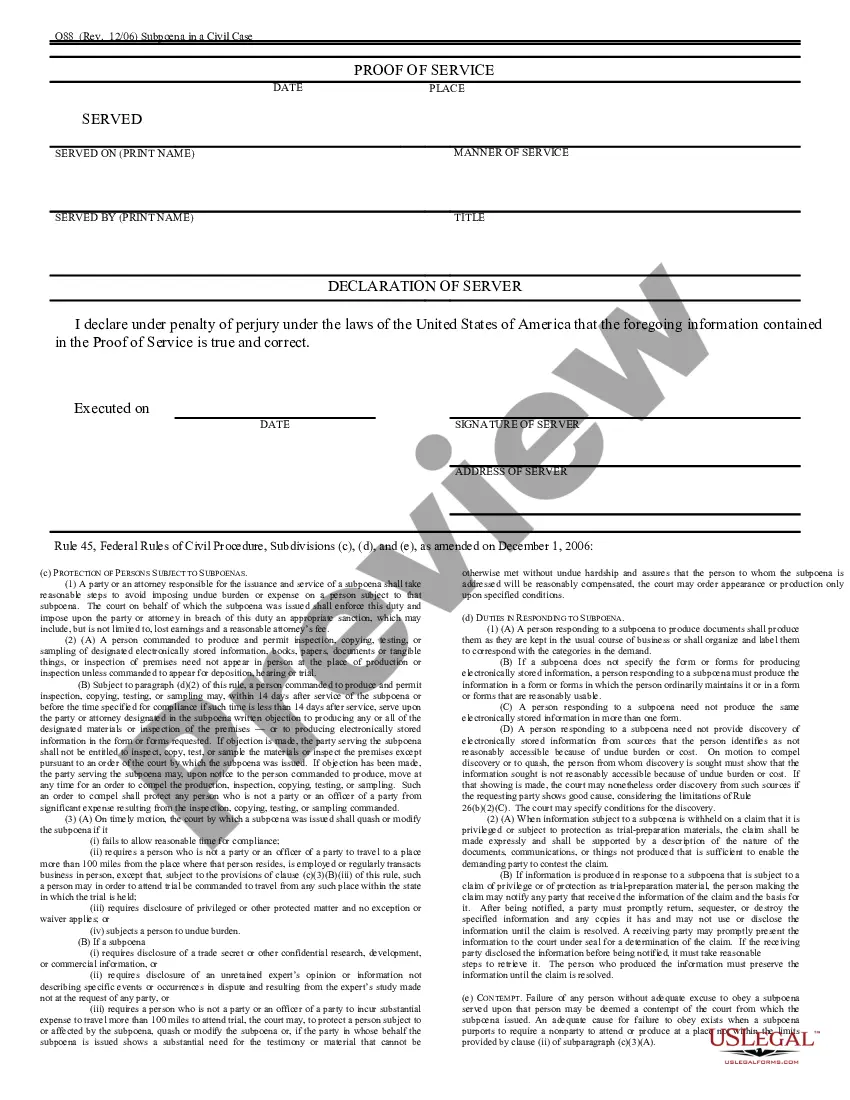
- Proof of service: A declaration by the person serving the subpoena, confirming it has been delivered to the designated witness.
- Compliance requirements: Details the obligations of the witness regarding document production or testimony.
- Legal protections: Clauses concerning the protection of persons subject to subpoenas, including guidelines for objections.
Situations where this form applies
This form should be used when a party involved in a civil action needs a witness to appear at a trial or hearing. Common scenarios include when a party wants to summon experts for their testimony, or when they need to ensure that key individuals provide evidence relevant to the case. Using this form helps parties in litigation secure necessary testimonies to support their claims or defenses.
Intended users of this form
- Litigants: Plaintiffs or defendants in a civil action needing to compel a witness.
- Attorneys: Legal representatives seeking to gather testimonies for their cases.
- Organizations: Companies or entities involved in lawsuits requiring testimony from employees or agents.
- Process servers: Individuals responsible for delivering subpoenas to witnesses or parties.
How to prepare this document
- Identify the issuing court and the case details, including case number and title.
- List the names of individuals required to testify and specify the matters they will address.
- Sign and date the form, ensuring you include the title and role (e.g., attorney for plaintiff or defendant).
- Fill out the proof of service section once the subpoena is delivered to the witness.
- Retain copies for your records and ensure that the witnesses understand their obligations under the subpoena.
Does this form need to be notarized?
Notarization is generally not required for this form. However, certain states or situations might demand it. You can complete notarization online through US Legal Forms, powered by Notarize, using a verified video call available anytime.
Get your form ready online
Our built-in tools help you complete, sign, share, and store your documents in one place.
Make edits, fill in missing information, and update formatting in US Legal Forms—just like you would in MS Word.
Download a copy, print it, send it by email, or mail it via USPS—whatever works best for your next step.
Sign and collect signatures with our SignNow integration. Send to multiple recipients, set reminders, and more. Go Premium to unlock E-Sign.
If this form requires notarization, complete it online through a secure video call—no need to meet a notary in person or wait for an appointment.
We protect your documents and personal data by following strict security and privacy standards.

Make edits, fill in missing information, and update formatting in US Legal Forms—just like you would in MS Word.

Download a copy, print it, send it by email, or mail it via USPS—whatever works best for your next step.

Sign and collect signatures with our SignNow integration. Send to multiple recipients, set reminders, and more. Go Premium to unlock E-Sign.

If this form requires notarization, complete it online through a secure video call—no need to meet a notary in person or wait for an appointment.

We protect your documents and personal data by following strict security and privacy standards.
Avoid these common issues
- Failing to specify the topics on which the witness will testify.
- Not signing the subpoena, which may render it invalid.
- Inadequate time allowed for compliance, possibly leading to court challenges.
- Not properly servicing the subpoena to the intended witness.
Benefits of using this form online
- Convenience: Download and complete the form easily from anywhere at any time.
- Editability: Make necessary adjustments to the form as required for your specific case.
- Reliability: Access to templates drafted by licensed attorneys ensures compliance with legal standards.
Legal use & context
- The subpoena allows for the legal compulsion of testimony in civil court proceedings, which helps establish facts.
- Failure to comply with the subpoena may result in contempt of court charges.
- Parties must adhere to protections outlined for individuals receiving subpoenas to avoid undue hardship.
Main things to remember
- The Subpoena to Appear and Testify is vital for obtaining necessary witness testimonies in civil actions.
- Proper completion and service of the form are essential to its enforceability.
- Utilizing this form can streamline the process of gathering evidence for legal cases.
Looking for another form?

Form popularity
FAQ
You can Subpoena the witness, which requires them to come to court. You can also use a Subpoena during discovery.Fill in the name of the case, the name and address of the witness, and the courtroom for the case. When you Subpoena a witness, you must pay them a witness fee and travel costs.
The short answer to this is that a subpoena is a legally binding court order for you to appear in Court. Failure to abide by a court order can result in a finding of contempt.In order to be legally binding, the subpoena must be legally served on the alleged victim or other witness.
Opening Statements and Examination of Witnesses The plaintiff has the burden of proof in civil cases, so their attorney will start with presenting their case. This involves calling witnesses to testify on their behalf, as well as presenting any documents or other tangible items that are relevant.
A refusal to testify is considered civil contempt. But even civil contempt is considered quasi-criminal in nature. That means that a person is entitled to certain constitutional procedures. For example, the witness is entitled to consult with a lawyer.
You must engage legal counsel to file a motion to quash in the appropriate court, and you must also be prepared for the possibility that the agency or party that sought or issued the subpoena will simply seek to have it re-served by authorized means.
Lawyers who are licensed in the state usually have the power to issue a subpoena. However, individuals who are a party to a lawsuit and other individuals may also be able to issue a subpoena, depending on the rules of civil or criminal procedure in the court that has jurisdiction of the case.
Under the Fifth Amendment, you can refuse to testify to self-incriminating evidence.So, if you've been subpoenaed and do not want to testify, consult with a experienced criminal defense attorney to see if any of these privileges apply to you, or you could face jail time if you don't show up.
A subpoena must issue from the court where the action is pending.The clerk must issue a subpoena, signed but otherwise in blank, to a party who requests it. That party must complete it before service. An attorney also may issue and sign a subpoena if the attorney is authorized to practice in the issuing court.