Letter to Client - Termination of Representation
About this form
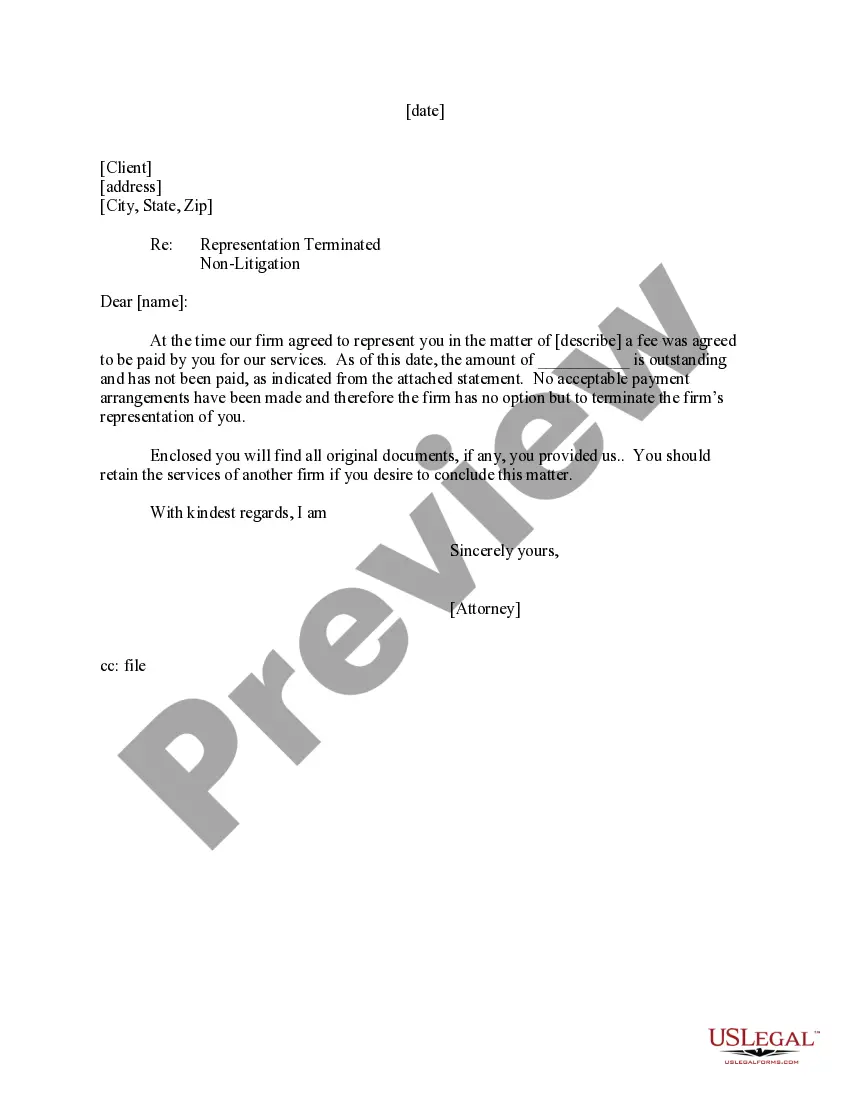
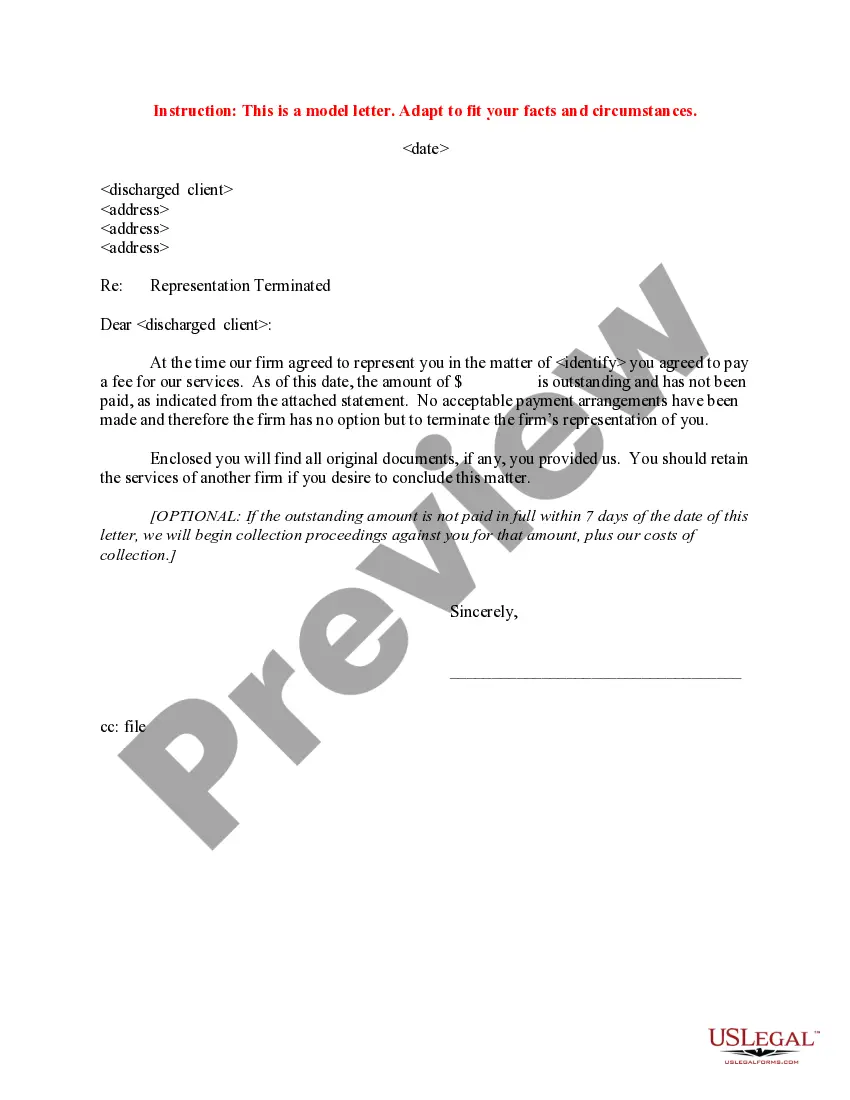
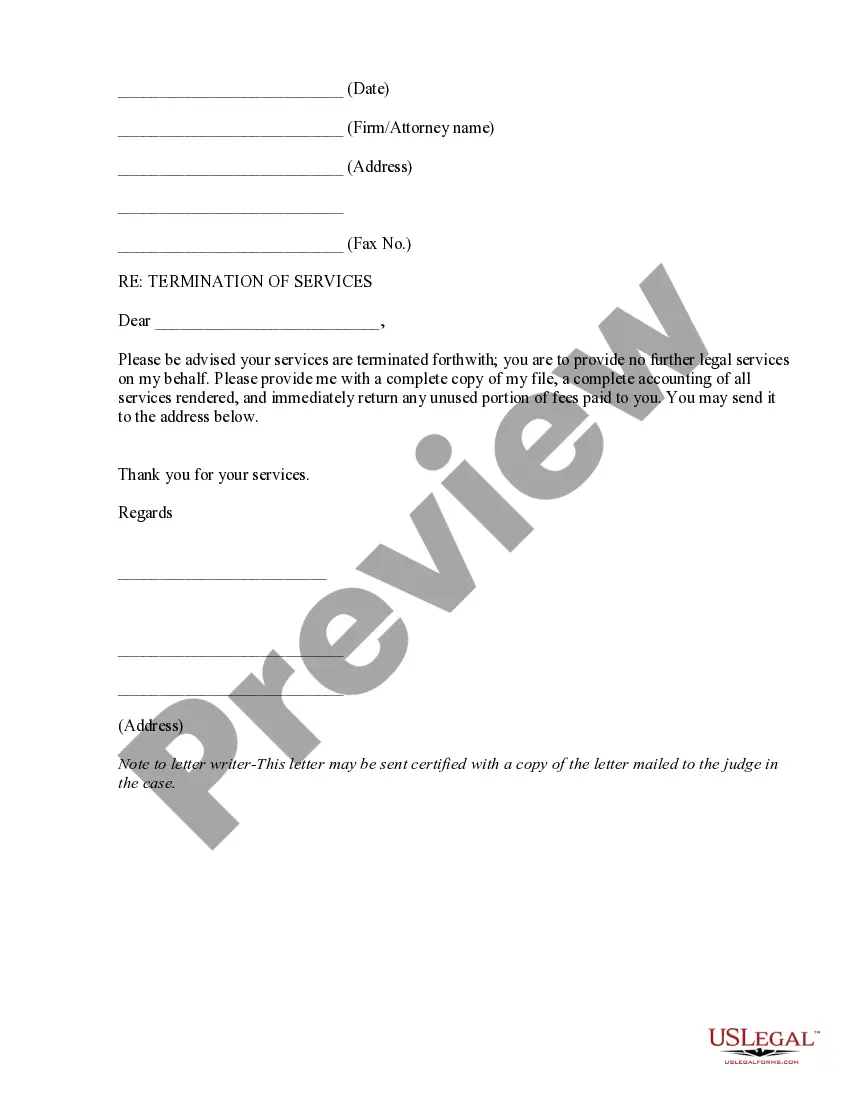
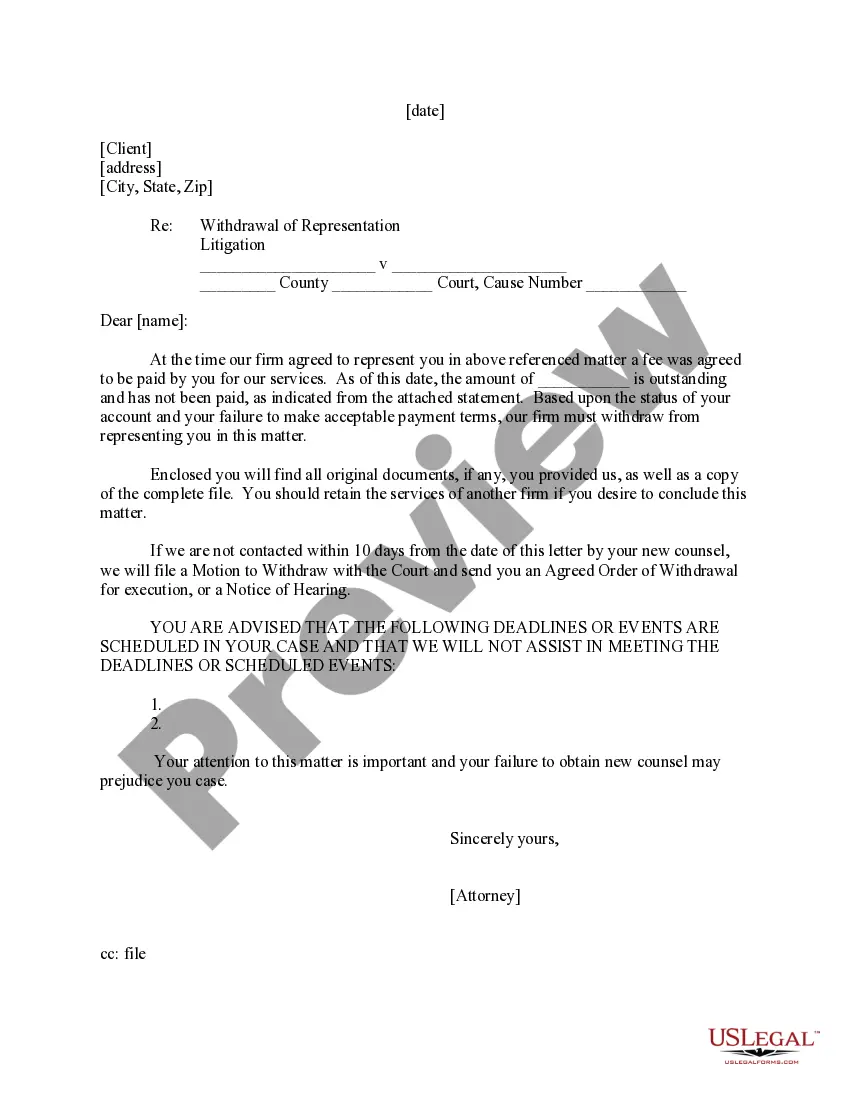
The Letter to Client - Termination of Representation is a legal document used by attorneys to formally notify a client that their representation is being terminated. This letter outlines the reasons for the termination and includes information about any outstanding fees. It is important to note that this form differs from other termination notices as it emphasizes non-litigation matters and the client's outstanding financial obligations.
What’s included in this form
- Client address: Specifies where the letter will be sent.
- Subject line: Clearly states the purpose of the letter.
- Introduction: A statement confirming the representation and references to the fee agreement.
- Outstanding fees: Details the amount owed and the lack of acceptable payment arrangements.
- Document return: Information on the return of original documents provided by the client.
- Closing: Professional sign-off from the attorney, along with cc indication for the file.

When to use this document
This form is necessary when an attorney decides to terminate their representation of a client due to unpaid fees or lack of payment arrangements. Situations may include failure to pay for previously agreed upon services or when a client does not respond to payment requests. Using this letter ensures the attorney's compliance with ethical obligations while preserving a record of communication with the client.
Who should use this form
- Attorneys who need to formally terminate client representation.
- Legal professionals managing client accounts with outstanding fees.
- Law firms that require documentation of client communication regarding representation status.
How to prepare this document
- Fill in the client's full address including city, state, and zip code.
- Clearly state the reason for termination in the subject line.
- Detail the fee agreement in the introduction and mention the outstanding amount.
- Include a statement about the return of documents provided by the client.
- Sign the letter and include a copy for your records.
Does this document require notarization?
Notarization is not commonly needed for this form. However, certain documents or local rules may make it necessary. Our notarization service, powered by Notarize, allows you to finalize it securely online anytime, day or night.
Get your form ready online
Our built-in tools help you complete, sign, share, and store your documents in one place.
Make edits, fill in missing information, and update formatting in US Legal Forms—just like you would in MS Word.
Download a copy, print it, send it by email, or mail it via USPS—whatever works best for your next step.
Sign and collect signatures with our SignNow integration. Send to multiple recipients, set reminders, and more. Go Premium to unlock E-Sign.
If this form requires notarization, complete it online through a secure video call—no need to meet a notary in person or wait for an appointment.
We protect your documents and personal data by following strict security and privacy standards.

Make edits, fill in missing information, and update formatting in US Legal Forms—just like you would in MS Word.

Download a copy, print it, send it by email, or mail it via USPS—whatever works best for your next step.

Sign and collect signatures with our SignNow integration. Send to multiple recipients, set reminders, and more. Go Premium to unlock E-Sign.

If this form requires notarization, complete it online through a secure video call—no need to meet a notary in person or wait for an appointment.

We protect your documents and personal data by following strict security and privacy standards.
Common mistakes to avoid
- Failing to specify the exact amount owed by the client.
- Leaving out client contact details, which can hinder communication.
- Not providing original documents back to the client.
- Omitting a professional closing or signature from the attorney.
Why complete this form online
- Easy to download and customize according to specific client details.
- Quick access allows for efficient management of client communications.
- Drafted by licensed attorneys, ensuring compliance with legal standards.
Looking for another form?
Form popularity
FAQ
Letter to Client - Termination of Representation is a formal notice from an attorney ending the attorney–client relationship. It is used when fees remain unpaid or payment arrangements fail and concerns non-litigation matters. The letter outlines outstanding fee obligations, provides instructions for returning original documents, and includes a professional closing to finalize the file.
After sending the Letter to Client - Termination of Representation, the attorney ends the client relationship and creates a formal record of the decision. The notice should document outstanding fees, reference the fee agreement, and instruct the client on returning original documents to ensure a complete file.
An example of a good termination letter is the Letter to Client - Termination of Representation template, which includes a clear subject line, an introduction referencing the fee agreement, a detailed section on outstanding fees, instructions for returning original documents, and a professional closing with a cc line.
Use the Letter to Client - Termination of Representation as a template: include a subject line, an introduction noting the fee agreement, a statement terminating representation, a detailed note on outstanding fees, instructions for returning original documents, and a professional closing with cc to the file.
To terminate legal representation, send the Letter to Client - Termination of Representation when there are unpaid fees or no acceptable payment arrangements. The form ensures ethical compliance by documenting the termination, outlining outstanding balances, and providing document-return instructions, while preserving the file and communication history.
This form focuses on non-litigation matters and outstanding financial obligations, unlike generic termination letters. It includes a clear introduction, a description of outstanding fees, instructions for returning original documents, and a closing with cc. The multi-state template supports consistent documentation of representation termination across jurisdictions.