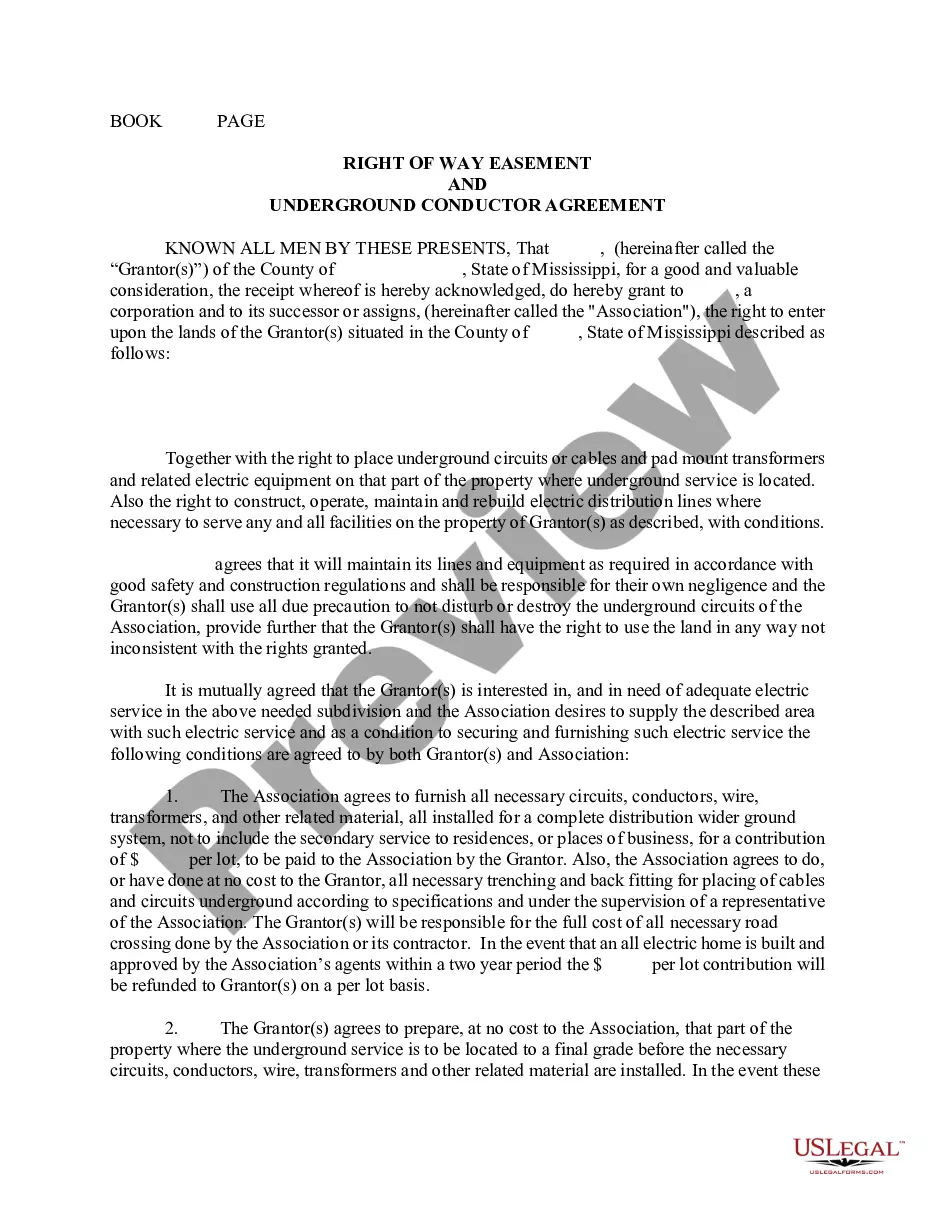
Trustee's motion to prevent termination of automatic stay - hearing
What is this form?
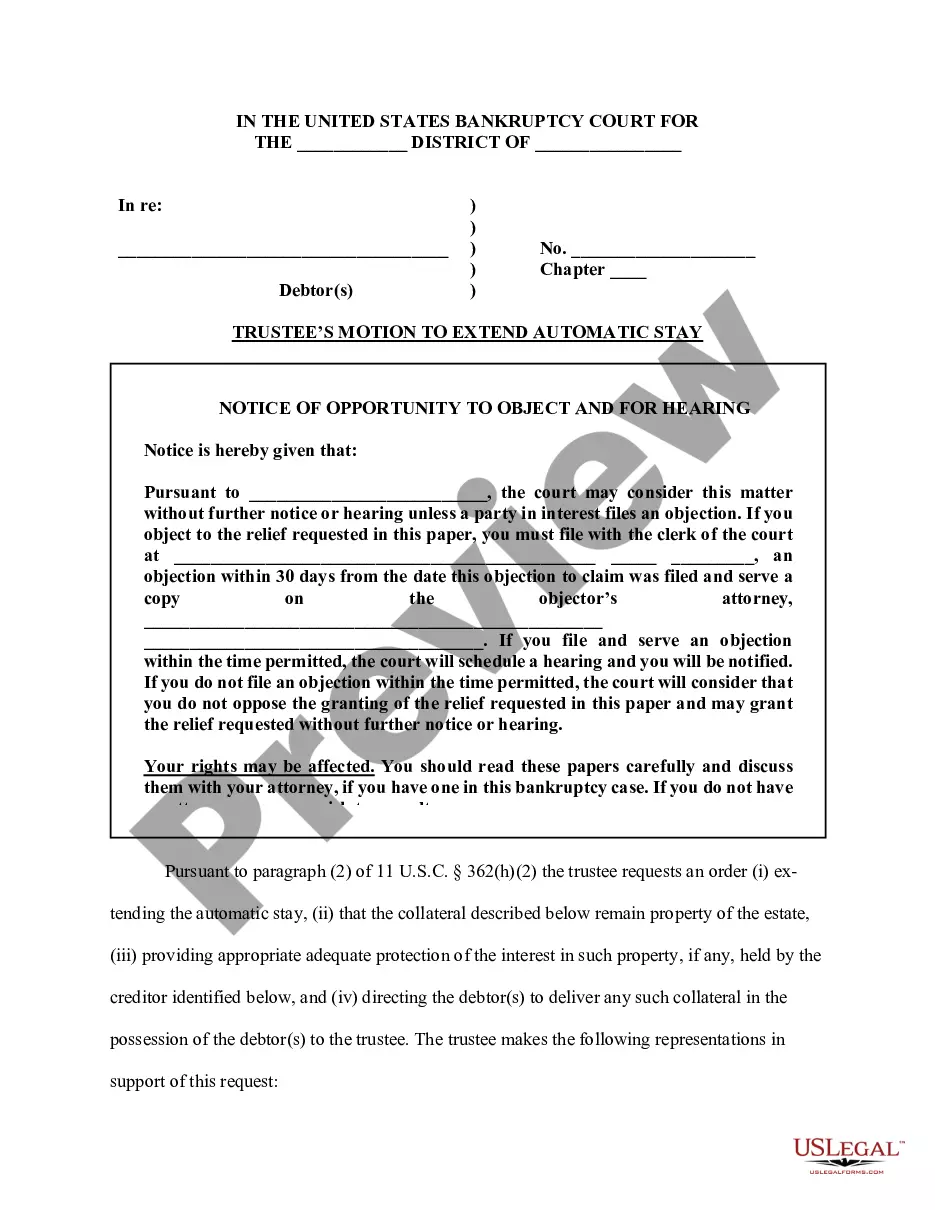
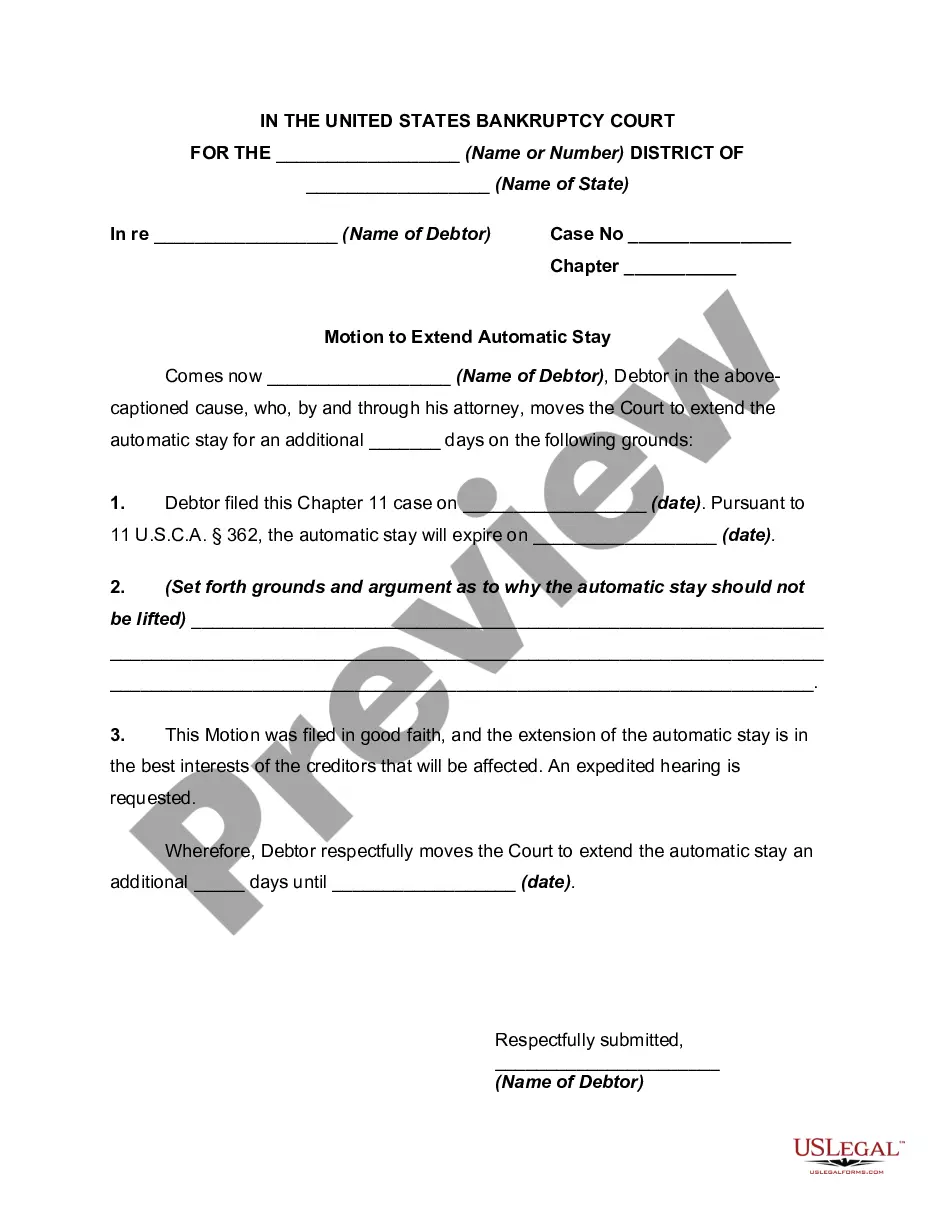
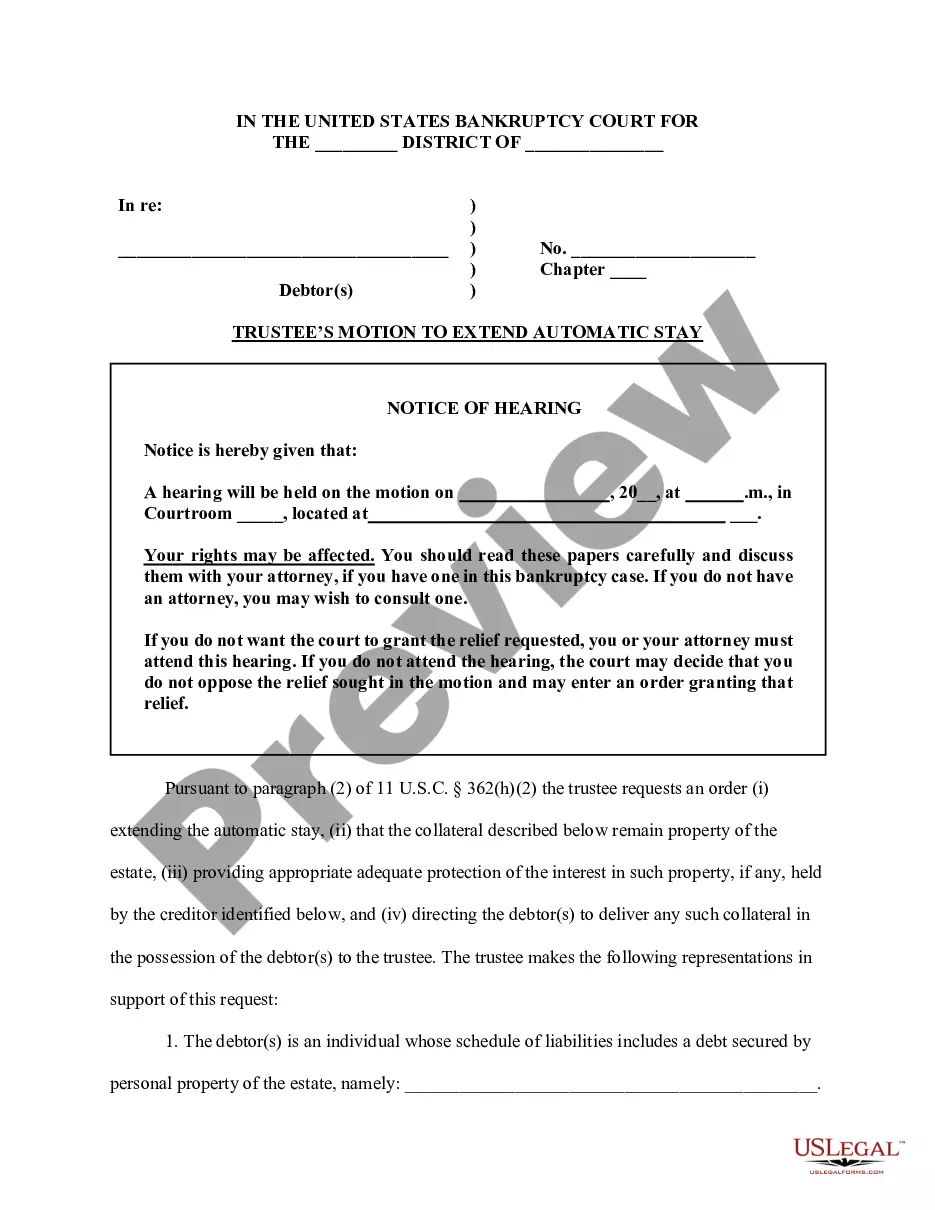
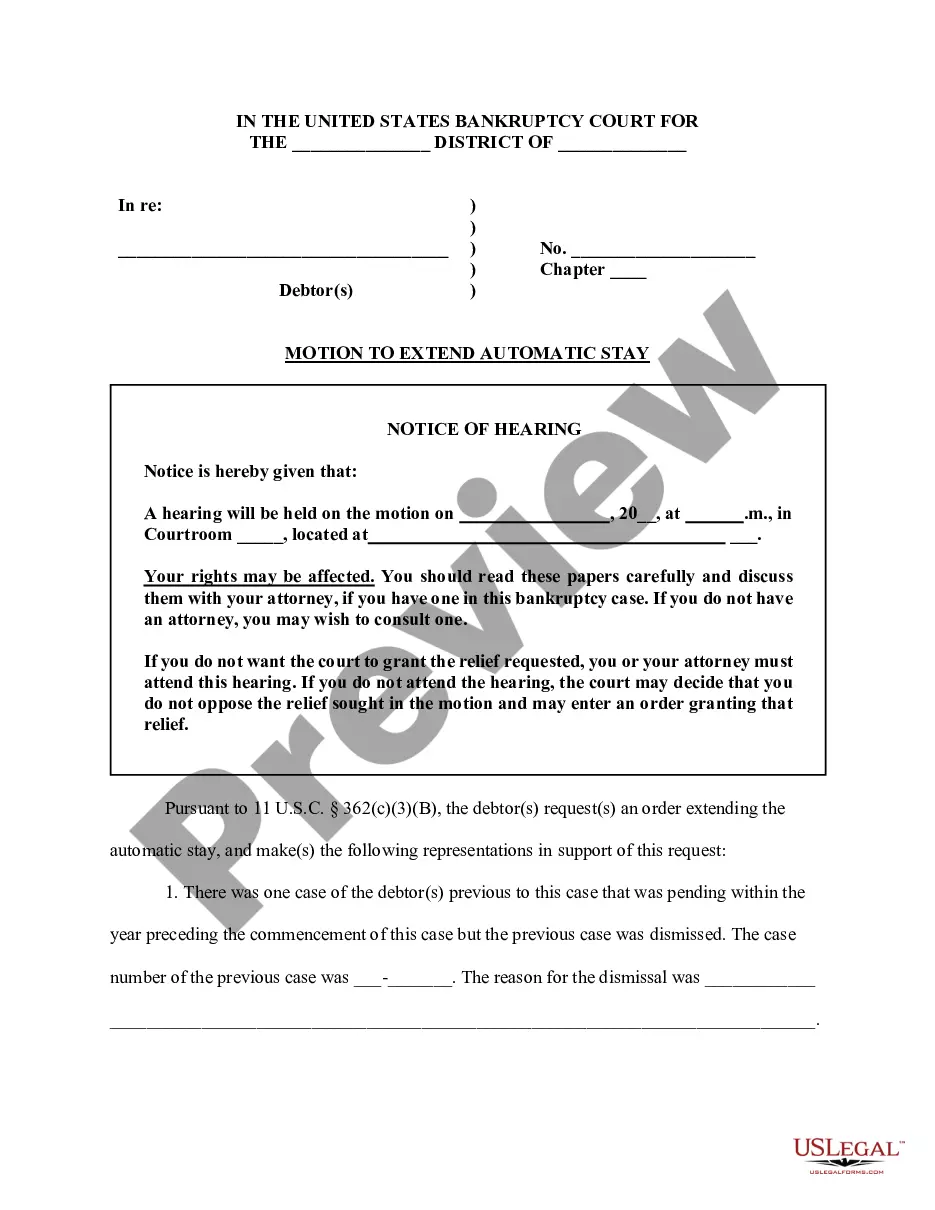
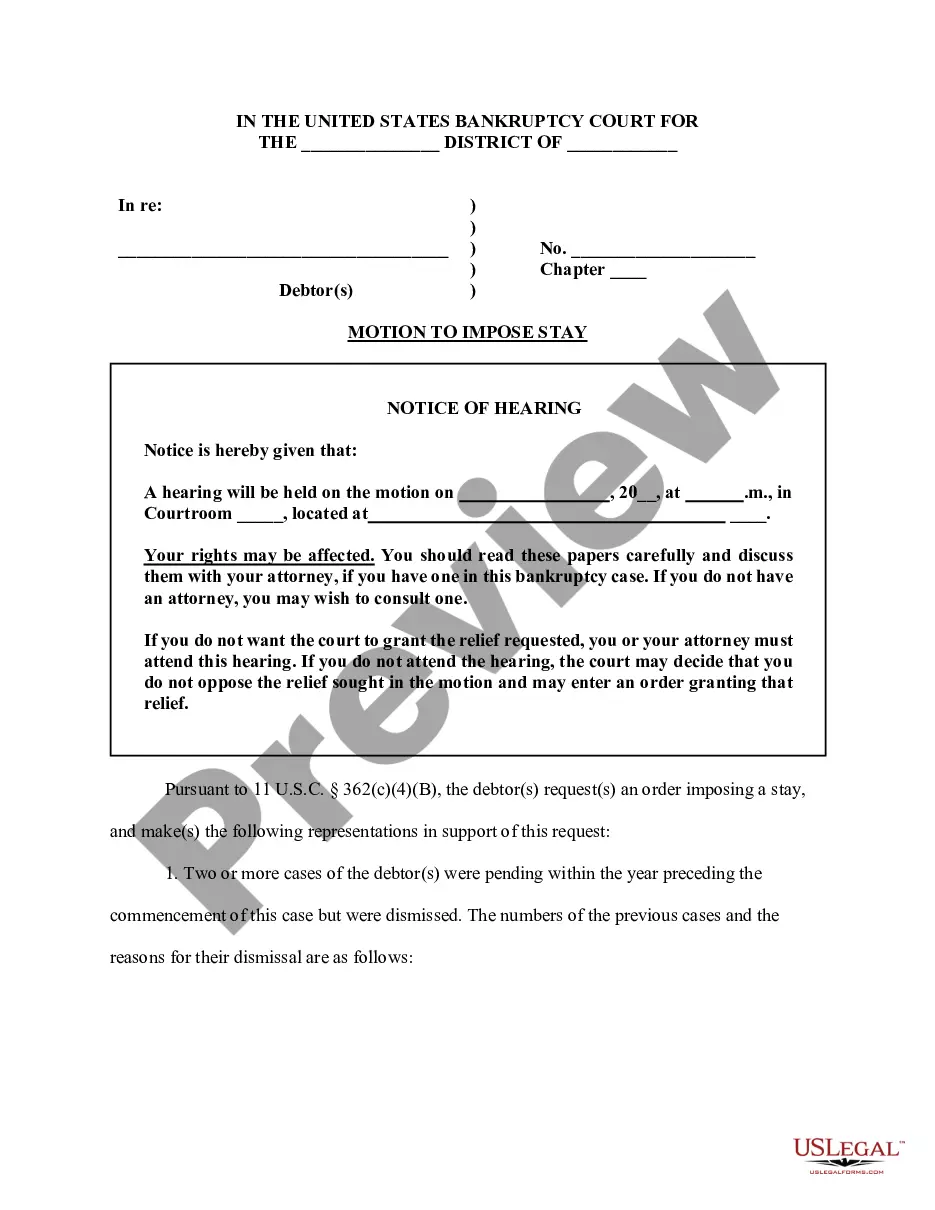
The Trustee's motion to prevent termination of automatic stay - hearing is a legal document used in bankruptcy proceedings. This form allows a trustee to request that the court extend the automatic stay, which prevents creditors from taking action against the debtor while the bankruptcy case is ongoing. Unlike similar forms, this document specifically addresses situations where the trustee believes the stay may be lifted, outlining the necessary procedures to maintain protections for the debtor's assets.
Form components explained
- Case Information: Includes details of the bankruptcy case, including the debtor's name and case number.
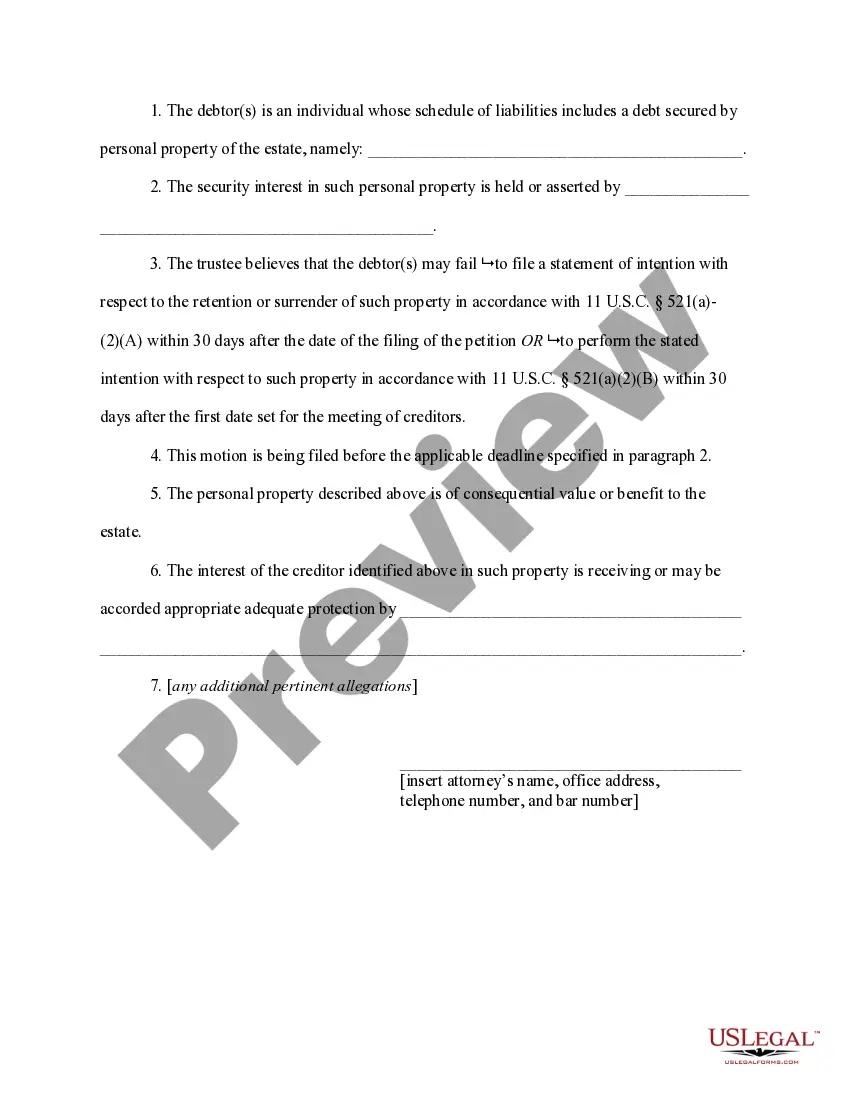
- Trusteeâs Request: States the trusteeâs request for extending the automatic stay and maintaining the collateral as part of the estate.
- Creditor Details: Identifies the creditor holding the security interest in the debtor's property.
- Objection Process: Outlines the process for other parties to object to the motion within a specified timeframe.
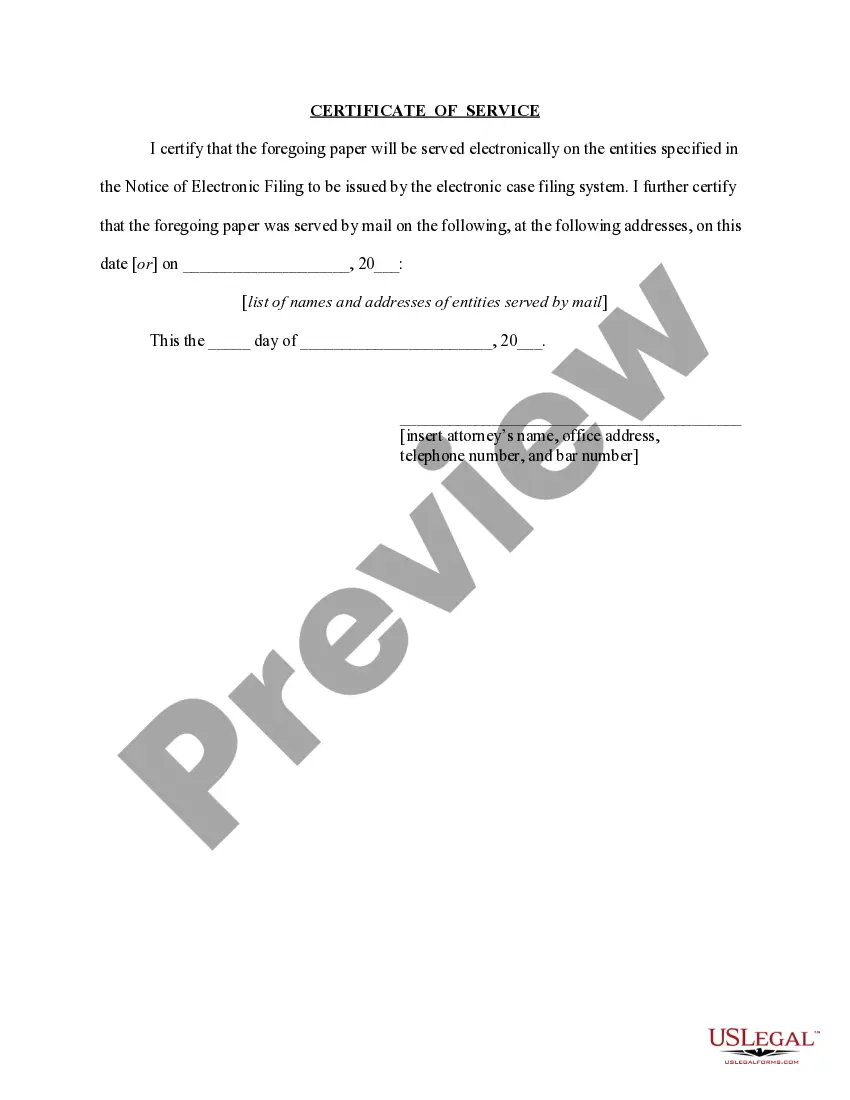
- Certificate of Service: Confirms that the motion has been served to relevant parties.
When to use this form
This form is necessary when a debtor is undergoing bankruptcy proceedings and a trustee needs to ensure that the automatic stay is not lifted. It is typically used in scenarios where there is concern about creditors attempting to take control of property or assets that are essential to the bankruptcy estate. If the debtor has failing to fulfill obligations such as filing a statement of intention regarding secured property, this motion can be critical in preserving debtor rights and protections.
Who needs this form
- Trustees: Licensed professionals overseeing bankruptcy cases who need to protect the debtorâs interests.
- Debtors: Individuals undergoing bankruptcy may need to understand the implications of this motion if filed by the trustee.
- Creditors: Interested parties who want to respond to the motion or contest the continuation of the automatic stay.
How to complete this form
- Identify the parties involved by entering the debtor's name and the case information at the beginning of the document.
- Fill in the sections detailing the creditor's information, including the name and nature of their security interest.
- Indicate any specific requests you want the court to grant regarding the automatic stay and the collateral in question.
- Complete the certificate of service section, ensuring all relevant parties are notified of the motion.
- Review the motion for accuracy and have it signed by the trustee or their attorney before filing it with the court.
Does this document require notarization?
This form does not typically require notarization unless specified by local law. It is advisable to check either with your local court or an attorney to confirm any specific requirements that may apply.
Get your form ready online
Our built-in tools help you complete, sign, share, and store your documents in one place.
Make edits, fill in missing information, and update formatting in US Legal Forms—just like you would in MS Word.
Download a copy, print it, send it by email, or mail it via USPS—whatever works best for your next step.
Sign and collect signatures with our SignNow integration. Send to multiple recipients, set reminders, and more. Go Premium to unlock E-Sign.
If this form requires notarization, complete it online through a secure video call—no need to meet a notary in person or wait for an appointment.
We protect your documents and personal data by following strict security and privacy standards.

Make edits, fill in missing information, and update formatting in US Legal Forms—just like you would in MS Word.

Download a copy, print it, send it by email, or mail it via USPS—whatever works best for your next step.

Sign and collect signatures with our SignNow integration. Send to multiple recipients, set reminders, and more. Go Premium to unlock E-Sign.

If this form requires notarization, complete it online through a secure video call—no need to meet a notary in person or wait for an appointment.

We protect your documents and personal data by following strict security and privacy standards.
Common mistakes
- Failing to file the motion within the required timeframe.
- Not serving the motion to all relevant parties, which can lead to objections being dismissed.
- Omitting necessary details about the creditor or the collateral, weakening the motionâs effectiveness.
Benefits of using this form online
- Convenience: Easily download and complete the form from anywhere without the need for physical visits.
- Editability: Modify the document quickly as circumstances change or additional information becomes available.
- Reliability: Access professionally drafted forms created by licensed attorneys, ensuring legal accuracy and compliance.
Summary of main points
- The Trustee's motion to prevent termination of automatic stay is essential for protecting the debtor's interests during bankruptcy.
- Accurate completion and timely filing of this form can help maintain essential legal protections for debtors.
- Understanding the objections process is crucial for all parties involved to ensure their rights are upheld.
Looking for another form?
Form popularity
FAQ
Filing a Motion and Setting a Hearing Date -- A Motion for Relief from the Automatic Stay is commenced by filing the appropriate motion and setting the motion for a hearing date. To file a Motion for Relief from the Automatic Stay, the Local Bankruptcy Rules require parties to use mandatory forms.
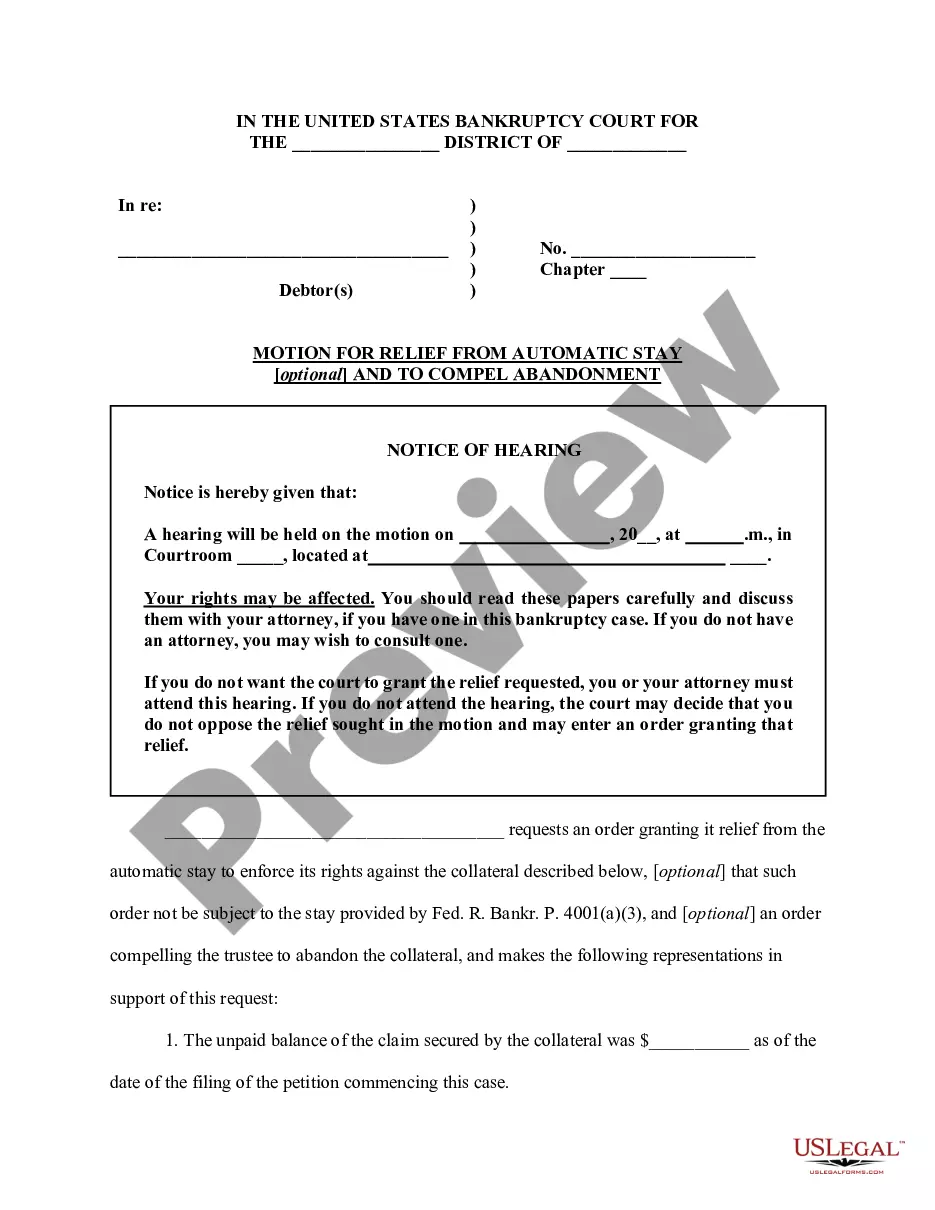
Creditors Obtaining Relief From the Automatic Stay -- If a creditor properly files and serves a Motion for Relief from the Automatic Stay, and a bankruptcy judge grants the Motion, the Automatic Stay will either be removed or modified so that the creditor can resume collection efforts against the debtor.
This Standard Clause for use in a forbearance or restructuring agreement provides for a defaulting borrower to waive its right to assert the automatic stay against a lender if it later files for bankruptcy. This Standard Clause has integrated notes with important explanations and drafting tips.
What are the exceptions to the automatic stay under 11 U.S.C § 362? Establishing paternity; Establishing or modifying domestic support obligations, including child support and alimony; Child custody or visitation matters; Divorce proceedings; Domestic violence matters.
The automatic stay is one of the fundamental debtor protections provided by the bankruptcy laws. It gives the debtor a breathing spell from his creditors. It stops all collection efforts, all harassment, and all foreclosure actions.
Civil cases involving family or domestic issues - Most family court proceedings cannot be halted by the automatic stay, including child custody and paternity cases, as well as divorce cases addressing issues other than the division of marital property.
The most commonly sought exceptions are actions by parties to securities contracts to close out open positions; eviction of a debtor by a landlord where the lease has been fully terminated prior to the bankruptcy filing; actions by taxing authorities to conduct tax audits, issue deficiency notices, demand tax returns