Deed of Tax Indemnity
About this form
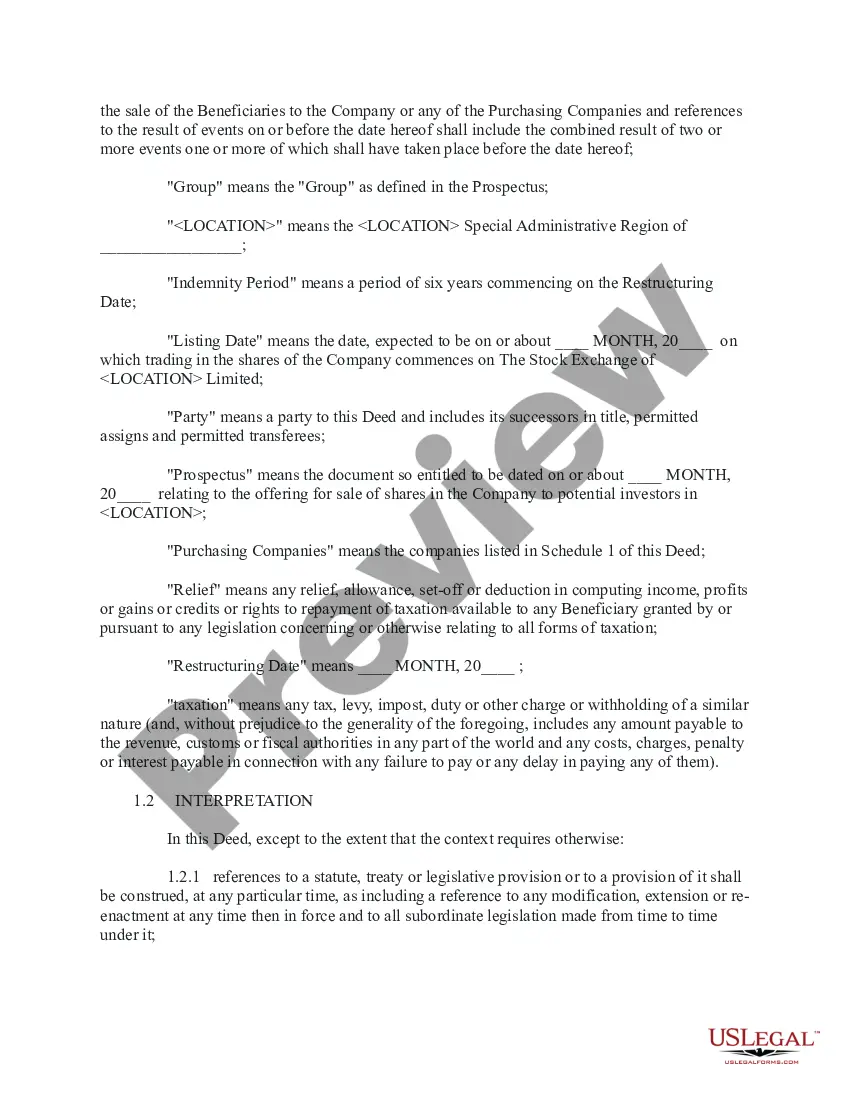
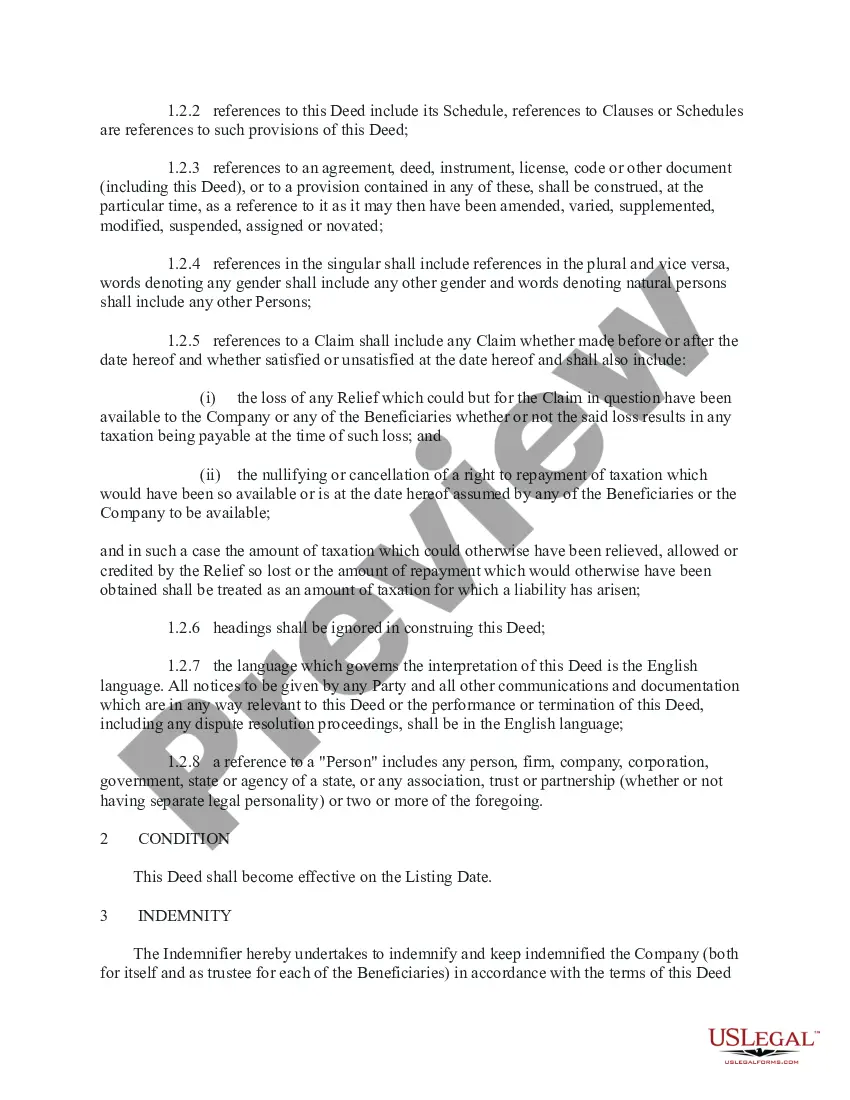
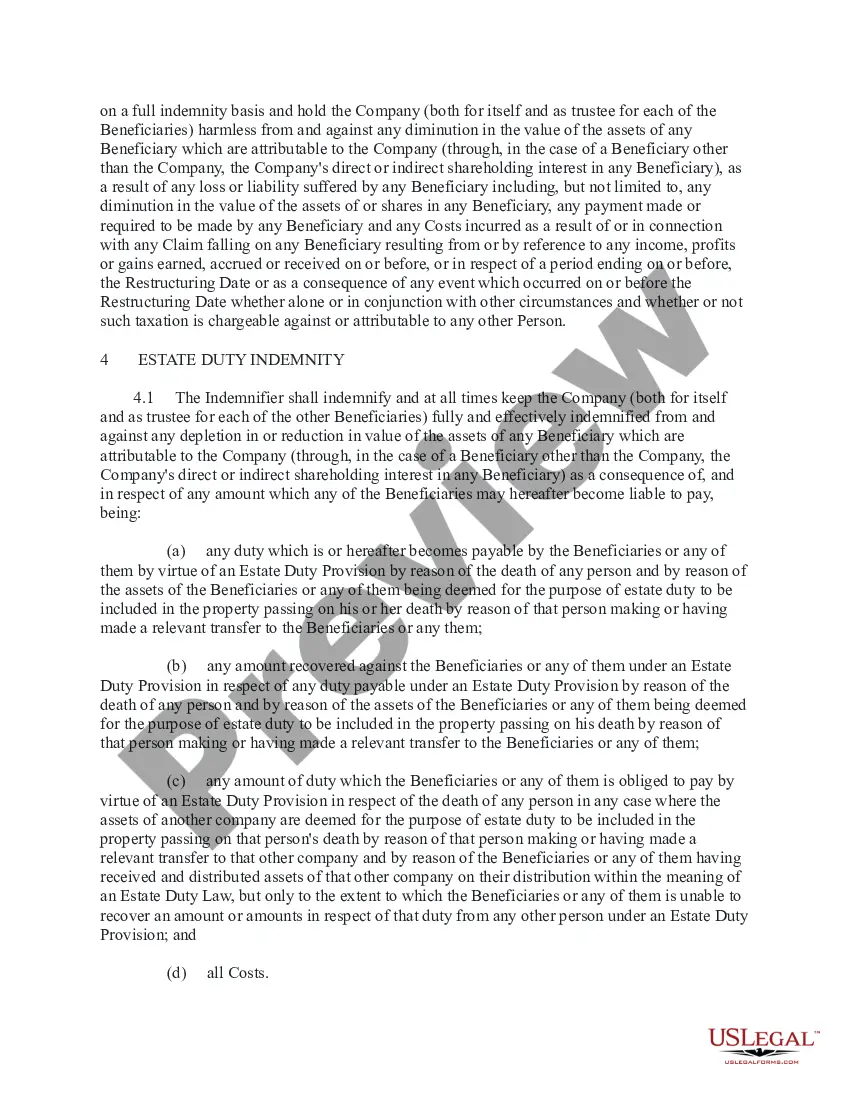
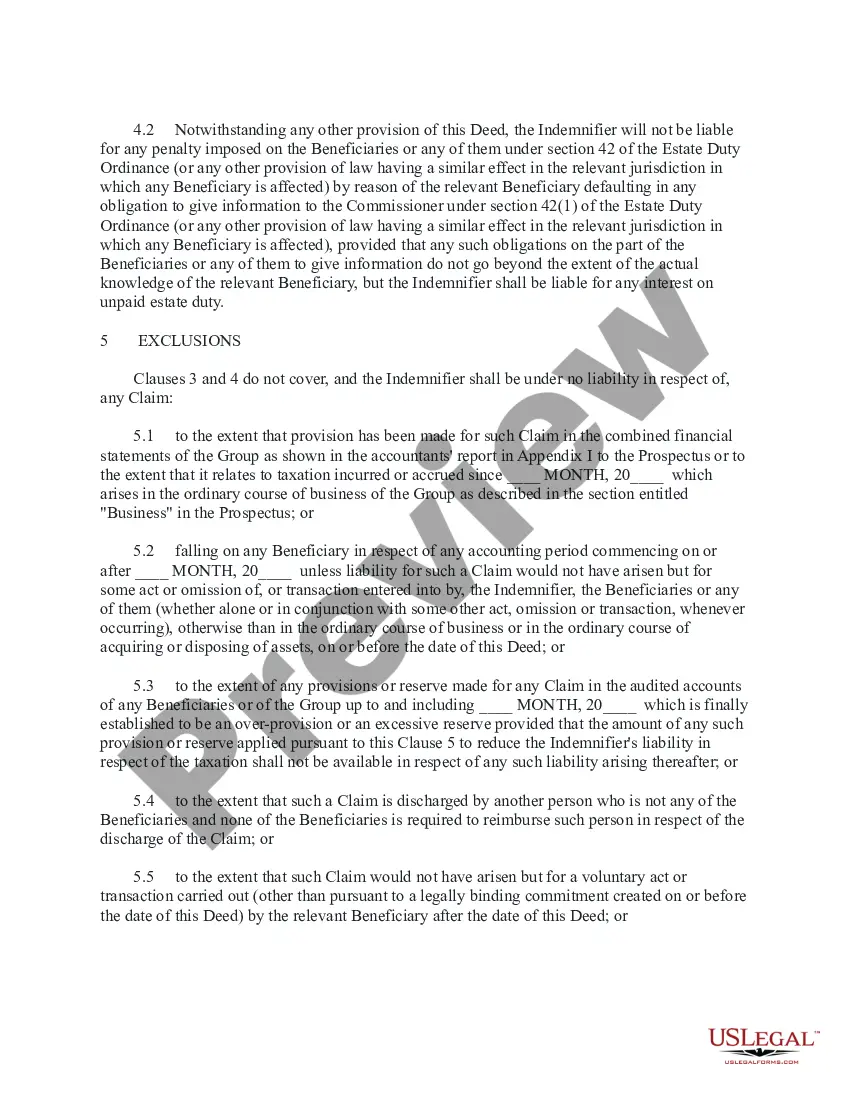
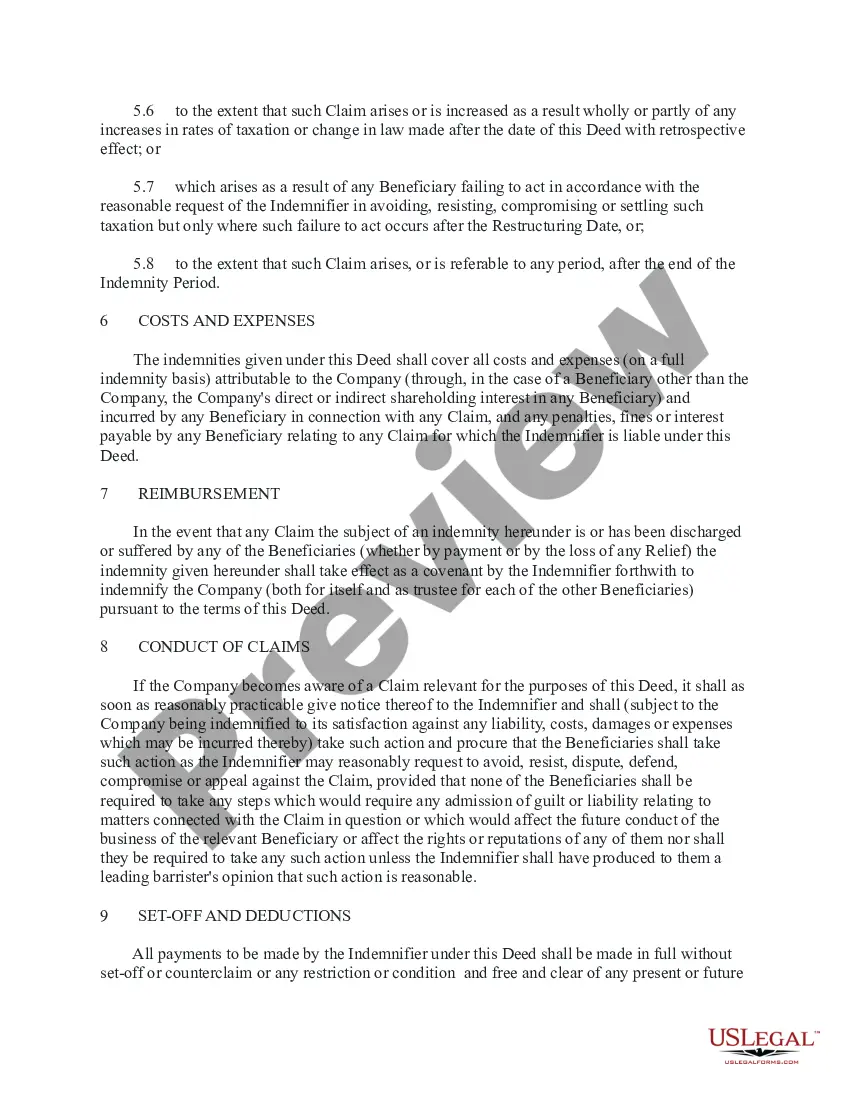
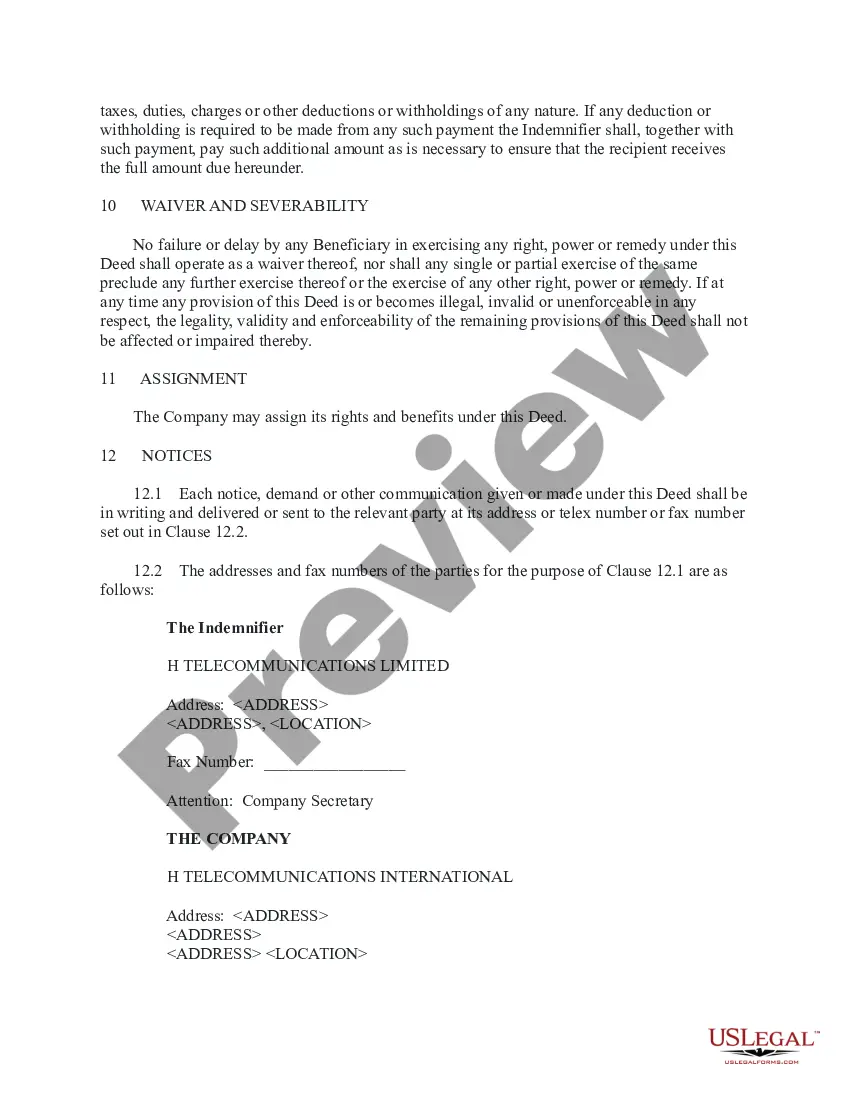
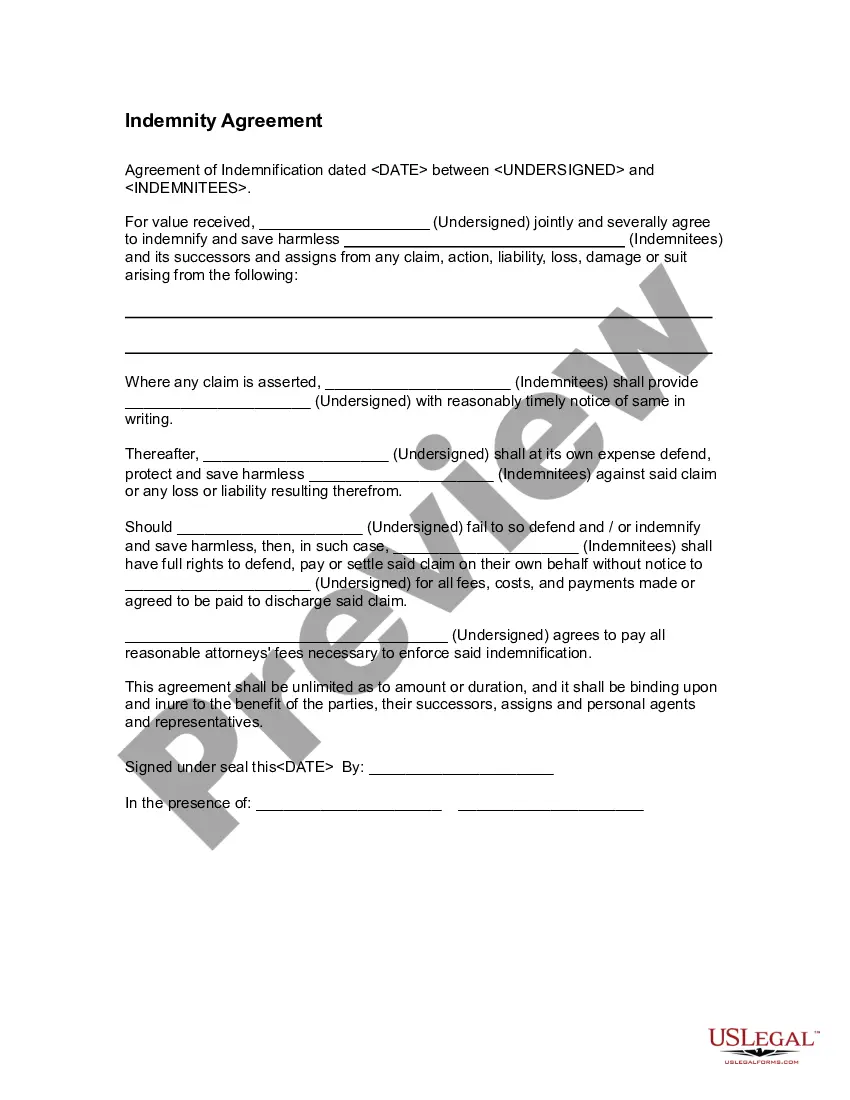
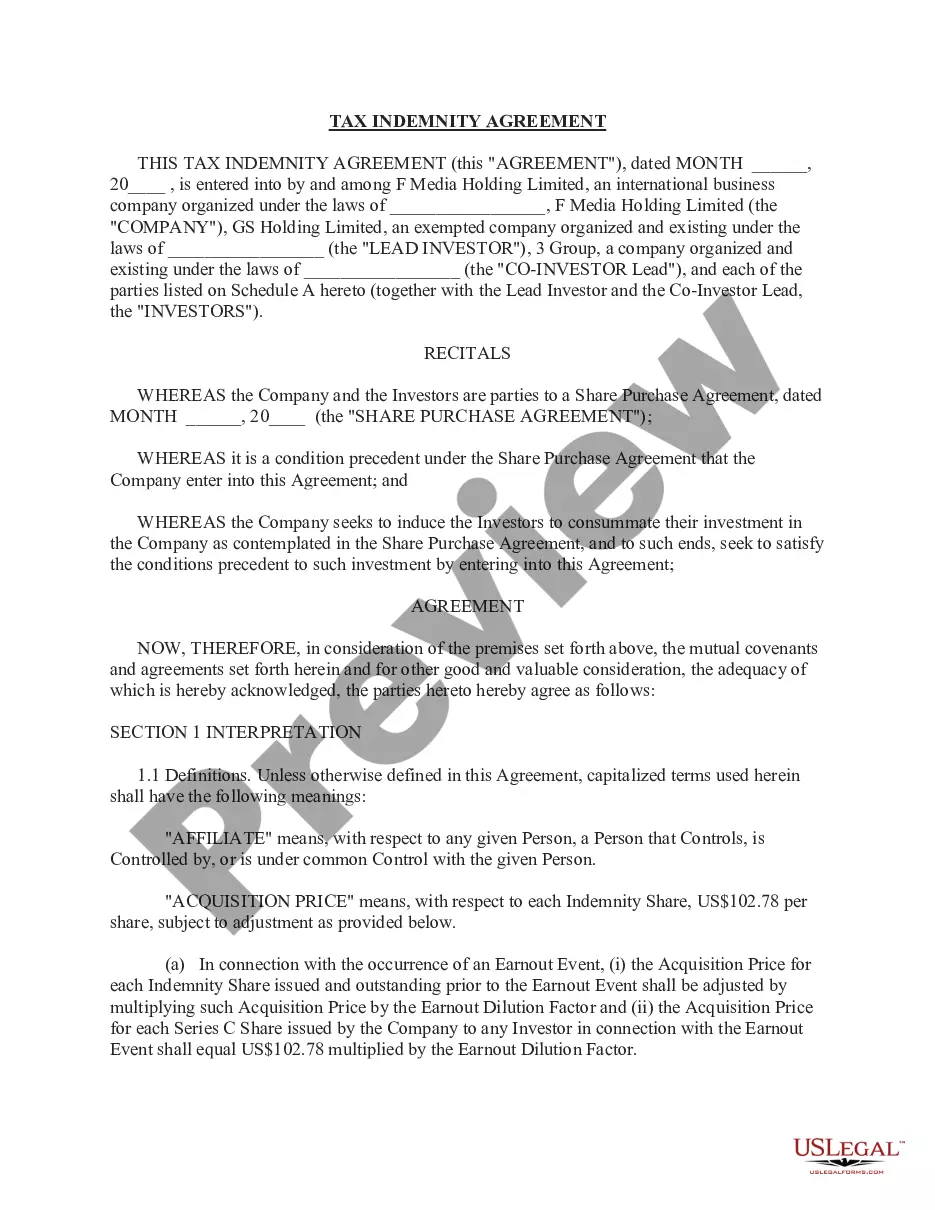
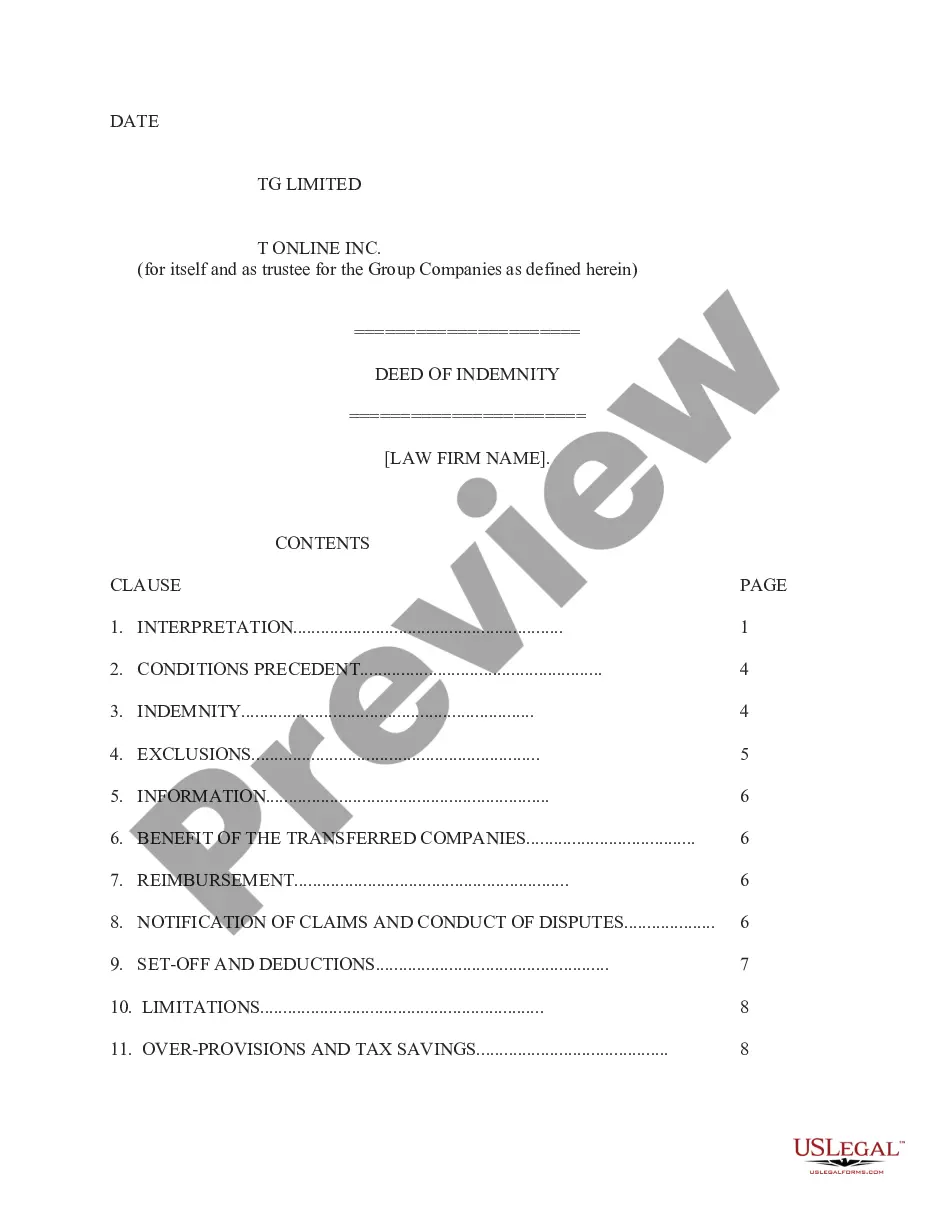
The Deed of Tax Indemnity is a legal document used to protect one party from unspecified tax liabilities that may arise following a transaction, such as a share purchase agreement. This form serves as an unconditional indemnity, ensuring that the buyer is not held responsible for hidden tax obligations that could impact the value of the assets being purchased. Many businesses utilize this deed when undergoing complex transactions involving restructuring or acquisitions to safeguard their financial interests related to tax responsibilities.
Key components of this form
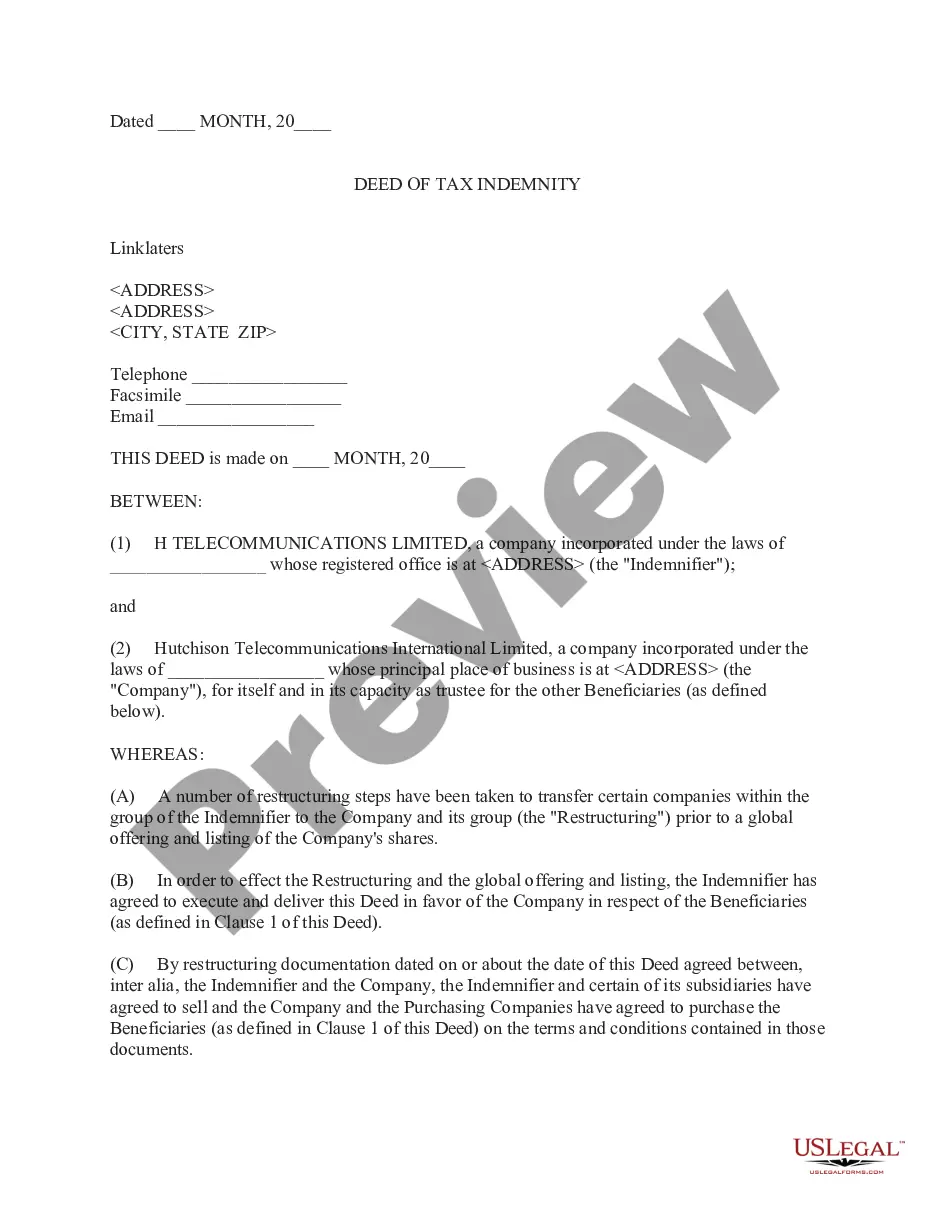
- Parties Involved: Identification of the indemnifier and the company benefiting from the indemnity.
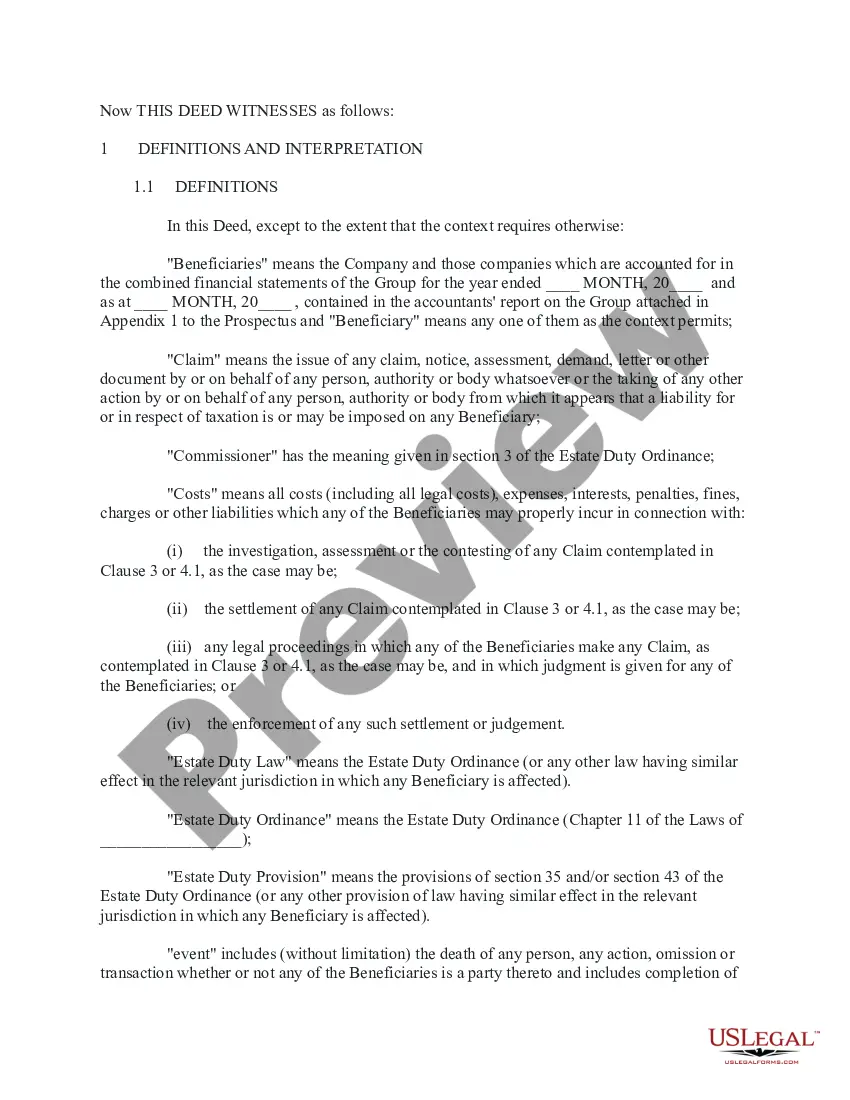
- Definitions: Clear definitions of key terms such as "Beneficiaries," "Claim," and "Indemnity Period" relevant to tax liabilities.
- Indemnity Clause: Details the indemnifier's responsibilities regarding tax claims and associated costs.
- Exclusions: Specifies claims not covered by the indemnity to clarify limits of liability.
- Costs and Expenses: Outlines how costs related to claims, including legal fees, will be handled.


Situations where this form applies
This form should be used when a business engages in transactions that involve the transfer of shares or restructuring, particularly when the buyer is concerned about undisclosed tax liabilities associated with the purchased assets. It is vital in ensuring the buyer does not face unexpected tax consequences that could affect their financial standing.
Who this form is for
- Companies involved in mergers, acquisitions, or restructuring operations.
- Business owners seeking to protect their financial interests from potential tax liabilities.
- Legal professionals advising clients on transactions involving share purchases.
- Accountants needing to formalize tax indemnity agreements for their clients.
Completing this form step by step
- Identify the parties: Fill in the names and addresses of the indemnifier and the company.
- Enter relevant dates: Specify the date the deed is executed and any relevant transaction dates.
- Define beneficiaries: Clearly list the companies that will benefit from the indemnity agreement.
- Specify indemnity terms: Outline the specific liabilities and exclusions associated with the indemnity.
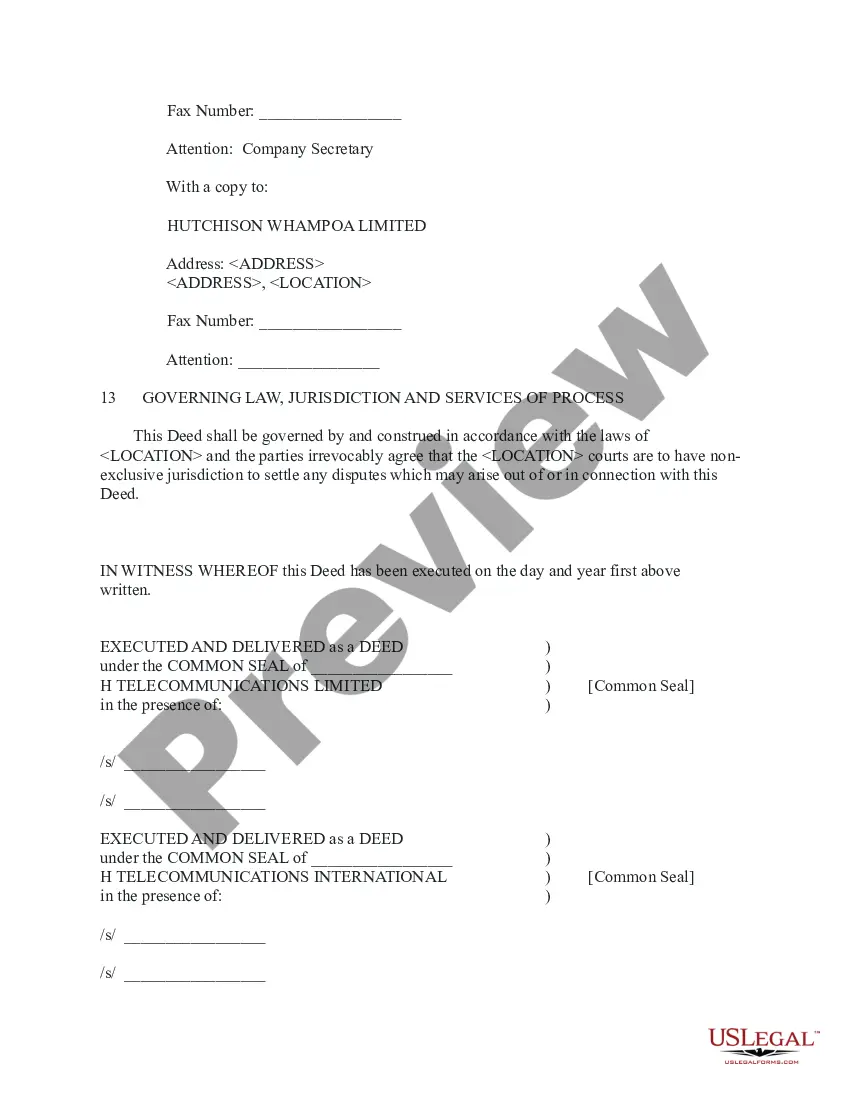
- Provide necessary signatures: Ensure all parties involved sign and date the document, witnessing its authenticity.
Does this document require notarization?
Notarization is generally not required for this form. However, certain states or situations might demand it. You can complete notarization online through US Legal Forms, powered by Notarize, using a verified video call available anytime.
Get your form ready online
Our built-in tools help you complete, sign, share, and store your documents in one place.
Make edits, fill in missing information, and update formatting in US Legal Forms—just like you would in MS Word.
Download a copy, print it, send it by email, or mail it via USPS—whatever works best for your next step.
Sign and collect signatures with our SignNow integration. Send to multiple recipients, set reminders, and more. Go Premium to unlock E-Sign.
If this form requires notarization, complete it online through a secure video call—no need to meet a notary in person or wait for an appointment.
We protect your documents and personal data by following strict security and privacy standards.

Make edits, fill in missing information, and update formatting in US Legal Forms—just like you would in MS Word.

Download a copy, print it, send it by email, or mail it via USPS—whatever works best for your next step.

Sign and collect signatures with our SignNow integration. Send to multiple recipients, set reminders, and more. Go Premium to unlock E-Sign.

If this form requires notarization, complete it online through a secure video call—no need to meet a notary in person or wait for an appointment.

We protect your documents and personal data by following strict security and privacy standards.
Common mistakes
- Failing to clearly define the parties involved in the transaction.
- Omitting necessary signatures or dates which could invalidate the deed.
- Not specifying all relevant exemptions and liabilities, leading to potential disputes later.
- Using vague language that could create ambiguity regarding the indemnity terms.
Why complete this form online
- Convenience: Download and complete the deed from the comfort of your home or office.
- Editability: Easily customize the form to meet your specific legal needs.
- Speed: Quickly obtain a legally-drafted document to accelerate your transaction process.
- Reliability: Access templates prepared by licensed attorneys to ensure compliance with legal standards.
Looking for another form?
Form popularity
FAQ
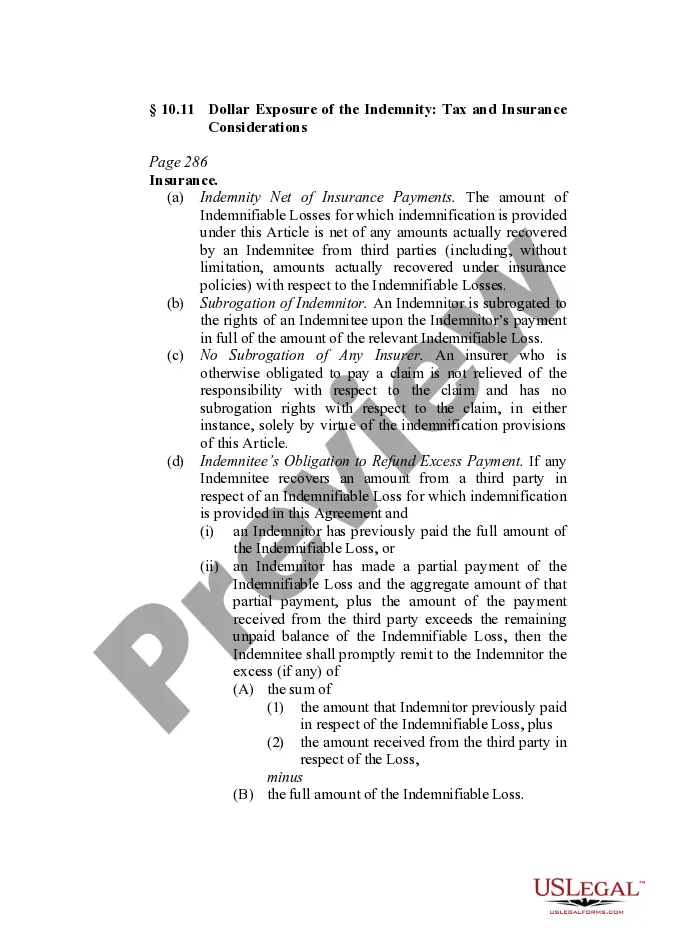
From a US tax perspective, there are typically no consequences from indemnification payments. The amount paid to the taxing authority and the amount collected from the seller would generally offset, with no net impact on taxable earnings.
Money you receive as part of an insurance claim or settlement is typically not taxed. The IRS only levies taxes on income, which is money or payment received that results in you having more wealth than you did before.
Income tax indemnifications are contractual arrangements established between two parties whereby one party will reimburse the other for income taxes paid to a taxing authority related to tax positions that arose (typically) prior to a transaction.
What Lawsuit Settlement is not Taxable? Compensation money awarded for visible injuries is considered tax-free, so there is no need to include these settlements in your yearly tax report. As mentioned, settlement awards from personal injury lawsuits that demonstrate ?observable bodily harm? are not taxable by the IRS.
An officer's deed of indemnity is a deed signed by a company that is intended to protect you against claims made by third parties.
The Middle Ground: This provision states that indemnification payments made under the Agreement are to be treated as an adjustment to the Purchase Price for tax purposes, so long as such treatment is allowed by law.
The tax treatment of payments under fixed indemnity health coverage depends on how the premiums are paid. If employees are taxed on the premiums, the fixed indemnity payments are not taxable. Fixed indemnity payments are taxable when premiums are paid by the employer or by employees on a pre-tax basis.
Supplemental health insurance premiums, like hospital indemnity insurance and critical illness insurance, are generally tax deductible, but only as a qualified medical expense.