Non-Qualified Stock Option Award Agreement
Understanding this form
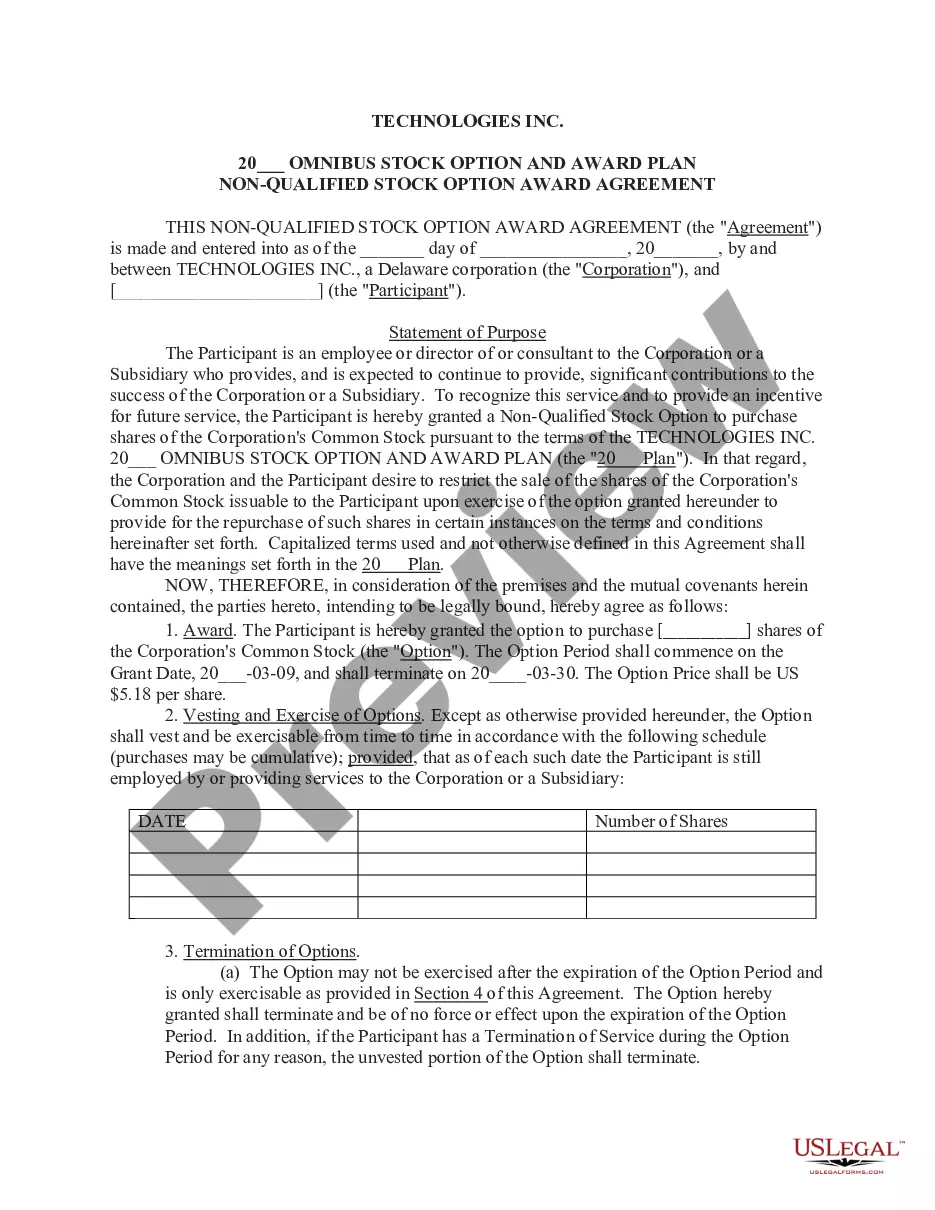
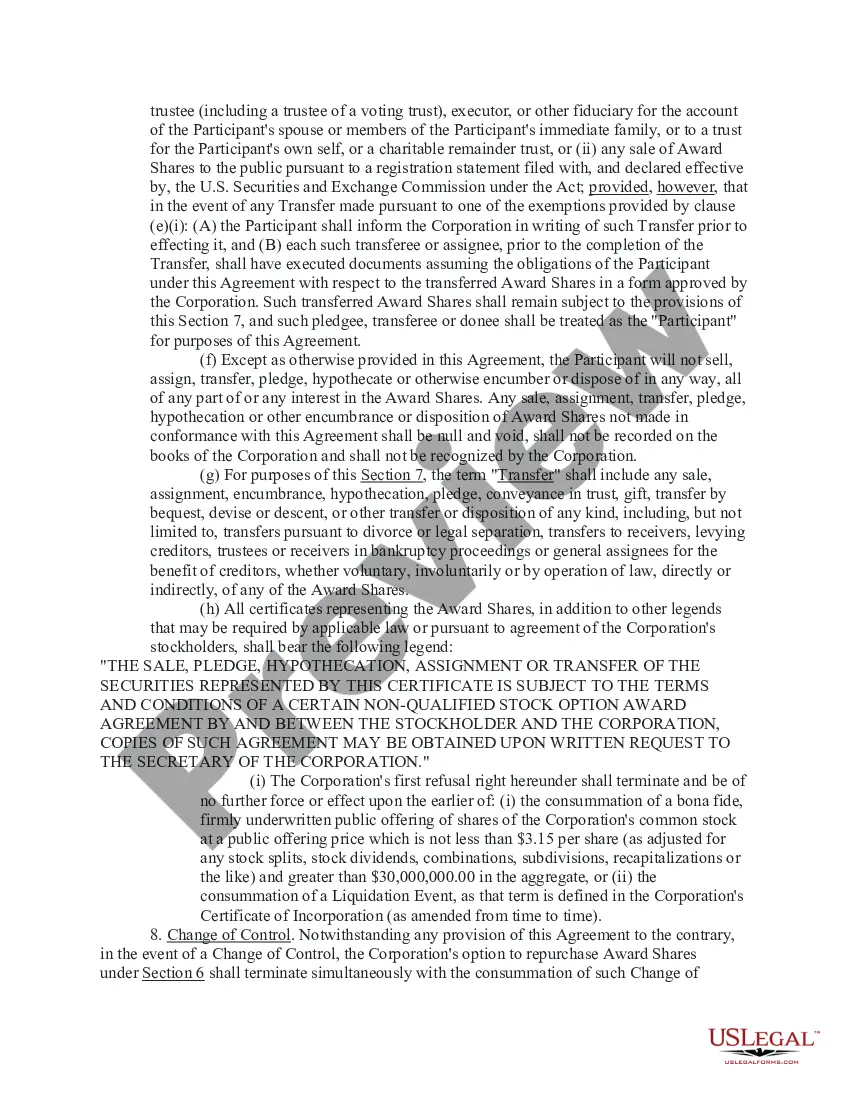
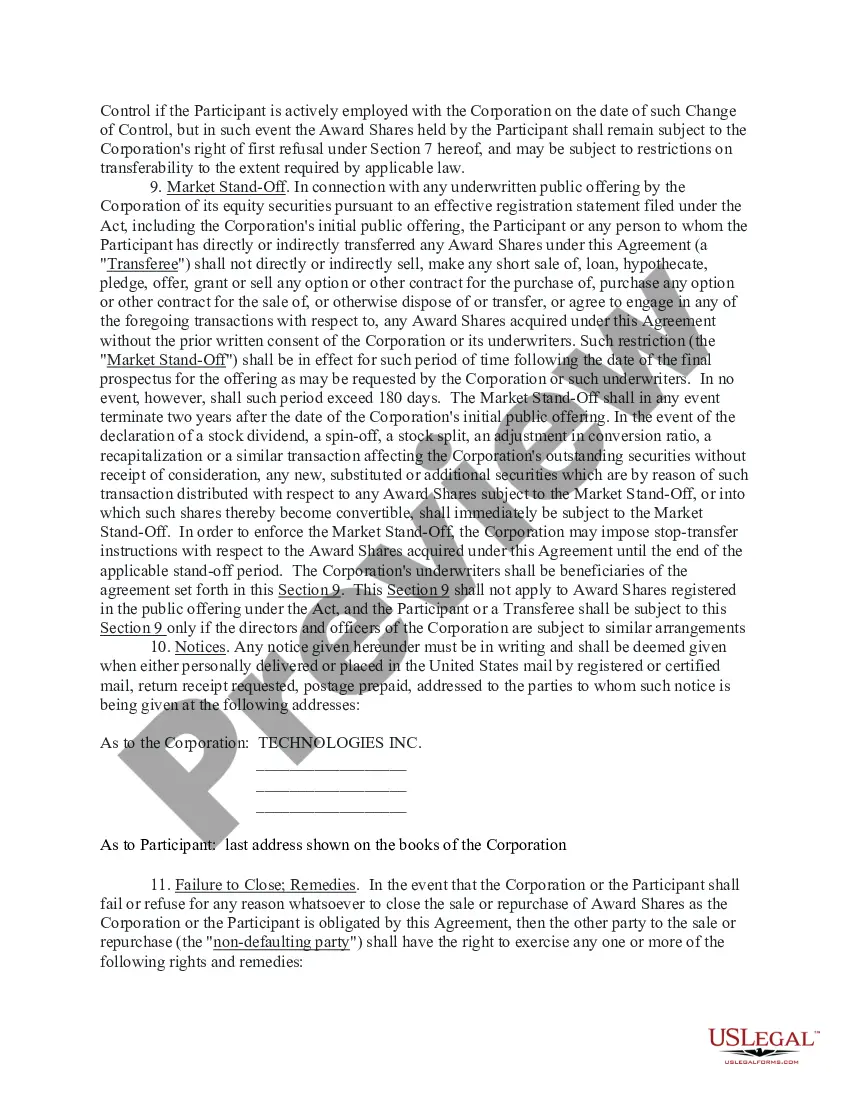
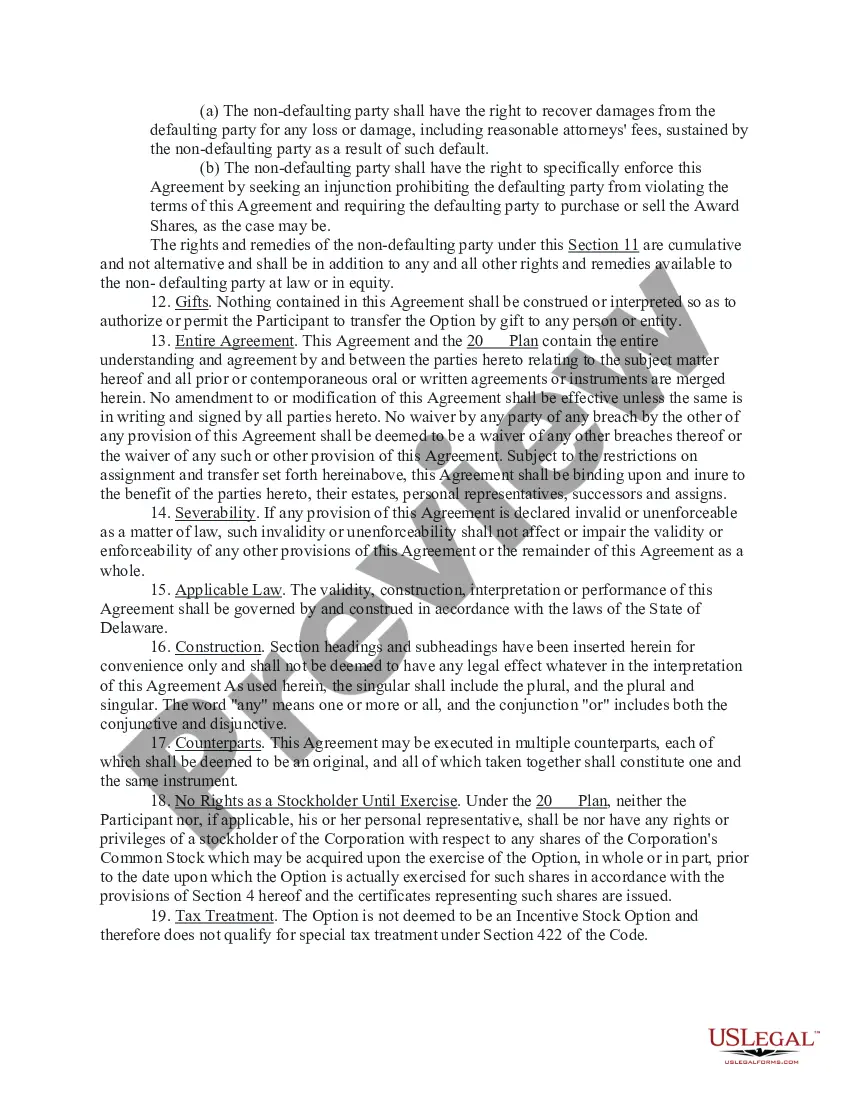
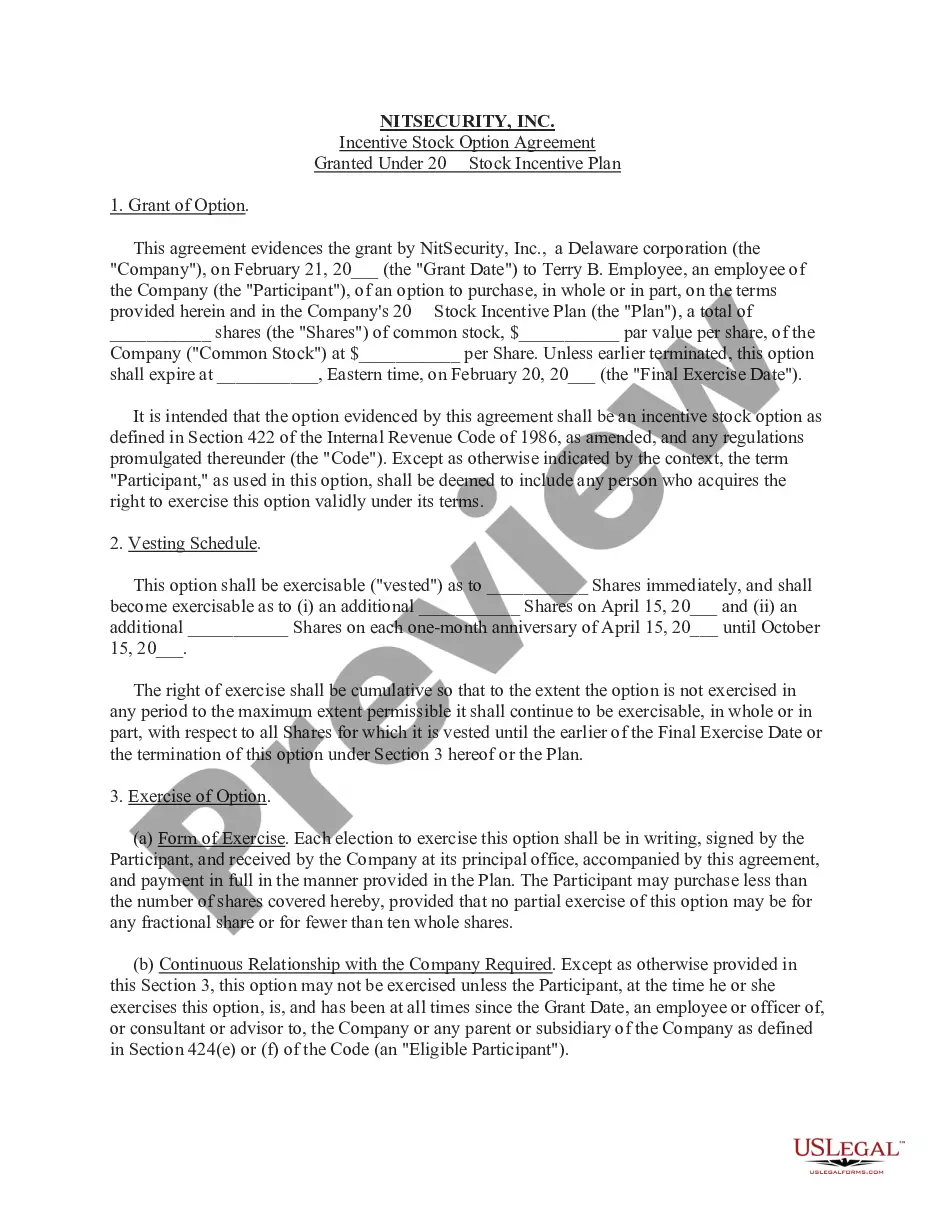
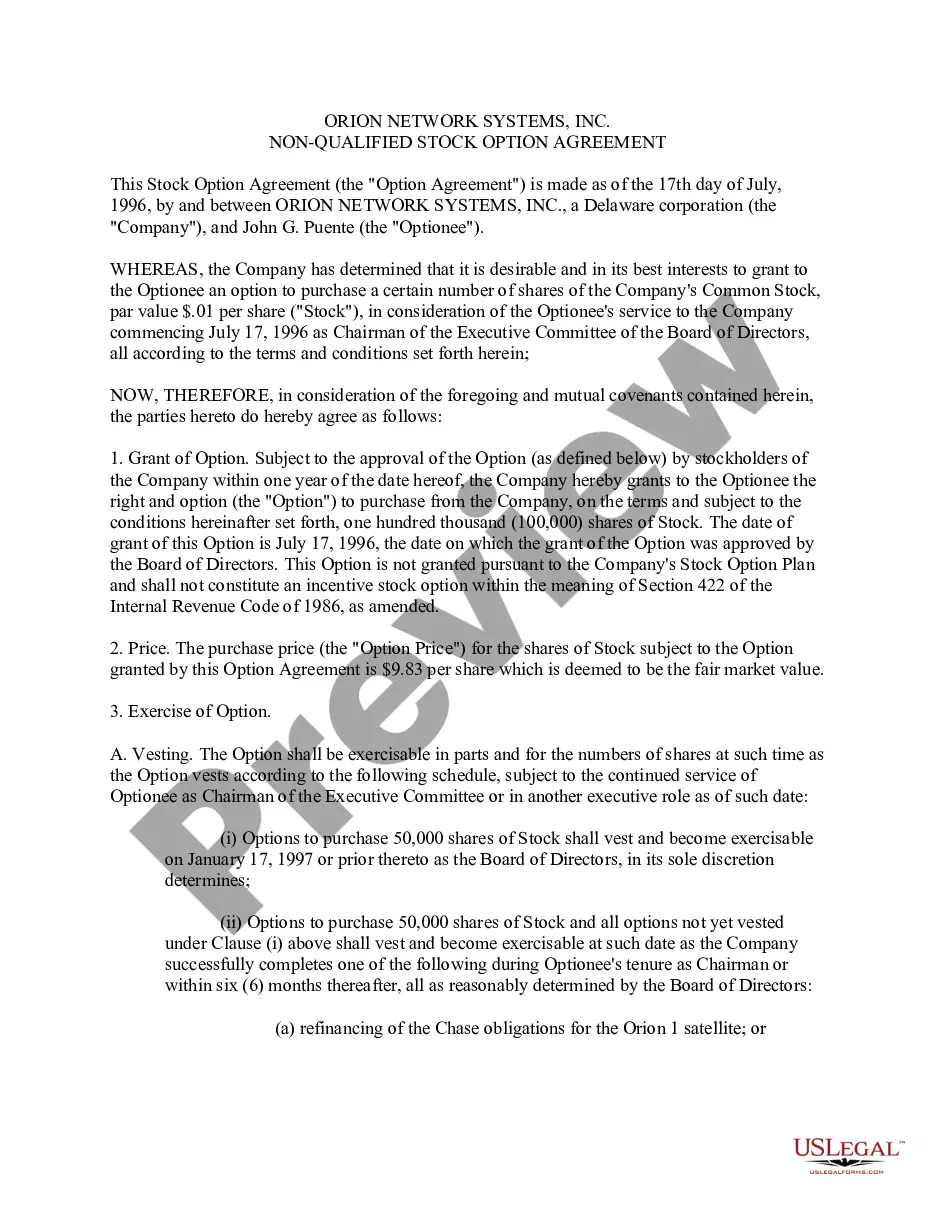
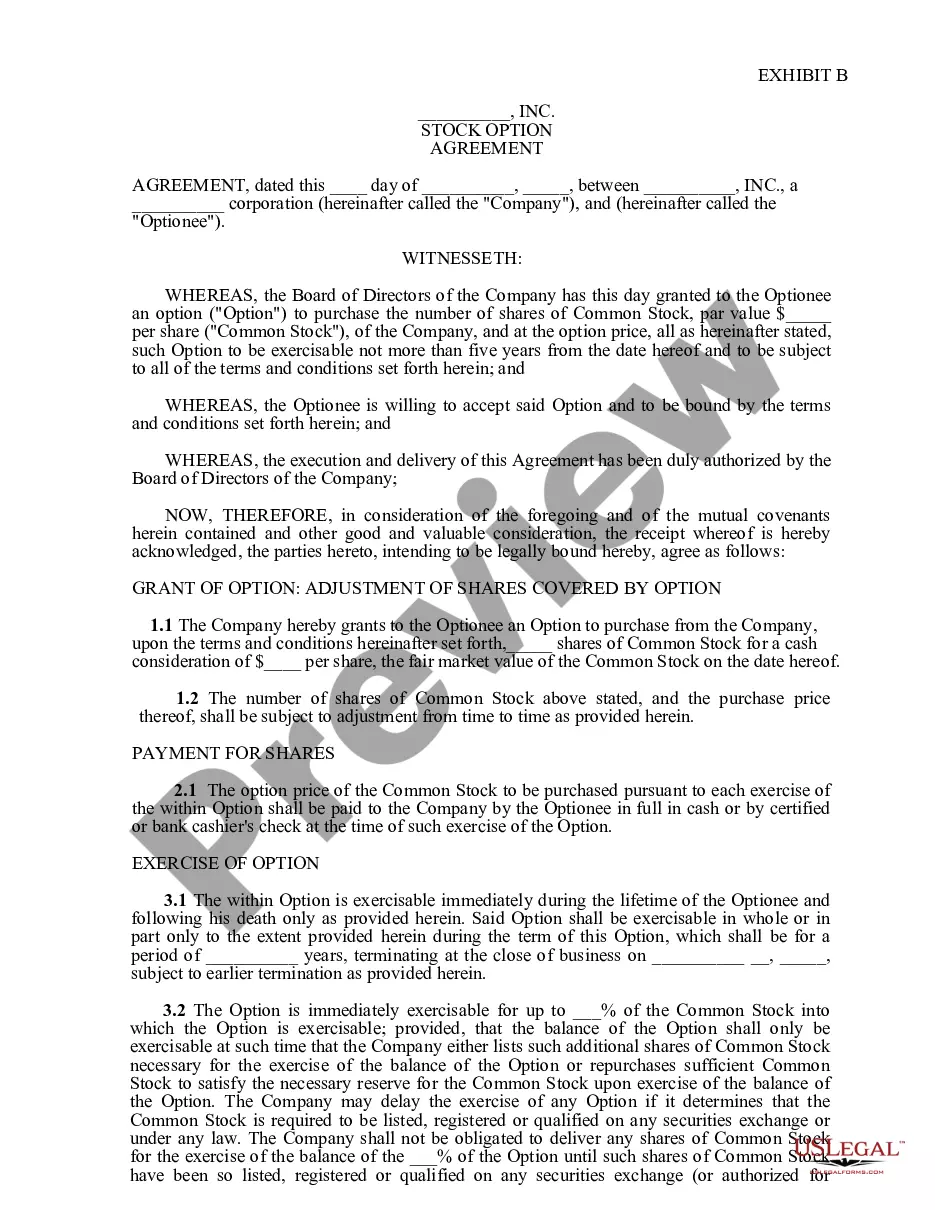
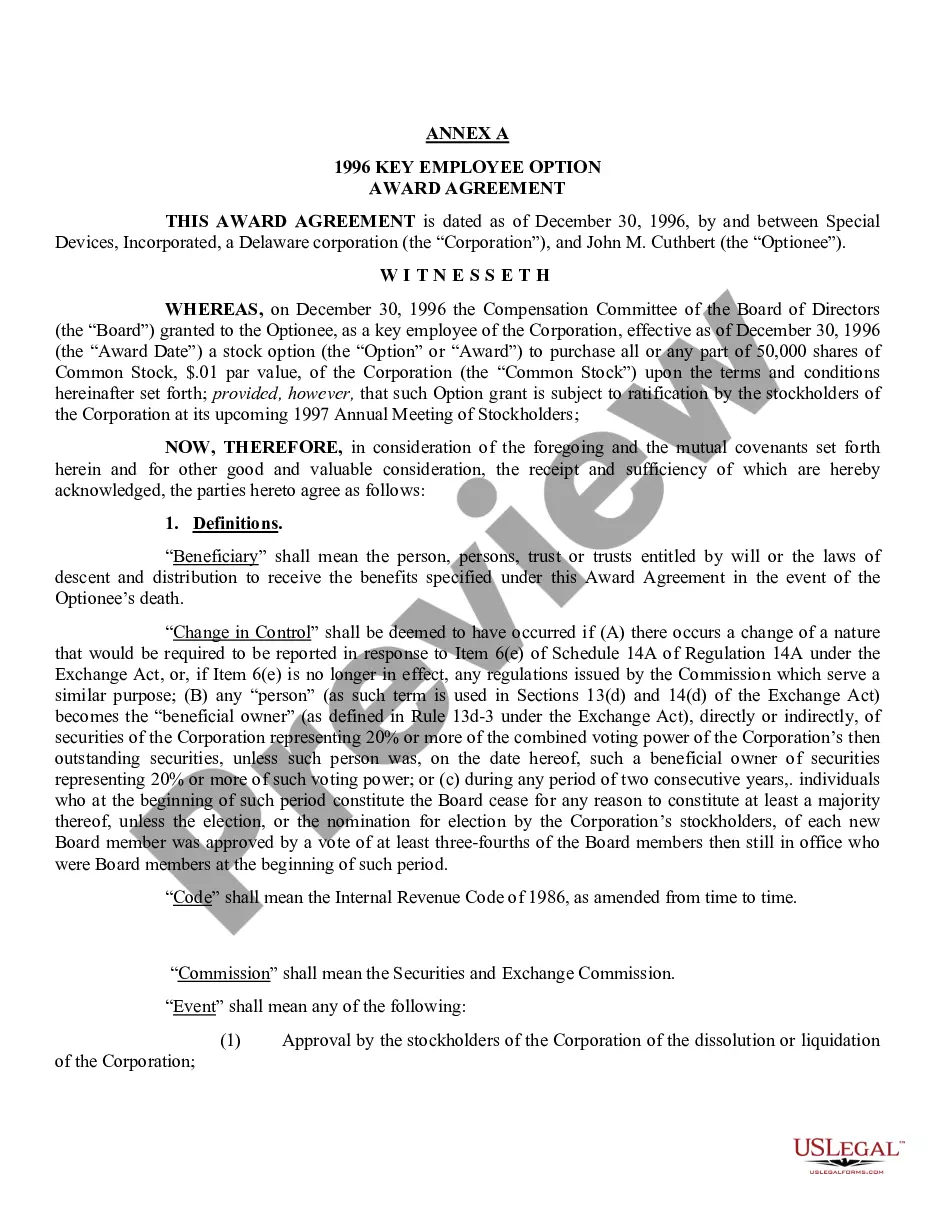
The Non-Qualified Stock Option Award Agreement is a legal document that states the terms under which a participant can purchase shares of a corporation's common stock through non-qualified stock options (NSOs). Unlike qualified options, NSOs do not offer special tax benefits. This agreement is intended for organizations that want to incentivize employees, directors, or consultants by granting the right to acquire stock, with terms outlined for vesting, exercise, and sale restrictions.
What’s included in this form
- Introductory information identifying the corporation and participant
- Award section detailing the number of shares and option price
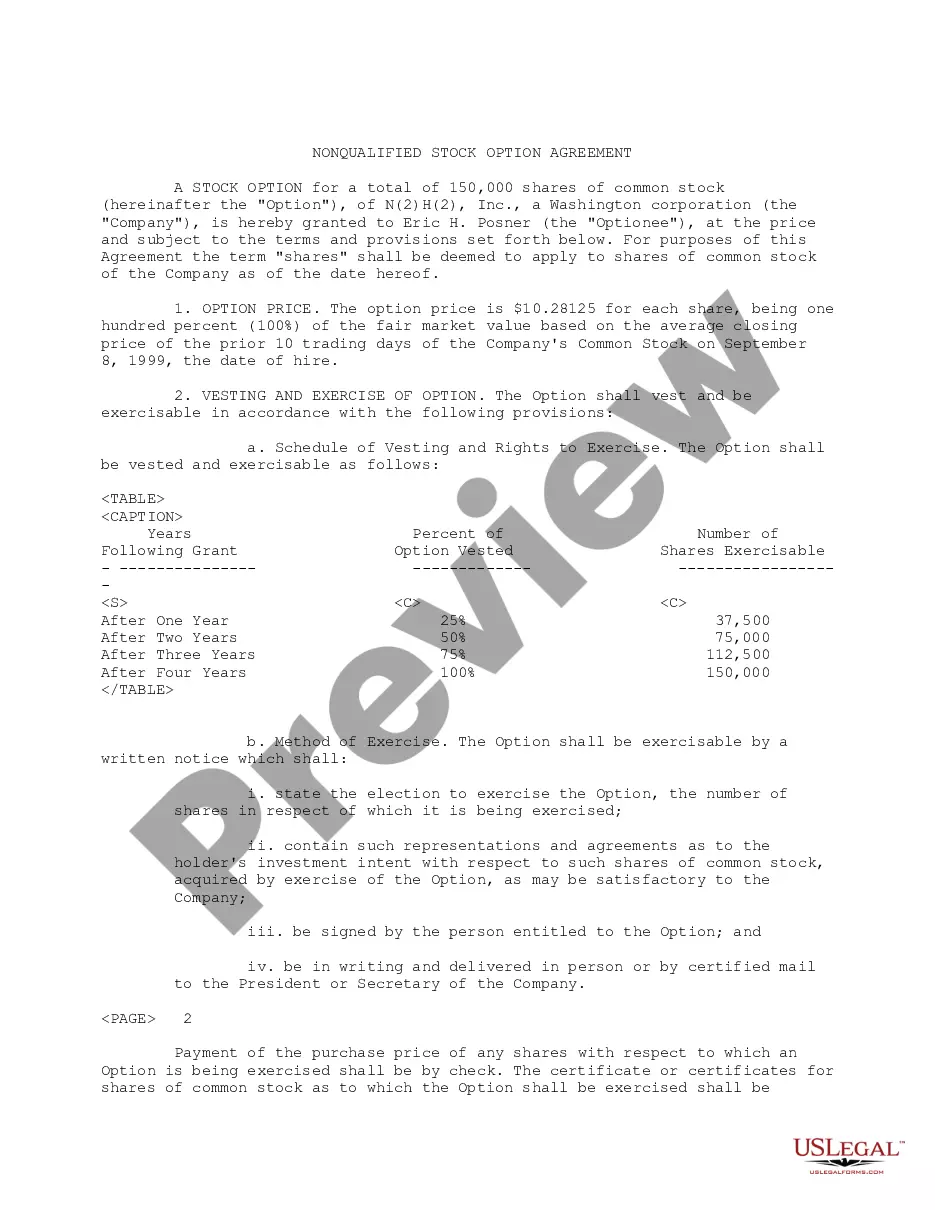
- Vesting schedule indicating when options become exercisable
- Termination clauses explaining the fate of options upon service termination
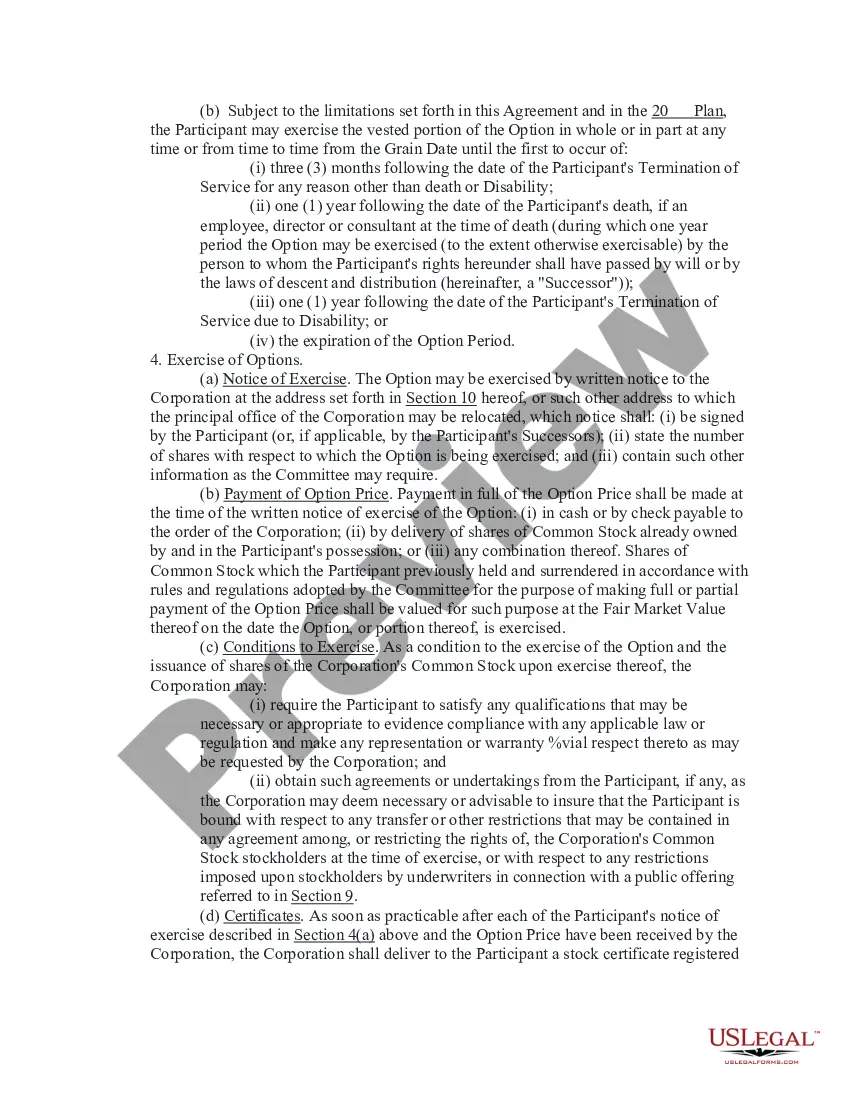
- Conditions for exercising the options, including payment methods
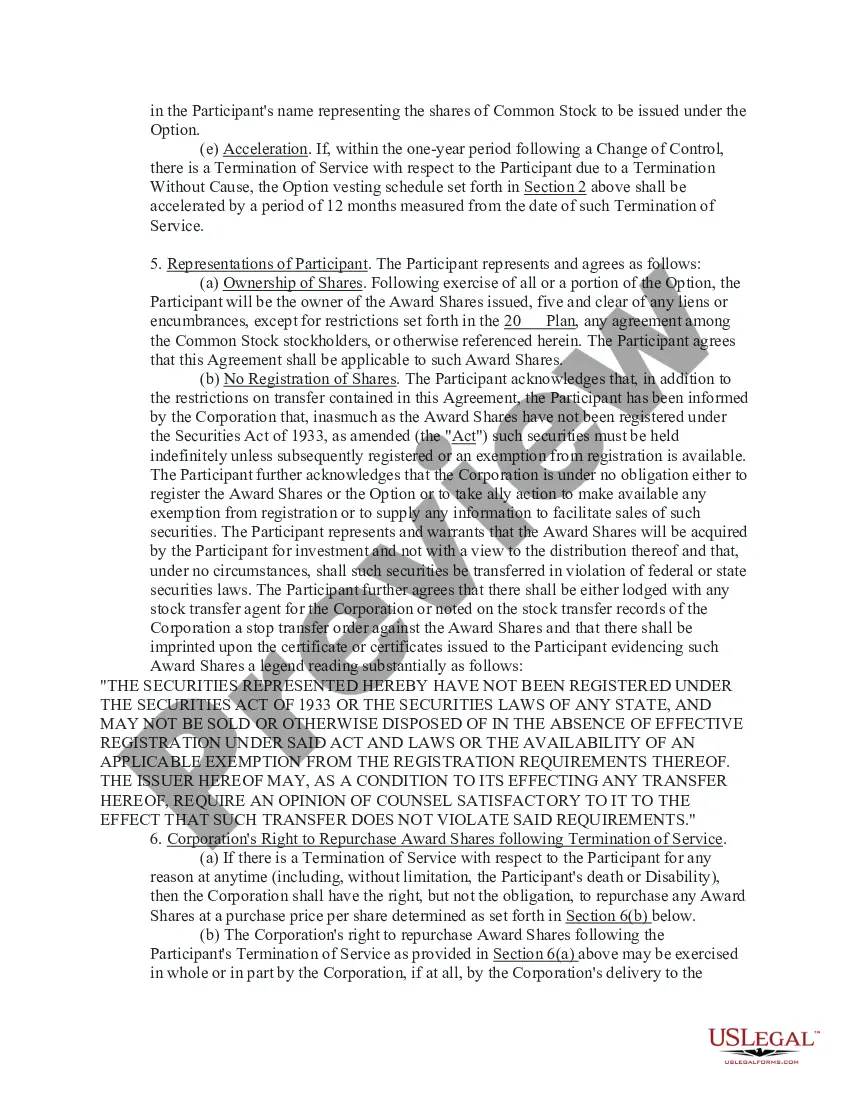
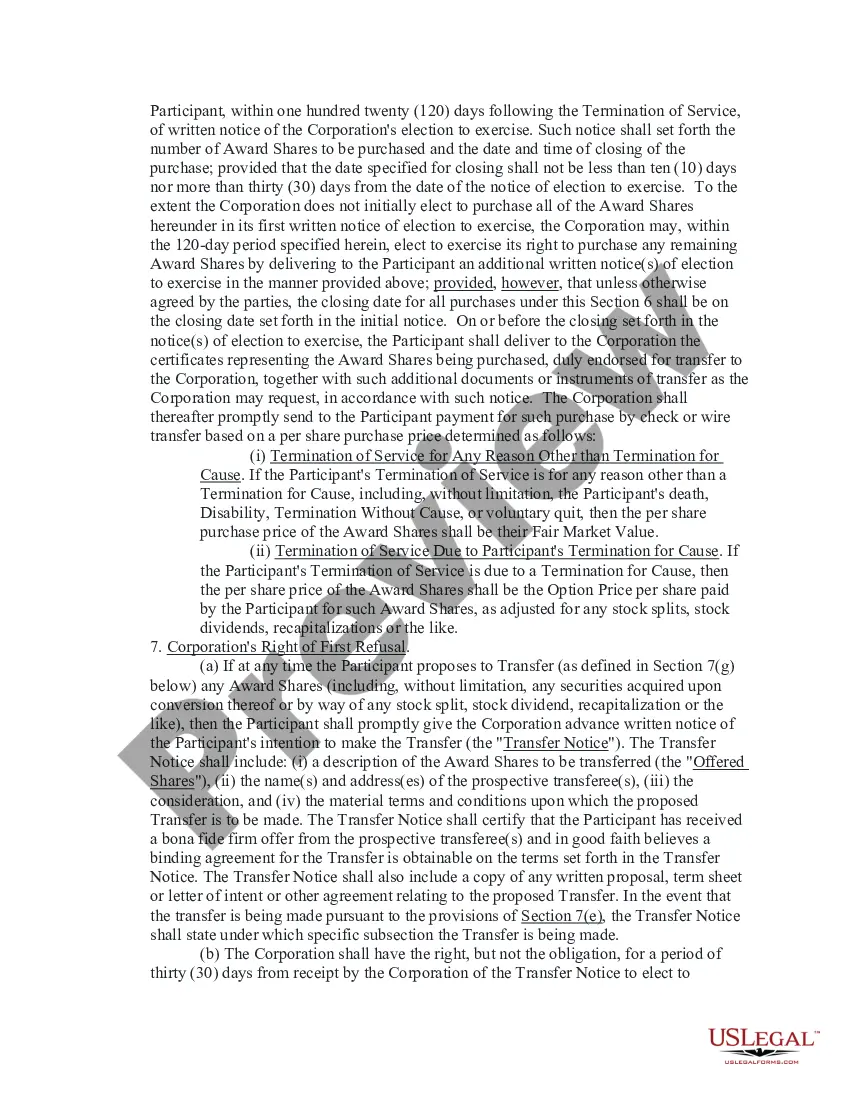
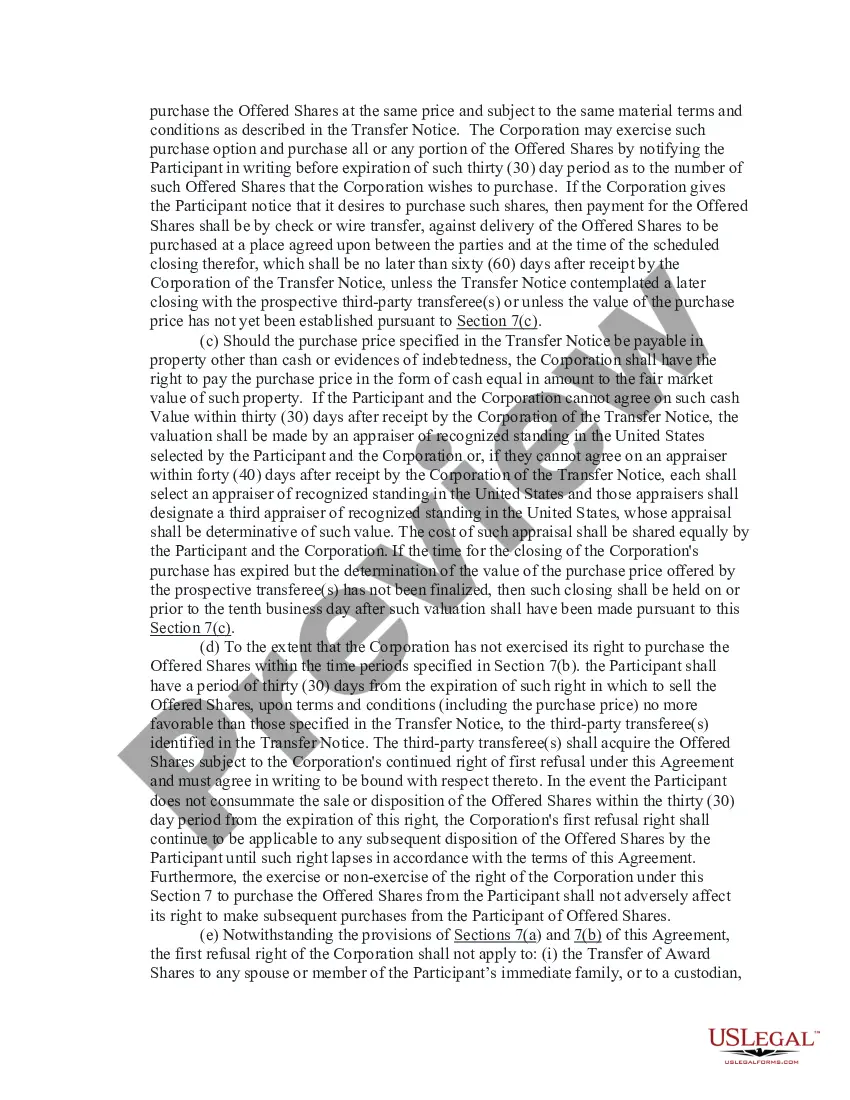
- Corporation's rights regarding repurchase of shares and first refusal

When this form is needed
This form is used when a corporation wishes to grant non-qualified stock options to employees, directors, or consultants as part of an incentive or compensation package. It is particularly relevant for technology companies or startups seeking to attract and retain talent by allowing them to purchase shares at a defined price, motivating them to contribute to the company's success.
Who this form is for
- Employers looking to offer stock options as part of employee compensation
- Corporations aiming to incentivize directors or consultants with stock options
- Human resource and legal professionals seeking to formalize stock option agreements
Completing this form step by step
- Identify the parties involved: Corporation and Participant.
- Fill in the number of shares granted and the option price.
- Set the commencement and expiration dates for the option period.
- Specify the vesting schedule and any conditions for exercising the options.
- Ensure signatures from both the Corporation representatives and Participant are included for legal validity.
Notarization requirements for this form
This form does not typically require notarization unless specified by local law. It's essential to check if your jurisdiction requires additional steps for stock option agreements.
Get your form ready online
Our built-in tools help you complete, sign, share, and store your documents in one place.
Make edits, fill in missing information, and update formatting in US Legal Forms—just like you would in MS Word.
Download a copy, print it, send it by email, or mail it via USPS—whatever works best for your next step.
Sign and collect signatures with our SignNow integration. Send to multiple recipients, set reminders, and more. Go Premium to unlock E-Sign.
If this form requires notarization, complete it online through a secure video call—no need to meet a notary in person or wait for an appointment.
We protect your documents and personal data by following strict security and privacy standards.

Make edits, fill in missing information, and update formatting in US Legal Forms—just like you would in MS Word.

Download a copy, print it, send it by email, or mail it via USPS—whatever works best for your next step.

Sign and collect signatures with our SignNow integration. Send to multiple recipients, set reminders, and more. Go Premium to unlock E-Sign.

If this form requires notarization, complete it online through a secure video call—no need to meet a notary in person or wait for an appointment.

We protect your documents and personal data by following strict security and privacy standards.
Typical mistakes to avoid
- Failing to accurately complete the vesting schedule can lead to confusion about when options become exercisable.
- Not specifying the option price correctly may result in disputes at the time of exercise.
- Omitting signatures or dates, which can invalidate the agreement.
Why use this form online
- Convenient access to legal templates that are easy to download and print.
- Editability allows customization to specific company or participant needs.
- Reliability from using forms drafted by licensed attorneys ensures legal soundness.
Looking for another form?
Form popularity
FAQ
Profits made from exercising qualified stock options (QSO) are taxed at the capital gains tax rate (typically 15%), which is lower than the rate at which ordinary income is taxed. Gains from non-qualified stock options (NQSO) are considered ordinary income and are therefore not eligible for the tax break.
Once you exercise your non-qualified stock option, the difference between the stock price and the strike price is taxed as ordinary income. This income is usually reported on your paystub. There are no tax consequences when you first receive your non-qualified stock option, only when you exercise your option.
NSOs work by a company giving employees or other stakeholders options to buy company shares as part of a compensation package. The shares have a specific exercise price. After vesting, you can decide when to exercise, based on whether the company's stock price rises above the exercise price.
Stock options are a form of compensation. Companies can grant them to employees, contractors, consultants and investors. These options, which are contracts, give an employee the right to buy, or exercise, a set number of shares of the company stock at a preset price, also known as the grant price.
Non-qualified stock options (NSOs) provide employees and other stakeholders with the right (but not the obligation) to purchase shares of company stock at a predetermined price. NSOs can be profitable if a company's stock price rises more than the exercise price.
Non-qualified stock options (NSOs or NQSOs) are a type of stock option that does not qualify for tax-advantaged treatment for the employee like ISOs do. NSOs can also be issued to other non-employee service providers like consultants, advisors, and independent board members.
Non-Qualified Stock Options: An Example To illustrate, say the company grants an employee 10,000 shares of non-qualified stock options with a strike price of $1 per share. The stock isn't actively traded on an established securities market, so the non-qualified stock option isn't taxable at the time of the grant.
What Is a Non-Qualified Stock Option (NSO)? A non-qualified stock option (NSO) is a type of employee stock option wherein you pay ordinary income tax on the difference between the grant price and the price at which you exercise the option.