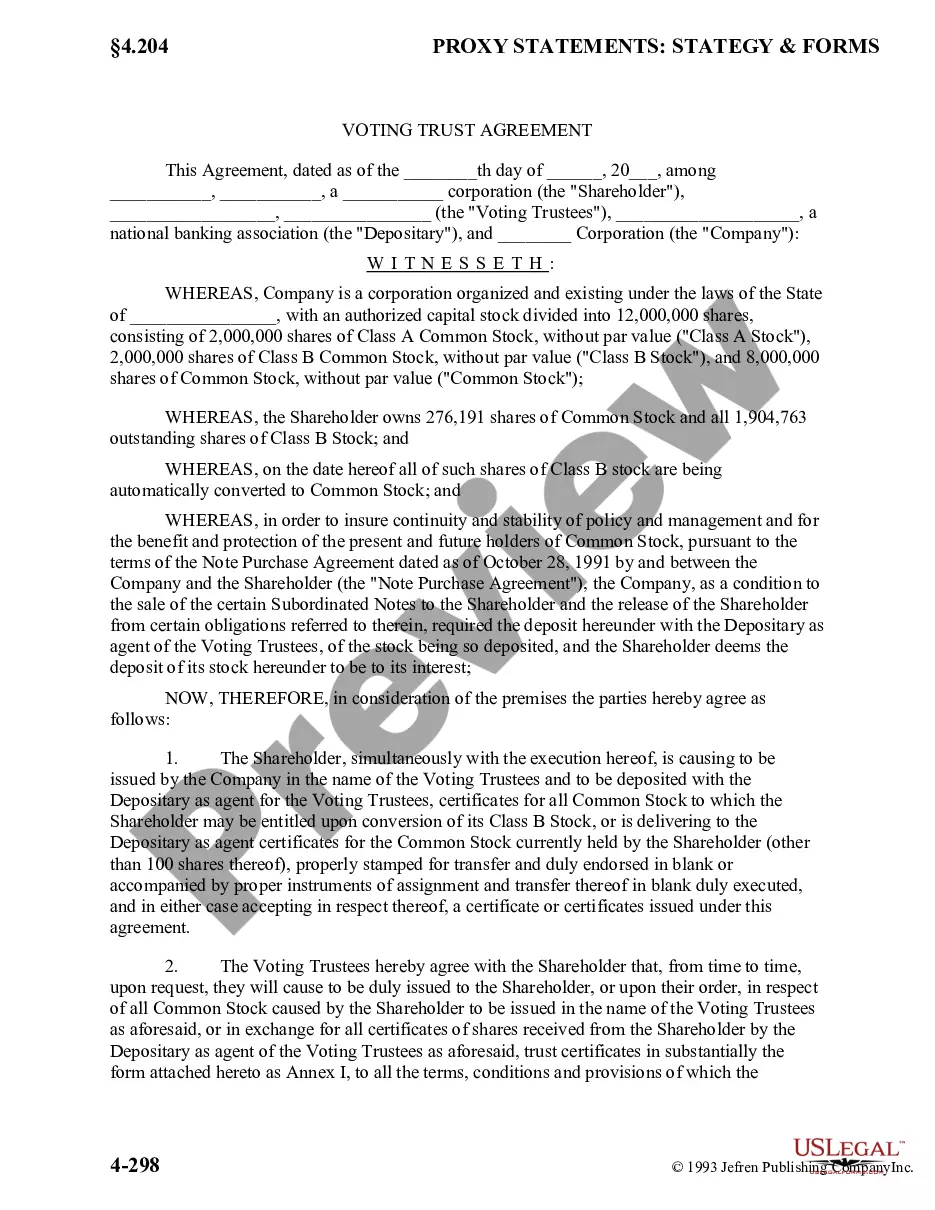
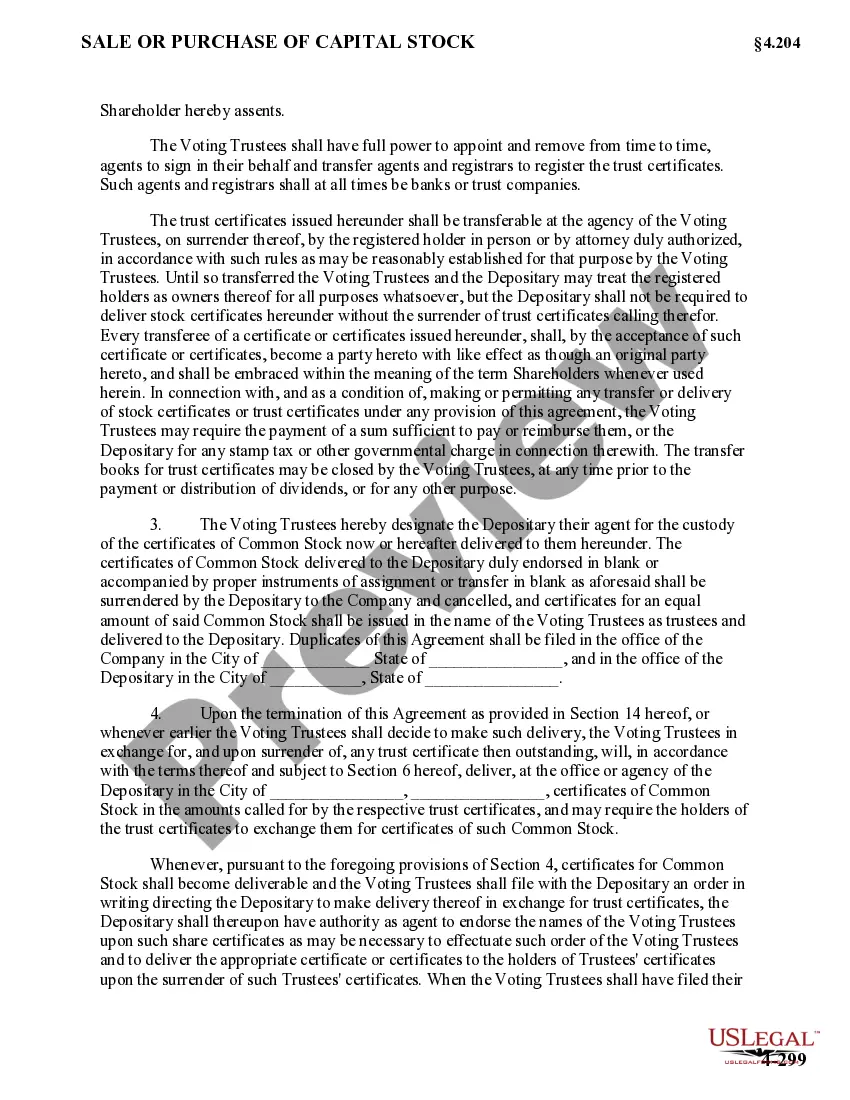
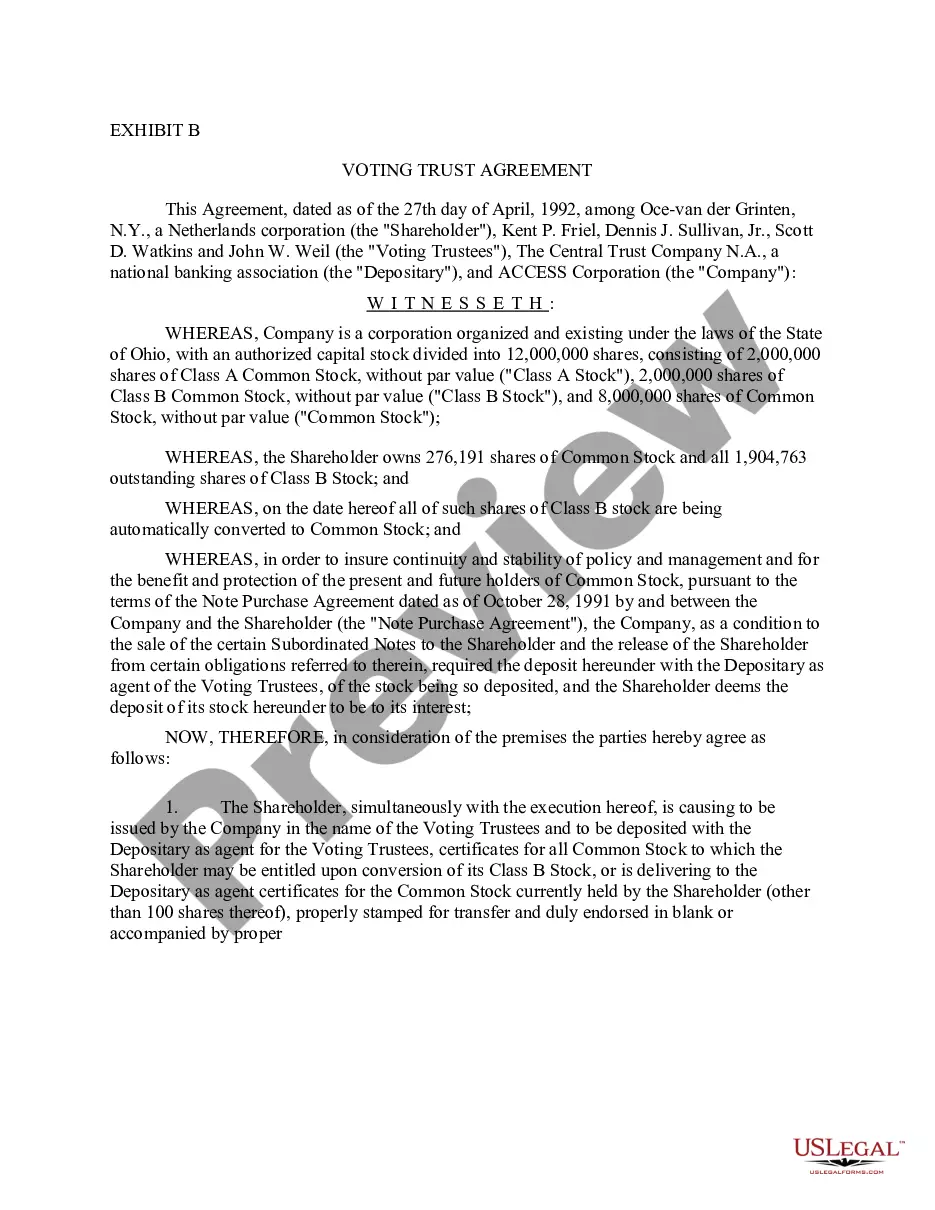
Voting Trust Agreement which provides that the shareholder has issued certificates in the care of the depositary in the name of the voting trustees
What is this form?
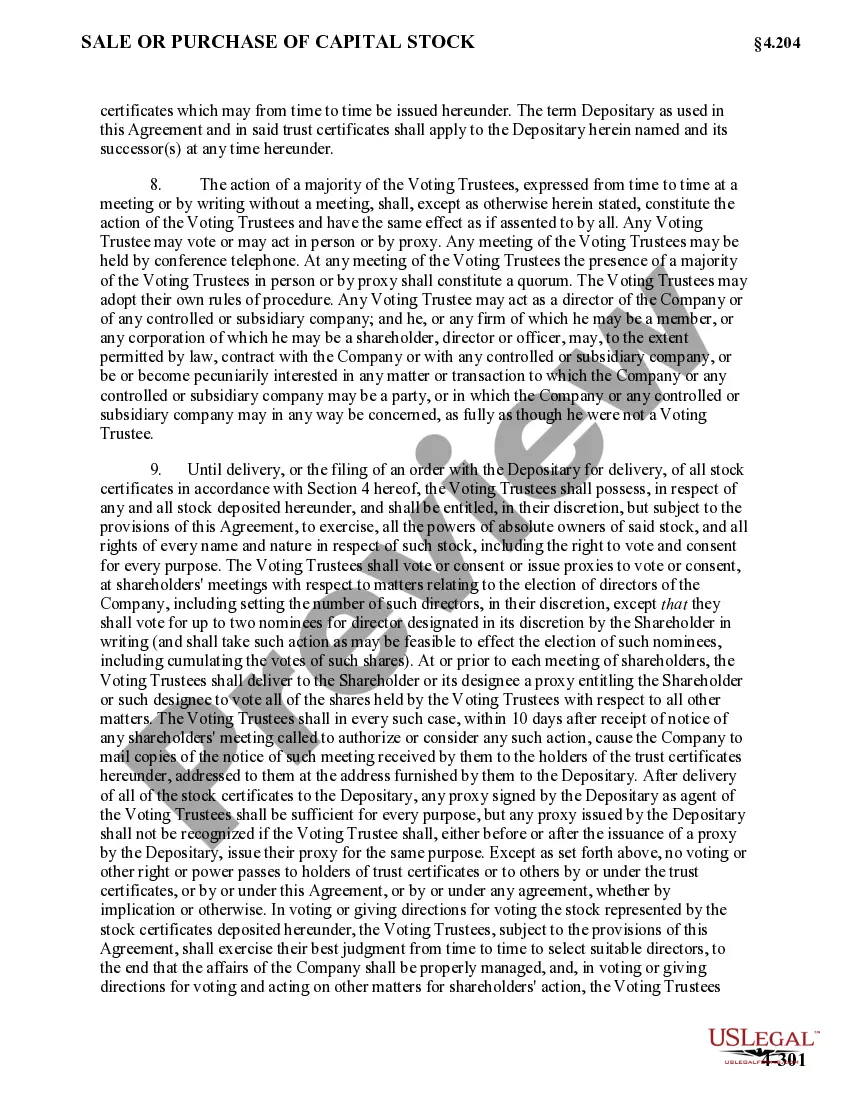
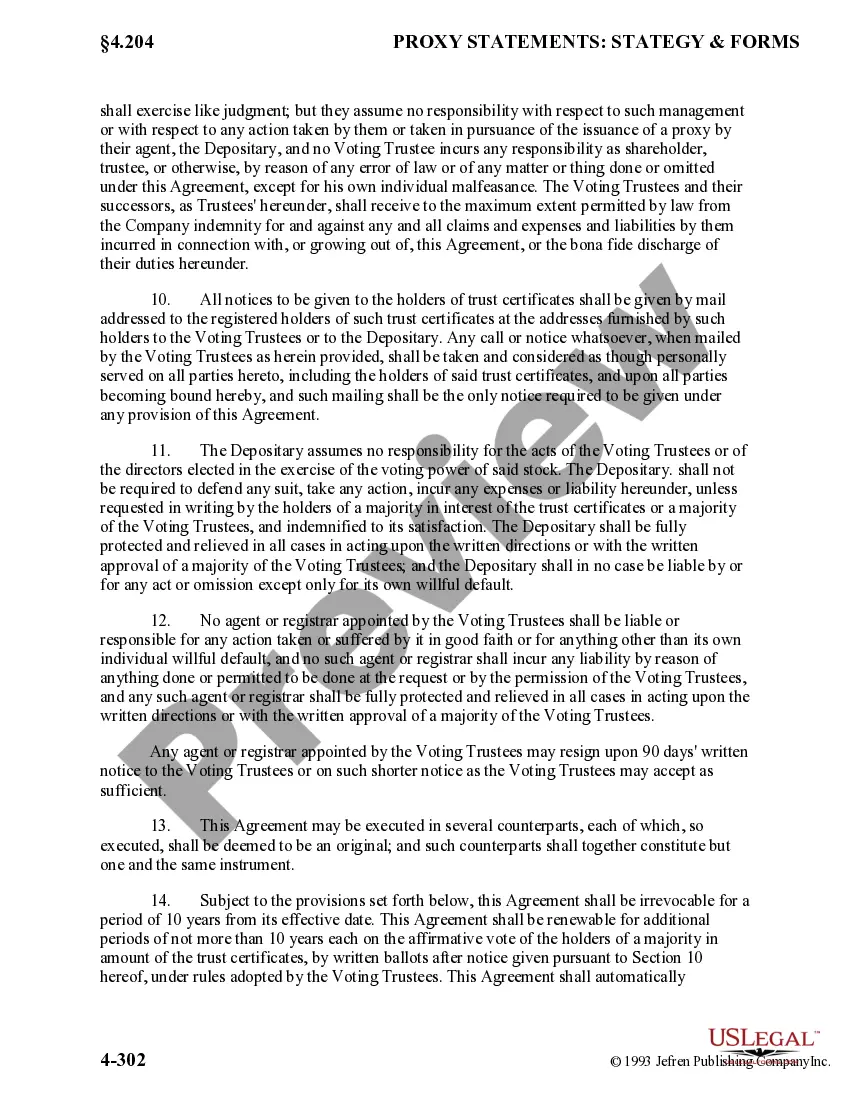
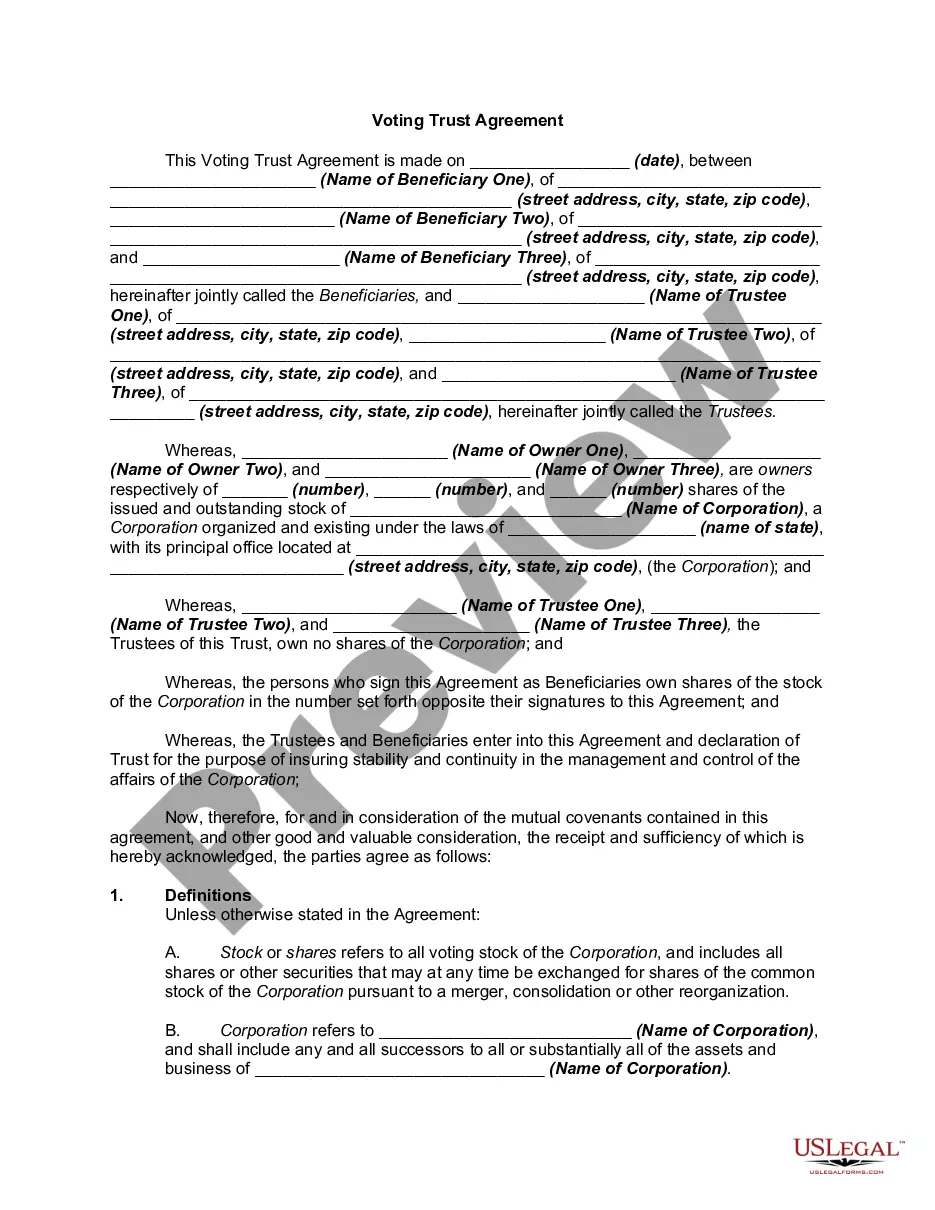
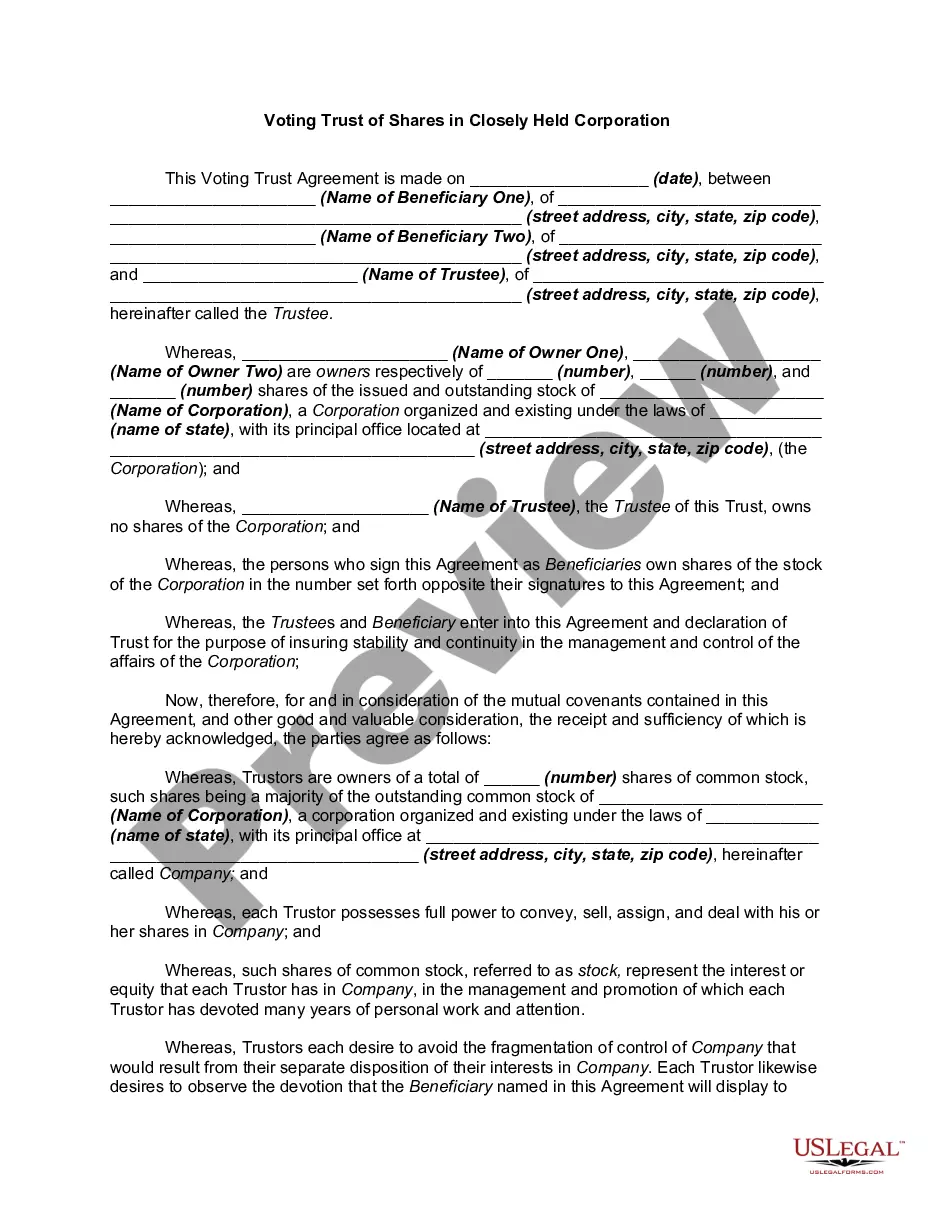
A Voting Trust Agreement is a legal document that creates a trust for shareholders, allowing designated trustees to manage voting rights for the shares placed in the trust. This agreement is crucial for maintaining continuity and stability in corporate governance, particularly when a shareholder wishes to delegate their voting rights to a group of trustees. Unlike other shareholder agreements, this document specifically addresses the safeguarding of shares and the management of voting during a defined period.
Key parts of this document
- Identification of the Shareholder, Voting Trustees, and Depositary.
- Details of shares being deposited and the conversion process from Class B Stock to Common Stock.
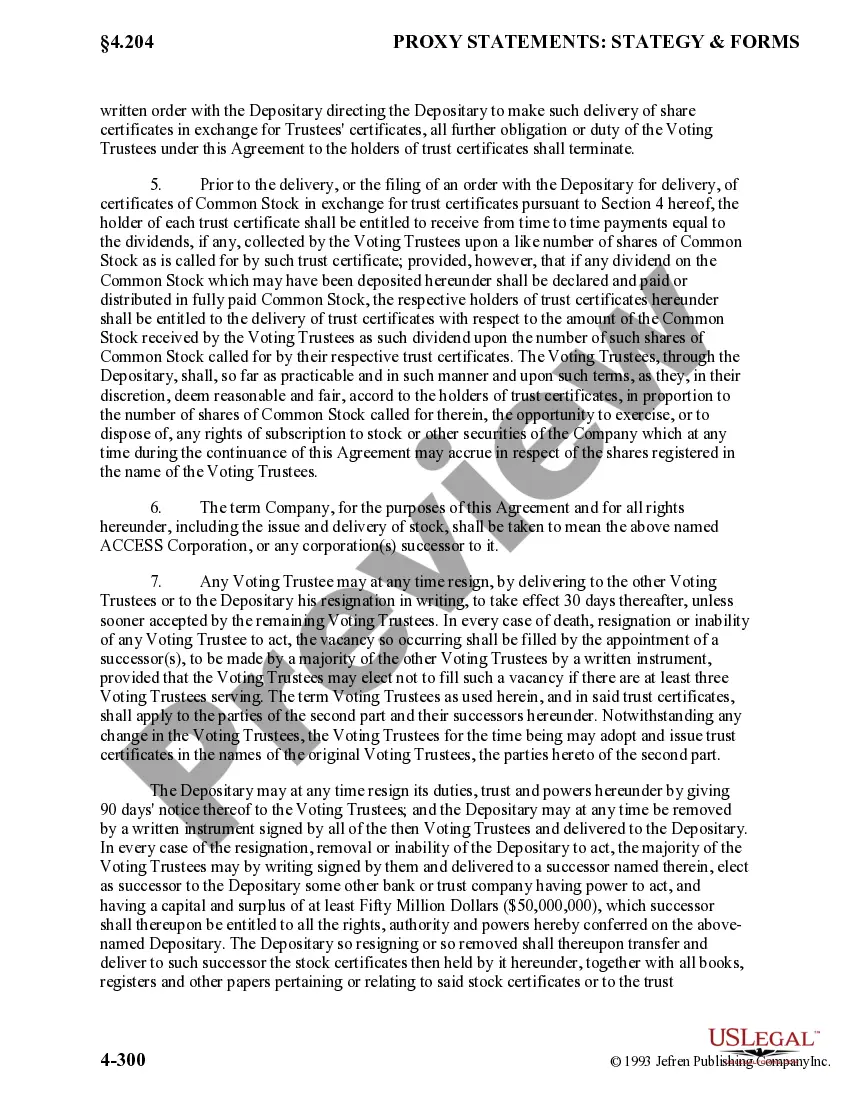
- Responsibilities of Voting Trustees regarding share management and voting rights.
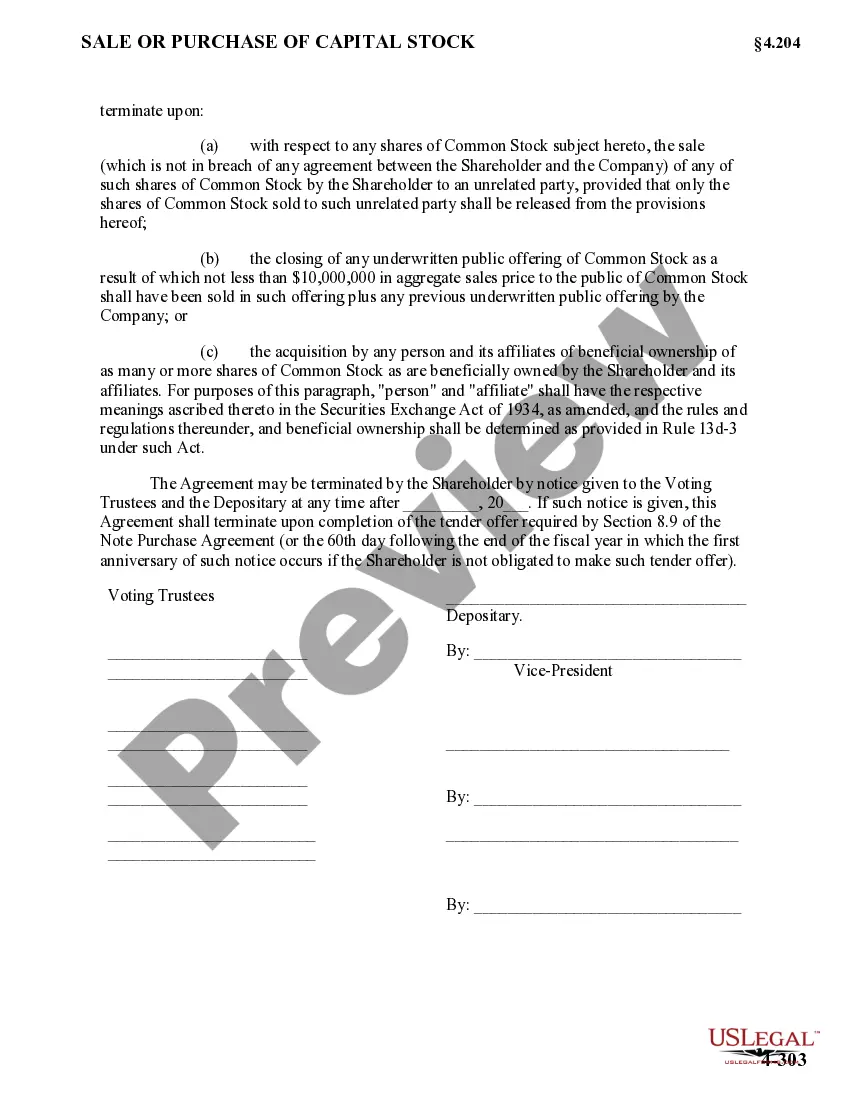
- Provisions for terminating the agreement and conditions for renewal.
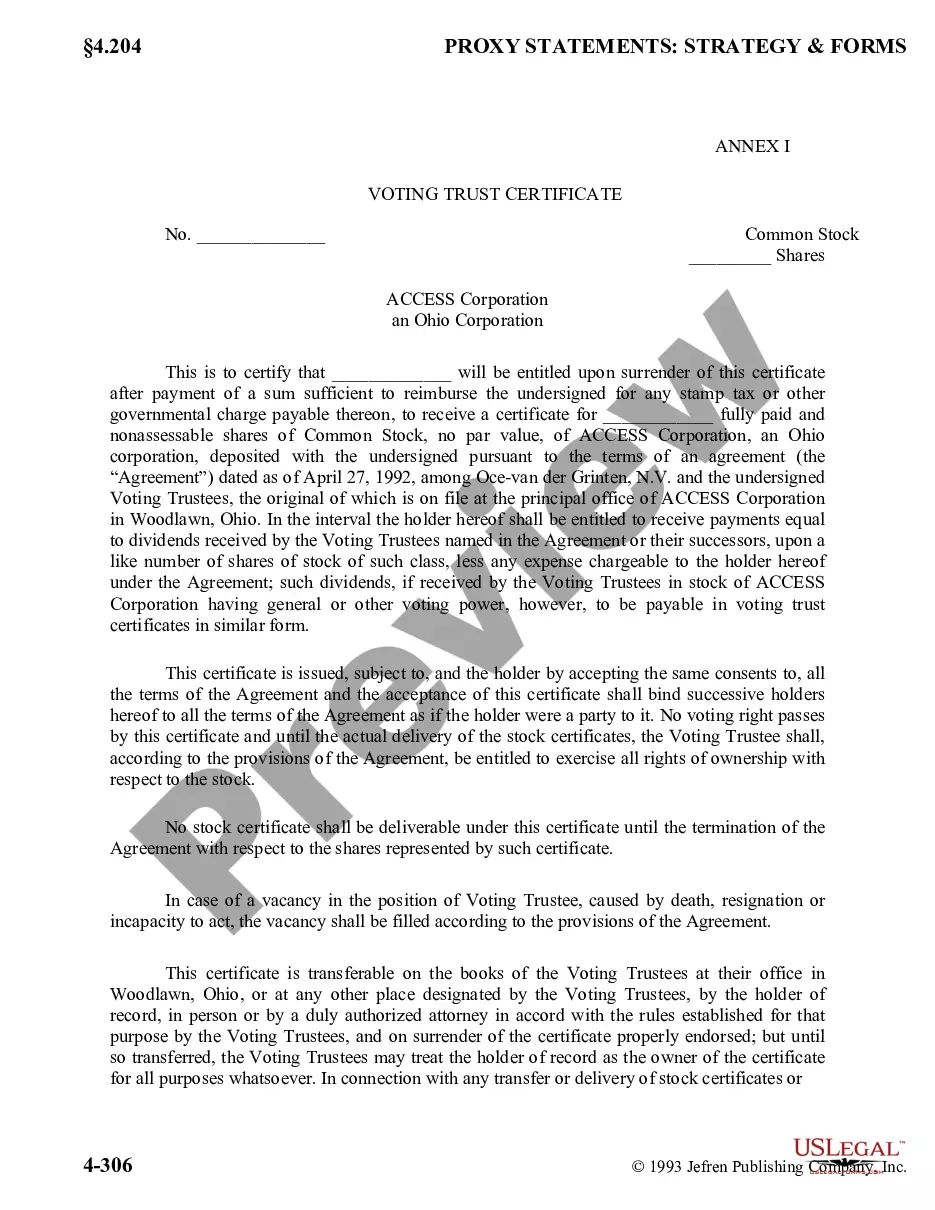
- Instructions for delivering trust and stock certificates between parties.
When to use this form
This form should be used when a shareholder intends to transfer voting rights of their shares to trustees for a specific period. It is particularly useful in situations involving corporate mergers, acquisitions, or any circumstances where the shareholder prefers to consolidate voting power within a trustee system to ensure consistent decision-making and policy implementation.
Who needs this form
- Shareholders looking to delegate their voting rights to a group of trusted individuals.
- Corporations involved in restructuring or needing stable management during transitions.
- Investors holding large quantities of shares wanting to ensure cohesive governance.
Instructions for completing this form
- Fill in the date and names of the Shareholder, Voting Trustees, and Depositary accurately.
- Specify the shares being deposited, including the conversion from Class B Stock to Common Stock.
- Outline the roles and responsibilities of the Voting Trustees regarding the management of shares.
- Provide details on the terms of termination and renewal of the agreement.
- Ensure all parties sign the agreement and keep copies for their records.
Is notarization required?
Notarization is not commonly needed for this form. However, certain documents or local rules may make it necessary. Our notarization service, powered by Notarize, allows you to finalize it securely online anytime, day or night.
Get your form ready online
Our built-in tools help you complete, sign, share, and store your documents in one place.
Make edits, fill in missing information, and update formatting in US Legal Forms—just like you would in MS Word.
Download a copy, print it, send it by email, or mail it via USPS—whatever works best for your next step.
Sign and collect signatures with our SignNow integration. Send to multiple recipients, set reminders, and more. Go Premium to unlock E-Sign.
If this form requires notarization, complete it online through a secure video call—no need to meet a notary in person or wait for an appointment.
We protect your documents and personal data by following strict security and privacy standards.
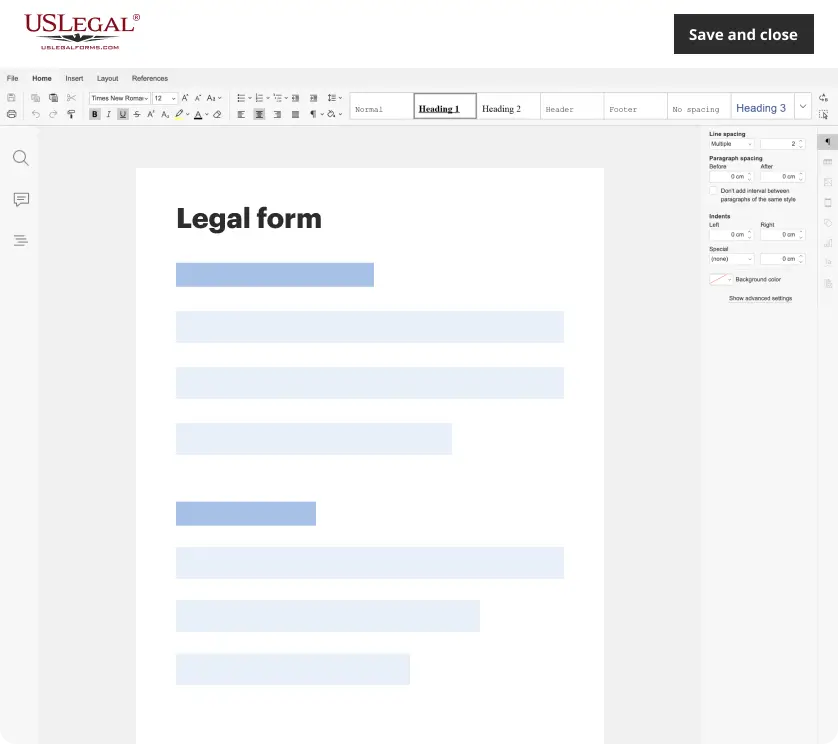
Make edits, fill in missing information, and update formatting in US Legal Forms—just like you would in MS Word.
Download a copy, print it, send it by email, or mail it via USPS—whatever works best for your next step.
Sign and collect signatures with our SignNow integration. Send to multiple recipients, set reminders, and more. Go Premium to unlock E-Sign.

If this form requires notarization, complete it online through a secure video call—no need to meet a notary in person or wait for an appointment.
We protect your documents and personal data by following strict security and privacy standards.
Common mistakes to avoid
- Failing to accurately specify the shares being placed in the trust.
- Not clearly outlining the responsibilities of the Voting Trustees.
- Missing signatures from all required parties.
- Neglecting to follow state-specific regulations that may affect the agreement.
Benefits of completing this form online
- Convenience of downloading and completing the form from any location.
- Editability allows for customization according to specific needs.
- Access to legally vetted templates drafted by licensed attorneys.
- Efficient arrangements for electronic submissions, if applicable.
Looking for another form?
Form popularity
FAQ
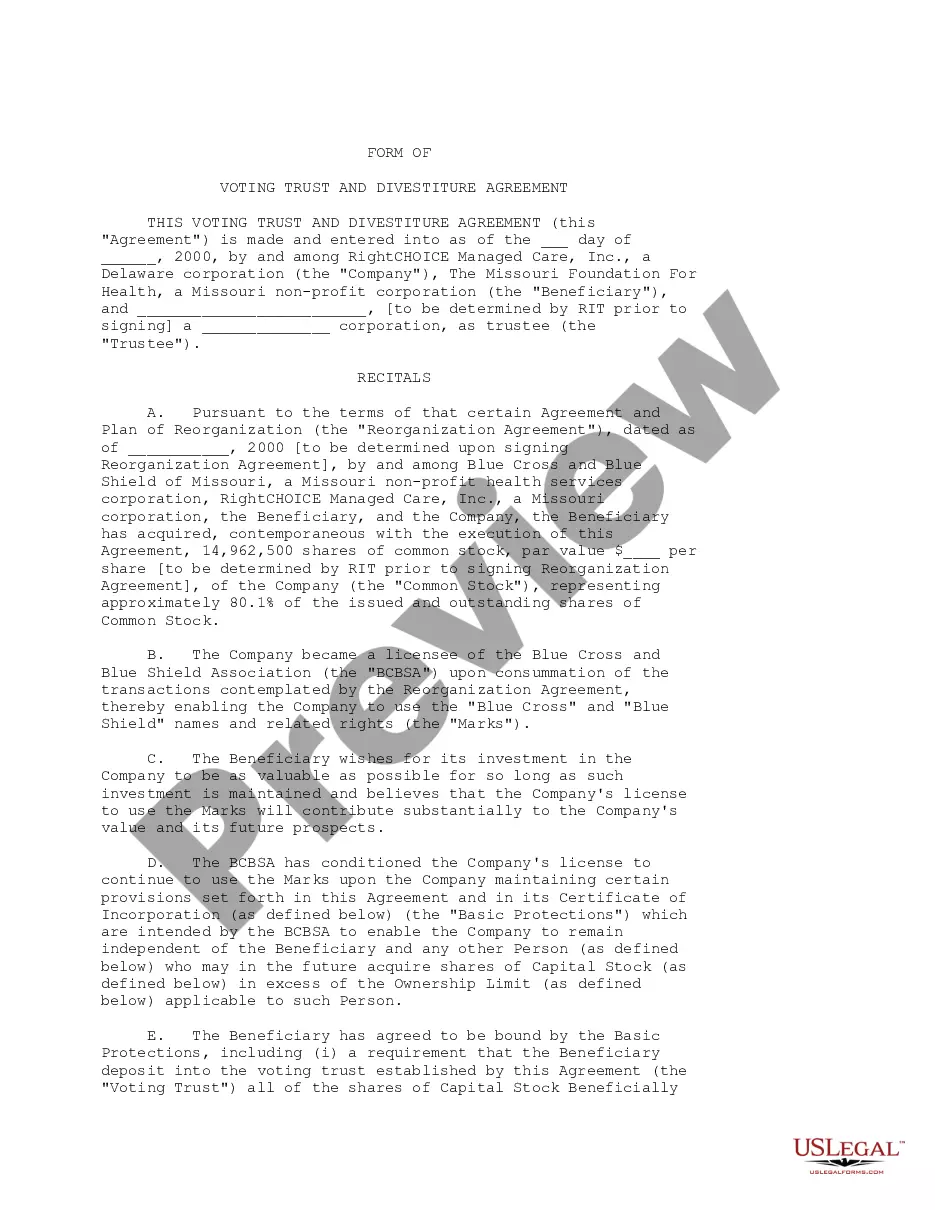
A voting trust is a contract between shareholders in which their shares and voting rights are temporarily transferred to a trustee.
A shareholder's agreement establishes the rights of majority and minority shareholders of the corporation while also establishing the responsibilities of the board of directors and officers for that corporation. It is beneficial to have in place when the corporation only has a few shareholders.
A "shareholder trust" is a trust which holds shares in a corporation.Any fiduciary duties that might otherwise exist between those in control of the entity and other interest holders such as the shareholder trust may run only to the trust.
A shareholder agrees to vote its voting shares generally or in favour of a specific proposal and against any contrary proposal. Voting agreements are commonly used in business combination transactions to assure the purchaser that significant shareholders will vote to approve the subject transaction.
A voting trust certificate is issued to a stockholder in exchange for his or her common stock, and represents all of the normal rights of a shareholder (e.g., receiving dividends) except the right to vote.
Shareholders cast votes at a company's annual meeting. If they cannot attend, they may utilize a proxy vote to convey their wishes. Typically common shares carry one vote per share, while preferred shares have no voting rights.
A shareholders' agreement is an agreement entered into between all or some of the shareholders in a company. It regulates the relationship between the shareholders, the management of the company, ownership of the shares and the protection of the shareholders. They also govern the way in which the company is run.
Common problem areas include the following: Directors -v- members. Transfer of shares. Approving a change in business direction. Managing changes in the roles shareholders play. Injection of debt. Competition. Exit.