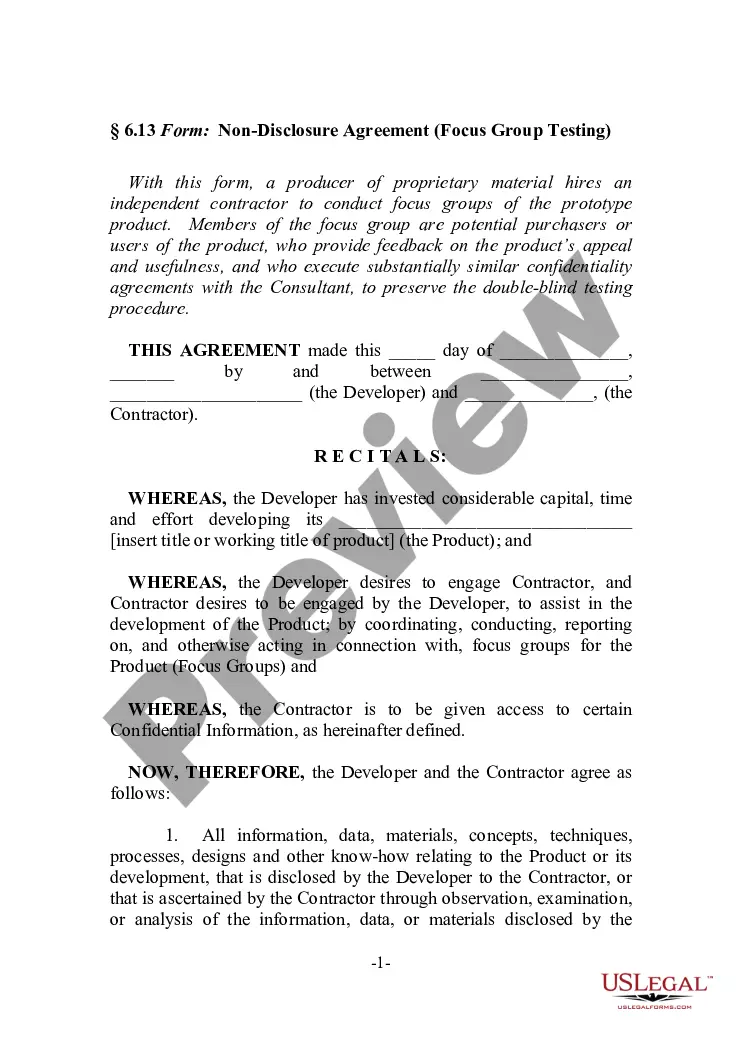
Nondisclosure Agreement - Focus Group Testing
About this form
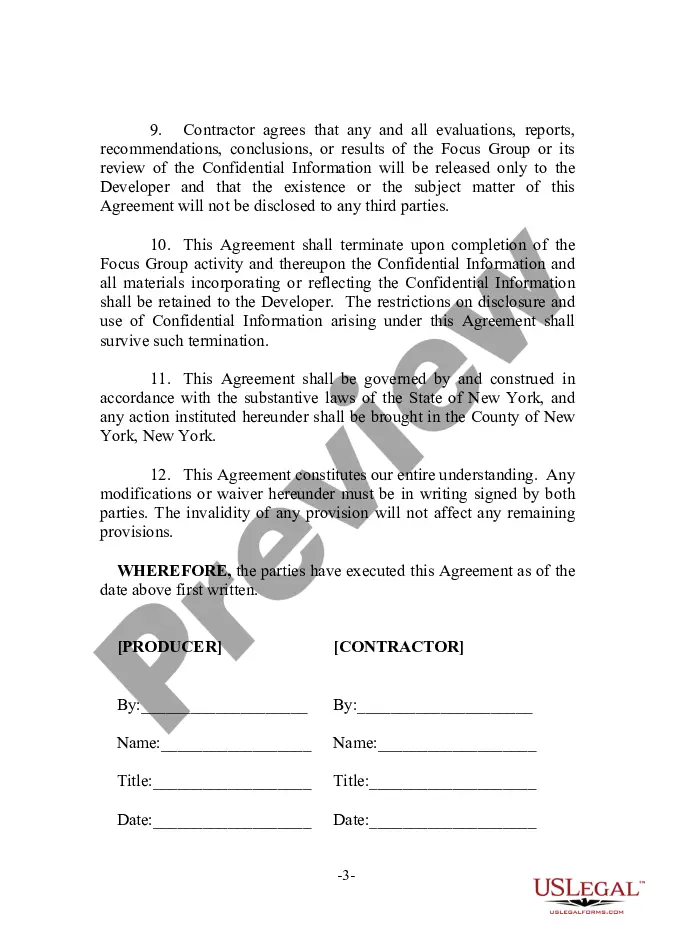
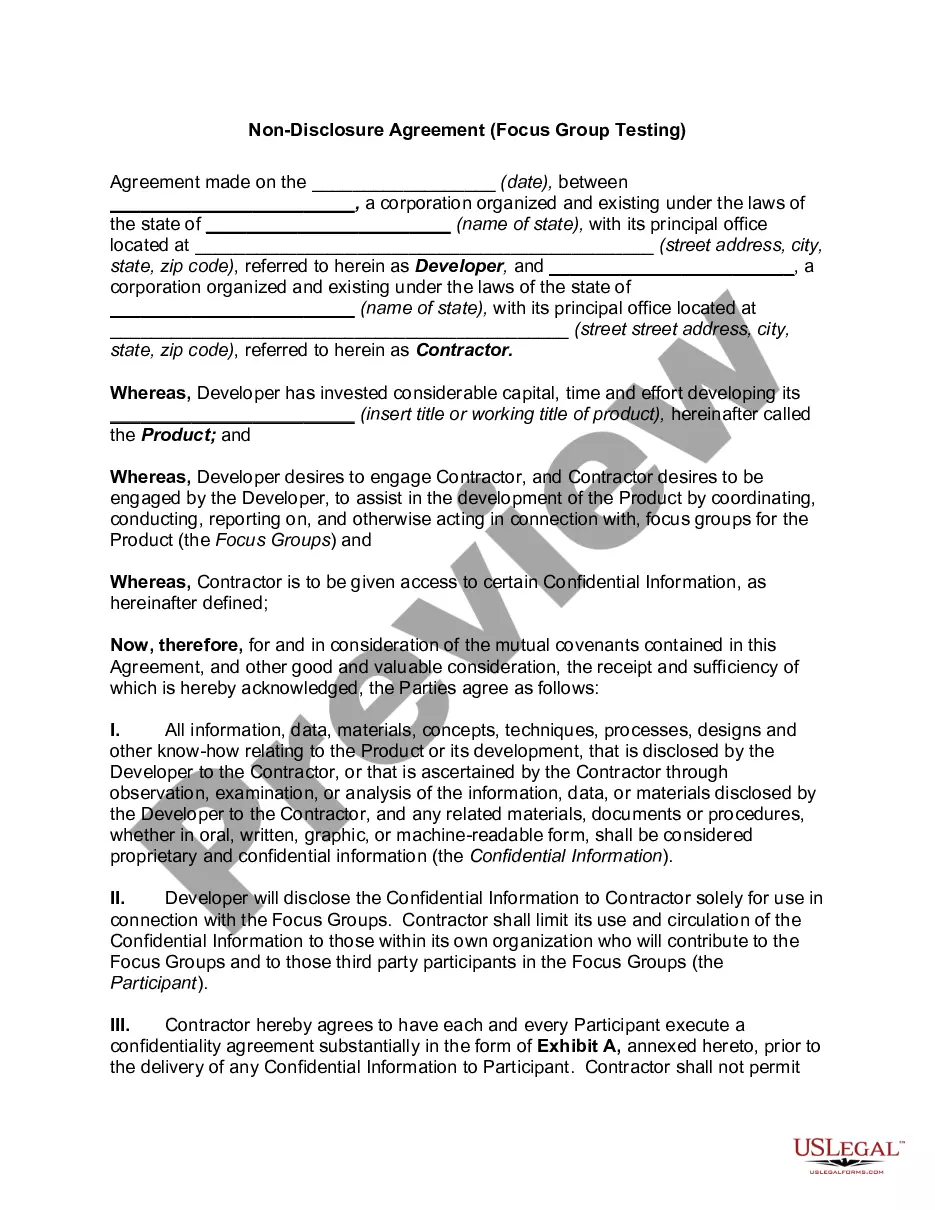
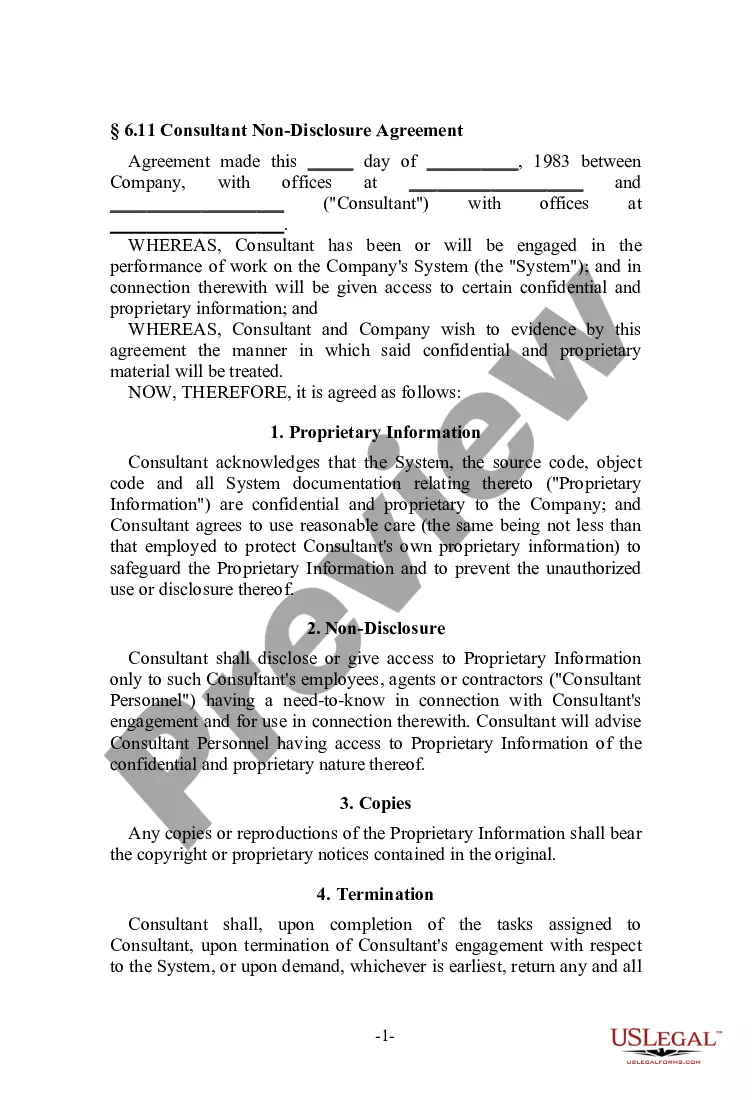
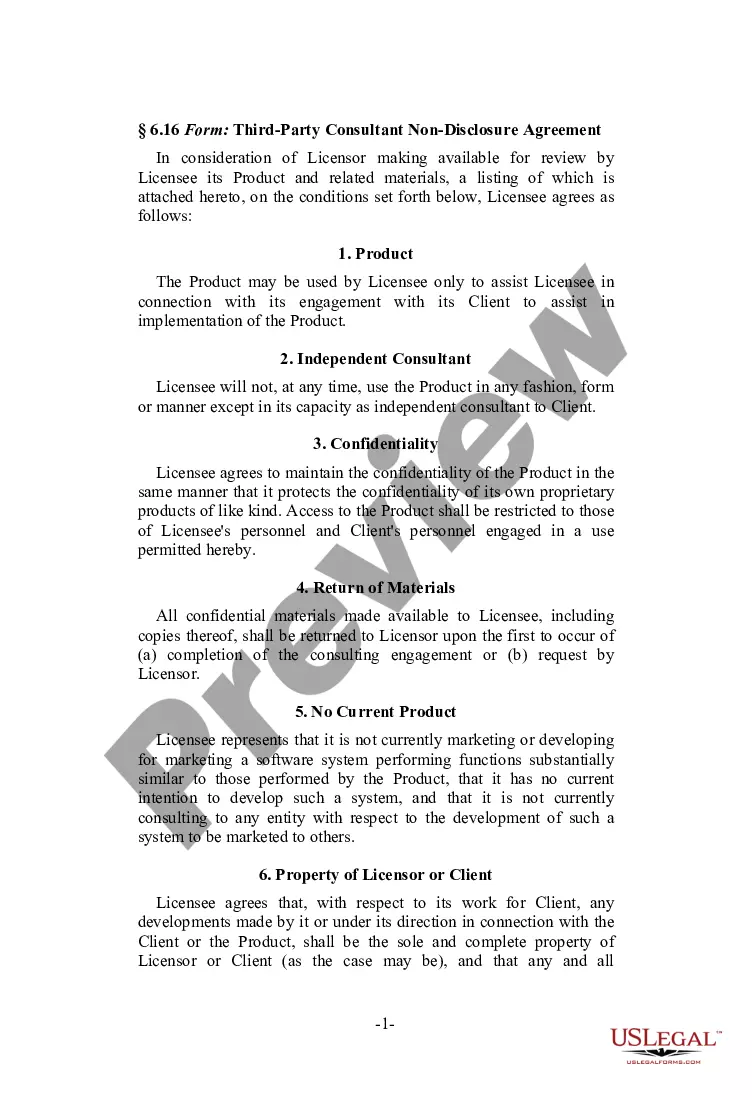
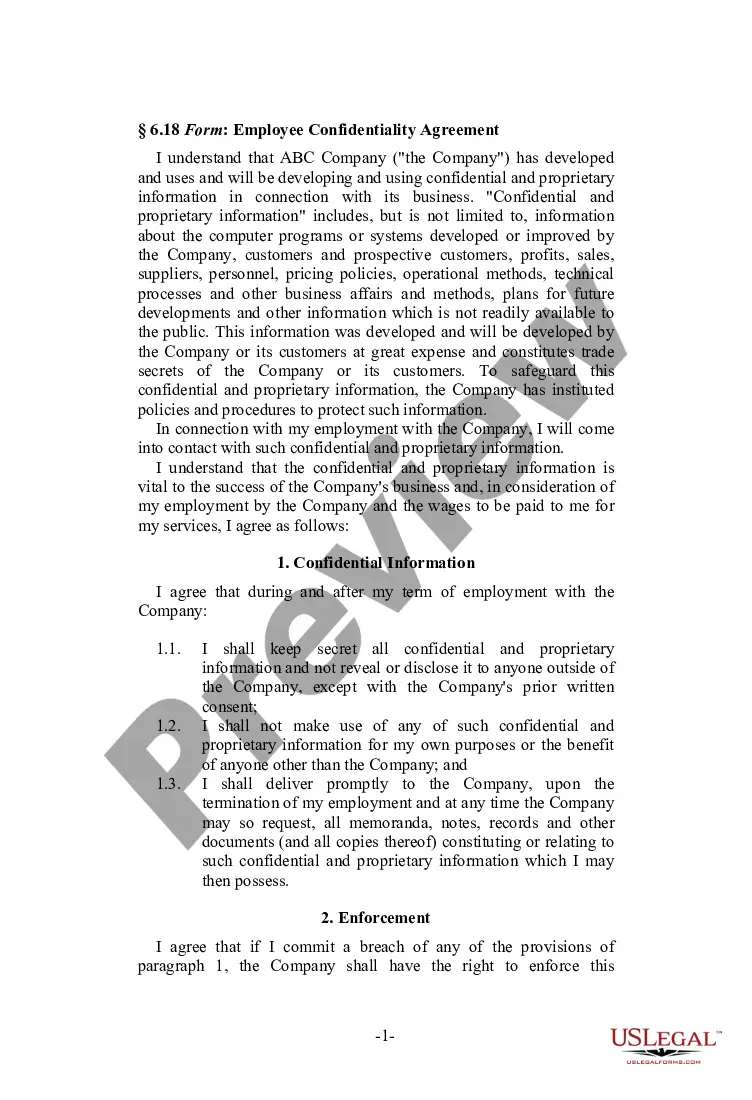
This Nondisclosure Agreement (Focus Group Testing) is a legal document designed to protect confidential information shared between a developer and an independent contractor during focus group testing of a product. This agreement ensures that any proprietary material, feedback, or insights about the product remain confidential, preventing unauthorized disclosure to third parties. Unlike other nondisclosure agreements, this form is specifically tailored for the context of focus group testing in the computer and software industries.
Main sections of this form
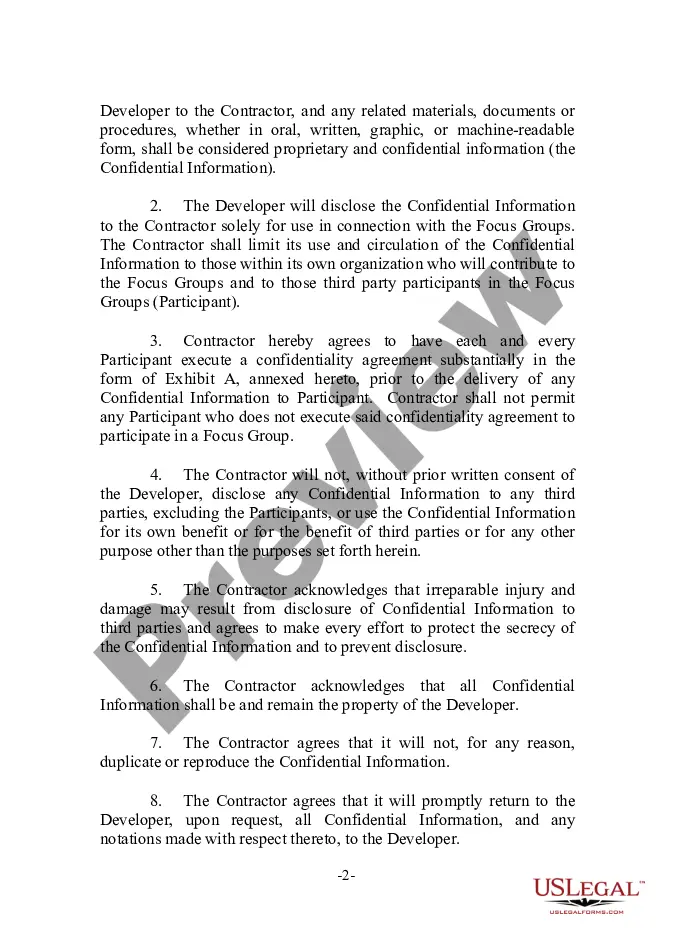
- Identification of the Developer and Contractor, including roles and responsibilities.
- Definition of Confidential Information to be protected.
- Limitations on the use and distribution of the confidential information.
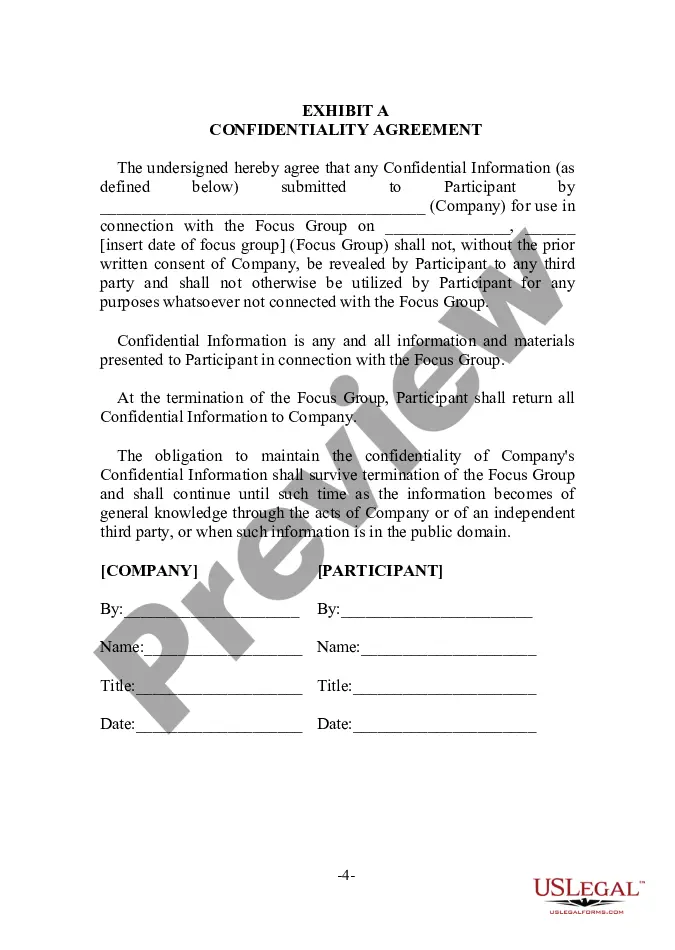
- Requirements for participants in the focus groups to sign similar confidentiality agreements.
- Provisions for returning or destroying confidential information after the focus group concludes.
- Governing law clause stipulating New York laws apply.
When this form is needed
Use this Nondisclosure Agreement when you plan to conduct focus groups for a prototype product and need to share sensitive information with an independent contractor. This form is essential to safeguard proprietary ideas, concepts, and feedback from potential users during the developmental phase of the product, ensuring that all parties maintain confidentiality throughout the testing process.
Who can use this document
- Developers or companies involved in creating new products seeking feedback through focus groups.
- Independent contractors hired to organize and conduct focus group testing.
- Business owners or teams needing to protect sensitive information during product development.
Completing this form step by step
- Identify the parties involved by entering the names of the Developer and Contractor.
- Specify the product title or working title in the designated section.
- Detail any Confidential Information that will be shared during the focus group testing.
- Ensure all participants in the focus group sign a confidentiality agreement before participation.
- Have both parties sign and date the agreement to finalize it.
Notarization requirements for this form
This form does not typically require notarization unless specified by local law.
Get your form ready online
Our built-in tools help you complete, sign, share, and store your documents in one place.
Make edits, fill in missing information, and update formatting in US Legal Forms—just like you would in MS Word.
Download a copy, print it, send it by email, or mail it via USPS—whatever works best for your next step.
Sign and collect signatures with our SignNow integration. Send to multiple recipients, set reminders, and more. Go Premium to unlock E-Sign.
If this form requires notarization, complete it online through a secure video call—no need to meet a notary in person or wait for an appointment.
We protect your documents and personal data by following strict security and privacy standards.

Make edits, fill in missing information, and update formatting in US Legal Forms—just like you would in MS Word.

Download a copy, print it, send it by email, or mail it via USPS—whatever works best for your next step.

Sign and collect signatures with our SignNow integration. Send to multiple recipients, set reminders, and more. Go Premium to unlock E-Sign.

If this form requires notarization, complete it online through a secure video call—no need to meet a notary in person or wait for an appointment.

We protect your documents and personal data by following strict security and privacy standards.
Mistakes to watch out for
- Failing to list all participants who will have access to Confidential Information.
- Not having participants complete their own confidentiality agreements.
- Omitting the date of the agreement or signatures from either party.
- Using vague or unclear language when defining Confidential Information.
Why complete this form online
- Convenience of instant download, allowing for quicker implementation.
- Editability to customize the form for specific needs before printing.
- Reliability of using a document drafted by licensed attorneys.
Legal use & context
- This nondisclosure agreement provides legal protection against unauthorized sharing of confidential information.
- It is enforceable in a court of law, provided both parties adhere to its terms.
- Violations may result in legal consequences, including financial damages for the aggrieved party.
Key takeaways
- This Nondisclosure Agreement is crucial for protecting sensitive information during focus group testing.
- Clearly define all participants and ensure confidentiality agreements are in place.
- Completing this form accurately is essential for legal enforceability.
Looking for another form?
Form popularity
FAQ
Depending on the complexity of what you need protected and the number of parties involved, the cost of having an NDA drafted can vary significantly. When you hire a lawyer in the Priori network, drafting an NDA typically costs anywhere from $175-$1,500.
2. Clearly label all confidential information as confidential. This means writing confidential on documents or any folder you keep them in. If you are sending an email, make sure the title clearly identifies it as confidential.
Be Clear About Project Goals. Talk to the project stakeholders and learn what information is critical to the project's success. Know What Information Is Already Available. Brainstorm Preliminary Questions. Solicit Feedback. Refine Your List of Questions. Run a Test.
An investigator's use of focus groups can qualify for exemption from IRB Review CFR 46.104.Focus groups are considered to be in the same category as surveys and interviews; data collected must come are from adults (at least 18 years old) and must not be both sensitive and identifiable.
Set the date of the agreement. Describe the two parties, sometimes called the Disclosing Party and the Receiving Party.7feff Include names and identification, so there can be no misunderstanding about who signed the agreement.
Simply defined, a confidentiality statement for documents is a legally binding document stating that two parties won't profit from or share confidential information.
Risks and Confidentiality: The nature of a focus group is such that confidentiality cannot be guaranteed. The researchers must provide participants with the procedures in place to maintain confidentiality of the research data and they must inform participants not to repeat what is said in the focus group to others.
Here's some breach of confidentiality examples you could find yourself facing: Saving sensitive information on an unsecure computer that leaves the data accessible to others. Sharing employees' personal data, like payroll details, bank details, home addresses and medical records.
Publicly available data do not require IRB review. Examples: census data, labor statistics. Note: Investigators should contact the IRB if they are uncertain as to whether the data qualifies as publicly available.