Company Agreement regarding children in the workplace
Understanding this form
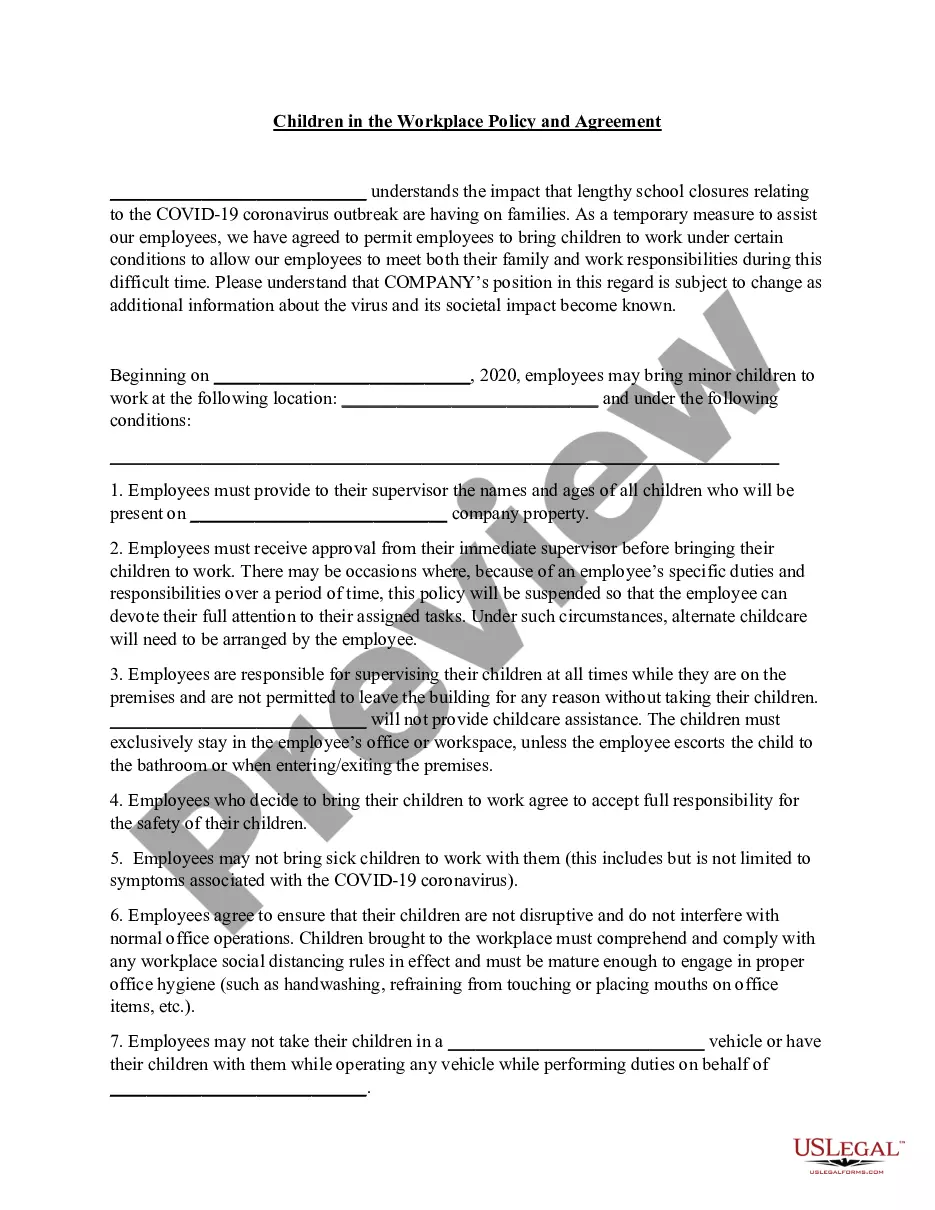
The Company Agreement regarding children in the workplace is a document that allows employees to bring their minor children to work under specific conditions, particularly during situations like the COVID-19 pandemic. This form outlines the responsibilities and expectations of both the employee and employer, ensuring a balance between family and work obligations. It is distinct from other workplace agreements as it specifically addresses the unique circumstances of children in the workplace and includes provisions related to health and safety measures.
Form components explained
- Policy overview and temporary permissions for bringing children to work.
- Requirements for employee notification regarding children's names and ages.
- Supervisory approval for bringing children to work and potential suspensions of this permission.
- Employee responsibility for supervising their children at all times.
- Health and behavior guidelines for children while on company premises.
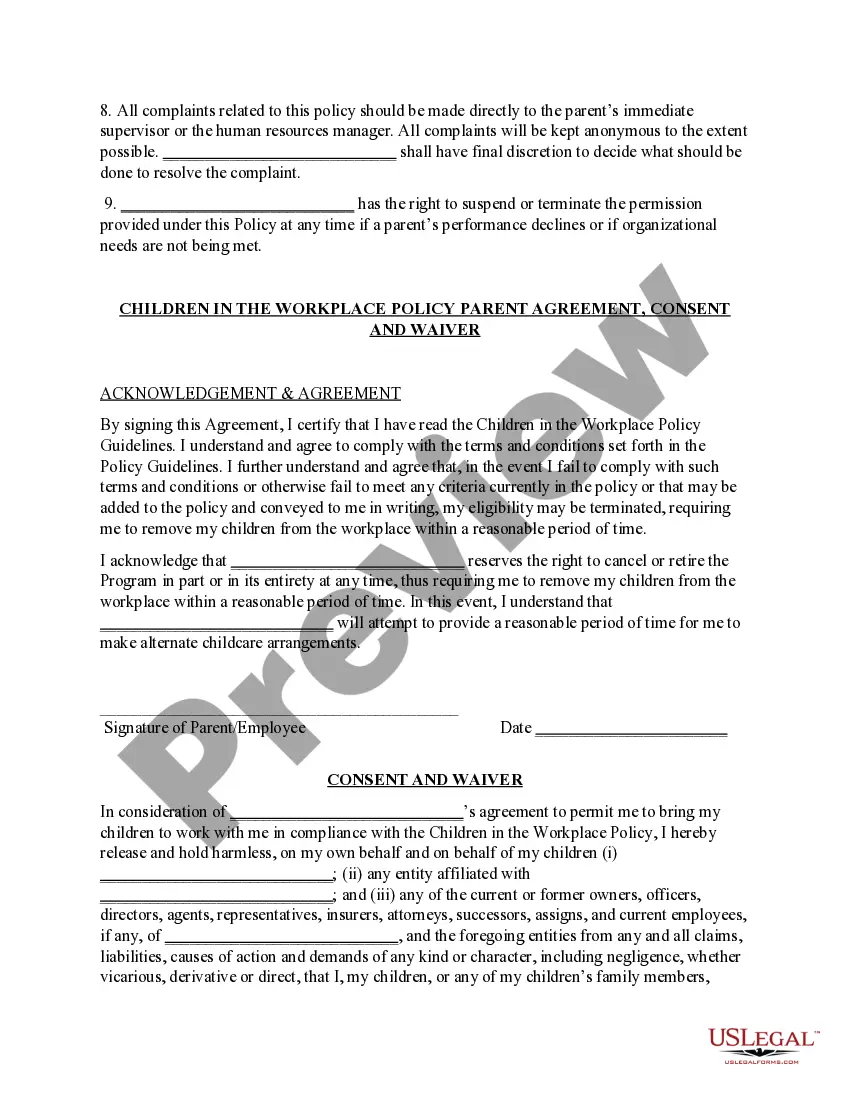
- Acknowledgment of understanding the policy's terms and potential consequences for violations.
When to use this document
This form should be used when an employee needs to bring their minor children to work due to circumstances such as school closures or lack of childcare options. It is particularly relevant during emergencies like the COVID-19 pandemic when typical childcare solutions may not be available, allowing employees to fulfill both their work and family responsibilities. Employers may adopt this policy to support affected employees while maintaining a safe workplace environment.
Who this form is for
- Employees working in a company that allows children on the premises.
- Parents or guardians of minor children who are facing childcare challenges.
- Employers or human resource managers implementing a temporary policy for children in the workplace.
How to prepare this document
- Identify the employee bringing children to work and fill in their name and the date of the agreement.
- Provide the names and ages of the children intended to be brought to work.
- Specify the work location where the children will be present.
- Obtain approval from the immediate supervisor regarding the arrangement.
- Sign and date the agreement confirming awareness and agreement to the terms outlined in the policy.
Notarization requirements for this form
This form does not typically require notarization unless specified by local law. Employees should ensure that they understand the requirements before finalizing the agreement.
Get your form ready online
Our built-in tools help you complete, sign, share, and store your documents in one place.
Make edits, fill in missing information, and update formatting in US Legal Forms—just like you would in MS Word.
Download a copy, print it, send it by email, or mail it via USPS—whatever works best for your next step.
Sign and collect signatures with our SignNow integration. Send to multiple recipients, set reminders, and more. Go Premium to unlock E-Sign.
If this form requires notarization, complete it online through a secure video call—no need to meet a notary in person or wait for an appointment.
We protect your documents and personal data by following strict security and privacy standards.
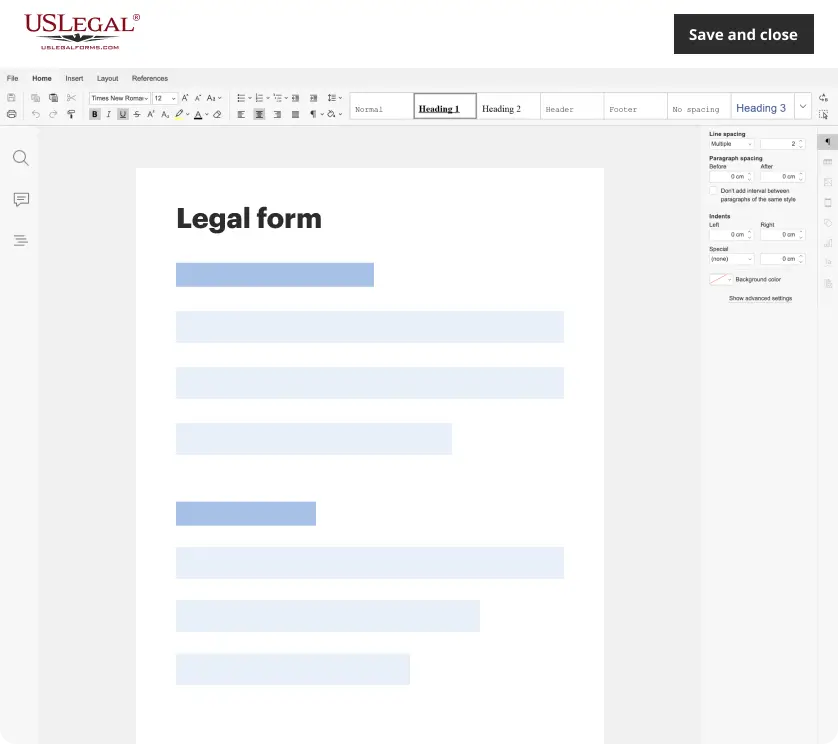
Make edits, fill in missing information, and update formatting in US Legal Forms—just like you would in MS Word.
Download a copy, print it, send it by email, or mail it via USPS—whatever works best for your next step.
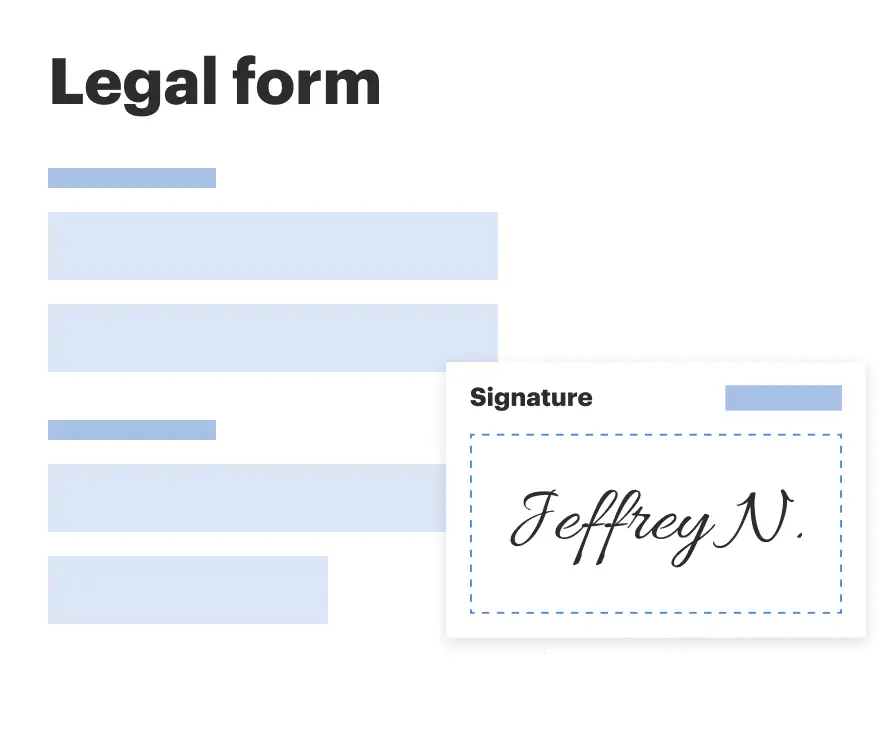
Sign and collect signatures with our SignNow integration. Send to multiple recipients, set reminders, and more. Go Premium to unlock E-Sign.
If this form requires notarization, complete it online through a secure video call—no need to meet a notary in person or wait for an appointment.
We protect your documents and personal data by following strict security and privacy standards.
Common mistakes
- Failing to notify the supervisor about the children's presence in advance.
- Misunderstanding the guidelines about child supervision and behavior.
- Not providing necessary details about the children, such as names or ages.
- Assuming that approval to bring children can be taken for granted without prior consent from management.
Benefits of using this form online
- Convenient access allows employees to fill out the form anytime, without needing to visit an office.
- The form can be edited as needed before final submission, ensuring accuracy.
- Immediate downloading enables quick implementation of the policy in the workplace.
- Reliable and secure handling of personal information, ensuring privacy compliance.
Legal use & context
- This form creates a binding agreement between the employee and employer regarding bringing children to work.
- It reinforces that the employer can amend or revoke the policy based on changing circumstances.
- Proper understanding and compliance with this agreement can protect both the employee's rights and the company's interests during sensitive times.
Main things to remember
- The agreement is crucial for explicitly outlining the conditions under which children can accompany employees to work.
- Both parties have specific responsibilities to ensure a safe and productive workplace environment.
- Failure to comply with the terms may result in revocation of the privilege to bring children to work.
Looking for another form?

Form popularity
FAQ
12-year-old children are allowed to work for their parents on the condition that their parents are the sole owners of the business they are working for. They can work at any time of day and for any number of hours, according to federal family business child labor laws.
Can kids have a business? Yes, kids can have businesses. Having a business is a great way for children to focus their energy and efforts on something positive instead of sitting around the house. It is important to note that a business is a business, no matter the age of the person in charge.
Earlier this week, the New York Times published a story about one woman in California who has filed a lawsuit because her employer fired her.The short answer is yes unless your employment contract isn't at-will and requires just cause for termination, your employer can really fire you for any reason at all.
Generally, for a family business, there is no age limit, except when it comes to dangerous work, or jobs involving machinery. Additionally, depending on state laws, there may be age requirements for other types of jobs, as well as for the sale of certain items, such as alcohol, tobacco, and firearms.
With Permission. Employers can talk to an employee's identified family member about employee issues if a court or the employee has given permission for that family member to do so. I prefer formality in this circumstance.
An employer can tell an employee that they cannot come into work even if the person wants to work.In most states, an employer can ask for a doctor's note stating that the employee can return to work.
Yes, you can bring children to work (and not just on National Take Our Daughters and Sons to Work Day) if your office has the right atmosphere (laid-back instead of buttoned-up), your company is supportive of working moms and you don't do it too often.
You have to state you are taking time off for medical reasons, pursuant to FMLA, and the leave is unpaid, but you have the right to use it and you cannot be fired for using it.The common law and federal law do not provide any right to take time off, other than FMLA leave, to care for family members.
An employee may note that there aren't any laws against bringing your child to work. For example, the Occupational Safety and Health Administration identifies 17 hazardous occupations for minors, but specific rules are not outlined. These conditions may also be hazardous for minor visitors, as well.