Executive Summary Director and Officer Insurance Coverage Analysis
What this document covers
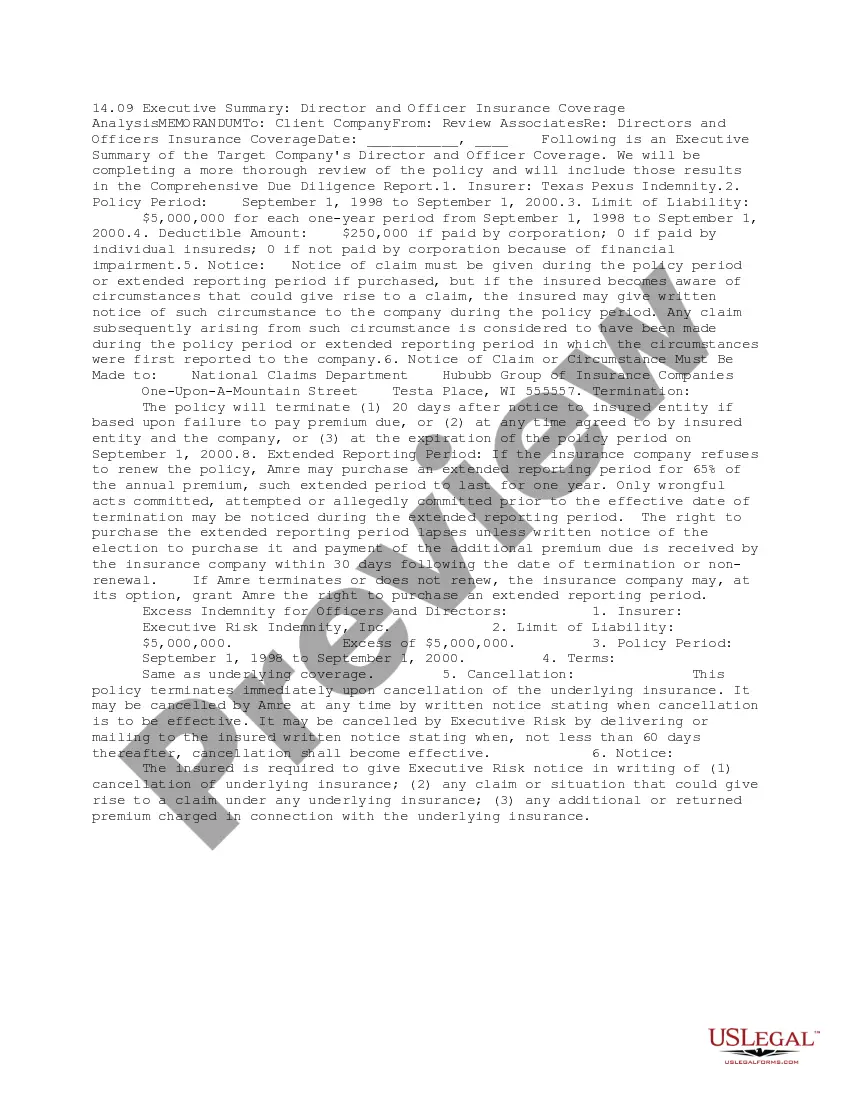
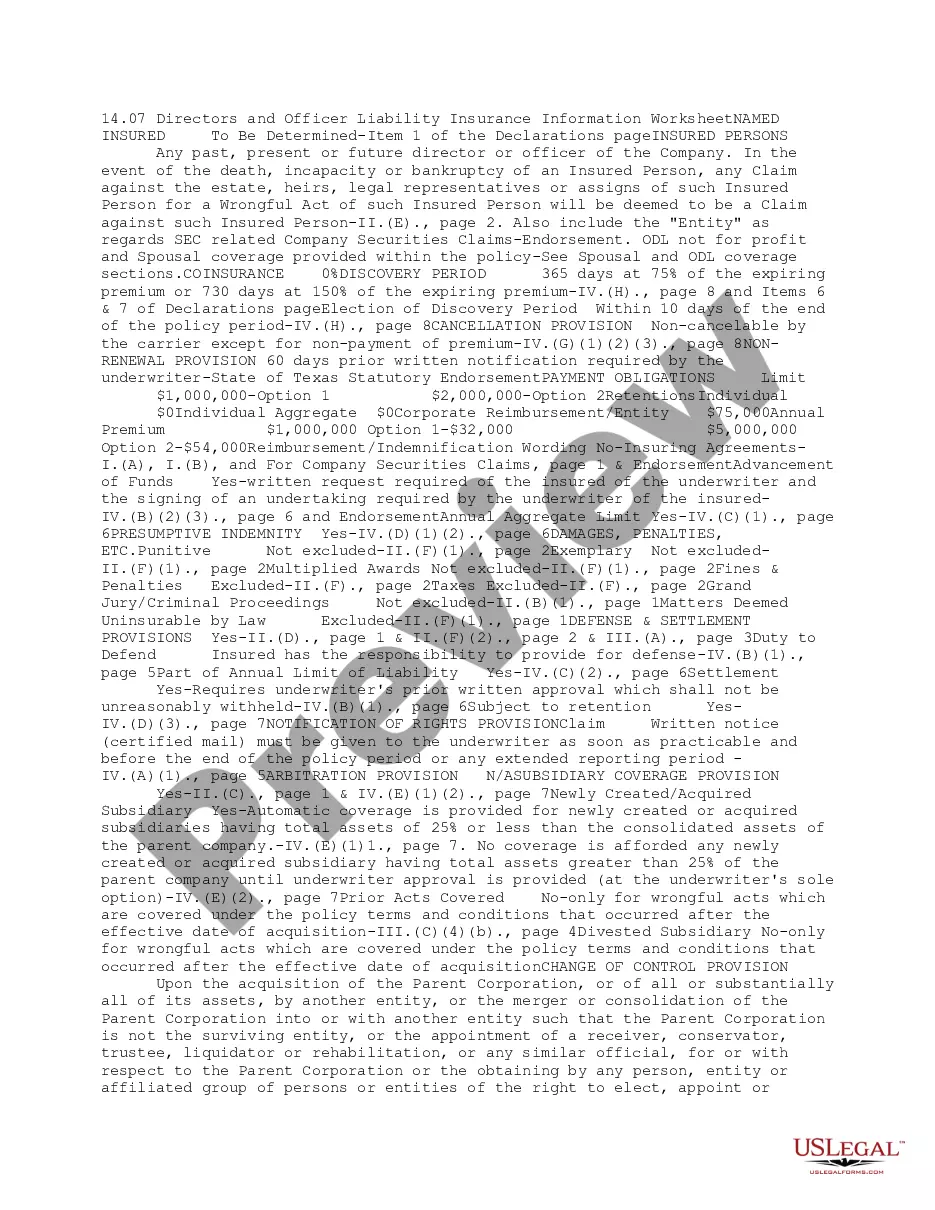
The Executive Summary Director and Officer Insurance Coverage Analysis is a critical due diligence document that summarizes the insurance coverage for directors and officers within a company. This form is particularly valuable during corporate transactions, enabling stakeholders to assess the level of protection available for key personnel. It differs from other insurance analysis forms by focusing on executive coverage specifically, which can be instrumental in risk management and corporate governance.
Key components of this form
- Insurer details, including the name of the insurance company.
- Policy period specifying the coverage duration.
- Limit of liability outlining the maximum payout available.
- Deductible amounts which need to be paid before coverage applies.
- Terms regarding notice of claims and circumstances that may lead to claims.
- Termination conditions that can end coverage.
- Details about the extended reporting period, if applicable.
Common use cases
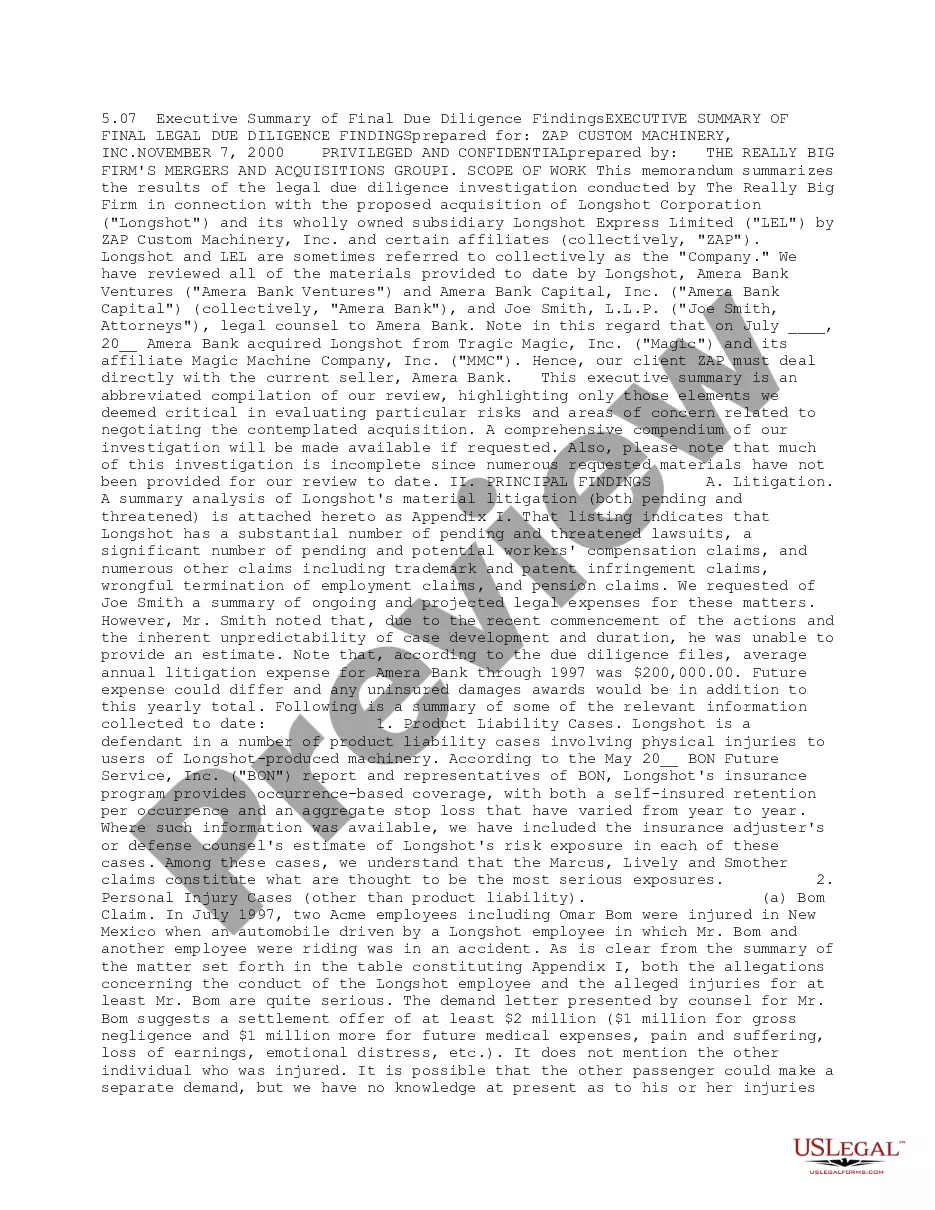
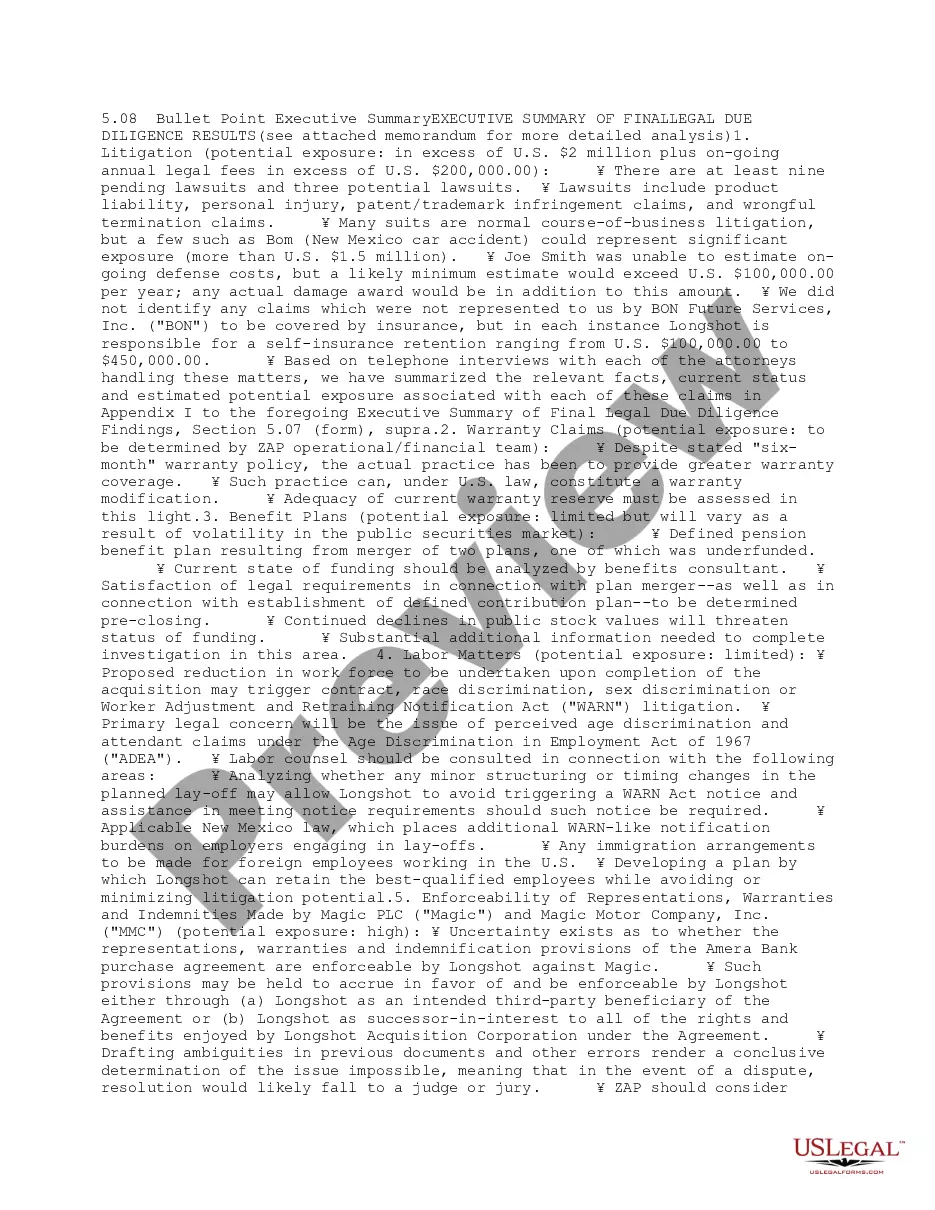
This form should be used when conducting a due diligence review of a company's insurance coverage for its directors and officers. It is particularly relevant in situations such as mergers, acquisitions, or other significant corporate transactions where understanding the risk exposure of leadership personnel is essential. Additionally, it can be used to evaluate existing coverage for annual reviews and to determine potential gaps in protection.
Who needs this form
This form is intended for:
- Corporate executives and board members seeking to understand their insurance coverage.
- Legal and compliance teams involved in corporate governance and risk management.
- Mergers and acquisitions advisors conducting due diligence.
- Insurance brokers assisting companies in evaluating their director and officer insurance policies.
How to complete this form
- Identify the insurer and enter the company name.
- Specify the policy period by entering the start and end dates.
- Enter the limit of liability to reflect the covered amount for potential claims.
- List the deductible amounts applicable under different circumstances.
- Document any notices regarding claims or circumstances that could lead to a claim.
- Outline the termination conditions based on the policy provisions.
Does this form need to be notarized?
This form does not typically require notarization unless specified by local law. Users should ensure compliance with any state regulations that may necessitate notarization for specific insurance documents.
Get your form ready online
Our built-in tools help you complete, sign, share, and store your documents in one place.
Make edits, fill in missing information, and update formatting in US Legal Forms—just like you would in MS Word.
Download a copy, print it, send it by email, or mail it via USPS—whatever works best for your next step.
Sign and collect signatures with our SignNow integration. Send to multiple recipients, set reminders, and more. Go Premium to unlock E-Sign.
If this form requires notarization, complete it online through a secure video call—no need to meet a notary in person or wait for an appointment.
We protect your documents and personal data by following strict security and privacy standards.

Make edits, fill in missing information, and update formatting in US Legal Forms—just like you would in MS Word.

Download a copy, print it, send it by email, or mail it via USPS—whatever works best for your next step.

Sign and collect signatures with our SignNow integration. Send to multiple recipients, set reminders, and more. Go Premium to unlock E-Sign.

If this form requires notarization, complete it online through a secure video call—no need to meet a notary in person or wait for an appointment.

We protect your documents and personal data by following strict security and privacy standards.
Typical mistakes to avoid
- Failing to update the policy period after renewal.
- Not documenting changes in deductible amounts or coverage limits.
- Ignoring the importance of detailed claimant notice instructions.
- Overlooking the necessity to inform the insurer about potential claims in a timely manner.
Benefits of completing this form online
- Easy access to professionally drafted documents from licensed attorneys.
- Ability to download and customize forms to meet specific needs.
- Convenience of completing the form at your own pace and from any location.
- Reliable updates to ensure compliance with current laws and regulations.
Looking for another form?
Form popularity
FAQ
While the D&O policy is in place, current, former and future employees are covered.Even after a director leaves the board, a lawsuit concerning their actions while on the board is covered under D&O insurance. Directors should speak with their employers about which type of policy they carry.
Directors and officers (D&O) liability insurance protects the personal assets of corporate directors and officers, and their spouses, in the event they are personally sued by employees, vendors, competitors, investors, customers, or other parties, for actual or alleged wrongful acts in managing a company.
Directors and Officers (D&O) insurance policies are a type of liability insurance for losses suffered as a result of the actions of a company's board of directors and executives. Directors and officers owe a duty of care to the company's shareholders, customers and employees.
Directors & officers insurance (D&O) is liability insurance that covers the directors and officers of the company against lawsuits alleging a breach of fiduciary duty. A company pays for this coverage so executives can serve confidently as leaders of their organization without fear of personal financial loss.
Directors and officers (D&O) liability insurance protects the personal assets of corporate directors and officers, and their spouses, in the event they are personally sued by employees, vendors, competitors, investors, customers, or other parties, for actual or alleged wrongful acts in managing a company.
D&O insurance does cover2026"The type of D&O lawsuits (include) claims of negligence and allegations of mismanagement on behalf of the board; housing discriminatory complaints, usually associated with a denial of a purchase/sublet application involving a designated minority class; employment discrimination, sexual
D&O insurance will not provide coverage for what many would consider the worst acts of the directors or officers; dishonesty, fraud, criminal or malicious acts committed deliberately.D&O insurance will not provide coverage for bodily or personal injury of a person or physical damage to a third person's property.
Management liability, also known as directors and officers' insurance, includes extra coverage for the individual directors or officers of a business for their official company actions.Special crime insurance includes kidnap, ransom, and extortion exposures.
D&O insurance will not provide coverage for what many would consider the worst acts of the directors or officers; dishonesty, fraud, criminal or malicious acts committed deliberately.D&O insurance will not provide coverage for bodily or personal injury of a person or physical damage to a third person's property.