Utility Easement and Right of Way
Overview of this form
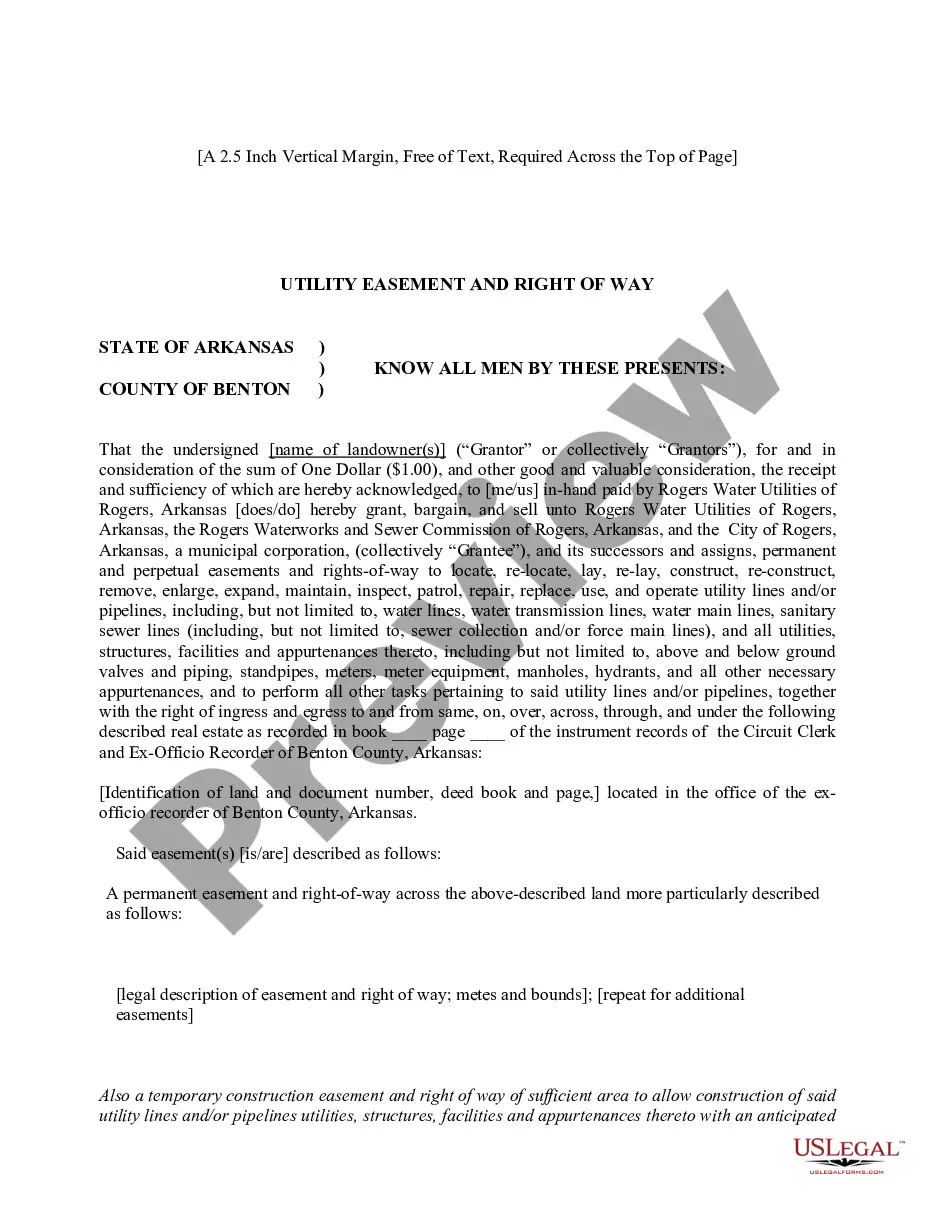
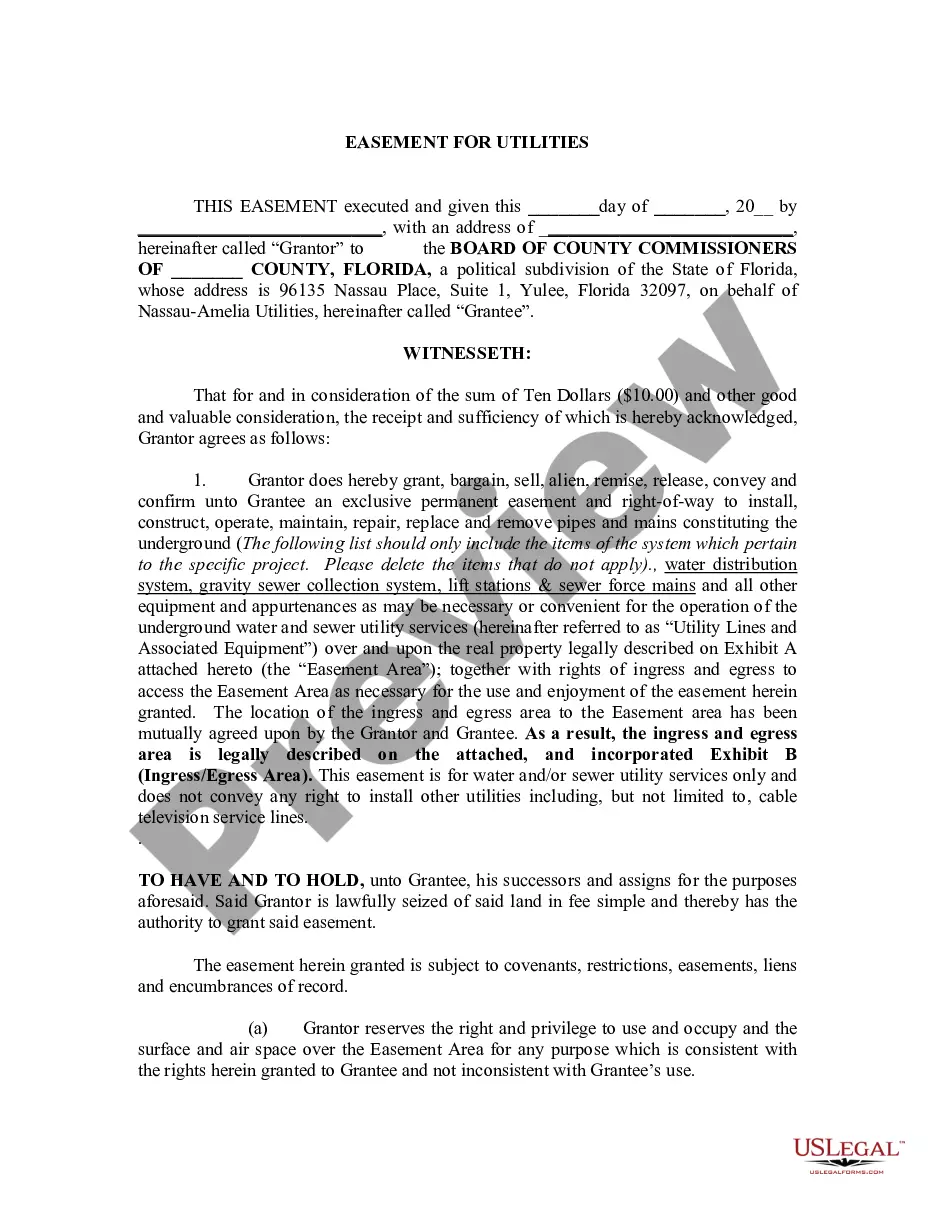
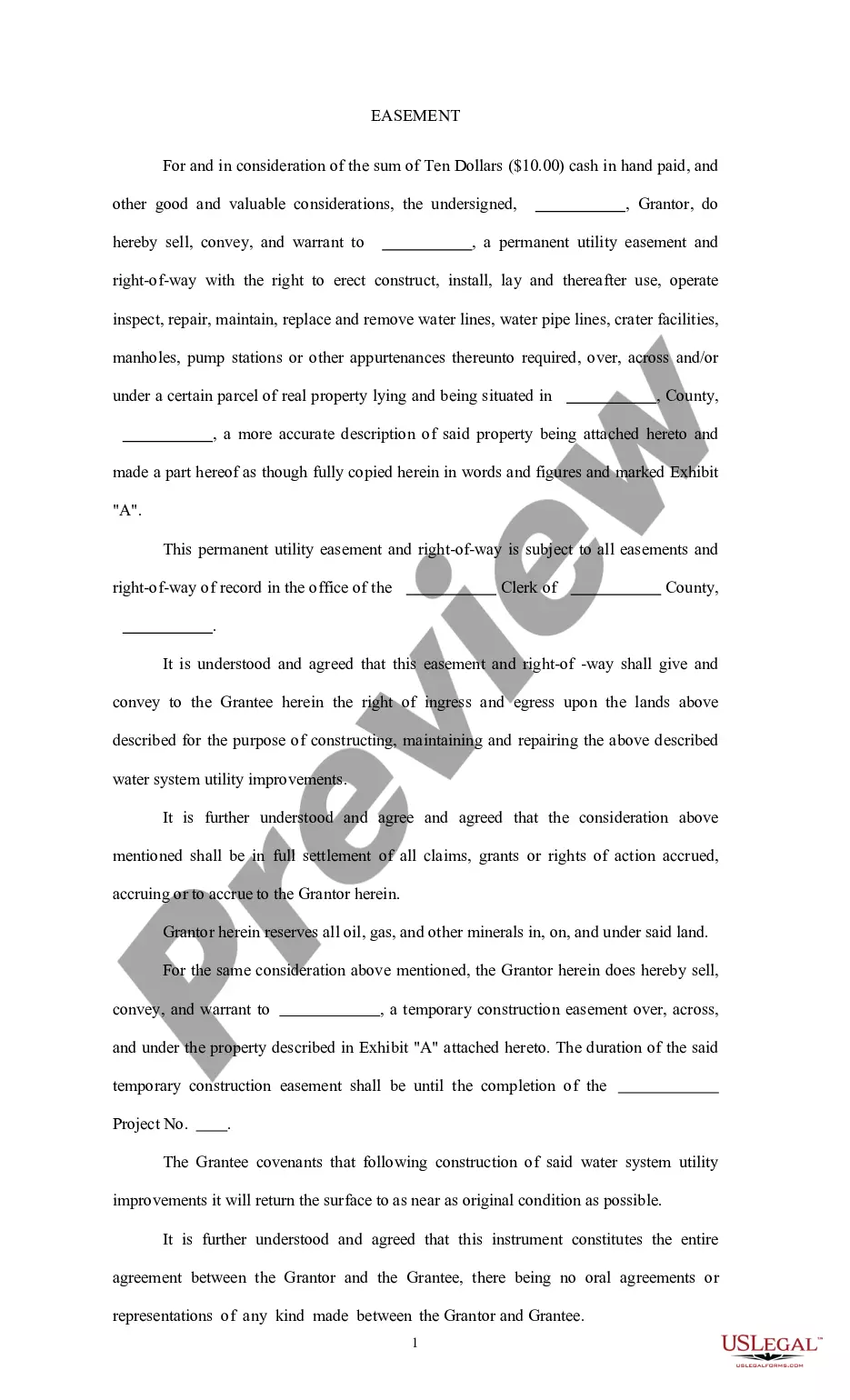
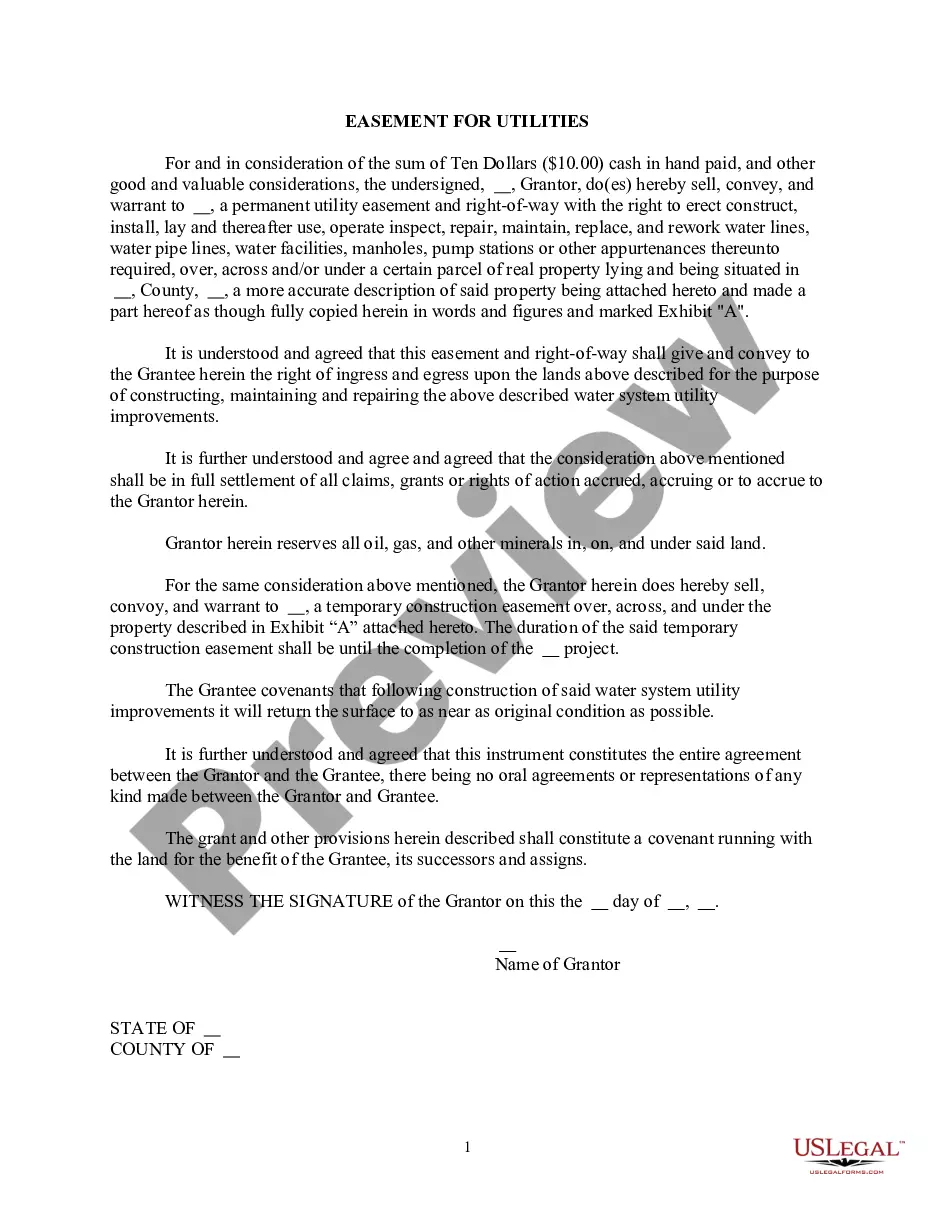
The Utility Easement and Right of Way form is a legal document that grants another party specific rights to use a tract of land for utility purposes. Unlike a lease, this form does not transfer possession or ownership of the property; it solely allows for the installation and maintenance of utility lines and pipelines. This form is essential for landowners who want to accommodate utility companies while retaining ownership of the land.
Key parts of this document
- Identification of parties: Clearly specifies the landowner (Grantor) and the utility company (Grantee).
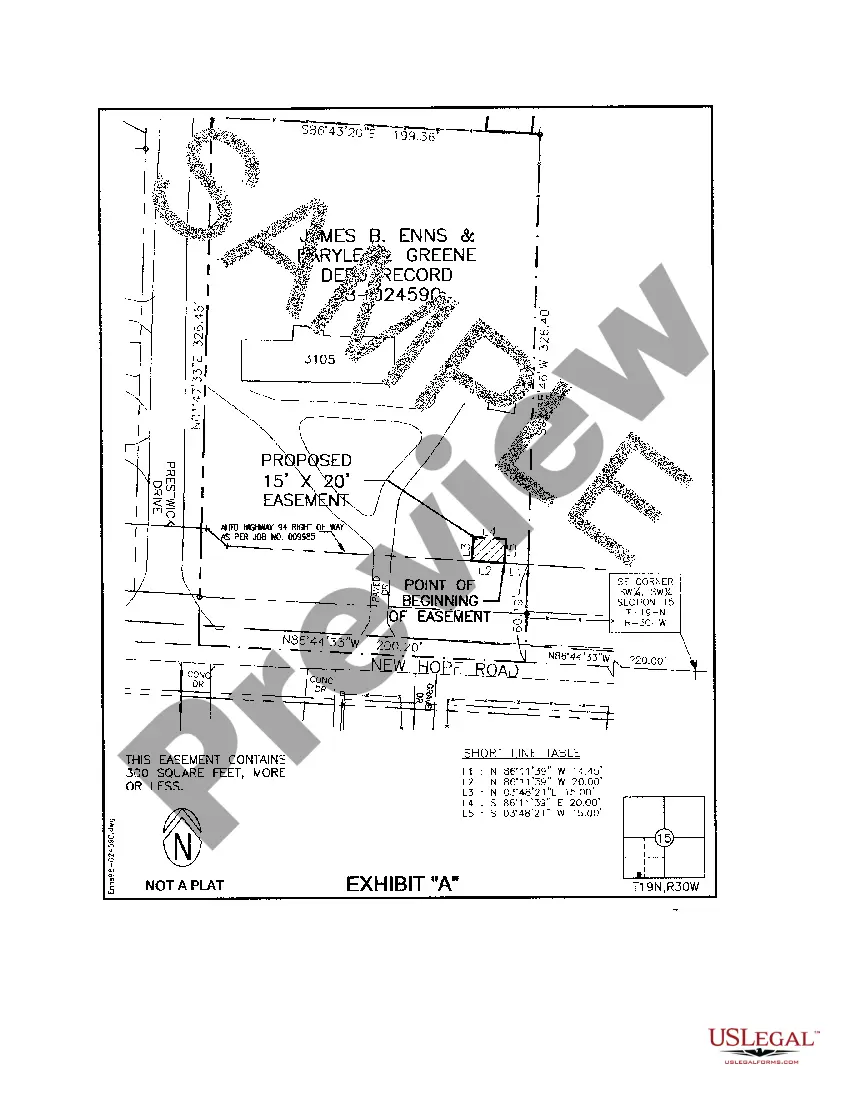
- Property description: Details the specific land involved in the easement.
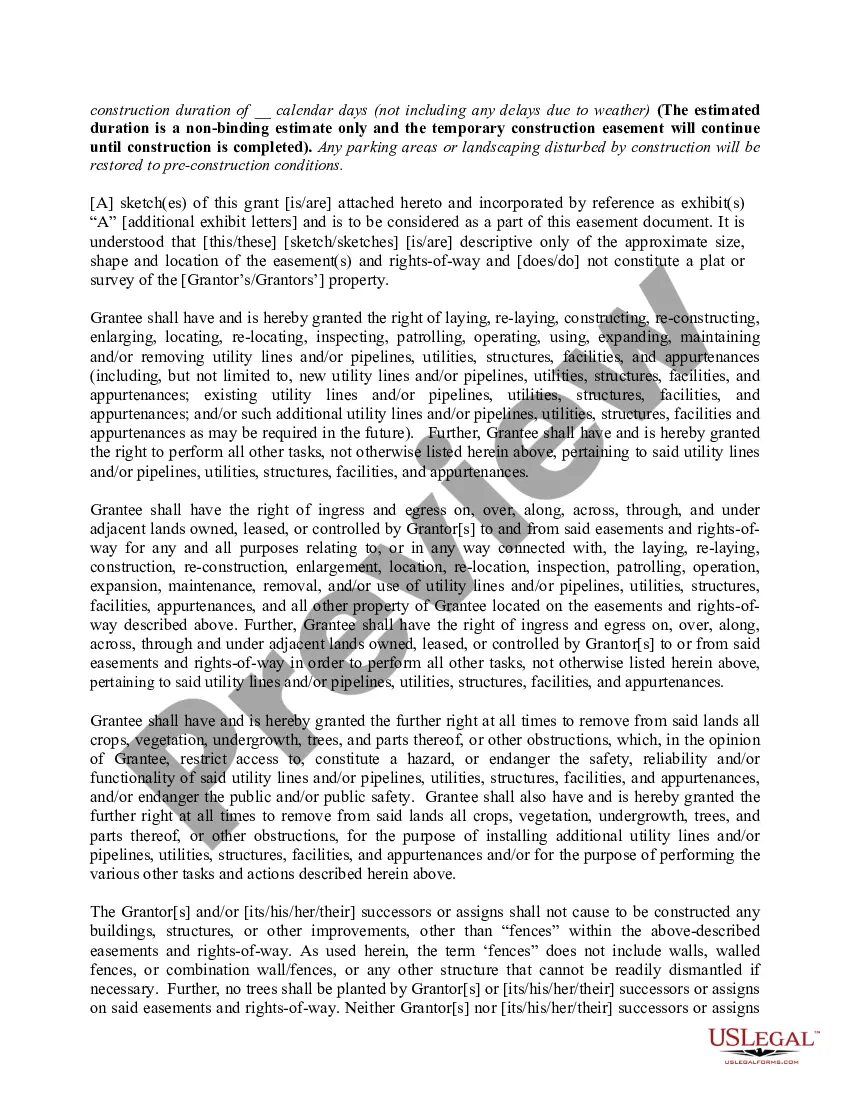
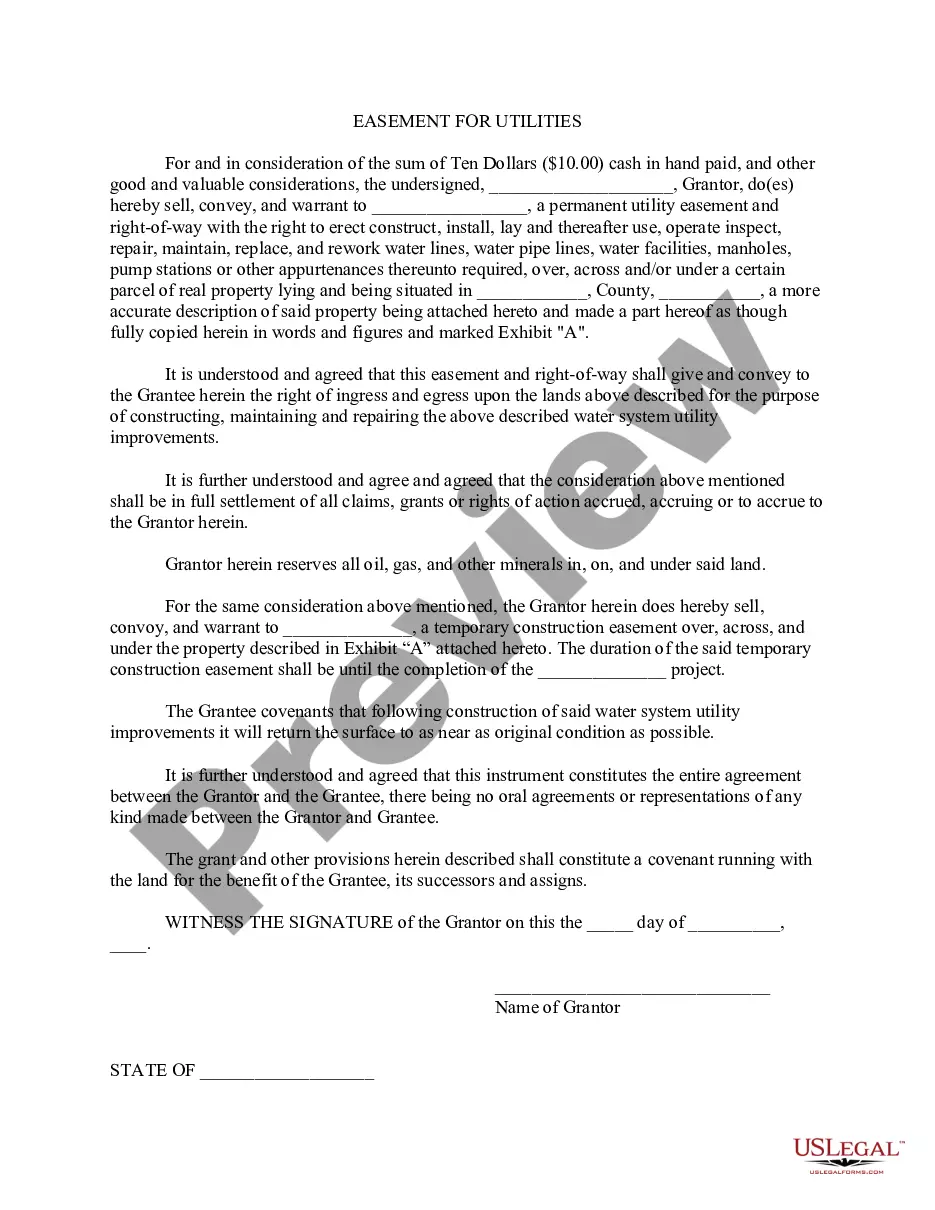
- Scope of easement: Outlines activities permitted by the Grantee, such as laying, maintaining, and removing utility lines.
- Duration of easement: Defines whether the easement is permanent or temporary, with terms regarding construction duration.
- Removal of obstructions: Grants Grantee the right to remove trees and vegetation that impede utility maintenance.
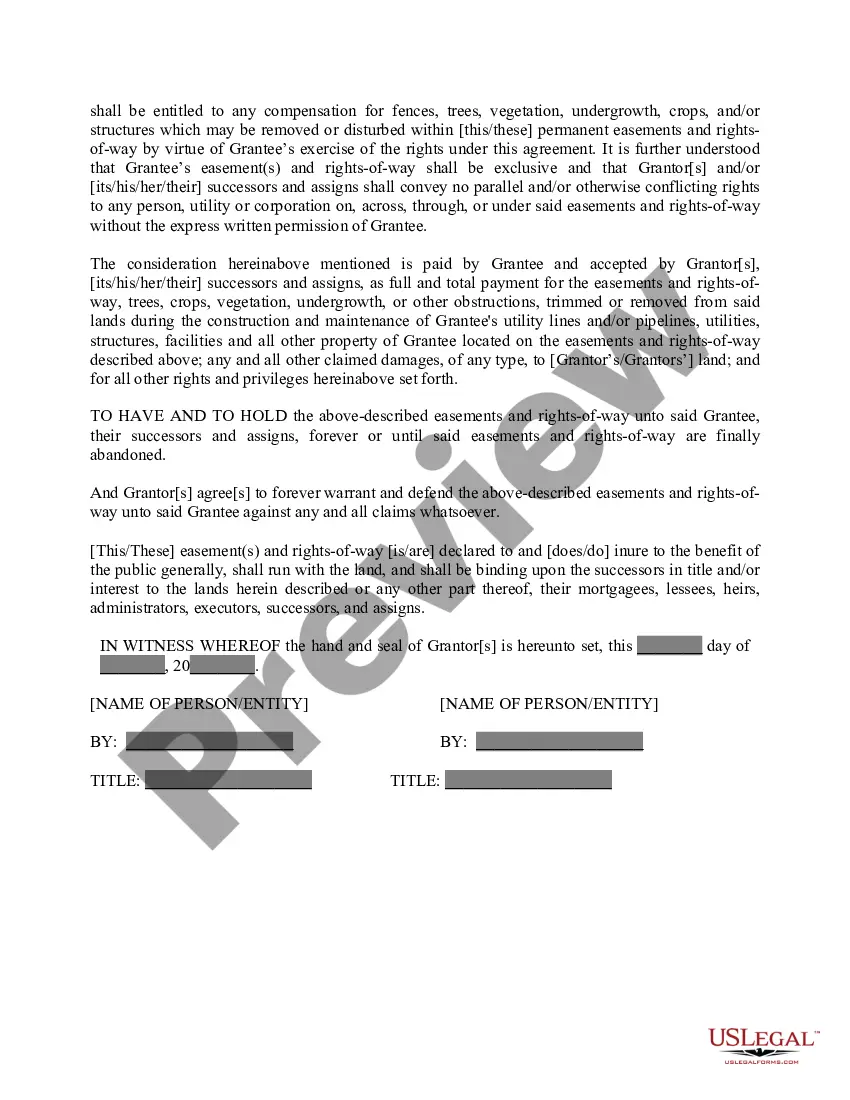
- Indemnification clause: Addresses liability and ensures that the landowner is not entitled to compensation for removed structures like crops or fencing.

When to use this form
This form should be used when a utility company needs to access private land to install or maintain utility services, such as water, sewage, or electricity. It is an important document for landowners who may be approached by utility providers for necessary access and want to formalize the arrangement legally.
Who this form is for
Eligibility and intended audience:
- Property owners granting utility access.
- Utility companies requiring easement rights for infrastructure repairs or installations.
- Landowners looking to protect their property rights while accommodating utility services.
Instructions for completing this form
Steps to complete the Utility Easement and Right of Way form:
- Identify the parties involved: Enter the names of the Grantor(s) and Grantee.
- Describe the property: Provide a clear legal description of the land that will be subject to the easement.
- Detail the scope of the easement: Specify the rights granted to the utility company regarding construction and maintenance activities.
- Sign and date: Ensure that all parties sign and date the document to make it enforceable.
- Notarize if required: Confirm whether notarization is necessary based on local laws before submitting the form.
Does this document require notarization?
This form does not typically require notarization unless specified by local law. However, having it notarized can enhance its validity and enforceability in legal disputes.
Get your form ready online
Our built-in tools help you complete, sign, share, and store your documents in one place.
Make edits, fill in missing information, and update formatting in US Legal Forms—just like you would in MS Word.
Download a copy, print it, send it by email, or mail it via USPS—whatever works best for your next step.
Sign and collect signatures with our SignNow integration. Send to multiple recipients, set reminders, and more. Go Premium to unlock E-Sign.
If this form requires notarization, complete it online through a secure video call—no need to meet a notary in person or wait for an appointment.
We protect your documents and personal data by following strict security and privacy standards.

Make edits, fill in missing information, and update formatting in US Legal Forms—just like you would in MS Word.

Download a copy, print it, send it by email, or mail it via USPS—whatever works best for your next step.

Sign and collect signatures with our SignNow integration. Send to multiple recipients, set reminders, and more. Go Premium to unlock E-Sign.

If this form requires notarization, complete it online through a secure video call—no need to meet a notary in person or wait for an appointment.

We protect your documents and personal data by following strict security and privacy standards.
Common mistakes
Common mistakes to avoid:
- Failing to properly identify the property can lead to disputes over easement boundaries.
- Not specifying the scope of work could result in unauthorized activities on the property.
- Leaving signatures or dates incomplete can render the document invalid.
- Neglecting to understand state-specific requirements can lead to legal challenges.
Benefits of completing this form online
Benefits of using this form online:
- Convenient access to ready-to-use templates that simplify the legal process.
- Editable fields allow customization to reflect specific agreements.
- Reliable drafts tailored by licensed attorneys to ensure legal compliance.
Looking for another form?
Form popularity
FAQ
Under Georgia utility easement law, the government has the right to easements of private property in order to , expand, and maintain utilities such as power lines. Very often, new construction can impact the location of existing utility lines.
An easement is a non-possessory, limited right of use over the land of another. Once an easement is granted, neither the grantor nor the grantee can change its location, size, or scope without the consent of the other party.
Utility easements are often taken when there is a road widening project and a power lines easement is needed to account for existing power lines being pushed onto your property. Some other examples include gas, cable, and telephone pole easements.
Utility easements 6 feet in width are permissible along rear property lines, in cases where the rear property lines abut unplatted land.