Right of Way Easement
About this form
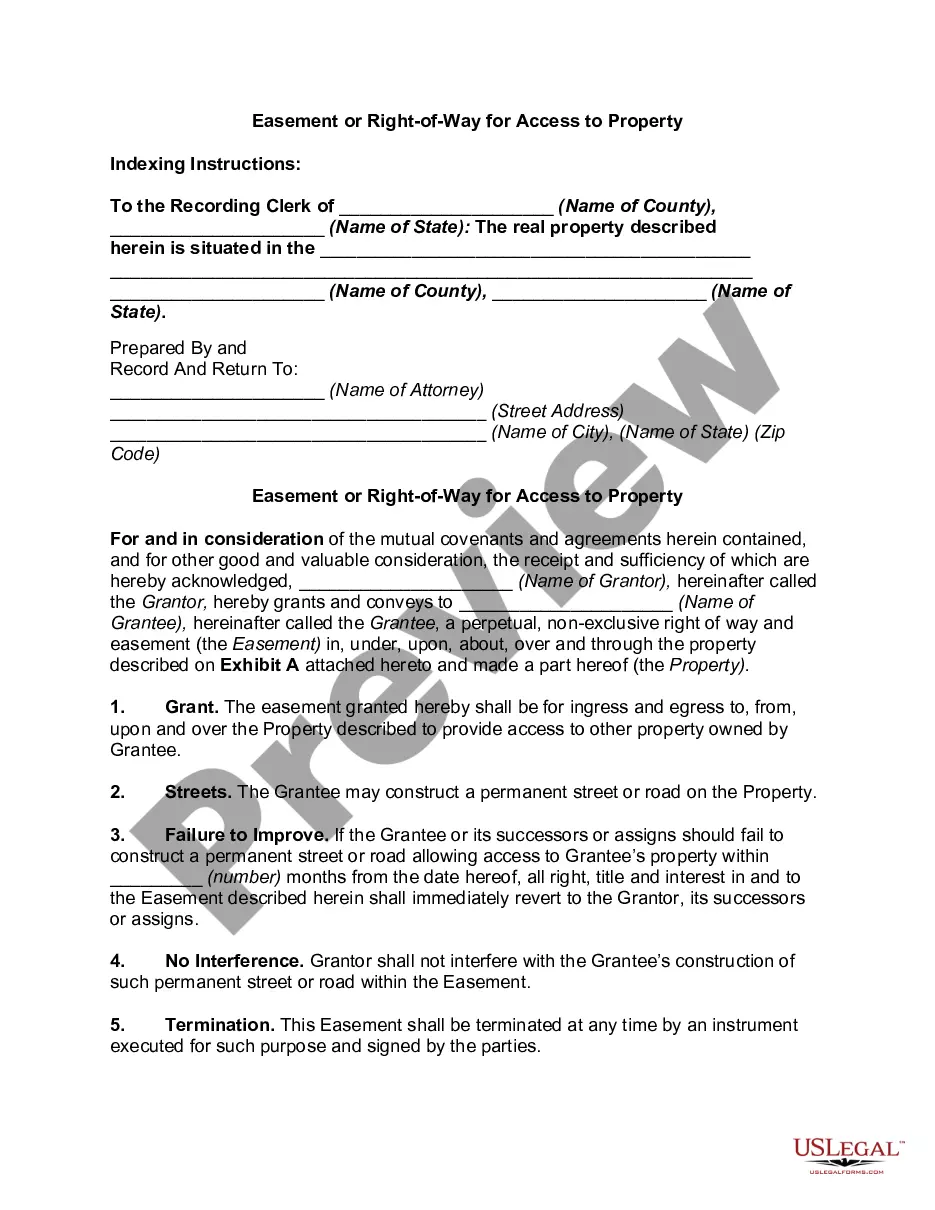
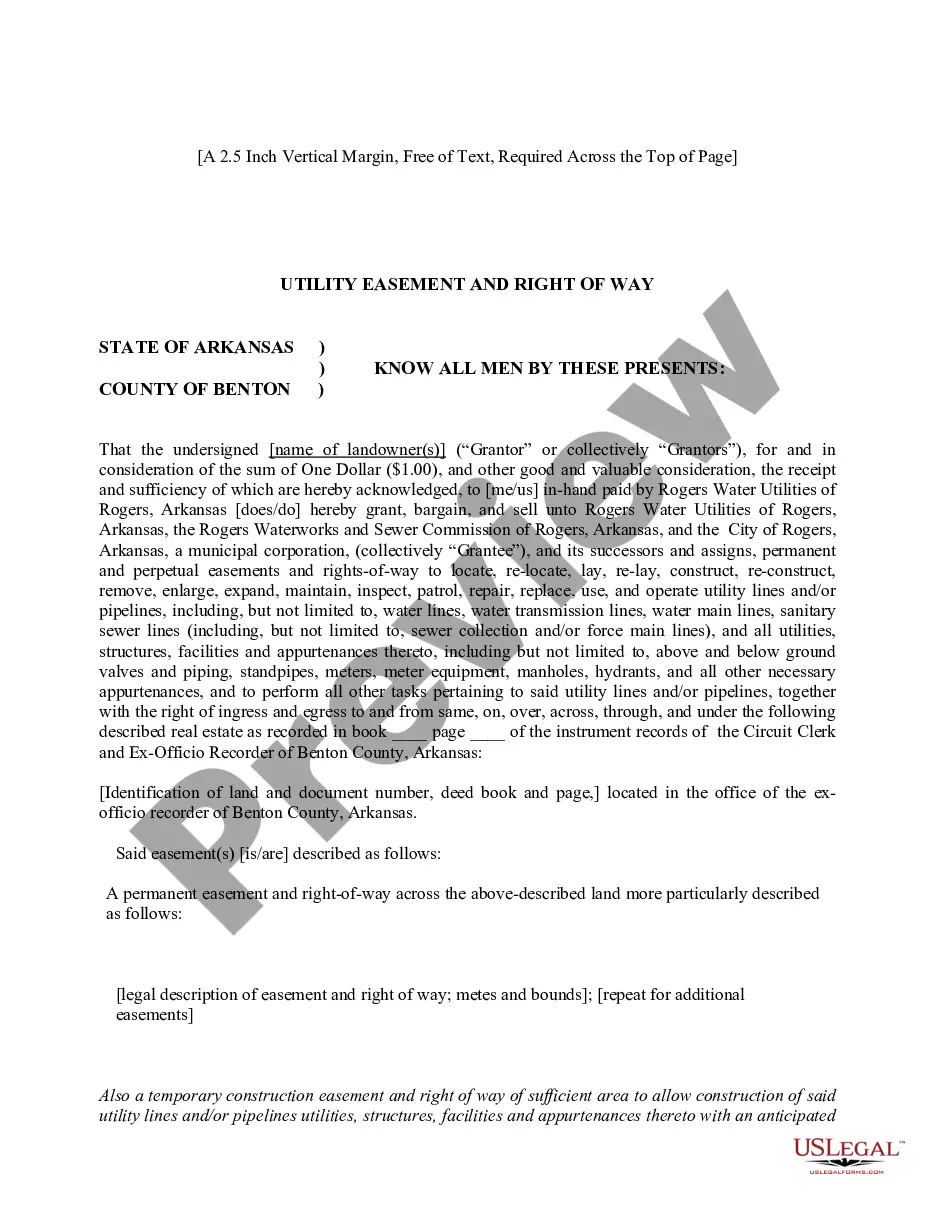
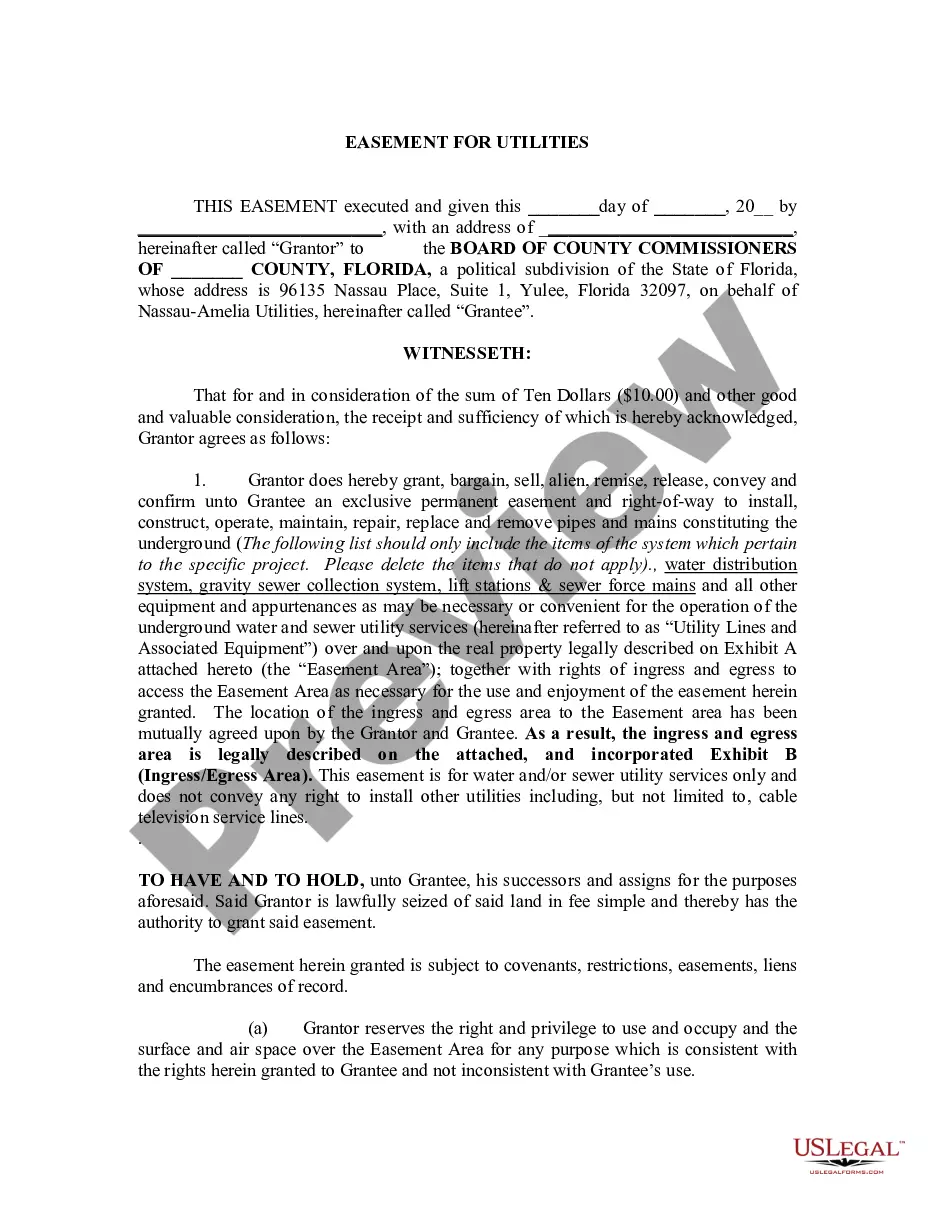
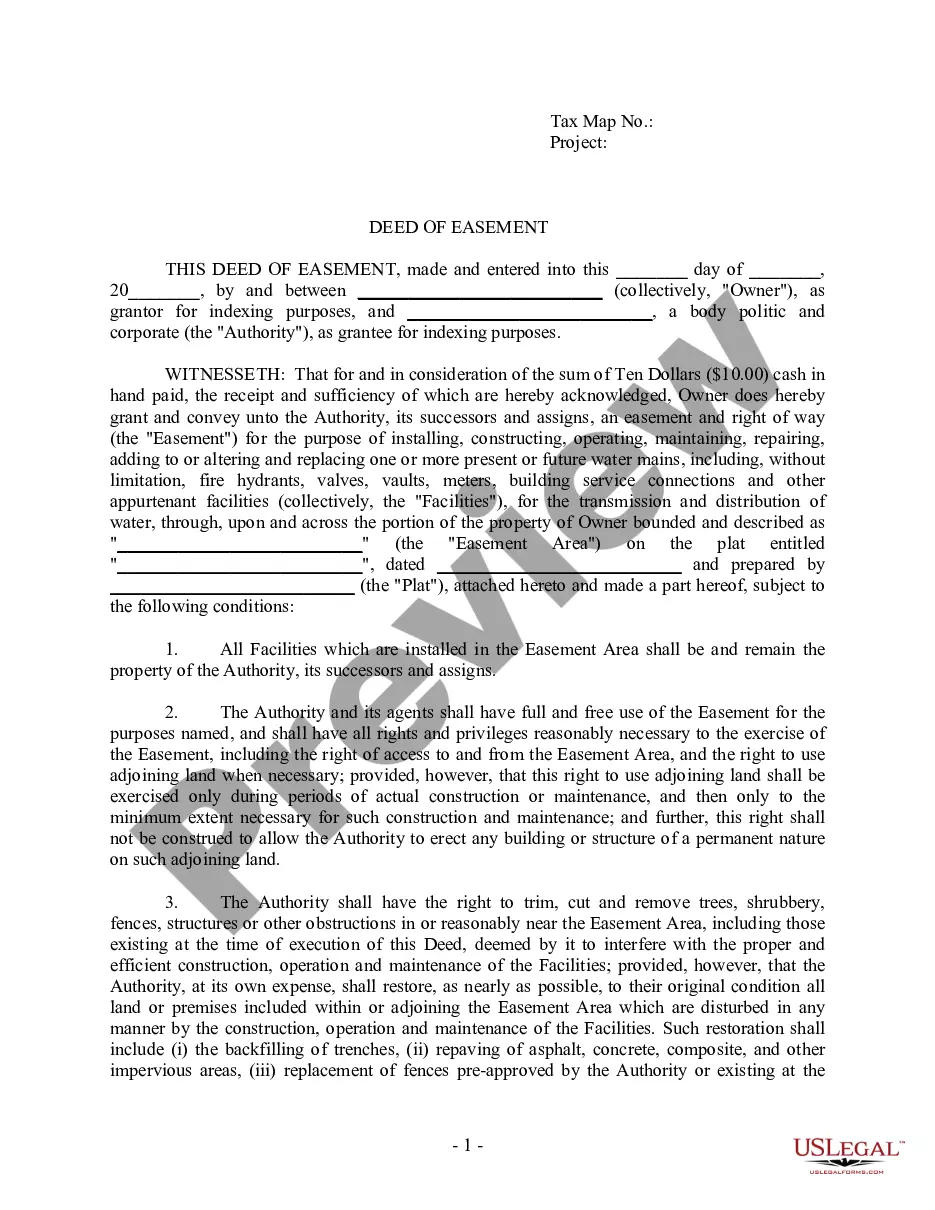
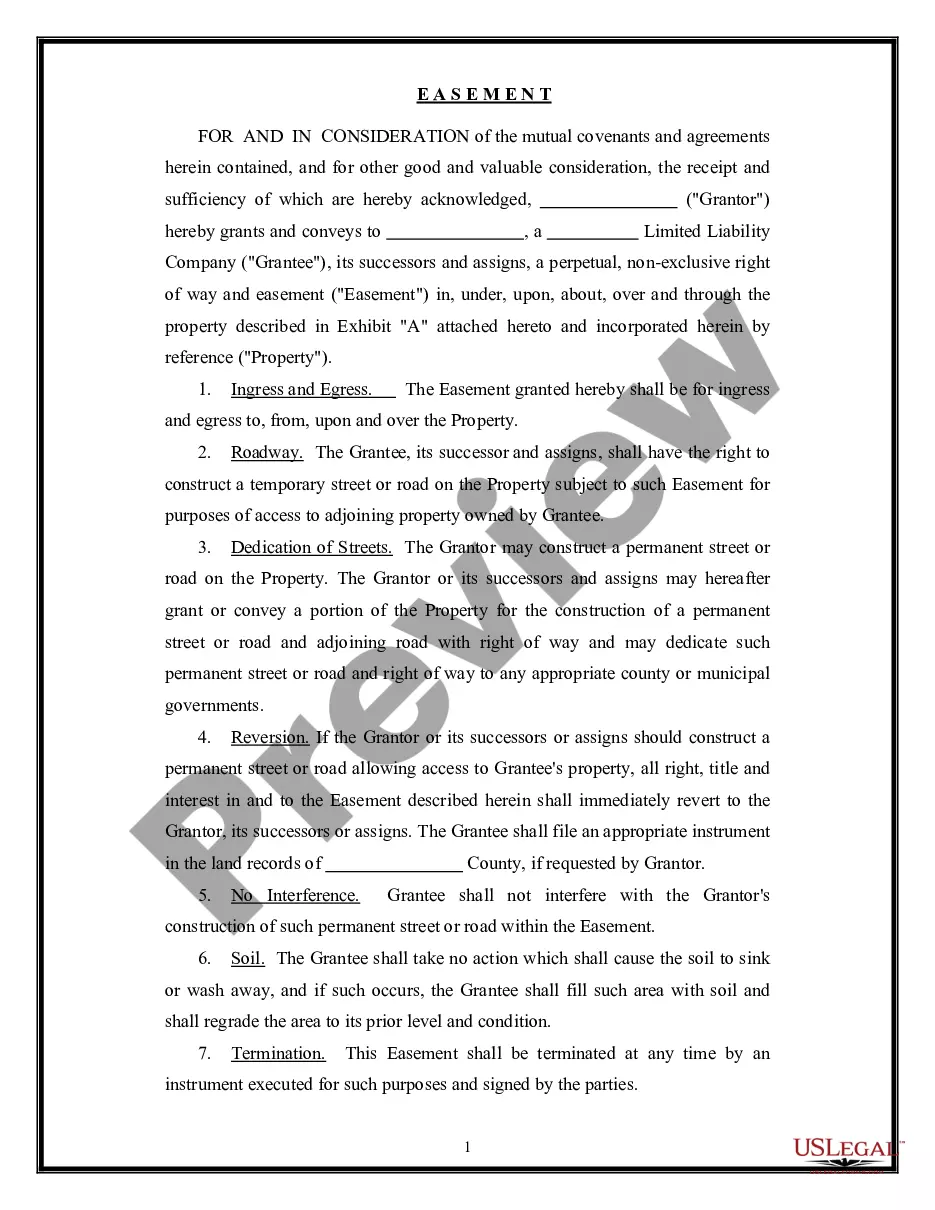
The Right of Way Easement is a legal document allowing one party (the Grantee) to utilize a specific area of land owned by another party (the Grantor) for a particular purpose, typically related to utilities. This form is distinct from property leasing agreements, as it does not transfer possession of the land but grants specific rights to access and use it for defined utility installations, like water lines.
Key parts of this document
- Identification of Grantors and Grantee, including their legal names.
- A description of the easement area, specifying its width and purpose.
- Recital of the consideration paid for the easement, typically a token amount.
- Rights of ingress and egress for the Grantee to access the easement area.
- Covenant by the Grantors ensuring ownership and freedom from liens.
- Signature lines for Grantors and acknowledgment by a notary public.
When to use this document
This form is useful in situations where a property owner needs to allow a utility company or individual to install and maintain lines or pipelines across their property without transferring ownership. It may be used for water, gas, or electrical installations that require continuous access for maintenance and repair.
Who needs this form
- Property owners looking to grant usage rights for specific land areas.
- Utility companies needing access to install infrastructure.
- Contractors managing projects that involve temporary or permanent easements.
- Real estate professionals facilitating property agreements.
How to prepare this document
- Identify the parties involved by entering the full names of Grantors and Grantee.
- Specify the property accurately, including any relevant land description and recorded information.
- Enter the consideration amount, confirming it as payment for easement rights.
- Detail the rights of ingress and egress as needed for the specified purpose.
- Complete and sign the form in front of a notary public to ensure legal validity.
Does this document require notarization?
Yes, this form must be notarized to be legally valid. This ensures that the signatures are authenticated and can help prevent disputes over the document's legitimacy. US Legal Forms offers integrated online notarization services, making it easy to notarize your document securely from home without needing to travel.
Get your form ready online
Our built-in tools help you complete, sign, share, and store your documents in one place.
Make edits, fill in missing information, and update formatting in US Legal Forms—just like you would in MS Word.
Download a copy, print it, send it by email, or mail it via USPS—whatever works best for your next step.
Sign and collect signatures with our SignNow integration. Send to multiple recipients, set reminders, and more. Go Premium to unlock E-Sign.
If this form requires notarization, complete it online through a secure video call—no need to meet a notary in person or wait for an appointment.
We protect your documents and personal data by following strict security and privacy standards.

Make edits, fill in missing information, and update formatting in US Legal Forms—just like you would in MS Word.

Download a copy, print it, send it by email, or mail it via USPS—whatever works best for your next step.

Sign and collect signatures with our SignNow integration. Send to multiple recipients, set reminders, and more. Go Premium to unlock E-Sign.

If this form requires notarization, complete it online through a secure video call—no need to meet a notary in person or wait for an appointment.

We protect your documents and personal data by following strict security and privacy standards.
Common mistakes
- Failing to provide a clear description of the easement area.
- Not properly identifying the parties involved in the form.
- Leaving out the notary acknowledgment, which is essential for validity.
- Omitting consideration details, which can lead to misunderstandings.
Benefits of completing this form online
- Convenience of immediate download for quick access.
- Editability allows you to customize the form according to your needs.
- Reliability of professionally drafted templates by licensed attorneys.
- Secure transactions ensure your information remains confidential.
Summary of main points
- The Right of Way Easement is crucial for allowing access to property for utility purposes.
- Clarity in descriptions and parties involved is vital to prevent legal issues.
- Notarization is required for the document to be legally binding.
- Utilizing this form online offers convenience and reliability.
Looking for another form?
Form popularity
FAQ
While the right-of-way is often 33 feet wide, it may be much wider (120 feet or more in some cases), since it extends beyond the paved road and shoulders. Contact the PennDOT District office to find out what the right-of-way width is for a specific location. Q. What is an encroachment?
A privately owned road, commonly called a ?private road,? is a road over which neither the municipality nor the general public has the right to pass by vehicle or on foot. Anyone using or repairing a privately-owned road without the owner's permission is subject to an action by the owner for trespass (see 14 M.R.S.A.
Adverse Possession Definition In Maine, if a person uses a part of another person's property for a period of at least 20 years and satisfies all the other requirements for adverse possession, they can attain ownership of that part. Adverse possession is sometimes referred to as ''squatter's rights.
An easement does not grant a right of possession, as would a deed, but rather, a right to use. In Maine, you will often encounter easements granting travel rights over the land of another or an easement so that power lines or plumbing can connect to one person's property through another's.
Generally, the owner of any easement has a duty to maintain the easement. If the easement is owned by more than one person, or is attached parcels of land under different ownership, each owner must share in the cost of maintaining the easement pursuant to their agreement.
The owner of an estate that has no access to a public road or utility may claim a right of passage over neighboring property to the nearest public road or utility. He is bound to compensate his neighbor for the right of passage acquired and to indemnify his neighbor for the damage he may occasion.
ofway easement grants the holder only the rights as stated in the express easement or granted by court order. Typically the right is simply to cross over the land of another. The easement holder does not have the right to change the nature or location of the rightofway.
Failure to yield; traffic infraction. A person commits a traffic infraction if the person operates a vehicle or a bicycle past a yield sign and fails to yield the right-of-way to a vehicle, person riding a bicycle or pedestrian proceeding on the intersecting way.