Domestic Subsidiary Security Agreement regarding ratable benefit of Lenders and Agent
Understanding this form
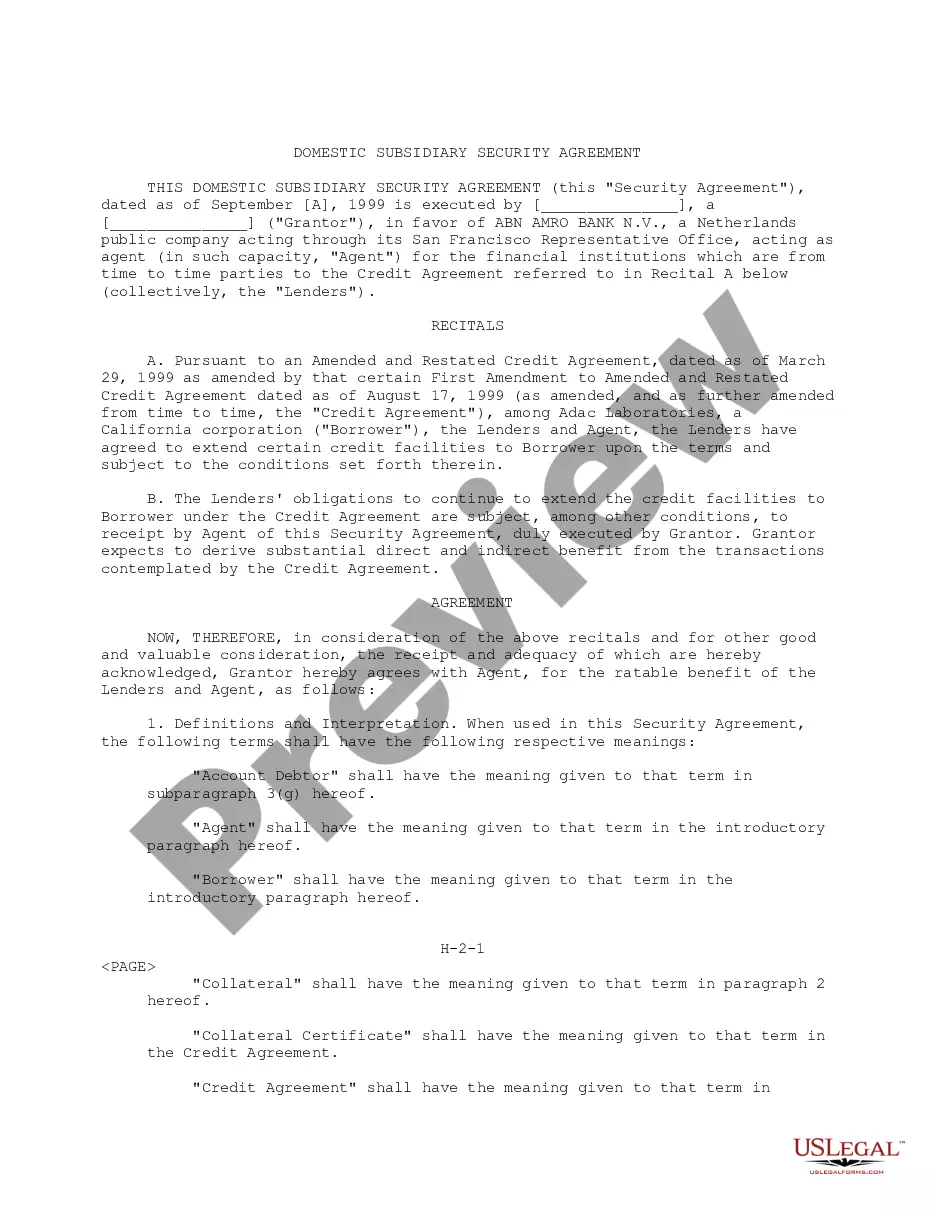
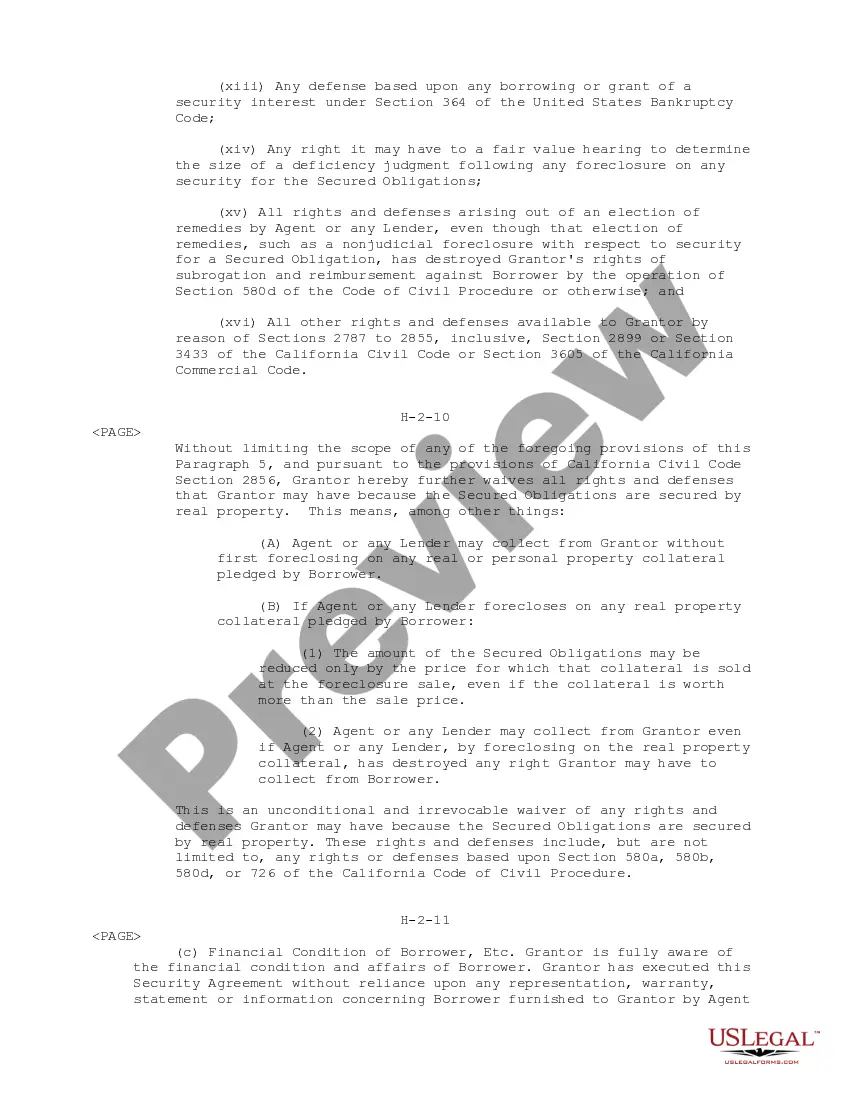
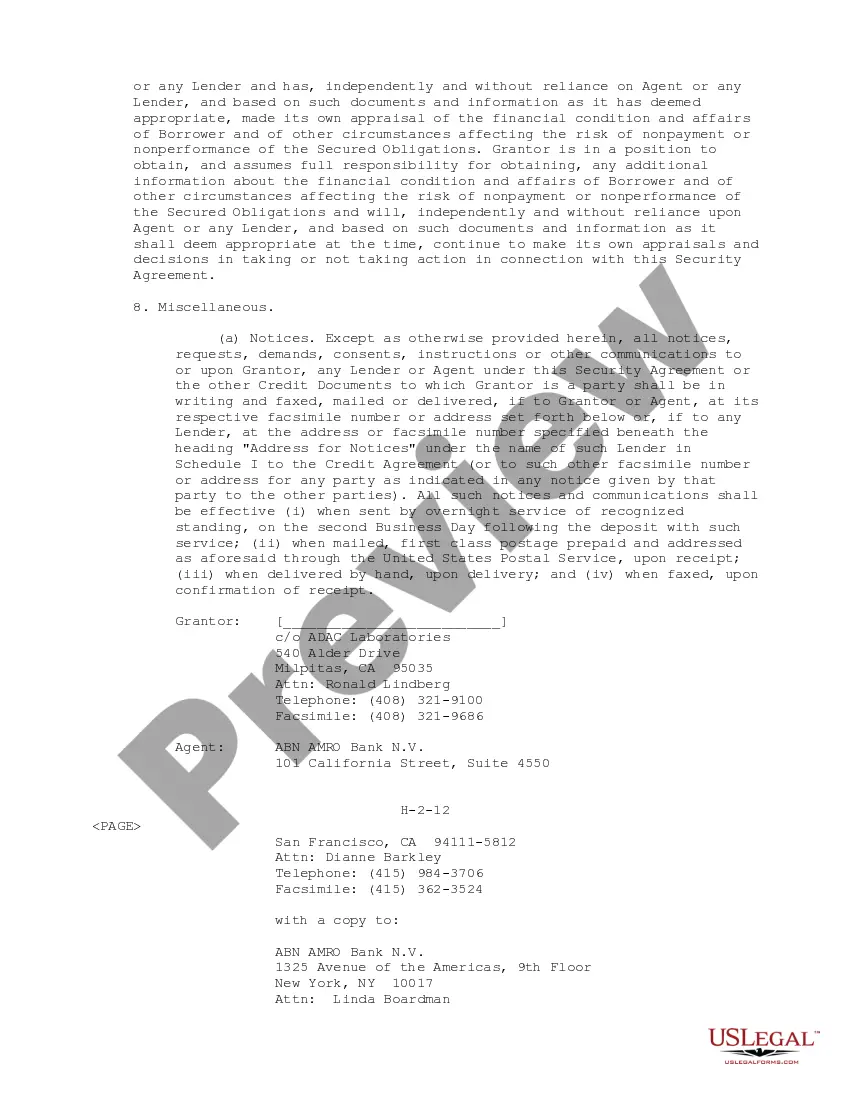
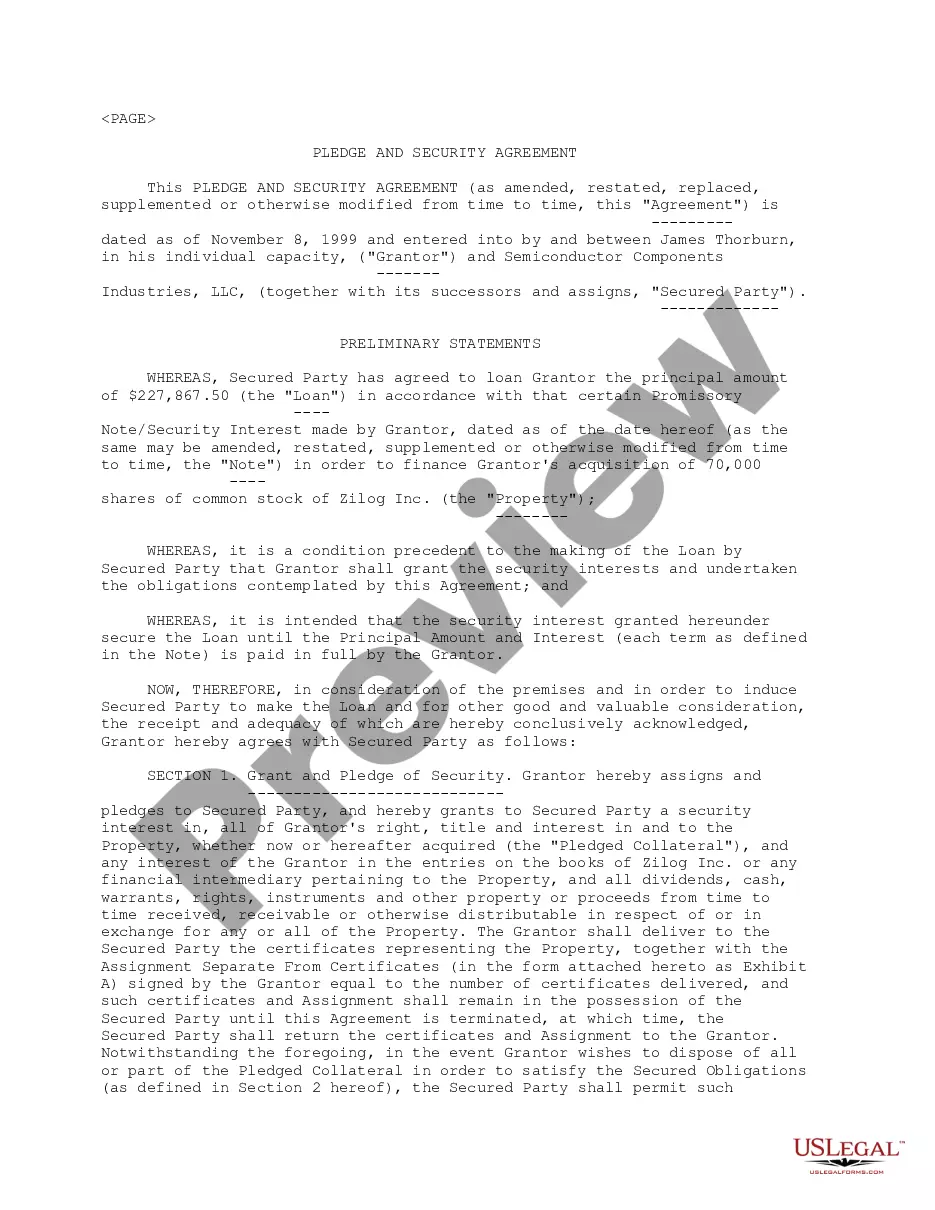
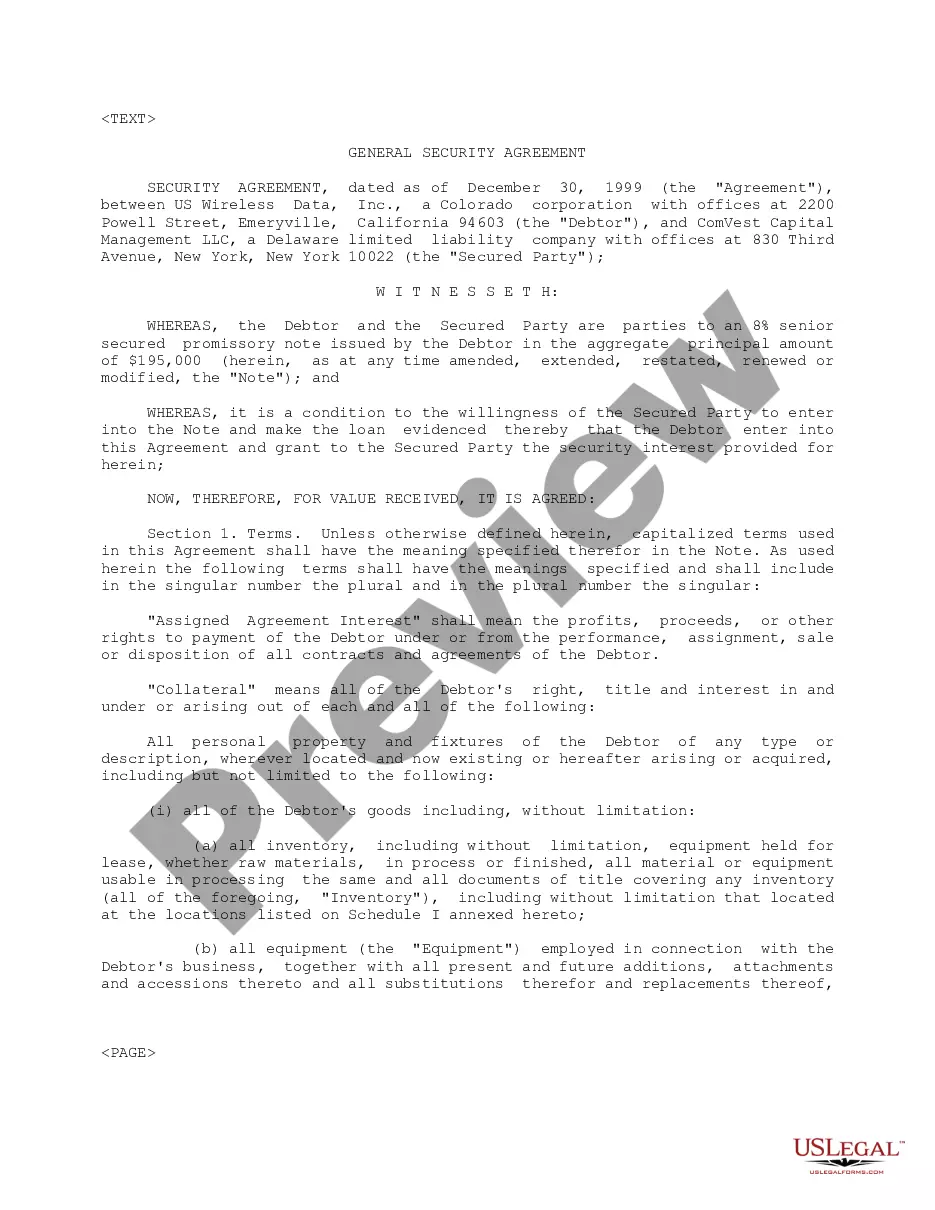
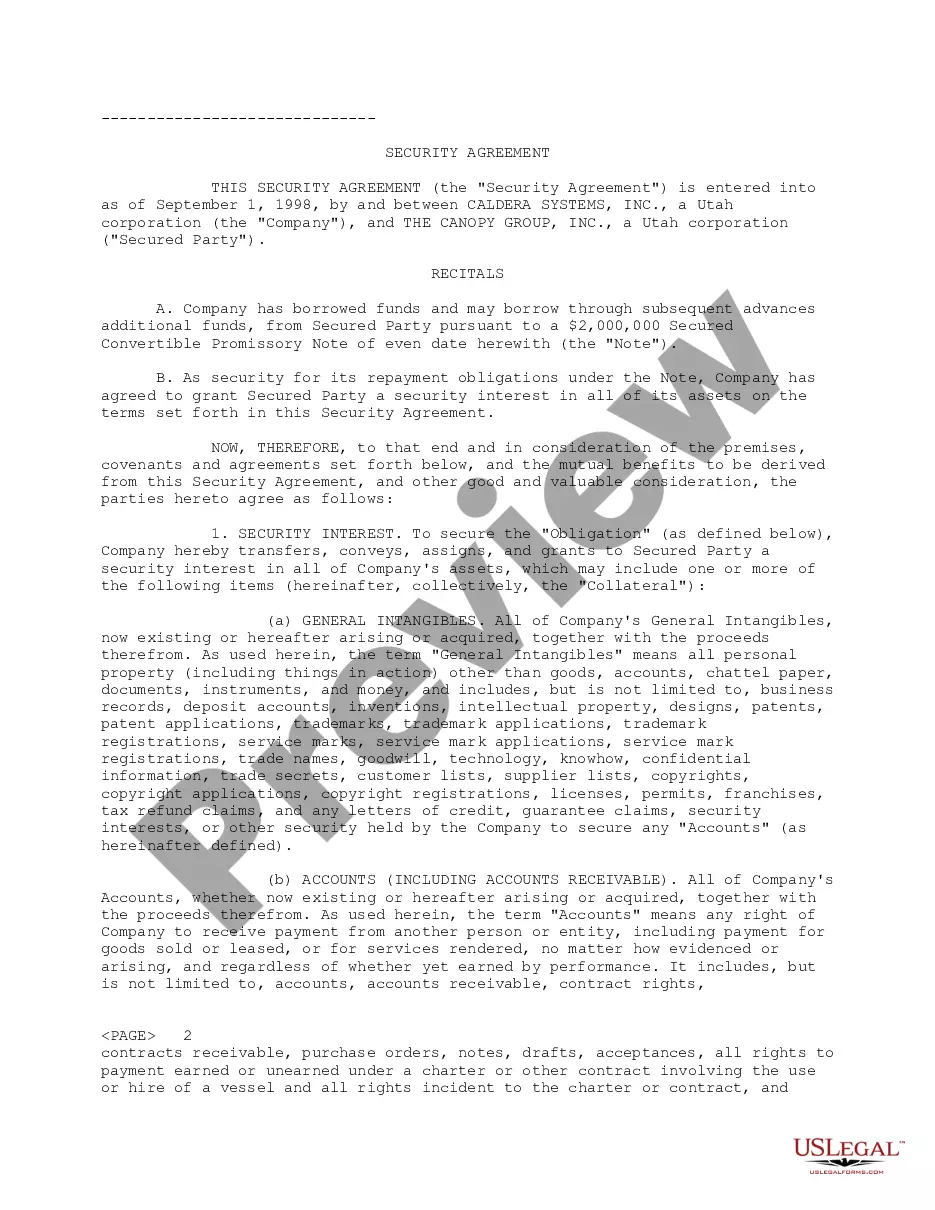
The Domestic Subsidiary Security Agreement is a legal document that establishes a security interest between a grantor and a lender, specifically ABN AMRO Bank, N.V. It ensures that the lenders have a claim on the grantor's collateral in the event of default under the associated credit agreement. This agreement is particularly important for entities that seek to secure financial backing by pledging assets to reassure lenders of their loan's security. Unlike other security agreements, this specific form is tailored for domestic subsidiaries, detailing the collateral to be secured and the obligations of the parties involved.
Key components of this form
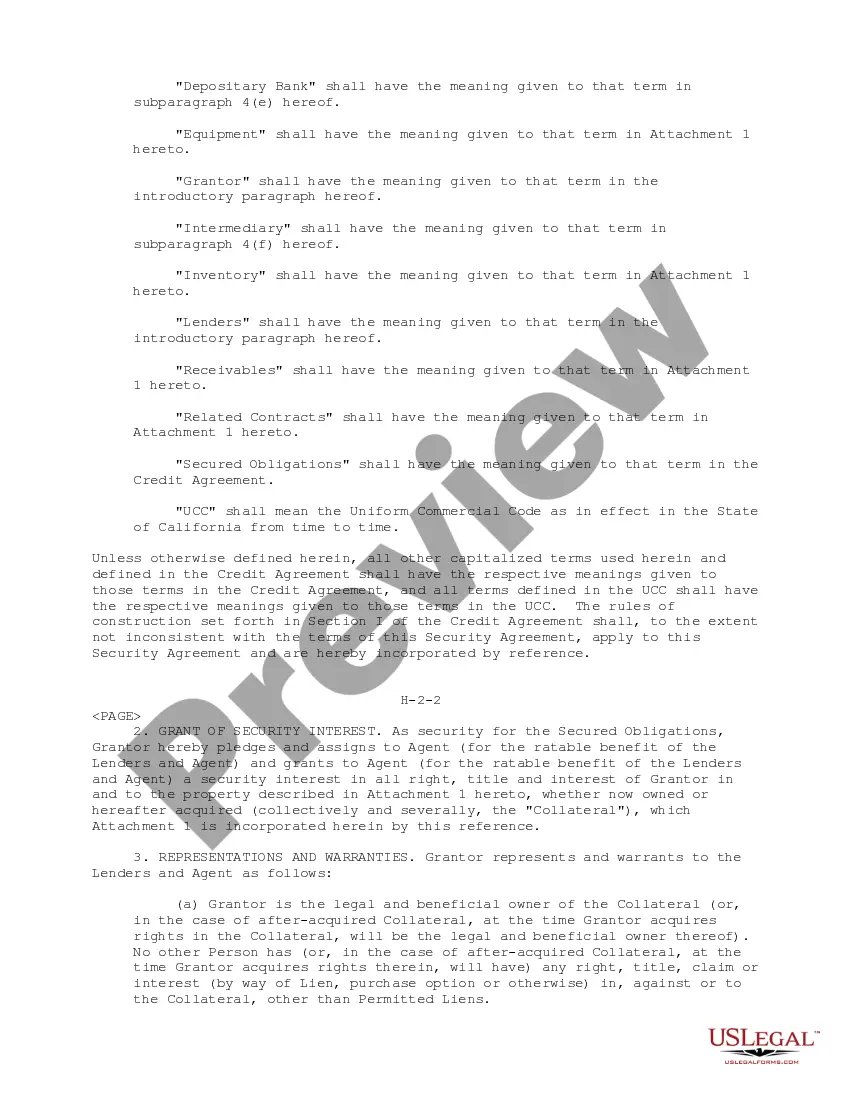
- Definitions and interpretations of essential terms used in the agreement.
- Details outlining the grant of a security interest in specified collateral.
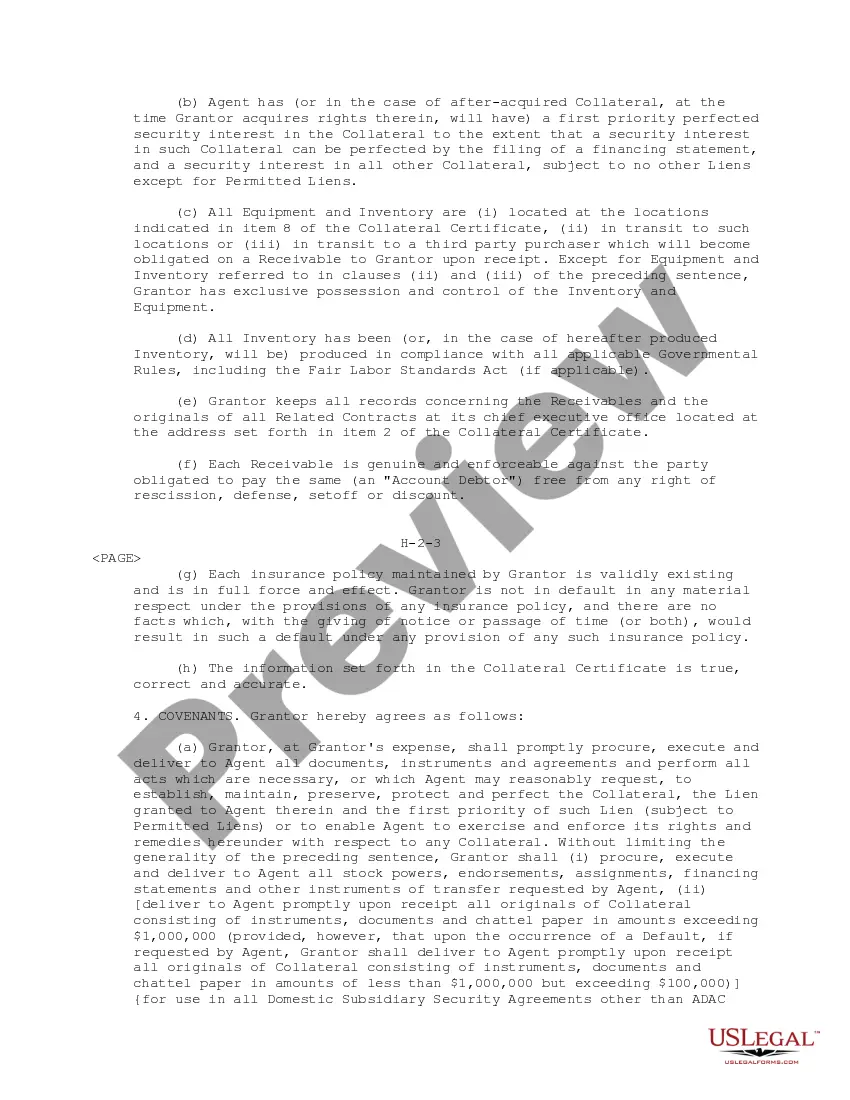
- A list of representations and warranties made by the grantor about the collateral.
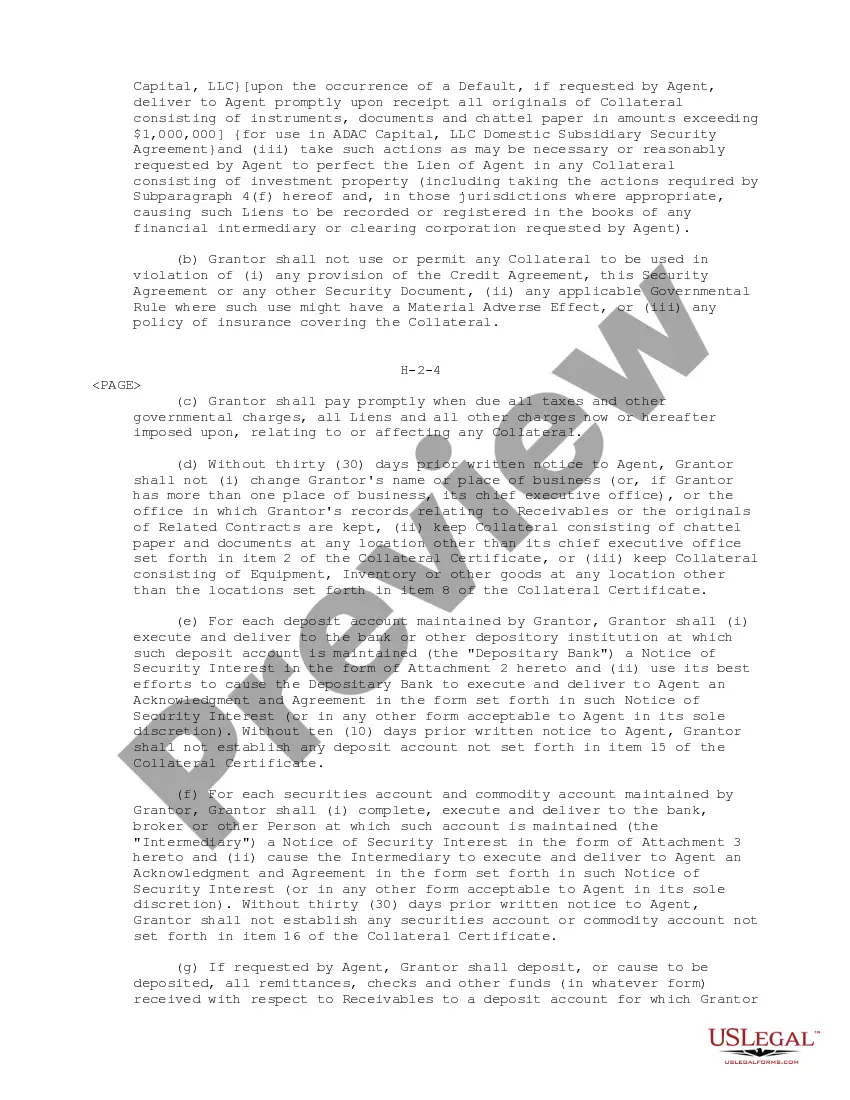
- Covenants that the grantor must adhere to regarding the management of collateral.
- Procedures for authorized actions by the agent representing the lenders.
- Conditions defining default and the available remedies for the lender.

When this form is needed
This form should be used when a corporation intends to secure a loan by pledging its assets as collateral. For example, if a domestic subsidiary receives financing through a credit agreement and needs to provide assurance to lenders concerning the ultimate repayment, this agreement formalizes that security interest. It is particularly relevant in corporate financing scenarios where subsidiaries seek to enhance their credibility with lenders and facilitate access to credit facilities.
Intended users of this form
- Domestic subsidiaries seeking to secure financing from lenders.
- Corporations intending to establish trust and credibility with financial institutions.
- Business owners looking to understand their obligations when pledging assets.
- Legal professionals advising clients on corporate financing agreements.
How to complete this form
- Identify the parties involved, specifically the grantor and the lender.
- Specify the collateral that is being pledged in the agreement.
- Populate the defined terms section by ensuring all parties understand their roles and definitions.
- Ensure that all covenants and representations are agreed upon and included.
- Review the signatures and date of execution for completeness.
Notarization requirements for this form
This form does not typically require notarization to be legally valid. However, some jurisdictions or document types may still require it. US Legal Forms provides secure online notarization powered by Notarize, available 24/7 for added convenience.
Get your form ready online
Our built-in tools help you complete, sign, share, and store your documents in one place.
Make edits, fill in missing information, and update formatting in US Legal Forms—just like you would in MS Word.
Download a copy, print it, send it by email, or mail it via USPS—whatever works best for your next step.
Sign and collect signatures with our SignNow integration. Send to multiple recipients, set reminders, and more. Go Premium to unlock E-Sign.
If this form requires notarization, complete it online through a secure video call—no need to meet a notary in person or wait for an appointment.
We protect your documents and personal data by following strict security and privacy standards.
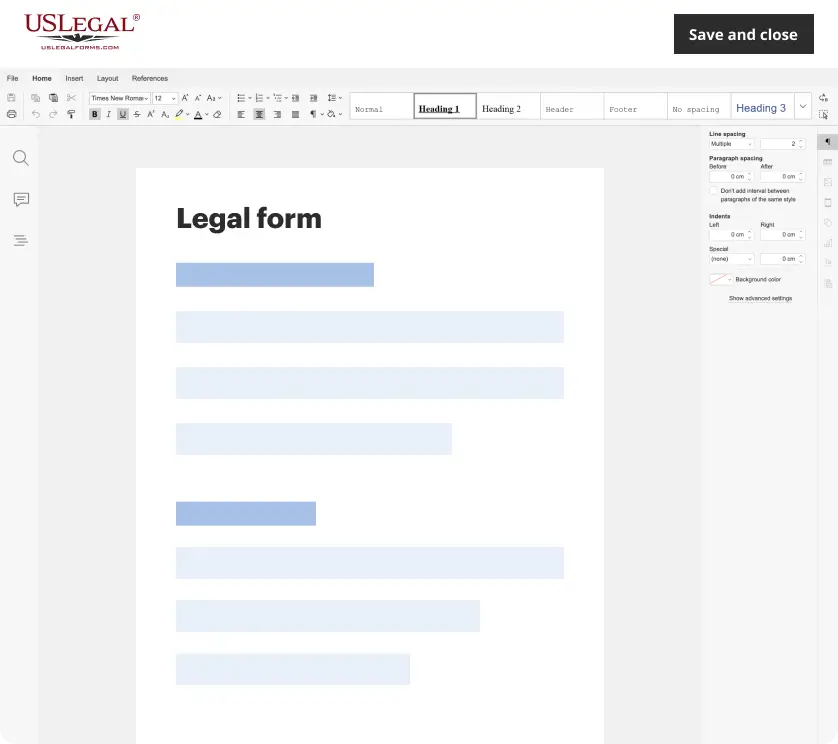
Make edits, fill in missing information, and update formatting in US Legal Forms—just like you would in MS Word.
Download a copy, print it, send it by email, or mail it via USPS—whatever works best for your next step.
Sign and collect signatures with our SignNow integration. Send to multiple recipients, set reminders, and more. Go Premium to unlock E-Sign.

If this form requires notarization, complete it online through a secure video call—no need to meet a notary in person or wait for an appointment.
We protect your documents and personal data by following strict security and privacy standards.
Mistakes to watch out for
- Failing to clearly define the collateral can lead to uncertainties.
- Not ensuring all parties sign the agreement can invalidate the security interest.
- Neglecting to include required representations and warranties may expose the grantor to liabilities.
- Missing the proper date of execution or incorrect details regarding the grantor's identity.
Why complete this form online
- Convenience of immediate access to the form without needing to visit a legal office.
- Editability that allows customization to fit specific needs and contexts.
- Reliability with professionally drafted documents that comply with current legal standards.
Summary of main points
- The Domestic Subsidiary Security Agreement secures lender interests by pledging collateral.
- Understanding all obligations in the agreement is crucial for both grantors and lenders.
- Proper completion of the form prevents potential legal disputes in the future.
Looking for another form?
Form popularity
FAQ
A local subsidiary is a separate legal entity from the foreign company even if the latter may be its only shareholder and will maintain control over its board of directors. This means that the foreign company does not have to bear the losses and liabilities of the local subsidiary.
A subsidiary is a separate legal entity for tax, regulation, and liability purposes. Parent companies can benefit from owning subsidiaries because it can enable them to acquire and control companies that manufacture components needed for the production of their goods.
If the parent simply owns a controlling interest in the subsidiary (50% or more), then the company is a subsidiary. If the parent owns less than 50% of another company, then that company is simply an associate of the parent company and not a subsidiary.
A subsidiary is a company that is owned or controlled by a parent or holding company. Usually, the parent company will own more than 50% of the subsidiary company.
Examples of Subsidiary Company Instagram is a photo-sharing application acquired by Facebook in April 2012. It also acquired Whatsapp a popular messaging application in 2014. Lastly, in march 2014, It bought shares of a virtual reality company, Oculus. Google & Nest are subsidiaries of Alphabet.
In the corporate world, a subsidiary is a company that belongs to another company, which is usually referred to as the parent company or the holding company.In cases where a subsidiary is 100% owned by another firm, the subsidiary is referred to as a wholly owned subsidiary.
If the parent company owns 51% to 99% of another company, then the company is a regular subsidiary. If the parent company owns 100% of another company, then the company is a wholly owned subsidiary.
A subsidiary is a company that is owned or controlled by a parent or holding company. Usually, the parent company will own more than 50% of the subsidiary company.A subsidiary and parent company are recognized as legally separate entities.