Common Stock Purchase Agreement with Vesting
Understanding this form
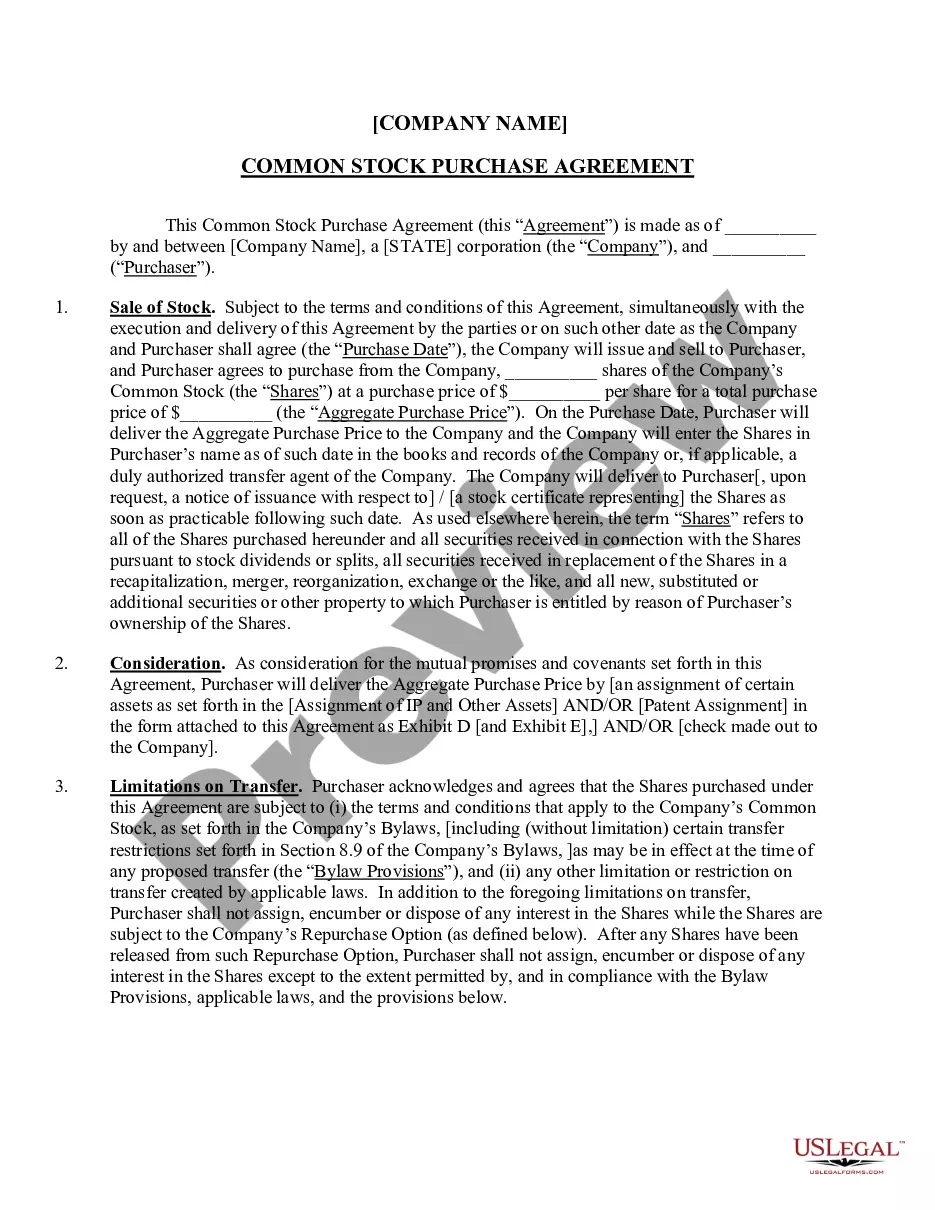
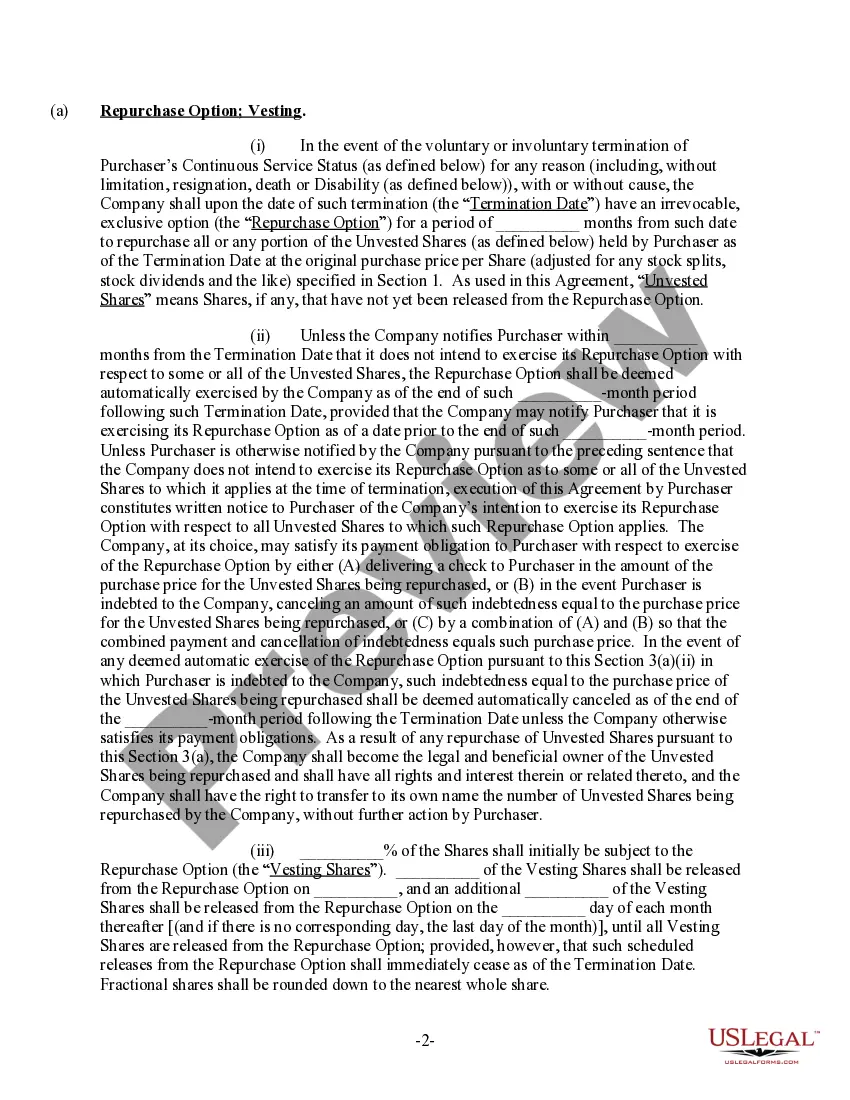
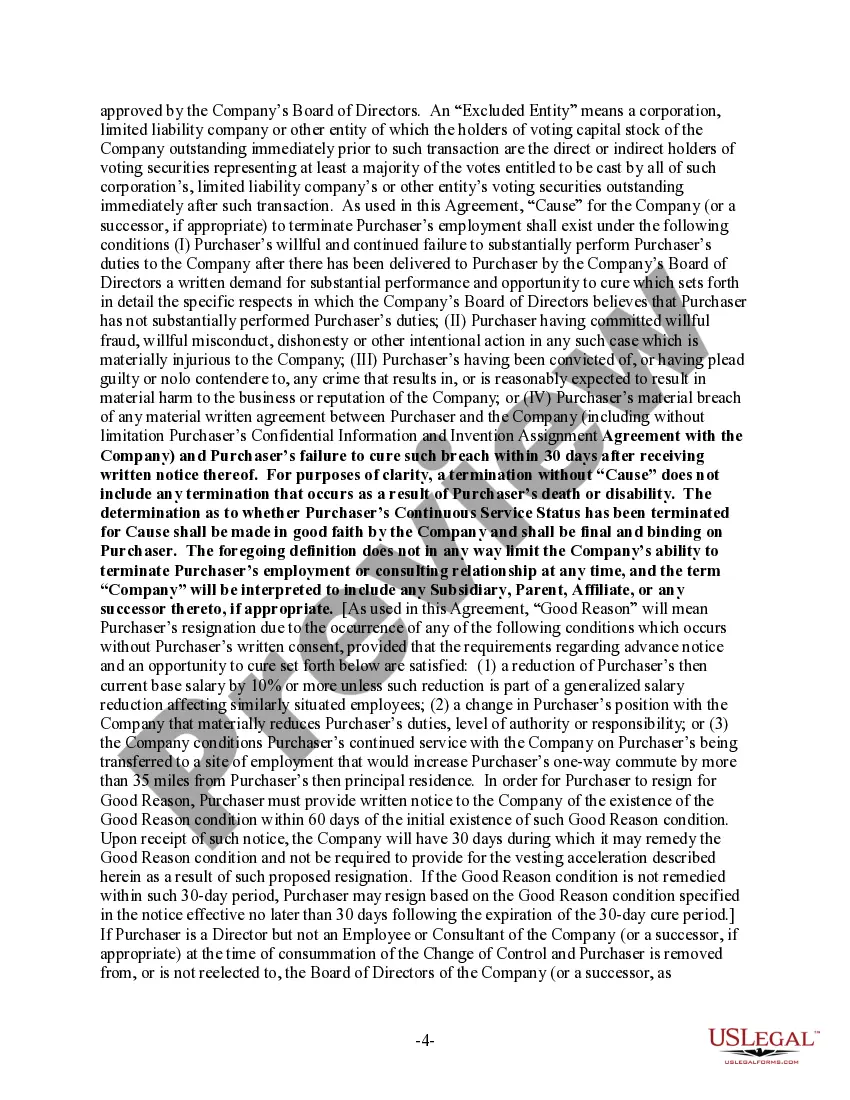
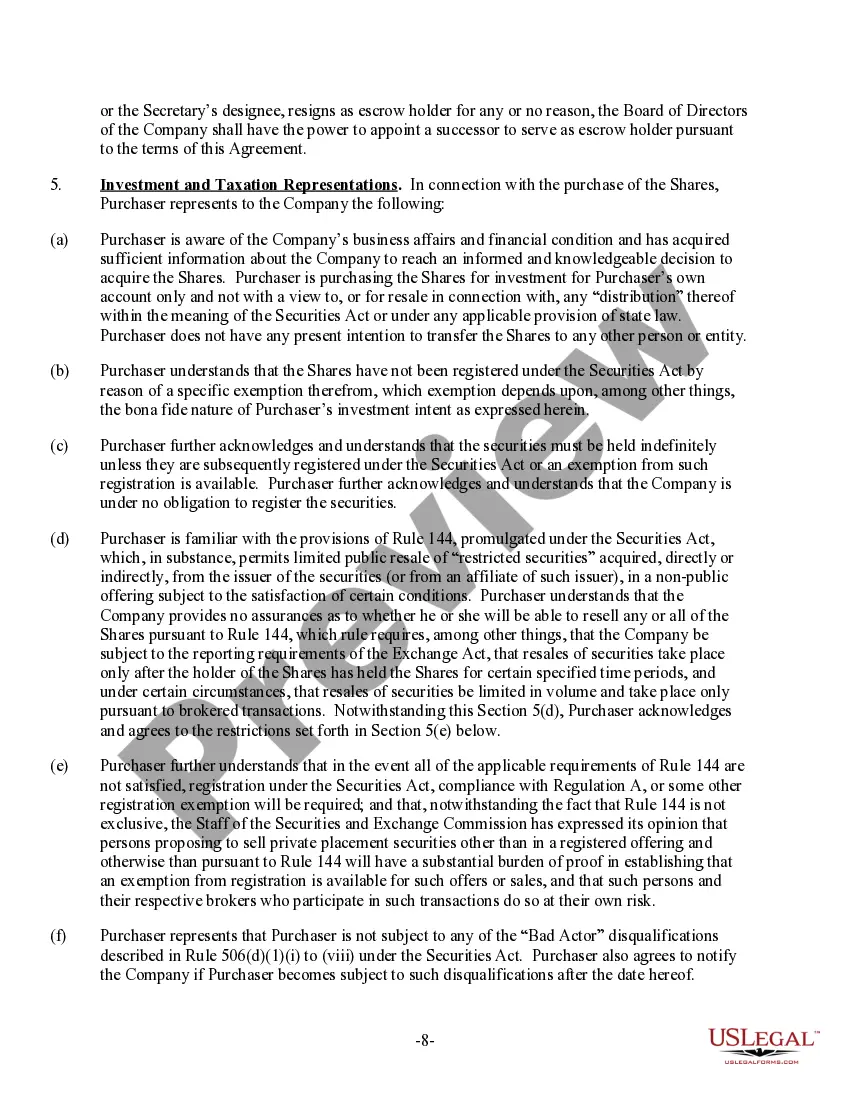
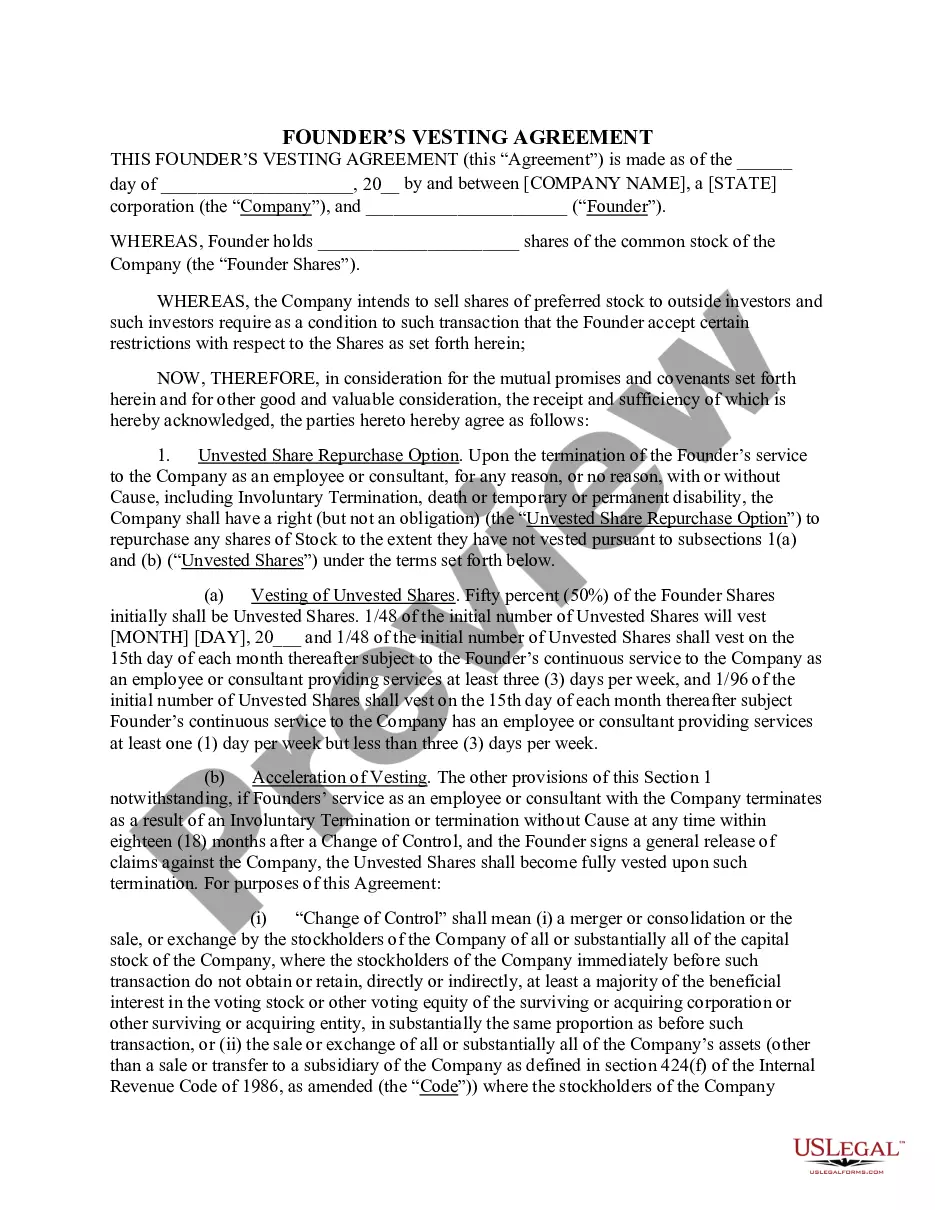
The Common Stock Purchase Agreement with Vesting is a legal document used by start-up companies to outline the terms under which a founder can purchase equity in the company. This agreement establishes a vesting schedule, which determines when the founder becomes the owner of the shares. Unlike standard stock purchase agreements, this document includes provisions for the repurchase of unvested shares if the founder's service is terminated, ensuring both the company and the founder are protected during the vesting period.
Key components of this form
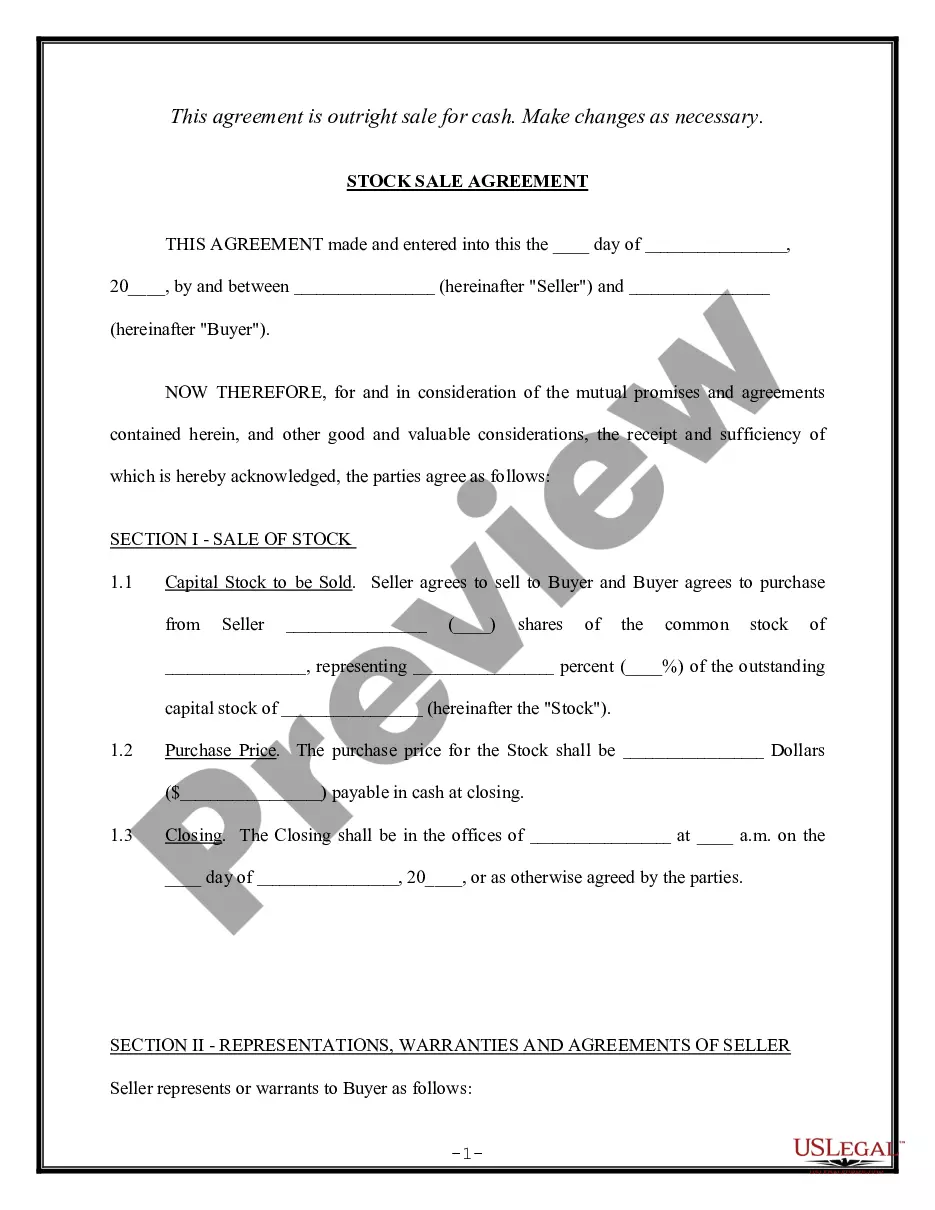
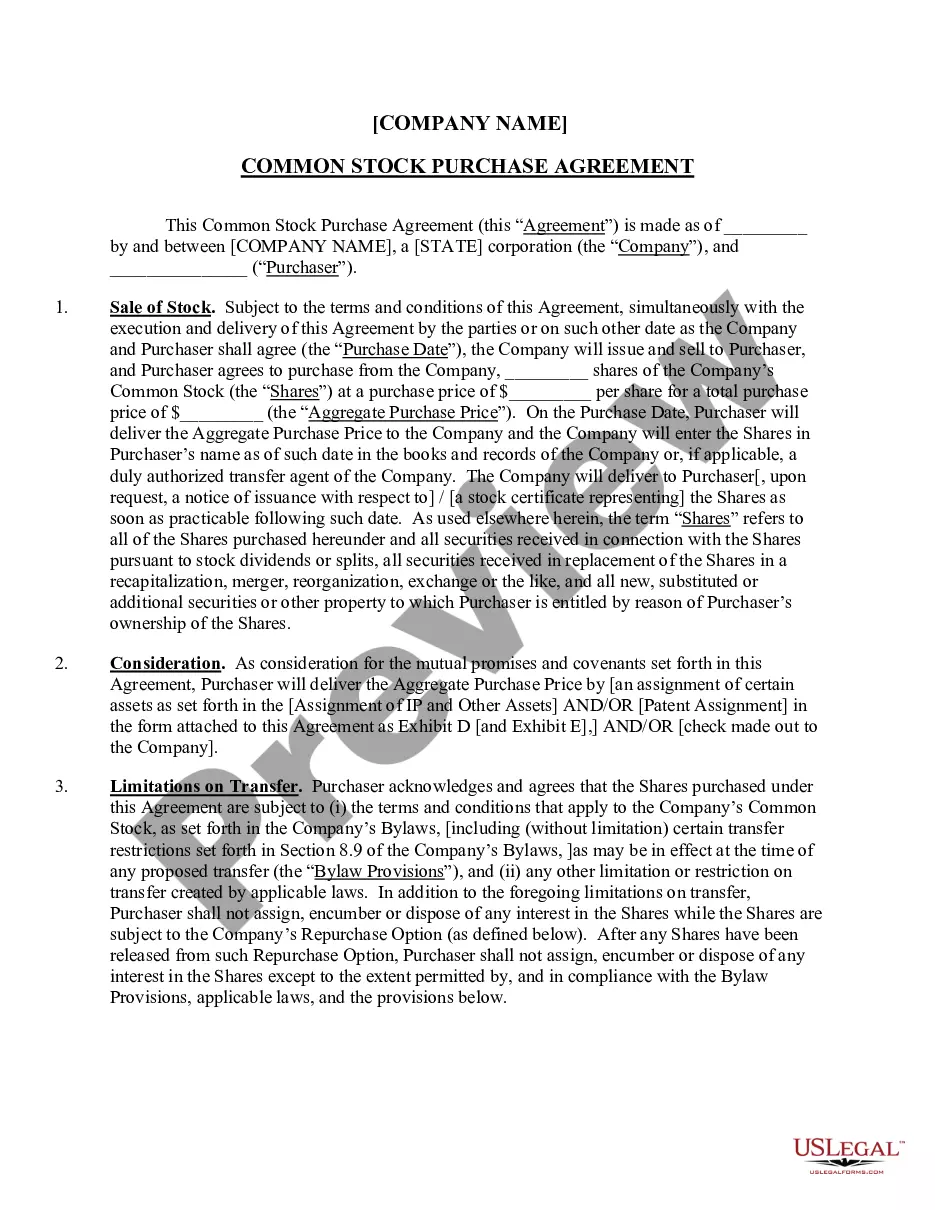
- Sale of Stock: Details the number of shares, purchase price, and transaction date.
- Consideration: Specifies the payment method, which can include cash or an asset assignment.
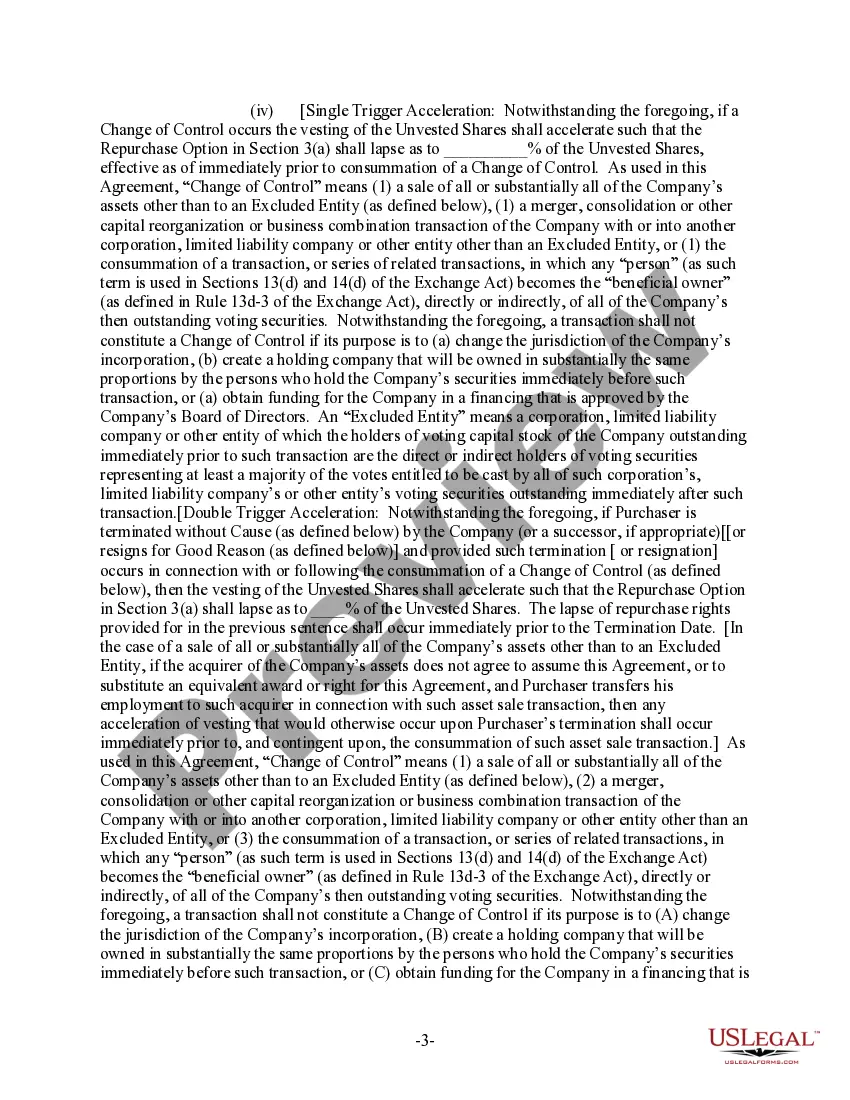
- Vesting Terms: Outlines how and when shares will fully belong to the founder over time.
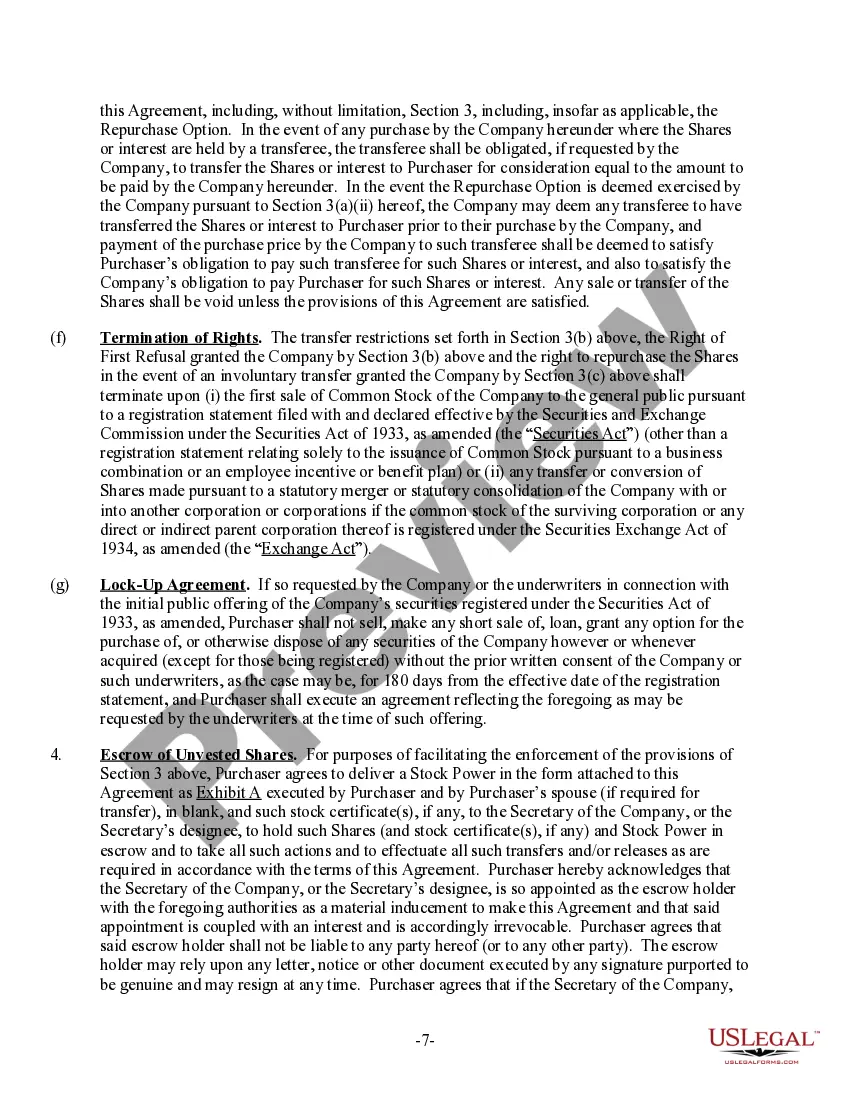
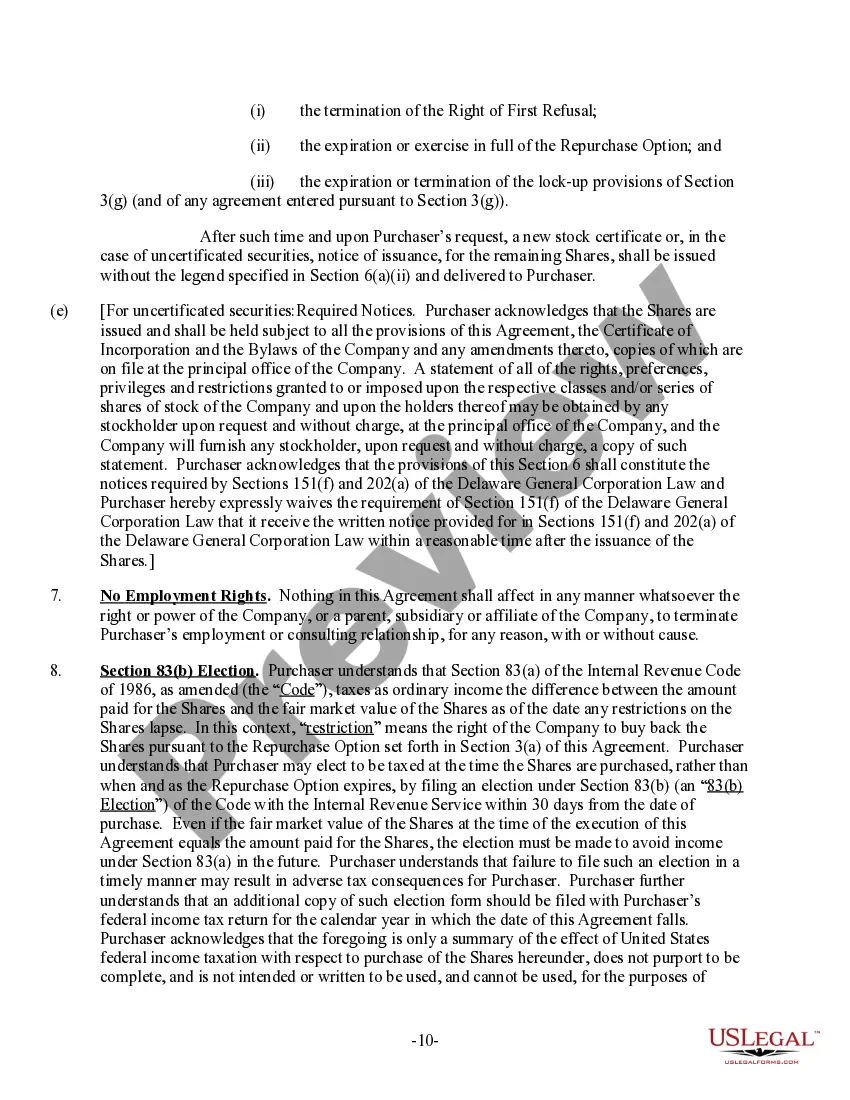
- Repurchase Option: Defines the company's right to reacquire unvested shares upon termination of the founder's service.
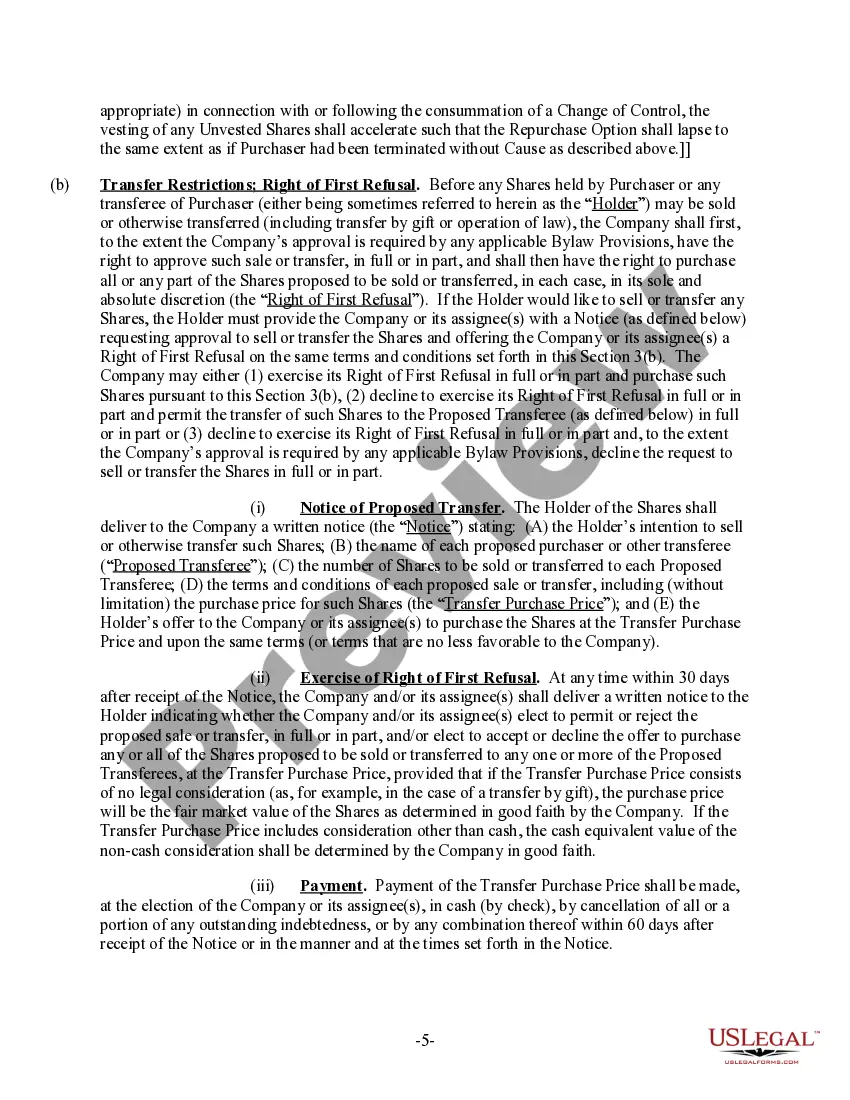
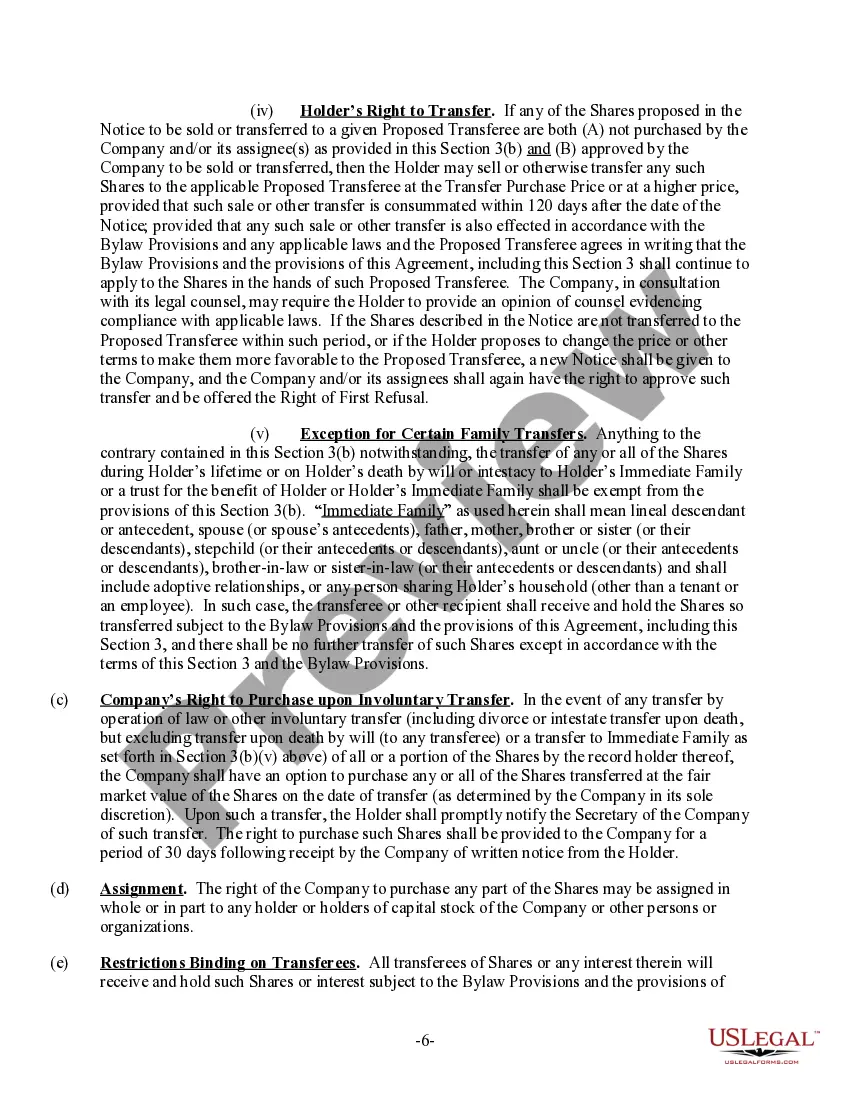
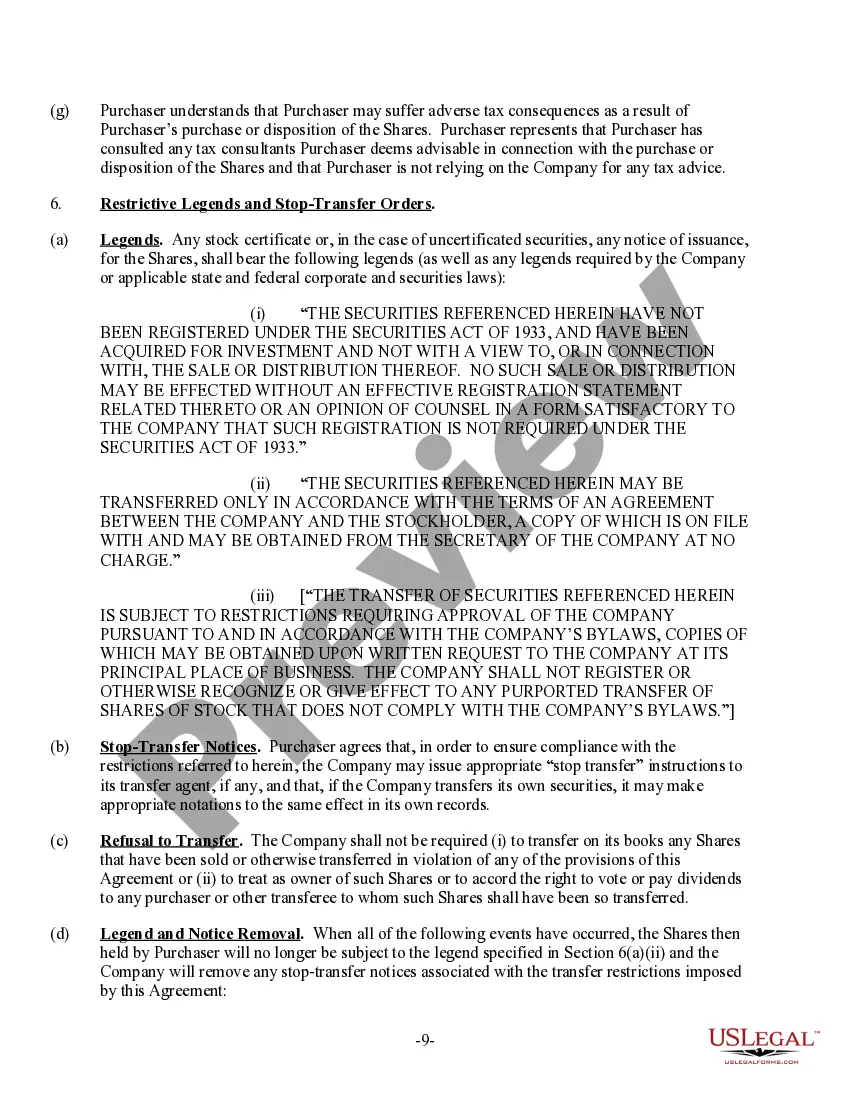
- Transfer Restrictions: Describes any limitations on the transfer of shares to others.

When to use this document
This form should be used when a start-up is issuing common stock to a founder who will receive the shares subject to a vesting schedule. It is particularly important in securing the founder's commitment to stay with the company for a defined period, thereby aligning their interests with those of the business.
Intended users of this form
This agreement is intended for:
- Start-up companies looking to formalize equity ownership with key founders.
- Founders who wish to acquire equity in exchange for their contributions while protecting the companyâs interests.
- Investors or corporate partners who may need to understand the equity agreements of the companies they engage with.
How to prepare this document
Follow these steps to complete the Common Stock Purchase Agreement with Vesting:
- Identify the parties involved: Fill in the names of the company and the purchaser (founder).
- Specify the stock details: Enter the number of shares, purchase price, and total purchase price.
- Outline the vesting schedule: Indicate the terms under which shares will vest over time.
- Include payment details: Specify payment methods, whether cash or asset assignment.
- Review transfer restrictions: Clarify any limitations on the transfer or sale of shares.
Notarization requirements for this form
This form does not typically require notarization unless specified by local law.
Get your form ready online
Our built-in tools help you complete, sign, share, and store your documents in one place.
Make edits, fill in missing information, and update formatting in US Legal Forms—just like you would in MS Word.
Download a copy, print it, send it by email, or mail it via USPS—whatever works best for your next step.
Sign and collect signatures with our SignNow integration. Send to multiple recipients, set reminders, and more. Go Premium to unlock E-Sign.
If this form requires notarization, complete it online through a secure video call—no need to meet a notary in person or wait for an appointment.
We protect your documents and personal data by following strict security and privacy standards.

Make edits, fill in missing information, and update formatting in US Legal Forms—just like you would in MS Word.

Download a copy, print it, send it by email, or mail it via USPS—whatever works best for your next step.

Sign and collect signatures with our SignNow integration. Send to multiple recipients, set reminders, and more. Go Premium to unlock E-Sign.

If this form requires notarization, complete it online through a secure video call—no need to meet a notary in person or wait for an appointment.

We protect your documents and personal data by following strict security and privacy standards.
Avoid these common issues
- Omitting specific terms related to vesting and transfer restrictions.
- Not updating the agreement to reflect changes in state laws or company policies.
- Failing to clearly define the consideration for the share purchase.
Benefits of using this form online
- Convenience of downloading a ready-to-use legal form drafted by licensed attorneys.
- Ability to customize the agreement according to specific needs and circumstances.
- Access to practical guidance and drafting notes included in the template.
What to keep in mind
- The Common Stock Purchase Agreement with Vesting protects both the founder and the company.
- It outlines specific terms for the purchase and vesting of shares to promote long-term commitment.
- Understanding this agreement is crucial for founders and startups to navigate equity ownership effectively.
Looking for another form?
Form popularity
FAQ
A Stock Purchase Agreement is used for the purchase and sale of outstanding stock of a business. The agreement typically includes purchase and sale terms, representations and warranties, covenants, conditions precedent, termination, and indemnification provisions.
Shareholder's agreement is primarily entered to rectify the disputes that occurred between the company and the Shareholder. Meanwhile, the Share Purchase agreement is a document that legalizes the process of transaction of share held between the buyer and the seller.
A company executes a Share subscription agreement (SSA) in case of a fresh issue of shares. A shareholders' agreement (SHA) is a contract that contains the rights and obligations of the shareholders in a company. Lawtendo will help you draft and review the agreements through an expert drafting lawyer.
A Share Purchase Agreement, also called a Stock Purchase Agreement, is used to transfer the ownership of shares (also called stock) in a company from a seller to a buyer. Shares (or stock) are units of ownership in a company that are divided among shareholders (also called stockholders).
Key Provisions of a Stock Purchase Agreement Make sure to include purchase price adjustments, if any.Share certificates and other agreements to be exchanged upon completion of the sale. Legal opinions. Escrow agreements. Employment agreements, detailing how employee issues will be handled after the transaction.
A vesting agreement is an agreement entered into between a corporation and a shareholder (usually an employee) that restricts the vesting of securities with the shareholder over a period of time or subject to other conditions.
A common stock purchase agreement is a legal agreement that is executed when stocks are bought or sold. The company itself and its shareholders are authorized to sell stock either for fundraising or to transfer ownership. The agreement is meant to protect both the buyer and the seller during the transaction.