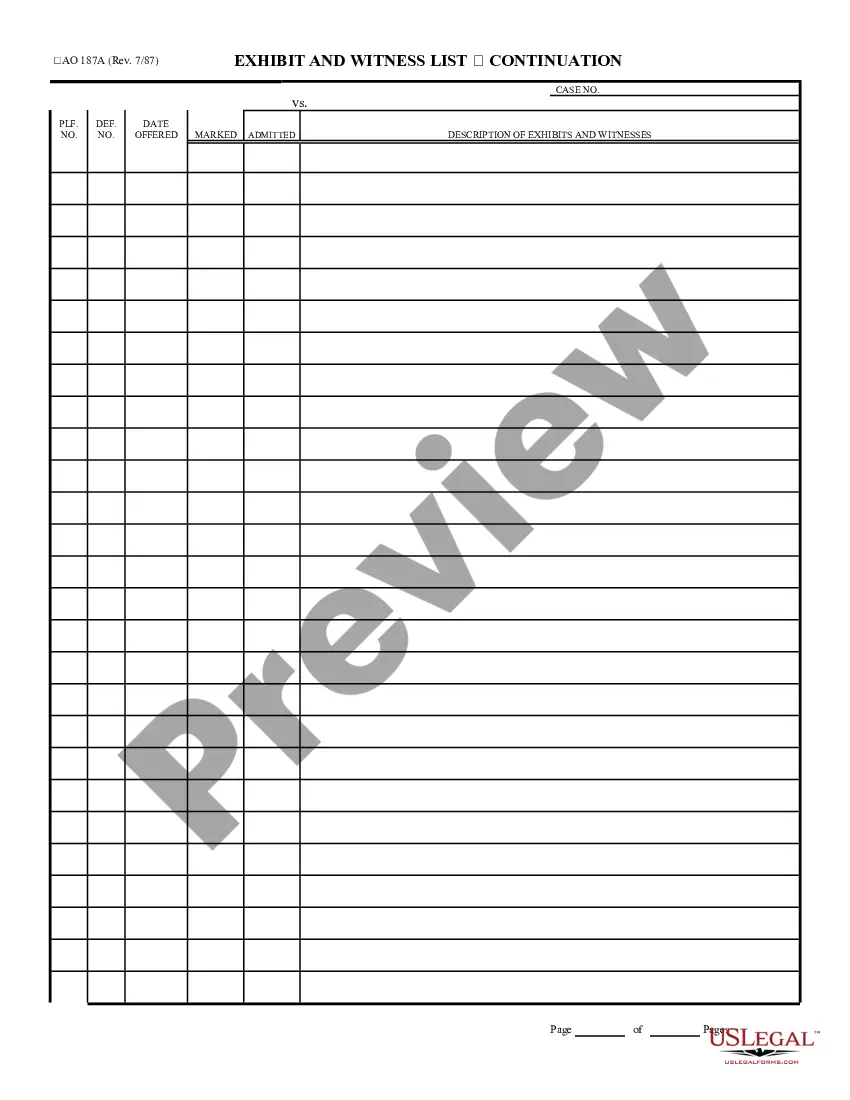
Exhibit and Witness List Continuation
Overview of this form
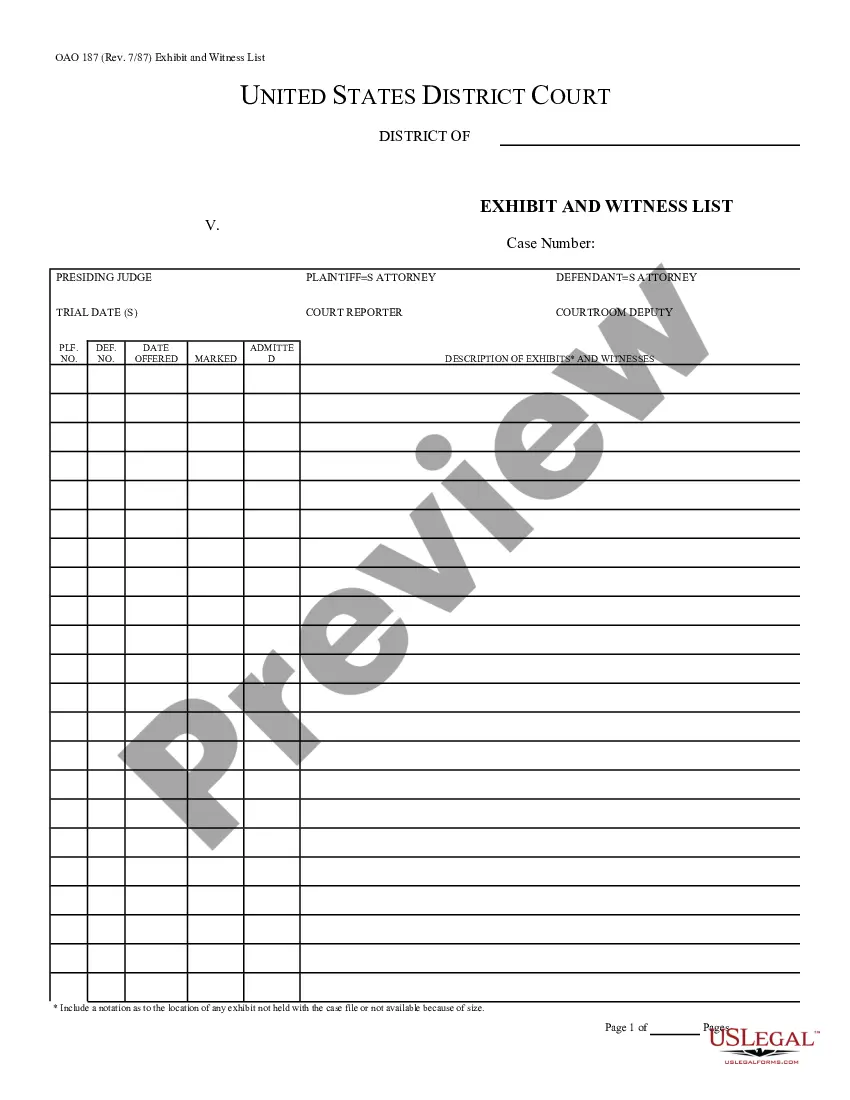
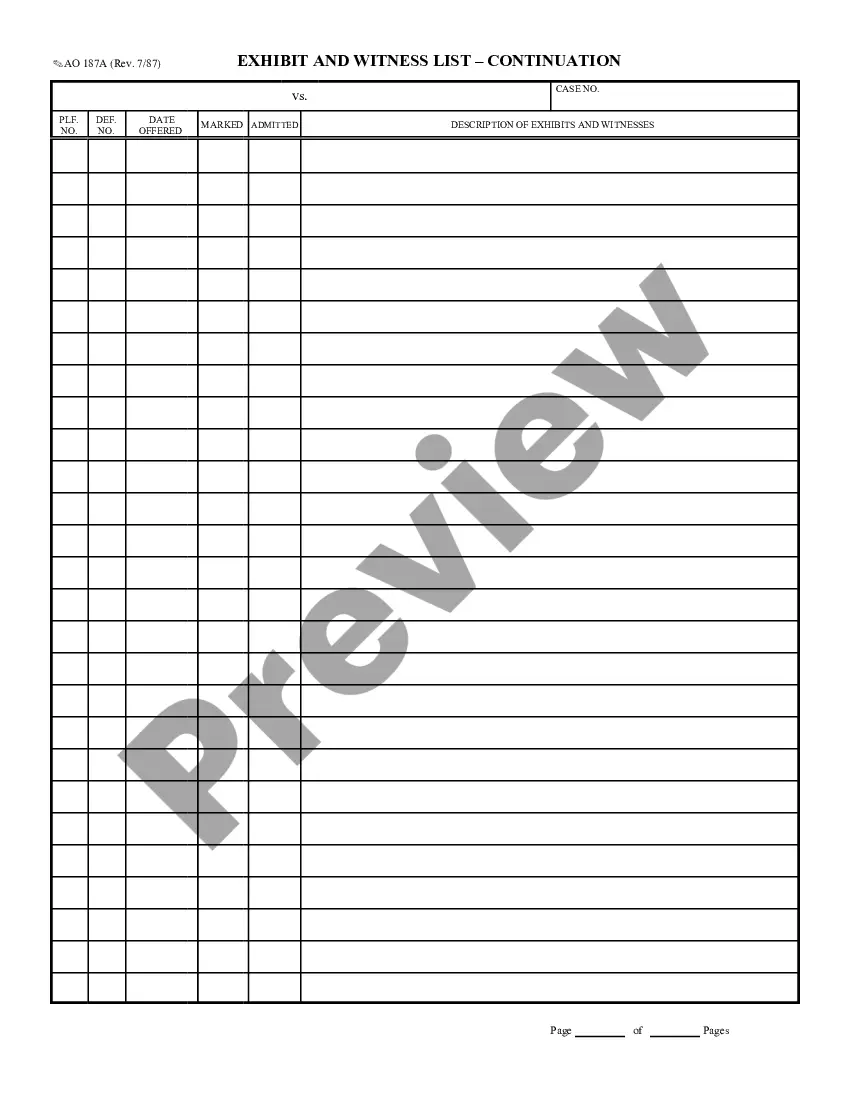
The Exhibit and Witness List Continuation form is designed for use in federal court proceedings. This form is crucial for documenting additional exhibits and witnesses that will support a party's case during litigation. Unlike other legal forms that might simply list evidence or witnesses, this form provides a structured way to expand upon those elements, ensuring completeness and compliance with court requirements.
Form components explained
- Exhibit list: A section to enumerate and describe each exhibit intended for submission in court.
- Witness list: A section to identify and provide details about witnesses who may testify.
- Additional remarks: Space for any notes or clarifications related to exhibits or witnesses.
- Signature fields: Areas for necessary signatures to validate the document.
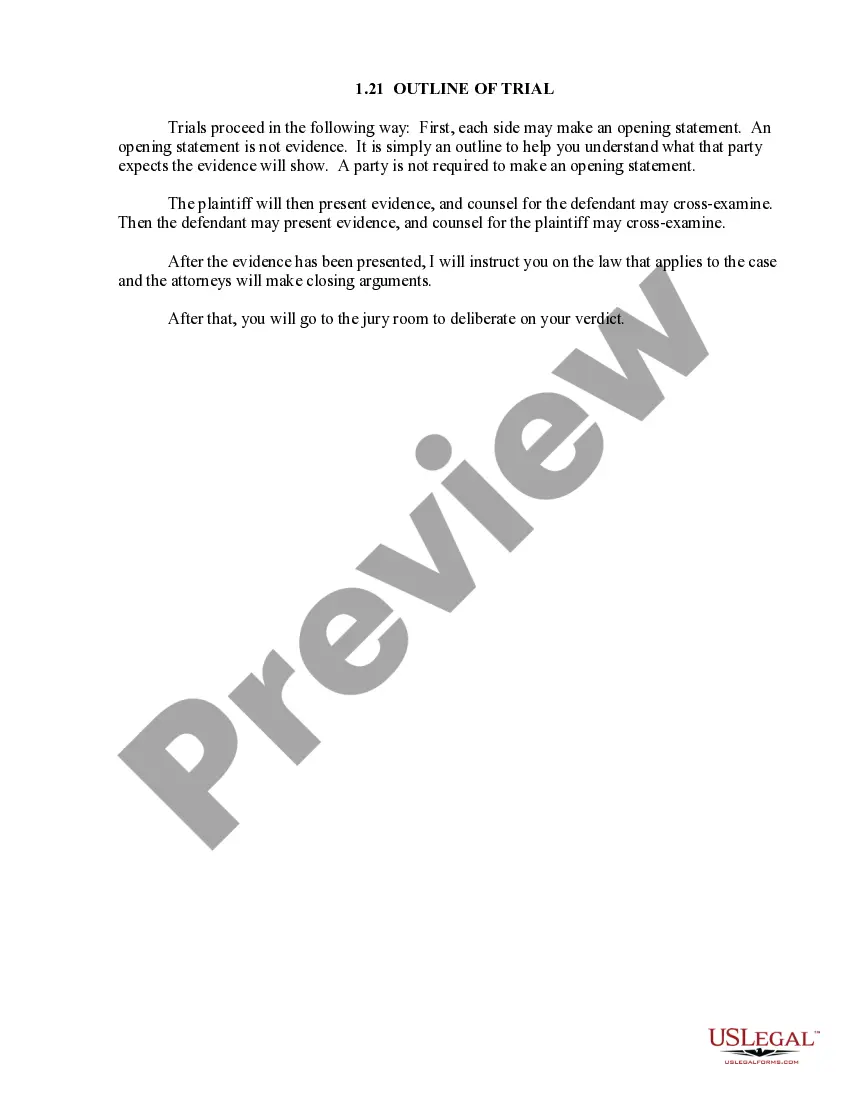
Situations where this form applies
This form should be used when preparing for a federal court trial where there are additional exhibits or witnesses that have not been formally listed in previous filings. It is essential to provide the court with a comprehensive overview of your case to ensure all evidence and testimonies can be considered.
Who this form is for
- Attorneys representing parties in federal court cases.
- Pro se litigants who are self-representing in federal court.
- Legal assistants preparing documentation for court submission.
Steps to complete this form
- Identify all additional exhibits you intend to submit and describe each one clearly.
- List all witnesses you plan to call to testify, including their contact information.
- Include any additional remarks that provide context or necessary explanations for the exhibits and witnesses.
- Sign the form in the designated area to confirm its accuracy and completeness.
Does this form need to be notarized?
This form usually doesn’t need to be notarized. However, local laws or specific transactions may require it. Our online notarization service, powered by Notarize, lets you complete it remotely through a secure video session, available 24/7.
Get your form ready online
Our built-in tools help you complete, sign, share, and store your documents in one place.
Make edits, fill in missing information, and update formatting in US Legal Forms—just like you would in MS Word.
Download a copy, print it, send it by email, or mail it via USPS—whatever works best for your next step.
Sign and collect signatures with our SignNow integration. Send to multiple recipients, set reminders, and more. Go Premium to unlock E-Sign.
If this form requires notarization, complete it online through a secure video call—no need to meet a notary in person or wait for an appointment.
We protect your documents and personal data by following strict security and privacy standards.
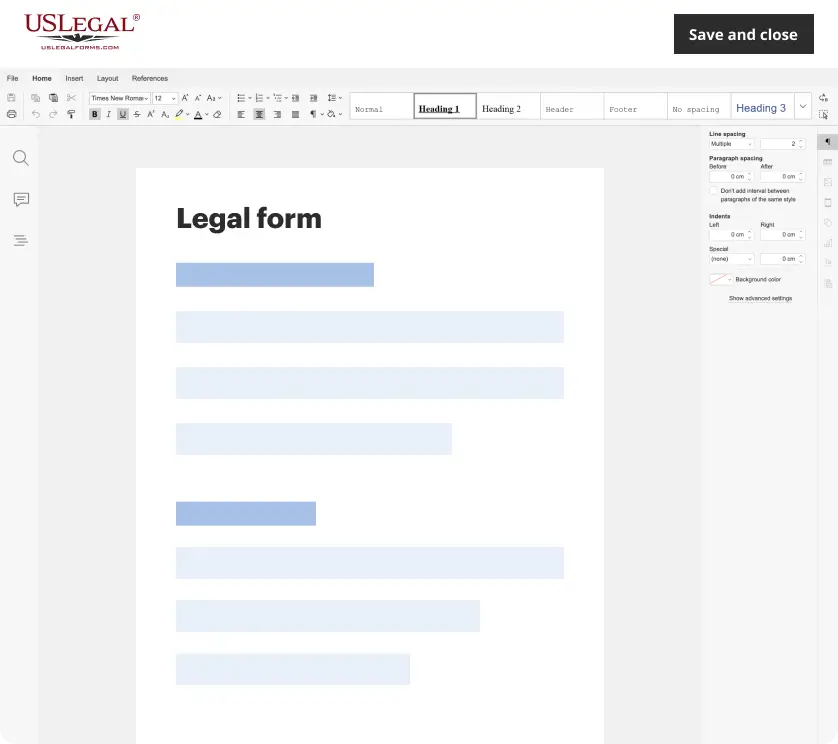
Make edits, fill in missing information, and update formatting in US Legal Forms—just like you would in MS Word.
Download a copy, print it, send it by email, or mail it via USPS—whatever works best for your next step.
Sign and collect signatures with our SignNow integration. Send to multiple recipients, set reminders, and more. Go Premium to unlock E-Sign.
If this form requires notarization, complete it online through a secure video call—no need to meet a notary in person or wait for an appointment.
We protect your documents and personal data by following strict security and privacy standards.
Common mistakes to avoid
- Failing to include all relevant exhibits and witnesses.
- Not providing adequate descriptions for exhibits.
- Omitting signatures or necessary dates.
Benefits of completing this form online
- Convenience of downloading and completing the form at your own pace.
- Editability allows for adjustments as needed before final submission.
- Reliability ensured through templates drafted by licensed attorneys.
Looking for another form?



Form popularity
FAQ
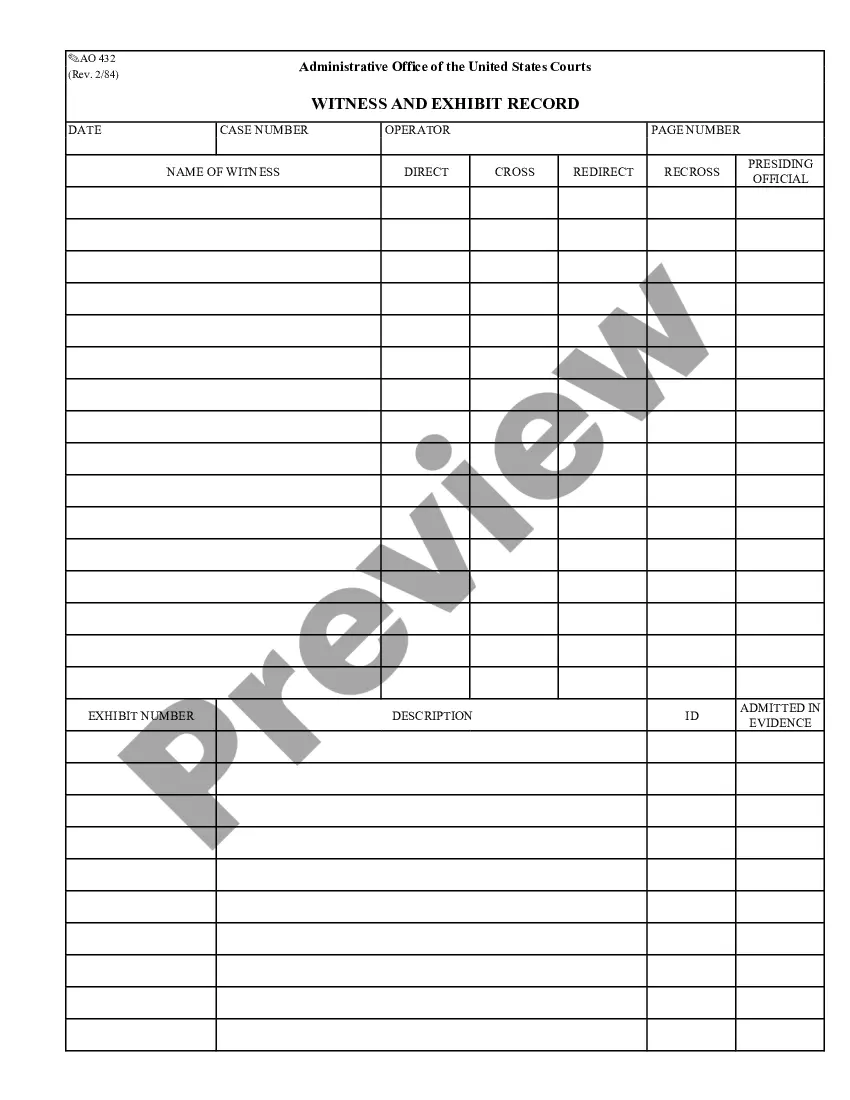
1) A document or object (including a photograph) introduced as evidence during a trial. 2) a copy of a paper attached to a pleading (any legal paper filed in a lawsuit), declaration, affidavit, or other document, which is referred to and incorporated into the main document. courts.
Generally, exhibits are labeled in sequential alphabetical or numerical order. For example, Exhibit A is followed by Exhibit B, etc. This gives the reader clear guideposts to follow throughout the document.
Ask to approach the witness with the exhibit. Show the exhibit to the witness and lay the foundation for the exhibit, as described earlier. Then ask the judge to admit the evidence by saying something like I move that Plaintiff's Exhibit A be introduced into evidence and hand the exhibit to the judge.
An exhibit, in a criminal prosecution or a civil trial, is physical or documentary evidence brought before the jury. The artifact or document itself is presented for the jury's inspection. Examples may include a weapon allegedly used in the crime, an invoice or written contract, a photograph, or a video recording.
An exhibit is a document, record or other tangible object formally introduced as evidence in the court. Exhibit list is list of such Exhibits a party wants to produce before the court to prove his case.
An exhibit is a document, record or other tangible object formally introduced as evidence in the court. Exhibit list is list of such Exhibits a party wants to produce before the court to prove his case.
An exhibit list is a court document that lists all the exhibits that you intend to (or may) use at trial.
Exhibits should be numbered (1, 2, 3) or lettered (A, B, C) consecutively in the order they are first encountered in the body of the contract.