Sample Letter for Short Sale Request to Lender
Understanding this form
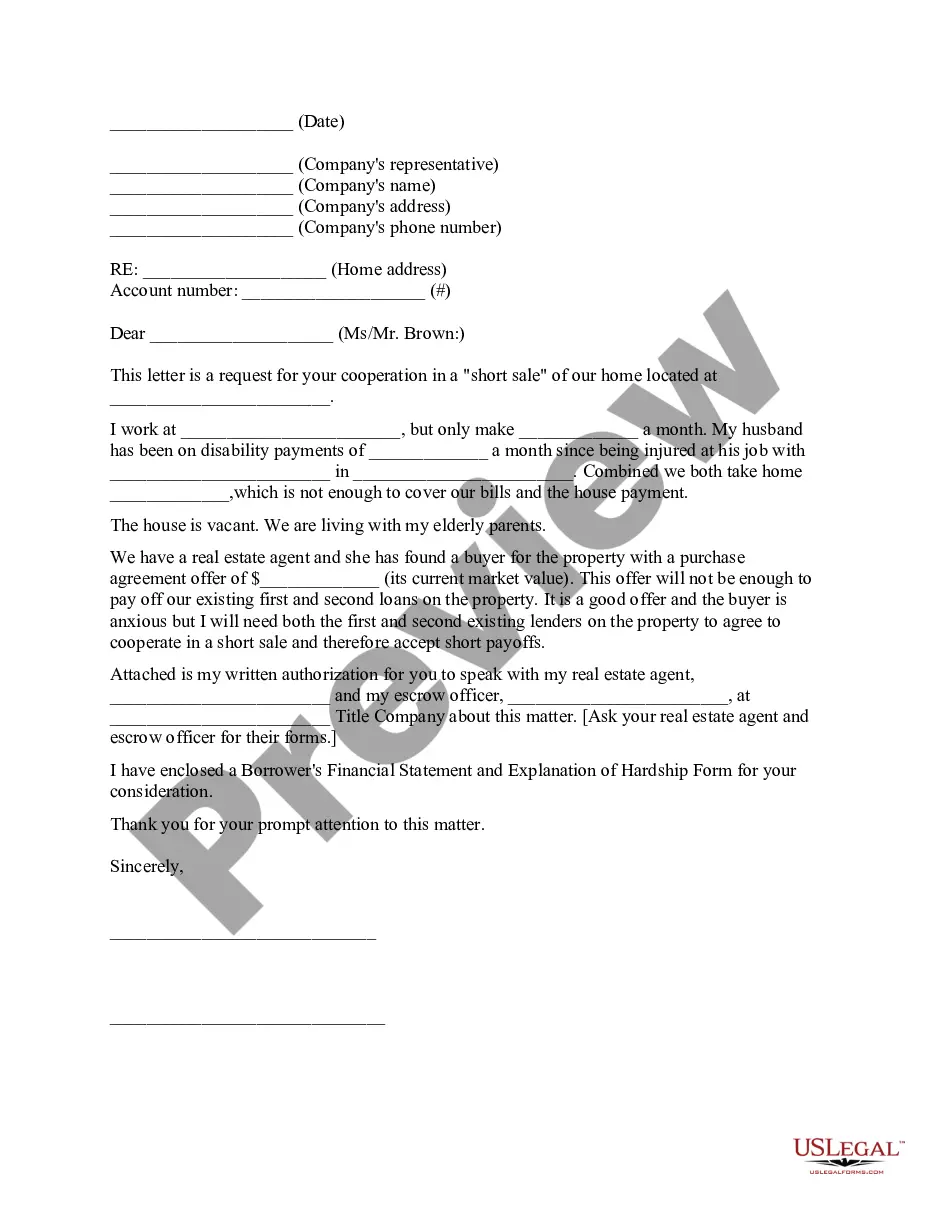
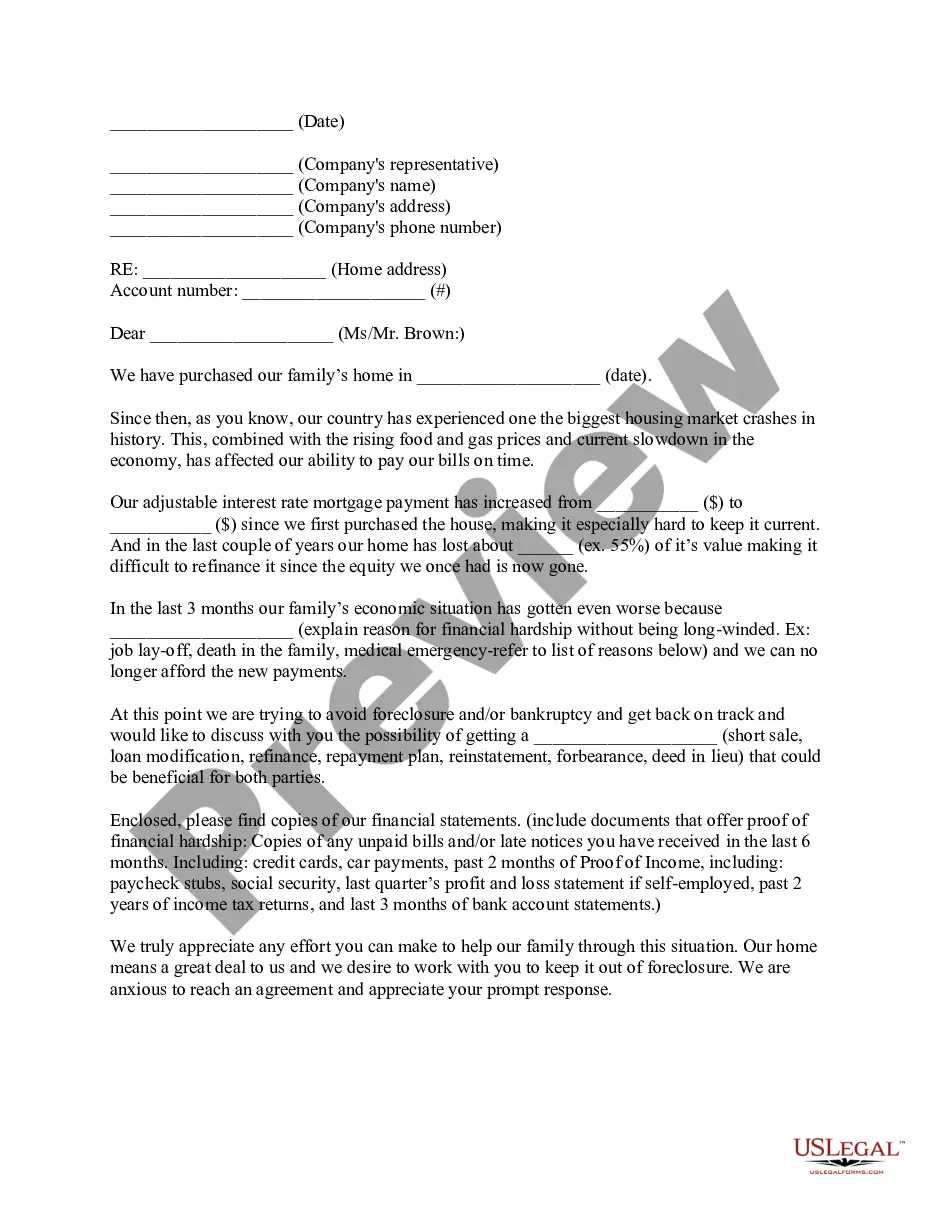
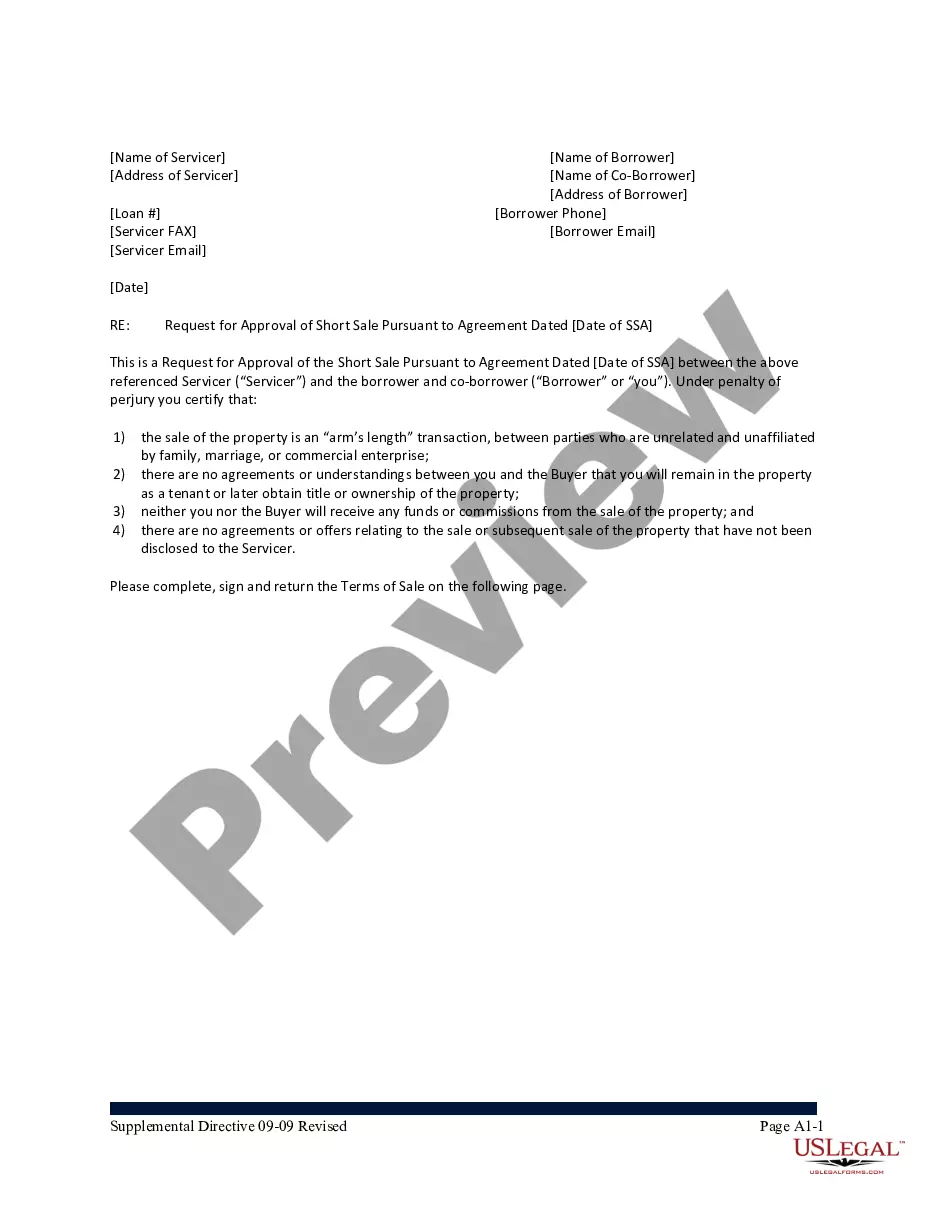
The Sample Letter for Short Sale Request to Lender is a template designed to help homeowners request a short sale from their lender in order to avoid foreclosure. This letter outlines the homeowner's financial situation and formally requests the lender's cooperation to allow the sale of the property for less than the amount owed. This form differs from other foreclosure-related documents by specifically focusing on initiating a short sale, which can help alleviate financial burdens while protecting the homeowner's credit.
Form components explained
- Sender's information: Includes name, address, and phone number of the homeowner.
- Property details: Specifies the home address and account number related to the mortgage.
- Financial disclosure: Provides details of the homeowner's income and financial hardship.
- Real estate agent involvement: Mentions the real estate agent and includes authorization to speak with them.
- Buyer offer: Details the proposed buyer's offer and its relation to the property's market value.
- Supporting documents: Indicates attachments such as the Borrower's Financial Statement and Explanation of Hardship Form.
When this form is needed
This form should be used when a homeowner is facing financial difficulties and wishes to prevent foreclosure by selling their home through a short sale. Common scenarios include situations involving job loss, medical emergencies, or other significant changes in financial circumstances that make it difficult to continue making mortgage payments. If the homeowner has found a buyer for their property whose offer is lower than the outstanding loans, this letter will facilitate communication with the lender about the short sale process.
Who should use this form
- Homeowners experiencing financial hardship and facing potential foreclosure.
- Individuals who have found a buyer for their property but need lender approval for a short sale.
- Real estate agents representing homeowners in short sale transactions.
- Co-signers or partners involved in the ownership of the property who support the short sale request.
Instructions for completing this form
- Identify the parties: Enter your name, the co-signer's name, and the lender's name at the beginning of the letter.
- Provide property details: Include the home address and account number related to the mortgage.
- State the financial situation: Clearly outline your income and the financial hardships faced.
- Include the real estate agent's contact information: Provide authorization for the lender to communicate with your agent and escrow officer.
- Attach required documents: Include additional forms like the Borrower's Financial Statement and Explanation of Hardship Form to support your request.
Does this form need to be notarized?
This form does not typically require notarization unless specified by local law. It is essential to verify whether any additional regulations apply to your state or situation. If notarization is required, consider using online notarization services for convenience and efficiency.
Get your form ready online
Our built-in tools help you complete, sign, share, and store your documents in one place.
Make edits, fill in missing information, and update formatting in US Legal Forms—just like you would in MS Word.
Download a copy, print it, send it by email, or mail it via USPS—whatever works best for your next step.
Sign and collect signatures with our SignNow integration. Send to multiple recipients, set reminders, and more. Go Premium to unlock E-Sign.
If this form requires notarization, complete it online through a secure video call—no need to meet a notary in person or wait for an appointment.
We protect your documents and personal data by following strict security and privacy standards.

Make edits, fill in missing information, and update formatting in US Legal Forms—just like you would in MS Word.

Download a copy, print it, send it by email, or mail it via USPS—whatever works best for your next step.

Sign and collect signatures with our SignNow integration. Send to multiple recipients, set reminders, and more. Go Premium to unlock E-Sign.

If this form requires notarization, complete it online through a secure video call—no need to meet a notary in person or wait for an appointment.

We protect your documents and personal data by following strict security and privacy standards.
Common mistakes to avoid
- Failing to include all necessary personal and property information, which may delay the process.
- Not providing clear financial details, leading to misunderstandings regarding hardship.
- Neglecting to authorize real estate agents or escrow officers, hindering communication.
- Forgetting to attach supporting documents that can substantiate your claims of financial hardship.
Why complete this form online
- Convenient access: Easily download and customize the letter from the comfort of your home.
- Expertly drafted: The template is created by licensed attorneys, ensuring legal accuracy and effectiveness.
- Editability: Tailor the content to fit your specific circumstances with ease.
- Quick turnaround: Instantly available, allowing timely communication with lenders.
Looking for another form?
Form popularity
FAQ
Hardship Examples. There are a variety of situations that may qualify as a hardship. Keep it original. Be honest. Keep it concise. Don't cast blame or shirk responsibility. Don't use jargon or fancy words. Keep your objectives in mind. Provide the creditor an action plan.
In the body of the letter, state the hardship that led you to fall behind on your mortgage payments. Explain to the lender what happened and why it was beyond your control. Keep your explanation brief. The goal of the hardship letter is to explain to the lender the nature of your hardship.
Get a Property Valuation Analysis. Get a Hardship Letter. Contact the Lender for a Short Sale Application. Prepare the Sales Contract. Assemble the Short Sale Package Together.
"Approved for short sale" means the bank has already determined that the homeowner qualifies for a short sale and has approved the request to sell the property at a reduced price. It is possible that an earlier buyer made an offer that was approved, but did not close the transaction.
A completed and signed IRS Form 4506, "Request for Copy of Tax Form. A completed and signed personal financial worksheet.
"Approved for short sale" means the bank has already determined that the homeowner qualifies for a short sale and has approved the request to sell the property at a reduced price. It is possible that an earlier buyer made an offer that was approved, but did not close the transaction.
An Executed Listing Agreement. Fully Executed Purchase Contract. Seller's Hardship Letter. Authorization Letter. Last Two Bank Statements. Tax Returns and Wage Documentation. A Closing Disclosure.
In the event that you find yourself considering a short sale on your home, your lender will ask you for something called a "short sale package." This package is basically a set of documents that you use to demonstrate your financial hardship. It's how you make your case to the bank for your short sale.
If the lender approves the offer, the short sale moves forward. If the lender does not accept the offer, the buyer may counteroffer or end the process.