Carpentry Services Contract - Self-Employed Independent Contractor
Overview of this form
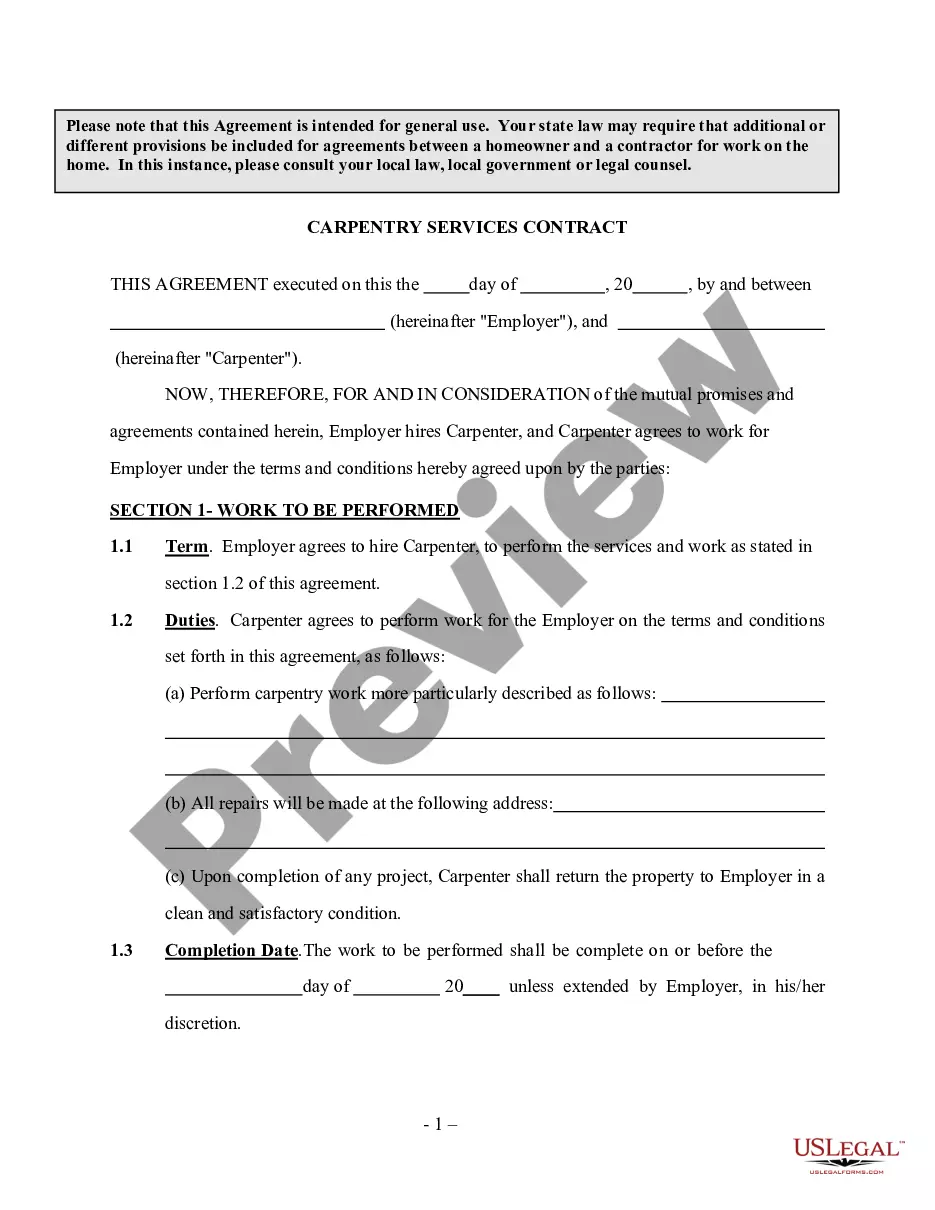
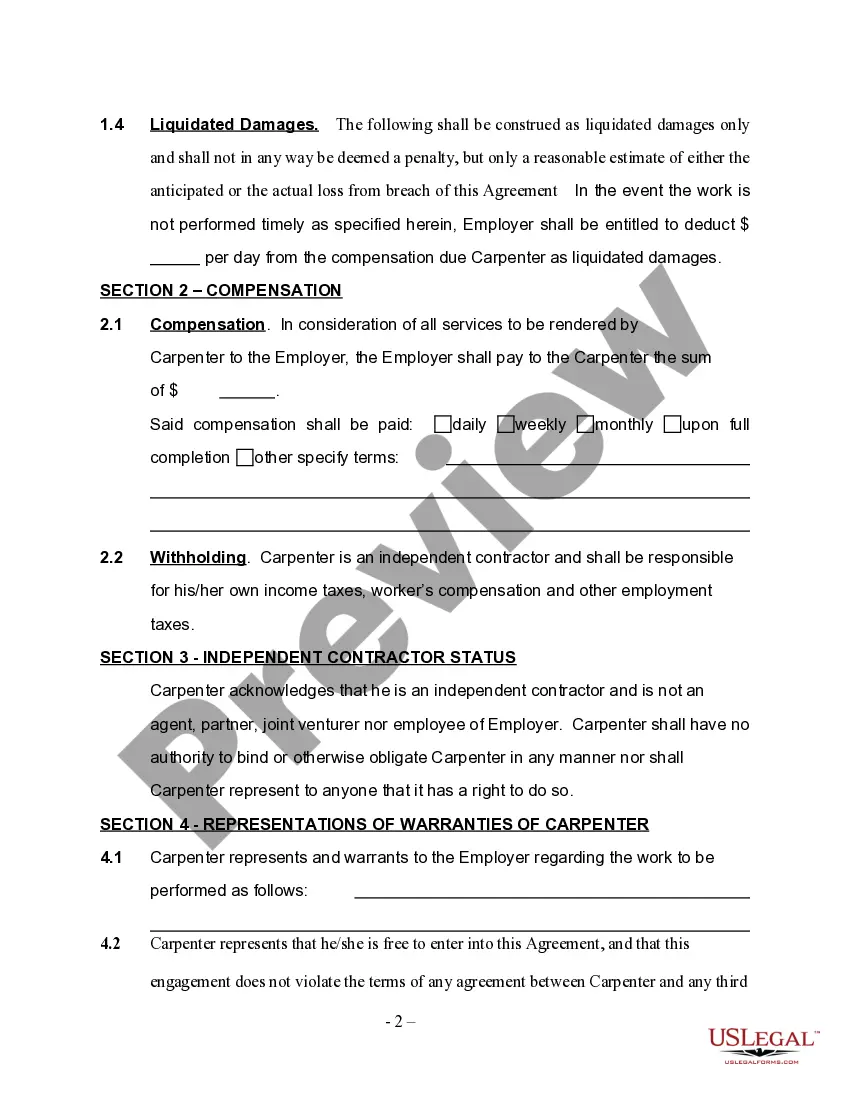
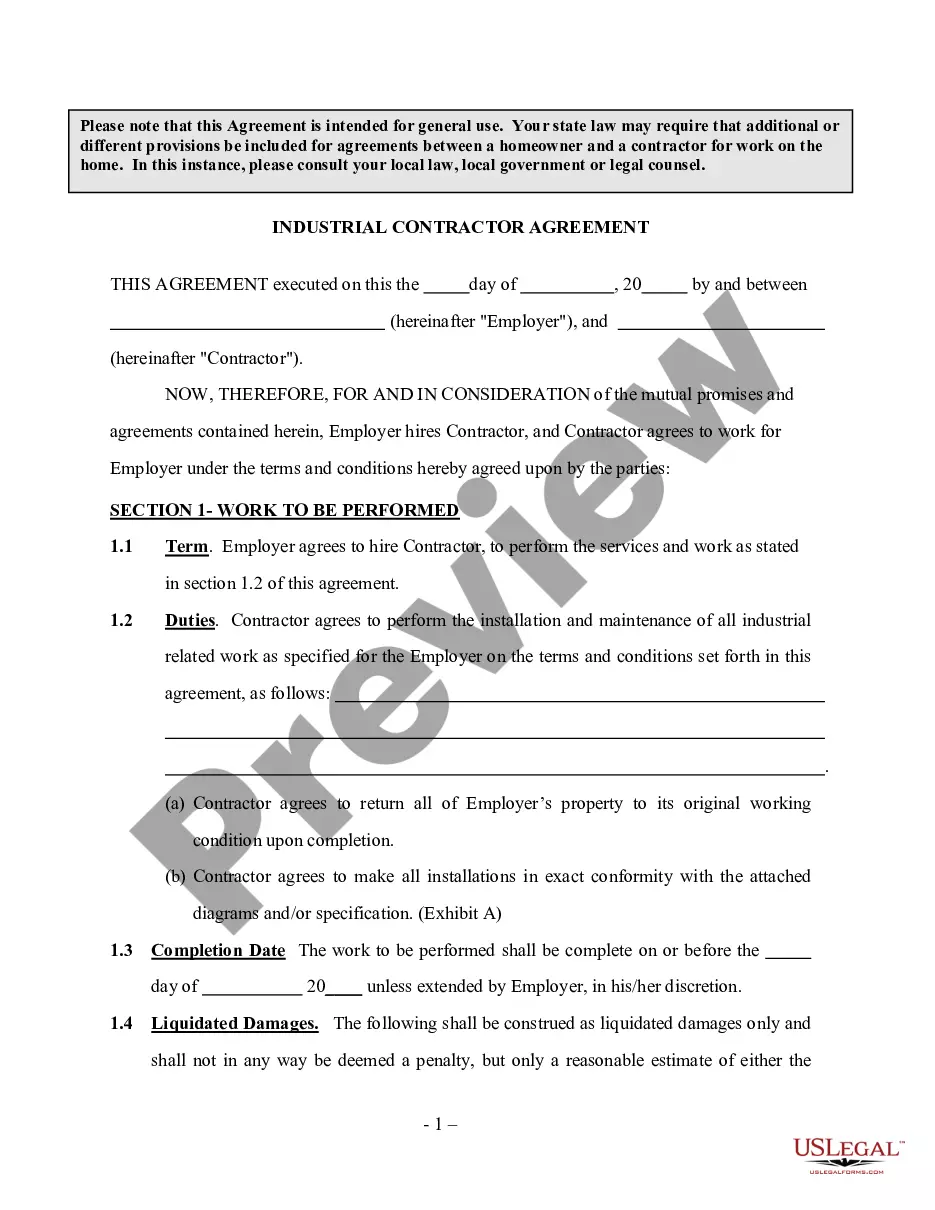
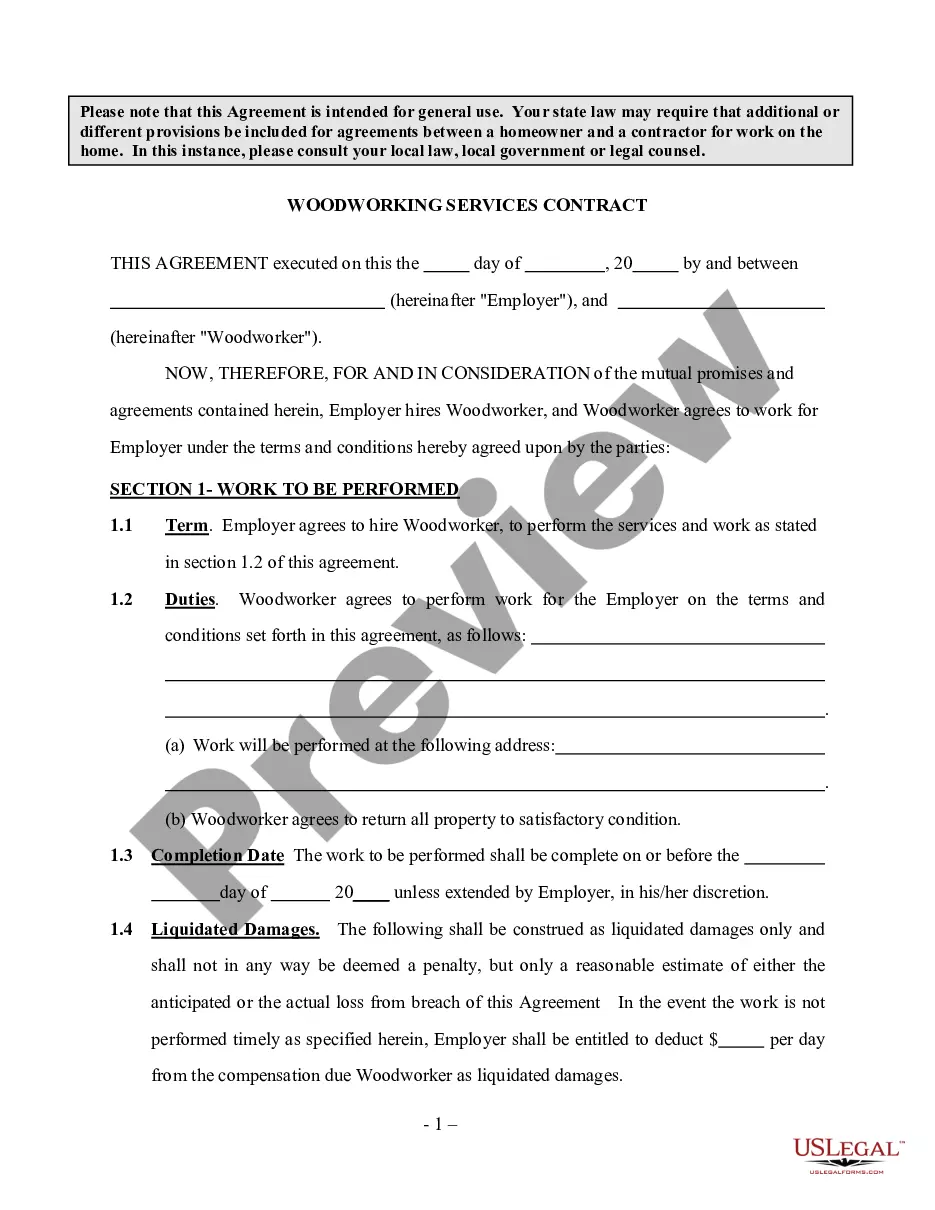
The Carpentry Services Contract for Self-Employed Independent Contractors is a legal agreement that establishes the terms between an employer and a self-employed carpenter. This contract defines the expectations, duties, and rights of both parties regarding carpentry services. Unlike standard employment contracts, this agreement acknowledges the carpenter as an independent contractor, distinguishing them from employees and clarifying their responsibilities. It is essential for ensuring both parties understand their obligations and protecting their interests during the course of the work.
Key parts of this document
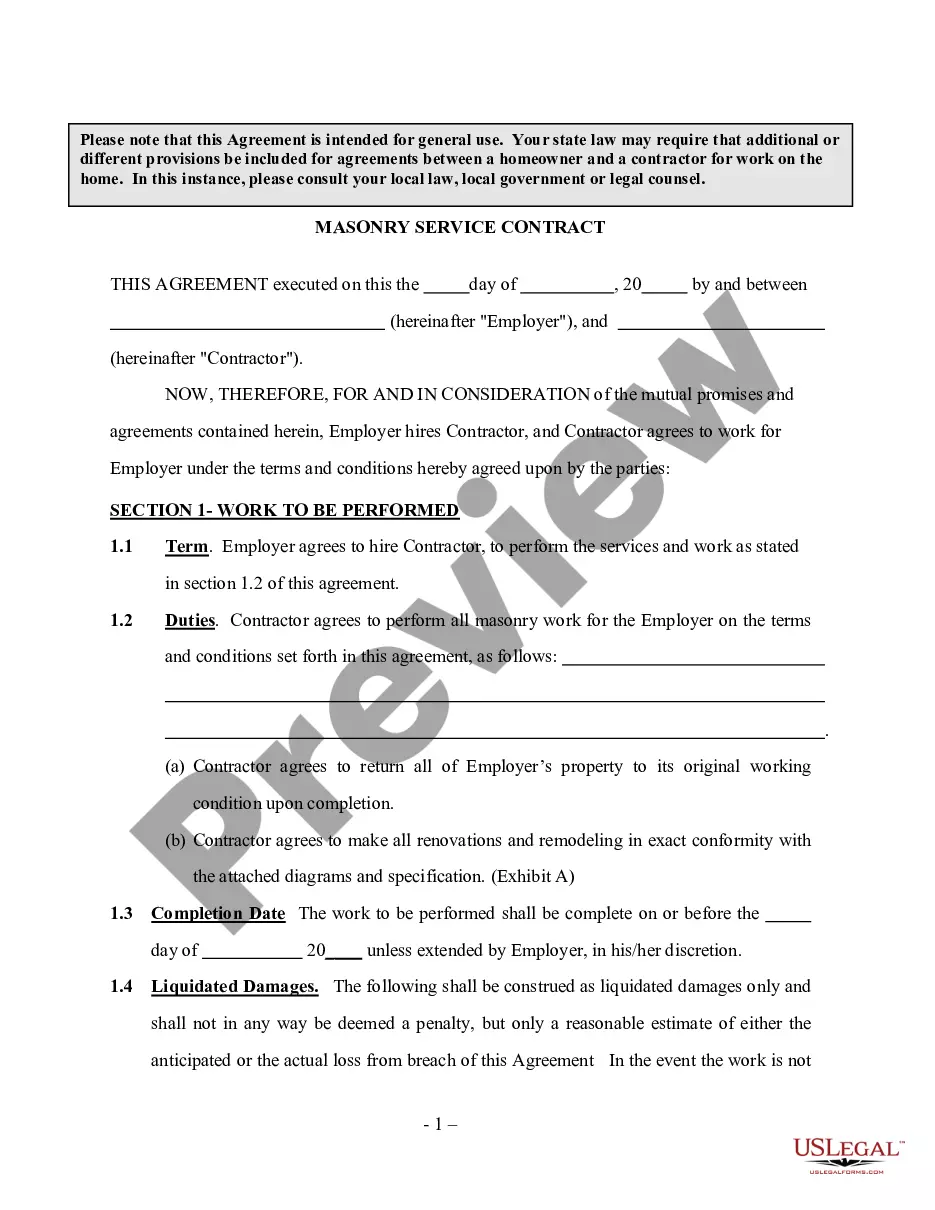
- Definition of the term and work to be performed by the carpenter.
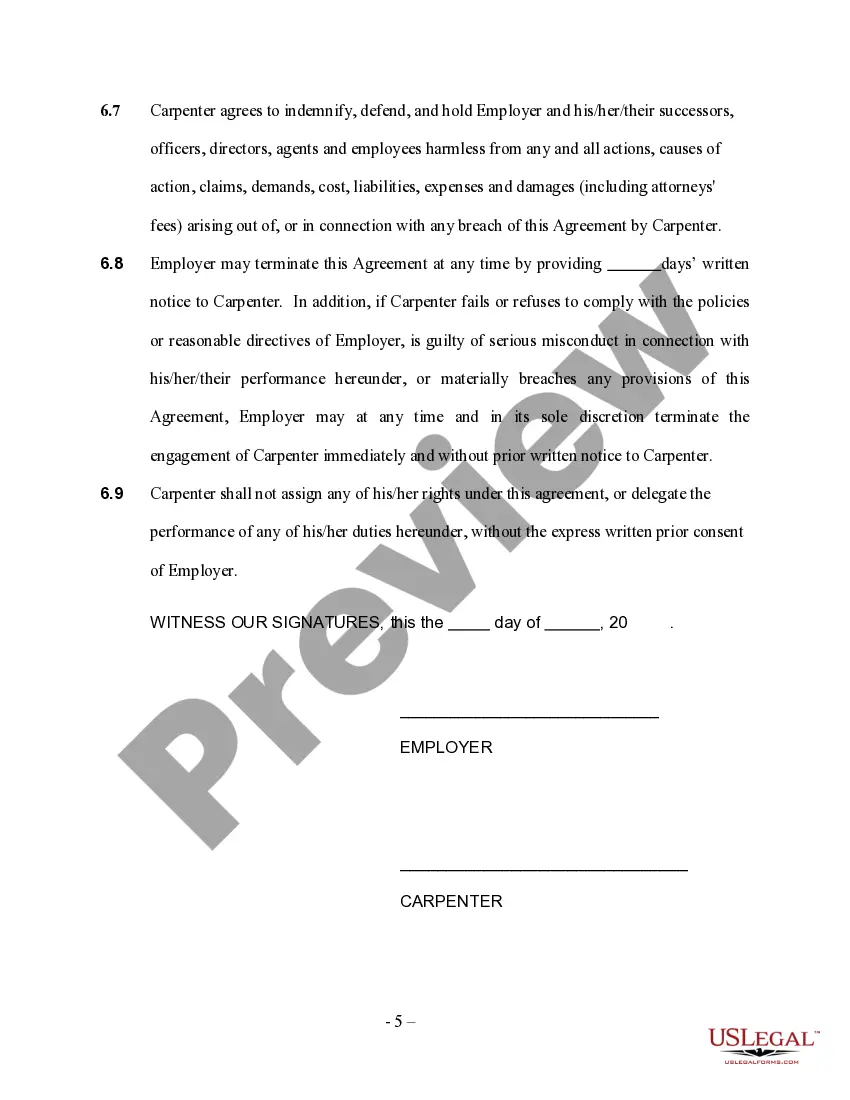
- Explicit acknowledgment of the carpenter's status as an independent contractor.
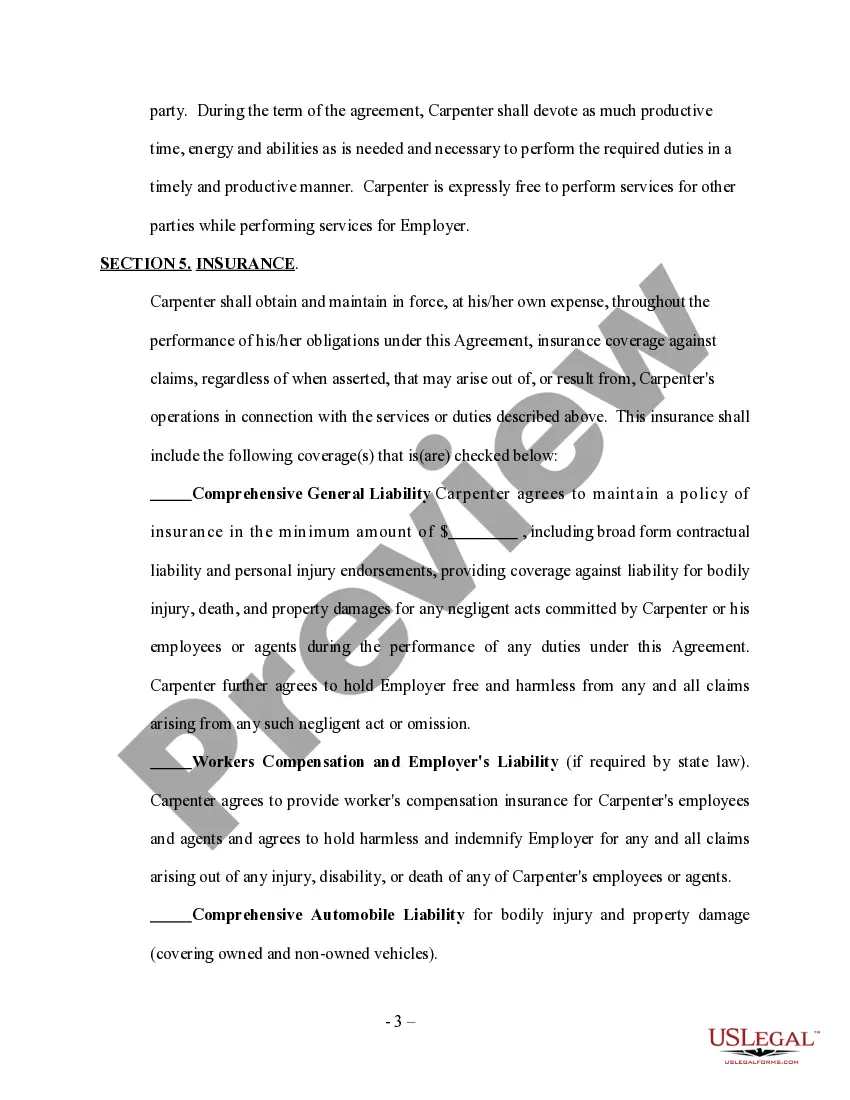
- Requirement for the carpenter to maintain proper insurance coverage.
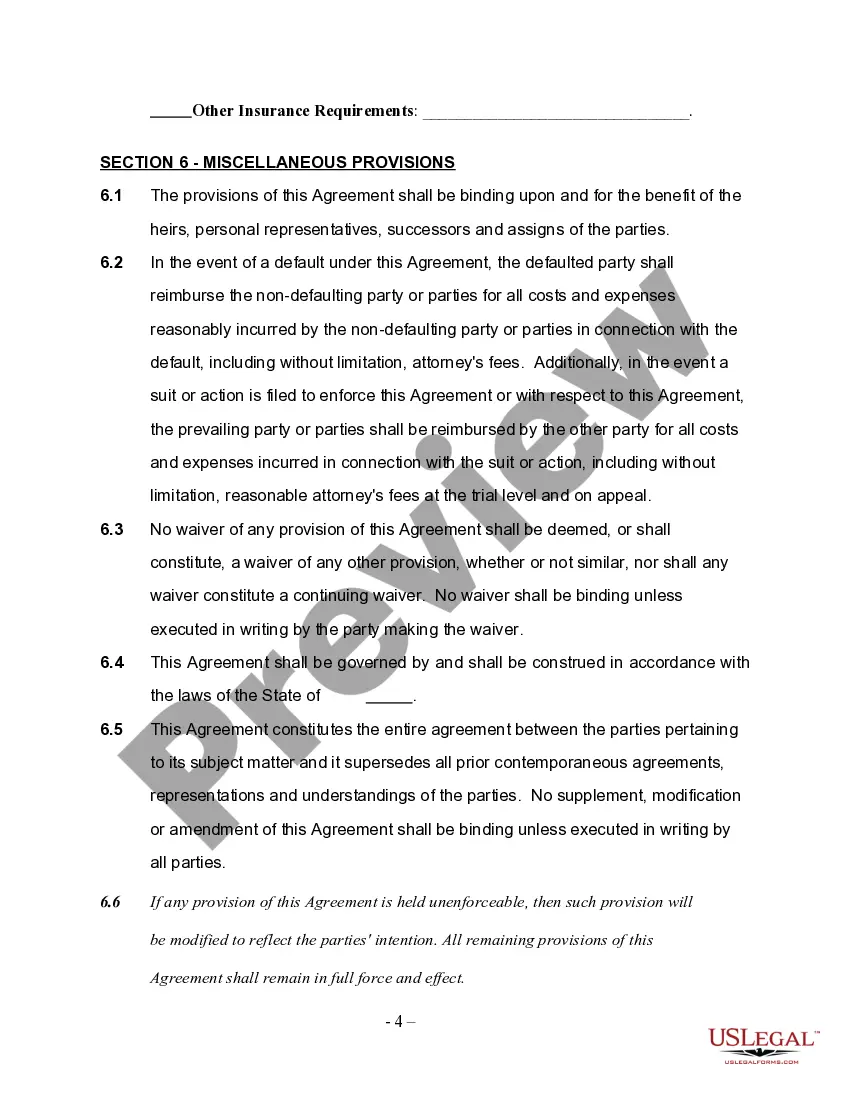
- Binding provisions on heirs and successors in case of a default.
- Clause addressing enforceability and modification of terms if necessary.

Situations where this form applies
This form is useful when hiring a carpenter as an independent contractor for carpentry services. Common situations include home renovation projects, custom furniture construction, or repair work where a homeowner or business seeks temporary assistance without establishing an employer-employee relationship. It is especially important when the scope of work, payment terms, and contractor status need clear definitions to prevent disputes.
Who this form is for
- Homeowners looking to hire a carpenter for renovations or repairs.
- Businesses requiring carpentry services on a contractual basis.
- Contractors wanting to formalize their agreements with employers.
- Independent carpenters seeking to provide their services under a formal contract.
How to complete this form
- Identify the parties involved in the agreement, including the employer and carpenter.
- Outline the specific carpentry services to be performed, including project details and timeline.
- Specify the payment terms, including compensation amounts and payment schedules.
- Ensure that the carpenter acknowledges their independent contractor status clearly.
- Review and sign the document, ensuring all parties receive a copy for their records.
Notarization requirements for this form
This form does not typically require notarization unless specified by local law. However, it's always wise to verify your local regulations to ensure the form's validity.
Get your form ready online
Our built-in tools help you complete, sign, share, and store your documents in one place.
Make edits, fill in missing information, and update formatting in US Legal Forms—just like you would in MS Word.
Download a copy, print it, send it by email, or mail it via USPS—whatever works best for your next step.
Sign and collect signatures with our SignNow integration. Send to multiple recipients, set reminders, and more. Go Premium to unlock E-Sign.
If this form requires notarization, complete it online through a secure video call—no need to meet a notary in person or wait for an appointment.
We protect your documents and personal data by following strict security and privacy standards.

Make edits, fill in missing information, and update formatting in US Legal Forms—just like you would in MS Word.

Download a copy, print it, send it by email, or mail it via USPS—whatever works best for your next step.

Sign and collect signatures with our SignNow integration. Send to multiple recipients, set reminders, and more. Go Premium to unlock E-Sign.

If this form requires notarization, complete it online through a secure video call—no need to meet a notary in person or wait for an appointment.

We protect your documents and personal data by following strict security and privacy standards.
Typical mistakes to avoid
- Failing to clearly define the scope of work and deadlines.
- Not specifying payment terms, leading to disputes over compensation.
- Ignoring local laws that may require additional provisions or language.
- Neglecting to include an insurance requirement for the carpenter.
Why complete this form online
- Convenient access to the form any time, facilitating quick contract creation.
- Editability allows users to customize the contract for specific needs or projects easily.
- Reliability ensures that the form is drafted by licensed attorneys and meets legal standards.
Legal use & context
- This form establishes a legal framework for the working relationship between the employer and carpenter.
- It is important to adhere to local regulations to ensure the enforceability of the contract.
- Both parties should keep a signed copy of the agreement for their records to resolve potential disputes.
Looking for another form?

Form popularity
FAQ
Identifying/Contact Information. Title and Description of the Project. Projected Timeline and Completion Date. Cost Estimate and Payment Schedule. Stop Work Clause and Stop Payment Clause. Act of God Clause. Change Order Agreement. Warranty.
Terms. This is the first section of any agreement or contract and states the names and locations of the parties involved. Responsibilities & Deliverables. Payment-Related Details. Confidentiality Clause. Contract Termination. Choice of Law.
Terms. This is the first section of any agreement or contract and states the names and locations of the parties involved. Responsibilities & Deliverables. Payment-Related Details. Confidentiality Clause. Contract Termination. Choice of Law.
Get it in writing. Keep it simple. Deal with the right person. Identify each party correctly. Spell out all of the details. Specify payment obligations. Agree on circumstances that terminate the contract. Agree on a way to resolve disputes.
A. No. Being labeled an independent contractor, being required to sign an agreement stating that one is an independent contractor, or being paid as an independent contractor (that is, without payroll deductions and with income reported by an IRS Form 1099 rather than a W-2), is not what determines employment status.
For most types of projects you hire an independent contractor (IC) to do, the law does not require you to put anything in writing. You can meet with the IC, agree on the terms of your arrangement, and have an oral contract or agreement that is legally binding. Just because you can doesn't mean you should, however.
Terms. This is the first section of any agreement or contract and states the names and locations of the parties involved. Responsibilities & Deliverables. Payment-Related Details. Confidentiality Clause. Contract Termination. Choice of Law.
The IRS requires contractors to fill out a Form W-9, request for Taxpayer Identification Number and Certification, which you should keep on file for at least four years after the hiring. This form is used to request the correct name and Taxpayer Identification Number, or TIN, of the worker or their entity.