Tutoring Agreement - Self-Employed Independent Contractor
Overview of this form
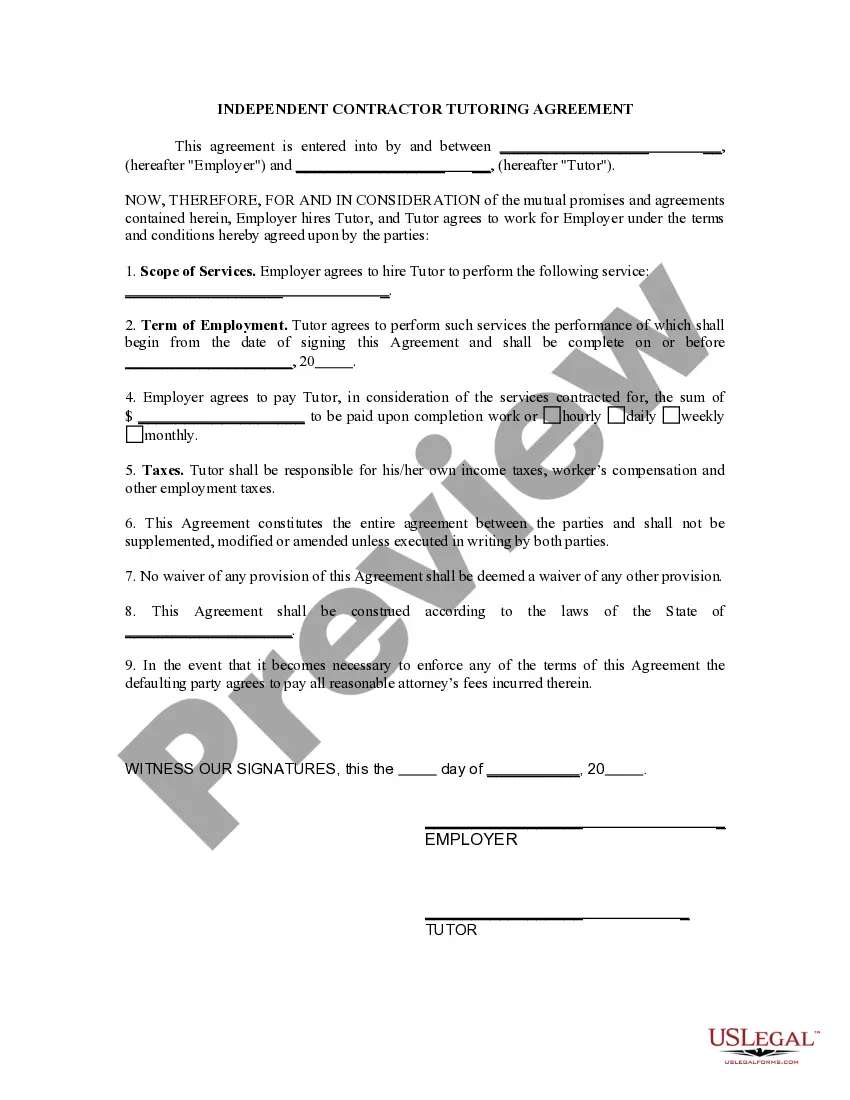
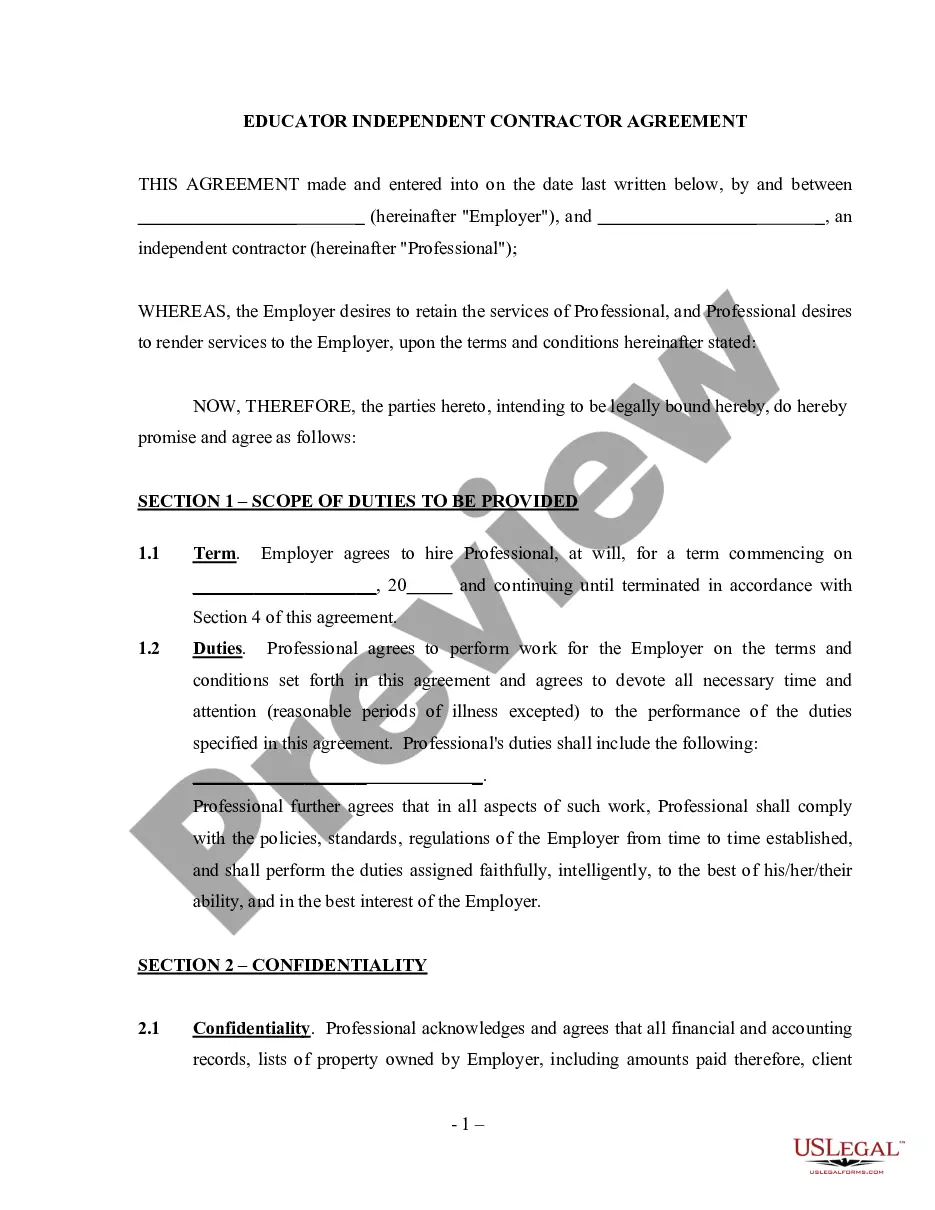
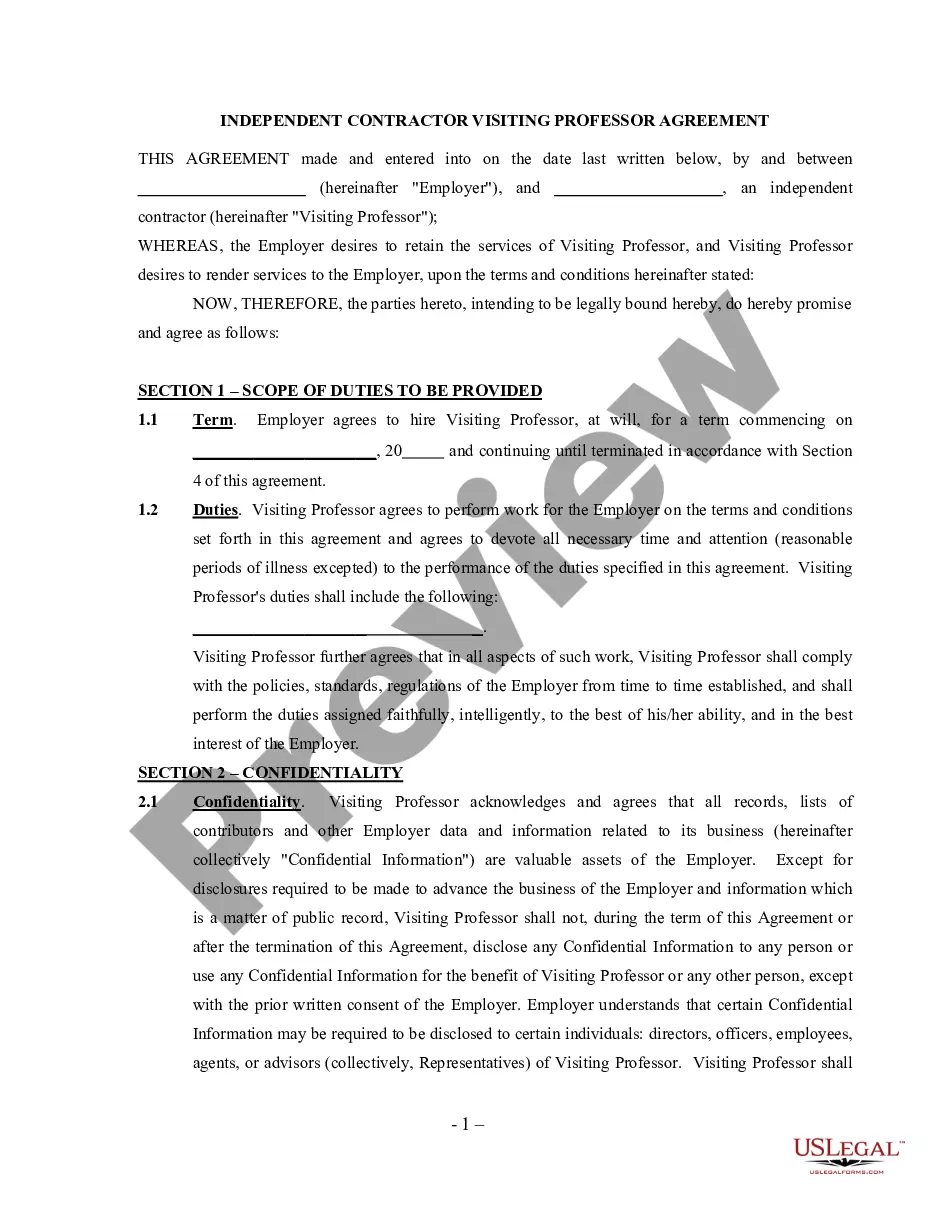
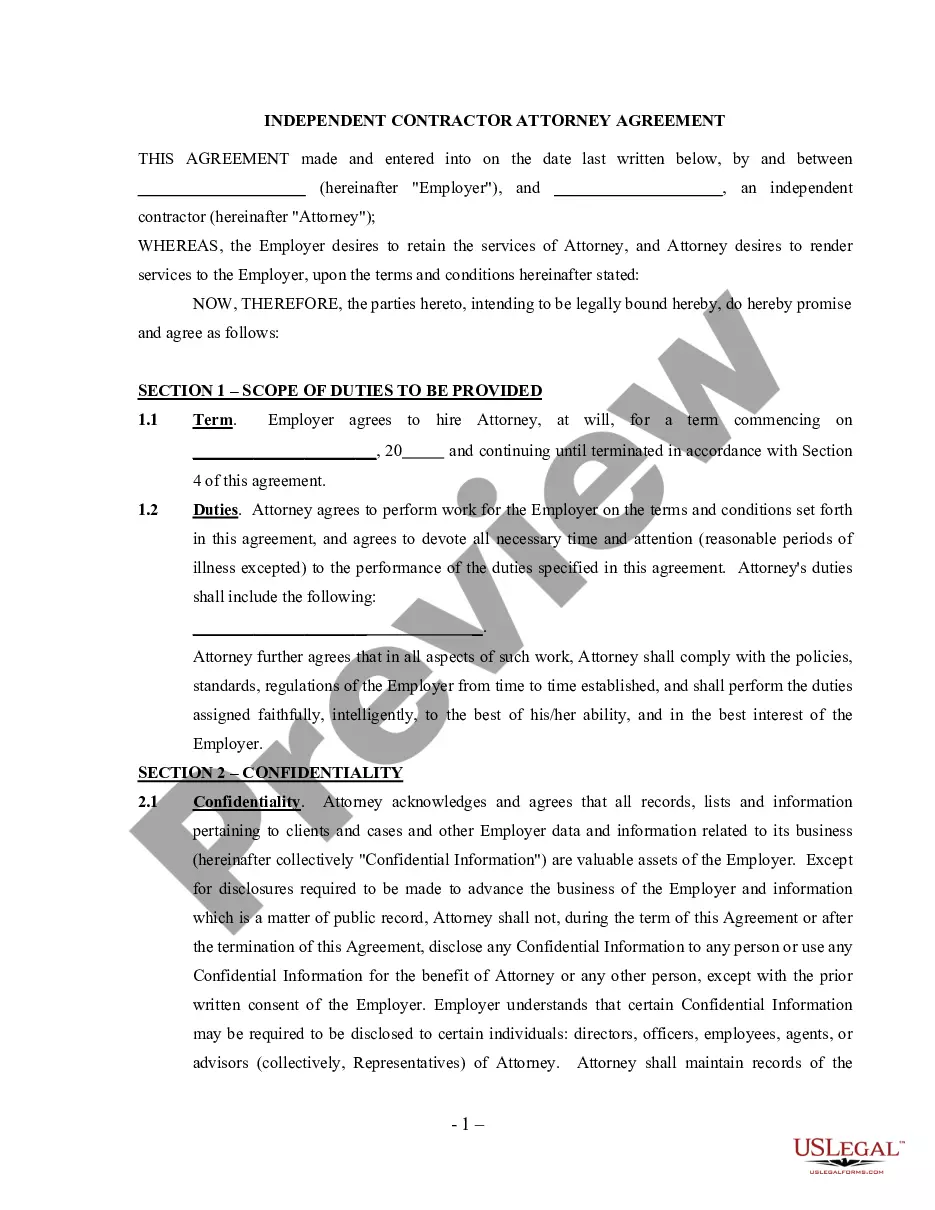
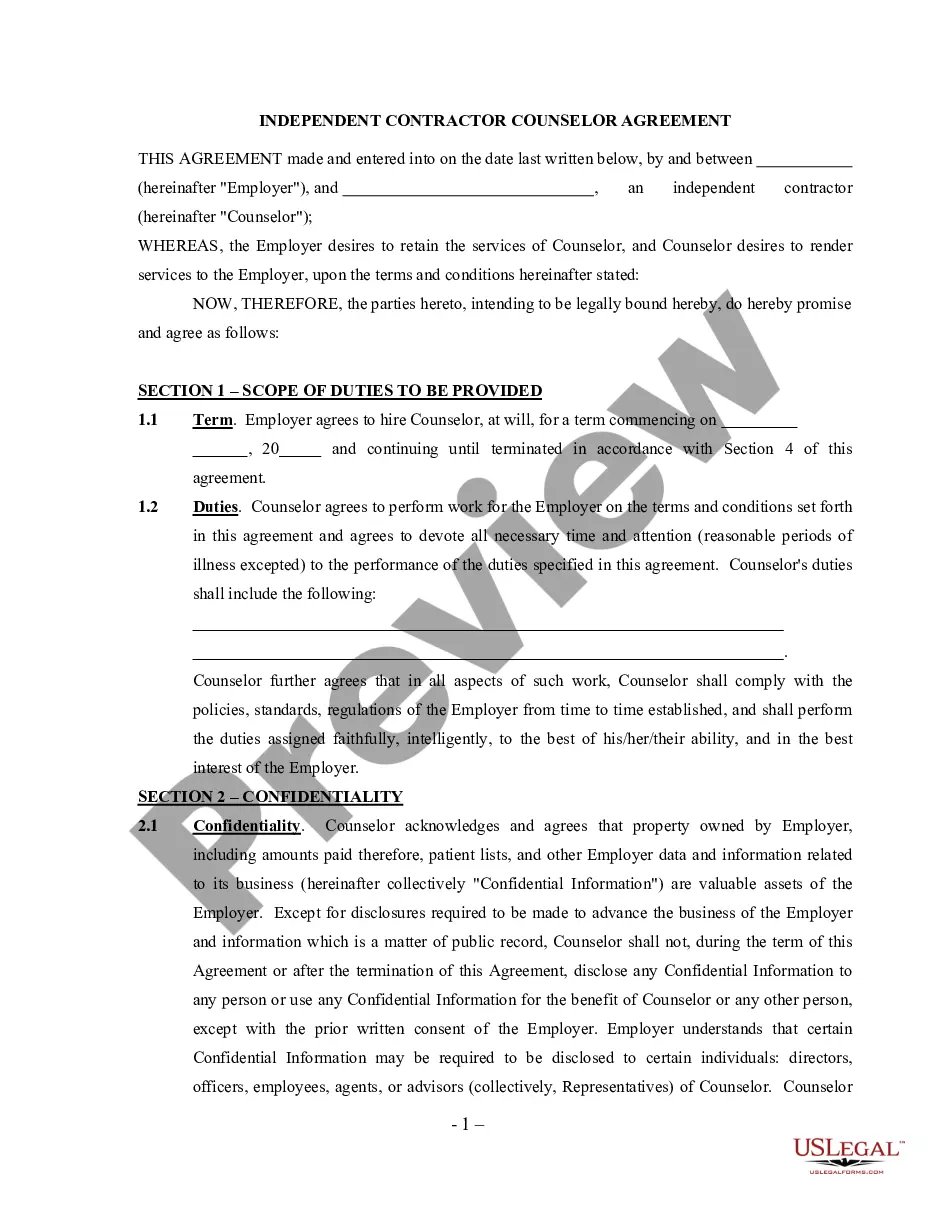
The Tutoring Agreement - Self-Employed Independent Contractor is a legal document that outlines the relationship between an employer and a tutor who is contracted as an independent contractor. This agreement specifies the roles and responsibilities of both parties and ensures clarity in the arrangement, distinguishing it from other forms of employment agreements, such as those for employees. It serves to protect the interests of both the employer and the tutor by formalizing expectations and conditions for the tutoring services provided.
Key parts of this document
- Identification of the parties involved: employer and tutor.
- Detailed scope of services to be performed by the tutor.
- Terms regarding the tutor's responsibility for taxes and other employment obligations.
- Clauses on modifications to the agreement and waiver provisions.
- Governing law clause indicating applicable state law.
When to use this document
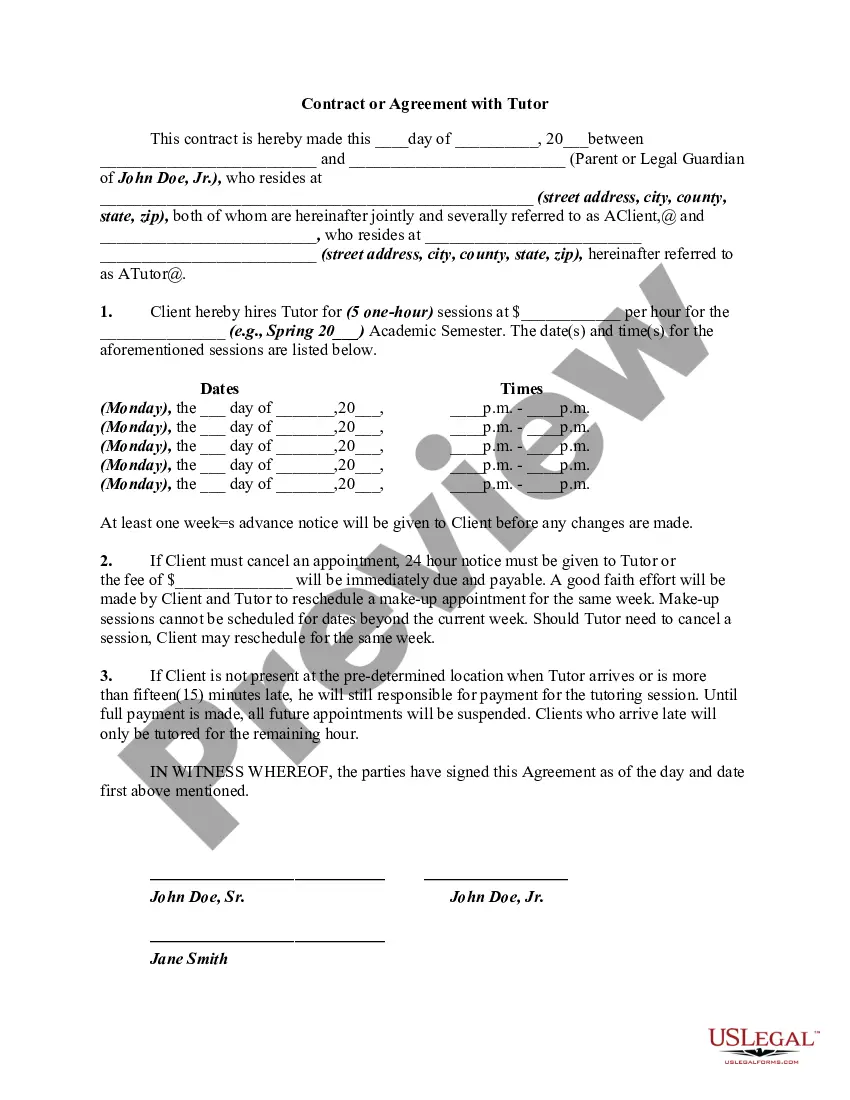
This form should be used when an employer seeks to hire a tutor on an independent contractor basis. It is particularly useful in situations such as tutoring for a specific subject, preparation for exams, or providing specialized academic support. The agreement clearly outlines the services expected from the tutor and ensures that both parties understand their rights and obligations.
Who should use this form
- Individuals or organizations hiring independent tutors for educational services.
- Freelance tutors seeking to define their working relationship with employers.
- Parents or guardians arranging tutoring services for their children.
Completing this form step by step
- Identify the parties by entering the name of the employer and tutor.
- Clearly specify the scope of services the tutor is to provide.
- Include details on financial responsibilities concerning taxes and fees.
- Review and agree upon modification clauses and waivers.
- Finalize the document by signing it and including the date.
Is notarization required?
In most cases, this form does not require notarization. However, some jurisdictions or signing circumstances might. US Legal Forms offers online notarization powered by Notarize, accessible 24/7 for a quick, remote process.
Get your form ready online
Our built-in tools help you complete, sign, share, and store your documents in one place.
Make edits, fill in missing information, and update formatting in US Legal Forms—just like you would in MS Word.
Download a copy, print it, send it by email, or mail it via USPS—whatever works best for your next step.
Sign and collect signatures with our SignNow integration. Send to multiple recipients, set reminders, and more. Go Premium to unlock E-Sign.
If this form requires notarization, complete it online through a secure video call—no need to meet a notary in person or wait for an appointment.
We protect your documents and personal data by following strict security and privacy standards.

Make edits, fill in missing information, and update formatting in US Legal Forms—just like you would in MS Word.

Download a copy, print it, send it by email, or mail it via USPS—whatever works best for your next step.

Sign and collect signatures with our SignNow integration. Send to multiple recipients, set reminders, and more. Go Premium to unlock E-Sign.

If this form requires notarization, complete it online through a secure video call—no need to meet a notary in person or wait for an appointment.

We protect your documents and personal data by following strict security and privacy standards.
Avoid these common issues
- Failing to clearly define the scope of services, which can lead to misunderstandings.
- Neglecting to include payment terms and conditions.
- Not specifying the governing law, leading to potential legal complications.
Why use this form online
- Convenient access to professionally drafted legal templates.
- Easy to customize according to specific needs and requirements.
- Quick download and printing, saving time and effort compared to traditional methods.
Quick recap
- The Tutoring Agreement ensures clarity around the roles and responsibilities of the tutor and employer.
- It is essential for establishing the tutor's status as an independent contractor.
- Customizing this agreement to comply with state laws is critical for enforceability.
Looking for another form?
Form popularity
FAQ
If you are a tutor but working through a company, you're most likely an employee.If that's the case, you're a contractor, working on a per contract basis, through an agency or company and considered self-employed. If you are working directly with students and they're paying you directly, you're self-employed.
Most clubs currently classify their coaches as independent contractors and do not pay employment taxes on payments to coaches.The IRS found the coaches were actually employees, primarily because the club provided the coaches' equipment.
Fees/Payment Policies. Here you can discuss the what, when, and how for payment. Student/Parent Expectations. Tutor Expectations. Communication.
The general rule is that an individual is an independent contractor if the payer has the right to control or direct only the result of the work and not what will be done and how it will be done. The earnings of a person who is working as an independent contractor are subject to Self-Employment Tax.
Tutoring fees are included with other medical expenses (such as vision care, prescriptions, orthodontics, etc.) to reduce the amount of federal and provincial taxes payable. To claim tutoring fees you need receipts and a written letter from a medical practitioner to certify that the service is required.
Like all hard-working Americans, tutors aren't exempt from filing their taxes. Unlike most working Americans, however, freelance tutors are part of the 10 percent who are self-employed. That means you're your own boss and your own accountant (unless, of course, you outsource that to a tax professional).
If you're actively running your own tutoring business, and not working for an agency or other employer, you're self-employed. That's true even if you have a full-time day job. In the eyes of the Internal Revenue Service, being self-employed classifies you as a 1099 independent contractor.
Whether you are a full-time self-employed tutor like me, or have a lecturing day job and tutor by night, you still need to declare yourself as self-employed to HMRC.