Geologist Agreement - Self-Employed Independent Contractor
About this form
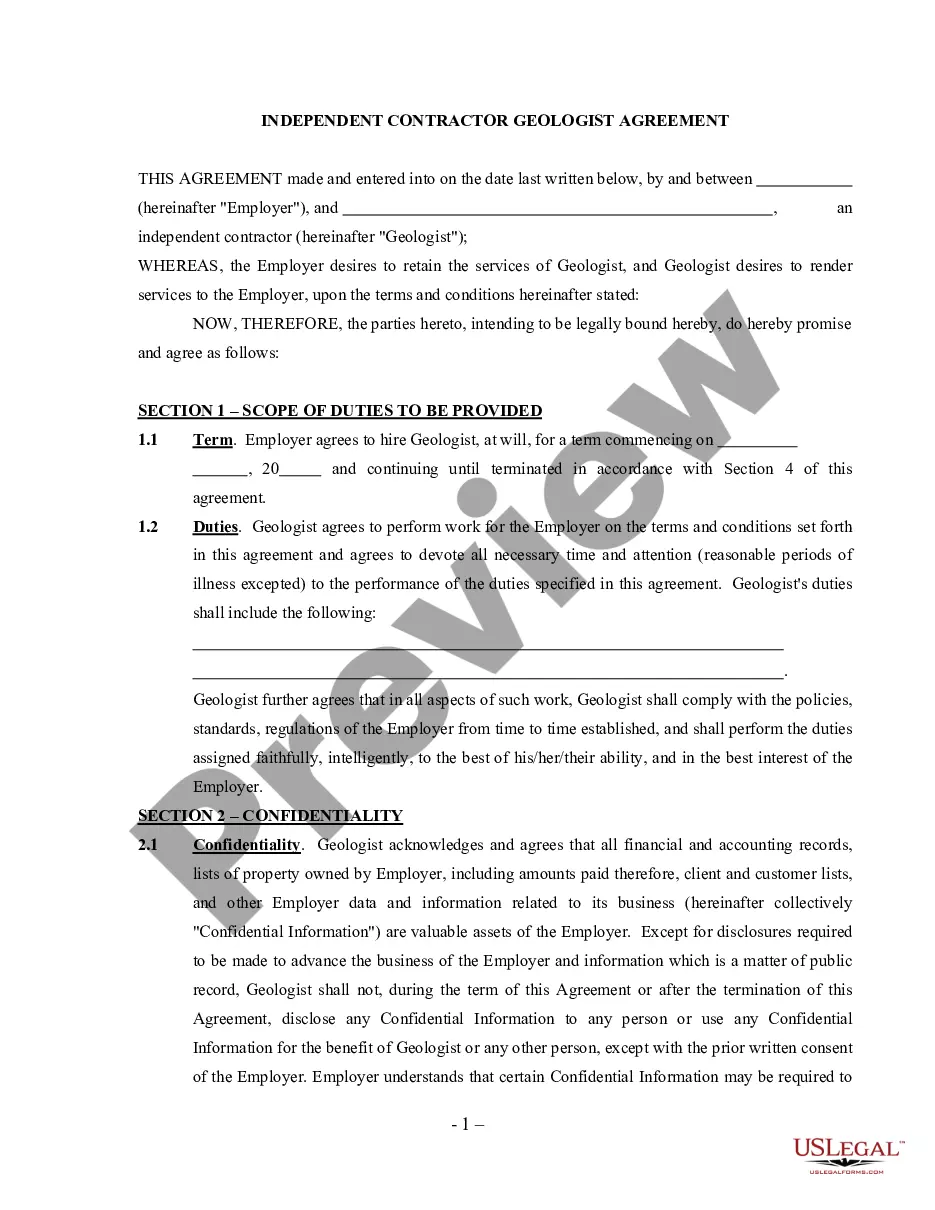
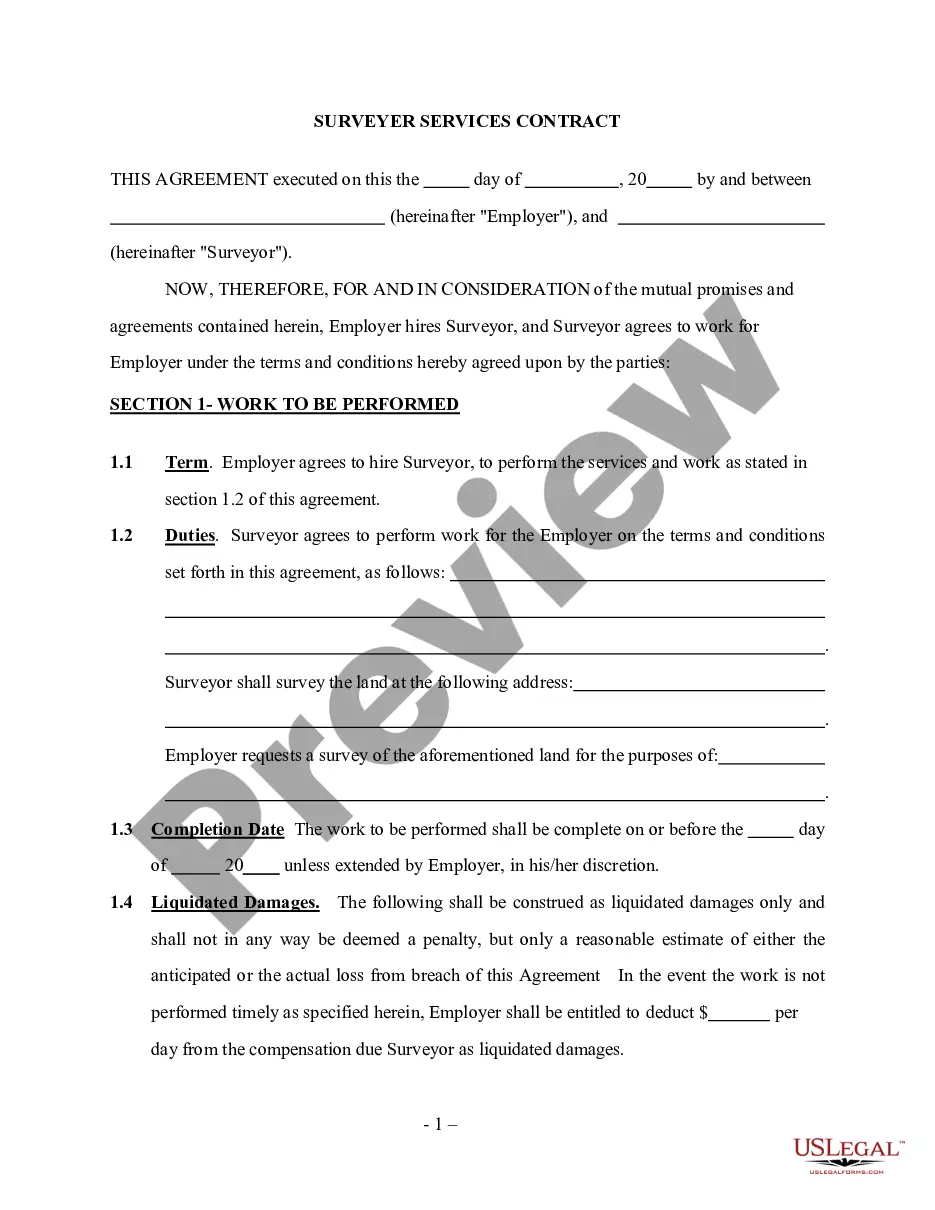
The Geologist Agreement - Self-Employed Independent Contractor is a legal document that outlines the terms under which a geologist provides services as an independent contractor. This form specifies the responsibilities of both the geologist and the employer, differentiating it from employment agreements by establishing the contractor's independent status and the scope of work to be done.
Key parts of this document
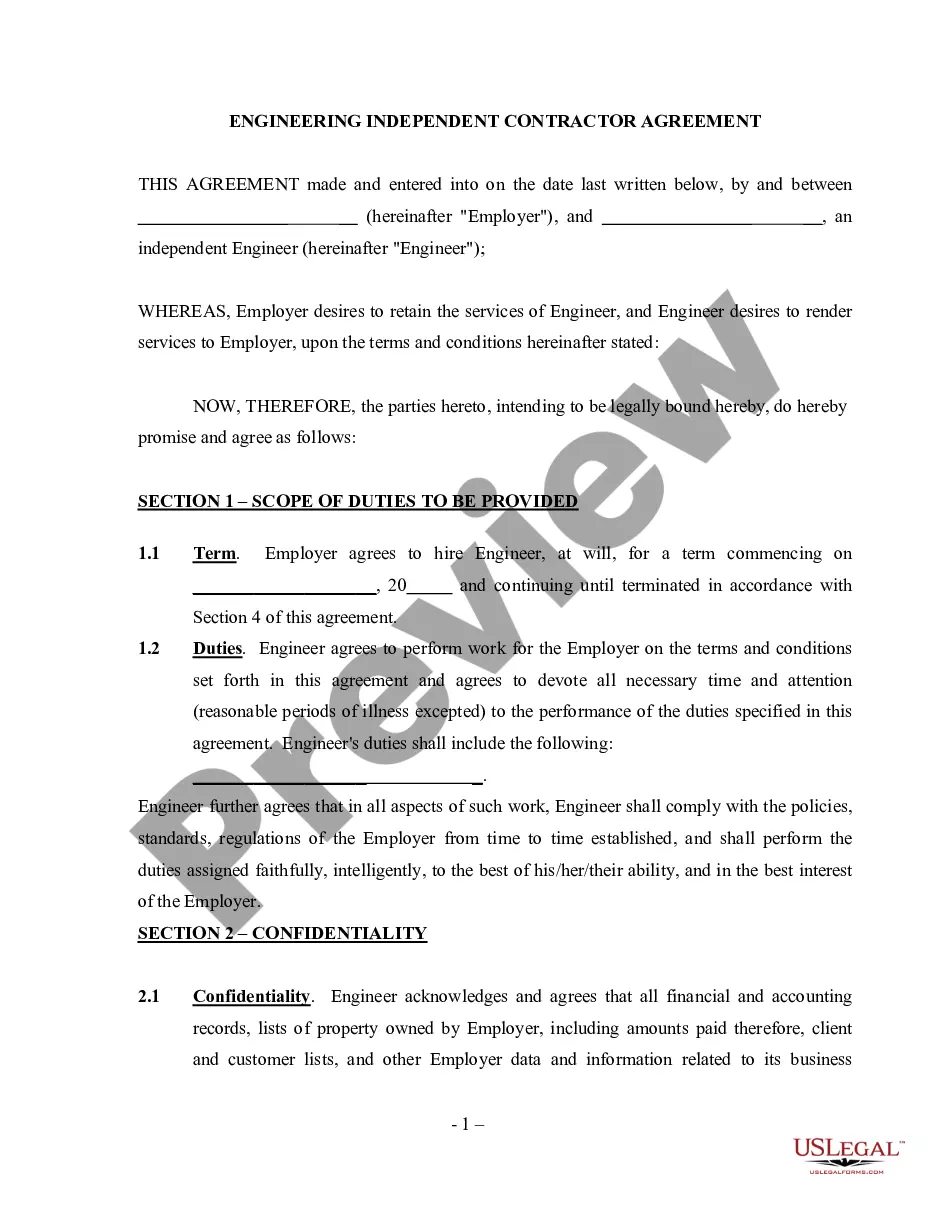
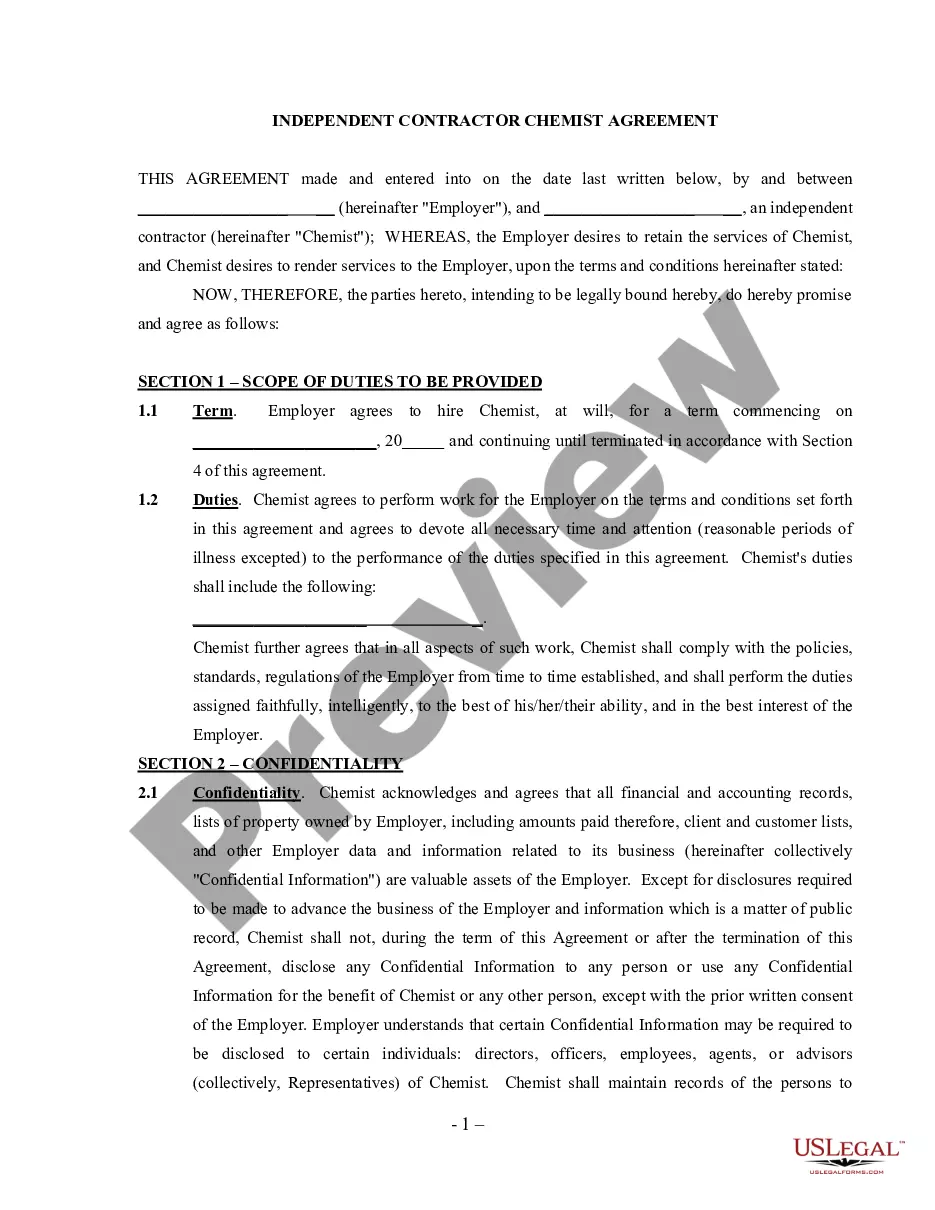
- SCOPE OF DUTIES: Details the specific geologic services to be provided by the geologist.
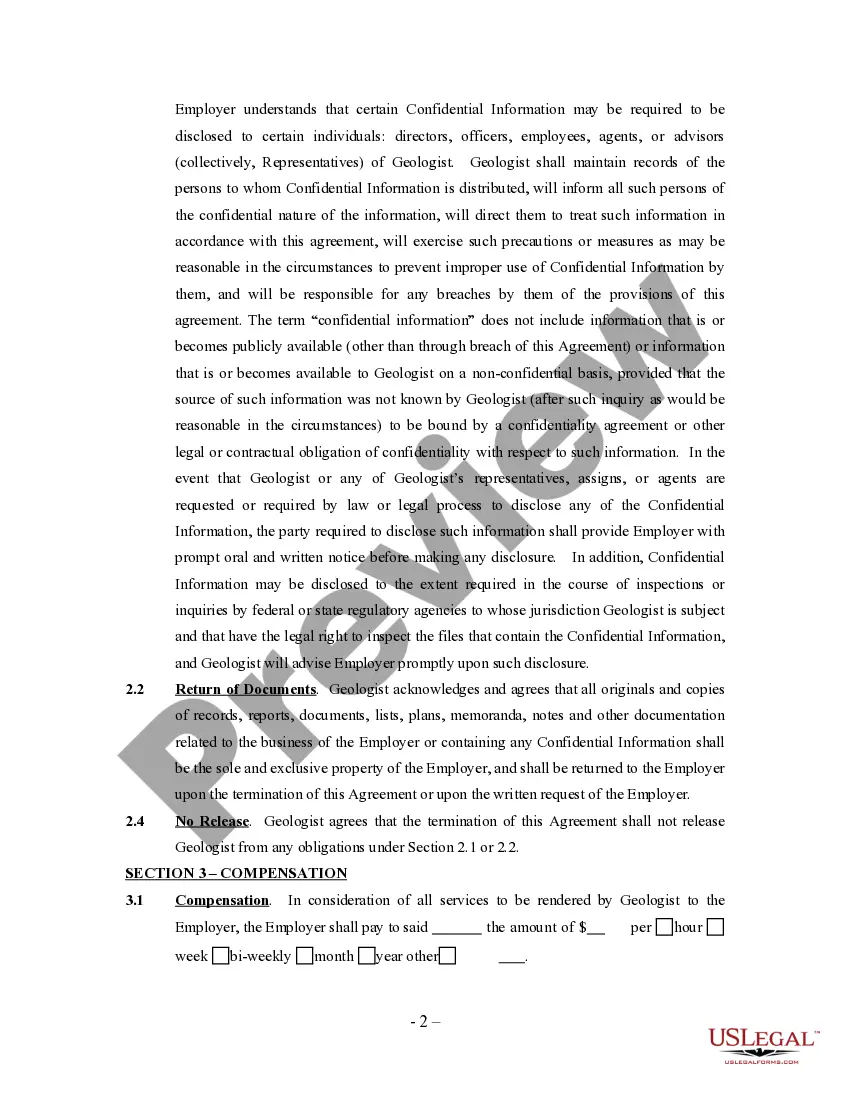
- CONFIDENTIALITY: Ensures the geologist protects the employer's proprietary information.
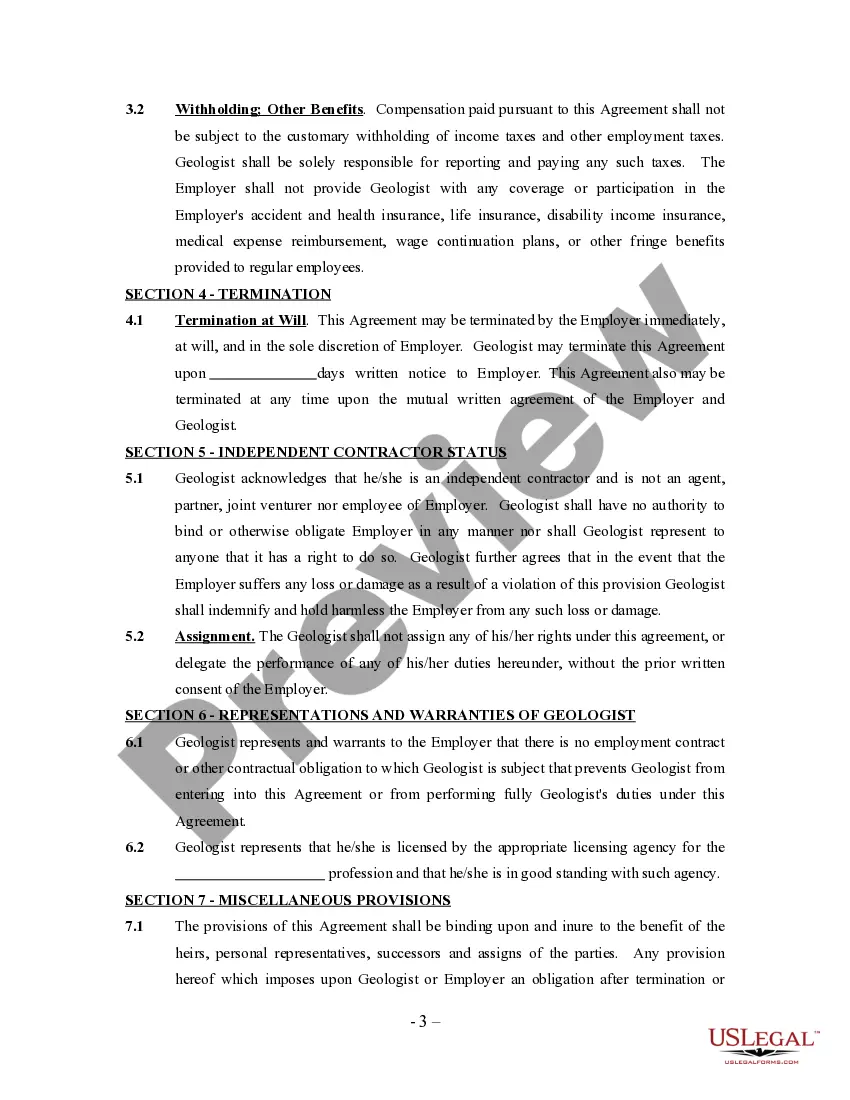
- INDEPENDENT CONTRACTOR STATUS: Confirms that the geologist operates as an independent entity without employer obligations like an employee.
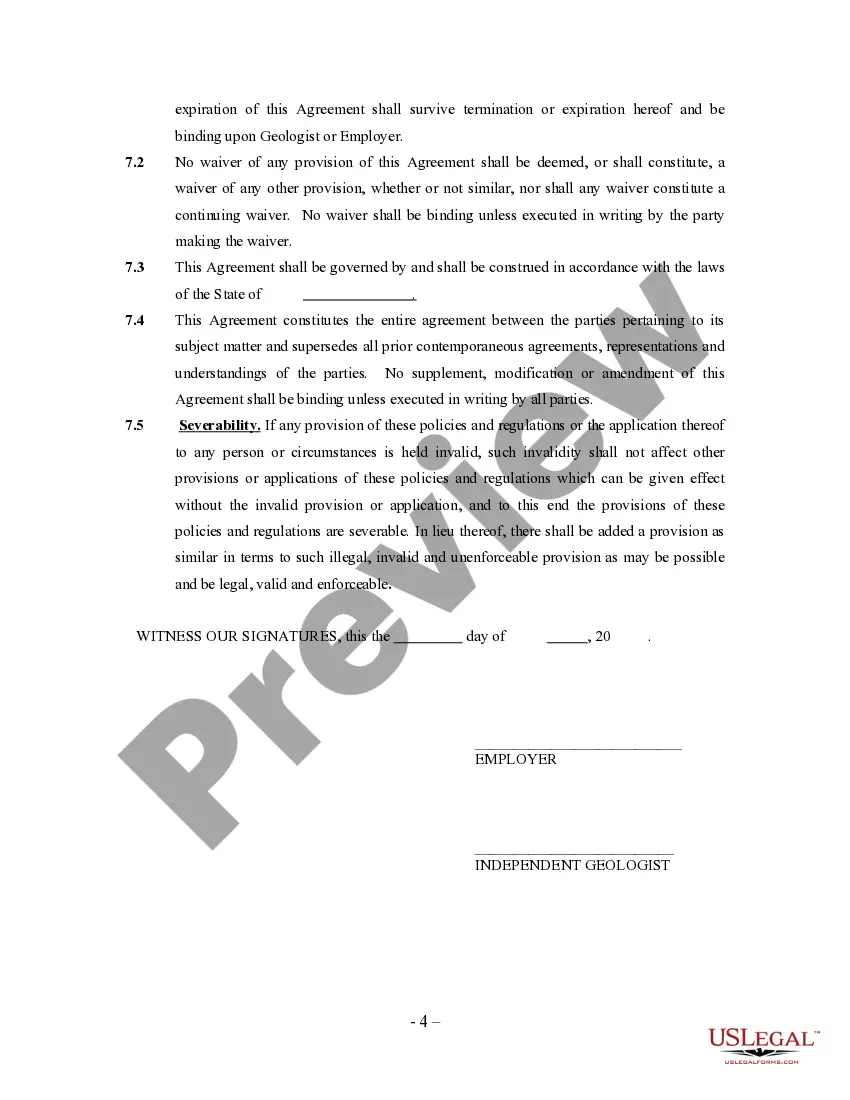
- TERMINATION: Outlines the conditions under which the agreement can be terminated by either party.
- RETURN OF DOCUMENTS: Requires the geologist to return all confidential documents upon termination of the agreement.
When to use this form
This form should be used when an employer wants to hire a geologist on an independent contractor basis. It is appropriate in situations where geologic services such as site assessments, environmental impact studies, or resource evaluations are needed. The form helps protect the interests of both the employer and the contractor by clearly defining the work relationship.
Intended users of this form
This form is intended for:
- Employers looking to engage a geologist on a project basis.
- Geologists seeking to formalize their independent contractor status while providing services.
- Businesses needing geologic expertise for projects without creating an employer-employee relationship.
Steps to complete this form
- Identify the parties involved: Fill in the legal names of both the employer and the geologist.
- Specify the scope of services: Clearly describe the geologic services the geologist will provide.
- Outline confidentiality provisions: Enter terms related to confidentiality and handling of sensitive information.
- Include termination conditions: Specify how and under what circumstances the agreement can be terminated.
- Sign the agreement: Ensure both parties sign and date the document to make it legally binding.
Notarization guidance
Notarization is generally not required for this form. However, certain states or situations might demand it. You can complete notarization online through US Legal Forms, powered by Notarize, using a verified video call available anytime.
Get your form ready online
Our built-in tools help you complete, sign, share, and store your documents in one place.
Make edits, fill in missing information, and update formatting in US Legal Forms—just like you would in MS Word.
Download a copy, print it, send it by email, or mail it via USPS—whatever works best for your next step.
Sign and collect signatures with our SignNow integration. Send to multiple recipients, set reminders, and more. Go Premium to unlock E-Sign.
If this form requires notarization, complete it online through a secure video call—no need to meet a notary in person or wait for an appointment.
We protect your documents and personal data by following strict security and privacy standards.
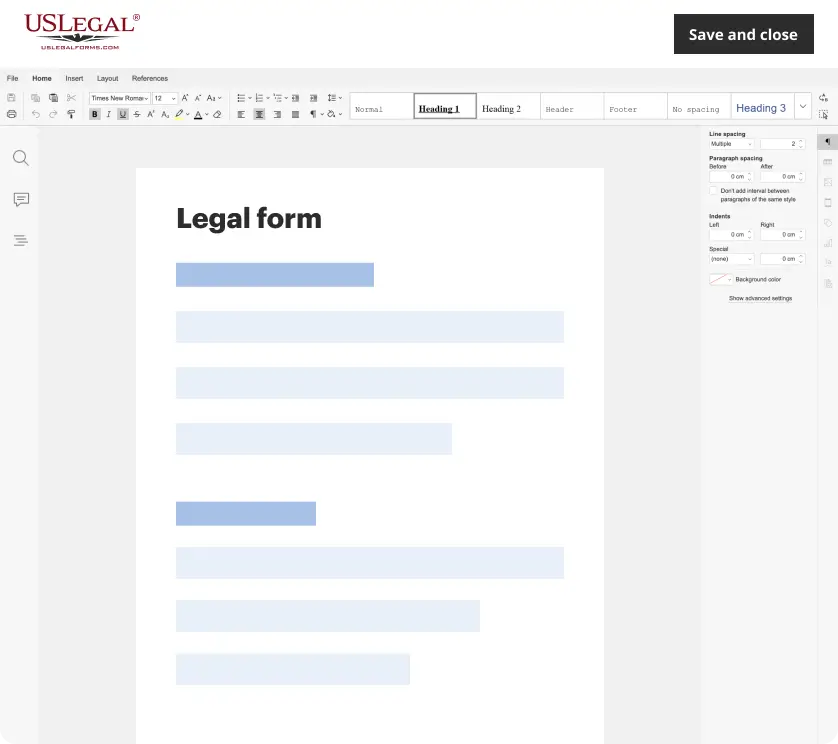
Make edits, fill in missing information, and update formatting in US Legal Forms—just like you would in MS Word.
Download a copy, print it, send it by email, or mail it via USPS—whatever works best for your next step.
Sign and collect signatures with our SignNow integration. Send to multiple recipients, set reminders, and more. Go Premium to unlock E-Sign.

If this form requires notarization, complete it online through a secure video call—no need to meet a notary in person or wait for an appointment.
We protect your documents and personal data by following strict security and privacy standards.
Avoid these common issues
- Failing to clearly define the scope of work, which can lead to misunderstandings.
- Not addressing confidentiality obligations adequately, risking disclosure of sensitive information.
- Mislabeling the contractor status, which may lead to unintended employer liabilities.
- Neglecting to sign or date the agreement, making it unenforceable.
Why use this form online
- Convenience: Downloadable format allows for easy access anytime, anywhere.
- Editability: Tailor the agreement to specific project needs before printing.
- Reliability: Documents created by licensed attorneys ensure compliance with legal standards.
Looking for another form?



Form popularity
FAQ
Yes, contractors earn (on average) a bit more than full-time employeesbut contracting comes with its own set of issues.Whether they work for a staffing agency or operate independently, contractors must have a clear SOW (statement of work) and take care to document their achievements and attributes.
It is important to understand at the outset that an independent contractor does not have the same protection under employment law as does an employee.For example, the independent contractor cannot lodge an unfair dismissal dispute with the CCMA or the Bargaining Council.
As an independent contractor, you have the right to market your services to other businesses and can work with more than one client at a time. Even if you have a long-term contract with a particular client, you can choose to work on additional projects as well.
An experienced Construction Contractor with 10-19 years of experience earns an average total compensation (includes tips, bonus, and overtime pay) of $35.00 based on 6 salaries. In their late career (20 years and higher), employees earn an average total compensation of $35.
As an independent contractor, you have the right to market your services to other businesses and can work with more than one client at a time. Even if you have a long-term contract with a particular client, you can choose to work on additional projects as well.
You define the work hours: Generally, independent contractors do the job as they see fit. They set their own hours and work how and when they want. And they should be paid by the project -- never on an hourly basis.Remember, contractors work on a temporary basis.
Independent contractors report their income on Schedule C (Form 1040), Profit or Loss from Business (Sole Proprietorship). Also file Schedule SE (Form 1040), Self-Employment Tax if net earnings from self-employment are $400 or more.
Simply put, being an independent contractor is one way to be self-employed. Being self-employed means that you earn money but don't work as an employee for someone else.An independent contractor is someone who provides a service on a contractual basis.
You have to file an income tax return if your net earnings from self-employment were $400 or more. If your net earnings from self-employment were less than $400, you still have to file an income tax return if you meet any other filing requirement listed in the Form 1040 and 1040-SR instructions PDF.