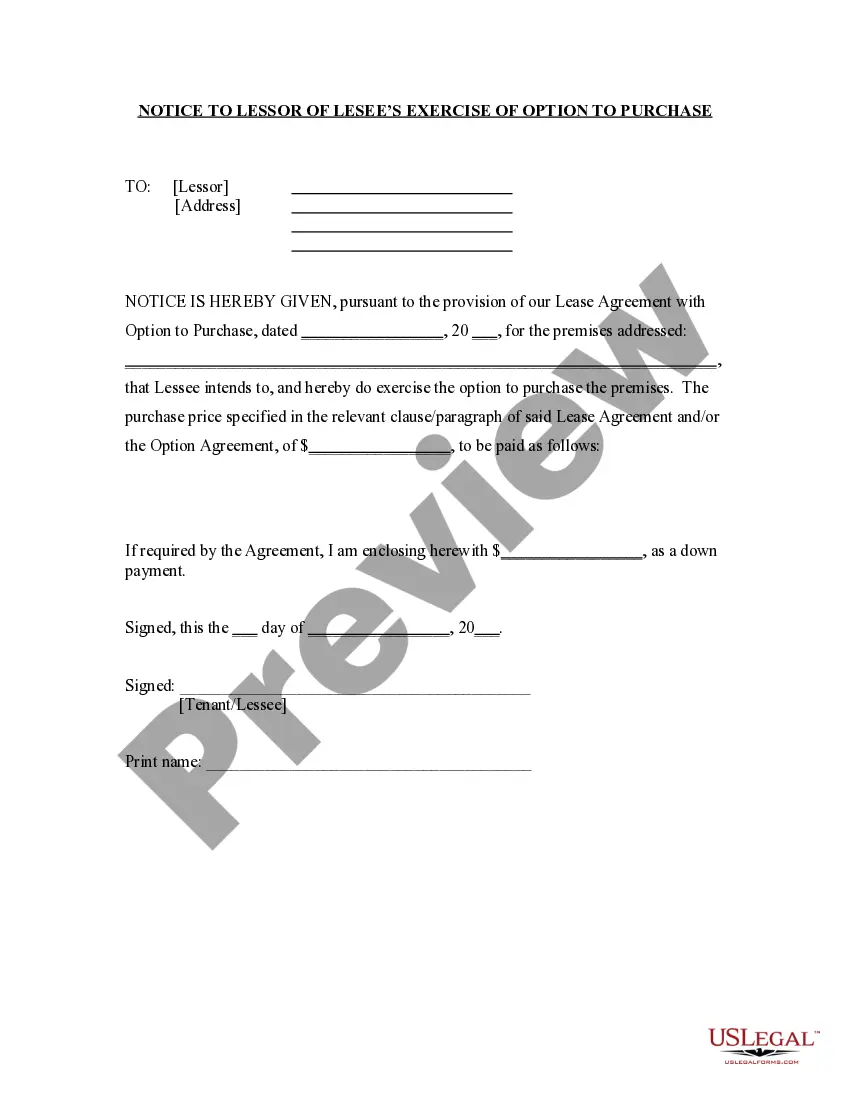
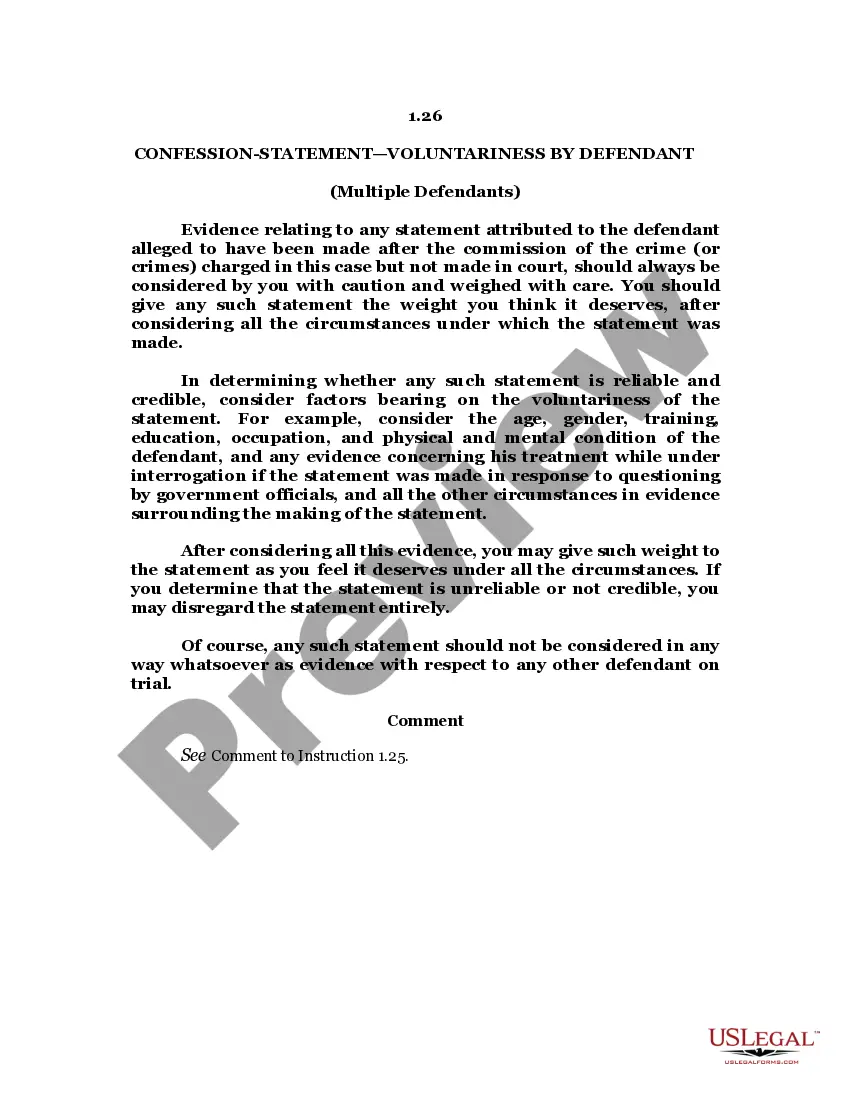
CONFESSION-STATEMENT-VOLUNTARINESS BY DEFENDANT
Overview of this form
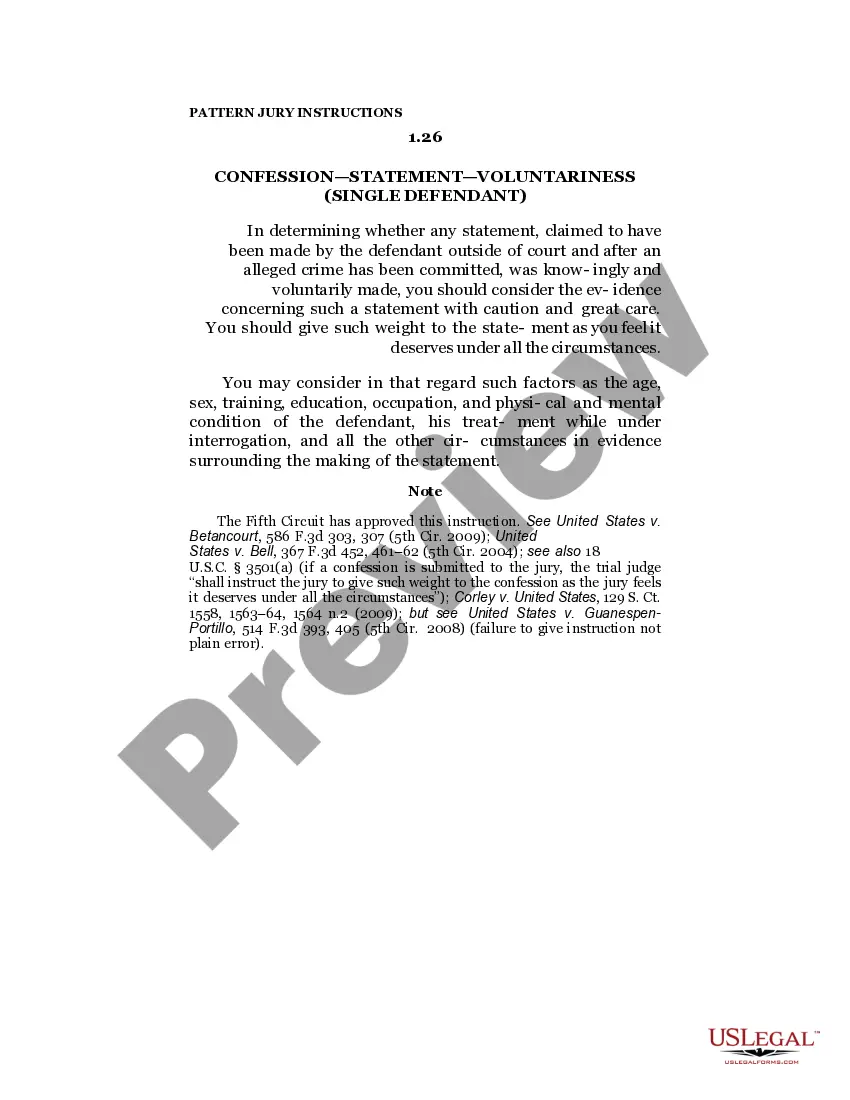
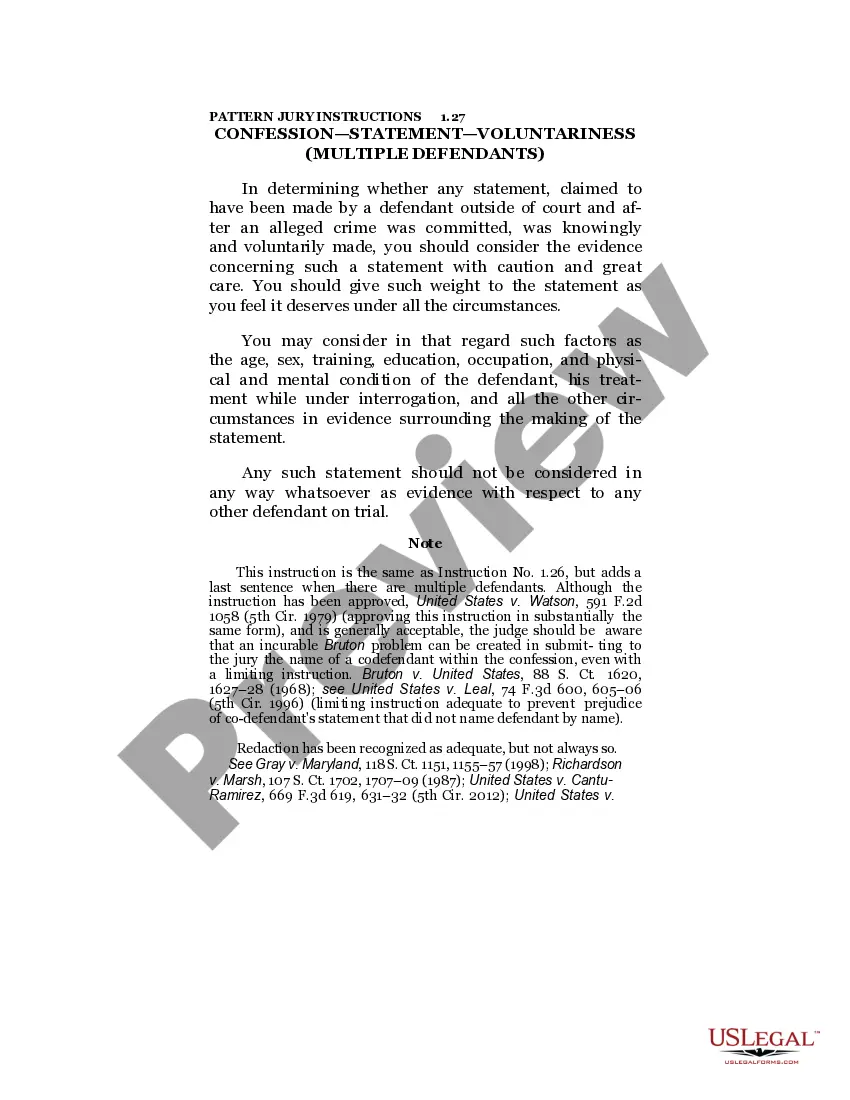
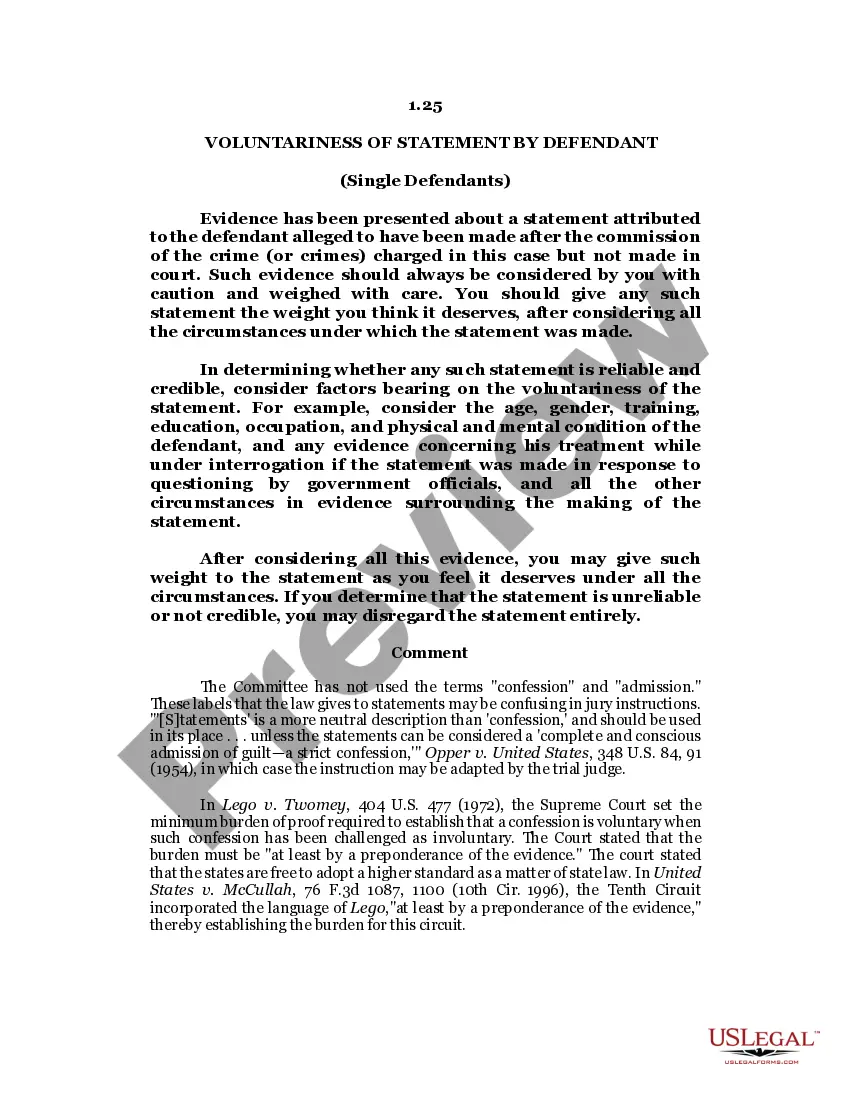
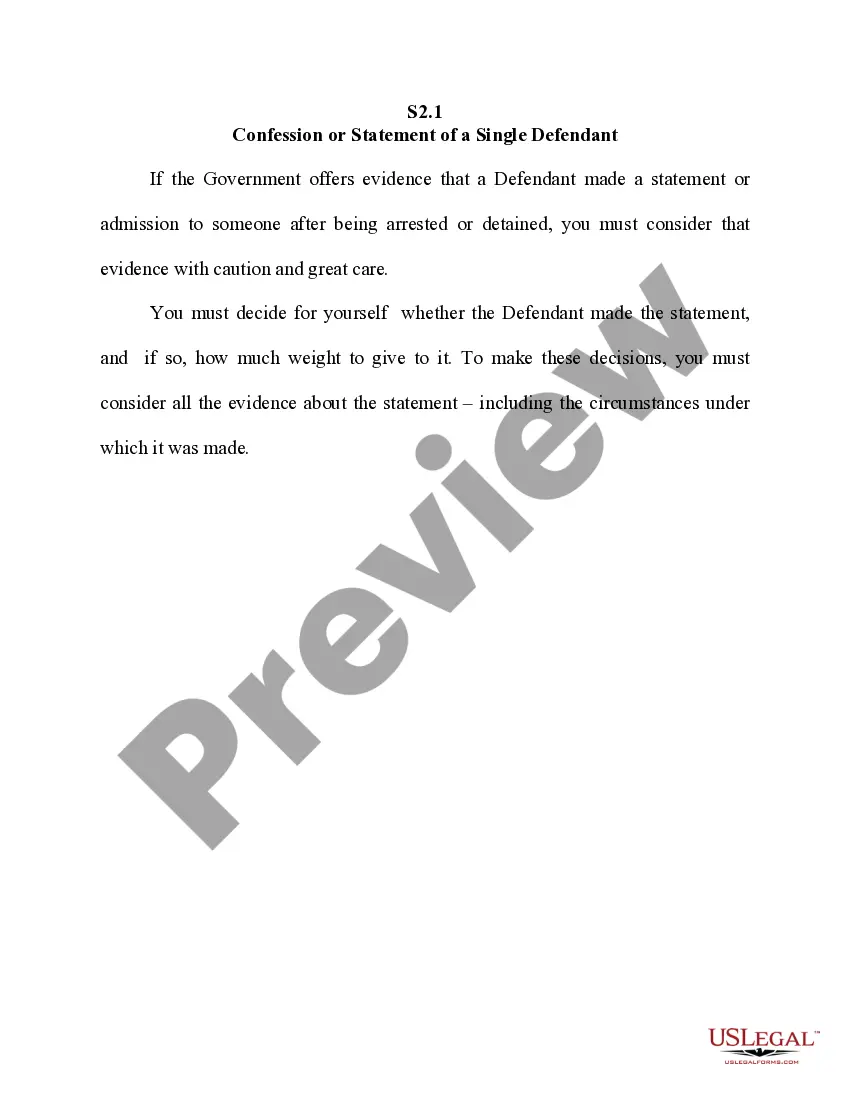
The Confession Statement - Voluntariness by Defendant form is a legal document designed to address the admissibility of confessions or statements made by a defendant outside of court. This form specifically evaluates the voluntariness and credibility of the statement, considering various factors such as the defendant's age, mental condition, and circumstances of the interrogation. It is important in ensuring that statements made under pressure or coercion are not improperly used in court, differing from other legal forms that may not focus on the circumstances of confession validity.
Form components explained
- Purpose of the statement: Analyzes the context and conditions under which confessions were made.
- Factors for consideration: Evaluates the defendant's demographic and psychological aspects that could affect statement reliability.
- Weight of evidence: Provides guidance on how to assess the importance of the confession based on the circumstances surrounding its making.
- Exclusivity clause: States that confessions of one defendant should not influence the trial of another defendant.
When to use this form
This form is necessary when a defendant's statement made outside of court is brought into evidence. It applies in criminal cases where the confession's integrity is questioned due to the circumstances under which it was obtained. Use this form to ensure that jurors consider all aspects of the confession's validity, particularly in cases involving multiple defendants where potential coercion may have impacted different individuals.
Intended users of this form
- Legal professionals handling criminal cases involving confessions.
- Defendants who want to guarantee their statements are evaluated fairly in court.
- Prosecutors needing to establish the reliability of a defendant's statement.
- Defense attorneys seeking to challenge the admissibility of a confession.
How to complete this form
- Identify the defendant: Clearly state the name of the individual making the confession.
- Describe the statement: Provide a summary of the statement made by the defendant.
- Evaluate the circumstances: List the conditions under which the confession was obtained, including interrogation details.
- Consider the defendant's characteristics: Include relevant details about the defendant's age, mental state, and other factors indicating reliability.
- Specify the intended use: Clarify how the statement should be considered in relation to other defendants, if applicable.
Does this form need to be notarized?
Notarization is not commonly needed for this form. However, certain documents or local rules may make it necessary. Our notarization service, powered by Notarize, allows you to finalize it securely online anytime, day or night.
Get your form ready online
Our built-in tools help you complete, sign, share, and store your documents in one place.
Make edits, fill in missing information, and update formatting in US Legal Forms—just like you would in MS Word.
Download a copy, print it, send it by email, or mail it via USPS—whatever works best for your next step.
Sign and collect signatures with our SignNow integration. Send to multiple recipients, set reminders, and more. Go Premium to unlock E-Sign.
If this form requires notarization, complete it online through a secure video call—no need to meet a notary in person or wait for an appointment.
We protect your documents and personal data by following strict security and privacy standards.

Make edits, fill in missing information, and update formatting in US Legal Forms—just like you would in MS Word.

Download a copy, print it, send it by email, or mail it via USPS—whatever works best for your next step.

Sign and collect signatures with our SignNow integration. Send to multiple recipients, set reminders, and more. Go Premium to unlock E-Sign.

If this form requires notarization, complete it online through a secure video call—no need to meet a notary in person or wait for an appointment.

We protect your documents and personal data by following strict security and privacy standards.
Common mistakes
- Failing to adequately describe the circumstances of the statement.
- Not considering all relevant factors that influence the statement's voluntariness.
- Assuming the confession is automatically admissible without evaluating its reliability.
- Overlooking the need for confidentiality concerning statements made by multiple defendants.
Benefits of using this form online
- Convenience: Access the form anytime, allowing for immediate download and use.
- Editability: Fill out the form online, adjusting fields as necessary before printing.
- Reliability: Ensure you have an up-to-date and legally sound form drafted by licensed attorneys.
Looking for another form?
Form popularity
FAQ
A confession is considered voluntary when made of the free will and of the accused, without fear or threat of harm and without hope or promise of benefit, reward, or immunity. Confessions generally include details of the crime.
Ford, 51 MJ 445 (the prosecution has the burden of establishing the admissibility of a confession, establishing by a preponderance of the evidence that the confession was voluntary).
Among the factors which are considered are the juvenile's age, experience, education, background, and intelligence, whether he has the capacity to understand the warning given to him, the nature of his Fifth Amendment rights, and the consequences of waiving them.
CONFESSIONS ARE ADMISSIBLE ONLY WHEN THEY ARE MADE VOLUNTARILY, AND THE BURDEN FOR PROVING THAT A CONFESSION WAS MADE VOLUNTARILY RESTS WITH THE PROSECUTION. THE PROSECUTION MUST SHOW THAT THE CONFESSION WAS NOT EXTRACTED BY ANY SORT OF THREAT OR VIOLENCE OR OBTAINED BY ANY PROMISE OR EXERTION OF IMPROPER INFLUENCE.
United States v. Ford, 51 MJ 445 (the prosecution has the burden of establishing the admissibility of a confession, establishing by a preponderance of the evidence that the confession was voluntary).
The trial judge in determining the issue of voluntariness shall take into consideration all the circumstances surrounding the giving of the confession, including (1) the time elapsing between arrest and arraignment of the defendant making the confession, if it was made after arrest and before arraignment, (2) whether
A 'voluntary false confession' is a self-incriminating statement that is offered without external pressure from the police. When Charles Lindbergh's baby was kidnapped in 1932, 200 people confessed.