COERCION OR DURESS
About this form
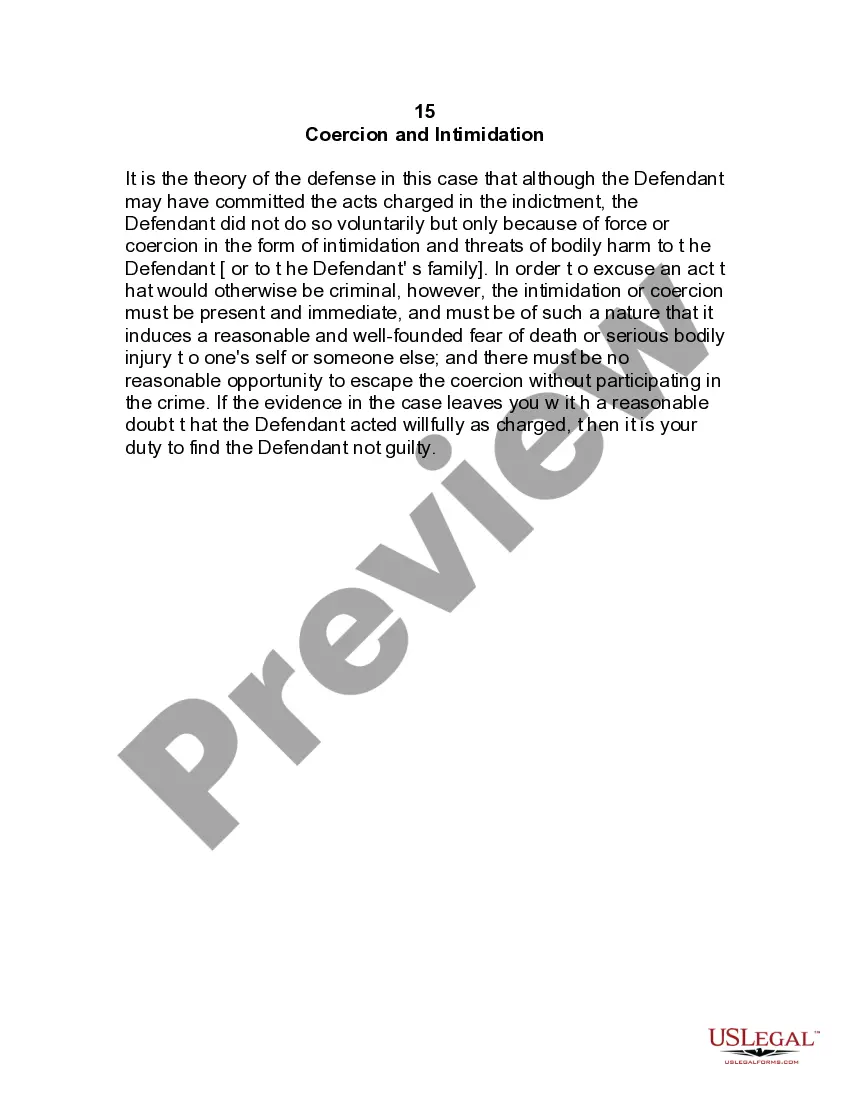
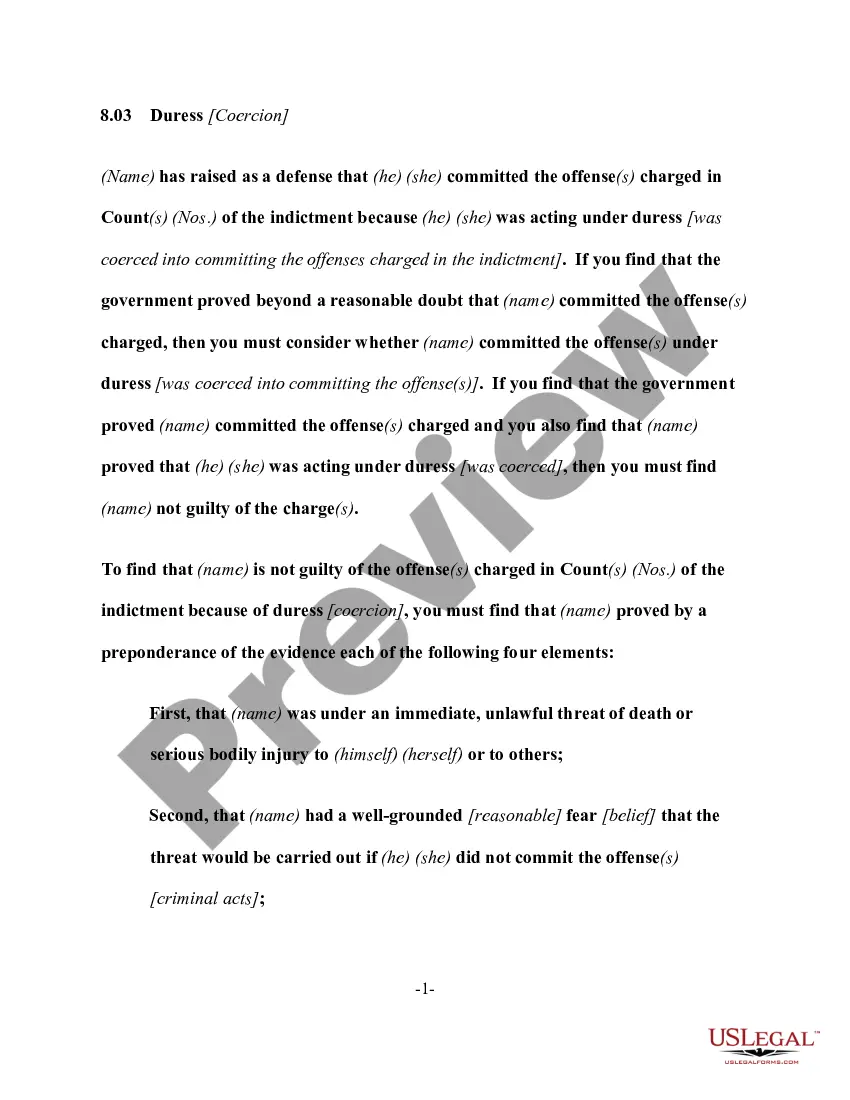
The Coercion or Duress form is a legal document used in defense cases where the defendant argues that they committed a crime under duress. This means they claim they were forced to act against their will due to an imminent threat of harm. The form outlines the criteria that must be demonstrated to successfully argue this defense, making it distinct from other legal forms that may pertain to defenses or justifications in criminal law. Understanding this form is crucial for anyone seeking to navigate criminal defense based on coercion or duress.
Key parts of this document
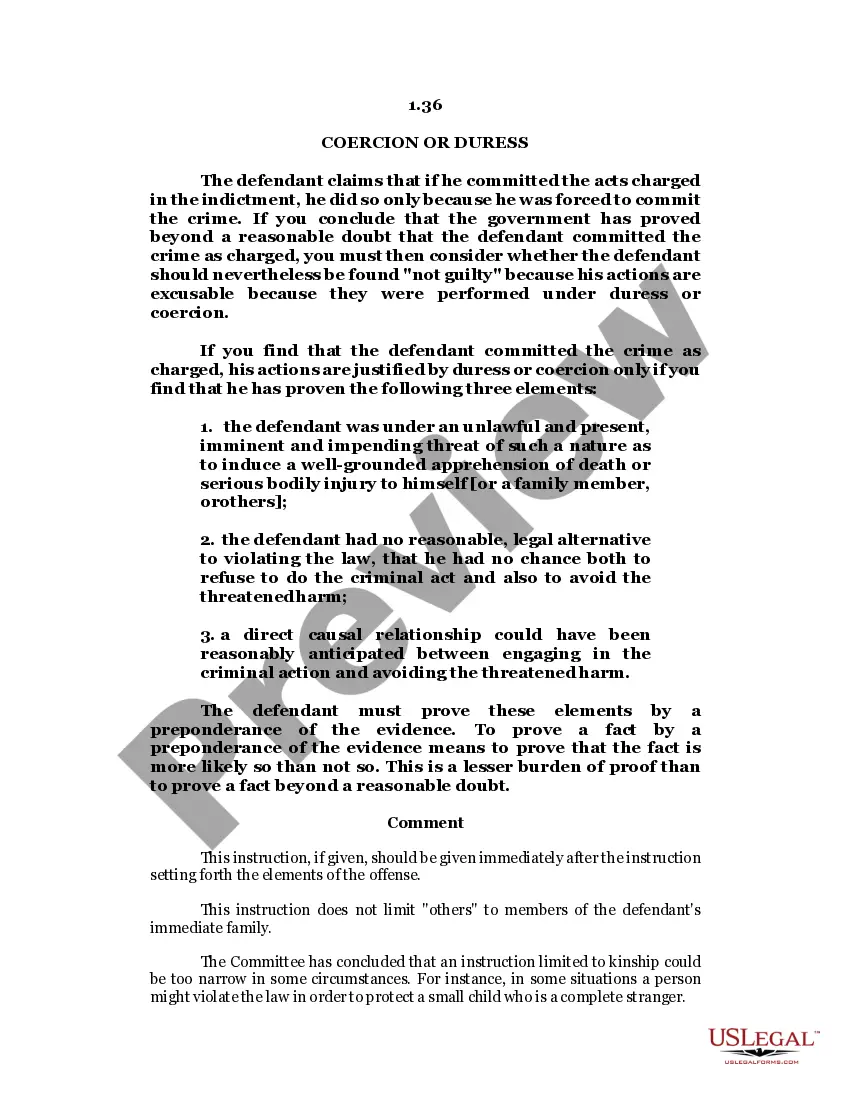
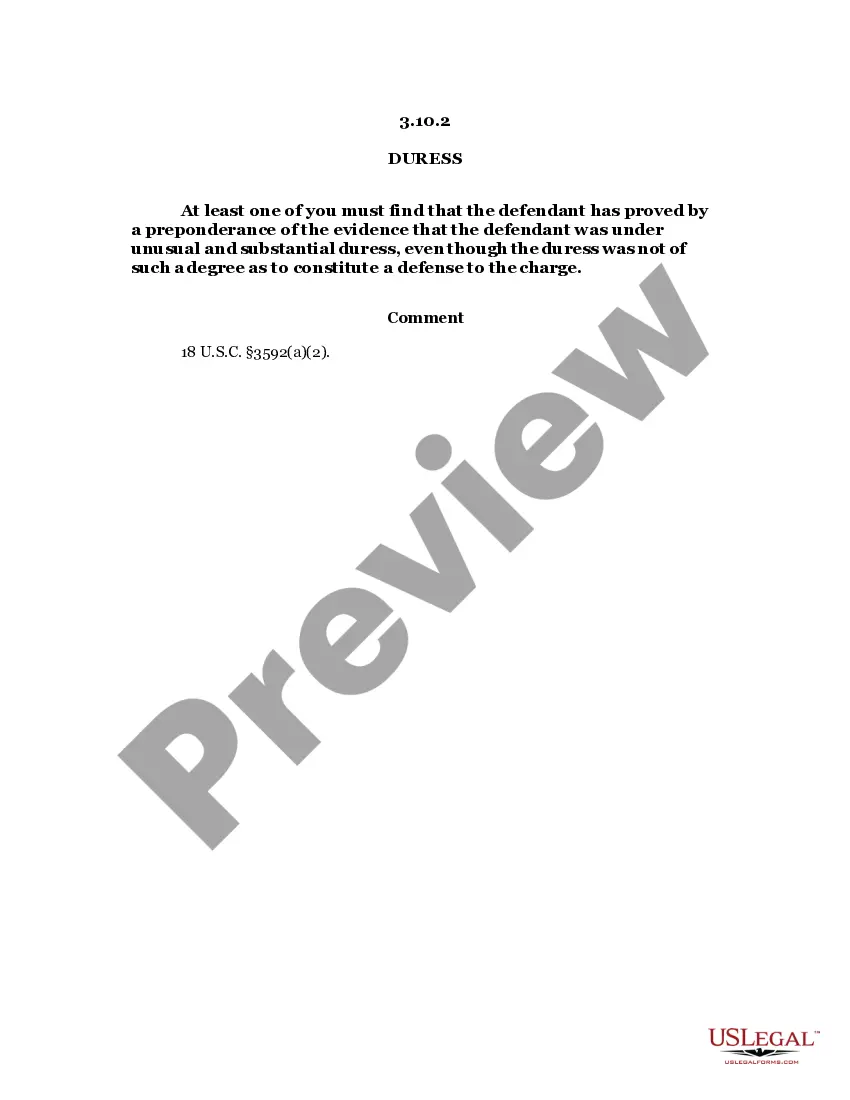
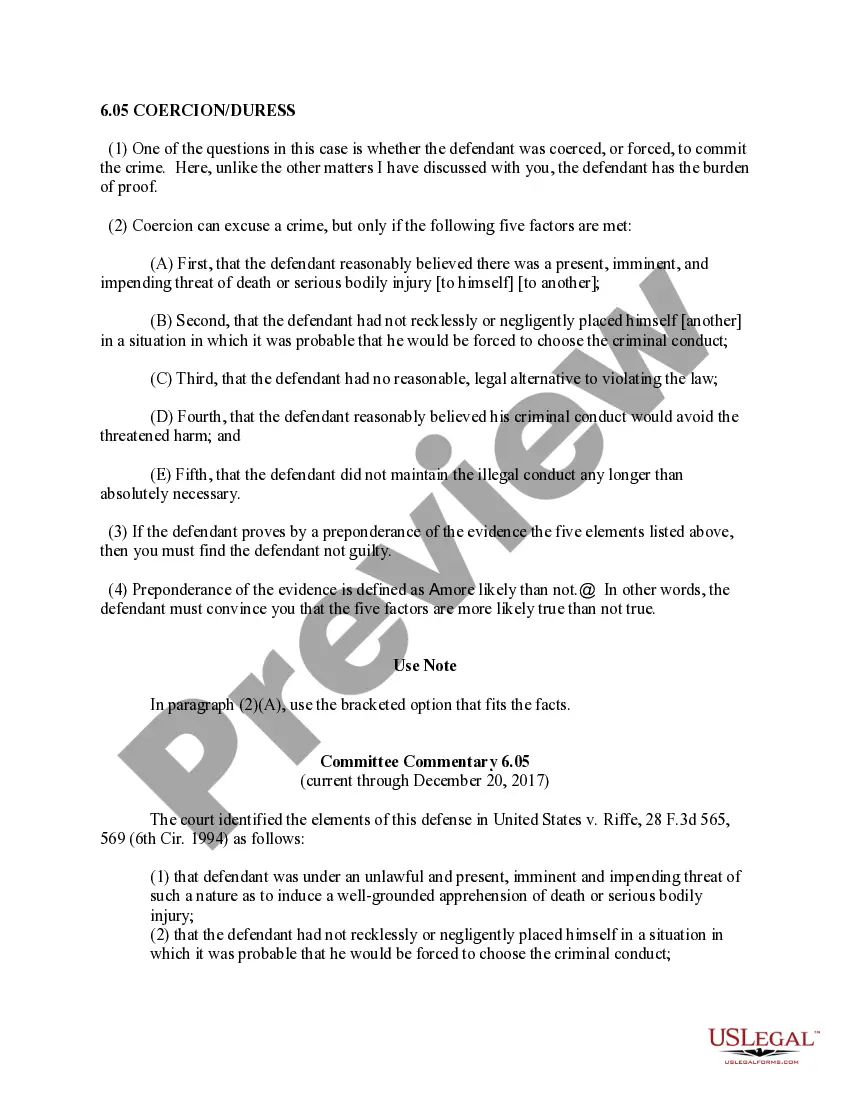
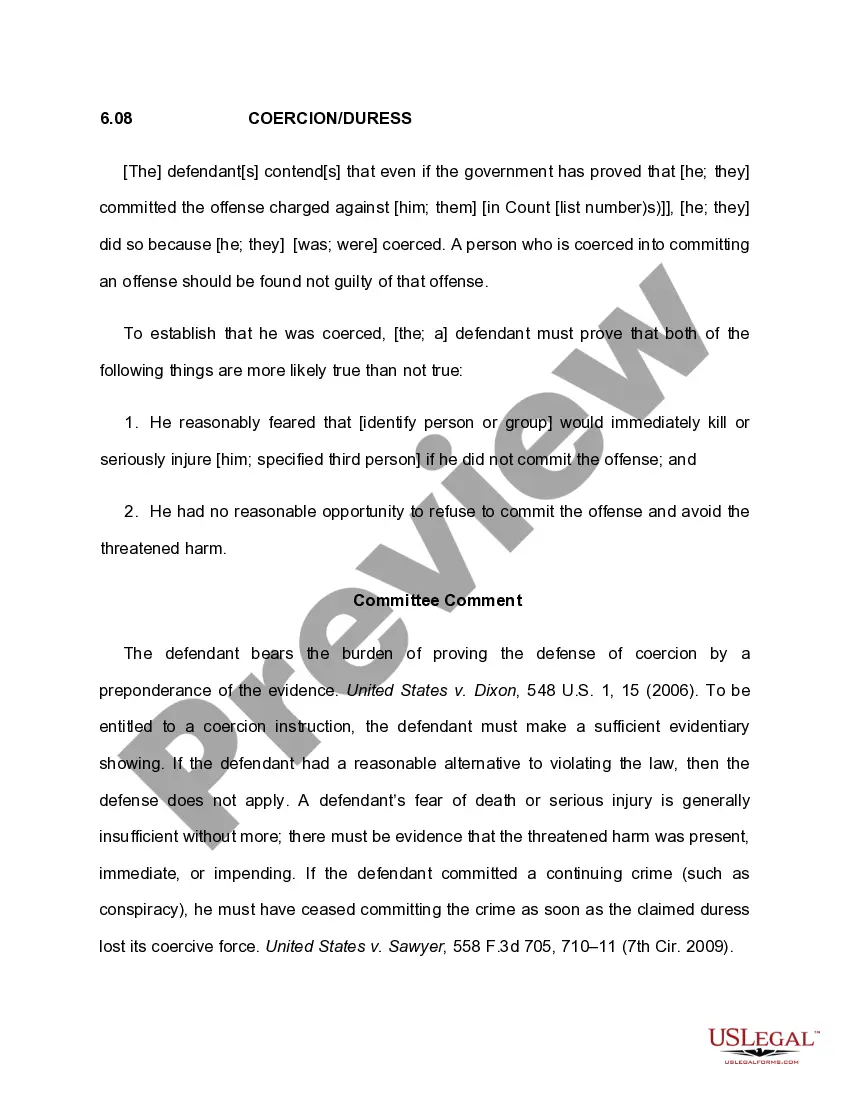
- The requirement of an unlawful and imminent threat to the defendant or others.
- The necessity of proving the lack of reasonable legal alternatives available to the defendant.
- The need to establish a direct causal relationship between the criminal act and the avoidance of the threat.
- The burden of proof resting on the defendant to demonstrate evidence by a preponderance standard.
Common use cases
This form is applicable in situations where a defendant has been charged with a crime and claims that their actions were compelled by an immediate, serious threat. Examples include cases of robbery where the accused might assert they were coerced into participation to protect themselves or another individual from harm. It is crucial when the defense hinges on the notion that the defendant had no choice but to commit the illegal act to avert a greater danger.
Who should use this form
- Defendants facing criminal charges who believe they acted under coercion or duress.
- Attorneys representing clients with a defense based on duress or coercion claims.
- Individuals who wish to understand their rights and the legal parameters of coercive acts in criminal law.
How to complete this form
- Identify the defendant and the charges against them.
- Detail the nature of the threat the defendant faced.
- Explain why there were no reasonable alternatives to committing the criminal act.
- Provide evidence or witness testimony supporting the claim of coercion or duress.
- Sign and date the form, ensuring all information is accurate and complete.
Notarization guidance
This form usually doesn’t need to be notarized. However, local laws or specific transactions may require it. Our online notarization service, powered by Notarize, lets you complete it remotely through a secure video session, available 24/7.
Get your form ready online
Our built-in tools help you complete, sign, share, and store your documents in one place.
Make edits, fill in missing information, and update formatting in US Legal Forms—just like you would in MS Word.
Download a copy, print it, send it by email, or mail it via USPS—whatever works best for your next step.
Sign and collect signatures with our SignNow integration. Send to multiple recipients, set reminders, and more. Go Premium to unlock E-Sign.
If this form requires notarization, complete it online through a secure video call—no need to meet a notary in person or wait for an appointment.
We protect your documents and personal data by following strict security and privacy standards.

Make edits, fill in missing information, and update formatting in US Legal Forms—just like you would in MS Word.

Download a copy, print it, send it by email, or mail it via USPS—whatever works best for your next step.

Sign and collect signatures with our SignNow integration. Send to multiple recipients, set reminders, and more. Go Premium to unlock E-Sign.

If this form requires notarization, complete it online through a secure video call—no need to meet a notary in person or wait for an appointment.

We protect your documents and personal data by following strict security and privacy standards.
Common mistakes
- Failing to provide sufficient evidence to support the claim of duress.
- Not clearly establishing the immediacy of the threat.
- Overlooking any possible alternative actions the defendant could have taken.
Benefits of using this form online
- Convenience of accessing legal forms anytime and anywhere.
- Editability to tailor the form to specific cases or circumstances.
- Reliability of professionally drafted templates that adhere to legal standards.
Legal use & context
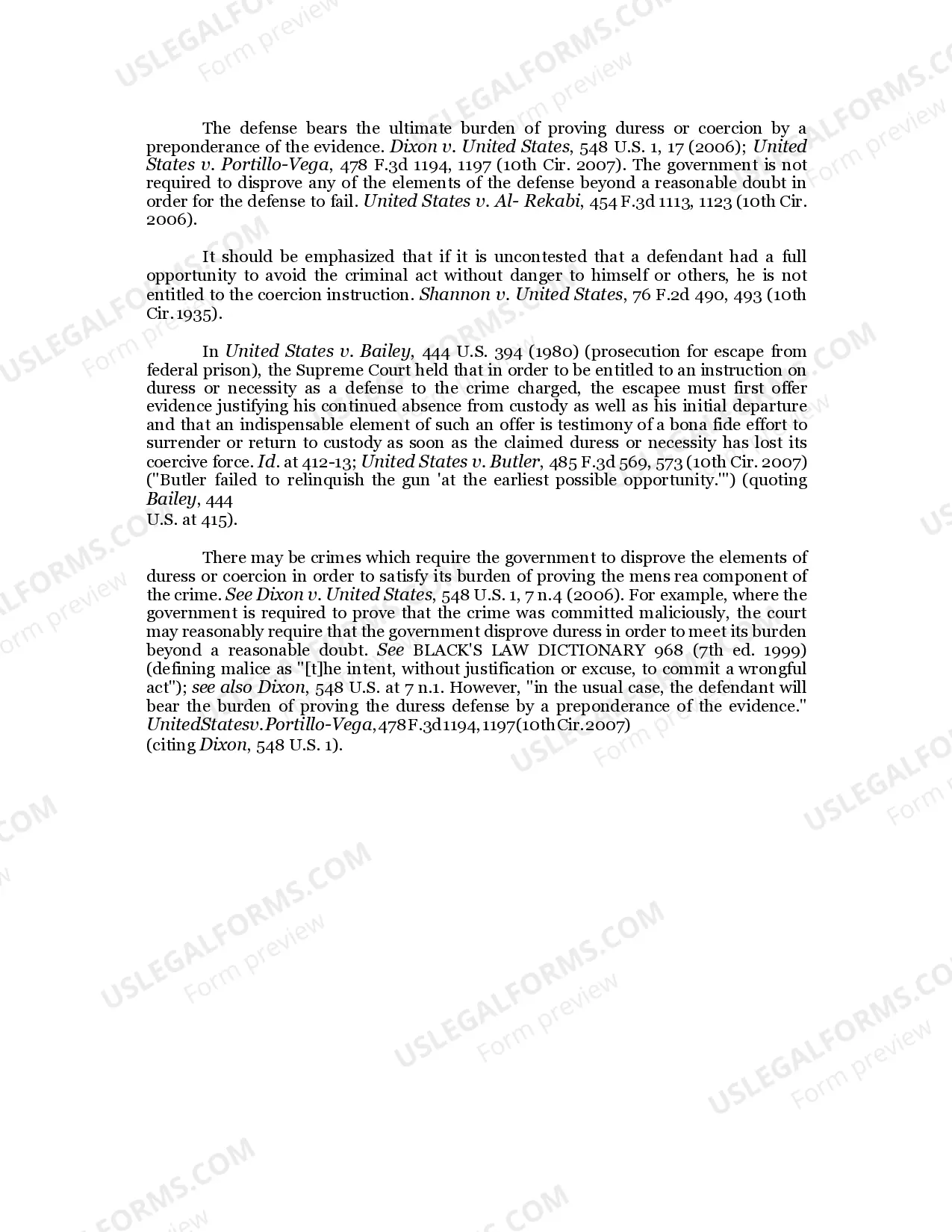
- The coercion or duress defense must be proven by a preponderance of the evidence.
- The burden of proof lies with the defendant to establish circumstances that justify actions taken under duress.
- Legal outcomes may vary based on the interpretation and enforcement of laws in different jurisdictions.
What to keep in mind
- The Coercion or Duress form serves as a crucial defense in criminal cases.
- Defendants must meet specific criteria to successfully claim this defense.
- Understanding local laws is critical for effectively utilizing this form.
Looking for another form?
Form popularity
FAQ
Duress or coercion (as a term of jurisprudence) is a possible legal defense, one of four of the most important justification defenses, by which defendants argue that they should not be held liable because the actions that broke the law were only performed out of an immediate fear of injury.
The Coercive Acts of 1774, known as the Intolerable Acts in the American colonies, were a series of four laws passed by the British Parliament to punish the colony of Massachusetts Bay for the Boston Tea Party.
Deterrence, Compellence, and Brute Force: Definitions The central characteristic of both forms of coercion is that they depend, ultimately, on cooperation by the party receiving the threat.
In order to be considered coercion, a person must fear for the life of someone they care about or fear for their own life based on the threat made. An example of this would be an ex-husband threatening to kill a shared child if custody paperwork is not signed.
Coercion committed by instilling in the victim a fear that he/she. or another person would be charged with a crime, that the. defendant reasonably believed the threatened charge to be true.
1 Coercion (Section 15) For example, A threatens to hurt B if he does not sell his house to A for 5 lakh rupees. Here even if B sells the house to A, it will not be a valid contract since B's consent was obtained by coercion. Now the effect of coercion is that it makes the contract voidable.
Difference between duress and coercion While duress is exercised concerning the life threats to an individual or his/her family or close relatives, coercion can be exercised against any person. Duress causes an imminent threat to an individual while coercion does not cover the ambits of imminent threat.
Physical coercion and threats of harm are common examples of conduct that constitute duress. Another form of conduct that might constitute legal duress includes wrongfully withholding a party's property, or threatening to wrongfully withhold the property until a contract is signed.