ALIEN-CONCEALMENT / 8 U.S.C. Sec. 1324(a)(1)(A)(iii)
About this form
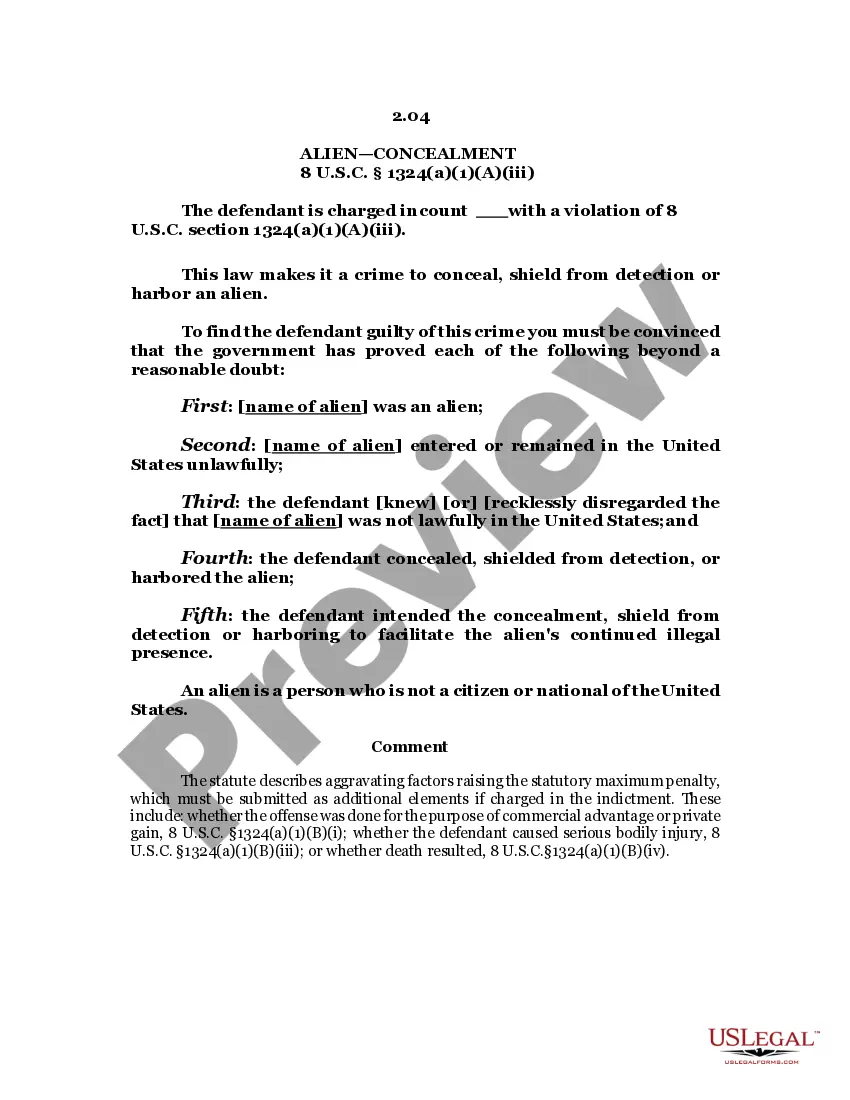
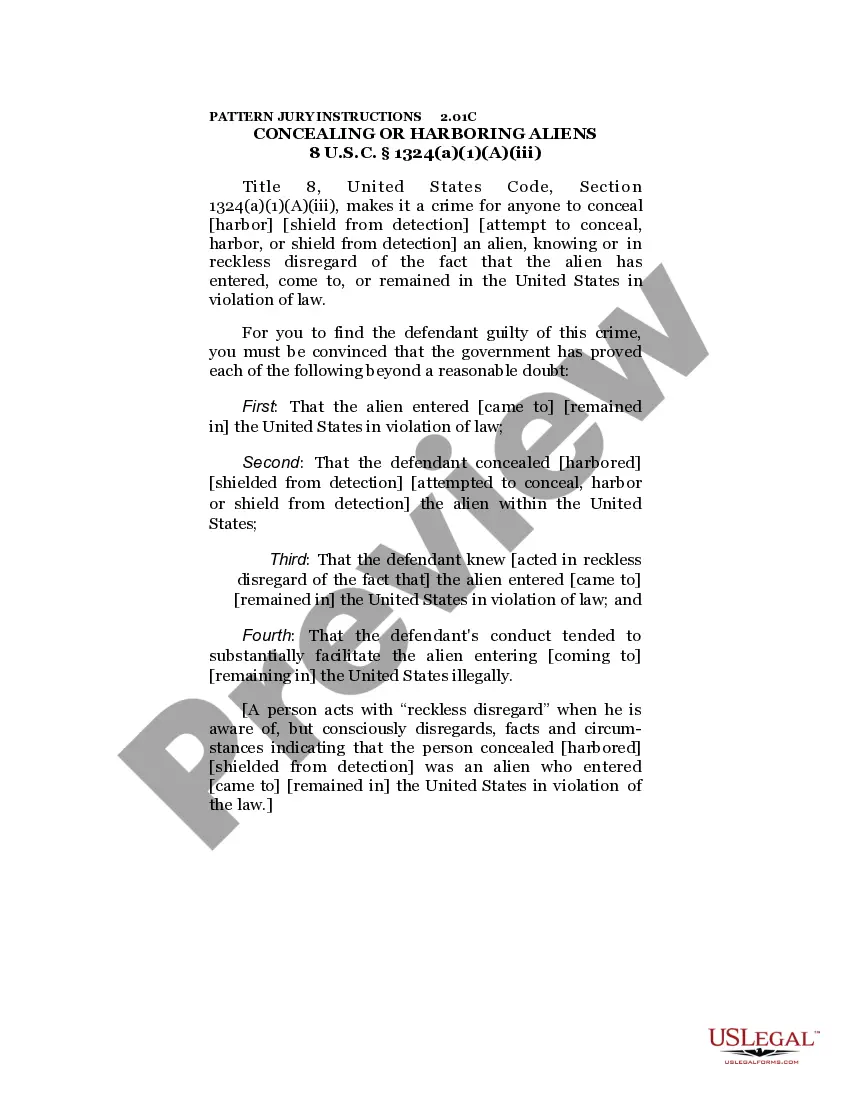
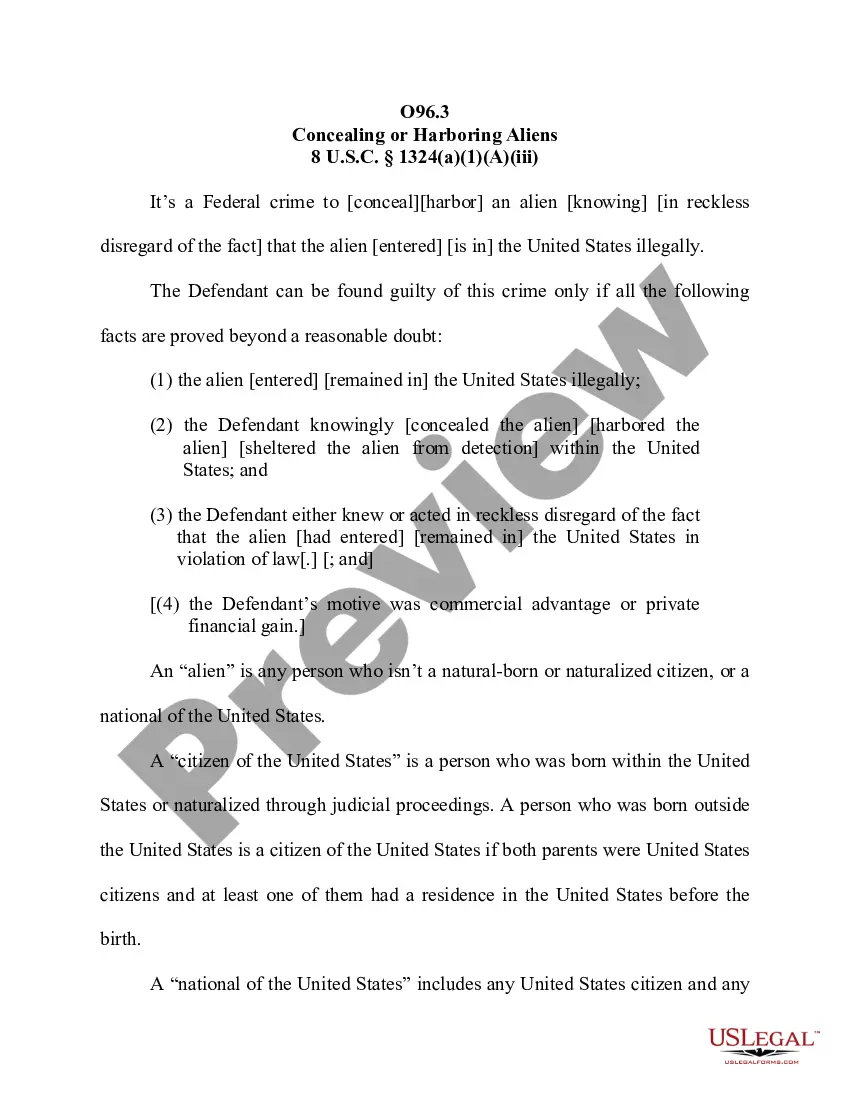
The Alien-Concealment form, based on 8 U.S.C. Sec. 1324(a)(1)(A)(iii), addresses criminal charges related to concealing or harboring an alien. This form is critical for understanding the legal obligations and risks associated with such actions. Unlike similar forms, this specific template is tailored to the nuances of federal law regarding immigration violations, making it essential for individuals facing accusations of alien concealment.
What’s included in this form
- Definition of what constitutes an alien under U.S. law.
- Criteria for unlawful entry or presence in the United States.
- Requirements for establishing knowledge or recklessness regarding an alien's legal status.
- Obligations of the defendant to ensure the concealment was intended to facilitate the alien's unlawful presence.
- Details on aggravating factors that can increase penalties, such as commercial advantage or serious injury.
Situations where this form applies
This form should be used when an individual is charged with violating alien concealment laws. It is pertinent during legal proceedings where the defendant must prepare a defense against accusations of knowingly concealing or harboring an individual who is unlawfully present in the United States. Additionally, it may be utilized in the context of advising clients on potential legal repercussions and obligations under federal immigration law.
Who can use this document
This form is intended for:
- Defendants facing charges under 8 U.S.C. Sec. 1324(a)(1)(A)(iii).
- Legal professionals representing clients in immigration-related cases.
- Individuals seeking to understand their legal rights and responsibilities related to alien concealment.
Steps to complete this form
- Identify the name of the alien involved in the case.
- Confirm whether the alien entered or remained unlawfully in the United States.
- Assess your knowledge of the alien's legal status, ensuring to document any evidence of recklessness.
- Detail how you concealed, shielded, or harbored the alien.
- Clarify your intent regarding the actions taken to facilitate the alienâs illegal presence in the U.S.
Is notarization required?
This form does not typically require notarization unless specified by local law. However, proper completion and understanding of the accused actions are critical for legal proceedings.
Get your form ready online
Our built-in tools help you complete, sign, share, and store your documents in one place.
Make edits, fill in missing information, and update formatting in US Legal Forms—just like you would in MS Word.
Download a copy, print it, send it by email, or mail it via USPS—whatever works best for your next step.
Sign and collect signatures with our SignNow integration. Send to multiple recipients, set reminders, and more. Go Premium to unlock E-Sign.
If this form requires notarization, complete it online through a secure video call—no need to meet a notary in person or wait for an appointment.
We protect your documents and personal data by following strict security and privacy standards.

Make edits, fill in missing information, and update formatting in US Legal Forms—just like you would in MS Word.

Download a copy, print it, send it by email, or mail it via USPS—whatever works best for your next step.

Sign and collect signatures with our SignNow integration. Send to multiple recipients, set reminders, and more. Go Premium to unlock E-Sign.

If this form requires notarization, complete it online through a secure video call—no need to meet a notary in person or wait for an appointment.

We protect your documents and personal data by following strict security and privacy standards.
Avoid these common issues
- Failing to accurately document the alien's status and how it relates to the charges.
- Not understanding the implications of the aggravating factors that can increase penalties.
- Overlooking the importance of intent in the concealment or harboring actions.
Benefits of using this form online
- Convenient access to the form allows for flexibility in completing it at your pace.
- Editable forms can be tailored to specific circumstances and needs.
- Reliable templates drafted by licensed attorneys ensure legal compliance and accuracy.
Looking for another form?
Form popularity
FAQ
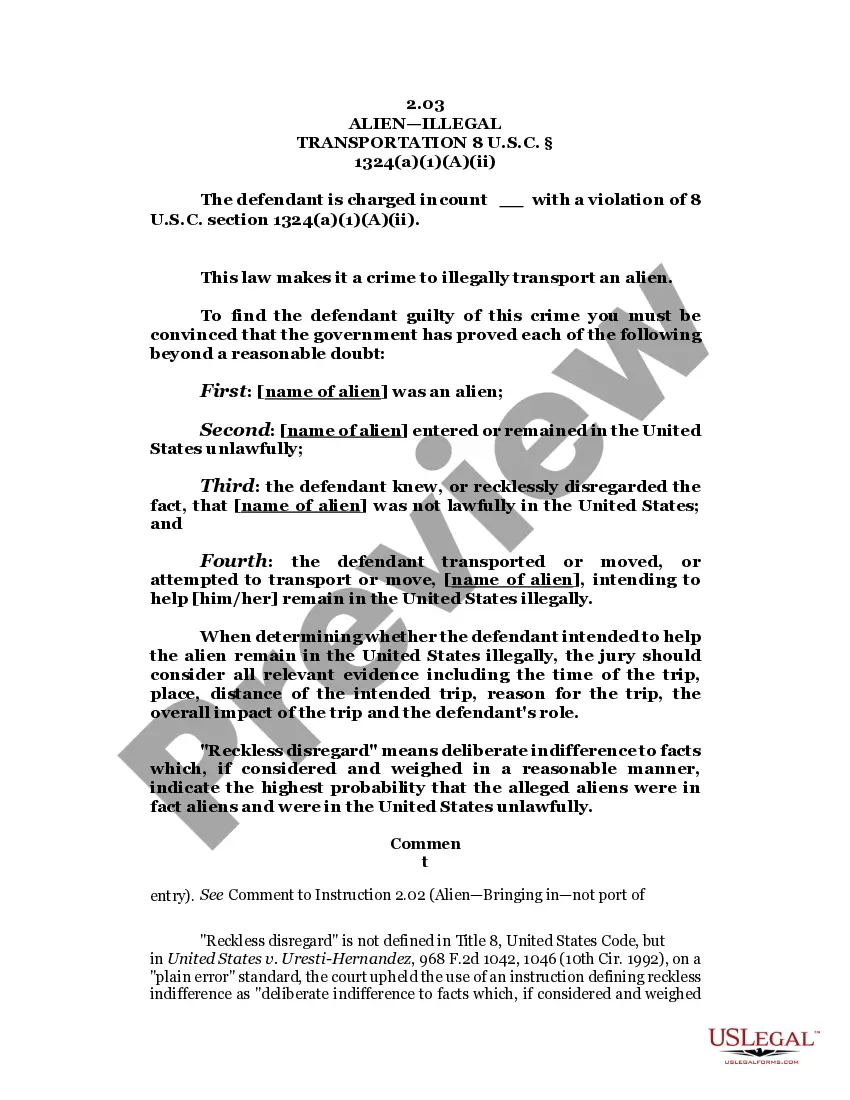
Title 8 U.S.C. § 1324a(a)(1)(A) makes it unlawful for any person or other entity to hire, recruit, or refer for a fee, for employment in the United States an alien knowing the alien is an unauthorized alien, as defined in subsection 1324a(h)(3).
A person is presumed innocent unless and until he or she is proven guilty beyond a reasonable doubt in a court of law. Conspiracy to transport and harbor illegal aliens for profit is punishable by up to ten years in prison and a $250,000 fine.
?Federal immigration law requires employers to verify the identity and work eligibility of new employees.? (8 U.S.C. § 132a(a)(1)(B)(i).) This means that it is the obligation of employers to verify a new worker's employment eligibility at the time they are hired.
Any alien, including an alien crewman, not duly admitted by an immigration officer or not lawfully entitled to enter or reside within the United States under the terms of this chapter or any other law relating to the immigration or expulsion of aliens, shall be guilty of a felony, and upon conviction thereof shall be
It is unlawful for a person or other entity, after hiring an alien for employment in ance with paragraph (1), to continue to employ the alien in the United States knowing the alien is (or has become) an unauthorized alien with respect to such employment.
Alien Smuggling: If you are convicted of illegal alien smuggling in federal court, you face a maximum of 10 years in federal prison. If, during and in relation to the offense, you cause serious bodily injury or put in jeopardy the life of any person, the penalty can be increased to a maximum of 20 years.
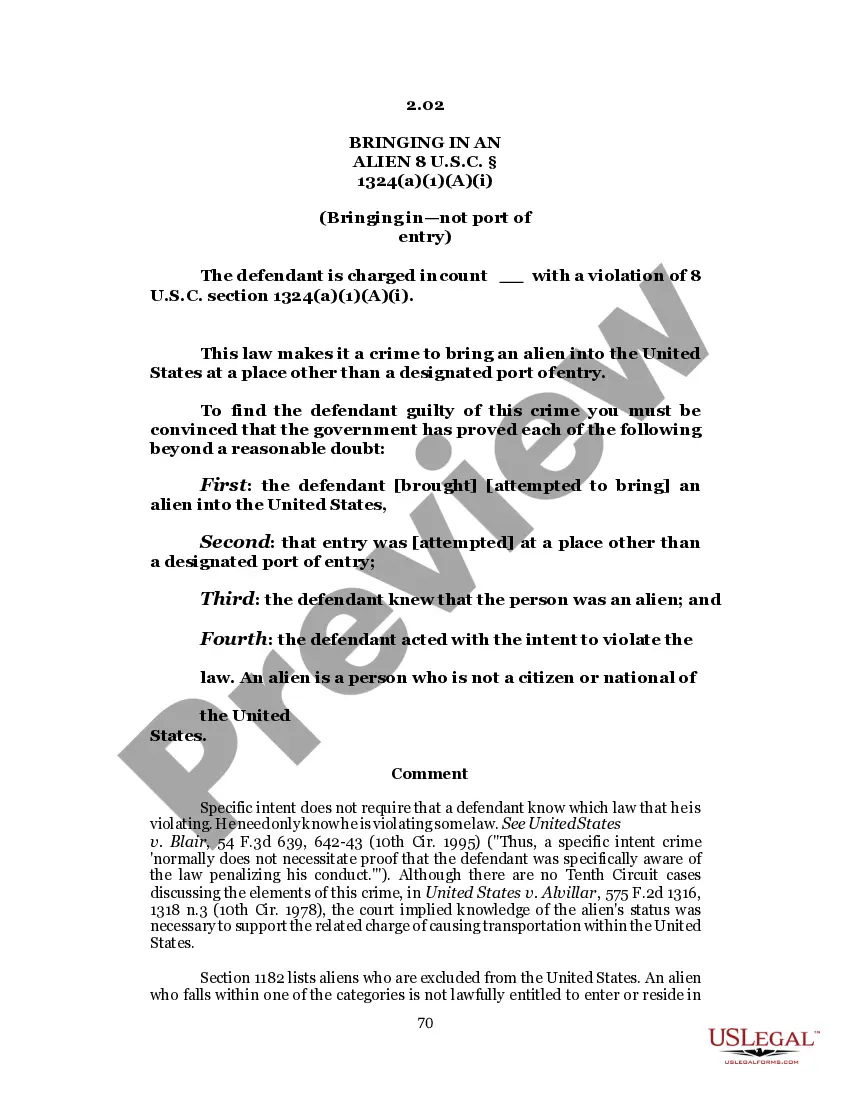
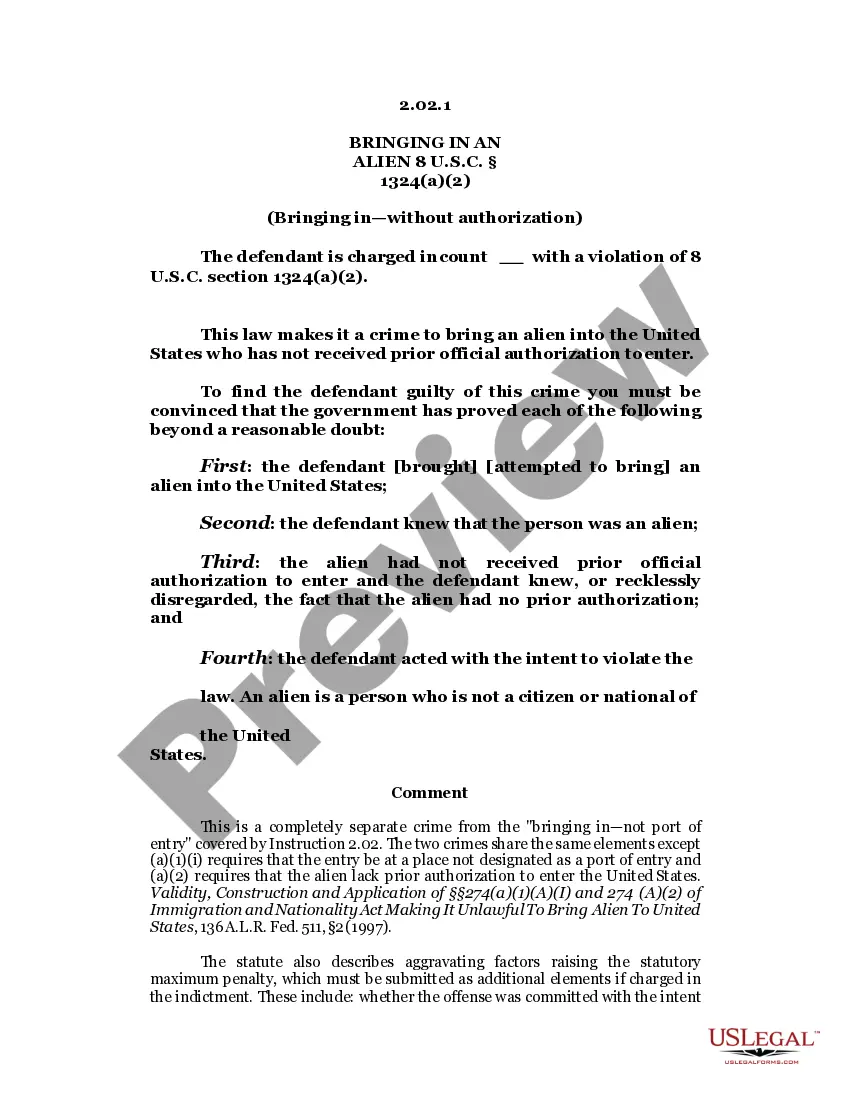
If a smuggler brings an illegal immigrant over at a non-designated point of entry, they are liable to pay a fine, be imprisoned for up to 10 years, or both.