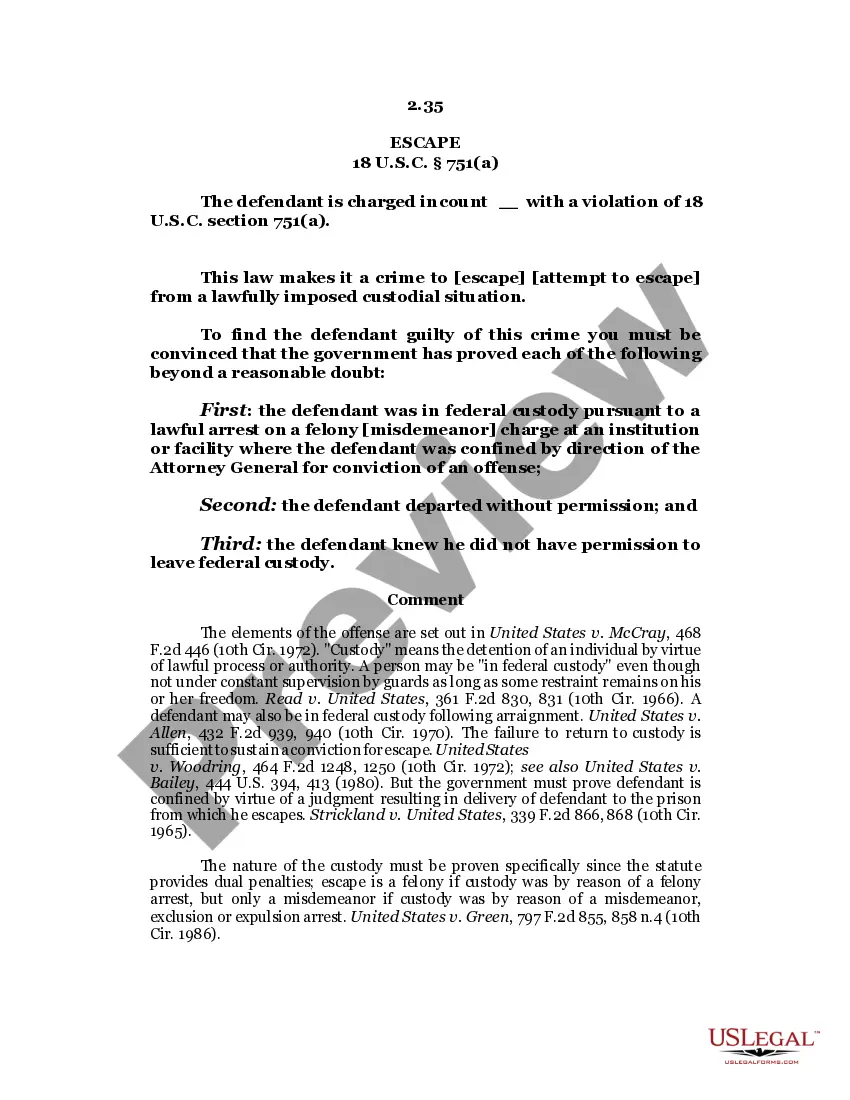
ESCAPE / 18 U.S.C. Sec. 751(a)
What this document covers
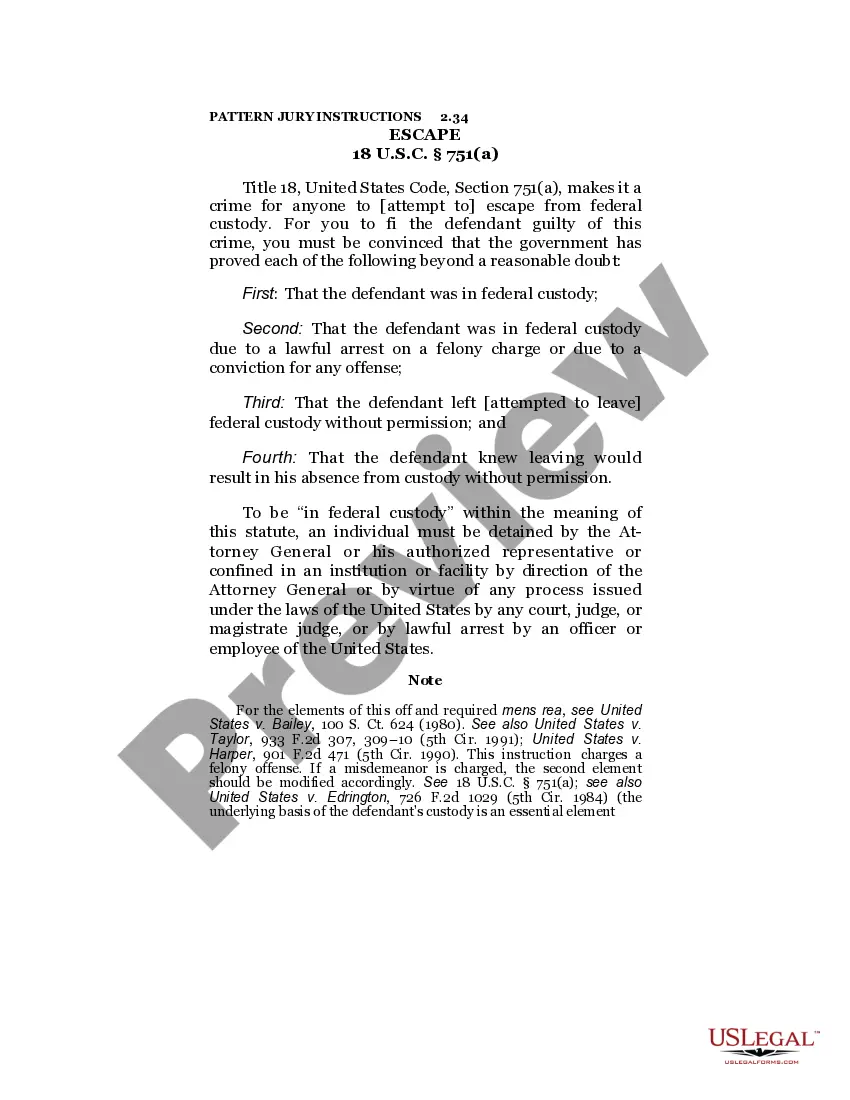
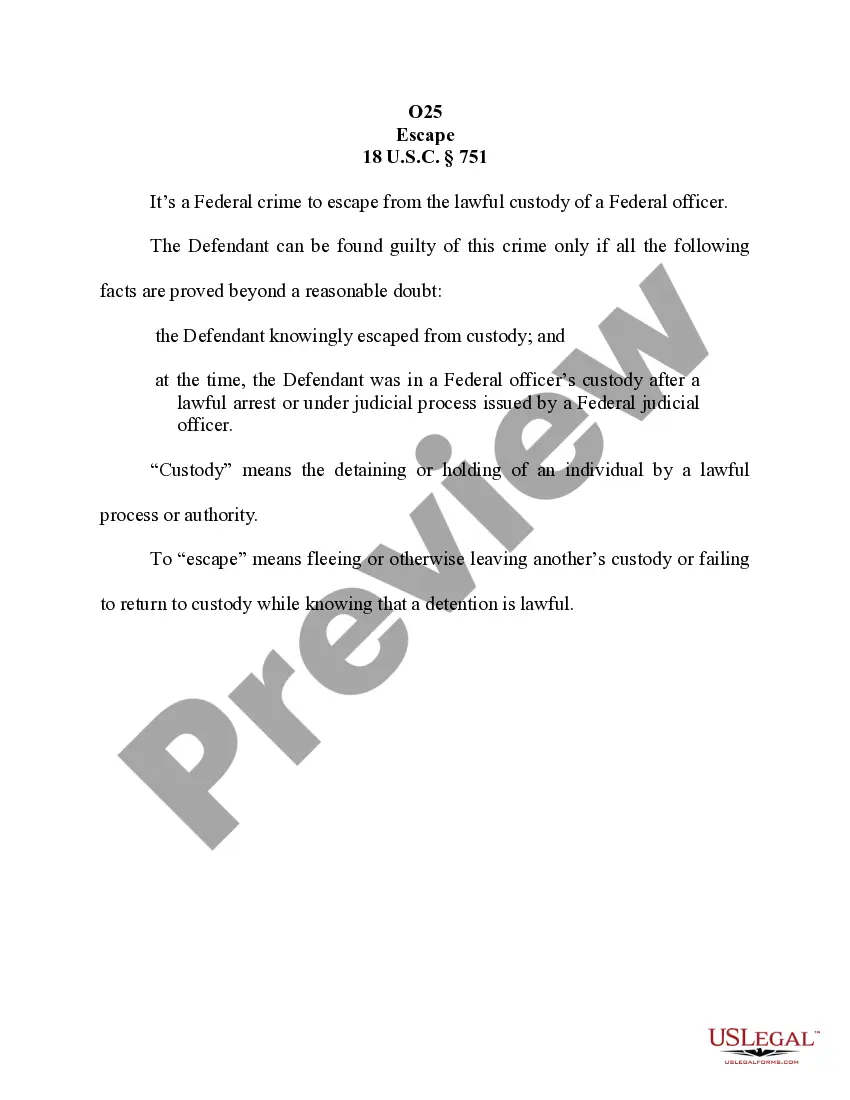
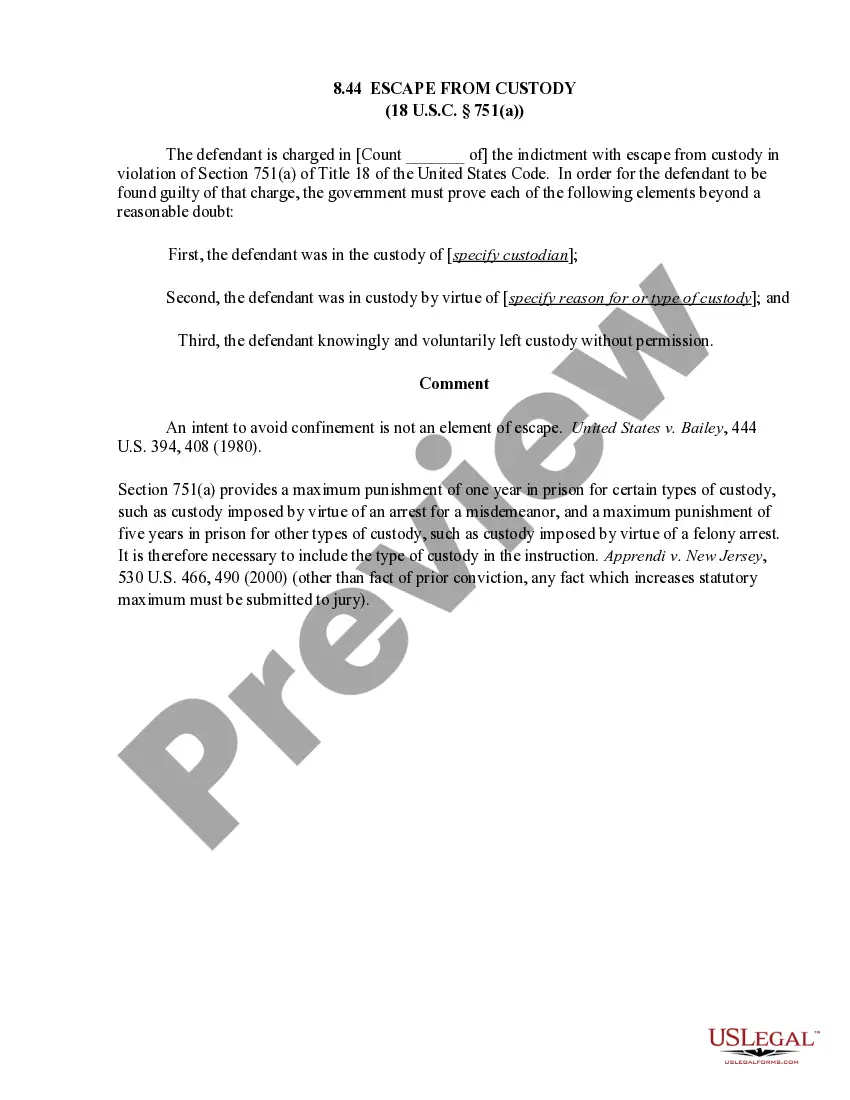
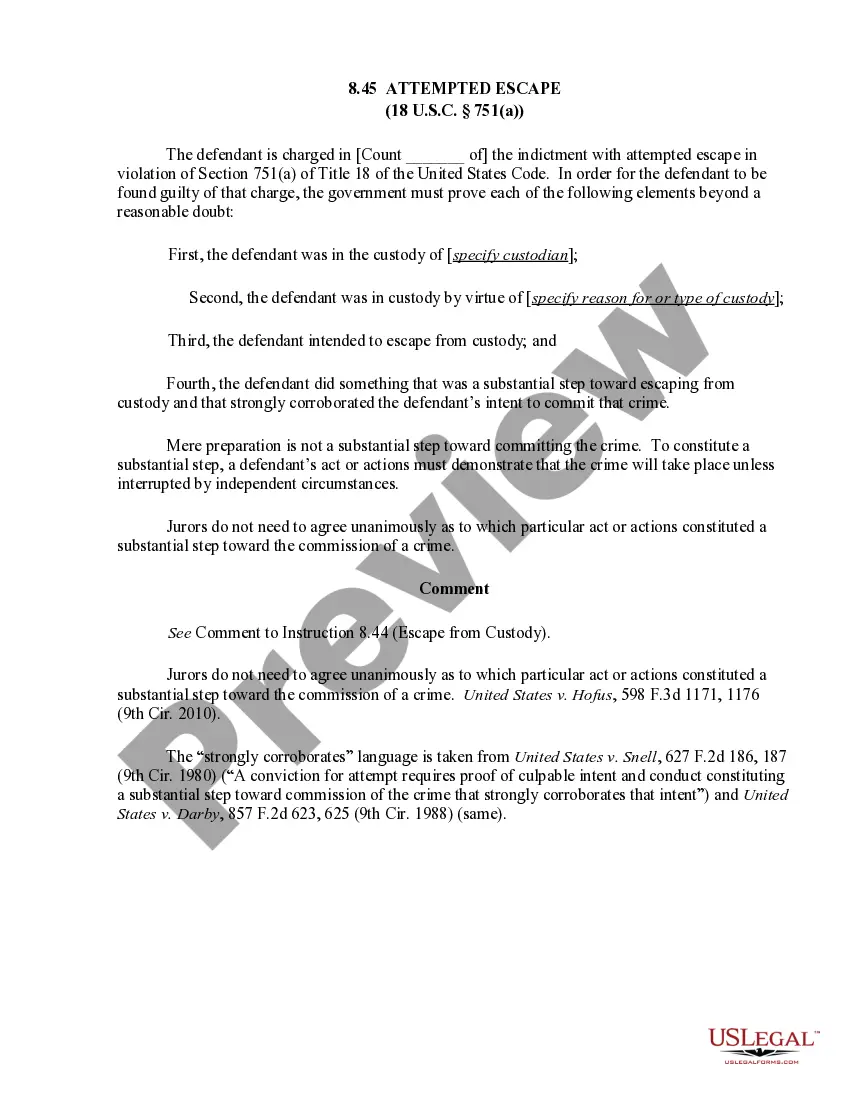
This form is related to the crime of escape as defined under 18 U.S.C. § 751(a). It establishes the legal elements required to prove that an individual unlawfully left federal custody. Using this form can help clarify charges related to escape, distinguishing it from other legal documents related to custody or criminal charges. Understanding the specifics of this form is crucial for those facing allegations of escape or for legal representatives assisting clients in such cases.
Key parts of this document
- Definition of escape, including attempts and unlawful departure from custody.
- Conditions of custody that must be met for a violation to occur.
- Requirements for the prosecution to prove each element of the charge beyond a reasonable doubt.
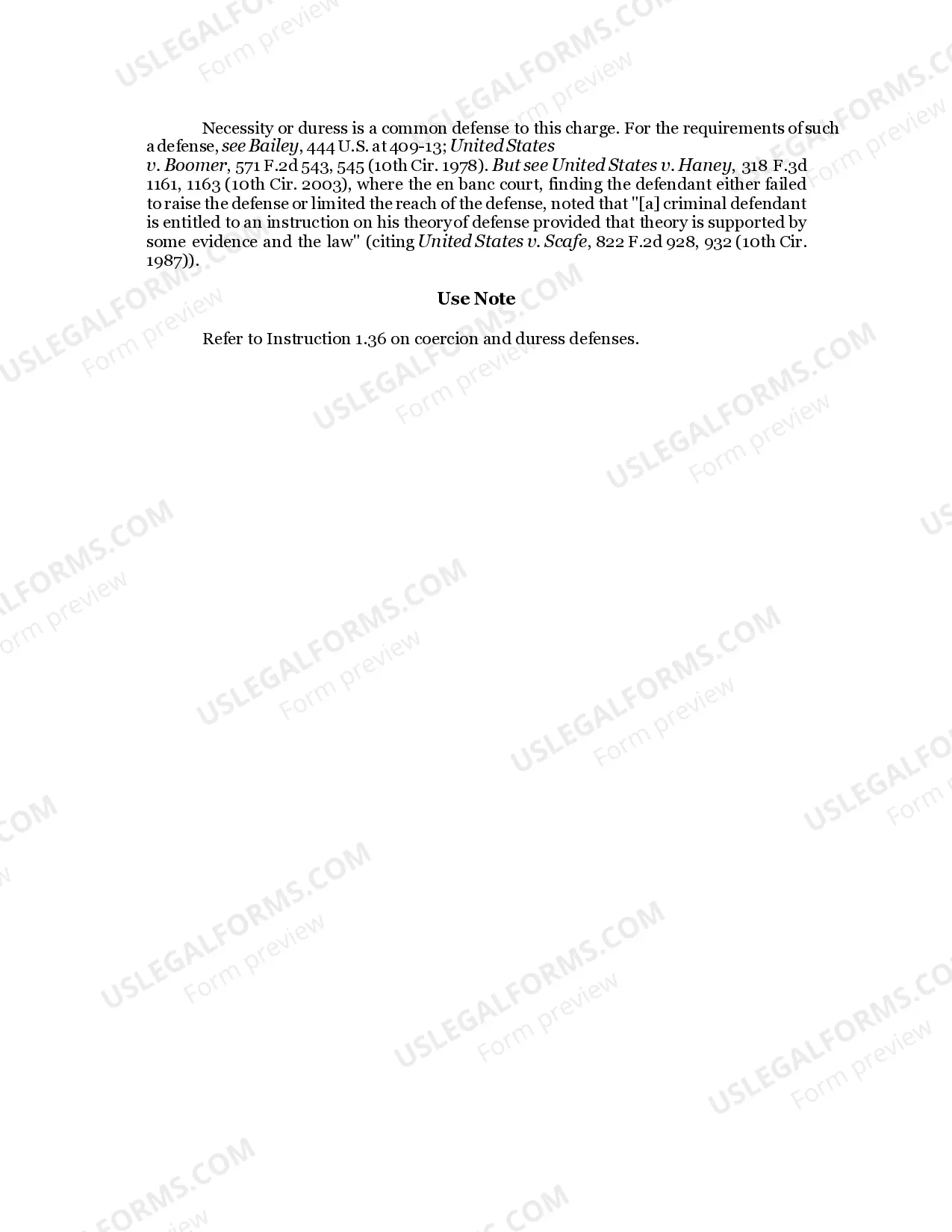
- Possible defenses, such as necessity or duress.
- Different penalties for escape based on the nature of the underlying custody (felony vs. misdemeanor).
Situations where this form applies
This form is needed when individuals are charged with escaping from federal custody or when legal counsel is required to navigate such charges. It is essential for defense attorneys when preparing to contest the charges, as it outlines the necessary legal framework and potential defenses available in an escape case.
Who this form is for
- Individuals facing charges of escape from federal custody.
- Defense attorneys representing clients in escape cases.
- Law enforcement professionals needing clarification on the legal standards for escape.
- Individuals seeking to understand their rights and obligations while in federal custody.
How to complete this form
- Identify the specific count of the escape charge against the defendant.
- Confirm that the individual was in federal custody lawfully due to an arrest on a felony or misdemeanor charge.
- Document that the individual departed from custody without permission.
- Provide evidence or a statement indicating that the individual knew they did not have permission to leave federal custody.
- Gather any relevant information about defenses, such as evidence of necessity or duress if applicable.
Does this form need to be notarized?
This form does not typically require notarization unless specified by local law. Users can complete it without the need for notarization, streamlining the process of filing or responding to charges of escape.
Get your form ready online
Our built-in tools help you complete, sign, share, and store your documents in one place.
Make edits, fill in missing information, and update formatting in US Legal Forms—just like you would in MS Word.
Download a copy, print it, send it by email, or mail it via USPS—whatever works best for your next step.
Sign and collect signatures with our SignNow integration. Send to multiple recipients, set reminders, and more. Go Premium to unlock E-Sign.
If this form requires notarization, complete it online through a secure video call—no need to meet a notary in person or wait for an appointment.
We protect your documents and personal data by following strict security and privacy standards.

Make edits, fill in missing information, and update formatting in US Legal Forms—just like you would in MS Word.

Download a copy, print it, send it by email, or mail it via USPS—whatever works best for your next step.

Sign and collect signatures with our SignNow integration. Send to multiple recipients, set reminders, and more. Go Premium to unlock E-Sign.

If this form requires notarization, complete it online through a secure video call—no need to meet a notary in person or wait for an appointment.

We protect your documents and personal data by following strict security and privacy standards.
Common mistakes
- Failing to accurately identify the legal basis for federal custody.
- Not fully understanding the implications of custody conditions.
- Neglecting to present appropriate defenses like necessity or duress.
- Misunderstanding the legal differences between felony and misdemeanor escape.
Why use this form online
- Instant access to legally vetted templates drafted by licensed attorneys.
- Easily downloadable and customizable to suit specific legal needs.
- Convenient and time-efficient process compared to traditional legal consultations.
- Assured compliance with the latest legal standards and requirements.
Summary of main points
- The Escape form addresses specific charges related to escape from federal custody.
- Understanding the legal elements involved is critical for defendants.
- Using this form online provides ease and convenience when dealing with legal proceedings.
Looking for another form?
Form popularity
FAQ
18 U.S. Code § 751 - Prisoners in custody of institution or officer U.S. Code US Law LII / Legal Information Institute.
Escape from Lawful Custody occurs when a person escapes from the custody of a peace officer after they have been arrested or detained. This offense is typically charged during an arrest or for a person in a halfway house failing to return from their work release program.
Title 18, United States Code § 2 now provides: (a) Whoever commits an offense against the United States or aids, abets, counsels, commands, induces or procures its commission, is punishable as a principal.
Introduction -- Escape From Custody Resulting From Conviction (18 U.S.C. §751 And 752) This chapter deals with the criminal sanctions for escape or attempted escape from lawful custody or confinement following conviction, or from custody or confinement prior to conviction.
For example, 18 U.S. code section 751 stipulates that it is unlawful to escape, or to attempt to escape, from the custody of the Attorney General; an authorized representative of the Attorney General; or from any institution that the defendant was ordered by the Attorney General to be confined in.
Section 836.6 - Escape (a) It is unlawful for any person who is remanded by a magistrate or judge of any court in this state to the custody of a sheriff, marshal, or other police agency, to thereafter escape or attempt to escape from that custody.