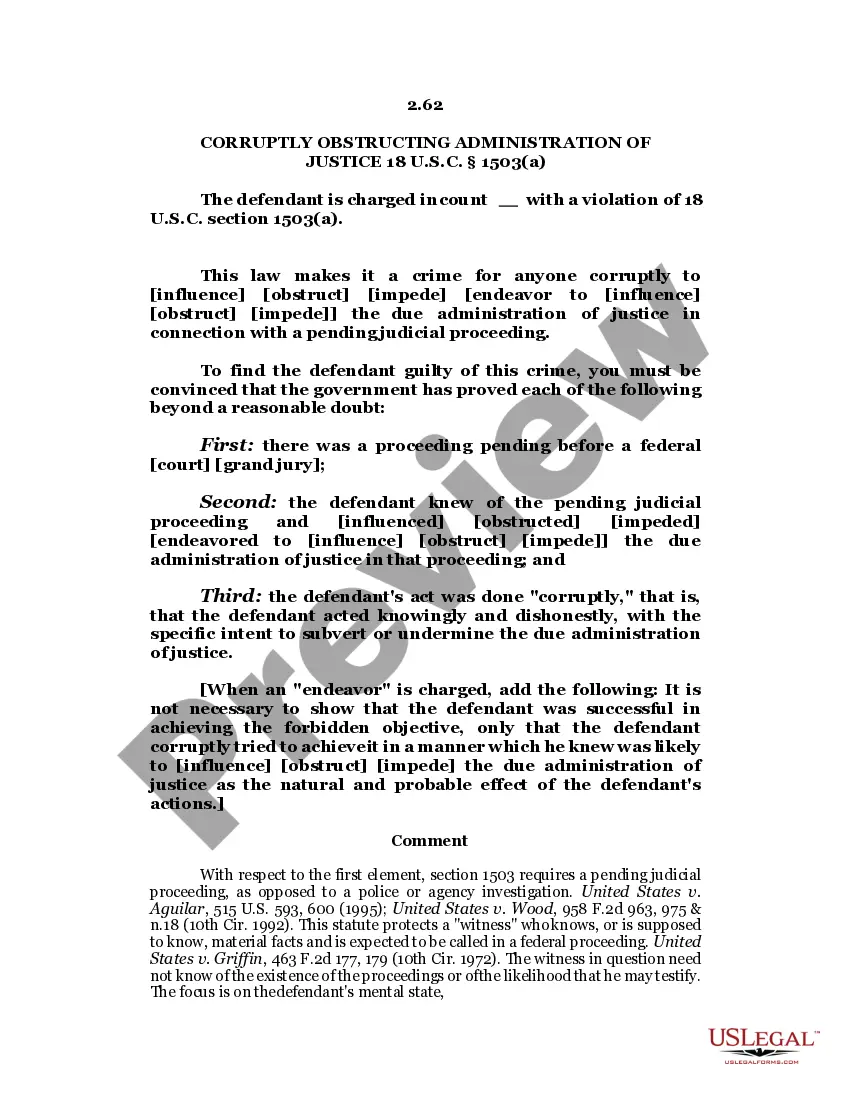
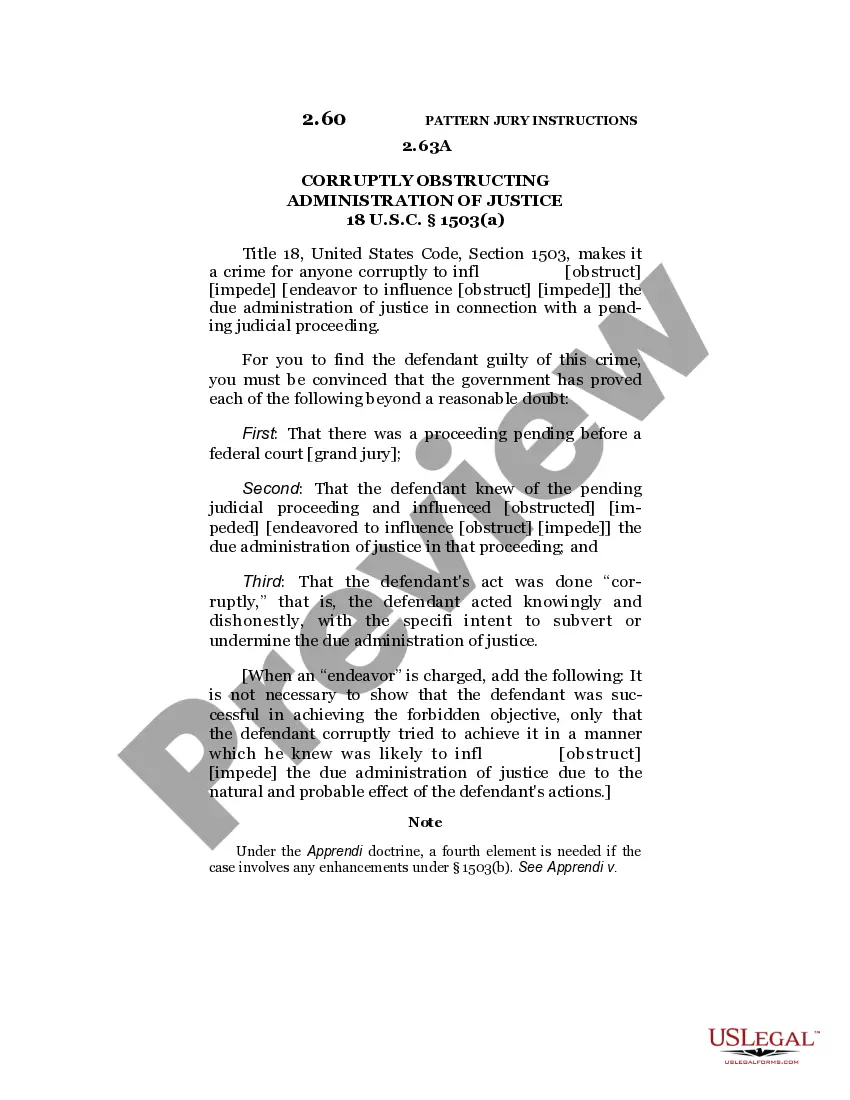
CORRUPTLY OBSTRUCTING ADMINISTRATION OF JUSTICE / 18 U.S.C. Sec. 1503(a)
Understanding this form
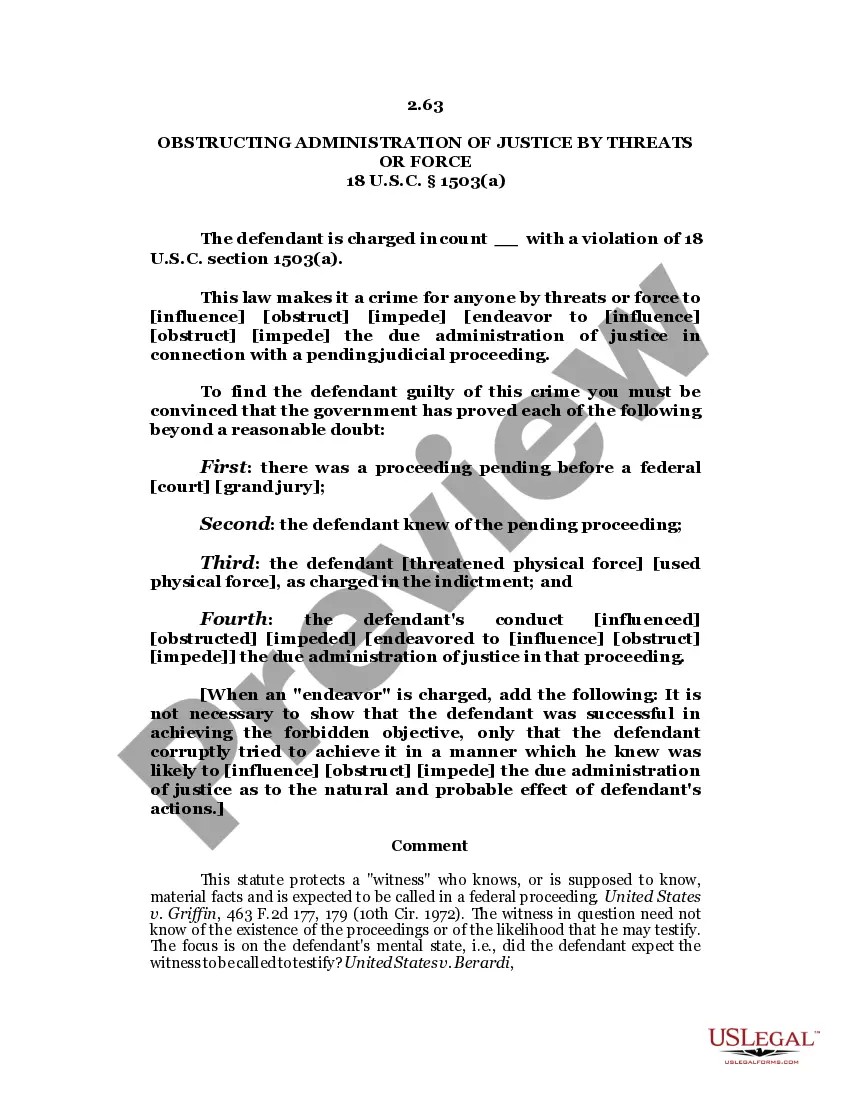
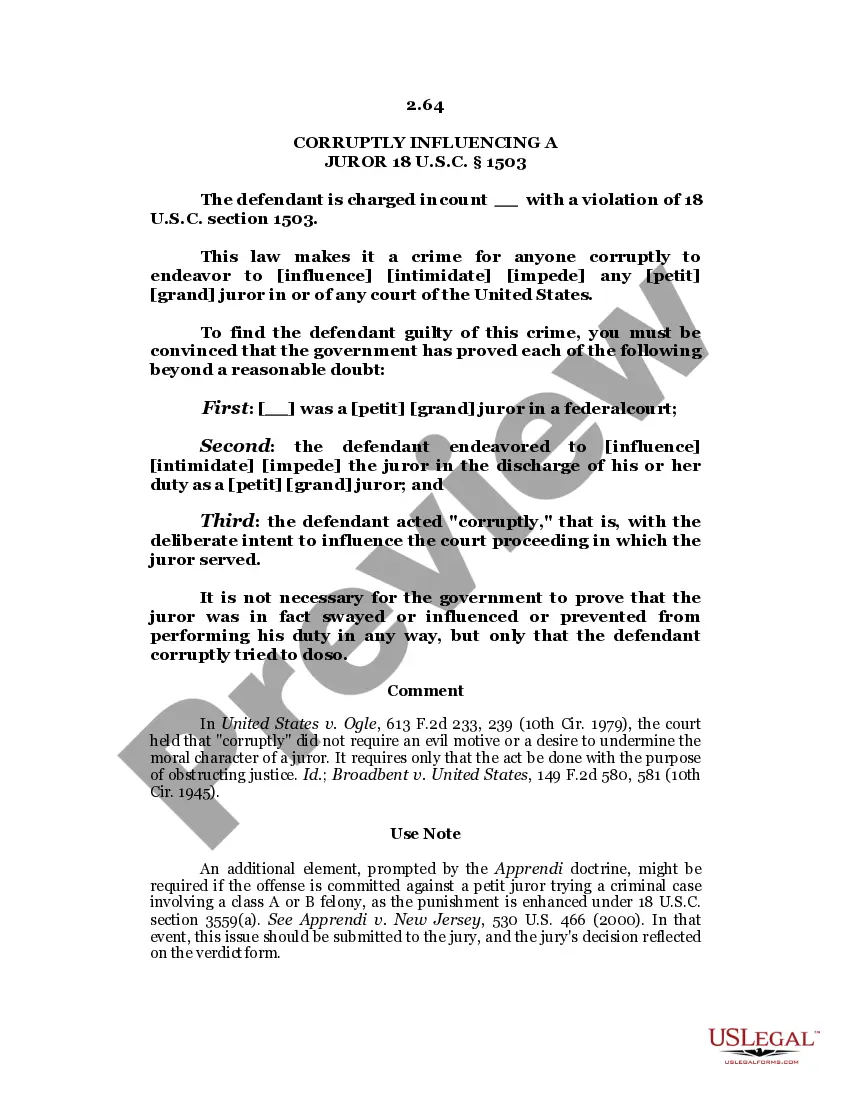
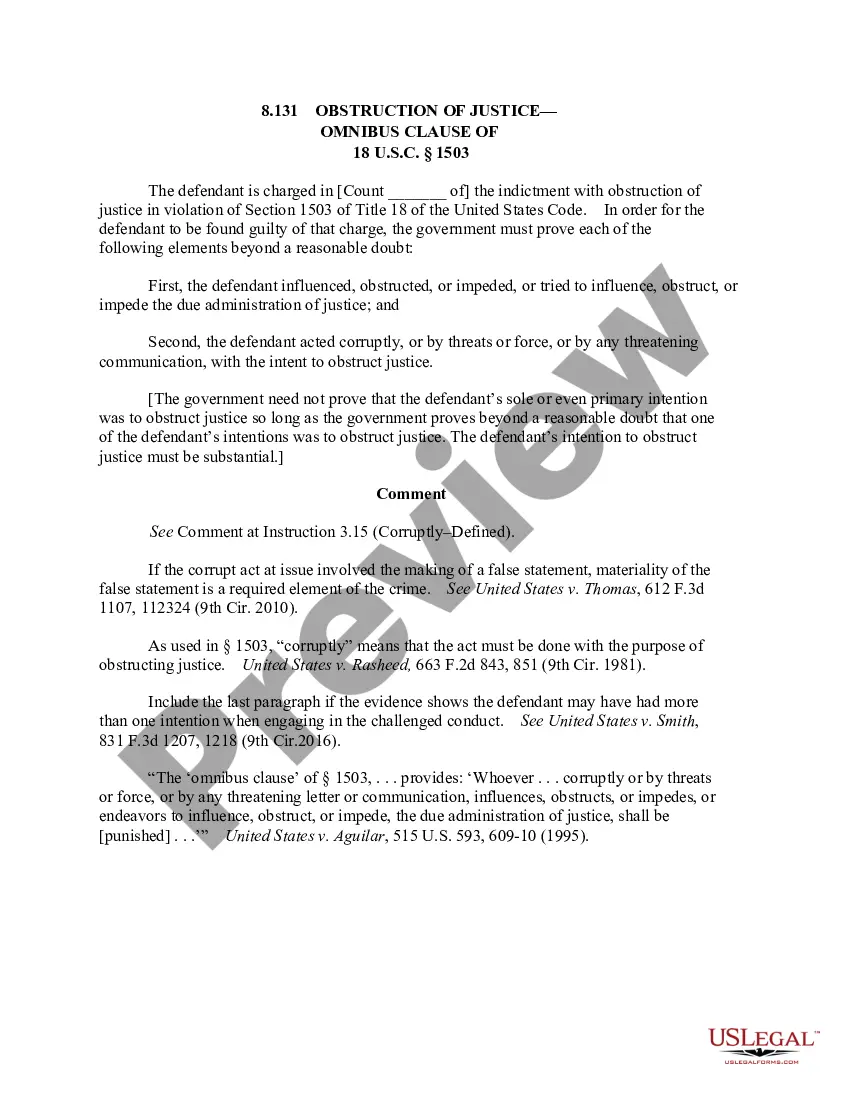
The form titled "Corruptly Obstructing Administration of Justice" pertains to violations under 18 U.S.C. § 1503(a). It is designed to address illegal actions aimed at influencing or obstructing justice in ongoing judicial proceedings. This form is crucial for understanding the elements of this specific crime, which include corrupt intent and knowledge of pending proceedings. Unlike other legal forms related to obstruction, this form specifically focuses on federal judicial contexts and emphasizes the gravity of corrupt acts against the justice system.
Key components of this form
- Definition of the crime: corruptly influencing, obstructing, or impeding justice.
- Elements required for a guilty verdict, including knowledge of a pending judicial proceeding.
- Clarification on what constitutes "corrupt" actions.
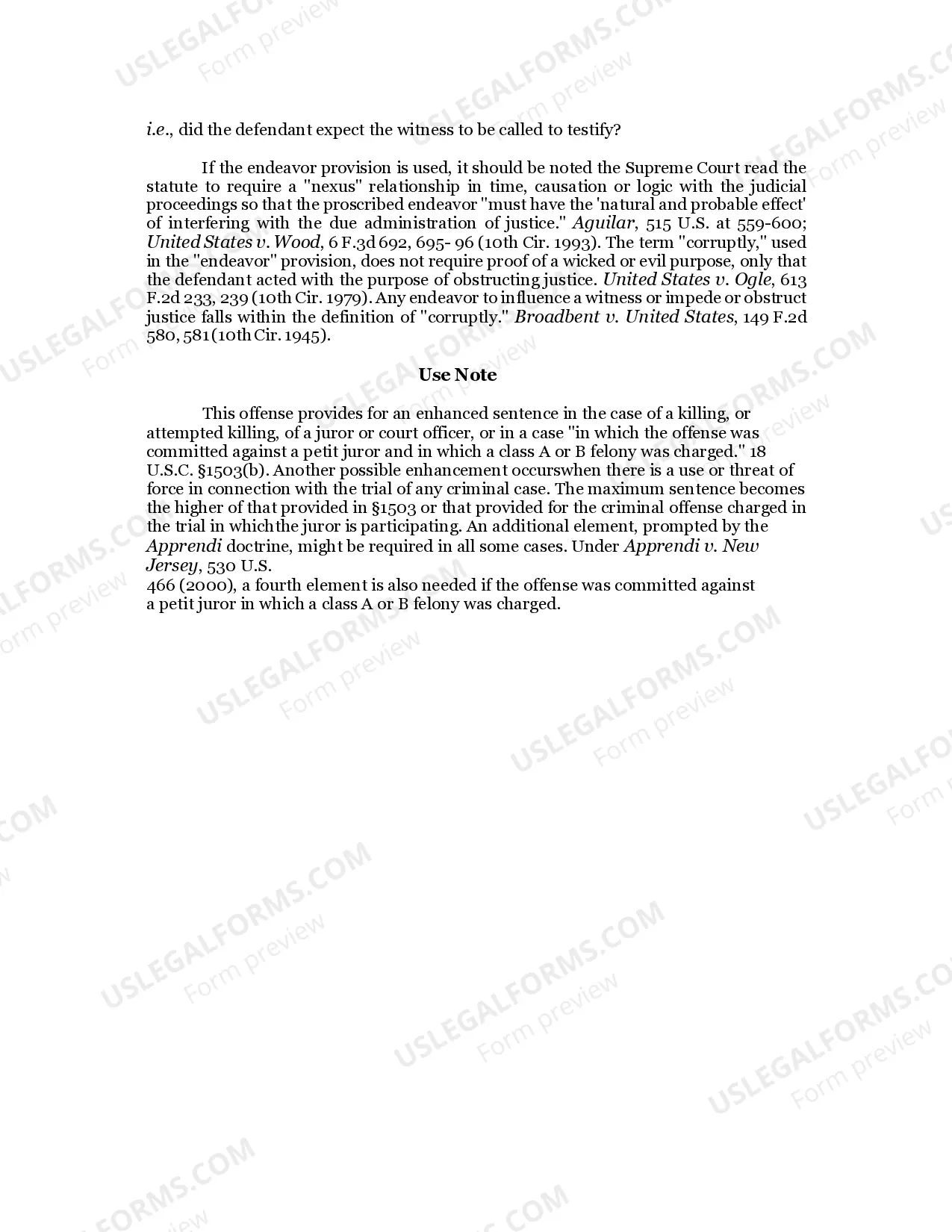
- Explanation of "endeavor" and the necessary nexus to judicial proceedings.
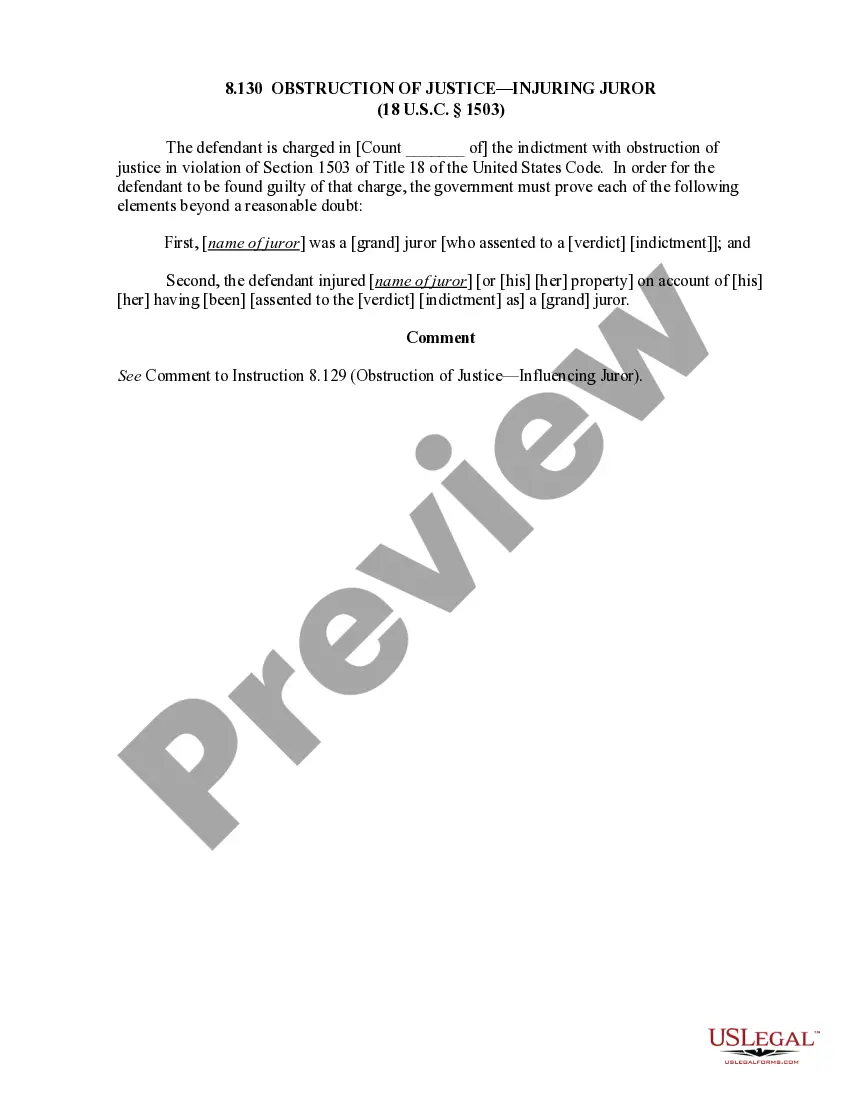
- Potential sentencing enhancements related to violence against jurors or officers.
When to use this document
This form should be used when charges of corruptly obstructing justice are brought against a defendant in a federal court. It is essential in situations where an individual is accused of attempting to influence a witness, impede a court proceeding, or undermine the integrity of the judicial process. Legal practitioners and defendants alike may reference this form for guidance on the legal standards and requirements for such cases.
Who should use this form
- Defendants facing charges under 18 U.S.C. § 1503(a).
- Legal professionals representing clients accused of obstructing justice.
- Individuals seeking to understand the implications of their actions related to judicial proceedings.
How to prepare this document
- Identify the defendant and the relevant count related to 18 U.S.C. § 1503(a).
- Specify the details of the pending judicial proceeding, indicating the federal court involved.
- Outline the actions taken by the defendant that are in question, ensuring to note the intent behind those actions.
- Confirm whether the defendant acted "corruptly" as defined by the law, providing evidence if available.
- Review any enhancements related to sentencing, especially if the defendant's actions involved threats or violence.
Is notarization required?
Notarization is generally not required for this form. However, certain states or situations might demand it. You can complete notarization online through US Legal Forms, powered by Notarize, using a verified video call available anytime.
Get your form ready online
Our built-in tools help you complete, sign, share, and store your documents in one place.
Make edits, fill in missing information, and update formatting in US Legal Forms—just like you would in MS Word.
Download a copy, print it, send it by email, or mail it via USPS—whatever works best for your next step.
Sign and collect signatures with our SignNow integration. Send to multiple recipients, set reminders, and more. Go Premium to unlock E-Sign.
If this form requires notarization, complete it online through a secure video call—no need to meet a notary in person or wait for an appointment.
We protect your documents and personal data by following strict security and privacy standards.

Make edits, fill in missing information, and update formatting in US Legal Forms—just like you would in MS Word.

Download a copy, print it, send it by email, or mail it via USPS—whatever works best for your next step.

Sign and collect signatures with our SignNow integration. Send to multiple recipients, set reminders, and more. Go Premium to unlock E-Sign.

If this form requires notarization, complete it online through a secure video call—no need to meet a notary in person or wait for an appointment.

We protect your documents and personal data by following strict security and privacy standards.
Avoid these common issues
- Failing to establish the necessary nexus to a federal judicial proceeding.
- Misunderstanding the definition of "corruptly," leading to inadequate evidence of intent.
- Overlooking enhancements to sentencing regarding threats made during the obstructive actions.
Benefits of using this form online
- Easy access to download and complete the form securely.
- Editability allows for customized inclusion of case-specific details.
- Reliability of having a form created with input from licensed attorneys.
Legal use & context
- Understanding that obstruction of justice is a serious federal offense with significant consequences.
- Recognizing the importance of legal representation when facing charges of this nature.
- Knowing that an "endeavor" to obstruct does not require success, only the intent to do so.
Looking for another form?
Form popularity
FAQ
(a) Whoever willfully endeavors by means of bribery to obstruct, delay, or prevent the communication of information relating to a violation of any criminal statute of the United States by any person to a criminal investigator shall be fined under this title, or imprisoned not more than five years, or both.
While varying greatly, each obstruction of justice statute typically requires proof that the defendant 1) knew of a government proceeding and 2) acted with the intent to interfere with the proceeding.
§ 1503: makes it illegal for someone to ?corruptly? or through threats or force influence a juror or officer of the court in carrying out their duties before a judicial proceeding. The punishment for this crime can reach over 20 years imprisonment in the most extreme cases. Obstructing Witnesses and Evidence 18 U.S.C.
Federal Obstruction of Justice Witness tampering, bribing juries, and destroying evidence are examples of obstructions at the federal level. Anyone who tampers with evidence with the intent to obstruct justice in a federal court case may face upwards of 20 years in prison.
Federal Obstruction of Justice Witness tampering, bribing juries, and destroying evidence are examples of obstructions at the federal level. Anyone who tampers with evidence with the intent to obstruct justice in a federal court case may face upwards of 20 years in prison.
The most common forms of obstruction of justice are witness tampering, perjury, and destroying evidence during the course of a government case. Obstruction of justice is a criminal offense under both federal and state law for which thousands of people go to prison every year.
Misleading or lying to investigators is a typical example of federal obstruction of justice. Bribing a government official, destroying evidence, or giving a false alibi to protect a friend or family member are also classic examples of obstruction of justice.
Under Title 18 U.S.C § 1503, federal law defines ?obstruction of justice? as: Any act which, corruptly or by the threat of force / threatening communication, impedes, influences, obstructs, or aims to impede, influence, or obstruct the due administration of justice.