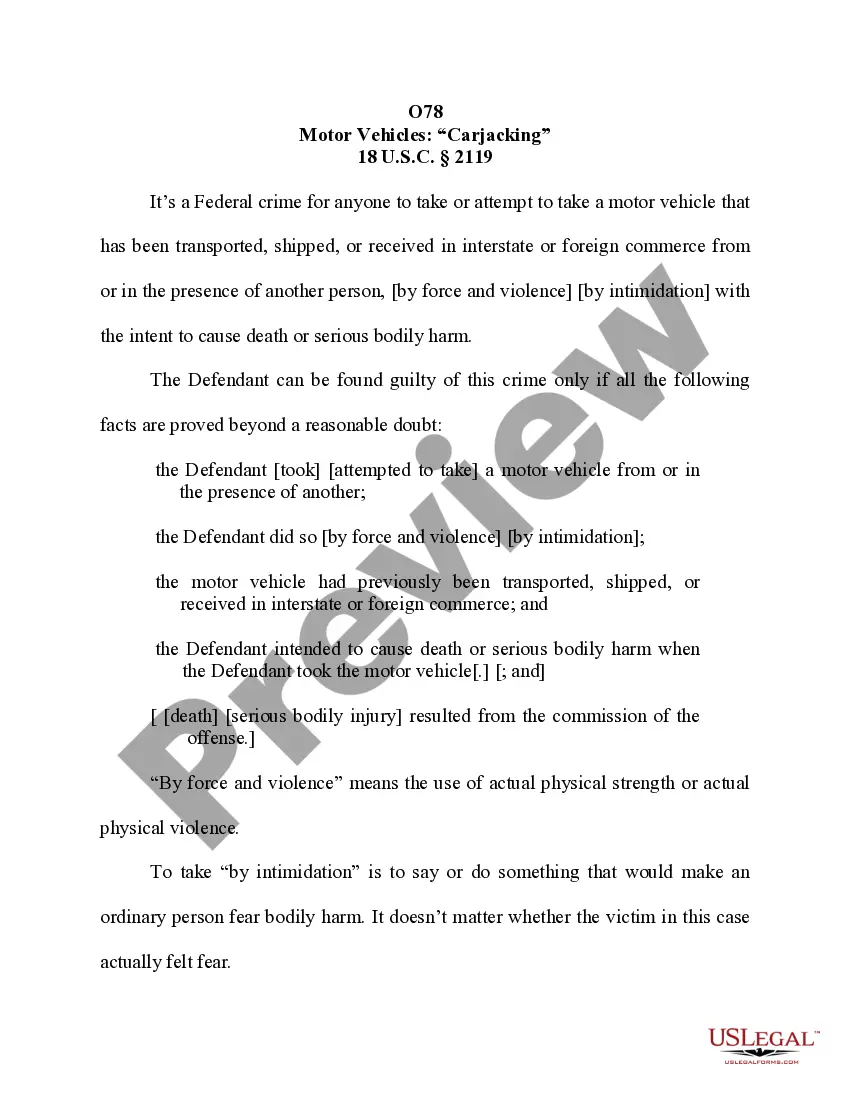
CARJACKING / 18 U.S.C. Sec. 2119
Understanding this form
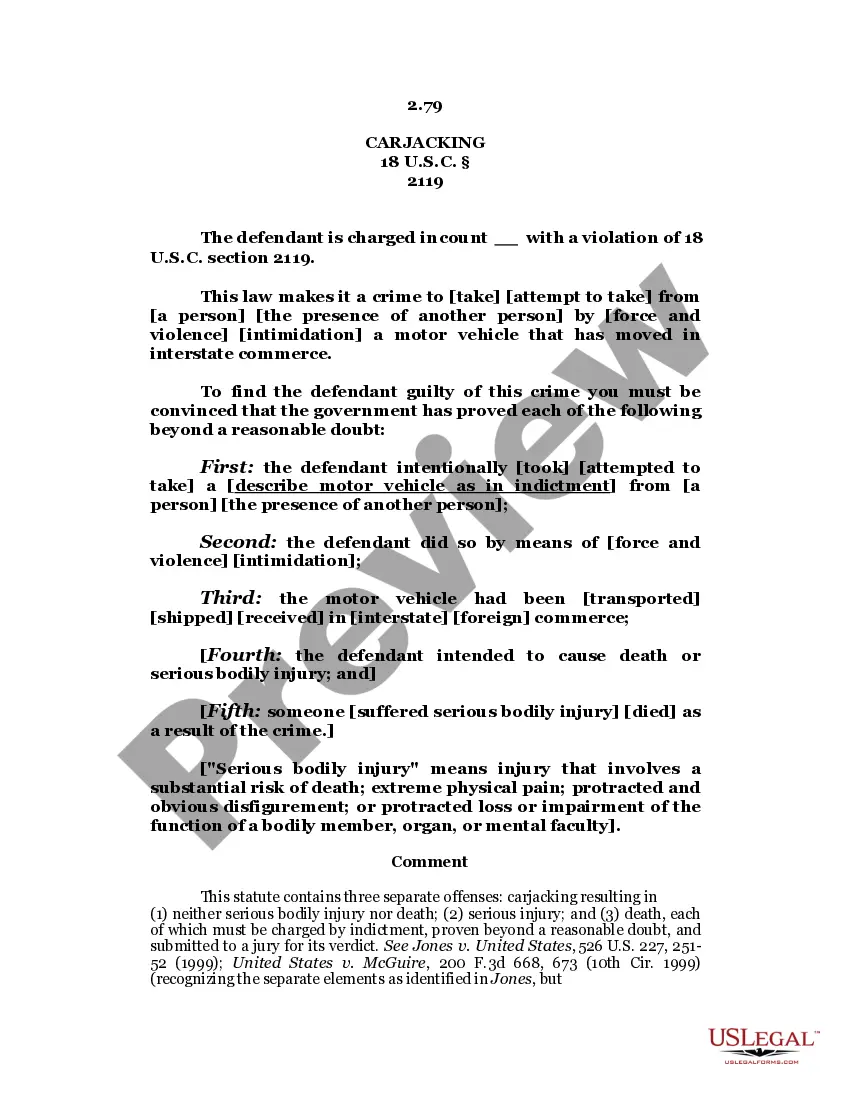
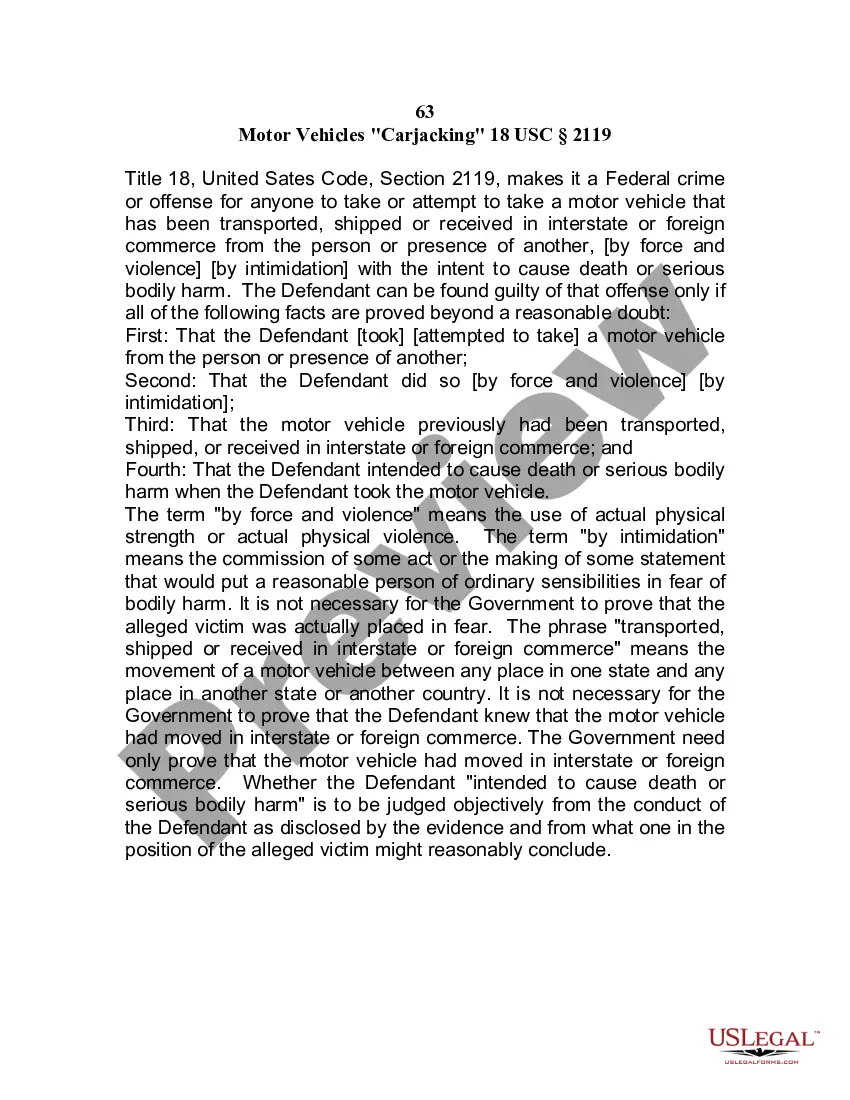
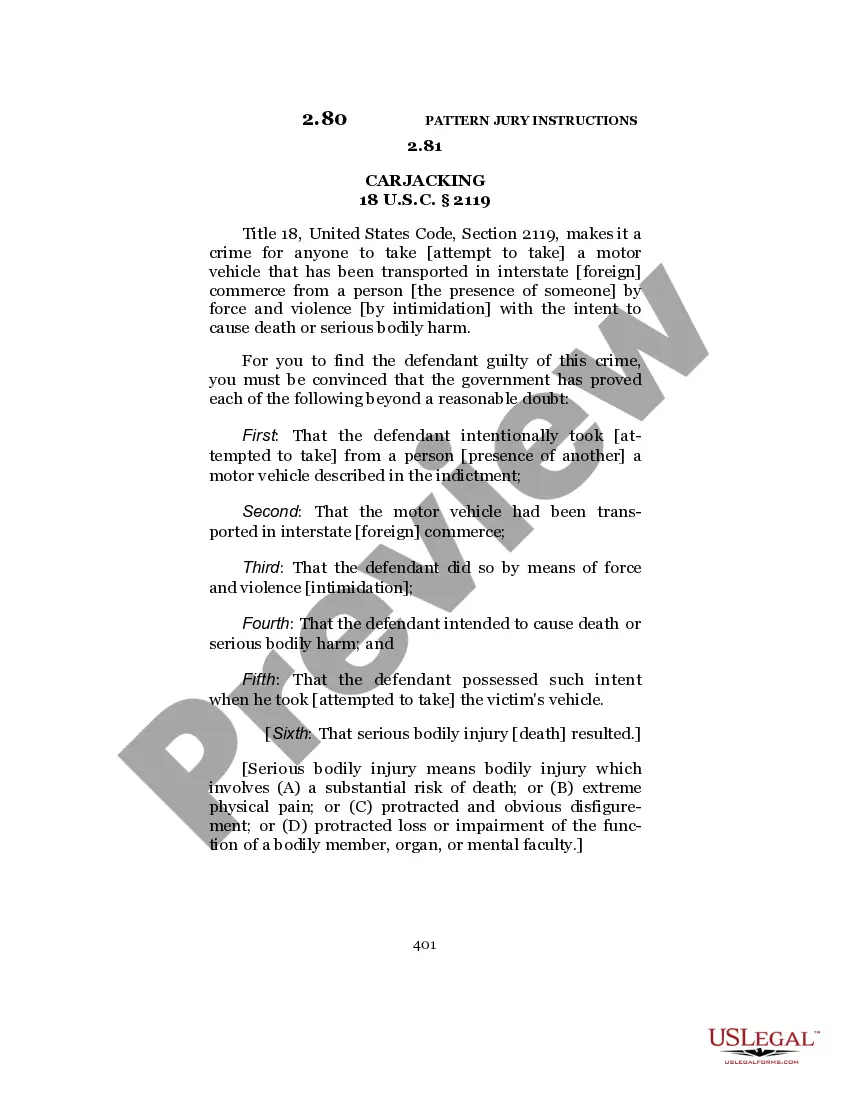
The Carjacking form, drafted under 18 U.S.C. Sec. 2119, is used to document the legal procedures and elements relating to the crime of carjacking. This form outlines the specific legal requirements to establish a case of carjacking, which includes taking a motor vehicle by force or intimidation from another person. It is essential to understand how this law applies to various situations, distinguishing it from other forms of theft or robbery. The form provides a clear framework for prosecution or defense in carjacking cases, ensuring that the elements of the crime are properly addressed.
Key components of this form
- Definition of carjacking and legal criteria for guilt.
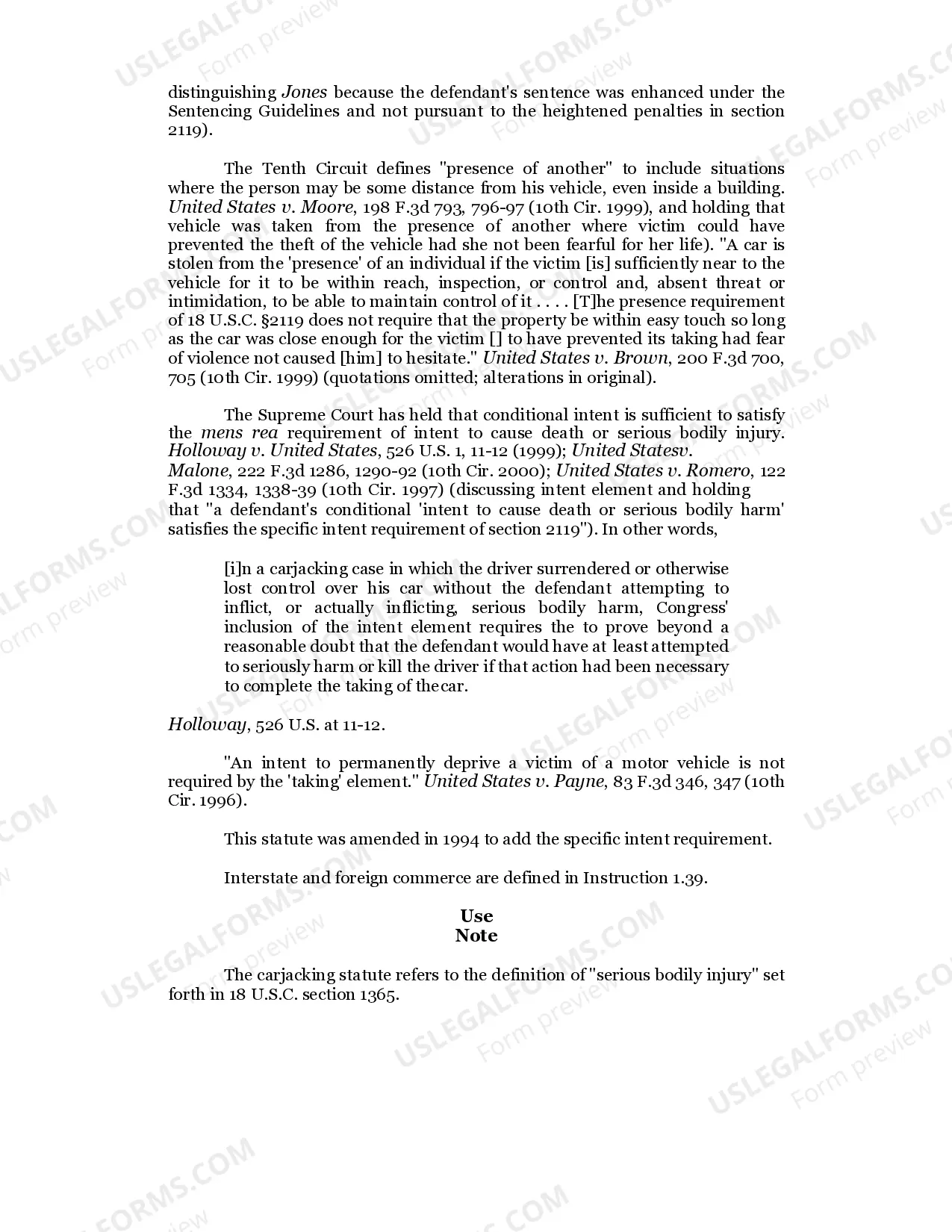
- Details on the requirement of taking a vehicle from a person's presence.
- Clarification of means used, such as force, violence, or intimidation.
- Specifications on the vehicle's transportation status across state lines.
- Conditions for serious bodily injury or death resulting from the crime.

Common use cases
This form should be used when there is an allegation of carjacking involving a motor vehicle obtained through force or intimidation. It is applicable in situations where someone has taken a vehicle directly from another individual, especially if serious bodily harm or death has occurred during the incident. Use this form to document the legal aspects of the case for indictment and prosecution purposes.
Intended users of this form
- Law enforcement officials preparing a case for prosecution.
- Prosecutors seeking to outline the elements of carjacking in court.
- Defense attorneys needing to understand the charges against a client.
- Individuals involved in carjacking cases as victims or defendants.
Instructions for completing this form
- Identify the defendant and describe the motor vehicle involved in the alleged offense.
- Detail the circumstances surrounding the claim of use of force or intimidation.
- Specify how the motor vehicle was transported across state lines or in foreign commerce.
- Include any evidence related to serious bodily injury or fatalities resulting from the incident.
- Review jurisdictional requirements to ensure all elements are adequately addressed.
Notarization requirements for this form
Notarization is generally not required for this form. However, certain states or situations might demand it. You can complete notarization online through US Legal Forms, powered by Notarize, using a verified video call available anytime.
Get your form ready online
Our built-in tools help you complete, sign, share, and store your documents in one place.
Make edits, fill in missing information, and update formatting in US Legal Forms—just like you would in MS Word.
Download a copy, print it, send it by email, or mail it via USPS—whatever works best for your next step.
Sign and collect signatures with our SignNow integration. Send to multiple recipients, set reminders, and more. Go Premium to unlock E-Sign.
If this form requires notarization, complete it online through a secure video call—no need to meet a notary in person or wait for an appointment.
We protect your documents and personal data by following strict security and privacy standards.

Make edits, fill in missing information, and update formatting in US Legal Forms—just like you would in MS Word.

Download a copy, print it, send it by email, or mail it via USPS—whatever works best for your next step.

Sign and collect signatures with our SignNow integration. Send to multiple recipients, set reminders, and more. Go Premium to unlock E-Sign.

If this form requires notarization, complete it online through a secure video call—no need to meet a notary in person or wait for an appointment.

We protect your documents and personal data by following strict security and privacy standards.
Common mistakes
- Failing to establish the presence of the victim during the vehicle taking.
- Neglecting to detail the means of intimidation or force used.
- Omitting the status of the vehicle in interstate commerce from the documentation.
- Misunderstanding the legal definitions of "serious bodily injury" and "death."
Why complete this form online
- Convenience of accessing and downloading the form from any device.
- Editability to tailor the form to specific case details before finalization.
- Reliability of using a template drafted by licensed attorneys familiar with relevant laws.
Looking for another form?
Form popularity
FAQ
Possible Penalties for a Carjacking Conviction in California The crime is a felony, and you may be sentenced to up to nine years in state prison. In addition, the court may order you to pay restitution to the victim or victims of the carjacking.
18 U.S. Code § 2119 Explained The accused must have taken a vehicle that has been transported, shipped, or received in interstate or foreign commerce, The accused must have taken the vehicle by using force or intimidation, The accused took the car knowingly, and.
I. California Penal Code 29800(a)(1): Possession of a Firearm by a Prohibited Person. Legal Definition: Any person who has a prior felony conviction, who owns, purchases, receives, or has in possession or under custody or control any firearm is guilty of a felony.
Penal Code § 215, California's carjacking law, makes it illegal to take a vehicle from another person through the use of force or fear. The term ?force or fear? means physical violence or threats of harm.
PC 212 PC defines "fear" in robbery cases. Thus, to convict someone of robbery in California, the prosecution must prove that the defendant took property from another person and that they did so by force or fear.
Any person who commits carjacking, as herein defined, shall be guilty of a felony punishable by imprisonment for life or a term not less than fifteen years.
California Penal Code 245(a)(1) PC describes the crime of assault with a deadly weapon as when someone attacks, or attempts to attack, another person with a deadly weapon (other than a firearm), or by a means that is likely to cause great bodily injury.
The crime of assault under California Penal Code Section 240 PC is often described as an ?attempted battery? involving an attack or threatened attack on another that does not result in physical contact, injury or harm.