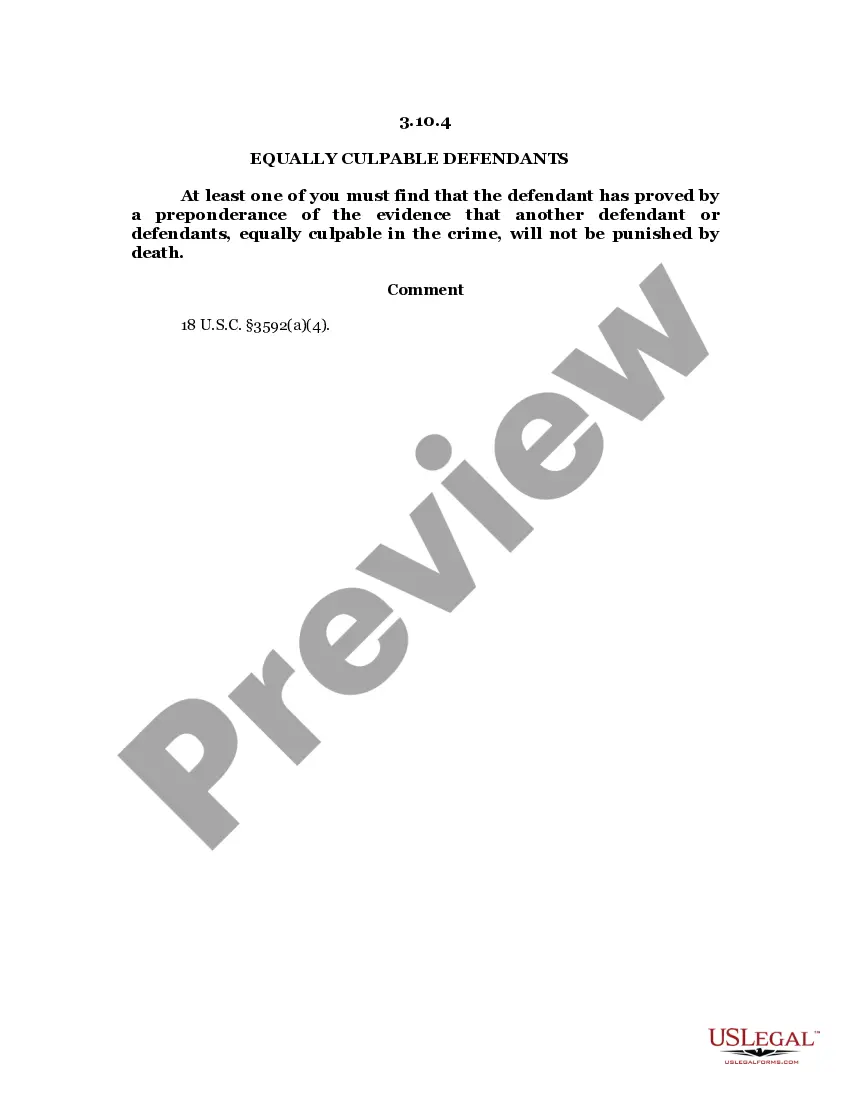
EQUALLY CULPABLE DEFENDANTS
Overview of this form
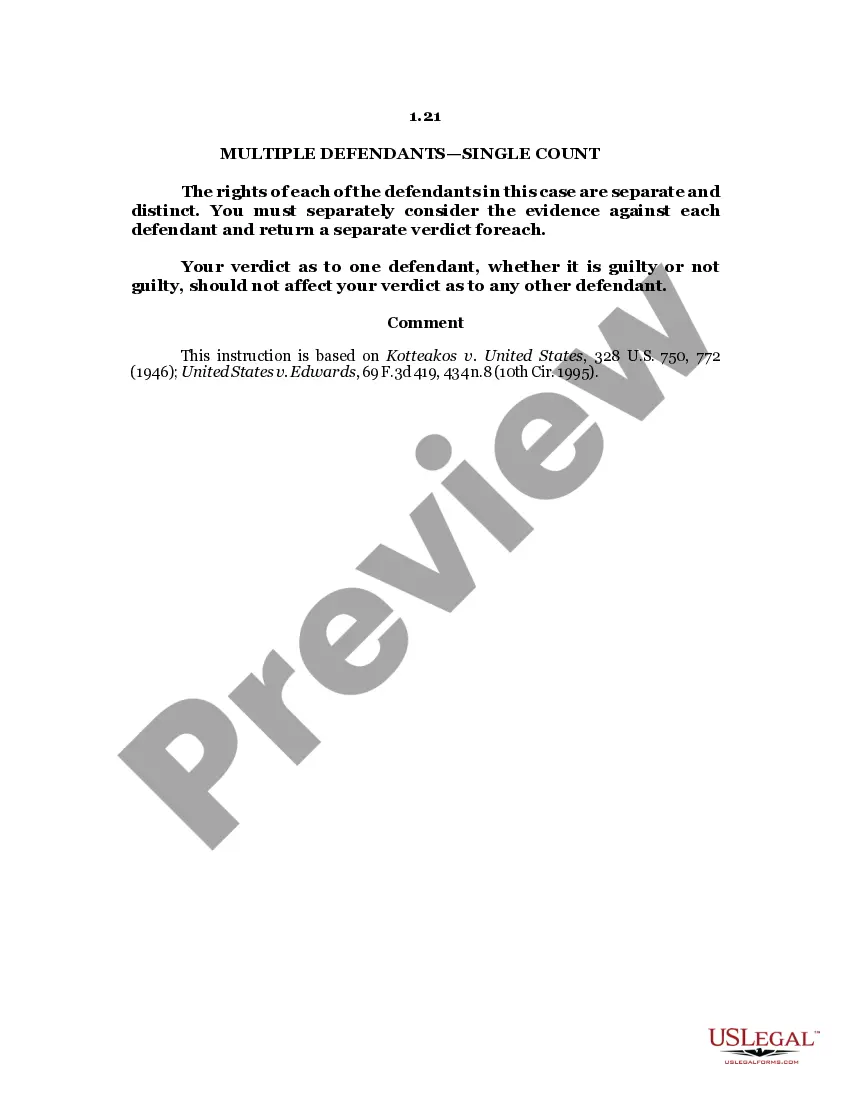
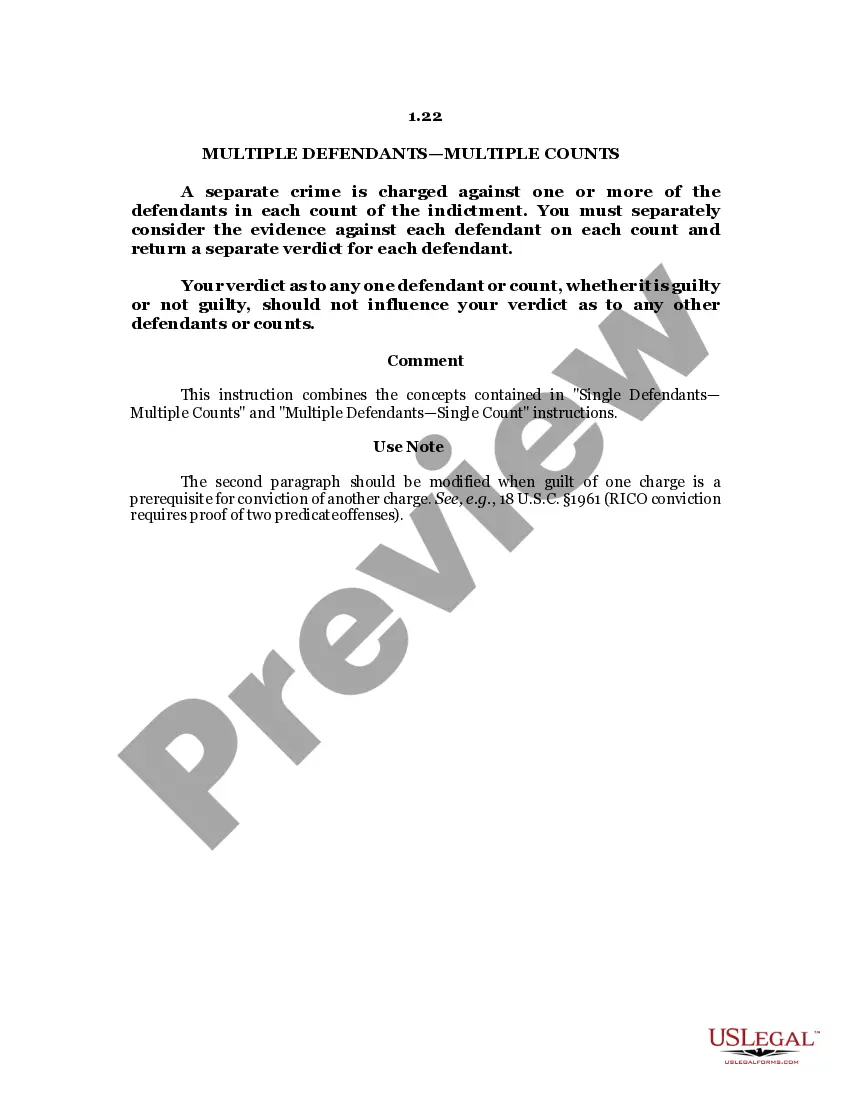
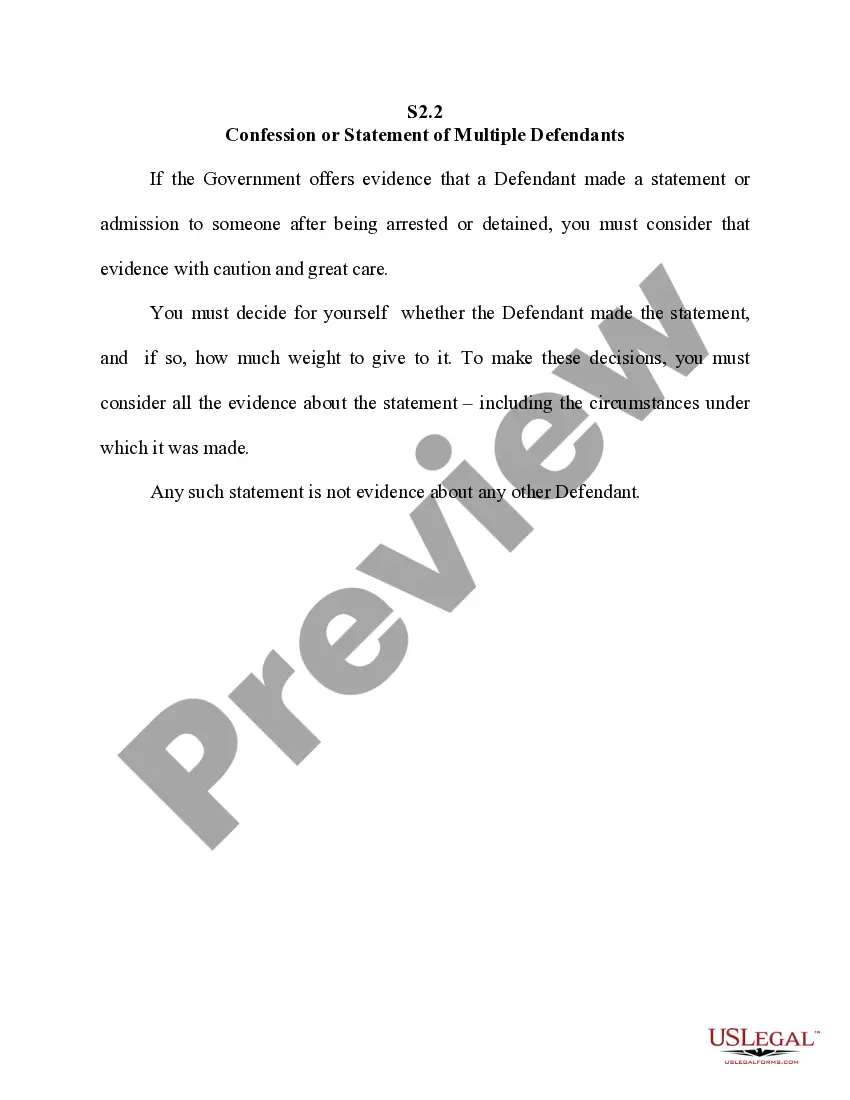
The Equally Culpable Defendants form is a legal document used in criminal cases to determine if a defendant's argument for lesser or no punishment due to the culpability of other equally responsible defendants is valid. This form serves a crucial role in ensuring that defendants are treated fairly, particularly in cases where multiple individuals are involved in the crime.
Key parts of this document
- Establishes the need for proof by a preponderance of evidence.
- Addresses the requirement that not all equally culpable defendants will face the death penalty.
- Cites relevant legislation: 18 U.S.C. §3592(a)(4).
Situations where this form applies
This form is necessary when a defendant is seeking to demonstrate that they should not be subjected to the death penalty because others involved in the crime are equally culpable. It is typically used in trials where multiple defendants are charged with the same crime and where the potential for capital punishment is in play.
Intended users of this form
This form is intended for:
- Defendants facing capital punishment alongside other equally culpable defendants.
- Legal representatives of defendants seeking to present mitigating circumstances during sentencing.
Steps to complete this form
- Identify the parties involved in the case, including all defendants.
- Provide evidence that demonstrates the equally culpable status of other defendants.
- Enter any relevant dates pertaining to the case, such as trial date or pre-trial motions.
Notarization requirements for this form
This form does not typically require notarization unless specified by local law.
Get your form ready online
Our built-in tools help you complete, sign, share, and store your documents in one place.
Make edits, fill in missing information, and update formatting in US Legal Forms—just like you would in MS Word.
Download a copy, print it, send it by email, or mail it via USPS—whatever works best for your next step.
Sign and collect signatures with our SignNow integration. Send to multiple recipients, set reminders, and more. Go Premium to unlock E-Sign.
If this form requires notarization, complete it online through a secure video call—no need to meet a notary in person or wait for an appointment.
We protect your documents and personal data by following strict security and privacy standards.

Make edits, fill in missing information, and update formatting in US Legal Forms—just like you would in MS Word.

Download a copy, print it, send it by email, or mail it via USPS—whatever works best for your next step.

Sign and collect signatures with our SignNow integration. Send to multiple recipients, set reminders, and more. Go Premium to unlock E-Sign.

If this form requires notarization, complete it online through a secure video call—no need to meet a notary in person or wait for an appointment.

We protect your documents and personal data by following strict security and privacy standards.
Avoid these common issues
- Failing to include all equally culpable defendants in the evidence.
- Insufficiently substantiating claims with evidence.
- Missing important case-related dates or details.
Why complete this form online
- Convenient access to legal templates at any time.
- Editable forms that can be customized to fit the specifics of your case.
- Reliable documents prepared in accordance with legal standards.
Legal use & context
- This form is essential for presenting a defense strategy in capital cases.
- It helps ensure fair treatment of defendants who share equal responsibility for a crime.
Looking for another form?



Form popularity
FAQ
The death penalty can only be imposed on defendants convicted of capital offenses ? such as murder, treason, genocide, or the killing or kidnapping of a Congressman, the President, or a Supreme Court justice. Unlike other punishments, a jury must decide whether to impose the death penalty.
Some examples include a lack of remorse, a leadership role in the crime, or history of criminal behavior. If a case's mitigating circumstances outweigh the aggravating circumstances, the judge is likely to be less aggressive in their ruling.
Any fact or circumstance that lessens the severity or culpability of a criminal act. Mitigating factors include an ability for the criminal to reform, mental retardation, an addiction to illegal substances or alcohol that contributed to the criminal behavior, and past good deeds, among many others.
This evidence, which can include mental problems, remorse, youth, childhood abuse or neglect, a minor role in the homicide, or the absence of a prior criminal record, may reduce the culpability of the defendant in the killing or may provide other reasons for preferring a life sentence to death.