Public Employee-First Amendment Claim- Discharge or Failure to Promote-Political Disloyalty or Key Employee
What is this form?
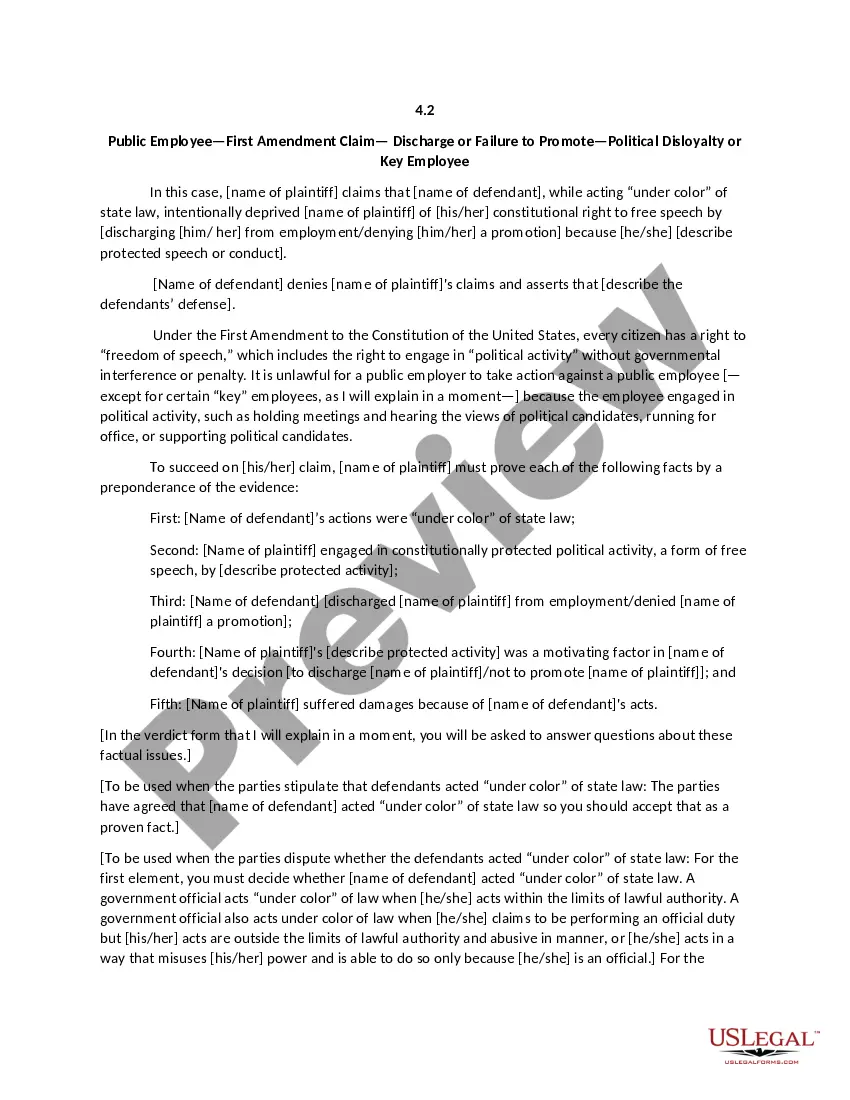
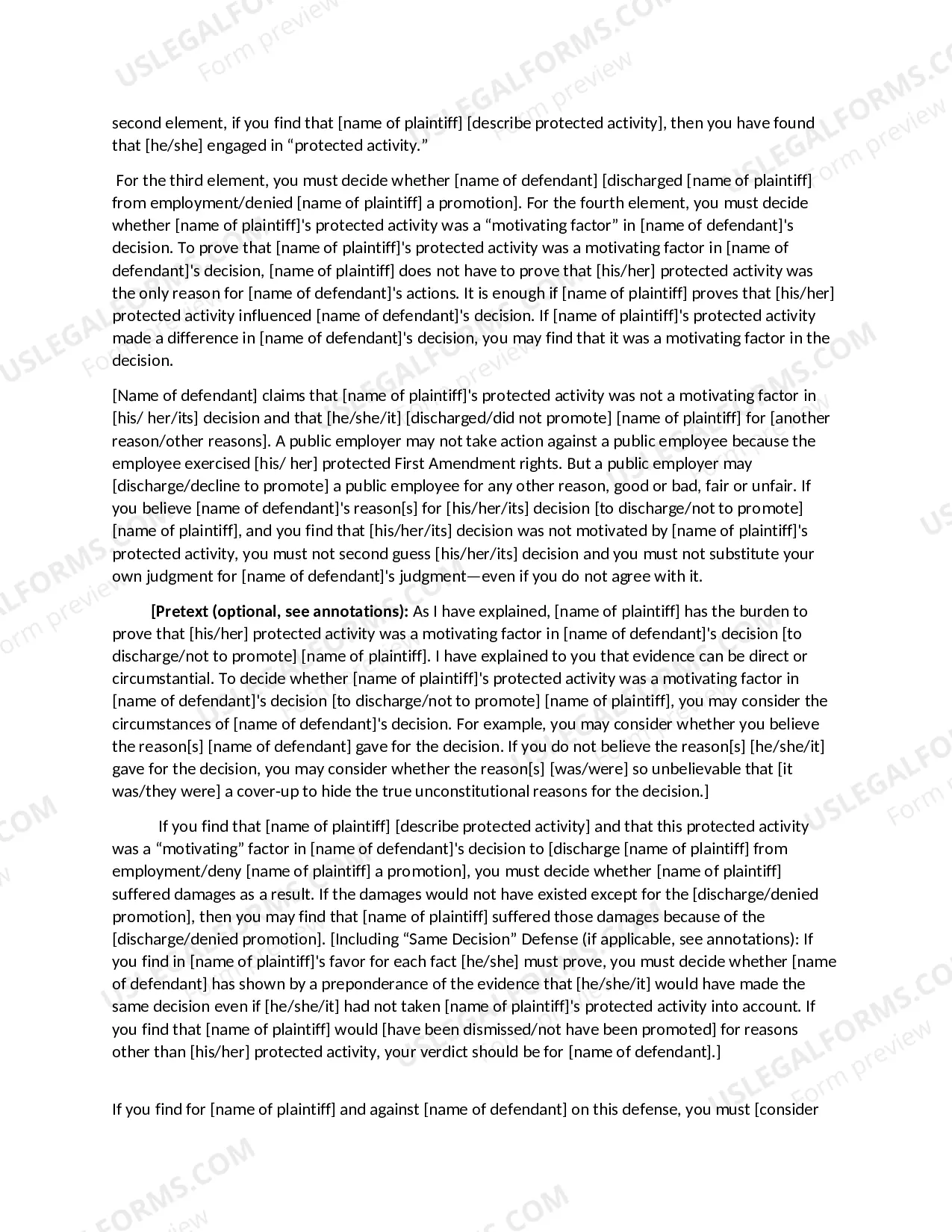
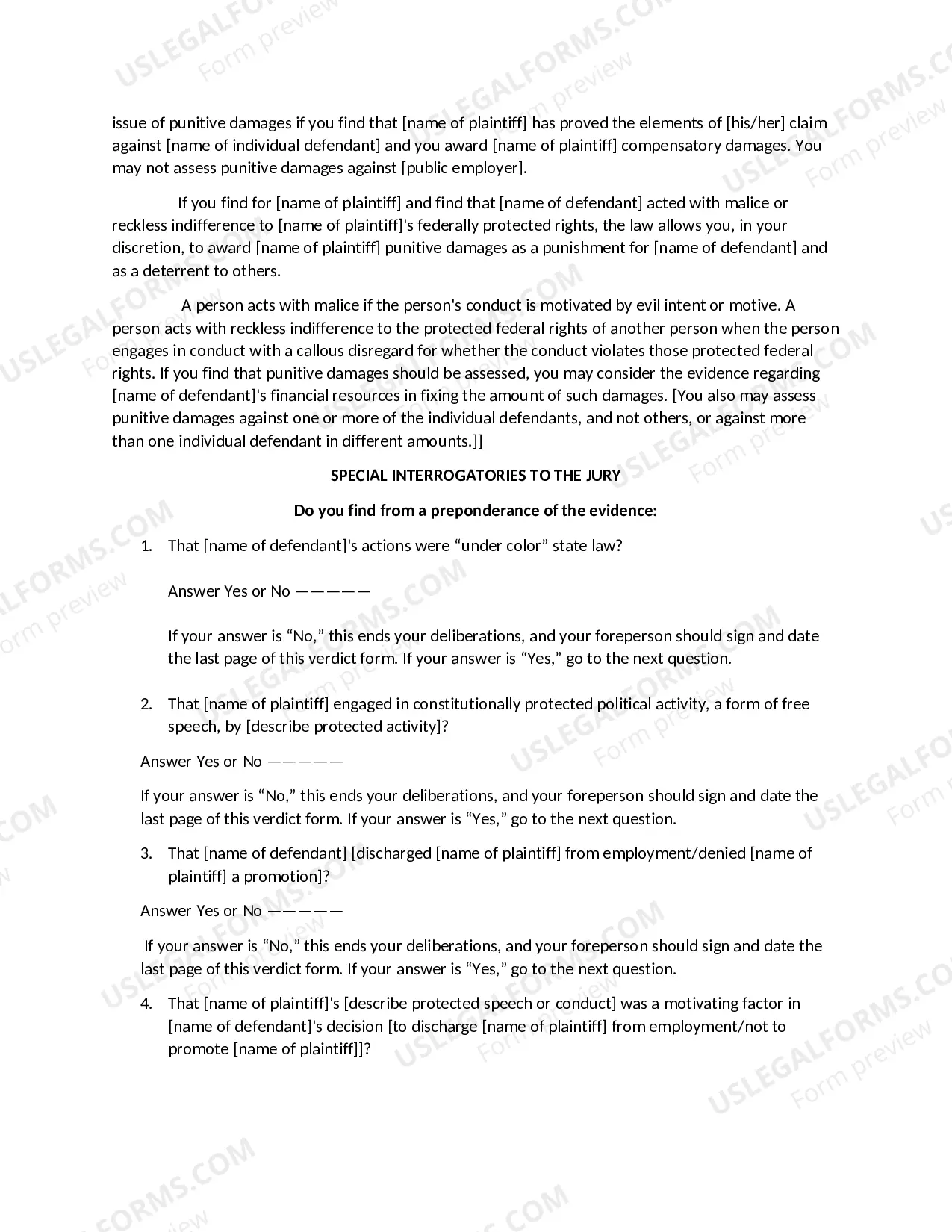
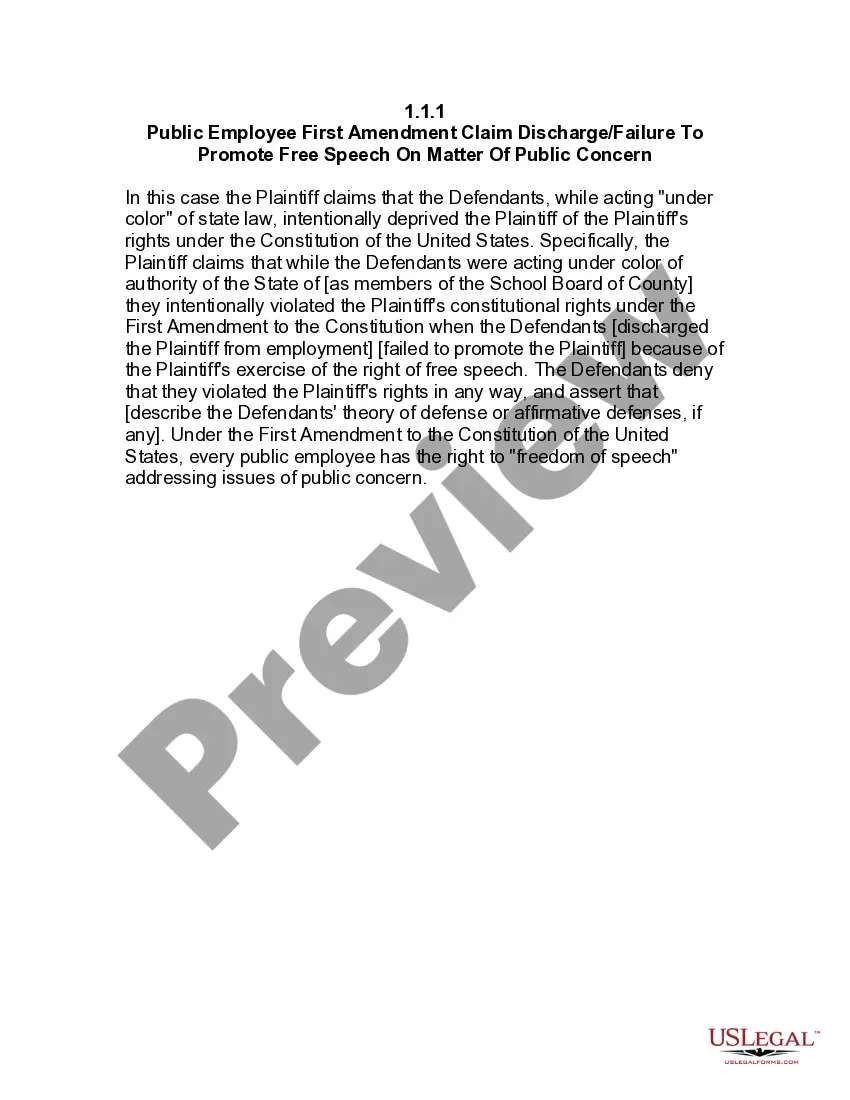
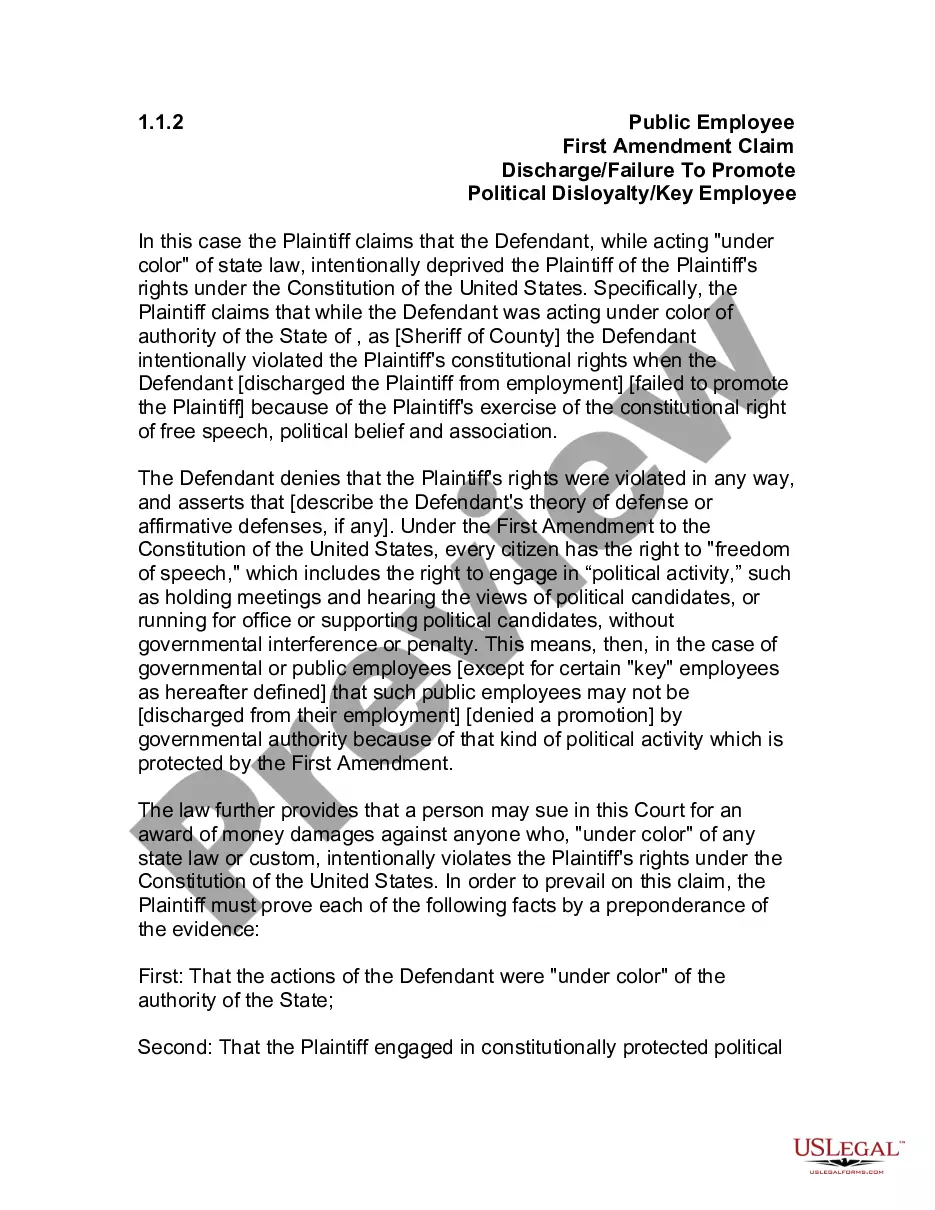
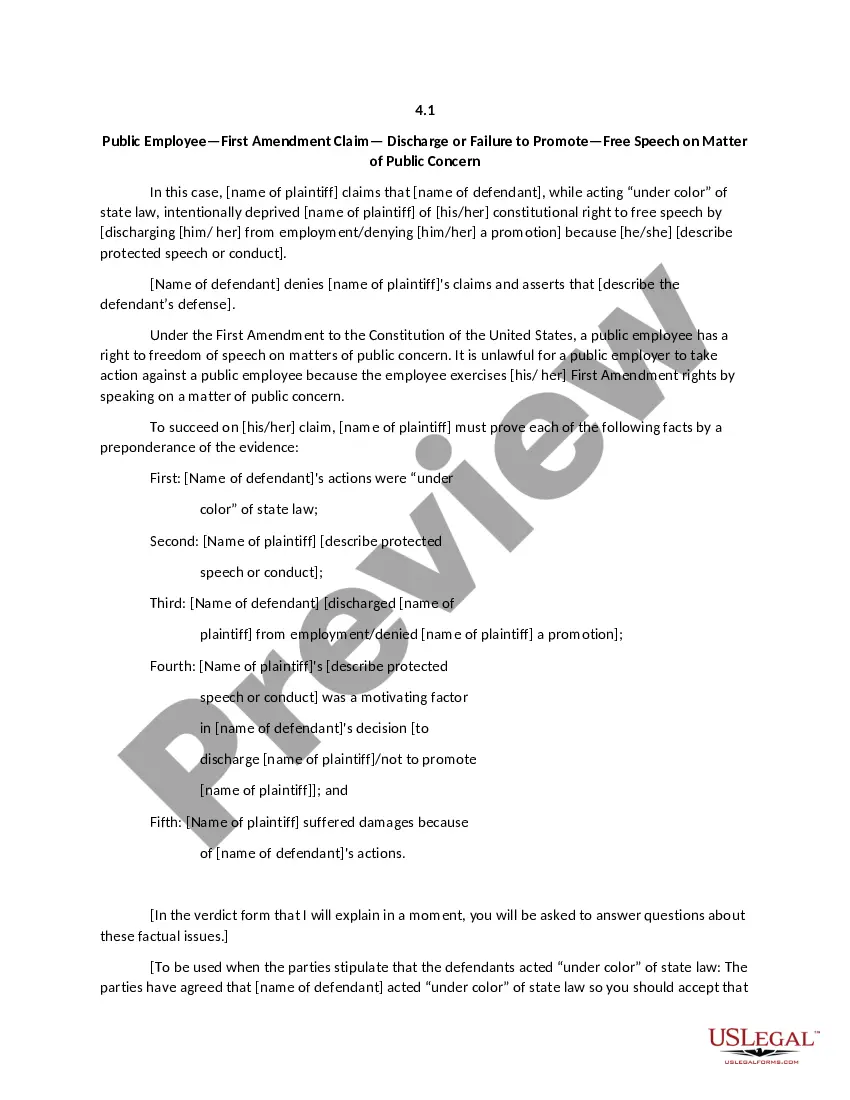
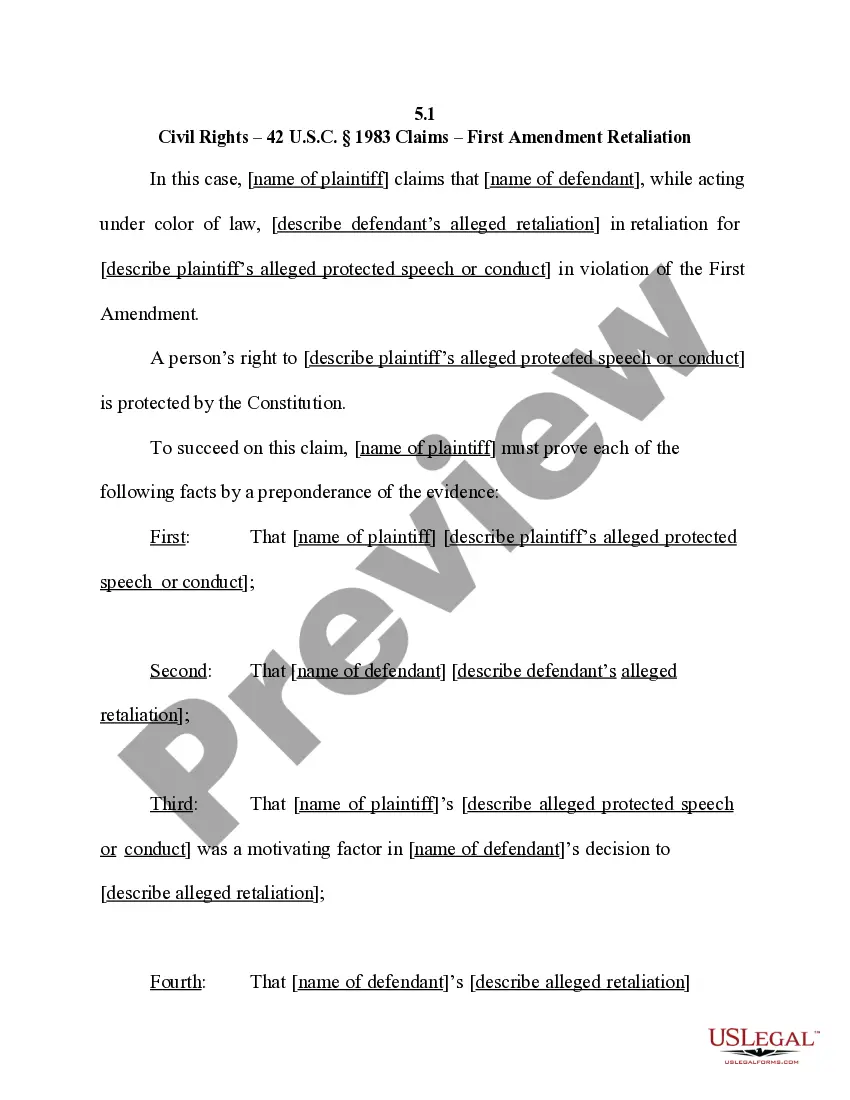
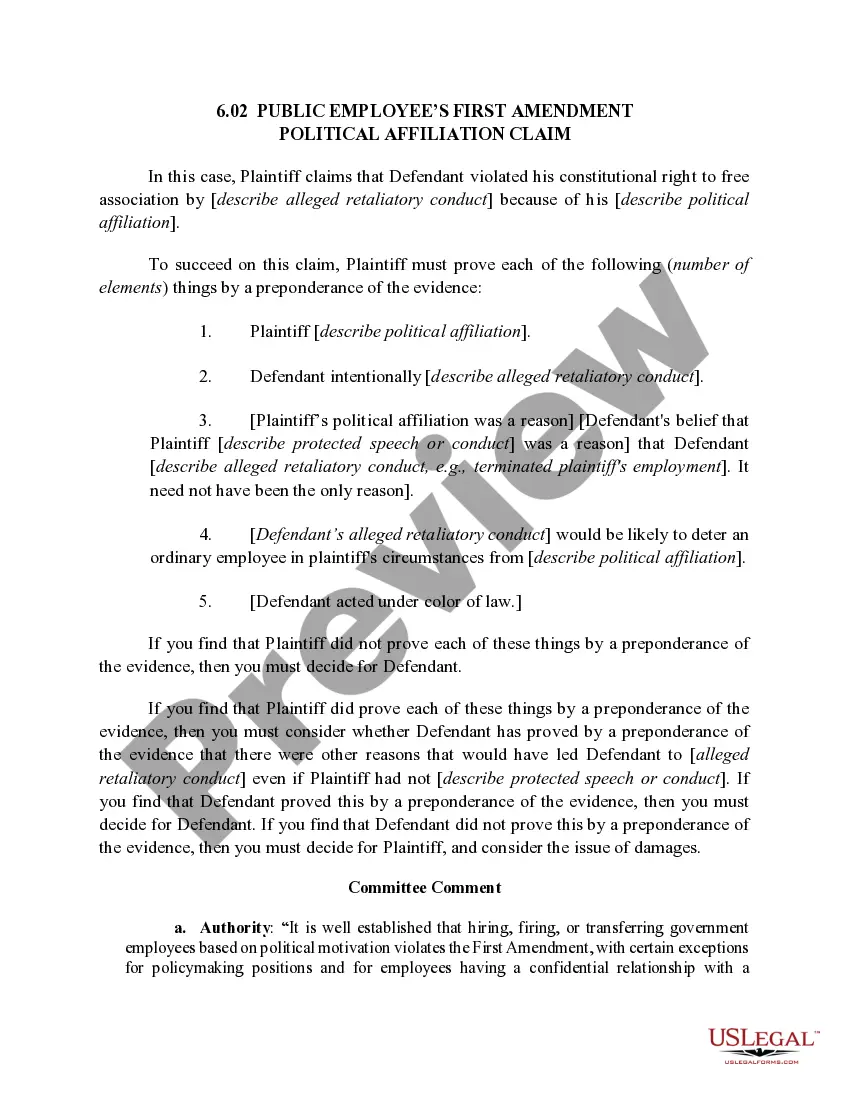
This form is the Public Employee-First Amendment Claim-Discharge or Failure to Promote-Political Disloyalty or Key Employee. It is designed to address allegations where a public employee believes their constitutional right to free speech has been violated by an unjust discharge or failure to promote due to political activities. This form serves as a legal framework for asserting such claims in a court setting, providing specific guidelines and elements needed to establish a violation of First Amendment rights.
What’s included in this form
- Identification of the plaintiff (employee) and defendant (employer).
- Details of the alleged protected speech or political activity.
- Clarification of whether the employer's actions were under color of state law.
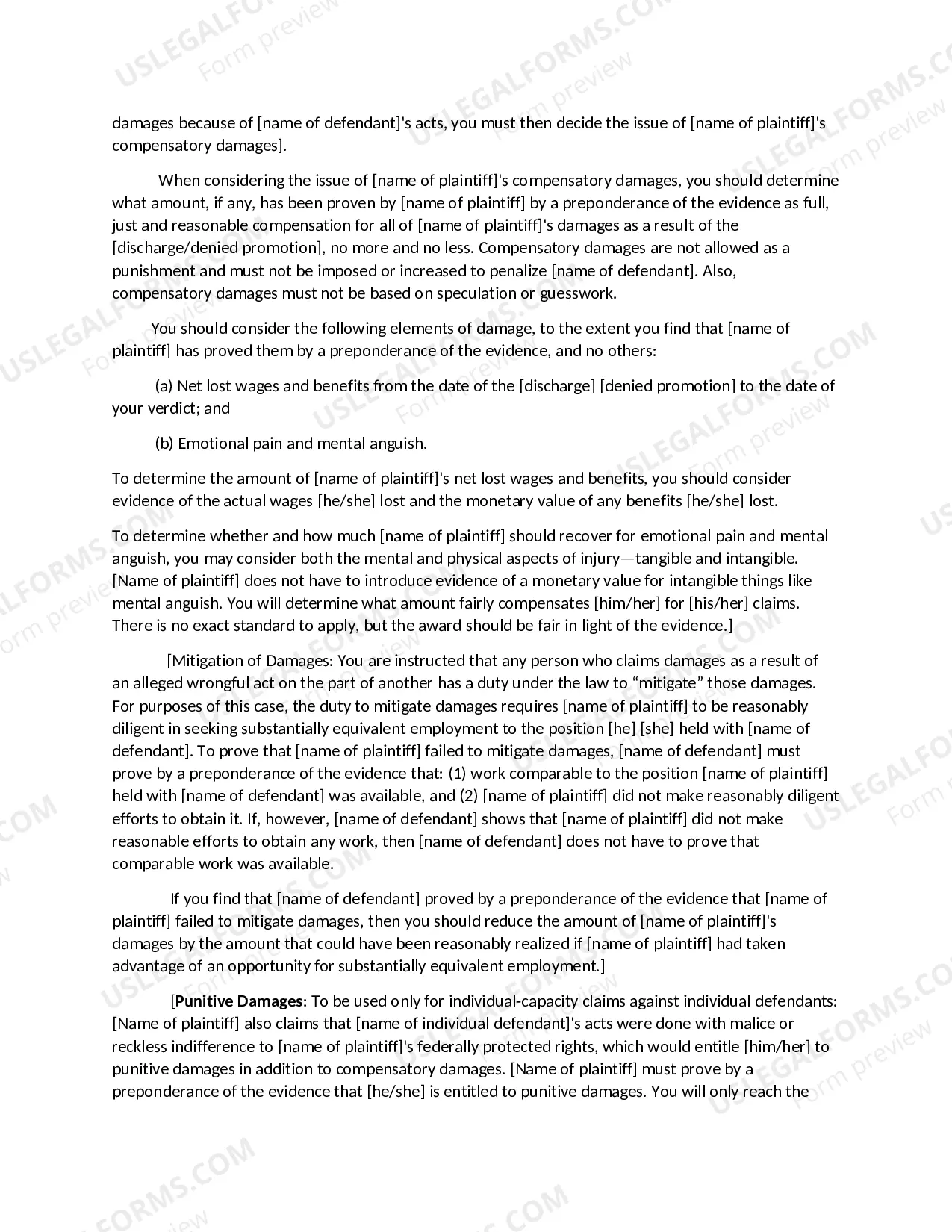
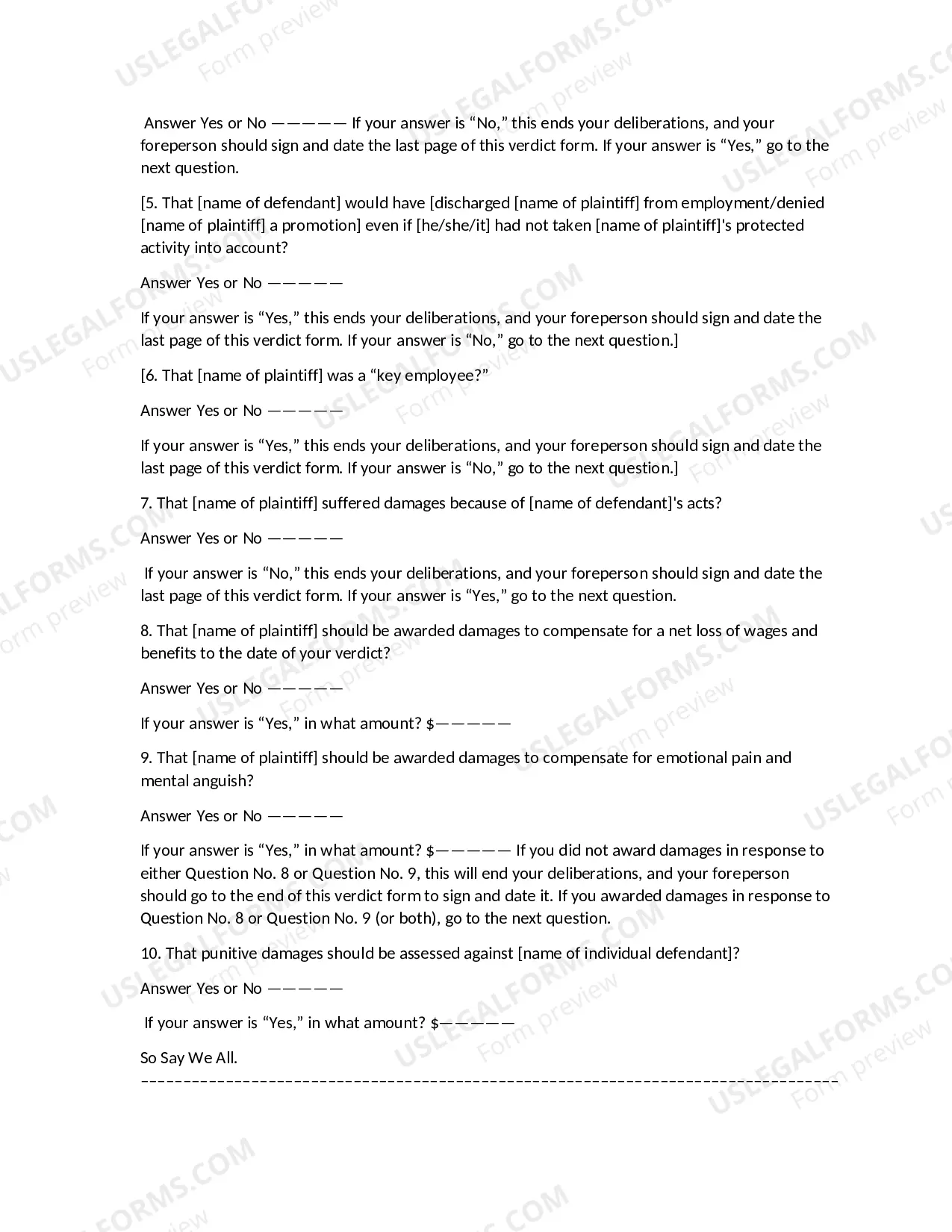
- Determination of damages suffered due to the employer's decision.
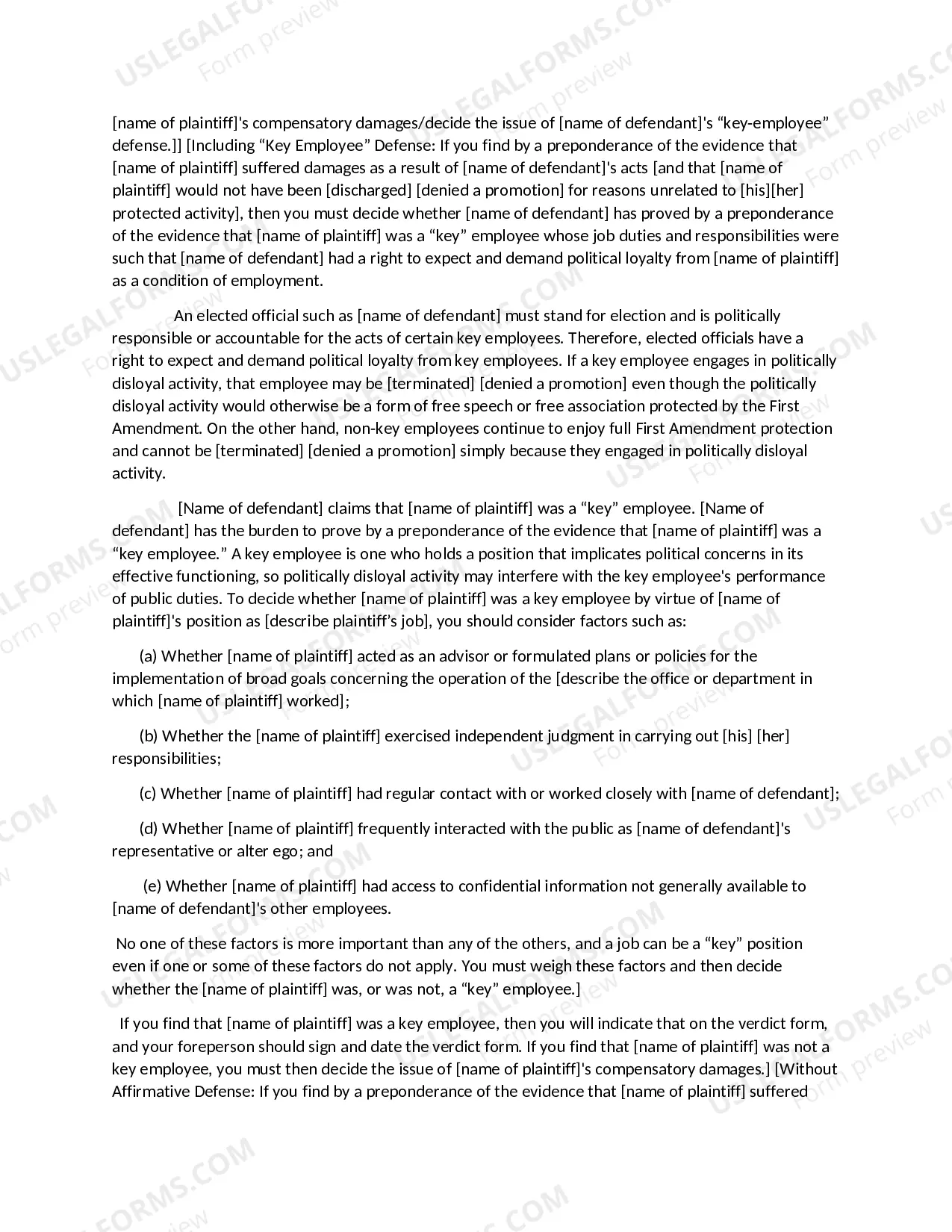
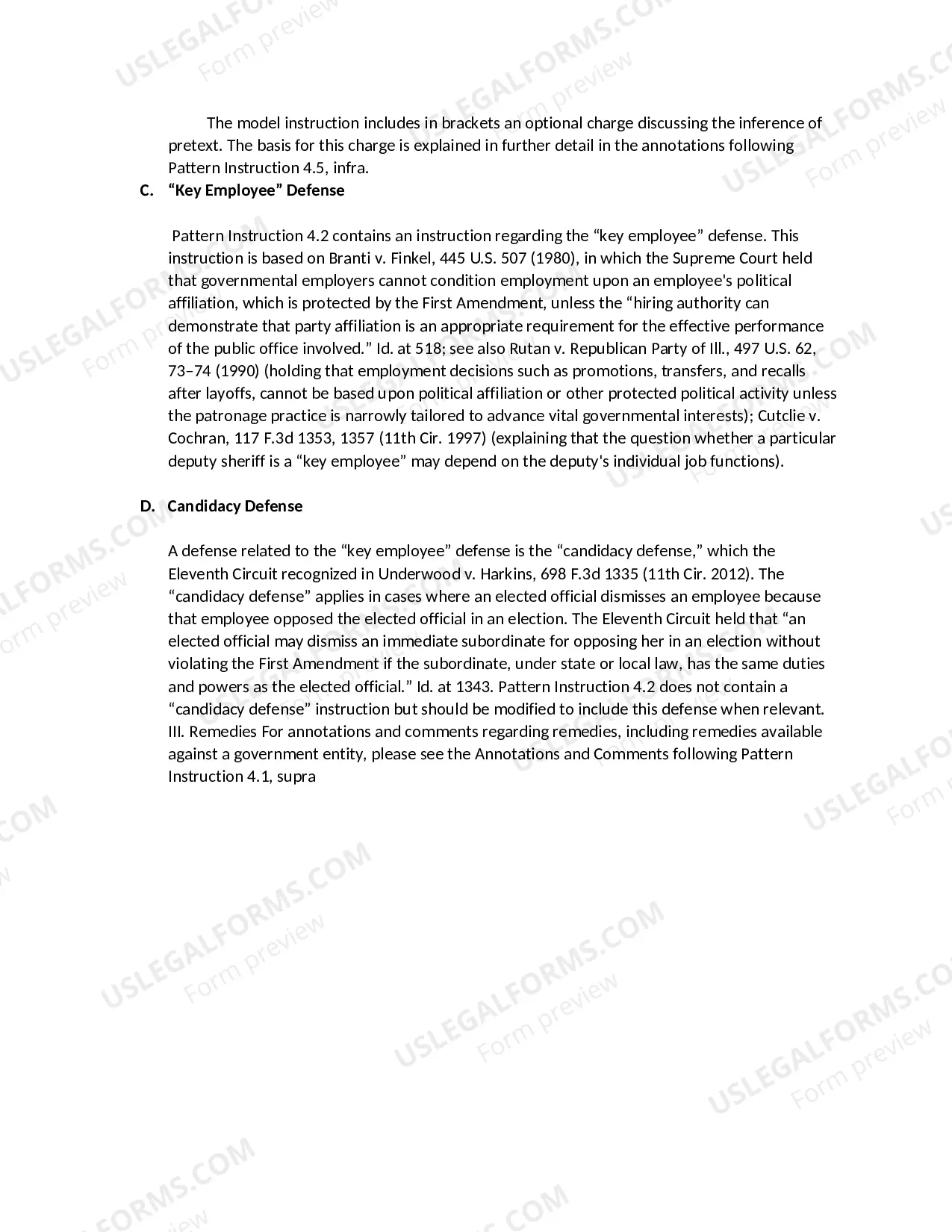
- Evaluation of the key employee status, affecting the employer's right to require political loyalty.
When to use this form
This form should be used when a public employee claims they have been wrongfully terminated or denied a promotion due to engaging in protected political speech or activity. Situations may include instances where the employee has spoken out concerning political matters, supported a candidate publicly, or participated in political campaigns and faced retaliatory actions by their employer as a result.
Who this form is for
- Public employees who believe they were discharged or not promoted due to their political activities.
- Individuals seeking to understand their rights regarding free speech in a public employment context.
- Legal representatives of employees in cases involving alleged violations of First Amendment rights.
Instructions for completing this form
- Identify the parties involved, providing names for the plaintiff and defendant.
- Detail the protected political activity that the plaintiff engaged in.
- Specify the adverse action taken by the defendant, such as discharge or failure to promote.
- Establish whether the defendant acted under color of state law.
- Outline the damages suffered by the plaintiff resulting from the defendant's actions.
Notarization guidance
In most cases, this form does not require notarization. However, some jurisdictions or signing circumstances might. US Legal Forms offers online notarization powered by Notarize, accessible 24/7 for a quick, remote process.
Get your form ready online
Our built-in tools help you complete, sign, share, and store your documents in one place.
Make edits, fill in missing information, and update formatting in US Legal Forms—just like you would in MS Word.
Download a copy, print it, send it by email, or mail it via USPS—whatever works best for your next step.
Sign and collect signatures with our SignNow integration. Send to multiple recipients, set reminders, and more. Go Premium to unlock E-Sign.
If this form requires notarization, complete it online through a secure video call—no need to meet a notary in person or wait for an appointment.
We protect your documents and personal data by following strict security and privacy standards.

Make edits, fill in missing information, and update formatting in US Legal Forms—just like you would in MS Word.

Download a copy, print it, send it by email, or mail it via USPS—whatever works best for your next step.

Sign and collect signatures with our SignNow integration. Send to multiple recipients, set reminders, and more. Go Premium to unlock E-Sign.

If this form requires notarization, complete it online through a secure video call—no need to meet a notary in person or wait for an appointment.

We protect your documents and personal data by following strict security and privacy standards.
Common mistakes to avoid
- Not clearly defining the protected political activity claimed.
- Failing to provide adequate evidence establishing the causal link between the protected activity and the employer's action.
- Neglecting state-specific requirements or defenses that may apply to the case.
Benefits of completing this form online
- Convenience of immediate download and access to a legally sound template.
- Editability allows for personalized entries while ensuring compliance with legal standards.
- Reliability from professionally drafted content by licensed attorneys ensuring adherence to legal requirements.
Legal use & context
- This form aids in filing claims related to First Amendment rights, particularly in public employment scenarios.
- Provides a structured approach for presenting claims where adverse employment actions are connected to political speech.
- The enforceability of such claims may vary depending on jurisdictional regulations surrounding public employment and free speech protections.
Key takeaways
- This form helps assert First Amendment claims based on wrongful termination or promotion denials.
- Clear identification of relevant legal elements is critical for a successful claim.
- Understanding state-specific requirements can influence the validity and success of a claim.
Looking for another form?
Form popularity
FAQ
Only that expression that is shown to belong to a few narrow categories of speech is not protected by the First Amendment. The categories of unprotected speech include obscenity, child ography, defamatory speech, false advertising, true threats, and fighting words.
Many people wrongly assume the First Amendment to the U.S. Constitution entitles them to express their views whenever and wherever they want. However, regarding freedom of speech in the workplace, this protection extends only to public sector (i.e., government) employees.
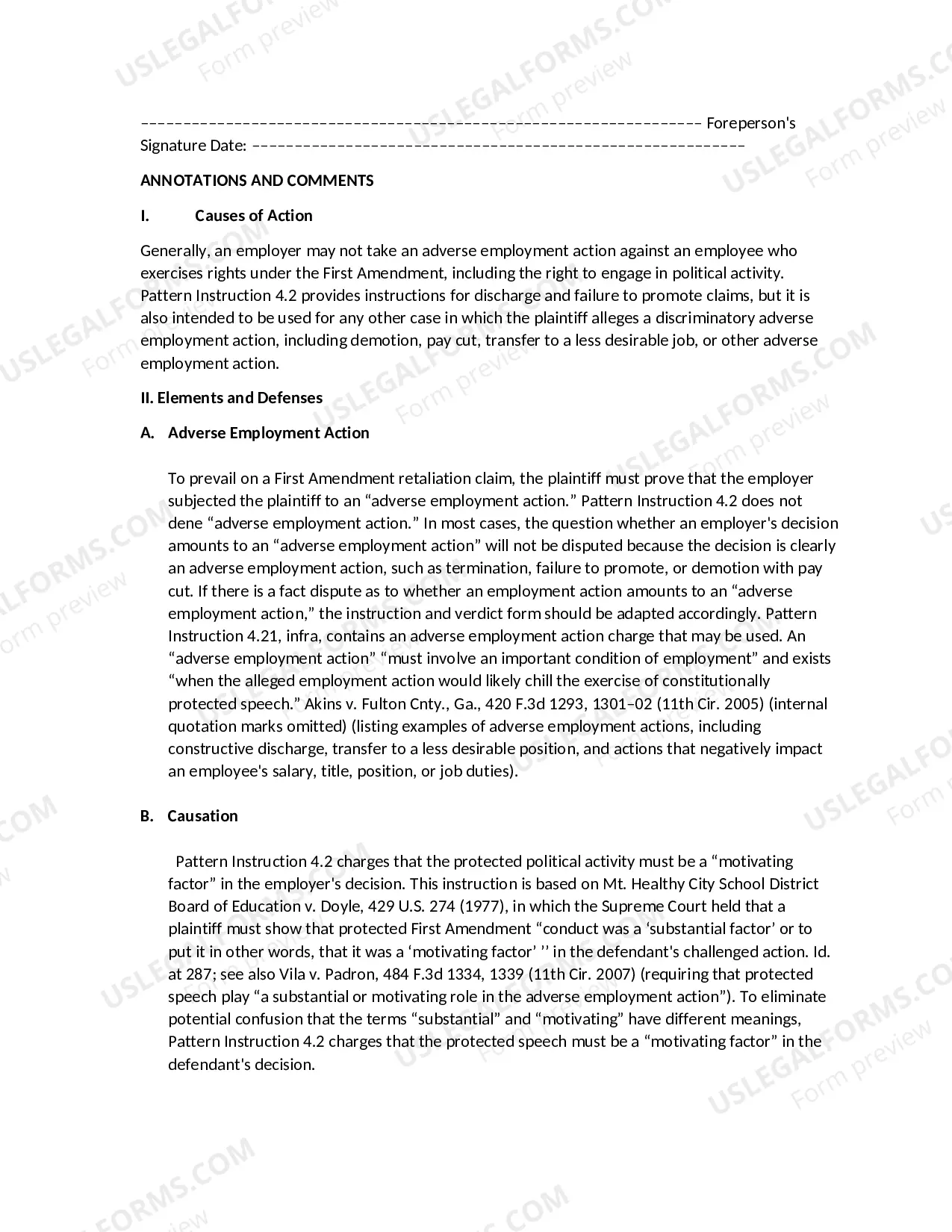
To bring a First Amendment retaliation claim, the plaintiff must allege that (1) it engaged in constitutionally protected activity; (2) the defendant's actions would 'chill a person of ordinary firmness' from continuing to engage in the protected activity; and (3) the protected activity was a substantial or motivating
Yes. Title VII of the Civil Rights Act of 1964 gives governmental employees the same rights and protections against unlawful discrimination as private employees.
What has the U.S. Supreme Court said about the First Amendment rights of public employees? The Supreme Court has ruled that public employee speech involving matters of public concern constitutes protected speech under the First Amendment.
This question was recently answered by the U.S. Supreme Court in a 5-4 decision. In the case of Garcetti v. Ceballos, the Court decided that employees must be acting as private citizens to receive First Amendment protection. That is, they are not acting as private citizens while performing their job duties.