Retaliation - Title VII, ADEA, ADA, and FLSA
What is this form?
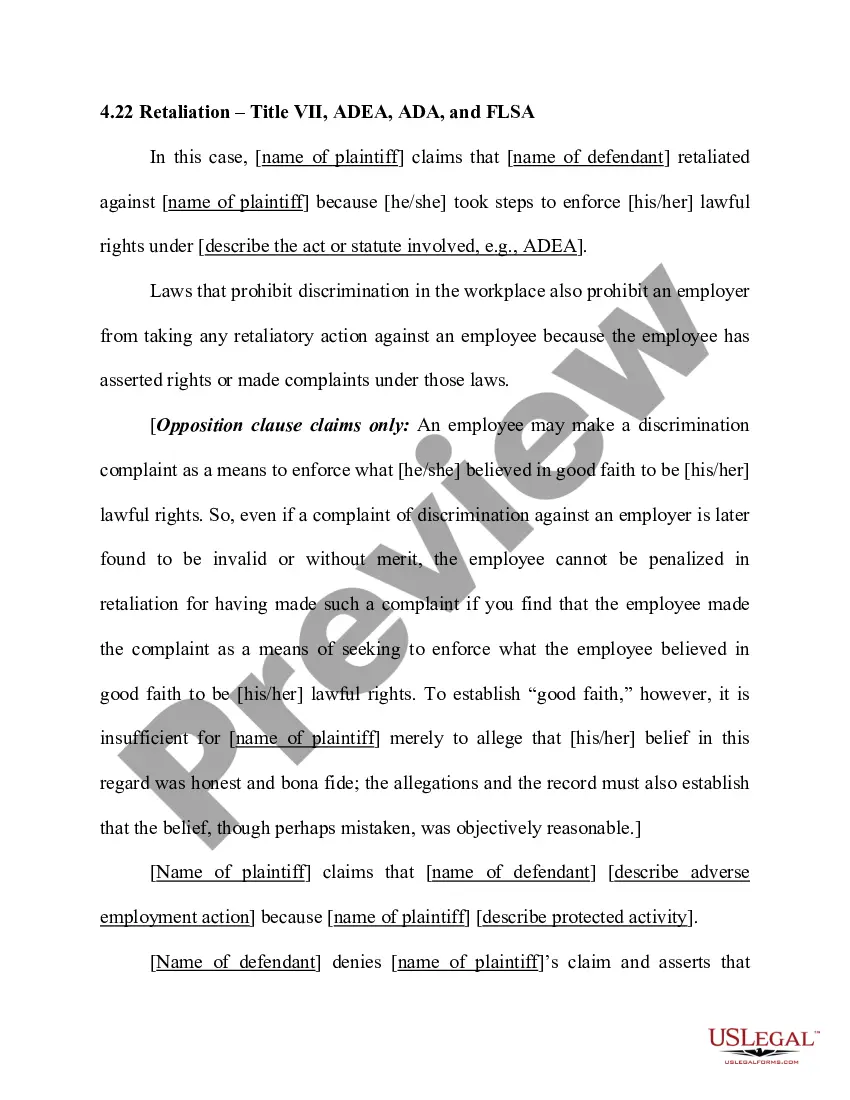
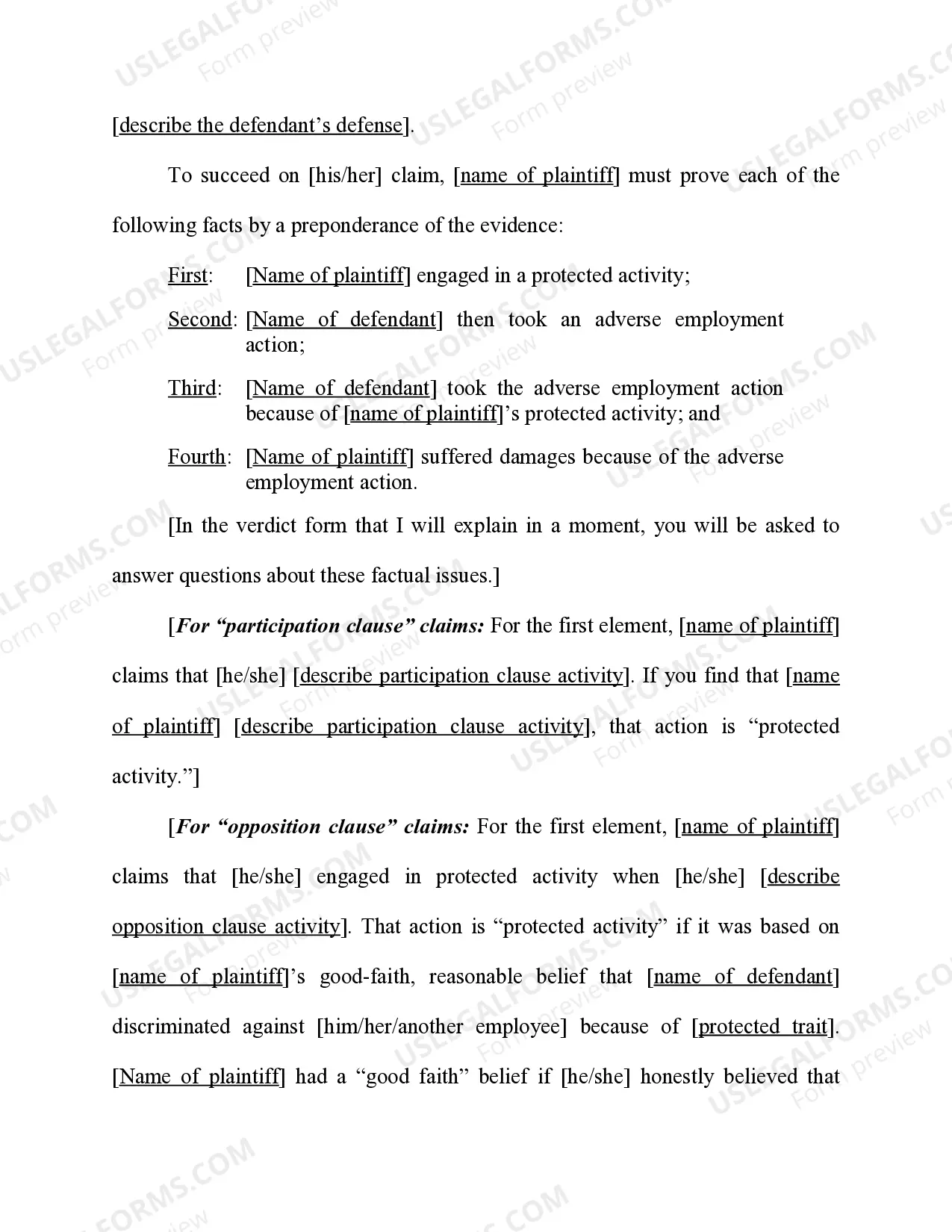
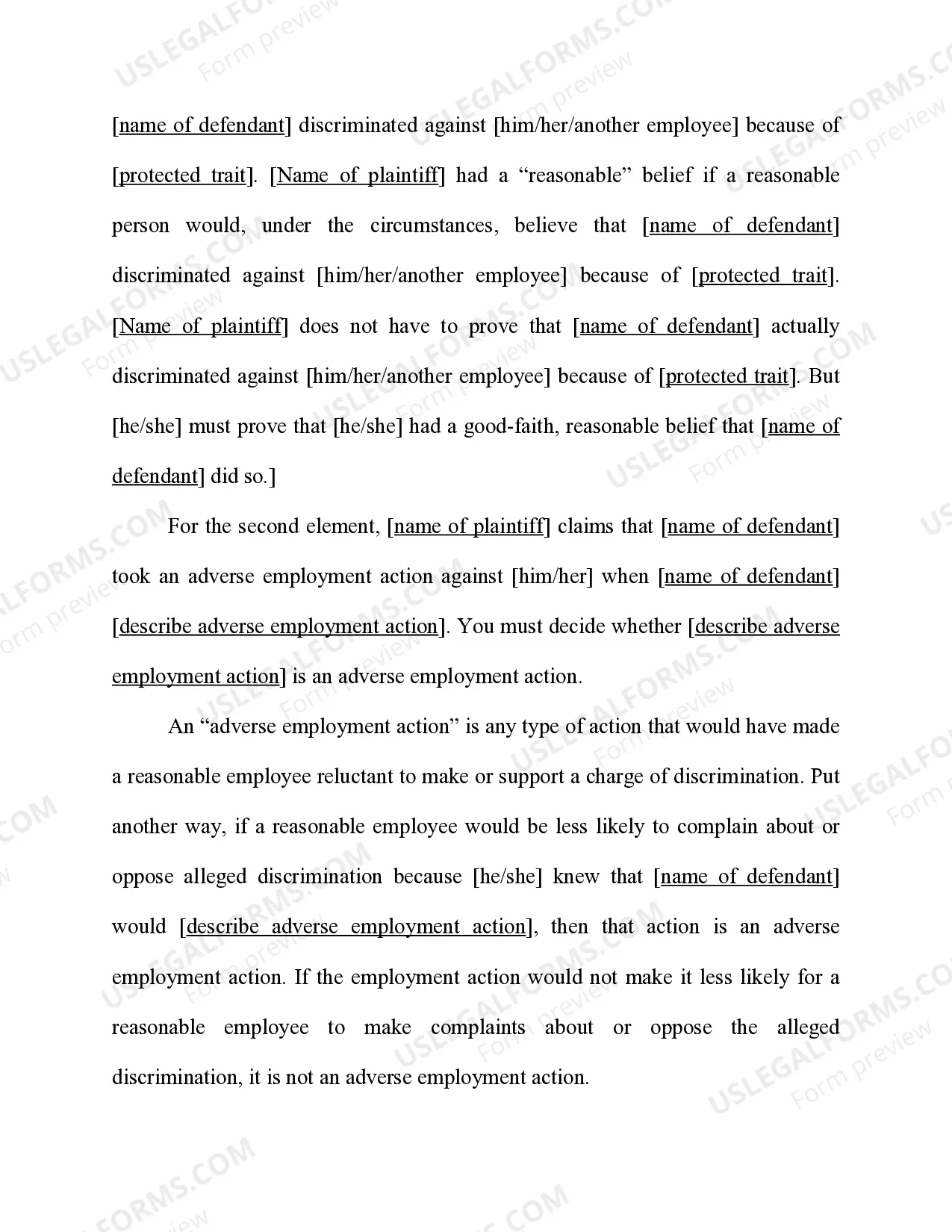
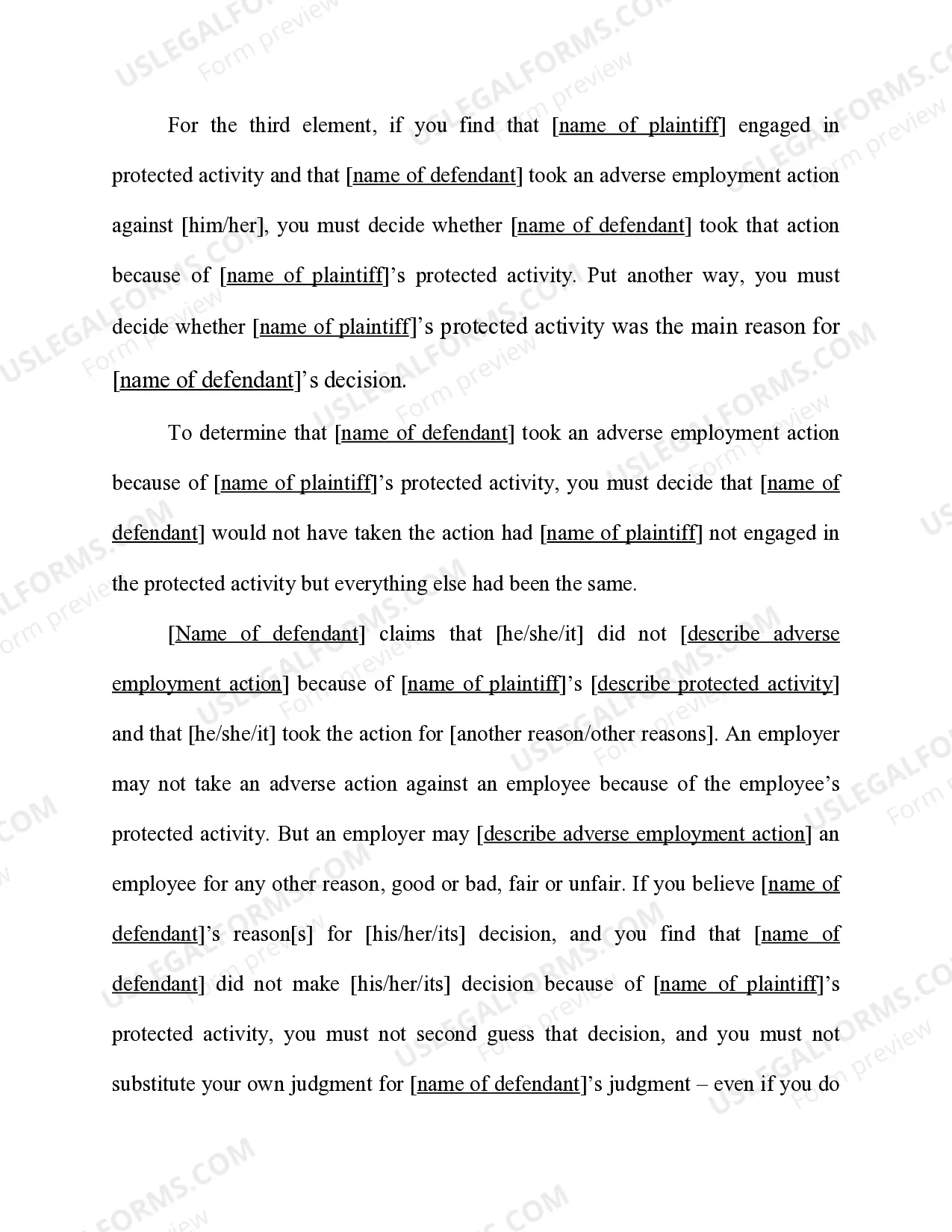
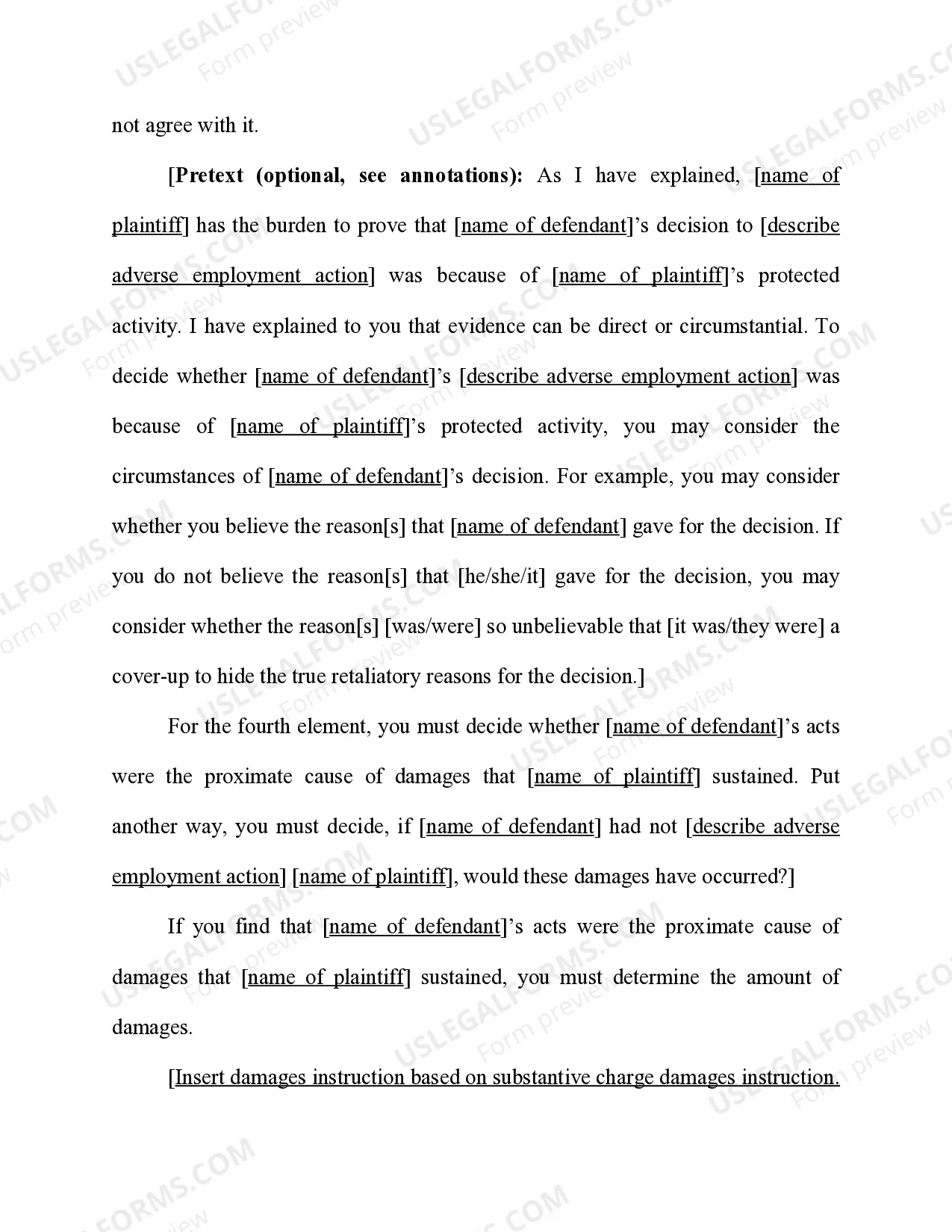
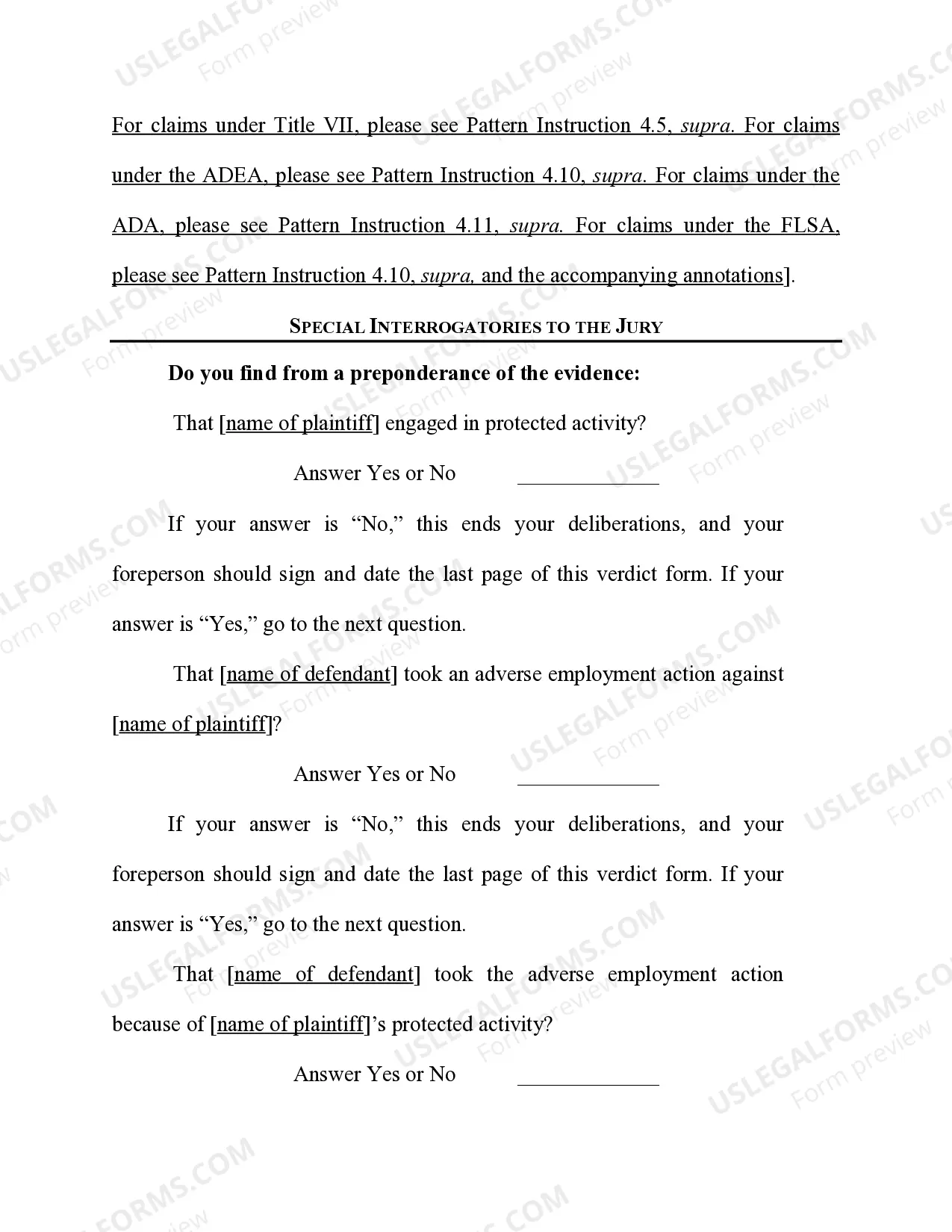
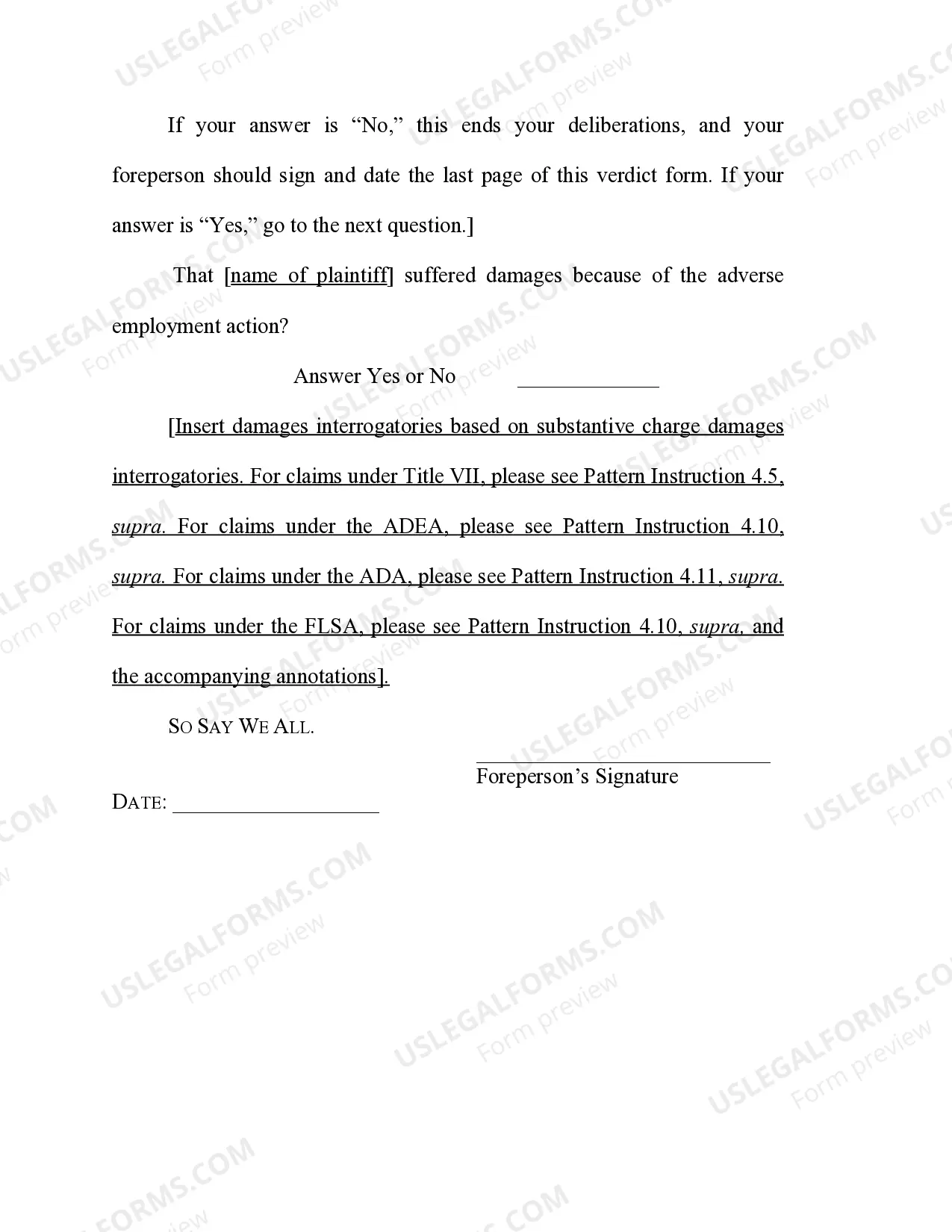
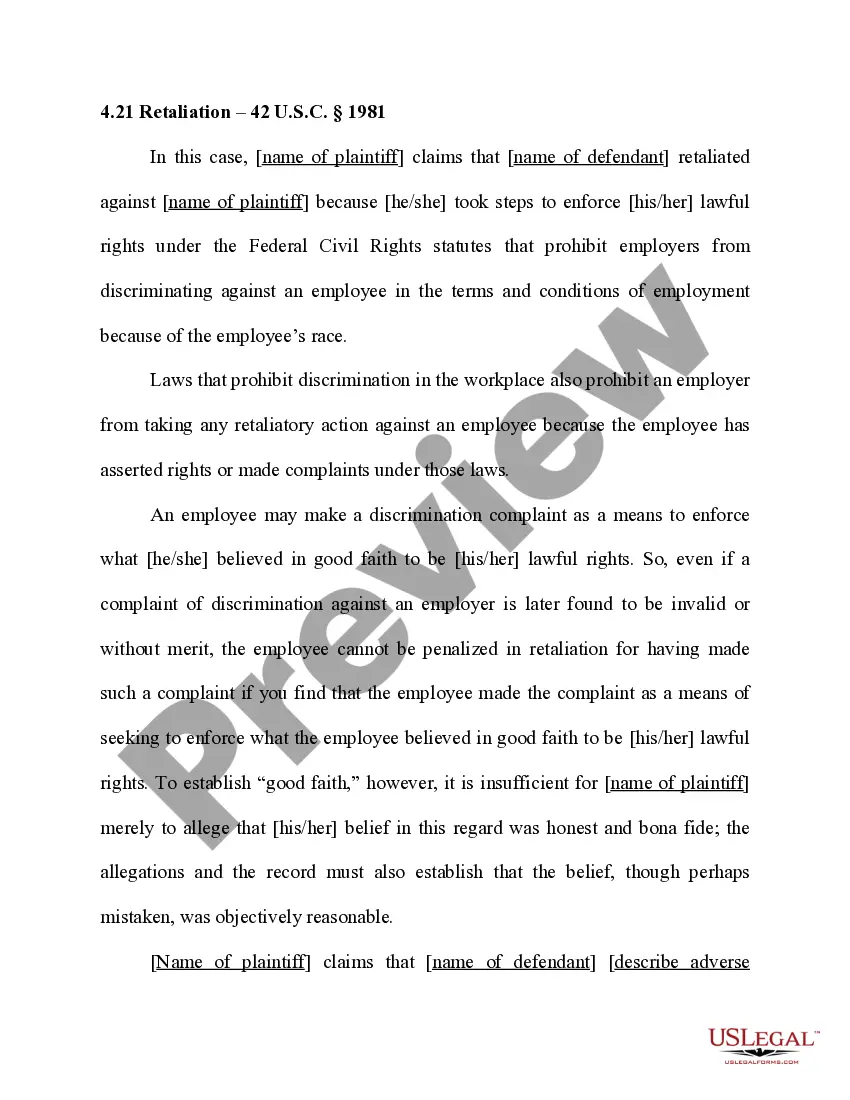
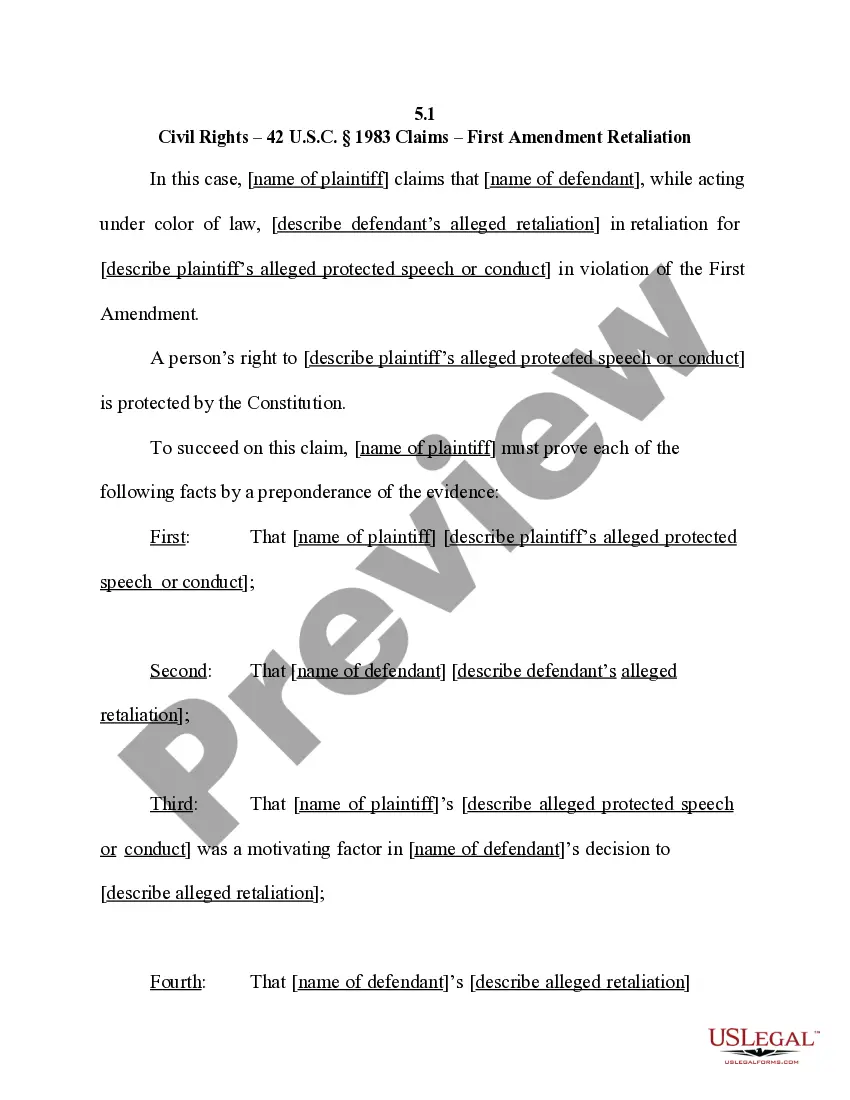
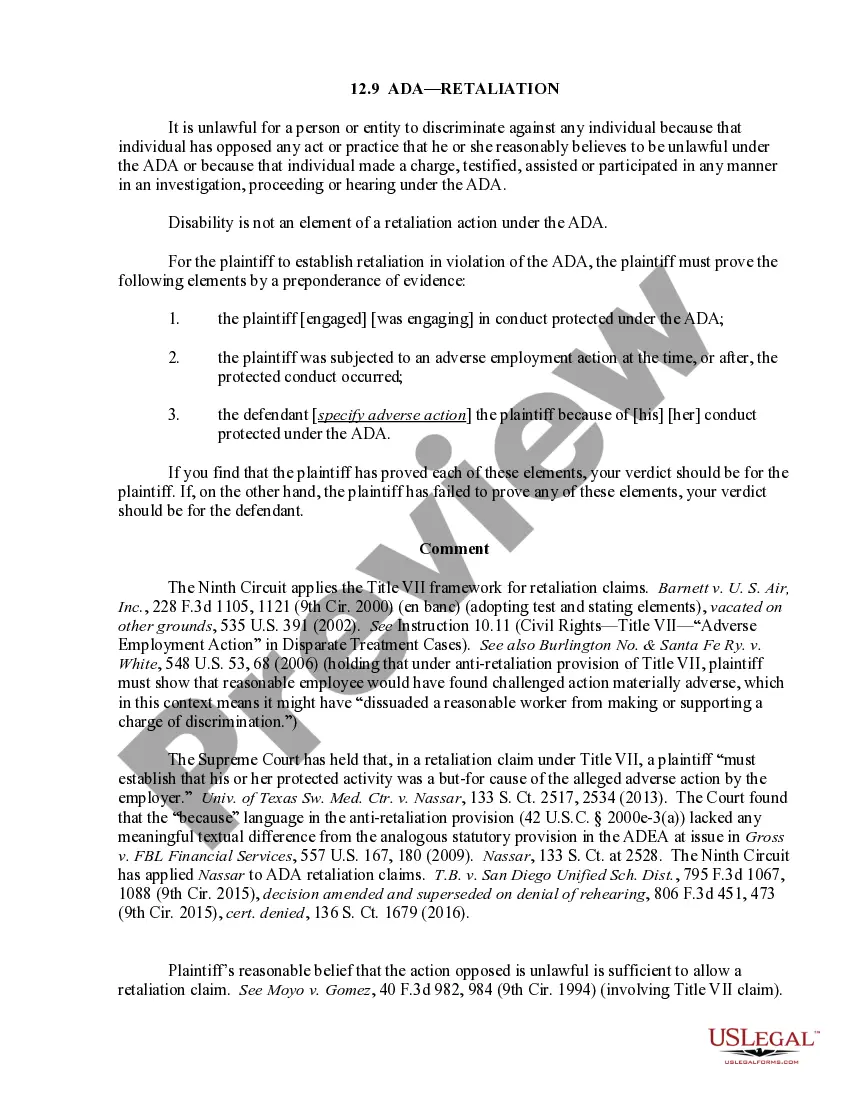
The Retaliation form for Title VII, ADEA, ADA, and FLSA is designed for individuals claiming that they faced retaliation from their employer for asserting their legal rights. This form outlines the necessary elements to establish a retaliation claim under these federal laws, including essential definitions and criteria that differentiate it from similar forms focused on discrimination or unfair employment practices.
Key parts of this document
- Definition of retaliation and protected activities.
- Criteria for proving a retaliation claim: engagement in protected activity, adverse employment action, and causation.
- Instructions for jurors on the preponderance of evidence standard.
- Special interrogatories to determine the presence of retaliation.
When to use this form
This form should be used when an employee believes they have been subjected to retaliatory actions from their employer after reporting or opposing discriminatory practices. Common scenarios include situations where an employee files a complaint regarding discrimination, supports another employeeâs complaint, or participates in a workplace investigation, and subsequently faces negative employment consequences.
Who needs this form
- Employees who believe they have been retaliated against for asserting their rights under Title VII, ADEA, ADA, or FLSA.
- Individuals who have filed or supported a complaint of workplace discrimination.
- Legal representatives assisting employees with employment law claims.
How to prepare this document
- Identify the parties involved: plaintiff and defendant.
- Clearly outline the protected activity engaged in by the plaintiff.
- Describe the adverse employment action taken against the plaintiff.
- Establish the causal link between the protected activity and the adverse employment action.
- Document any damages suffered as a result of the retaliation.
Is notarization required?
This form does not typically require notarization to be legally valid. However, some jurisdictions or document types may still require it. US Legal Forms provides secure online notarization powered by Notarize, available 24/7 for added convenience.
Get your form ready online
Our built-in tools help you complete, sign, share, and store your documents in one place.
Make edits, fill in missing information, and update formatting in US Legal Forms—just like you would in MS Word.
Download a copy, print it, send it by email, or mail it via USPS—whatever works best for your next step.
Sign and collect signatures with our SignNow integration. Send to multiple recipients, set reminders, and more. Go Premium to unlock E-Sign.
If this form requires notarization, complete it online through a secure video call—no need to meet a notary in person or wait for an appointment.
We protect your documents and personal data by following strict security and privacy standards.

Make edits, fill in missing information, and update formatting in US Legal Forms—just like you would in MS Word.

Download a copy, print it, send it by email, or mail it via USPS—whatever works best for your next step.

Sign and collect signatures with our SignNow integration. Send to multiple recipients, set reminders, and more. Go Premium to unlock E-Sign.

If this form requires notarization, complete it online through a secure video call—no need to meet a notary in person or wait for an appointment.

We protect your documents and personal data by following strict security and privacy standards.
Mistakes to watch out for
- Failing to clearly identify protected activities and corresponding adverse actions.
- Not providing sufficient evidence to show the causal link between the activities and the retaliation.
- Assuming that all forms of negative employment action are considered retaliation.
Benefits of using this form online
- Immediate access to legal forms drafted by licensed attorneys.
- Convenience of downloading and completing the form at your own pace.
- Editable formats allow for customizations based on individual circumstances.
Legal use & context
- This form is used within the framework of federal employment laws protecting against retaliation.
- Understanding the components of a retaliation claim is critical for legal enforceability.
- Claims must be substantiated by credible evidence demonstrating perceived retaliation.
Main things to remember
- This form provides essential guidance in handling workplace retaliation claims.
- Jurors must evaluate evidence thoroughly based on the defined legal criteria.
- Understanding the nuances of protected activities and the consequences of adverse actions is critical.
Looking for another form?
Form popularity
FAQ
Under the opposition clause, it is unlawful for an employer to discriminate against an employee because the employee has ?opposed? any practice made unlawful by Title VII. The term ?oppose? is undefined by the statute, and thus carries its ordinary meaning.
First, while under Title VII, individuals of every race, color, religion, sex, and national origin are protected, the ADEA applies only to individuals that are 40 years of age and older.
Some examples of retaliation would be a termination or failure to hire, a demotion, a decrease in pay, a decrease in the number of hours that you've worked. The cause will be obvious things such as a reprimand, a warning or lowering of your evaluation scores.
Title VII of the Civil Rights Act of 1964 (the ?Act?) prohibits an employer from retaliating against an employee who has ?made a charge, testified, assisted or participated in? any charge of unlawful discrimination under the Act.
The ADEA "makes it unlawful for an employer to retaliate against an employee for opposing the employer's discriminatory practices or participating in any investigation or proceeding under the ADEA." O'Day v.
Per federal case law and regulatory agency guidance, there are three essential elements in a claim of retaliation: Protected activity. Adverse action. Causal connection.
What activity is protected by the prohibition against retaliation? An individual engages in protected activity when they: (1) oppose a practice they consider to be discriminatory; (2) participate in an employment discrimination proceeding; or (3) engage in other protected EEO activity.