Miscellaneous Issues - Employee or Independent Contractor
What is this form?
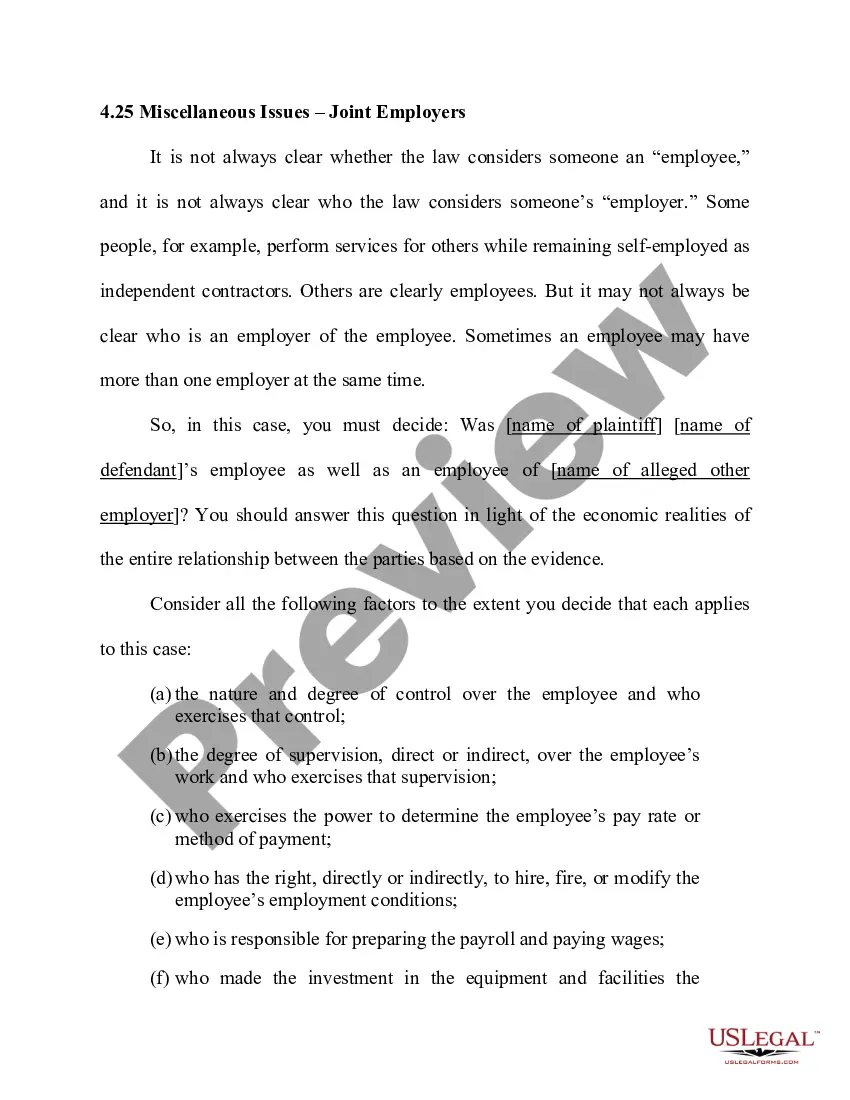
The Miscellaneous Issues - Employee or Independent Contractor form helps clarify the classification of individuals providing services. This form is essential in determining whether a person is categorized as an employee or an independent contractor based on various factors that define their work relationship. Distinguishing between these classifications is crucial, as they significantly impact rights and responsibilities under the law.
Key components of this form
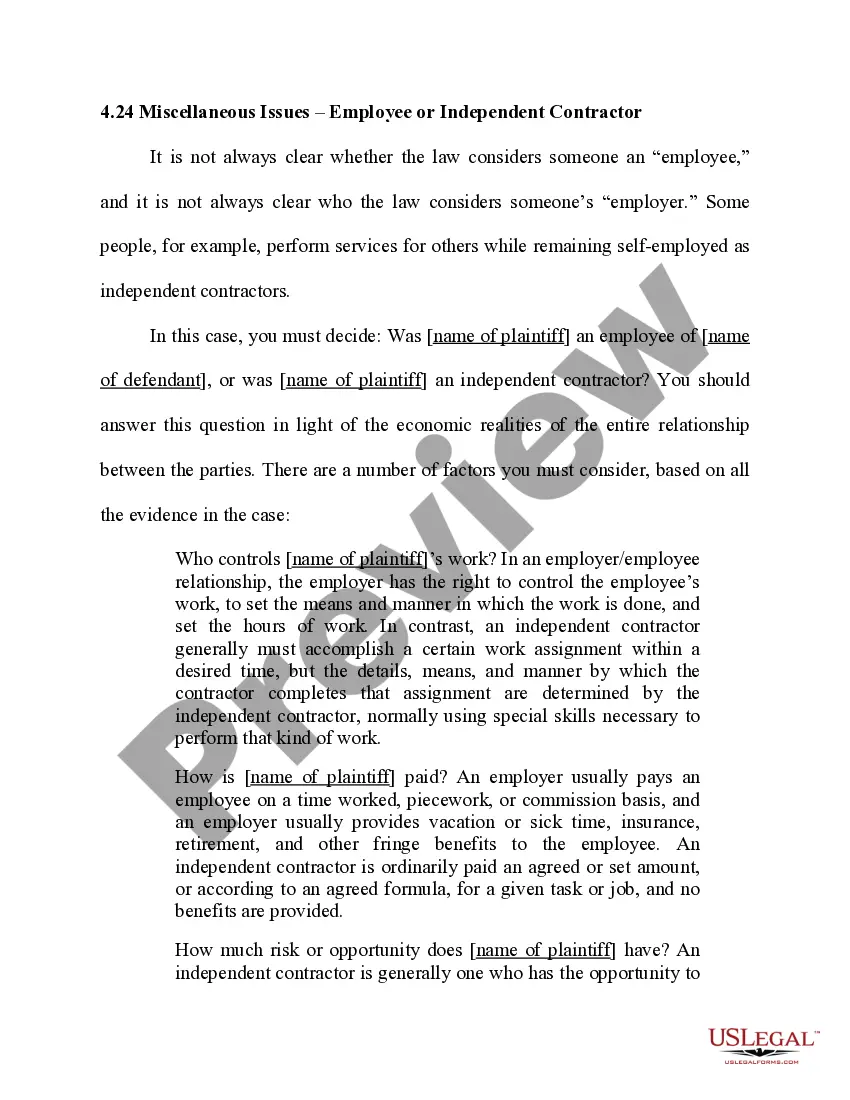
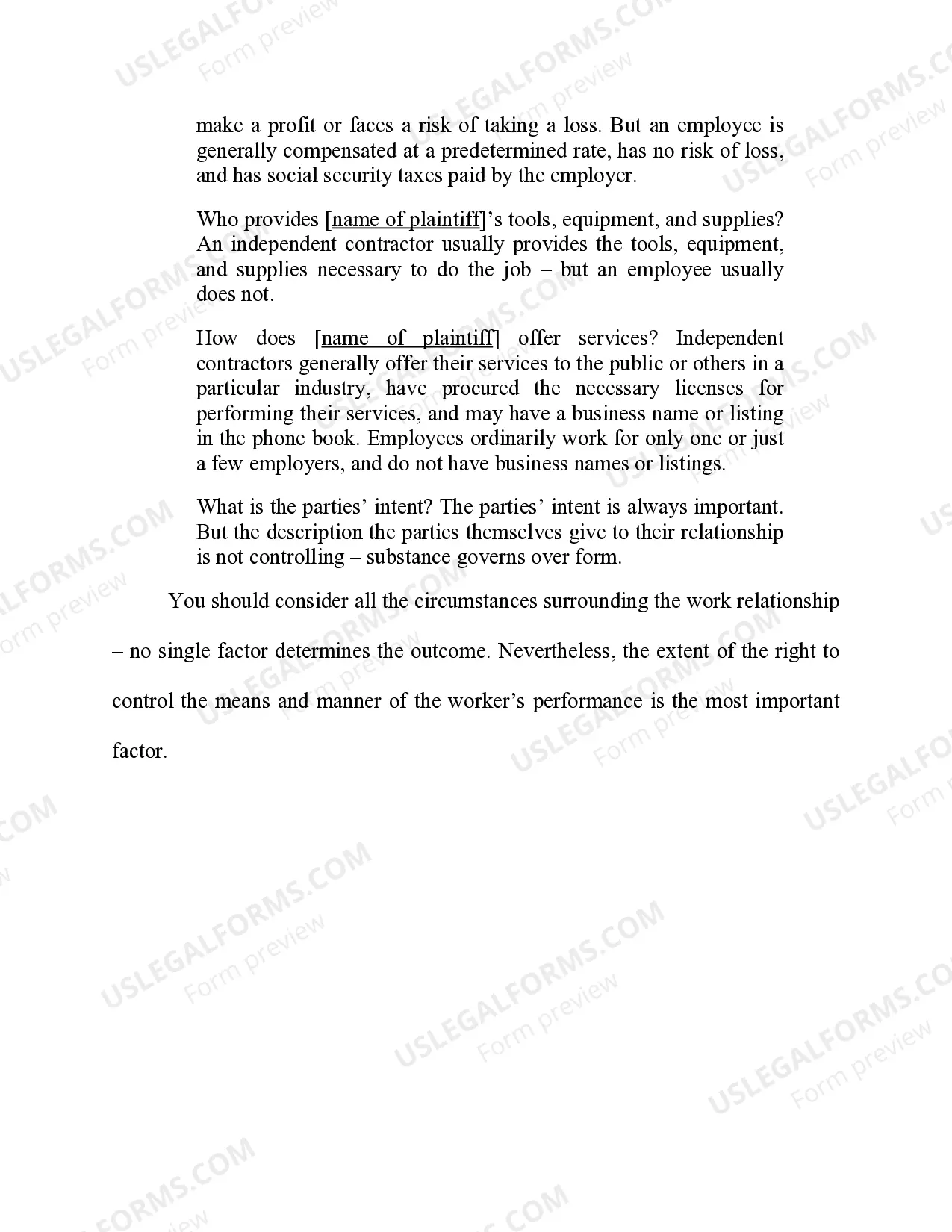
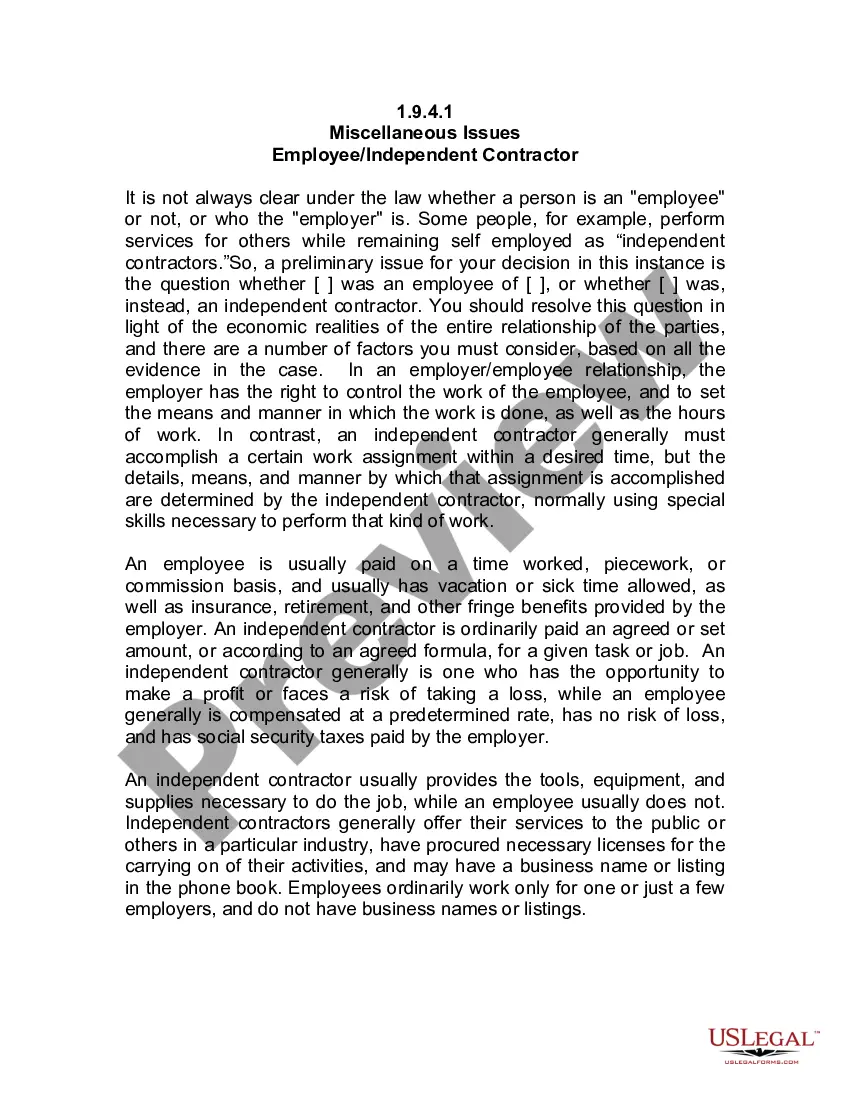
- Control over work: Analyzes who has the authority to direct work tasks.
- Payment structure: Evaluates how the individual is compensated and whether benefits are provided.
- Risk and opportunity: Considers the financial risk involved for the worker.
- Provision of tools: Determines who supplies the necessary equipment for the job.
- Service offerings: Looks at how services are marketed and the scope of service offering.
- Intent of the parties: Reflects on how the relationship is defined by the involved parties.

Situations where this form applies
This form should be used when there is uncertainty about a worker's classification as an employee or independent contractor. Scenarios include disputes over benefits eligibility, questions regarding tax responsibilities, or legal matters relating to employment rights. It aids in resolving issues where the nature of the work relationship is being questioned or challenged.
Who can use this document
- Business owners seeking clarification on the classification of their workers.
- Workers or contractors who want to understand their legal standing and rights.
- Attorneys representing clients in employment-related disputes.
- Organizations conducting audits or reviews of their workforce classification.
How to prepare this document
- Identify the parties involved: Specify the names of the employer and worker.
- Evaluate control: Assess who has primary control over the worker's tasks and schedule.
- Document payment arrangements: Outline how compensation is structured.
- Analyze risk factors: Consider the opportunities for profit or loss the worker faces.
- Gather evidence: Compile documentation supporting the classification for clarity.
Notarization requirements for this form
Notarization is generally not required for this form. However, certain states or situations might demand it. You can complete notarization online through US Legal Forms, powered by Notarize, using a verified video call available anytime.
Get your form ready online
Our built-in tools help you complete, sign, share, and store your documents in one place.
Make edits, fill in missing information, and update formatting in US Legal Forms—just like you would in MS Word.
Download a copy, print it, send it by email, or mail it via USPS—whatever works best for your next step.
Sign and collect signatures with our SignNow integration. Send to multiple recipients, set reminders, and more. Go Premium to unlock E-Sign.
If this form requires notarization, complete it online through a secure video call—no need to meet a notary in person or wait for an appointment.
We protect your documents and personal data by following strict security and privacy standards.

Make edits, fill in missing information, and update formatting in US Legal Forms—just like you would in MS Word.

Download a copy, print it, send it by email, or mail it via USPS—whatever works best for your next step.

Sign and collect signatures with our SignNow integration. Send to multiple recipients, set reminders, and more. Go Premium to unlock E-Sign.

If this form requires notarization, complete it online through a secure video call—no need to meet a notary in person or wait for an appointment.

We protect your documents and personal data by following strict security and privacy standards.
Mistakes to watch out for
- Failing to consider all factors that determine classification.
- Relying solely on verbal agreements or intentions rather than documented evidence.
- Assuming classification based on industry norms without evaluating individual circumstances.
Benefits of completing this form online
- Convenience of downloading the form at any time, eliminating the need for physical trips.
- Editability allows users to tailor the form to their specific needs.
- Reliability of professionally drafted forms to ensure compliance with legal standards.
Looking for another form?
Form popularity
FAQ
A business may pay an independent contractor and an employee for the same or similar work, but there are important legal differences between the two. For the employee, the company withholds income tax, Social Security, and Medicare from wages paid. For the independent contractor, the company does not withhold taxes.
Key takeaways. Employee misclassification is the illegal practice of categorizing workers as independent contractors when they should be classified as employees. Misclassification is a form of worker exploitation that can result in the loss of public tax revenue and create unfair business competition.
Entities provide a Form 1099-Misc to independent contractors and Form W-2 to employees. See this article on worker classification for more information. However, there may be instances where a worker may be serving as an independent contractor and an employee for the same entity.
Are you paid an hourly rate? If so, you are likely an employee. If you pay for your own expenses and are paid a flat rate for the job you are likely an independent contractor. Also, if you are able to advertise your services to other companies, you are you likely an independent contractor.
In the U.S., for example, the IRS can levy a variety of fines for misclassification. Fines start at $50 per unfiled W-2, tack on 1.5% of the wages paid, then throw in unpaid FICA taxes for both employer and employee.
In the US, the penalties are as follows: Tax violation fines: $50 per W-2 tax form that the company did not file and a percentage of the misclassified employees' wages and FICA taxes. Payment penalties of up to $1,000 per misclassified worker.
Contractor misclassification is often an employer's attempt to avoid paying taxes. If caught, the employer is liable for unpaid taxes, employee back pay, and other legal fines.
Federal law violation fines This department hires auditors to identify and penalize independent contractor misclassification. At a minimum, consequences include paying back wages, but you could also face criminal penalties, including: Payment penalties of up $1,000 per misclassified employee. Jail time of up to a year.