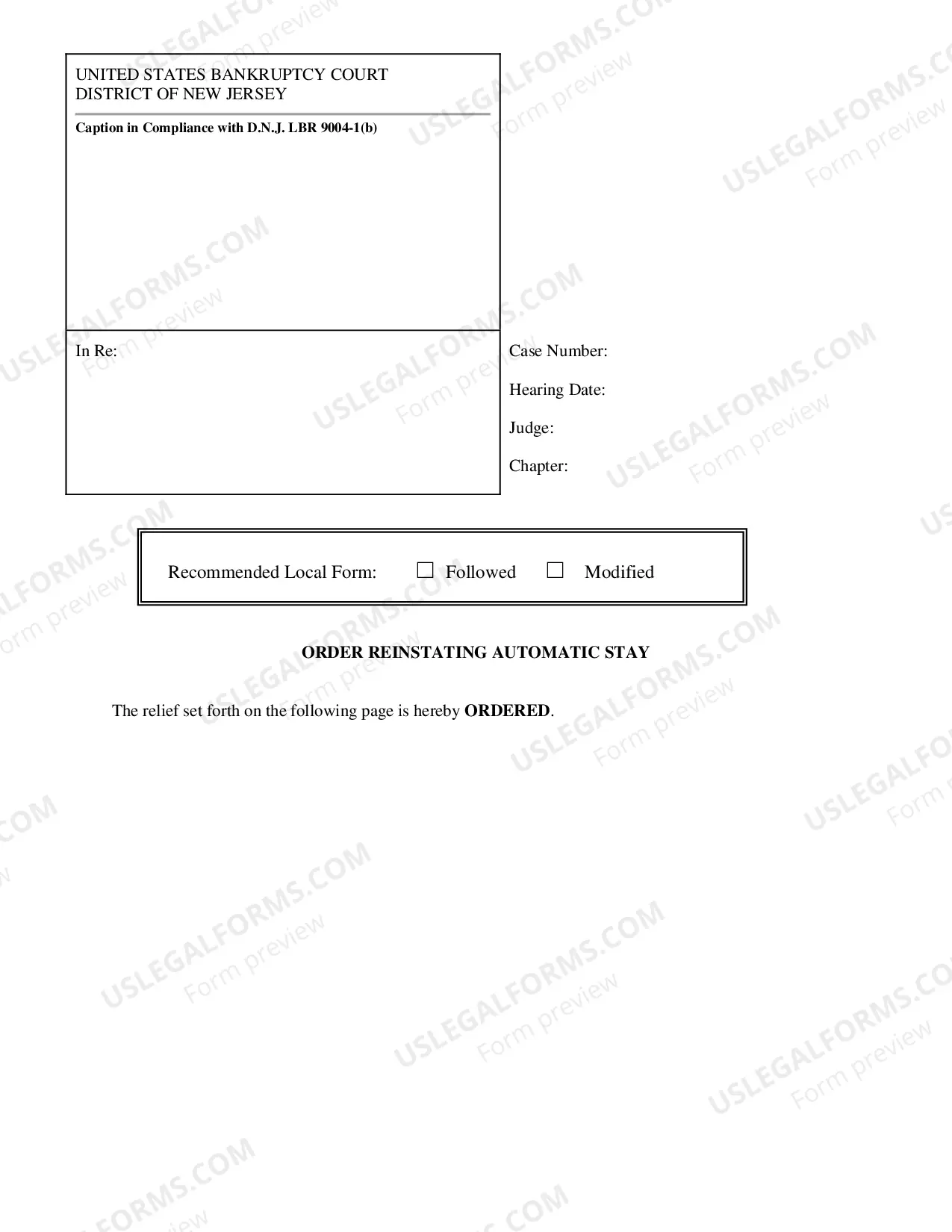
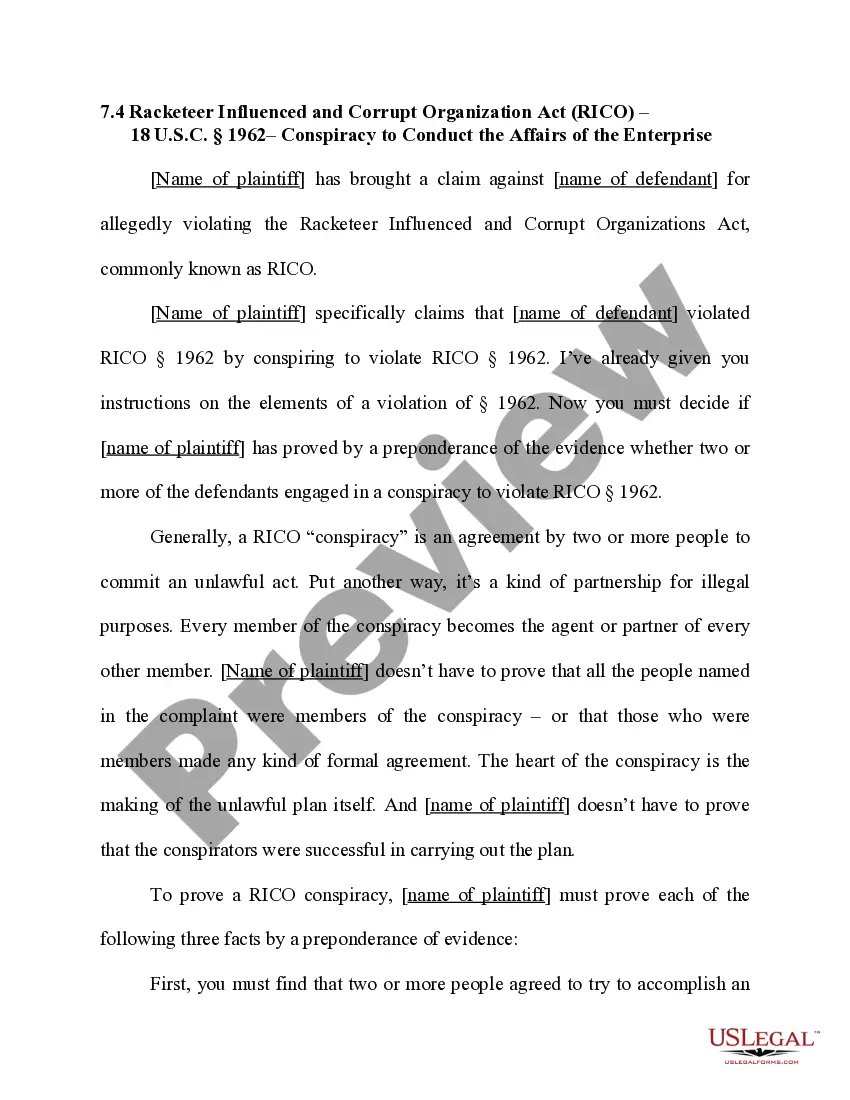
Racketeer Influenced and Corrupt Organization Act (RICO) - 18 U.S.C. Sec. 1962(d)- Conspiracy to Conduct the Affairs of the Enterprise
What is this form?
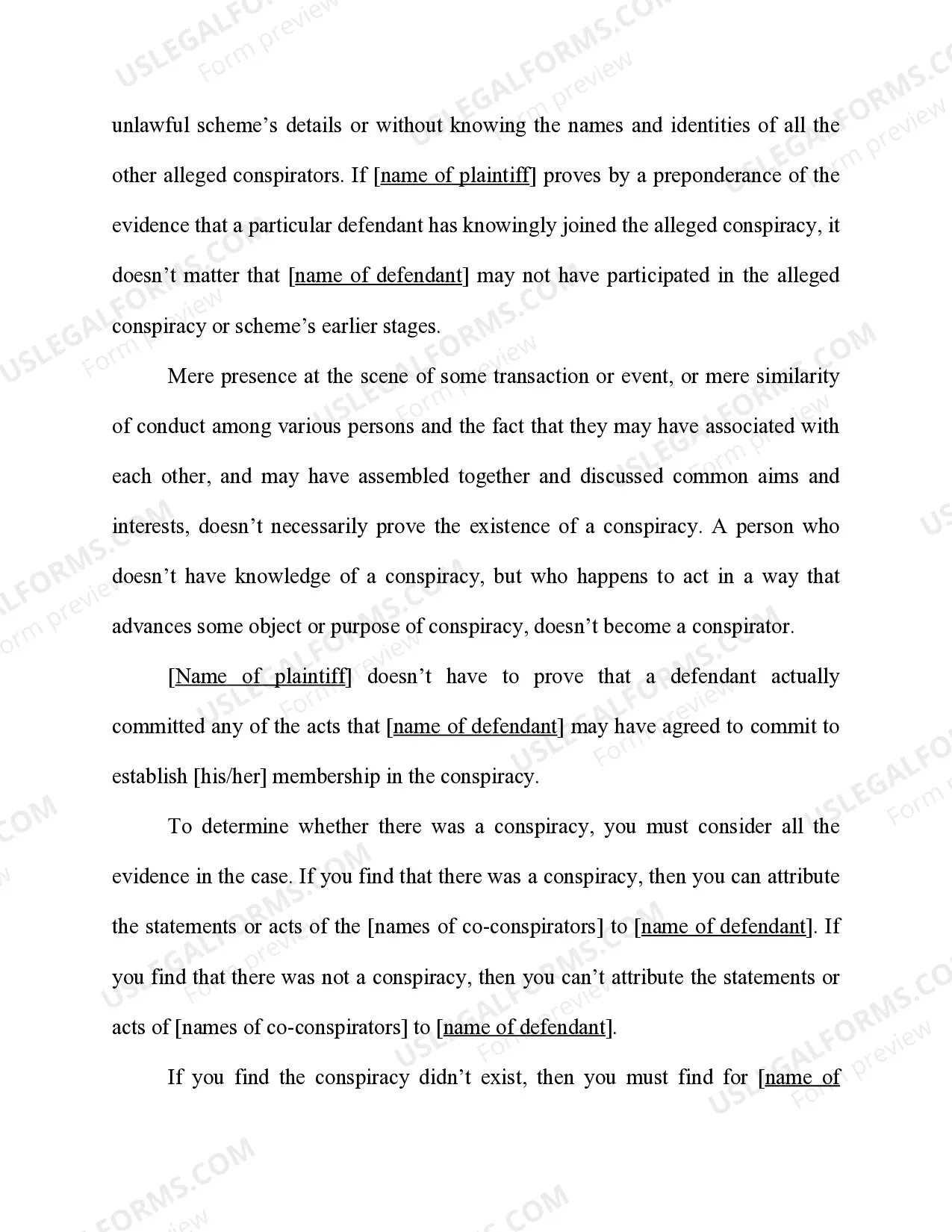
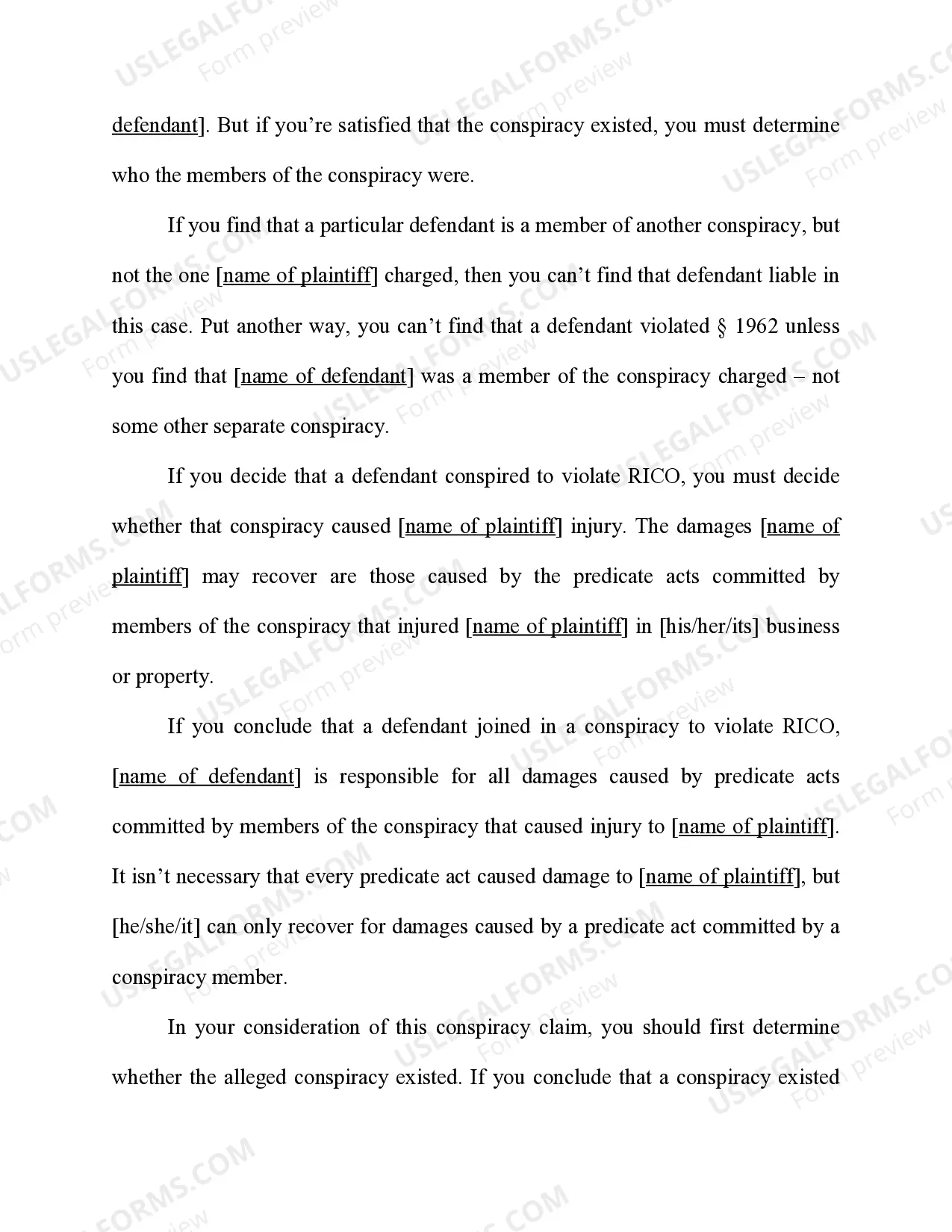
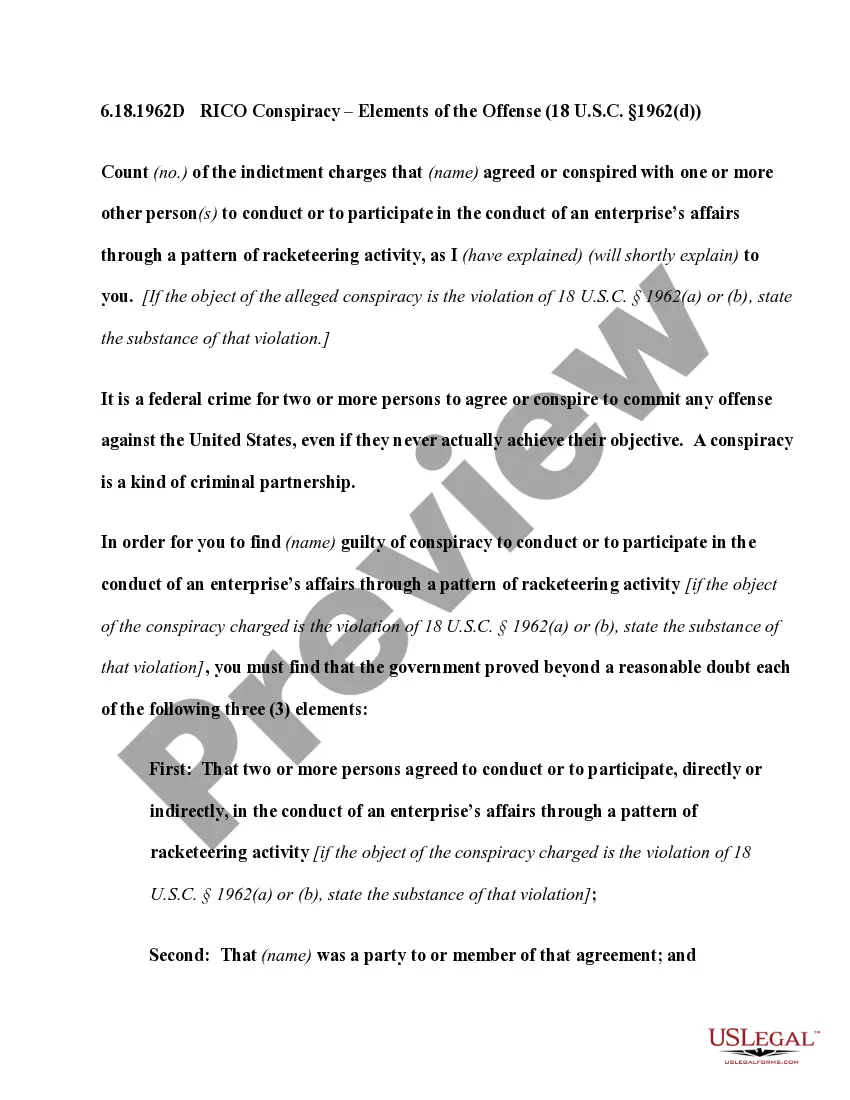
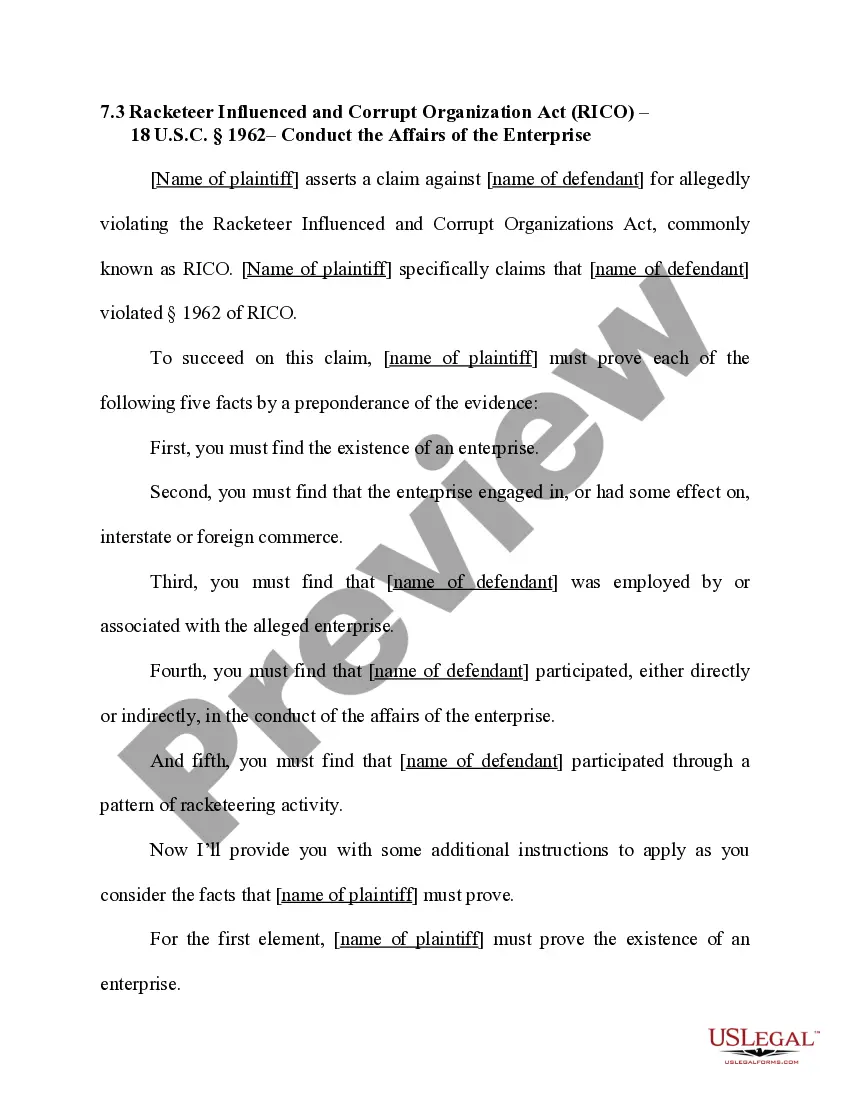
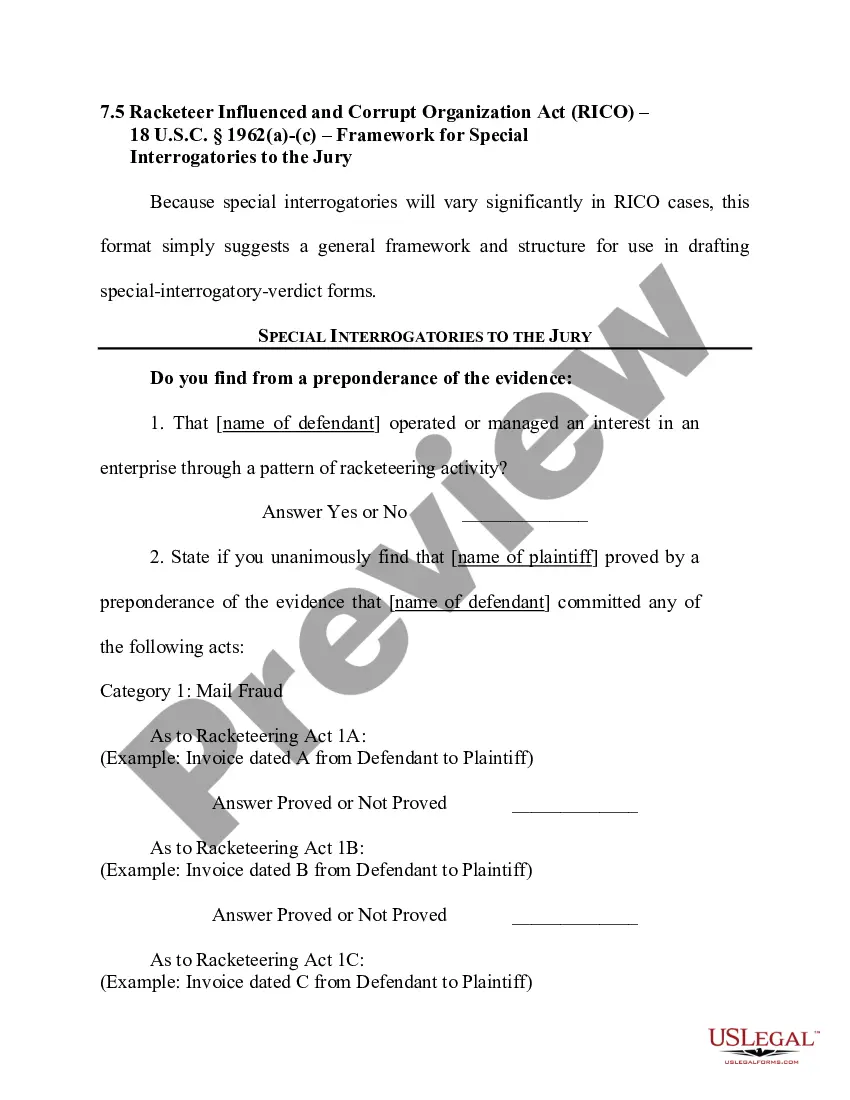
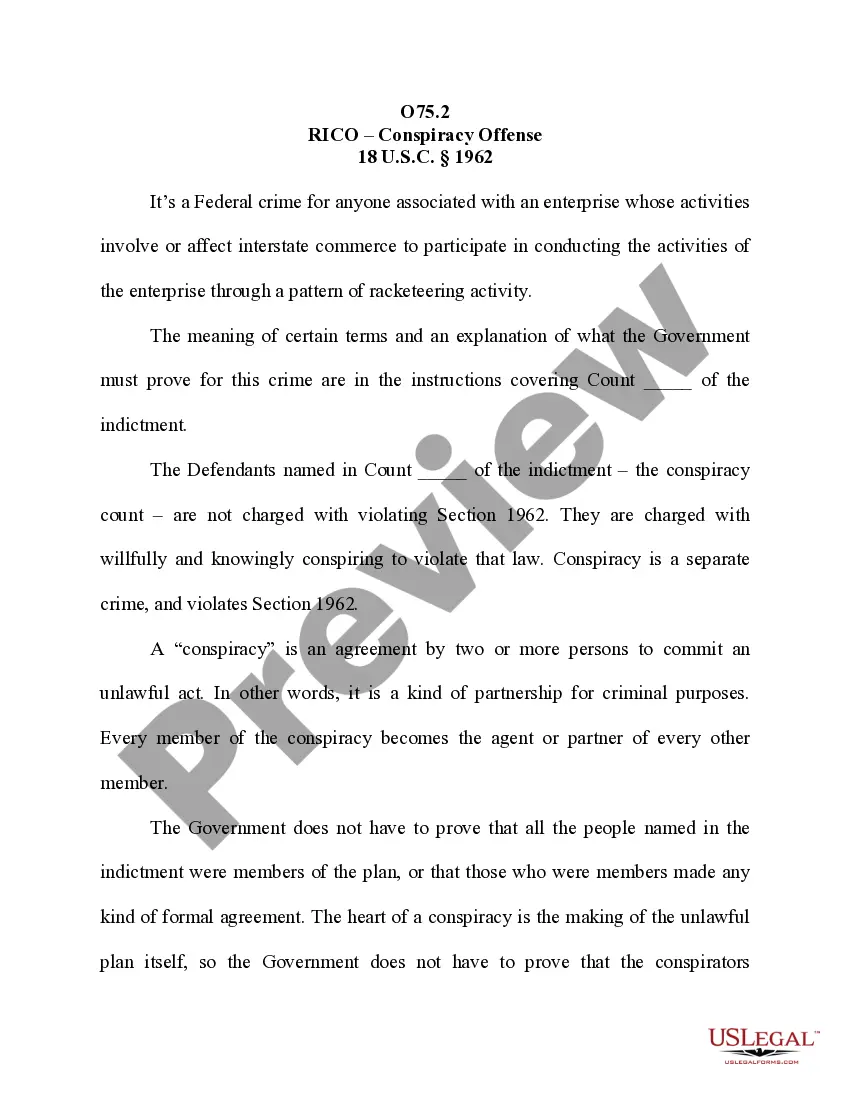
The Racketeer Influenced and Corrupt Organization Act (RICO) form is used to facilitate claims under federal law regarding conspiracies to conduct the affairs of an enterprise through illegal means. This form specifically addresses conspiracy under 18 U.S.C. Sec. 1962(d), differentiating it from other legal forms related to racketeering by focusing on conspiratorial agreements rather than individual acts of racketeering.
What’s included in this form
- Details of the plaintiff and defendant involved in the RICO conspiracy claim.
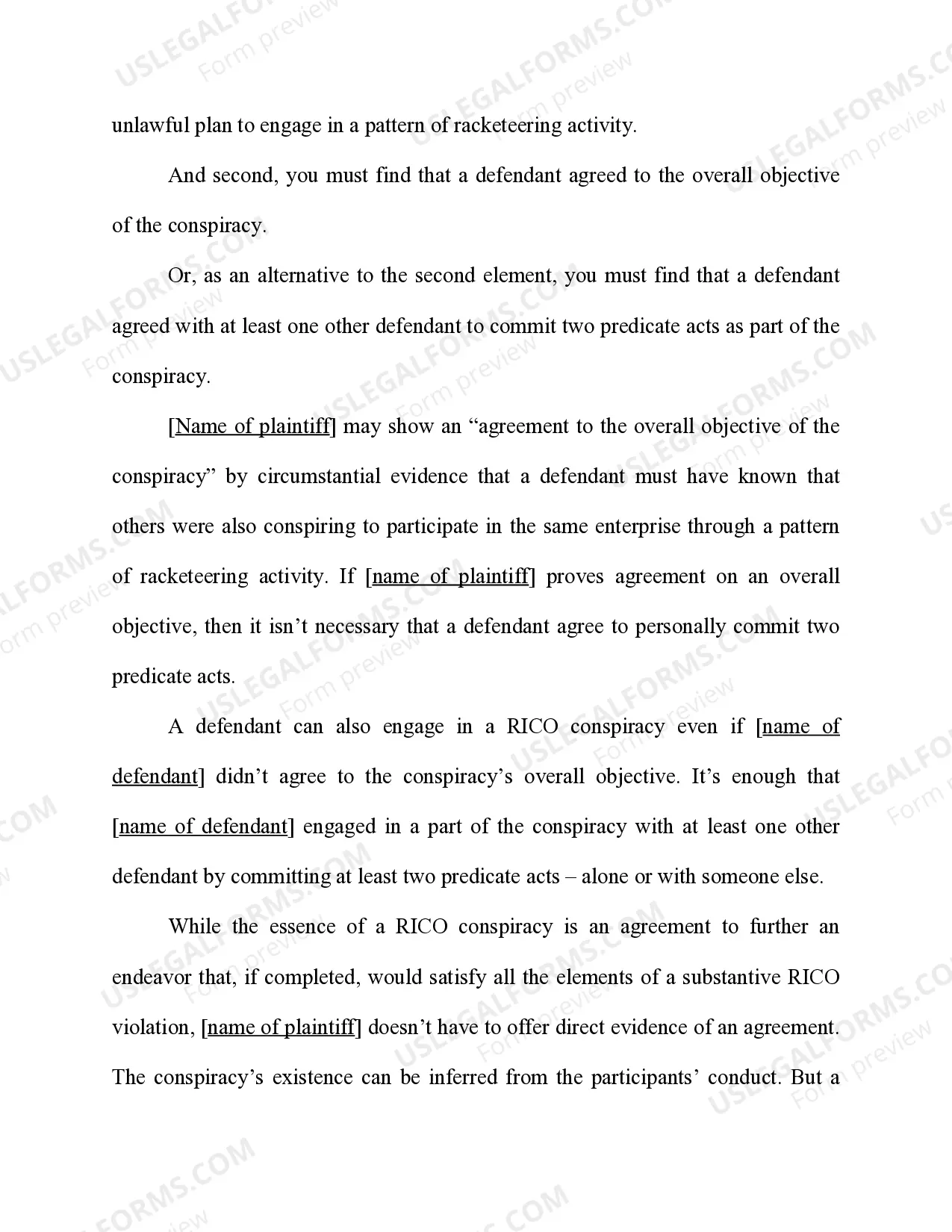
- Elements needed to establish a conspiracy, including agreements and acts planned.
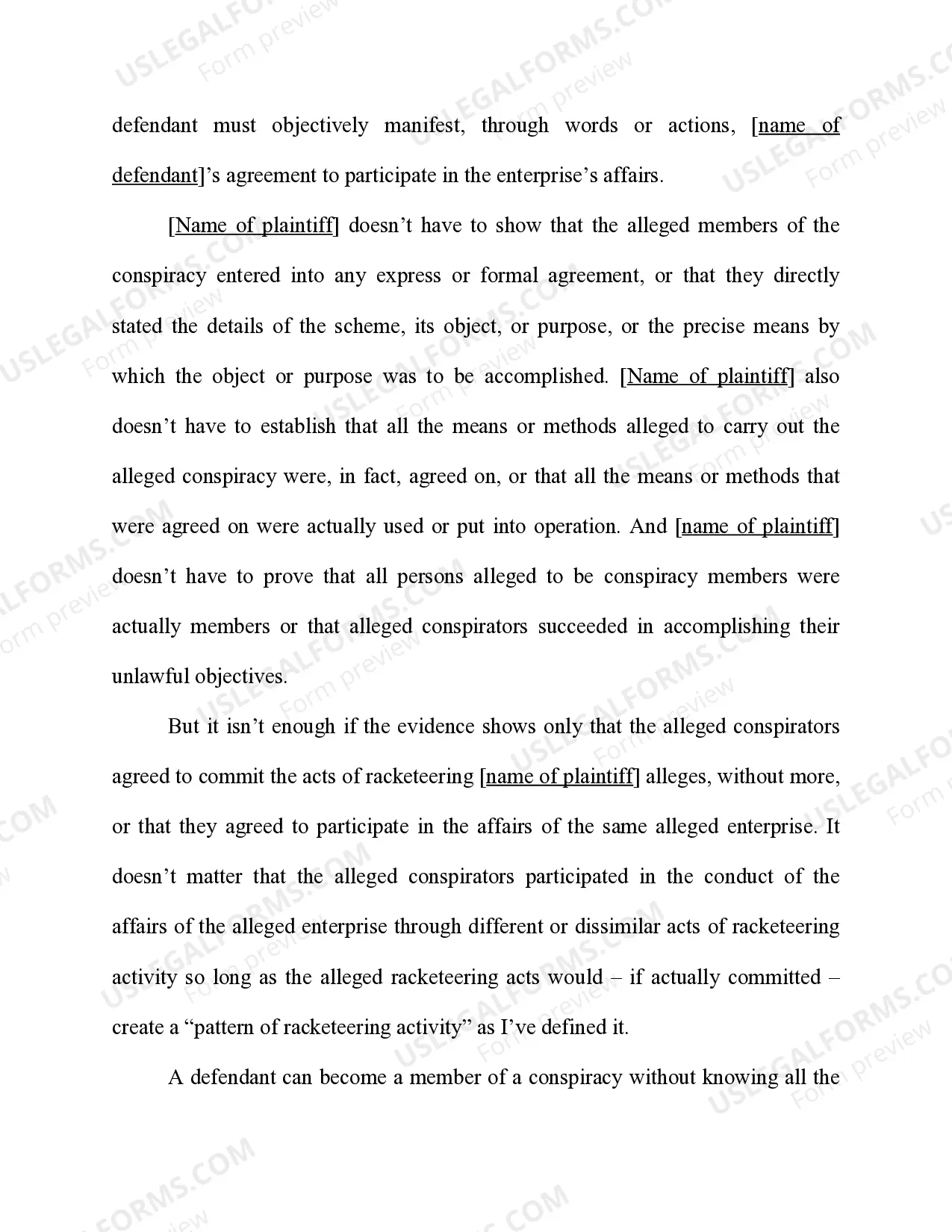
- Evidence and requirements for proving complicity in the conspiracy.
- Clarification of damages and how they relate to predicate acts within the conspiracy.
- Instructions for determining the existence and membership of the conspiracy.

Common use cases
This form should be used when a party believes they have been harmed by a conspiracy to commit racketeering activities. Common scenarios include cases where multiple individuals collaborate to engage in illegal business practices, such as fraud, extortion, or drug trafficking, that adversely affect another's property or business interests.
Intended users of this form
- Plaintiffs seeking to file a RICO conspiracy claim against defendants.
- Individuals or entities who believe they have suffered injury due to a racketeering conspiracy.
- Attorneys representing clients in RICO-related legal actions.
How to complete this form
- Identify the names of both the plaintiff and the defendant.
- Outline the specific unlawful plans agreed upon by the conspirators.
- Document the predicate acts that constitute the racketeering activity.
- Provide evidence of the conspiracy's existence, such as witness statements or conduct evidencing agreements.
- Calculate and specify the damages claimed as a result of the conspiracy.
Does this document require notarization?
This form does not typically require notarization unless specified by local law. Users should verify their jurisdiction's requirements to ensure compliance.
Get your form ready online
Our built-in tools help you complete, sign, share, and store your documents in one place.
Make edits, fill in missing information, and update formatting in US Legal Forms—just like you would in MS Word.
Download a copy, print it, send it by email, or mail it via USPS—whatever works best for your next step.
Sign and collect signatures with our SignNow integration. Send to multiple recipients, set reminders, and more. Go Premium to unlock E-Sign.
If this form requires notarization, complete it online through a secure video call—no need to meet a notary in person or wait for an appointment.
We protect your documents and personal data by following strict security and privacy standards.

Make edits, fill in missing information, and update formatting in US Legal Forms—just like you would in MS Word.

Download a copy, print it, send it by email, or mail it via USPS—whatever works best for your next step.

Sign and collect signatures with our SignNow integration. Send to multiple recipients, set reminders, and more. Go Premium to unlock E-Sign.

If this form requires notarization, complete it online through a secure video call—no need to meet a notary in person or wait for an appointment.

We protect your documents and personal data by following strict security and privacy standards.
Common mistakes to avoid
- Failing to clearly establish the agreement among conspiring parties.
- Not providing sufficient evidence of the pattern of racketeering activity.
- Overlooking to document individual damages stemming from the conspiracy.
- Assuming mere association equates to participation in the conspiracy.
Why complete this form online
- Convenience of accessible forms anytime, anywhere.
- Editability to customize details as needed.
- Reliable templates drafted by licensed attorneys to ensure legal compliance.
Legal use & context
- The RICO statute is federally enforceable, providing a framework for addressing organized crime.
- Claims under RICO can result in significant penalties and restitution for damages caused by the conspiracy.
- Understanding the elements of conspiracy is crucial for successful litigation under RICO.
Main things to remember
- The RICO form pertains to claims involving conspiracy under 18 U.S.C. Sec. 1962(d).
- Establishing a conspiracy requires proof of agreement and intent among parties.
- This form is applicable across various jurisdictions under federal law.
Looking for another form?
Form popularity
FAQ
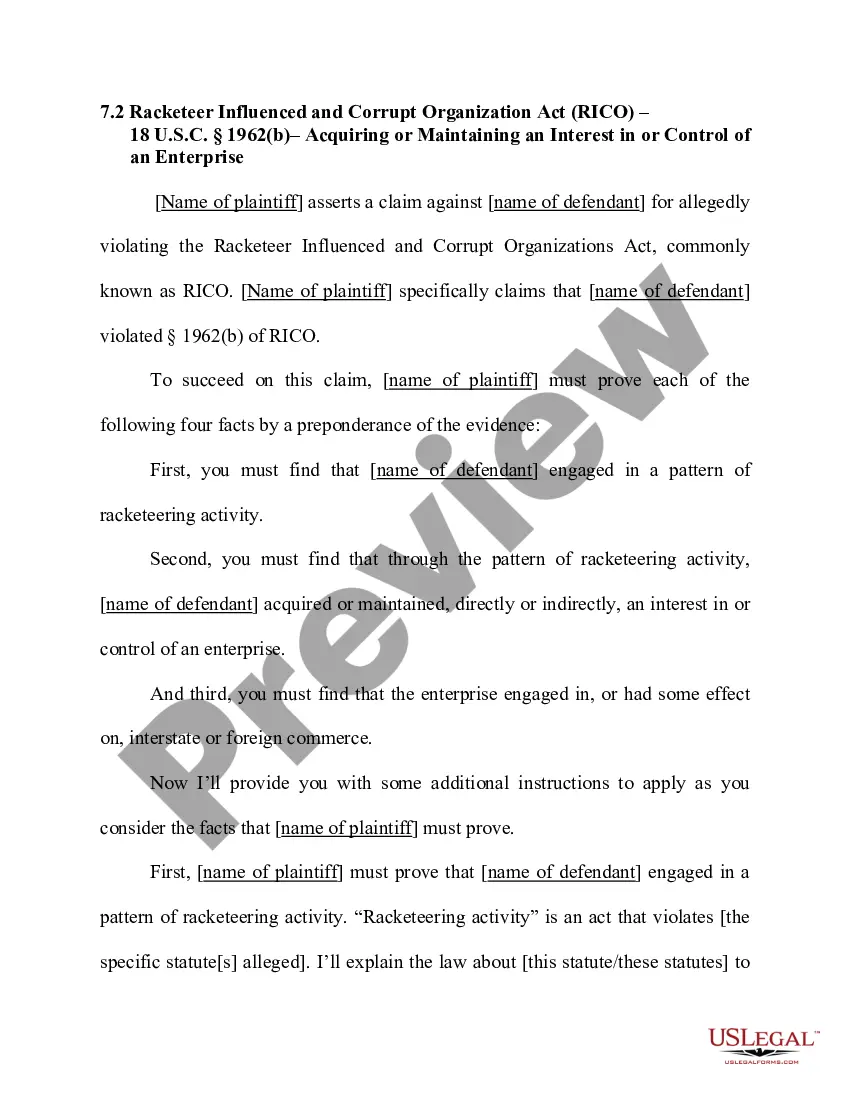
It shall be unlawful for any person through a pattern of racketeering activity or through collection of an unlawful debt to acquire or maintain, directly or indirectly, any interest in or control of any enterprise which is engaged in, or the activities of which affect, interstate or foreign commerce.
The Racketeer Influenced and Corrupt Organizations Act (RICO) of 1970 seeks to strengthen the legal tools in evidence gathering by establishing new penal prohibitions and providing enhanced sanctions and new remedies for dealing with the unlawful activities of those engaged in organized crime.
Title 18, United States Code § 2 now provides: (a) Whoever commits an offense against the United States or aids, abets, counsels, commands, induces or procures its commission, is punishable as a principal.
? (1) ''racketeering activity'' means (A) any act or threat. involving murder, kidnapping, gambling, arson, robbery, bribery, extortion, dealing in obscene matter, or dealing in a controlled. substance or listed chemical (as defined in section 102 of the. Controlled Substances Act), which is chargeable under State law.
The Racketeer Influenced and Corrupt Organizations Act (RICO) of 1970 seeks to strengthen the legal tools in evidence gathering by establishing new penal prohibitions and providing enhanced sanctions and new remedies for dealing with the unlawful activities of those engaged in organized crime.
Criminal RICO To violate RICO, a person must engage in a pattern of racketeering activity connected to an enterprise. The law defines 35 offenses as constituting racketeering, including gambling, murder, kidnapping, arson, drug dealing, bribery. Significantly, mail and wire fraud are included on the list.
The Racketeer Influenced and Corrupt Organizations Act (RICO) is described, and elements of a civil RICO claim are identified. RICO is a remedial statute which authorizes enhanced criminal penalties and public and private civil suits against violators.
Modern racketeering crimes include credit card frauds, data theft, and cybercrimes. They belong to the category of white-collar crimes.