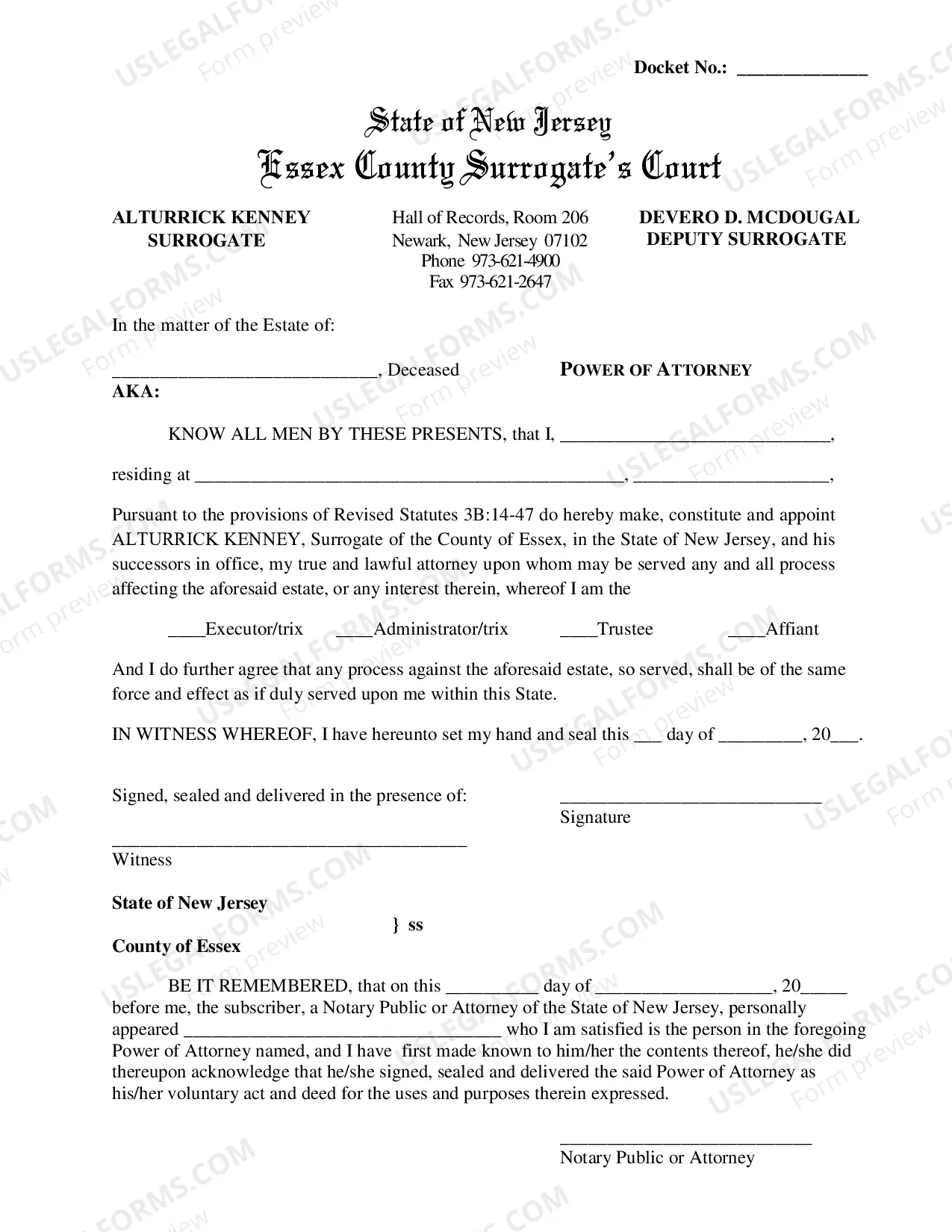
Copyright - Validity - Registration of a Derivative or Collective Work
Understanding this form
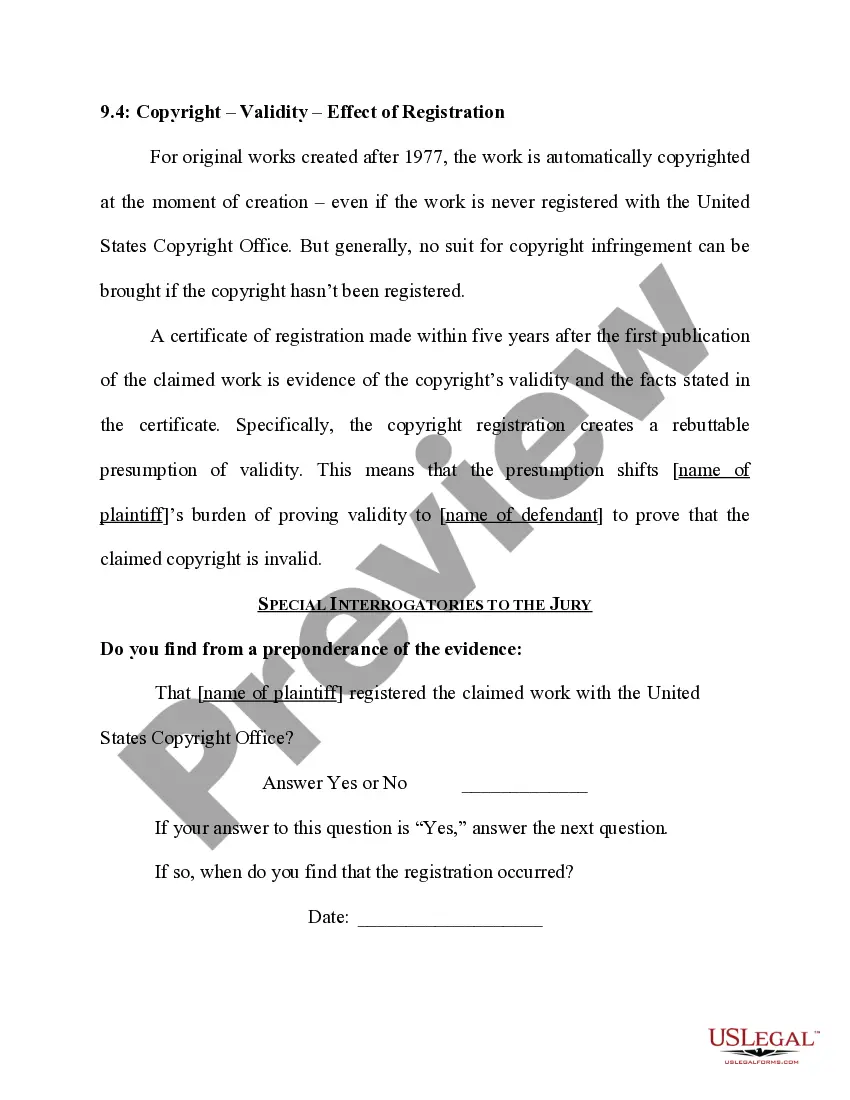
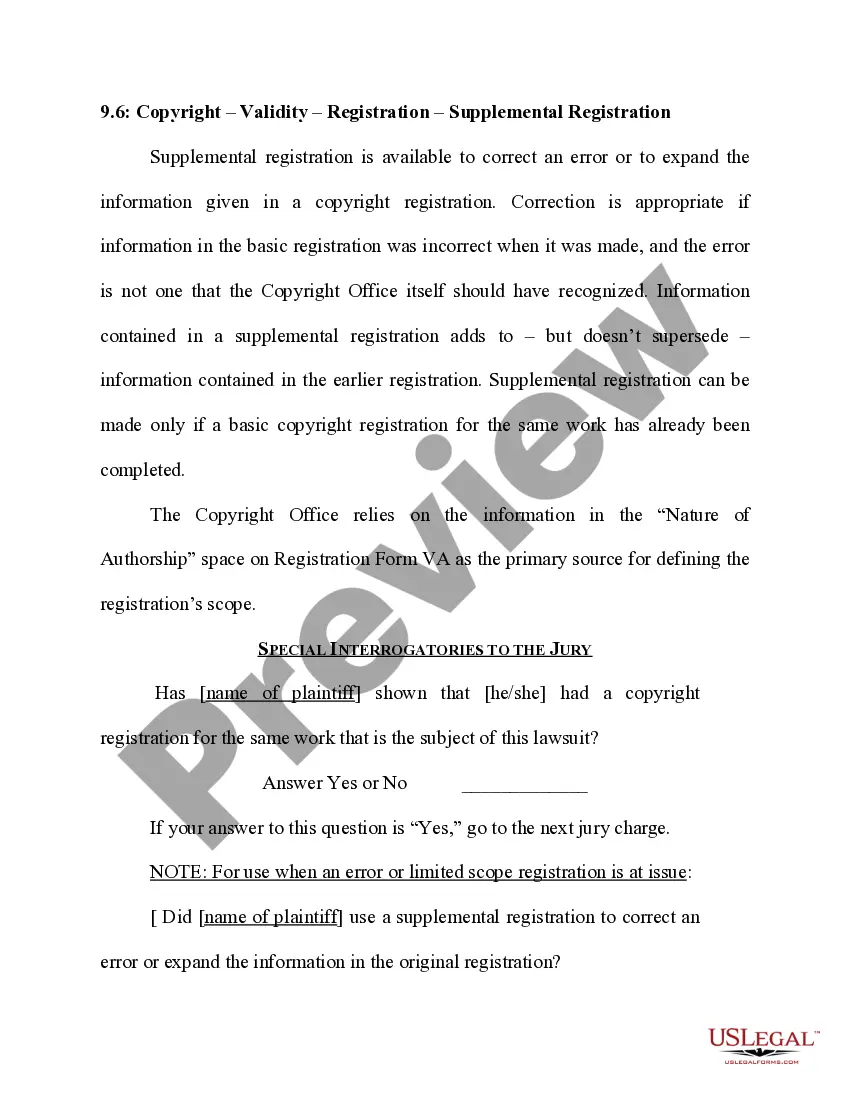
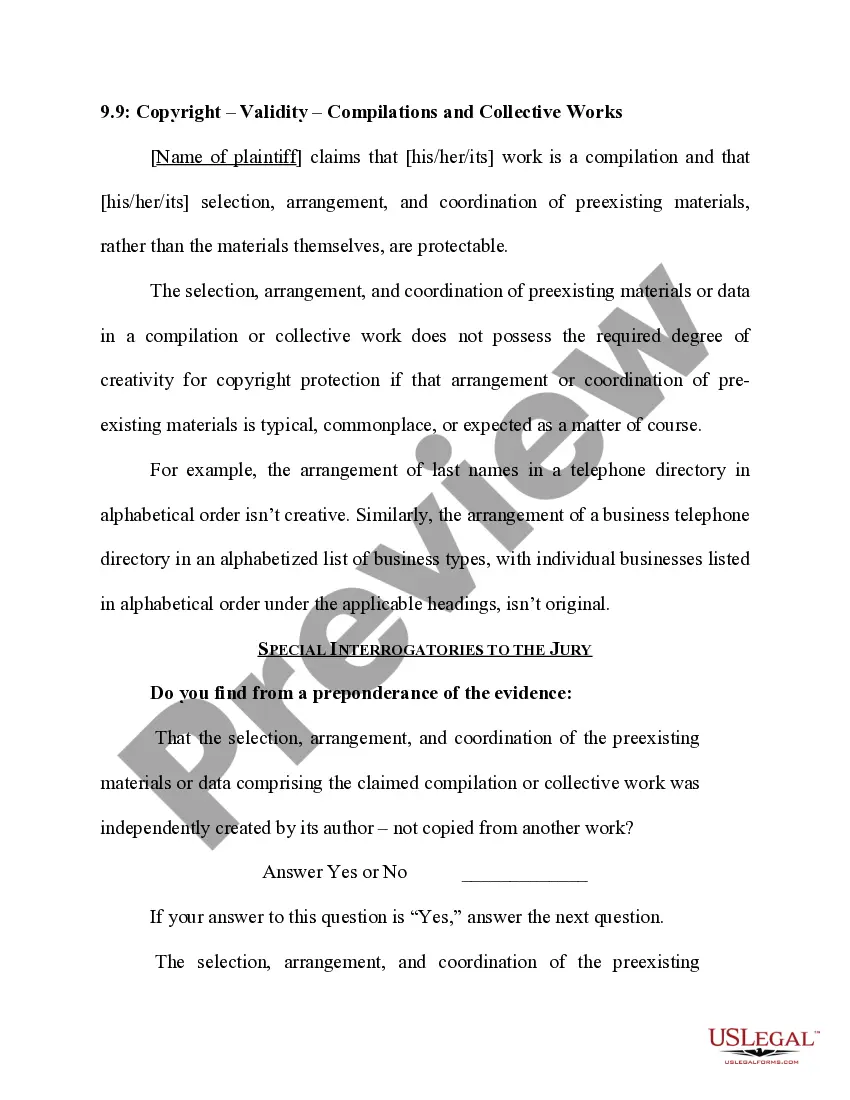
The Copyright - Validity - Registration of a Derivative or Collective Work form is essential for individuals or entities seeking to establish their rights in a creative work that is based on or incorporates preexisting copyrighted materials. It serves a pivotal role in copyright-infringement actions by allowing a plaintiff to assert rights based on the effective registration of a derivative or collective work rather than the original work itself. This form is distinct from other copyright forms as it specifically addresses situations involving derivative and collective works, which can complicate the determination of copyright validity.
Main sections of this form
- Identification of the plaintiff and defendant, essential for establishing parties involved.
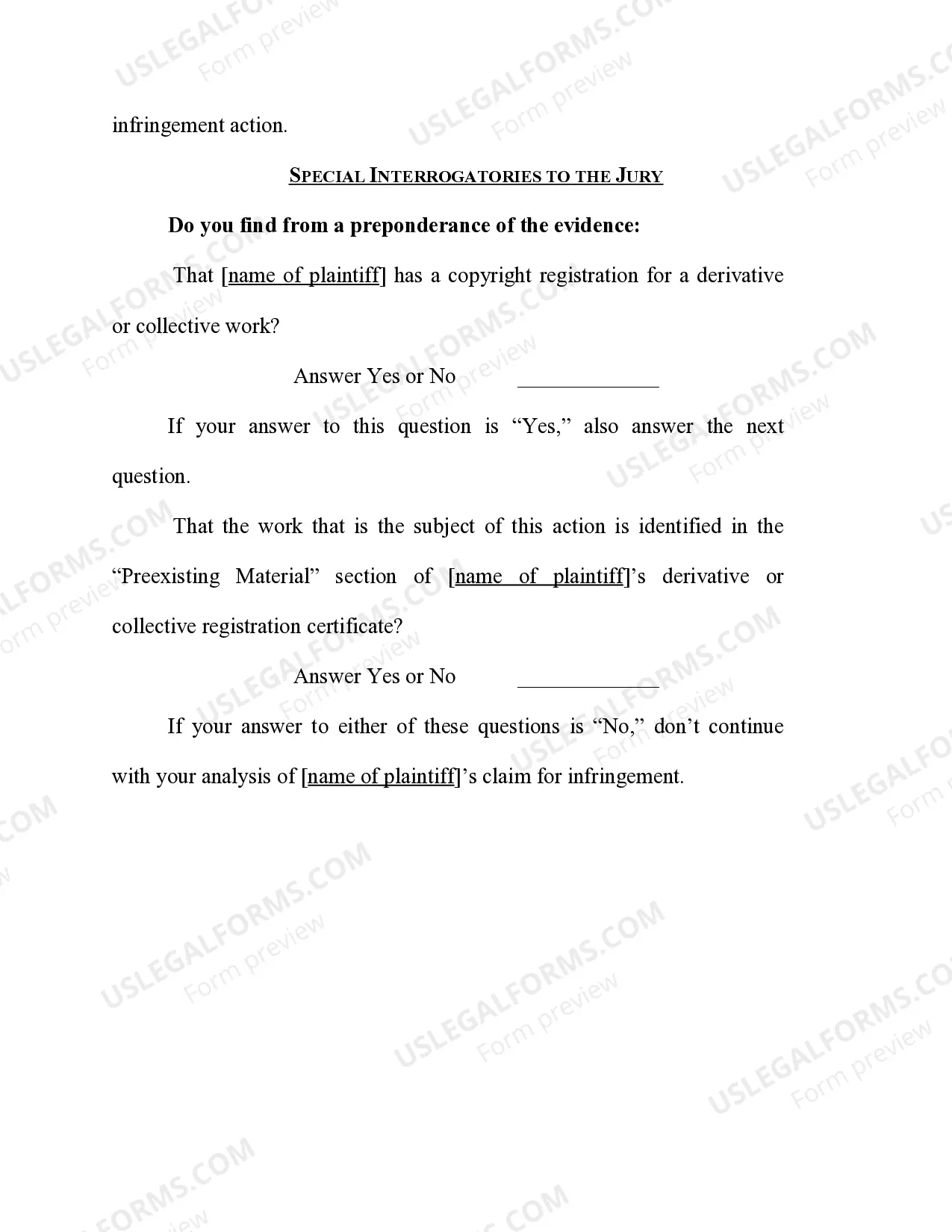
- Questions regarding the existence of registration for the collective or derivative work.
- Evaluation of the "Preexisting Material" section of the registration certificate.
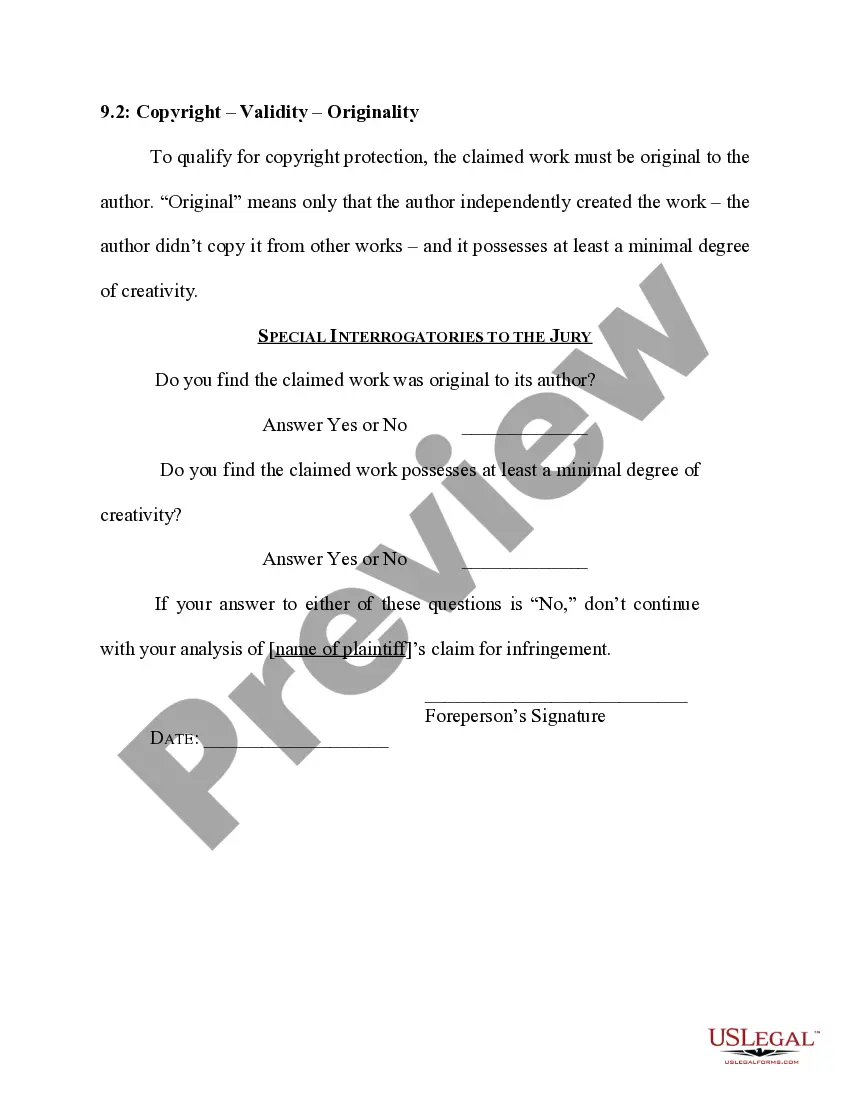
- Special interrogatories for jurors related to copyright claims.
- Requirements for determining if effective registration applies to the claimed work.
Situations where this form applies
This form is necessary when a copyright holder needs to prove that their work, which may derive from or compile other copyrighted materials, is protected under copyright law. It is particularly useful in legal disputes over copyright infringement where the original work is not registered but a derivative or collective work that includes it is registered. Situations may include cases of unauthorized reproduction, distribution, or display of the work and when the copyright holder seeks damages or an injunction.
Who this form is for
- Authors and creators of derivative works, such as adaptations, compilations, or transformations of preexisting content.
- Legal representatives handling copyright infringement cases.
- Individuals or entities asserting copyright claims in court related to derivative or collective works.
- Anyone seeking clarity on the relationship between their work and existing copyrighted materials.
Steps to complete this form
- Identify and enter the names of the parties involved, including the plaintiff and defendant.
- Determine if the plaintiff holds a valid copyright registration for the derivative or collective work.
- Review the registration certificate's "Preexisting Material" section to ensure the claimed work is mentioned.
- Answer special interrogatories regarding copyright registration status and the identification of the work.
- Ensure all necessary signatures and dates are included before submission.
Notarization requirements for this form
Notarization is not commonly needed for this form. However, certain documents or local rules may make it necessary. Our notarization service, powered by Notarize, allows you to finalize it securely online anytime, day or night.
Get your form ready online
Our built-in tools help you complete, sign, share, and store your documents in one place.
Make edits, fill in missing information, and update formatting in US Legal Forms—just like you would in MS Word.
Download a copy, print it, send it by email, or mail it via USPS—whatever works best for your next step.
Sign and collect signatures with our SignNow integration. Send to multiple recipients, set reminders, and more. Go Premium to unlock E-Sign.
If this form requires notarization, complete it online through a secure video call—no need to meet a notary in person or wait for an appointment.
We protect your documents and personal data by following strict security and privacy standards.

Make edits, fill in missing information, and update formatting in US Legal Forms—just like you would in MS Word.

Download a copy, print it, send it by email, or mail it via USPS—whatever works best for your next step.

Sign and collect signatures with our SignNow integration. Send to multiple recipients, set reminders, and more. Go Premium to unlock E-Sign.

If this form requires notarization, complete it online through a secure video call—no need to meet a notary in person or wait for an appointment.

We protect your documents and personal data by following strict security and privacy standards.
Typical mistakes to avoid
- Failing to verify the registration status of the derivative work before proceeding with claims.
- Neglecting to check if the claimed work is identified in the "Preexisting Material" section.
- Inaccurate or incomplete responses to the special interrogatories presented in the form.
- Overlooking state-specific rules that could impact the validity of the form.
Advantages of online completion
- Convenient access to downloadable forms that can be completed at your pace.
- Editability options allow customization to fit specific legal situations.
- Reliable templates drafted by licensed attorneys ensure compliance with current legal standards.
- Easy retrieval of form history for potential future use or reference.
Looking for another form?
Form popularity
FAQ
Collective Works A collective work is a compilation in which a number of contributions, constituting separate and independent works in themselves, are assembled into a collective whole. In most cases, the Copyright Office. requires each work of authorship to be. registered on a separate application.
Copyright Protection in Derivative Works The copyright in a derivative work covers only the additions, changes, or other new material appearing for the first time in the work.
Under the Copyright Act, a collective work is considered one work for purposes of registration. A registration for a collective work covers the copyrightable authorship in the selection, coordination, or arrangement of the work.
§ 103(b) provides: The copyright in a compilation or derivative work extends only to the material contributed by the author of such work, as distinguished from the preexisting material employed in the work, and does not imply any exclusive right in the preexisting material.
The right to create a derivative work falls under the songwriting copyright, and the owner of the original underlying copyright is the only one who has the right to create or authorize someone else to create a derivative work or new version of their work. You can't create a derivate work without the owner's permission.
The copyright for the derivative work only covers the additions or changes to the original work, not the original itself. The owner of the original work retains control over the work, and in many circumstances can withdraw the license given to someone to create derivative works.
The right to create a derivative work falls under the songwriting copyright, and the owner of the original underlying copyright is the only one who has the right to create or authorize someone else to create a derivative work or new version of their work. You can't create a derivate work without the owner's permission.
Copyright Protection in Derivative Works The copyright in a derivative work covers only the additions, changes, or other new material appearing for the first time in the work.