Evading a Currency-Transaction Reporting Requirement (While Violating Another Law) by Structuring Transaction
What is this form?
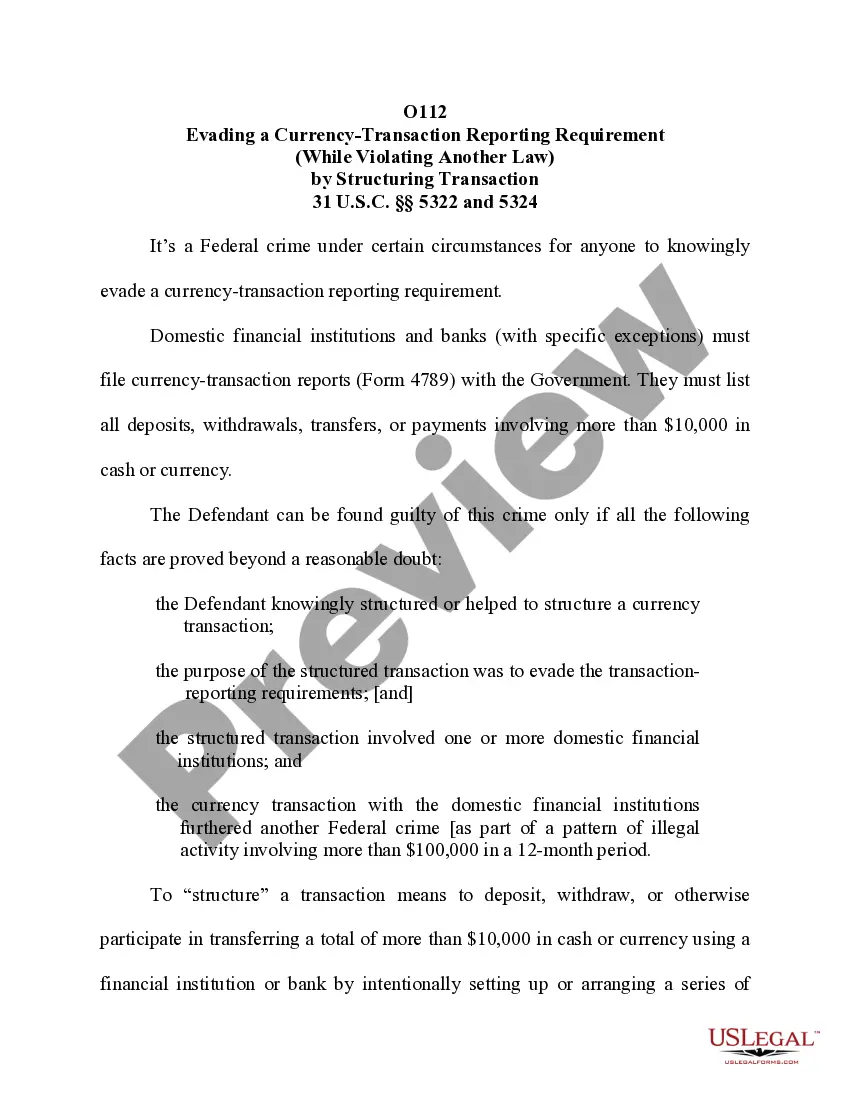
This form addresses the legal framework around evading currency-transaction reporting requirements by structuring transactions under U.S. law. It outlines the definition of this offense, which occurs when individuals intentionally design transactions to avoid exceeding the $10,000 reporting threshold. It is crucial for those involved in financial transactions to understand this form, as it differs from standard currency reporting forms by specifically addressing the illegal structuring of transactions to escape legal requirements.
Main sections of this form
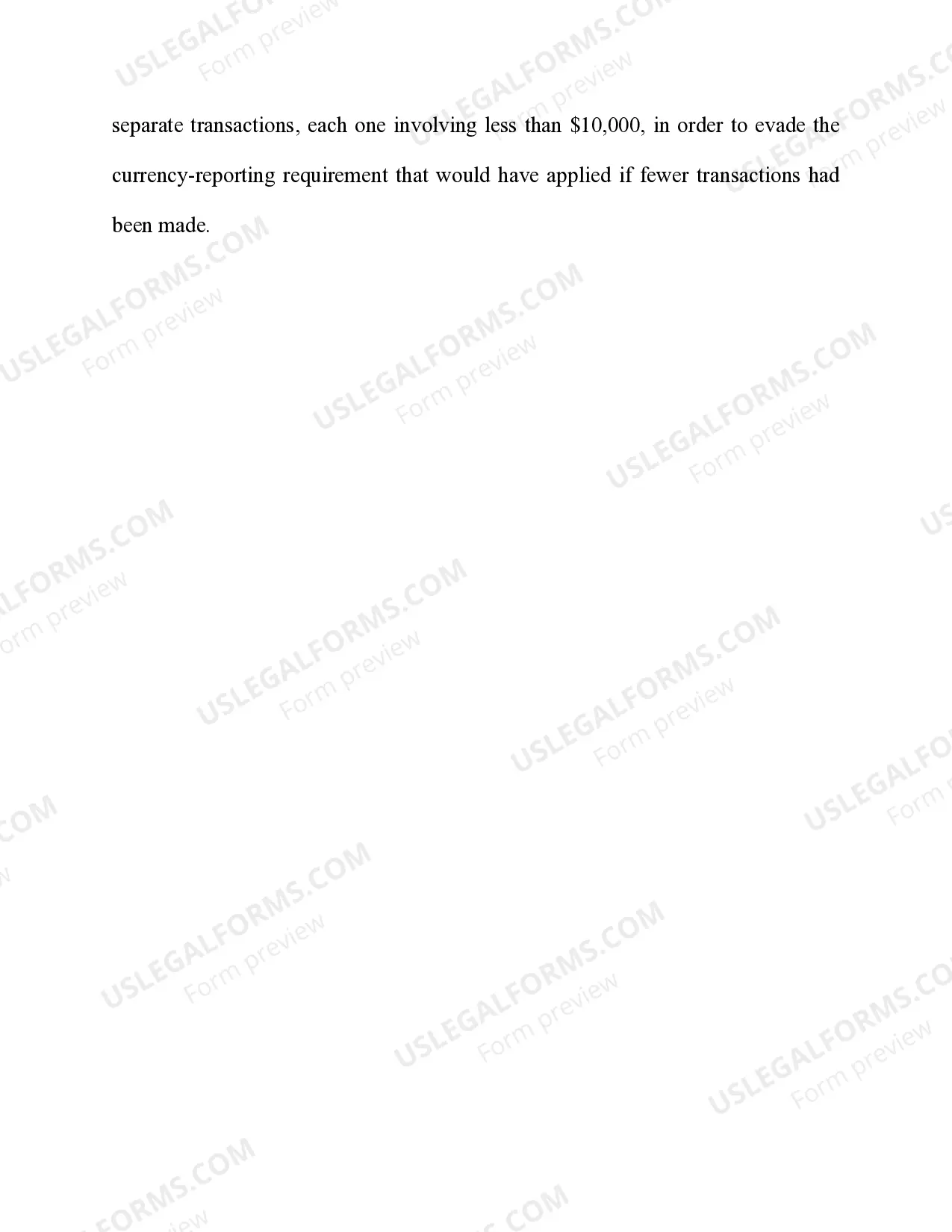
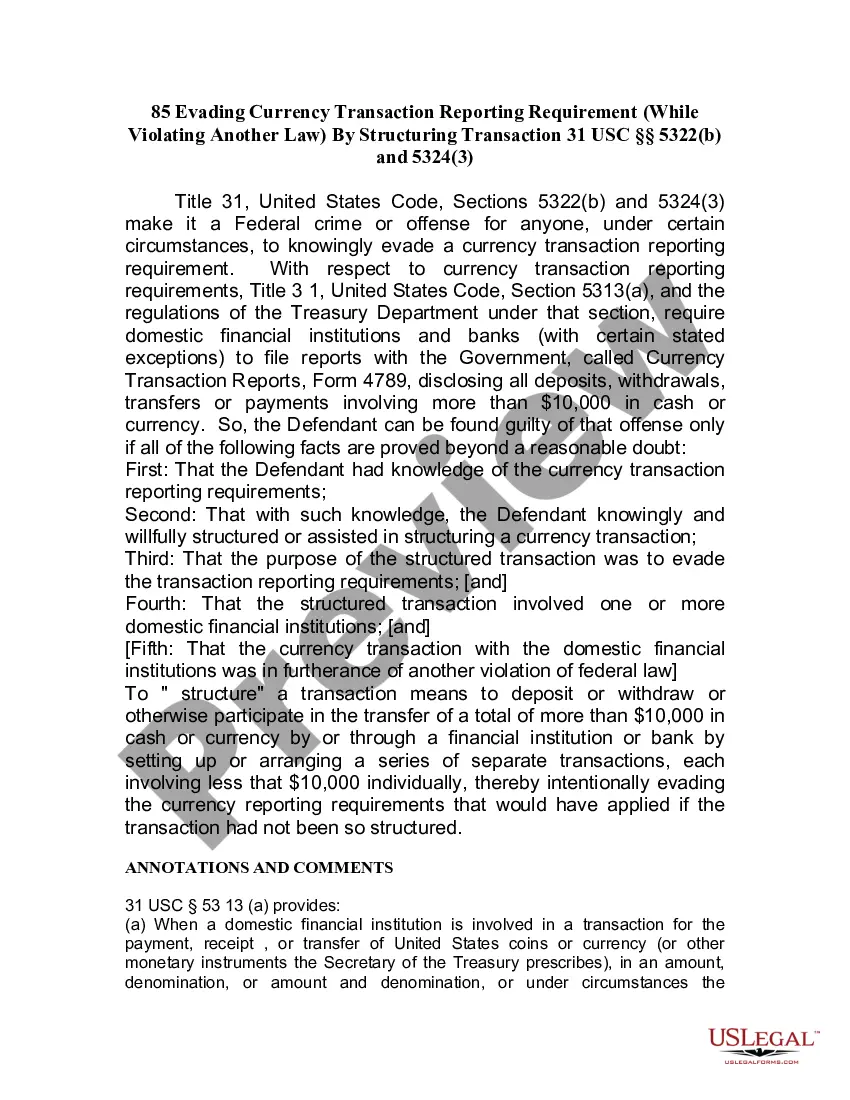
- Definition of structuring: Describes how individuals intentionally conduct transactions in amounts less than $10,000 to evade reporting requirements.
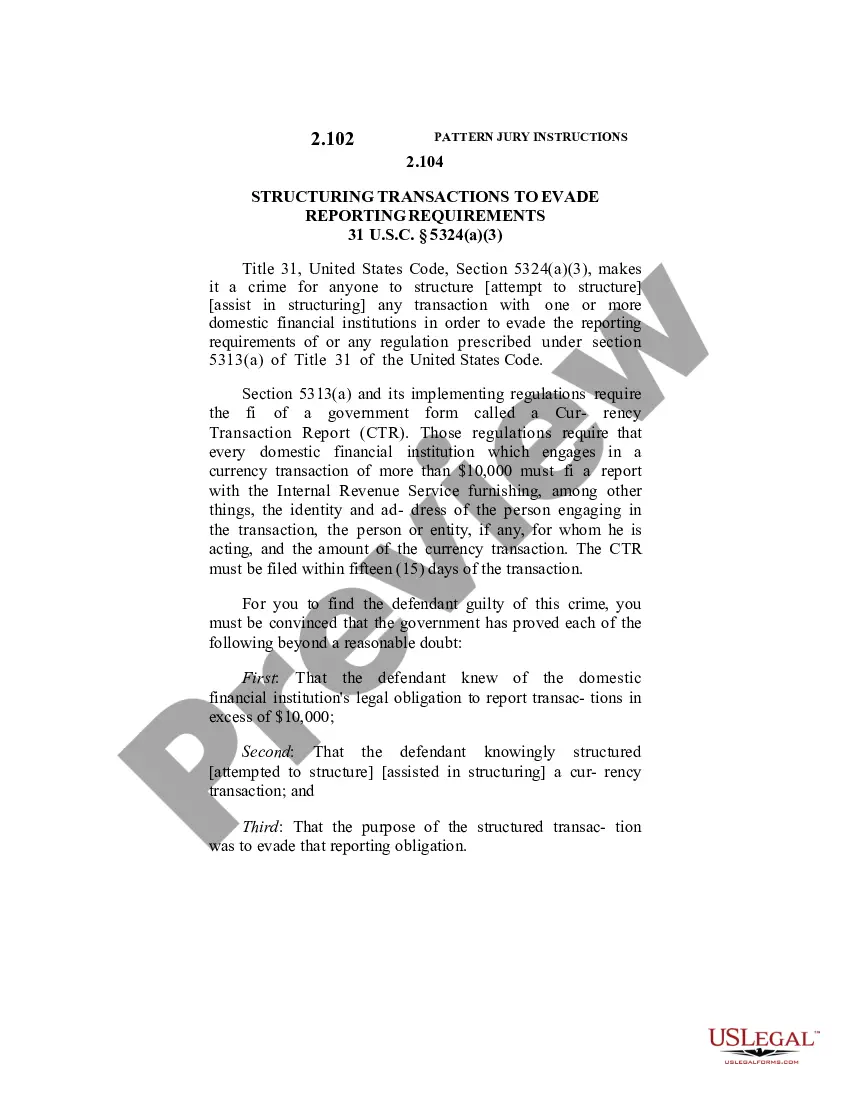
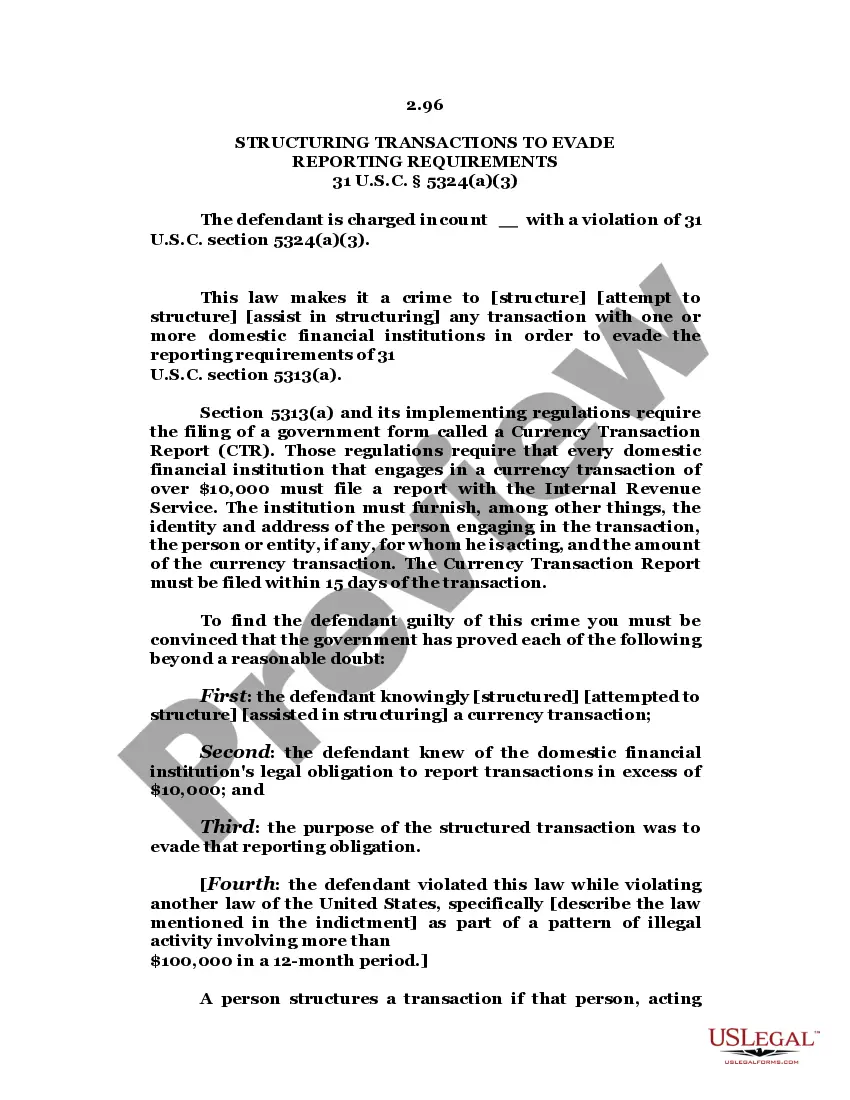
- Categorization of offenses: Details the elements that must be proven for a conviction, including intent and involvement of domestic financial institutions.
- Legal references: Cites relevant sections of the U.S. Code that outline the legal ramifications of evading transaction reporting requirements.
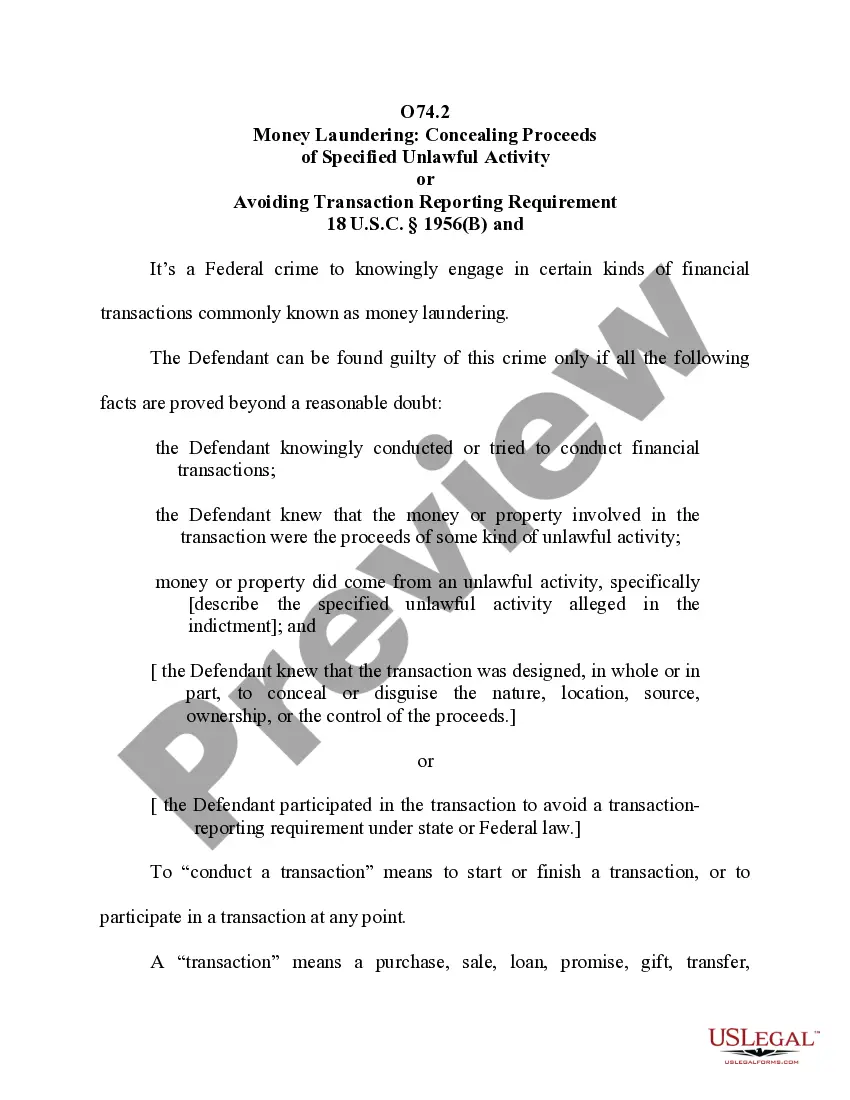
When to use this document
This form is needed in scenarios where an individual or entity is accused of structuring financial transactions to evade reporting requirements. It is particularly relevant for those who are involved in significant cash transactions, as it provides guidance for understanding the legal repercussions of such actions. It can also be utilized when preparing a defense against charges related to this offense.
Who needs this form
- Individuals accused of evading currency-transaction reporting requirements.
- Legal professionals seeking to understand the implications of structuring transactions.
- Financial institutions looking to ensure compliance with federal regulations.
How to complete this form
- Identify the nature of the transaction you are reporting.
- Document the specific amounts and dates of each cash transaction.
- Detail the intentions behind structuring the transaction to remain under reporting limits.
- Provide information about the financial institutions involved in the transactions.
- Review and ensure compliance with federal laws surrounding currency reporting.
Notarization guidance
This form does not typically require notarization unless specified by local law, providing flexibility during completion.
Get your form ready online
Our built-in tools help you complete, sign, share, and store your documents in one place.
Make edits, fill in missing information, and update formatting in US Legal Forms—just like you would in MS Word.
Download a copy, print it, send it by email, or mail it via USPS—whatever works best for your next step.
Sign and collect signatures with our SignNow integration. Send to multiple recipients, set reminders, and more. Go Premium to unlock E-Sign.
If this form requires notarization, complete it online through a secure video call—no need to meet a notary in person or wait for an appointment.
We protect your documents and personal data by following strict security and privacy standards.

Make edits, fill in missing information, and update formatting in US Legal Forms—just like you would in MS Word.

Download a copy, print it, send it by email, or mail it via USPS—whatever works best for your next step.

Sign and collect signatures with our SignNow integration. Send to multiple recipients, set reminders, and more. Go Premium to unlock E-Sign.

If this form requires notarization, complete it online through a secure video call—no need to meet a notary in person or wait for an appointment.

We protect your documents and personal data by following strict security and privacy standards.
Mistakes to watch out for
- Failing to clearly document the purpose of each transaction.
- Not understanding the legal definitions of structuring and evasion.
- Overlooking details about the cash thresholds set by federal law.
Benefits of using this form online
- Convenience of completing the form from anywhere without the need for physical paperwork.
- Editability allows users to save and modify their information as needed before finalizing.
- Access to reliable templates created by licensed attorneys to ensure legal compliance.
Legal use & context
- Understanding the implications of structuring is crucial for compliance with U.S. currency laws.
- Failure to comply with reporting requirements can lead to severe federal penalties, including fines and imprisonment.
What to keep in mind
- Evading currency-transaction reporting can lead to serious legal consequences.
- Strategic structuring of transactions is illegal and should be avoided.
- Consulting legal experts is advisable when facing allegations of evasion.
Looking for another form?
Form popularity
FAQ
Deliberately evading the $10,000 reporting threshold with multiple transactions, or transactions just under $10,000, is known as "structuring." Structuring is illegal under federal law, with strict penalties for both the customer and the bank employee.
The transactions need not exceed the $10,000 CTR filing threshold at any one bank on any single day in order to constitute structuring. Money launderers and criminals have developed many ways to structure large amounts of currency to evade the CTR filing requirements.
Structuring money such as cash deposits to avoid the filing of a Currency Transaction Report (CTR) is illegal. Banks are required to file CTRs for cash transactions of $10,000 or more.
To avoid providing the bank with the information required for a CTR, somebody engaged in structuring may split their transactions across several days or deposit the money into different accounts at different banks.
Structuring in money laundering involves intentionally transacting money in smaller amounts to avoid detection, while smurfing in money laundering involves using other people (smurfs) to make smaller deposits. Smurfing is often done with foreign and offshore accounts and is considered more sinister than structuring.
A structured transaction is a series of transactions broken up from a larger sum in order to avoid reporting requirements under the Bank Secrecy Act (BSA), which requires financial institutions to report all transactions of $10,000 or more.
For example, if someone has $50,000 in cash to deposit in their bank, should they choose to deposit it through five deposits of $9,999 and one deposit of $5, with the intent to avoid the reporting requirement, they have committed the crime of structuring.